Humantay Lake vs Hierve el Agua and Which One to Visit
Ultima actualización en 16 November, 2026 por Jhon Quispe
Last Updated on 16 November, 2026 by Jhon Quispe
Is Humantay Lake or Hierve el Agua better?
Choose Humantay Lake in Peru for a challenging mountain hike to a turquoise lake at approximately 13,780 ft (4,200 m). Choose Hierve el Agua in Oaxaca for petrified waterfalls, mineral pools and generally shorter sightseeing walks at around 5,900 ft (1,800 m). Humantay requires more physical preparation, while Hierve el Agua is usually easier to explore from its main visitor areas.
- Humantay Lake vs Hierve el Agua at a glance
- Which destination should you choose?
- Main differences between Humantay Lake and Hierve el Agua
- Humantay Lake in the Peruvian Andes
- Hierve el Agua and its petrified waterfalls
- How to get to both destinations
- Travel costs and budget comparison
- Best time to visit each destination
- Safety, accessibility and what to bring
- Common mistakes when comparing both destinations
- Choose the right natural experience for your next trip
-
Frequently asked questions about Humantay Lake vs Hierve el Agua
- Can you visit Humantay Lake and Hierve el Agua on one trip?
- Are bathrooms and food services available at both destinations?
- Do you need to reserve either destination in advance?
- Which destination is better for families with children?
- Does Hierve el Agua have hot springs?
- Is Humantay Lake part of the Salkantay Trek?
These destinations offer two very different natural experiences. Humantay rewards visitors who complete a steep Andean ascent, while Hierve el Agua reveals mineral formations and wide valley views without requiring the same high-altitude effort. Transportation, access rules and available activities can make the final choice just as important as the scenery.

Humantay Lake vs Hierve el Agua at a glance
Humantay Lake and Hierve el Agua are natural attractions in different countries. Both offer impressive landscapes, but their elevations, visitor activities and physical requirements are considerably different.
The following comparison highlights the main factors to consider before choosing between them.
| Comparison | Humantay Lake, Peru | Hierve el Agua, Mexico |
| Location | Cusco region, Peruvian Andes | San Lorenzo Albarradas, Oaxaca |
| Main attraction | Turquoise glacial lake and snowcapped mountains | Petrified waterfalls and mineral pools |
| Approximate altitude | 13,780 ft (4,200 m) | 5,900 ft (1,800 m) |
| Main activity | High-altitude mountain hiking | Viewpoints, sightseeing and walking trails |
| Physical difficulty | Moderate to challenging because of the steep ascent and altitude | Generally easier at the main viewpoints; longer trails can be demanding |
| Typical excursion | Full day from Cusco | Half-day or full-day outing from Oaxaca, depending on the itinerary |
| Landscapes | Glacial water, rocky mountain slopes and snowy peaks | Mineral cliffs, valleys, natural pools and hillside vegetation |
| Swimming | Not permitted at the lake | Possible only in designated pools when authorized |
| Best for | Travelers seeking an Andean mountain hiking experience | Travelers interested in geology, viewpoints and shorter walks |
Important note:
Humantay Lake and Hierve el Agua are in different countries. Travel costs, transportation and physical requirements should be compared from your actual starting city. A traveler already in Cusco will have different planning needs from someone staying in Oaxaca.
Which destination should you choose?
The best choice depends on the type of natural landscape you enjoy, how much hiking you want to do and your comfort with high-altitude environments.
| Travel preference | Recommended destination |
| Challenging mountain hiking | Humantay Lake |
| Turquoise water surrounded by snowcapped peaks | Humantay Lake |
| Shorter sightseeing walks | Hierve el Agua |
| Petrified waterfalls and unusual geology | Hierve el Agua |
| Possible access to designated natural pools | Hierve el Agua, subject to current regulations |
| Exploring the high Andes of Peru | Humantay Lake |
| Traveling with limited high-altitude hiking experience | Consider Hierve el Agua’s main visitor areas |
| Adding a nature excursion to a Cusco itinerary | Humantay Lake |
| Exploring natural attractions around Oaxaca | Hierve el Agua |
Choose Humantay Lake for mountain hiking
Humantay Lake is particularly appealing to active travelers who want to hike through the Andes and reach a turquoise lake beneath snowy mountains.
The journey requires a substantial day of travel from Cusco and a steep ascent from Soraypampa.
The main reward is the mountain setting, but reaching it requires preparation for walking at approximately 13,780 ft (4,200 m).
Choose Hierve el Agua for geology and viewpoints
Hierve el Agua is better suited to visitors who want to explore unusual mineral formations, appreciate valley landscapes and enjoy shorter sightseeing walks.
The main visitor area generally involves less physical effort than the Humantay ascent, although some trails are steep or uneven.
Travelers interested in photography, natural geology and an excursion from Oaxaca may prefer this destination.
Main differences between Humantay Lake and Hierve el Agua
Although both attractions are associated with water and striking natural scenery, their geological origins and visitor experiences are different.
Altitude and physical difficulty
Humantay Lake sits at approximately 13,780 ft (4,200 m), while Hierve el Agua is located at around 5,900 ft (1,800 m).
Humantay is therefore approximately 7,880 ft (2,400 m) higher than Hierve el Agua.
The difference is important because visitors to Humantay must combine high altitude with an uphill hike from Soraypampa.
Even physically active travelers may feel the effects of elevation when walking above 13,000 ft (3,962 m).
At Hierve el Agua, the lower altitude generally reduces that particular challenge. However, uneven rock, exposed viewpoints and stairs can still make longer walks demanding.
Glacial landscapes vs mineral formations
Humantay is a high-altitude lake associated with the glacial mountain environment of the Cusco Andes.
Its turquoise appearance varies with light, suspended sediments and natural water conditions.
Hierve el Agua is known for mineral deposits that have accumulated along cliffs, creating formations resembling flowing waterfalls.
These geological structures are primarily solid mineral formations rather than waterfalls frozen by cold temperatures.
Activities, walking trails and swimming rules
The main activity at Humantay Lake is hiking to the viewpoint area and observing the landscape.
Swimming is not permitted at the lake, and visitors should respect the fragile environment and current local restrictions.
At Hierve el Agua, visitors can explore designated viewpoints, photograph the mineral formations and walk along permitted trails.
Access to specific natural pools may be allowed when the site’s management authorizes it. Pool access and swimming conditions should be verified for the actual visit.
Humantay Lake in the Peruvian Andes
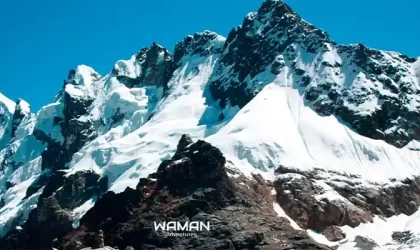
Humantay Lake is a high-altitude natural attraction in the Cusco region, near Humantay Mountain and the trekking area associated with Salkantay.
The lake is especially recognized for its turquoise water, rocky slopes and views of the surrounding snowy peaks.
Location and natural features
Humantay Lake lies northwest of Cusco, in a mountainous area commonly reached through Mollepata and Soraypampa.
The lake is located at approximately 13,780 ft (4,200 m).
Its landscape includes:
- Turquoise glacial water: Color that changes with sunlight and weather.
- Humantay Mountain: Snow-covered slopes rising above the lake.
- Andean valleys: Mountain scenery along the approach from Soraypampa.
- Natural viewpoints: Locations where visitors can observe and photograph the lake.
- High-altitude vegetation: Plant life adapted to the mountain environment.
The lake’s appearance depends on environmental conditions, so photographs taken on different days may show variations in water color, clouds and snow cover.


Hiking from Soraypampa
Most day trips involve traveling by road to Soraypampa before beginning the uphill hike toward Humantay Lake.
The trail crosses dirt and rocky surfaces, with sections that become steeper as hikers approach the lake.
Many visitors need approximately 1–2 hours for the ascent, depending on fitness, weather, altitude adjustment and walking pace.
The full hike, including the descent and time at the lake, requires additional hours.
The standard route is often described as approximately 2.5 mi (4 km) round trip, although the actual walking distance depends on the trailhead.
The relatively short distance should not be confused with low difficulty. The slope and altitude can make the ascent feel demanding.
For a more detailed explanation of physical preparation and trail conditions, consult the Humantay Lake hiking difficulty guide.
Cultural significance of the Andean landscape
Humantay Lake lies within a mountain landscape that holds cultural and spiritual significance for local Andean communities.
Prominent mountains are often understood through the concept of Apus, sacred mountains associated with local beliefs and traditions.
This cultural context adds meaning to the natural scenery beyond its photographic appeal.
Visitors should respect local practices, remain on authorized trails and avoid disturbing the lake or surrounding vegetation.


Hierve el Agua and its petrified waterfalls
Hierve el Agua is a natural attraction in Oaxaca, Mexico, known for large mineral formations that resemble waterfalls along the edge of a cliff.
These formations developed through the accumulation of minerals deposited by water over long periods.
The destination offers a different experience from Humantay, with geological features, broad valley views and mineral pools.
Location and formation of the mineral waterfalls
Hierve el Agua is located in the municipality of San Lorenzo Albarradas, in Oaxaca.
The site is approximately 43 mi (70 km) from Oaxaca de Juárez, depending on the road route.
Its altitude is around 5,900 ft (1,800 m).
The petrified waterfall formations developed as mineral-rich spring water flowed across rock surfaces and deposited calcium carbonate.
Over time, these mineral deposits created structures that resemble water descending over the cliffs.
Despite the name Hierve el Agua, which translates to “the water boils,” visitors should not assume the springs are boiling hot.


Viewpoints, pools and walking conditions
Hierve el Agua offers several types of visitor experiences, depending on current access arrangements.
Its main attractions include:
- Petrified waterfalls: Mineral formations extending down the cliffs.
- Natural pools: Water-filled areas near the upper part of the site.
- Valley viewpoints: Panoramic views of the surrounding mountains and valleys.
- Geological formations: Visible mineral deposits and patterns created by water.
- Walking trails: Paths leading to different perspectives of the formations.
A basic visit focused on the main viewpoints usually requires less physical effort than the Humantay ascent.
However, some paths contain uneven rocks, stairs and exposed sections.
Longer walks toward lower viewpoints can involve substantial descents and climbs.
Travelers should verify access arrangements before visiting, particularly if they want to use the pools or have limited mobility.
Warning:
Some viewpoints and walking paths near Hierve el Agua’s cliffs are exposed or may become slippery. Remain within authorized visitor areas, avoid approaching cliff edges unnecessarily and follow current instructions from site personnel.
How to get to both destinations
Humantay Lake and Hierve el Agua are generally visited from different regional travel hubs.
Humantay is commonly accessed from Cusco, while Hierve el Agua is usually visited from Oaxaca de Juárez.
Humantay Lake from Cusco
The typical journey follows the route:
Cusco → Mollepata → Soraypampa → Humantay Lake.
The first sections are completed by road, while the final approach is an uphill hike.
Most organized excursions depart from Cusco early in the morning to allow time for transportation, walking, rest stops and the return journey.
Soraypampa lies at approximately 12,630–12,800 ft (3,850–3,900 m), depending on the reference point.
From this mountain area, visitors begin the trail toward Humantay Lake.


Hierve el Agua from Oaxaca
The usual access route follows the road from Oaxaca de Juárez toward Mitla and San Lorenzo Albarradas.
The final approach uses local mountain roads, where travel conditions can differ from the main highway.
Visitors can travel by private vehicle, join an organized excursion or arrange transport through the Mitla area.
Independent travelers should confirm return transportation before leaving Oaxaca, as local service availability may vary.
Independent travel vs organized tours
Both destinations may be visited through organized services or independently, but the level of coordination differs.
| Planning factor | Humantay Lake | Hierve el Agua |
| Usual starting city | Cusco | Oaxaca de Juárez |
| Main transport | Road transfer to Soraypampa | Road transfer toward Mitla and the site |
| Final approach | Steep mountain hike | Walks from the main visitor area |
| Organized services | Often coordinate transportation, guiding and meals | May combine Hierve el Agua with other Oaxaca attractions |
| Independent travel | Requires coordination of road transfers and return travel | Requires confirmation of local road access and return transport |
An organized day tour can simplify the Humantay journey from Cusco. Depending on the operator, services may include transportation, guiding, meals and local entrance arrangements.
For an existing commercial itinerary, see the Humantay Lake full-day tour from Cusco.
Organized outings to Hierve el Agua may also include stops such as Mitla, Teotitlán del Valle or the Tule Tree, but these are not guaranteed in every package.
Travelers should compare itineraries and confirm the actual time available at the main attraction.
Travel costs and budget comparison
Humantay Lake and Hierve el Agua require different transportation arrangements, so their total costs should not be compared only through the entrance fees.
The overall budget depends on the starting city, travel method, guided services, admissions and any additional activities.
| Expense | Humantay Lake | Hierve el Agua |
| Admission | Applicable local entrance arrangements | Site or community admission charges according to current rules |
| Guided tour | Usually a full-day excursion from Cusco | Half-day or full-day excursion from Oaxaca |
| Independent transportation | Transfers toward Mollepata and Soraypampa | Transportation toward Mitla and local access roads |
| Meals | May be included in organized tours | May be purchased separately or included in selected tours |
| Equipment | Hiking shoes, warm layers and rain protection | Comfortable walking shoes and sun protection |
| Optional expenses | Horse services where available and applicable | Additional sightseeing stops and local services |
Humantay Lake budget
The main expenses are transportation, local access arrangements, meals and guiding services where applicable.
A group excursion may simplify costs by combining several services, but the actual inclusions should be confirmed.
Optional support services, such as horse transportation along permitted sections when available, may involve additional charges.
Hierve el Agua budget
Travelers should account for transport from Oaxaca, local entrance arrangements, food and additional stops.
A private excursion may have a different cost structure from shared transportation or a larger group tour.
Entrance fees and local charges can change, so confirm the current amounts before departure.
Which destination is more economical?
For visitors already staying in Oaxaca, Hierve el Agua may involve fewer transportation and guiding requirements than a full-day mountain excursion from Cusco.
However, for travelers already in Cusco, an organized Humantay tour may be convenient.
When comparing destinations across countries, international flights and accommodation can represent much larger expenses than the local excursions themselves.
Best time to visit each destination
The seasonal patterns are different because Humantay lies in the high Andes of Peru, while Hierve el Agua is located in Oaxaca’s mountain environment.
| Seasonal factor | Humantay Lake | Hierve el Agua |
| Generally drier months | April–October | November–April |
| Main weather considerations | Cold, fog, rainfall and changing mountain conditions | Strong sun, rainfall, slippery rock and road conditions |
| Potential benefit of clear skies | Better mountain visibility and lake views | Clearer views of the mineral cliffs and surrounding valleys |
| Wet-weather challenge | Muddy or slippery ascent | Wet paths and variable local access |
Humantay Lake during the drier months
From approximately April through October, the Cusco region generally experiences less rainfall.
May through September is often preferred for high-altitude hiking, although cold conditions and occasional showers remain possible.
During wetter months, the trail can become muddy or slippery, and cloud cover may affect mountain visibility.
Hierve el Agua during Oaxaca’s drier months
Oaxaca’s generally drier period often extends from November through April.
These months can provide comfortable sightseeing conditions, but strong sunlight and exposed walking areas remain important considerations.
During wetter periods, vegetation may become greener while rain can affect paths and local roads.
Pool access depends on the management of the site and current conditions rather than season alone.


Safety, accessibility and what to bring
The two destinations require different preparation because of their altitude, walking conditions and exposure to the elements.
Safety and altitude at Humantay Lake
The main physical challenge is the steep uphill hike combined with an elevation of approximately 13,780 ft (4,200 m).
Reduced oxygen availability can make the ascent more demanding, particularly for visitors who have recently arrived from lower elevations.
Physical fitness does not eliminate the possibility of altitude illness.
Allowing time for acclimatization may reduce risk, but symptoms that become severe or worsen require medical attention.
Warning:
Humantay Lake is a high-altitude hiking destination. Travelers with concerning symptoms should avoid continuing strenuous activity without assessment. Confusion, poor coordination or breathlessness at rest requires urgent medical attention.
Accessibility at Hierve el Agua
The main visitor areas of Hierve el Agua may be more manageable for some visitors than the Humantay hike.
However, some paths have uneven rock, stairs, exposed slopes and slippery surfaces.
Not every viewpoint is equally accessible.
Families with children, older adults and travelers with mobility limitations should confirm the current conditions of the specific areas they want to visit.
What to bring to Humantay Lake
- Comfortable hiking footwear with reliable traction.
- Warm layers for high-altitude weather.
- Waterproof jacket or rain shell.
- Trekking poles when appropriate.
- Water and portable snacks.
- Sunscreen, sunglasses and a hat.
- Personal medication and a small daypack.
What to bring to Hierve el Agua
- Comfortable shoes for rocky or uneven terrain.
- Light clothing suitable for the weather.
- Sun protection and sunglasses.
- Water and cash for local expenses.
- Camera or phone for photographs.
- Rain protection when appropriate.
- Towel and swimwear only if pool access is authorized.
Drone use should not be assumed to be permitted at either destination. Follow local regulations and obtain authorization where required.
Additional experiences near Humantay Lake
Some visitors reach Humantay as part of a longer Salkantay trekking itinerary rather than a standard day trip.
Depending on the service, these programs may include mountain camping or other accommodation near the trekking area.
Local encounters and community activities can also form part of selected itineraries, although they are not guaranteed inclusions.


Common mistakes when comparing both destinations
- Assuming both attractions are lakes: Humantay is a high-altitude lake, while Hierve el Agua is best known for mineral formations and natural pools.
- Comparing altitude alone: Humantay combines higher elevation with a steep ascent, increasing the physical challenge.
- Assuming every Hierve el Agua path is easy: Some trails contain rocky surfaces, stairs and exposed viewpoints.
- Expecting to swim at Humantay: The lake is not a recreational swimming destination.
- Assuming Hierve el Agua’s pools are always accessible: Pool use depends on current rules and conditions.
- Using outdated prices: Admission charges and transportation costs may change.
- Traveling independently without planning the return: Local transport availability can vary at both destinations.
- Assuming a guided tour eliminates every risk: Weather, altitude and uneven terrain still require preparation.
Choose the right natural experience for your next trip
Humantay Lake is a rewarding choice for travelers who want a high-altitude Andean hike, while Hierve el Agua offers geological scenery and shorter sightseeing options in Oaxaca. If your next trip takes you to Cusco, explore the Humantay Lake full-day excursion or talk to a travel specialist about preparing for the altitude and choosing a suitable itinerary.

Frequently asked questions about Humantay Lake vs Hierve el Agua
Can you visit Humantay Lake and Hierve el Agua on one trip?
Are bathrooms and food services available at both destinations?
Do you need to reserve either destination in advance?
Which destination is better for families with children?
Does Hierve el Agua have hot springs?
Is Humantay Lake part of the Salkantay Trek?

Share:



Related tours you might be interested in
Enjoy unique experiences in Cusco and Machu Picchu with the peace of mind that comes from working with a local travel agency
Rural and Agritourism Experience in Chichubamba
TRADITIONAL LIFE IN THE HEART OF THE SACRED VALLEY Let yourself be immersed in the mystique and...

Birdwatching Experience at Chacán Dam & Ensifera Camp
BIRD WATCHING IN CUSCO: CHACÁN & ENSIFERA CAMP Cusco is far more than history and dramatic...

Cusco Soccer Game Experience
EXPERIENCE CUSCO SOCCER LIKE A LOCAL Immerse yourself in one of Cusco’s most intense cultural...
Huacarpay Birdwatching Experience
HUACARPAY: ANDEAN BIRD SANCTUARY Discover the natural richness of Huacarpay, a high-Andean wetland...
If you liked this article and the information you found, give us 5 stars!
Table of Contents
Related blogs
Hidroelectrica to Machu Picchu: Walk, Train, Cost and Time
8 min of reading
Everything You Need to Know About Machu Picchu Circuit 1
10 min of reading