Marinera Norteña: A Guide to Peru’s Most Famous Traditional Dance
Ultima actualización en 28 January, 2026 por Amy Pérez
Last Updated on 28 January, 2026 by Amy Pérez
- Quick answer
- ⚡ Marinera at a glance
- Key characteristics of Marinera Norteña
- Origins of Marinera Norteña
- How Marinera Norteña is performed
- Costumes
- Instruments
- Types of Marinera
- The major event: the National Festival and Competition
-
Frequently asked questions…
- What is Marinera Norteña, and why is it so representative of Peru?
- What is the story of Marinera Norteña, and where does it come from?
- Where can I watch Marinera Norteña live if I travel to Peru?
- When is the best time to travel if I want to see the National Marinera Festival?
- What makes Marinera Norteña different from the Lima and Highlands styles?
- Why does the Marinera Norteña dancer perform barefoot?
- What instruments are used in Marinera Norteña, and how does it sound compared with other styles?
- What is Marinera with the Peruvian Paso Horse, and where can you see it?
Quick answer
Marinera Norteña is Peru’s iconic national dance and a National Cultural Heritage tradition. Unlike other styles, Marinera Norteña stands out because the woman dances barefoot, and the music comes from a live brass band with trumpets and snare drum rather than guitar.
Marinera Norteña is a symbol of Peru’s Creole and mestizo identity. The choreography plays out like a flirtation between two partners.
Recognized as National Cultural Heritage, this art form blends Spanish elegance, Andean wit, and Afro-Peruvian rhythms into a performance that, year after year, keeps winning over new fans around the world.
⚡ Marinera at a glance
- 📍 Geographic origin: Peru’s North Coast: Trujillo, Piura, Chiclayo, and the Moche Valley.
- 🥁 Instruments: A live band with trumpets, trombones, snare drum and bass drum.
- 👣 Signature detail: The woman dances barefoot as a sign of connection to the earth; the man wears shoes.
- 📅 Main event: The National Marinera Festival in Trujillo, held in January.
- ❤️ Message: A romantic courtship where the woman flirts with intelligence and the man tries to win her over with charm.
Key characteristics of Marinera Norteña
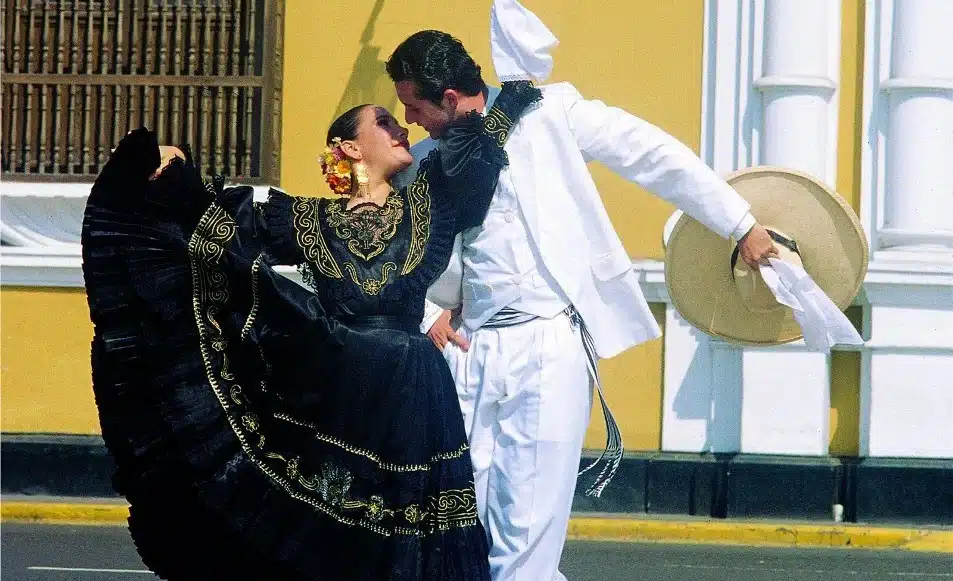
Marinera is a romantic dialogue between partners, danced freely rather than following a fixed choreography. It stands out for its agile, spontaneous style. Here, the woman flirts with intelligence and elegance, teasing but keeping her distance. Meanwhile, the man uses gallantry to match her steps and try to win her over, using his hat and handkerchief to play up the courtship.
Costumes are not one-size-fits-all; they vary by town (Moche, Huanchaco, Monsefú, Catacaos, among others), so each look tells a different story through its embroidery and textiles.
Origins of Marinera Norteña
This dance grew from a cultural crossroads where Spanish influence, Indigenous traditions, and African rhythms met. When it comes to its origins, two main perspectives stand out:
The Peru centered view
This view holds that the dance is purely Peruvian and traces back to the Zamacueca. Some say the original name may come from the Quechua word Zawani, meaning a dance of rest.
The Spanish influence view
It suggests Marinera draws inspiration from colonial era salon dances that everyday people adopted and adapted using local instruments.
Did you know…?
Before the war between Peru and Chile, this dance was known as La Chilena. After the War of the Pacific, Peru renamed it Marinera to honor the Peruvian Navy.
How Marinera Norteña is performed
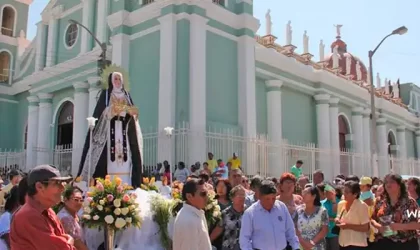
The dance centers on flirtation: the woman expresses affection, while the man courts, accompanies, and wins over his partner. You may also see the famous Peruvian Paso Horse included, when a mounted chalán (traditional horseman) makes the horse “dance,” aiming to impress his partner.
Costumes

For women
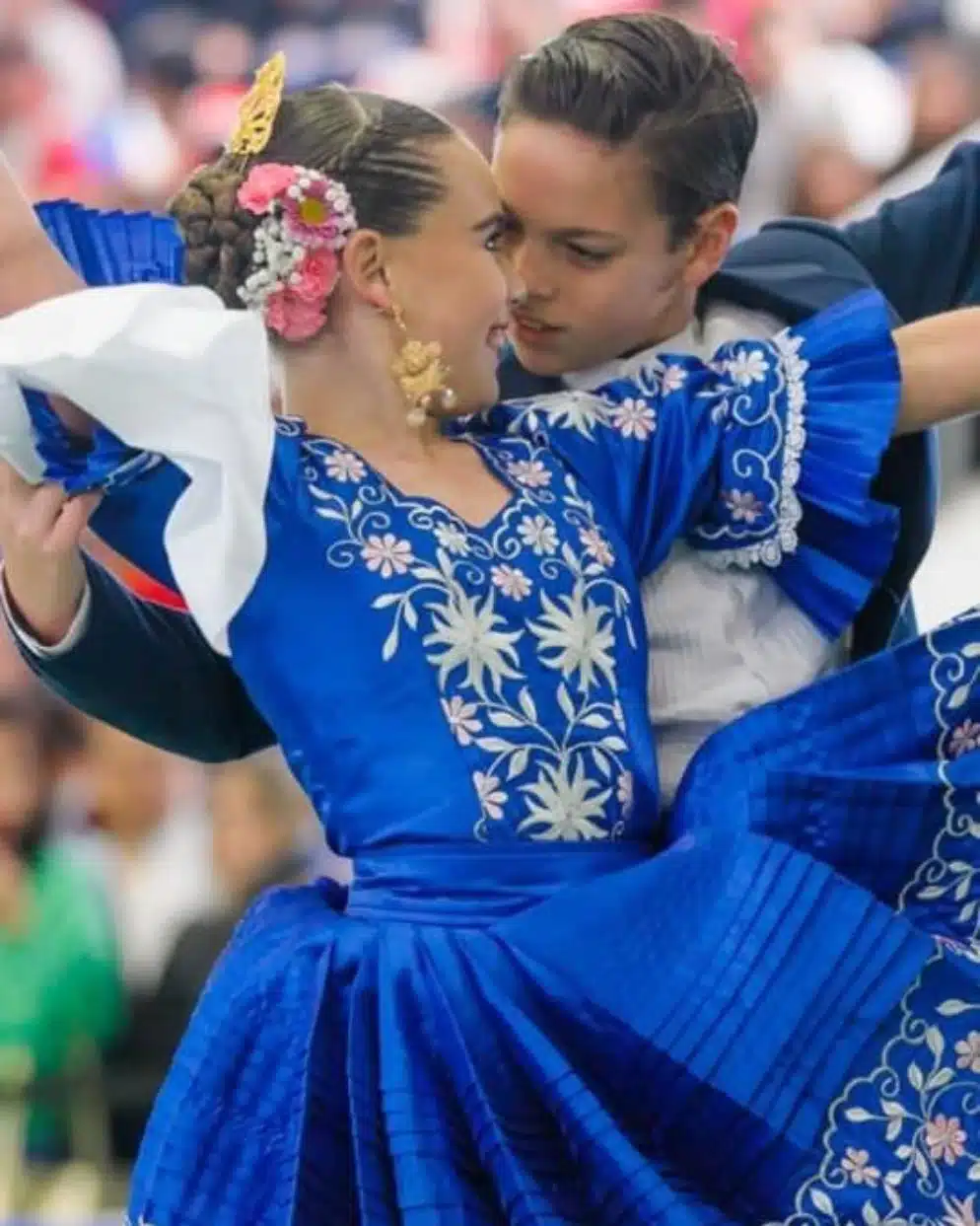
She wears a slip dress and a full skirt with ruffles that move with the music. Underneath, she layers petticoats (skirts that add volume) and a fitted sash. Accessories are essential: a white handkerchief, flowers in her hair, scapulars, gold or silver earrings (filigree), and the tembleque hair ornament.
For men
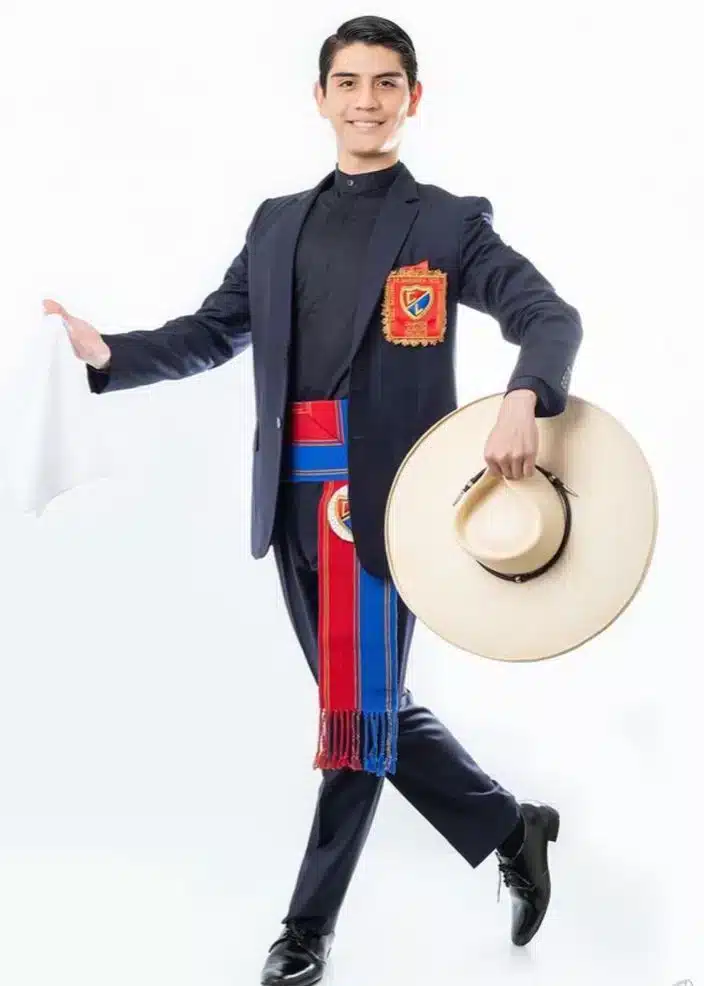
He wears the traditional outfit of a northern chalán: shirt and trousers (usually white or cream drill fabric), a waist sash, and the signature wide brim straw hat. Depending on the region or style, he may also wear a woven poncho.
Instruments
Unlike the Lima style marinera, which feels more like a ballroom dance and is played with guitar and cajón, the northern style is louder and more festive. A live band drives the music, led by wind instruments (trumpets, trombones, clarinets, tubas) and percussion (bass drum and snare), creating that unmistakable, high energy rhythm.

Types of Marinera
Marinera is a single dance that became a symbol of national identity, and over time it has developed into distinct, recognizable styles. All of them keep the same 6/8 rhythm. As for the structure of the dance, it includes the following parts: the invitation, the greeting, the face offs, and the breaks. This sequence varies in certain regions of Peru.
Marinera Norteña
This is the most playful, free, and energetic style of all. Here, the figure of the rural woman takes center stage: she dances barefoot, a point of local pride that shows her connection to the earth, whether the ground is rough or sun hot. The man, meanwhile, may wear shoes or go barefoot depending on whether he represents an urban figure or a rural one.
Marinera from Lima
This marinera is a salon dance: more elegant, measured, and far more restrained in its movements. The music feels intimate and complex, led by guitar, cajón, and hand claps. It relies on jarana singing (group vocals), where improvisation plays a vital role. It is a refined style that follows the rules of Creole tradition.
Marinera from the Highlands
Here, the highlands influence takes the lead. The style feels more melancholic and solemn, directly shaped by huayno (a musical tradition from Peru’s Andes). The rhythm often starts slower and more deliberate, but almost always shifts to a brighter, faster melody before the end. Each highland region (such as Ayacucho, Cajamarca, or Ancash) puts its own stamp on it, blending Spanish and Indigenous heritage through costumes and music.
Marinera with the Peruvian Paso Horse
In this version, the chalán not only guides his partner, but also his Peruvian Paso Horse. The horse has a unique lateral gait that lets it “dance” with elegance and keep time with the music alongside the barefoot dancer.

Types of Marinera costumes
The major event: the National Festival and Competition
The city of Trujillo (La Libertad) becomes the center of attention. Known as the “National Capital of Marinera,” the city hosts the year’s most important event, organized by the Club Libertad (since 1960). During those weeks, the National Competition takes over the Gran Chimú Coliseum, where couples of all ages and nationalities compete. Beyond the arena, you feel the celebration across the city with street parades and the traditional Peruvian Paso Horse competition.

Just like Marinera, Peru is home to many other dances that are just as colorful and joyful. If you want to discover more culture, take part in living traditions, and experience Peru’s celebratory spirit, we invite you to explore the country and soak up the magic that defines it. Whether you are researching where to stay on the Choquequirao trek or planning your calendar around festivals, all you need to do is contact us and we will find the best option for you.
Frequently asked questions…
What is Marinera Norteña, and why is it so representative of Peru?
What is the story of Marinera Norteña, and where does it come from?
Where can I watch Marinera Norteña live if I travel to Peru?
When is the best time to travel if I want to see the National Marinera Festival?
What makes Marinera Norteña different from the Lima and Highlands styles?
Why does the Marinera Norteña dancer perform barefoot?
What instruments are used in Marinera Norteña, and how does it sound compared with other styles?
What is Marinera with the Peruvian Paso Horse, and where can you see it?
Share:


If you liked this article and the information you found, give us 5 stars!
Table of Contents
Related blogs
Chinchero Textile Dyeing where ancient colors come to life
9 min of reading
Best Way to Get to Machu Picchu — Which Route Fits Your Trip?
11 min of reading