The Real Mountain Bike in Cusco, Discover the Andes on Two Wheels
Ultima actualización en 19 March, 2026 por Waman Adventures
Last Updated on 19 March, 2026 by Waman Adventures
- What Makes Cusco Different?
- Quick Seasonal Data
- Representative MTB Routes in Cusco
- How to Plan Without Mistakes
- When to Go?
- How to Get to Cusco?
- What to Bring Without Overcomplicating?
- Safety and Respect for the Territory
- Differences from Other MTB Destinations
- Recommended Operators
- Now It’s Time to Pedal in the Andes
-
Frequently Asked Questions
- What is the best time to go mountain biking in Cusco?
- Do I need previous experience to go mountain biking in Cusco?
- What equipment do I need for MTB trails in Cusco?
- How does altitude affect mountain biking in Cusco?
- How much does a mountain bike tour in Cusco cost?
- What’s the difference between Downhill and Enduro routes in Cusco?
- Is it safe to do mountain bike in Cusco on my own?
- What makes Waman Adventures and Peru Biking Tours sustainable operators?
If you’re thinking about diving into the world of mountain biking in Cusco, this destination will put you to the test from the first kilometer. Cusco sits at over 3,300 meters (10,800 feet) of altitude, so logistics involve acclimatizing, staying well-hydrated, and planning before riding hard. The routes mix Inca trails, dirt roads, and access to archaeological zones, so it’s wise to book ahead and check that your gear, helmet, and protective equipment are ready. It’s also important to understand local regulations and choose the dry season, between May and September, for safer pedaling.
Wondering how to get there and where to stay for stress-free riding? What’s the minimum technical level you need? What happens if the weather changes mid-route? In the body of this guide, you’ll find the essentials about access, safety, bookings, and general costs to plan with confidence. Keep reading and check the step-by-step breakdown before you decide.
What Makes Cusco Different?
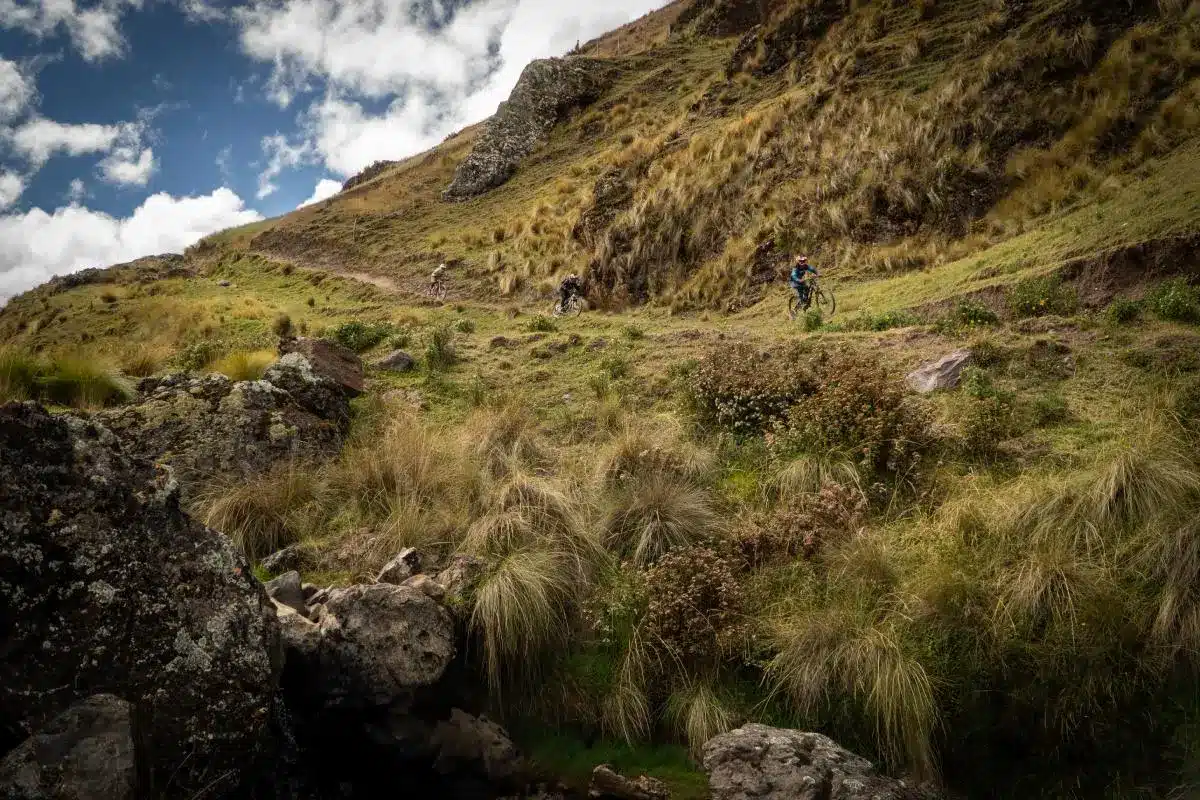
Cusco, the capital of what was once the Inca Empire, located in southern Peru, is world-renowned as the gateway to Machu Picchu. However, beyond its archaeological legacy, the region is gaining prominence as a high-altitude mountain biking destination. Its Andean geography, living Quechua communities, and network of historic trails make it a unique destination for those seeking an active, cultural, and scenic experience. The routes have existed for centuries and traverse vastly different ecosystems within just a few hours of pedaling. Cusco sits at approximately 3,350 meters (11,000 feet) altitude, and that factor shapes both the planning and the way you enjoy each descent.
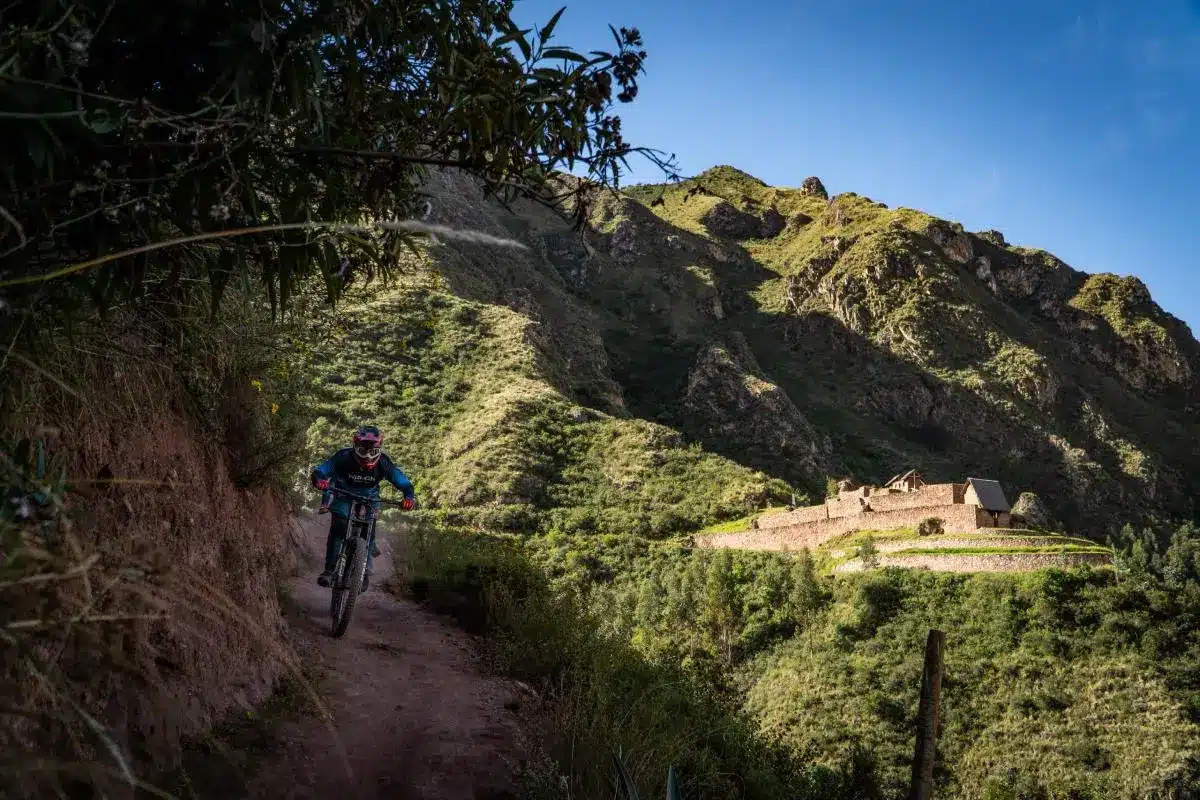
Unlike destinations where routes are built for tourists, mountain bike in Cusco means pedaling along paths still in use. These are mule trails, Inca cobblestones, active agricultural terraces, and villages where Quechua is part of daily life. There are no prefabricated structures. What does exist is real territory, tangible history, and communities that keep these paths alive. That combination of sport and living culture explains the steady growth of this activity in the Andes and its rugged geography.

Quick Seasonal Data
Cusco has two distinct seasons: dry and rainy. Below you’ll find an overview of the climate to help you plan your mountain bike in Cusco experience safely.
| Month | Climate | Average Temperature | Recommendation |
| May – October | Dry season, sunny days and cold mornings | Min. 37°F / Max. 70°F | Ideal time for all MTB routes |
| November – April | Rainy season, wet trails and variable weather | Min. 43°F / Max. 66°F | Avoid technical descents or long routes for safety |
Representative MTB Routes in Cusco
Cusco’s terrain offers a variety of routes that combine extreme landscapes, living culture, and technical adrenaline. Below, we present some of the most representative mountain bike trails in Cusco, recognized by local and international cyclists:
Lamay MTB Trail
High in the Sacred Valley mountains, this route begins near 4,300 meters (14,100 feet) and descends more than 2,100 meters (6,900 feet) through high-altitude lakes, eucalyptus forests, and ancient Andean canals. The route combines rock gardens, Inca staircases, and natural flow sections that thrill intermediate and advanced cyclists. During the descent, you’ll pass through the Sapacto community, spot llamas, and learn about the ancestral use of water in agricultural terraces. The arrival in Lamay village concludes the experience with views of the river and valley—a perfect finish for those seeking technical challenge and scenery.
- Duration: 3 to 4 hours
- Difficulty level: Advanced
- Min/Max altitude: 9,680 ft / 14,100 ft
Perolniyoc & The Other Side Trails
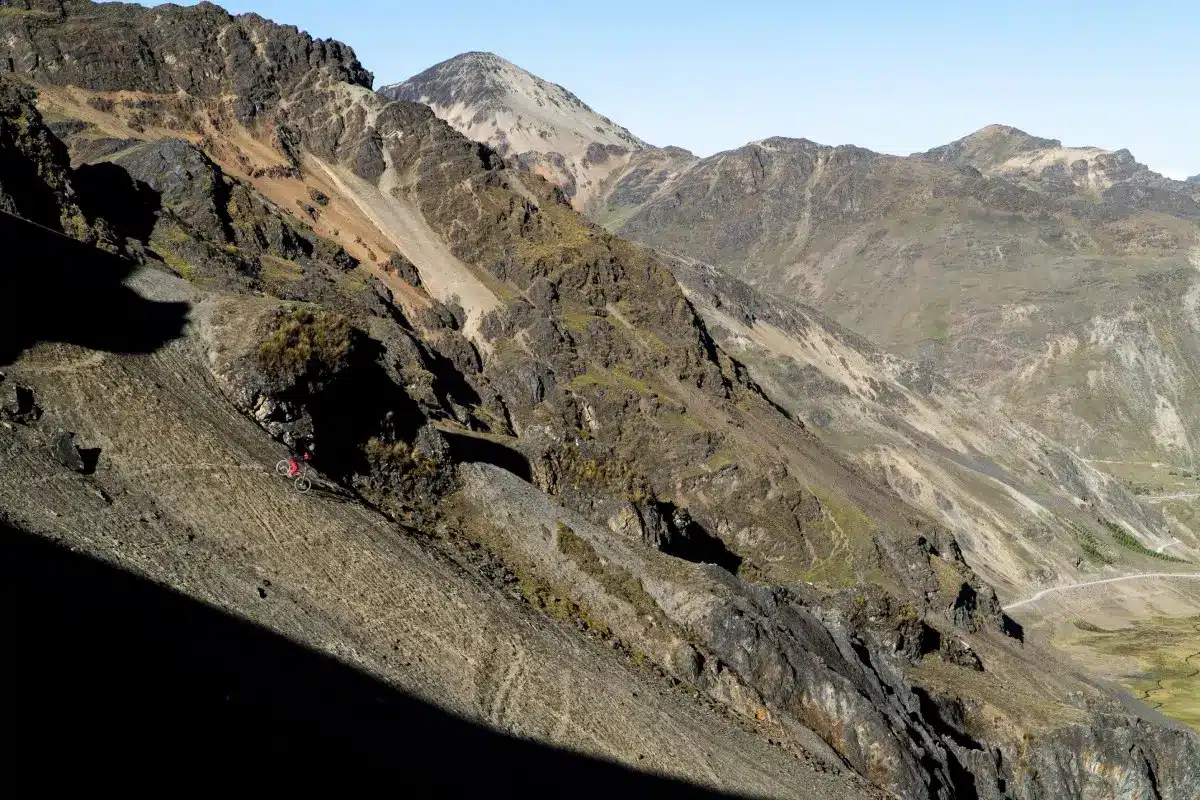
This full-day adventure fuses two legendary Sacred Valley descents. First, “The Other Side” starts from approximately 4,061 meters (13,323 feet) and drops down ancient trails. Then, at Perolniyoc, you pedal alongside waterfalls and tackle stone Inca staircases, natural jumps, and narrow sections that brush past traditional villages. The day ends beside the Huarocondo River, with a symbolic toast to achievement and Andean nature.
- Duration: 4 to 5 hours
- Difficulty level: Intermediate – Advanced
- Min/Max altitude: 9,186 ft / 13,780 ft

Yuncaypata & Huayllarcocha
Very close to the city center, this route lets you descend toward Huayllarcocha along rural roads, eucalyptus forests, and smooth curves. The trail combines sections of compact dirt with excellent views over Cusco city. Ideal for your first day before tackling the more demanding descents of the Andean terrain.
- Duration: 2 to 3 hours
- Difficulty level: Beginner – Intermediate
- Min/Max altitude: 10,827 ft / 12,795 ft

Maras Downhill MTB
Designed for those who want to mix culture and adrenaline, this route offers two descents totaling nearly 1,780 meters (5,840 feet) of accumulated drop. The first crosses viewpoints at 3,770 meters (12,370 feet) and Inca terraces down to ancient salt mines, while the second challenges you with loose rock, natural berms, and active water crossings. Views of the Maras salt system and Urubamba canyon accompany every pedal stroke. It’s designed for intermediate level but not without technical challenge.
- Duration: 3 hours
- Difficulty level: Intermediate
- Min/Max altitude: 9,350 ft / 12,467 ft
Lamay Enduro MTB Tour
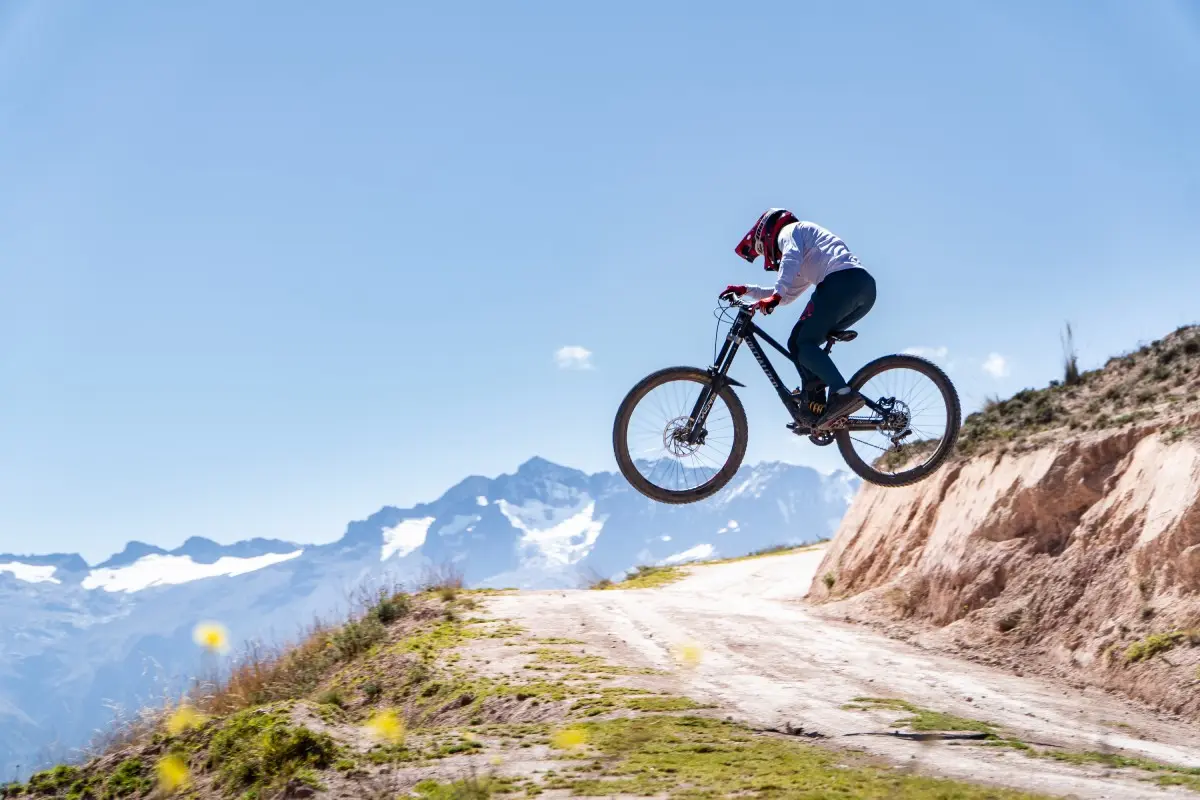
Another Lamay variant oriented toward gravity riding. This route starts above 4,300 meters (14,100 feet) and drops to 2,950 meters (9,678 feet), covering 20.8 km of technical trails, rock gardens, Inca staircases, and eucalyptus forests. Ideal for experienced cyclists who want immersion combining speed, living culture, and high-Andean landscape. The Huama to Lamay section is especially fluid, with that “continuous descent” sensation culminating in the valley.
- Duration: 4 hours
- Difficulty level: Advanced
- Min/Max altitude: 9,514 ft / 13,780 ft

Lomo Fino & El Brujo
This full-day tour serves as an epic finale to your cycling trip. From high routes to temperate zones in one jump, it combines technical drops, speed lines, open viewpoints, and forest sections. It includes those “infinite flow” moments you recognize in mountains like those south of Cusco. Ideal for those who’ve already acclimatized and want to close with an adrenaline rush.
- Duration: 6 to 7 hours (Full Day)
- Difficulty level: Intermediate – Advanced
- Min/Max altitude: 9,350 ft / 13,451 ft
Lares Inca Trail MTB
A route for those who love mountains, history, and physical challenge. It crosses high passes, Quechua communities, and Andean lakes, among alpacas and ancient trails. From 4,400 meters (14,436 feet) maximum down to tranquil valleys, this experience requires good physical condition, descent technique, and environmental awareness. A setting where sport becomes connection with geography and culture.
- Duration: 6 hours approx.
- Difficulty level: Advanced
- Min/Max altitude: 9,186 ft / 14,436 ft
How to Plan Without Mistakes
Cusco sits at around 3,399 meters or 11,150 feet. For those arriving from sea level, it’s recommended to reserve at least two easy days for acclimatization before riding intensely. Common symptoms of altitude sickness include mild headache, fatigue, and rapid breathing. In these cases, resting or descending in altitude is most effective.
High-Altitude Safety Tips
- Avoid riding alone on remote routes or areas with limited signal.
- Use a full-face helmet if doing technical descents.
- Hydrate constantly and carry electrolytes.
- Check brakes, tire pressure, and suspension before heading out.
- Avoid riding during electrical storms or heavy rain.
- Notify your guide or accommodation of your route and estimated return time.

When to Go?
The dry season (May to October) concentrates most tourism and mountain biking in Cusco. July and August are cold but offer the most stable weather for pedaling. During the rainy season (December to March), outings are often slowed down, modified, or canceled for safety reasons.
Quick Seasonal Data
| Month | Climate | MTB Recommendation |
| May – October | Dry, cold mornings and sunny midday | Best time: open routes, stable weather |
| November – April | Rainy, slippery sections and less predictable | Avoid technical descents for safety |
How to Get to Cusco?
Most international travelers land in Lima and then take a domestic flight of approximately 1 hour and 20 minutes to Alejandro Velasco Astete International Airport in Cusco. This airport is located within Cusco city, just minutes from the historic center, making it easy to quickly transfer to your hotel or tour agency upon arrival. From there, the starting point for mountain bike routes or more distant excursions can be between 30 minutes and 2 hours by road, depending on which valley or area you’ve chosen.
When planning your arrival, keep in mind that flights can depend heavily on weather: the airport is at high altitude and surrounded by mountains, which sometimes causes delays. For this reason, if you arrive late, it’s a good idea to plan for a night in Cusco before starting activities.
What to Bring Without Overcomplicating?
For your experience to be smooth from day one, it’s wise to pack with mountain, altitude, and variable weather in mind. You don’t need to bring your own bike—many operators in the region rent or include well-maintained full-suspension bikes and basic safety gear. This lets you travel light and focus on enjoying rather than hauling equipment.
As for clothing, the most practical approach is a layering system you can easily adapt. In the morning, when you’re above 3,000 meters (9,800 feet), the cold can have a strong effect; by midday, heat can raise the temperature noticeably. Bring a warm layer for afternoons and evenings, a lightweight rain jacket in case of drizzle or wind, and clothes that breathe well.
Personal protection is also key: helmet, ideally full-face if you’re tackling technical routes, knee pads, elbow pads, gloves, and UV-protective eyewear. And don’t forget sun protection: SPF 50+ sunscreen and lip balm will prevent the high-altitude sun from catching you off guard. Finally, bring a hydration pack or at least bottle cages: altitude and the effort of mountain biking demand that you stay well-hydrated to perform and enjoy.
Safety and Respect for the Territory
The routes cross communal lands and active agricultural zones. Going with a local guide avoids access conflicts and ensures a safe experience. This also applies to heritage sites like Moray or Maras, where there are designated areas for visitors and work zones that must be respected.
Operators like Peru Biking Tours work directly with communities and local guides who balance technical adrenaline with cultural respect.

Differences from Other MTB Destinations
Many mountain biking centers worldwide depend on designed tracks and mechanical lifts. Cusco stands out because its routes traverse living territory with Inca elements, farmland, terraces, ravines, and villages. There’s no closed-circuit feel, but rather geographic and cultural continuity immersed within your chosen adventure. That combination, added to operating altitudes between 2,800 and 4,400 meters (9,186–14,436 feet), places Cusco in another category compared to more conventional destinations.
Recommended Operators
When choosing your mountain bike operator in Cusco, look for companies that work with local guides, promote respect for communities, and minimize environmental impact. Waman Adventures and its division Peru Biking Tours stand out for their commitment to responsible tourism, constant guide training, and direct collaboration with Andean communities. Every outing operates under principles of safety, sustainability, and cultural authenticity.
Before booking, make sure the operator:
- Includes basic accident insurance and first-aid kit.
- Has communal or municipal permits to operate.
- Performs regular bike maintenance.
- Promotes fair economic compensation for guides and local communities.

Now It’s Time to Pedal in the Andes
Cusco is a powerful setting for mountain biking. The routes cross changing landscapes, traverse living communities, and reveal geography best understood on two wheels. Altitude demands preparation but also enables unique experiences: authentic trails, history on the ground, and open nature.
For operational details, available dates, and guided departures, you can consult Peru Biking Tours, a specialized MTB operator in the region.
Frequently Asked Questions
What is the best time to go mountain biking in Cusco?
Do I need previous experience to go mountain biking in Cusco?
What equipment do I need for MTB trails in Cusco?
How does altitude affect mountain biking in Cusco?
How much does a mountain bike tour in Cusco cost?
What’s the difference between Downhill and Enduro routes in Cusco?
Is it safe to do mountain bike in Cusco on my own?
What makes Waman Adventures and Peru Biking Tours sustainable operators?
Share:



Related tours you might be interested in
Enjoy unique experiences in Cusco and Machu Picchu with the peace of mind that comes from working with a local travel agency

Tour to Chinchero, Maras & Moray – Private Service
Discover with us this beautiful, charming and historic places, where we will visit the enigmatic...

2-Day Trip to Machu Picchu from Cusco with Machu Picchu Mountain
LIVE A UNIQUE EXPERIENCE EXPLORING THE BREATHTAKING LANDSCAPES ON A 2-DAY JOURNEY TO MACHU PICCHU...
6-Day Tour Cusco, Sacred Valley, Machu Picchu and Rainbow Mountain
EXPERIENCE THE MAJESTY OF THE INCAS: SACRED VALLEY, MACHU PICCHU & RAINBOW MOUNTAIN IN ONE TRIP If...

6 Day Andean Adventures Tour│With Flights from Chile
ENJOY THE BEST OF CUSCO CITY – MUST VISIT DESTINATIONS ARE WAITING FOR YOU! Want to explore Cusco...
If you liked this article and the information you found, give us 5 stars!
Table of Contents
Related blogs

ESSENTIAL INFORMATION ABOUT HOW TO PREPARE FOR CHOQUEQUIRAO TREK
9 min of reading