Lares Trek vs Inca Trail Differences, Altitude and Difficulty
Ultima actualización en 27 September, 2026 por Jhon Quispe
Last Updated on 27 September, 2026 by Jhon Quispe
Lares Trek or Inca Trail, which should you choose?
Choose the Lares Trek if you value high-Andean communities, quieter mountain scenery and more flexible trekking logistics. Choose the Classic Inca Trail if your priority is Inca archaeology, original stone paths and reaching Machu Picchu on foot through the Sun Gate. Waman’s current four-day Lares route hikes about 19.3 mi (31 km) and reaches 15,846 ft (4,830 m), while the four-day Classic Inca Trail covers about 27 mi (43 km) and reaches 13,828 ft (4,215 m).
- Lares Trek vs Inca Trail at a glance
- The main differences between Lares Trek and the Inca Trail
- Altitude and difficulty on Lares Trek vs Inca Trail
- Distance and duration
- Permits, availability and crowds
- Best time to hike Lares Trek or Inca Trail
- Which trek fits your travel style?
- Plan the Machu Picchu trek that fits your trip
-
Frequently asked questions about Lares Trek vs Inca Trail
- Is Lares Trek harder than the Inca Trail?
- How high is the Lares Trek compared with the Inca Trail?
- Does the Lares Trek require an Inca Trail permit?
- Can you hike Lares Trek or the Inca Trail in February?
- Does the Lares Trek arrive at Machu Picchu on foot?
- Which route is less crowded, Lares Trek or Inca Trail?
- Is there a shorter alternative to the Classic Inca Trail?
The biggest difference is not simply which trek is harder. Lares climbs higher but has a shorter hiking distance, while the Classic Inca Trail is longer, more regulated and includes sustained stone stairways, mountain passes and archaeological sites before entering Machu Picchu on foot.

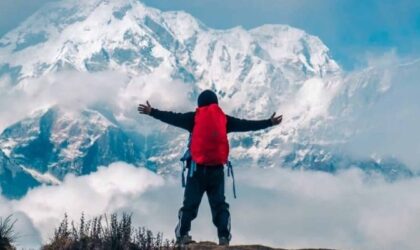
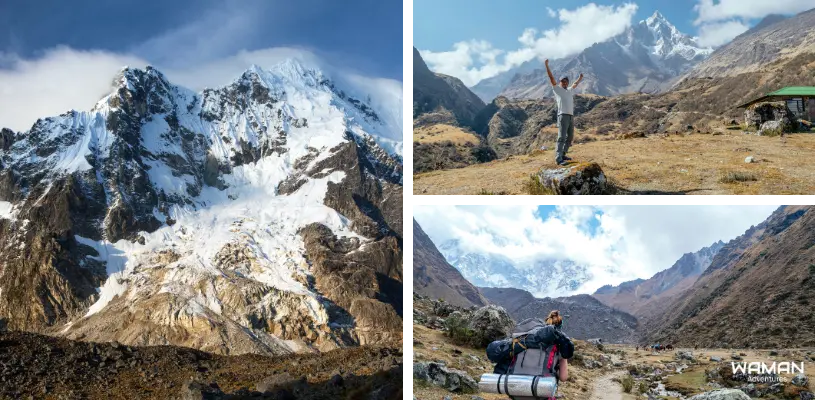
Lares combines high-altitude trekking with living Andean communities.
Lares Trek vs Inca Trail at a glance
| Comparison | Lares Trek 4 Days | Classic Inca Trail 4 Days |
| Hiking distance | About 19.3 mi (31 km) | About 27 mi (43 km) |
| Highest point | Sicllakasa Pass at 15,846 ft (4,830 m) | Warmiwañusca Pass at 13,828 ft (4,215 m) |
| Main experience | High-Andean communities, mountain scenery and Lares hot springs | Inca archaeology, original stone trail and changing ecosystems |
| Machu Picchu connection | Trek ends in the Lares region, then road and train to Machu Picchu Pueblo | Trail continues on foot to Machu Picchu through Inti Punku |
| Permit system | No Inca Trail permit for the Lares hiking route; Machu Picchu admission is still required | Official Inca Trail permit required through an authorized operator |
| February | Not subject to the Inca Trail’s scheduled annual closure, although weather can affect conditions | Closed throughout February for annual conservation and maintenance |
| Difficulty profile | Higher altitude, cold high-Andean terrain and consecutive hiking days | Longer distance, repeated ascents and descents, stone stairs and multiple passes |
The main differences between Lares Trek and the Inca Trail
Both routes combine multi-day trekking with a Machu Picchu visit, but they create very different travel experiences. The Lares route spends more time in high-Andean landscapes and communities, while the Classic Inca Trail follows a protected archaeological corridor that leads directly to Machu Picchu.
Cultural experience and archaeological sites
The Lares Trek places more emphasis on the living Andean landscape. Waman’s current four-day route crosses areas such as Pumahuanca, Puyoc, Cuncani and Lares, where the itinerary passes through mountain communities and agricultural zones before continuing toward Ollantaytambo and Machu Picchu Pueblo.
The Classic Inca Trail is more archaeology-centered. Its route passes sites such as Patallacta, Runkurakay, Sayacmarca, Phuyupatamarca and Wiñay Wayna before approaching Machu Picchu through Inti Punku, or the Sun Gate.

The Inca Trail links archaeology, stone paths and mountain ecosystems.
Landscapes and ecosystems
Lares is dominated by high-Andean terrain, open valleys, puna grasslands, lagoons and mountain passes. The route’s cultural landscape is part of the experience because trekking areas remain connected with rural communities and traditional agricultural zones.
The Inca Trail changes more dramatically in vegetation as elevation drops toward Machu Picchu. Trekkers move from high Andean environments into cloud forest, with denser vegetation around later sections of the route.

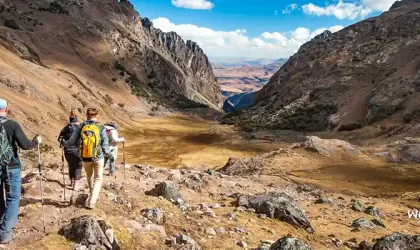
Some landscapes at some Inca Trail’s points.
How each route reaches Machu Picchu
This is one of the most important practical differences. The standard four-day Lares Trek does not hike continuously into Machu Picchu. Waman’s trekking section ends in the Lares region on Day 3, followed by road transportation to Ollantaytambo and a train to Machu Picchu Pueblo. The archaeological visit takes place on Day 4.
The Classic Inca Trail remains a walking route all the way to Machu Picchu. On the final morning, hikers continue from Wiñay Wayna toward Inti Punku and then descend into the archaeological area.
Altitude and difficulty on Lares Trek vs Inca Trail
Altitude is one of the strongest differences between these routes. The current four-day Lares itinerary reaches 15,846 ft (4,830 m) at Sicllakasa Pass, while the Classic Inca Trail reaches 13,828 ft (4,215 m) at Warmiwañusca, also known as Dead Woman’s Pass. Lares therefore climbs about 2,018 ft (615 m) higher.

Sicllakasa is the highest point on Waman’s four-day Lares route.
Which trek feels harder?
There is no single difficulty answer that applies to every traveler. Lares places more emphasis on altitude exposure, especially around Sicllakasa Pass, while the Classic Inca Trail combines a longer total distance with repeated climbs, descents and long stone staircases. A traveler who handles elevation well may find Lares more manageable, while someone sensitive to very high altitude may feel the opposite.

Dead Woman’s Pass is the Classic Inca Trail’s highest point.
For either trek, preparation should include regular hill or stair walking, cardiovascular endurance, leg strength and enough time to adjust to Cusco’s elevation before beginning a multi-day route.
Distance and duration
The current Waman Lares Trek 4 Days includes about 19.3 mi (31 km) of hiking across Days 1 to 3. Day 4 is primarily the Machu Picchu visit rather than part of that trekking mileage.
The Classic Inca Trail 4 Days covers approximately 27 mi (43 km). The route is longer because the walking continues through the archaeological corridor and finishes at Machu Picchu rather than connecting to the destination by road and train.
| Route | Approx. hiking distance | Highest point | Where the trekking section ends |
| Lares Trek 4D/3N | 19.3 mi (31 km) | 15,846 ft (4,830 m) | Lares region, followed by road and train |
| Classic Inca Trail 4D/3N | About 27 mi (43 km) | 13,828 ft (4,215 m) | Machu Picchu via Inti Punku |

The altitude is lower than the Lares Trek, so you will enjoy other ecosystems.
Permits, availability and crowds
The Classic Inca Trail has stricter access rules. Entry must be arranged through an authorized operator, and the official daily capacity is limited to 500 people, including visitors, guides and support staff. Peru’s official tourism inventory also confirms the annual February closure. This makes fixed-date availability one of the most important differences when planning the Inca Trail.
The Lares route itself does not use the regulated Inca Trail permit system, so the trekking portion normally has more booking flexibility. The complete trip still depends on Machu Picchu admission, train space, accommodation and transportation, so Lares should not be treated as having unlimited availability.
Keep this in mind:
The Classic Inca Trail is closed throughout February for annual conservation and maintenance. The Lares route does not follow the same scheduled closure, but rain, road access and trail conditions can still affect departures.
Best time to hike Lares Trek or Inca Trail
For both routes, the drier part of the year generally provides more predictable trekking conditions. April through October is commonly used as the main planning window, although clear days, rain, cold nights and mountain weather can occur outside neat seasonal boundaries.
The key difference is February. The regulated Inca Trail network closes for annual maintenance, while the Lares route is not part of that same closure. Travelers considering Lares during wetter months should still plan for mud, rain and changing high-altitude conditions.

The Lares hot springs mark the transition from the trekking section toward Ollantaytambo and Machu Picchu Pueblo.
Which trek fits your travel style?
The strongest choice depends on what you want the trek itself to contribute to your Machu Picchu trip.
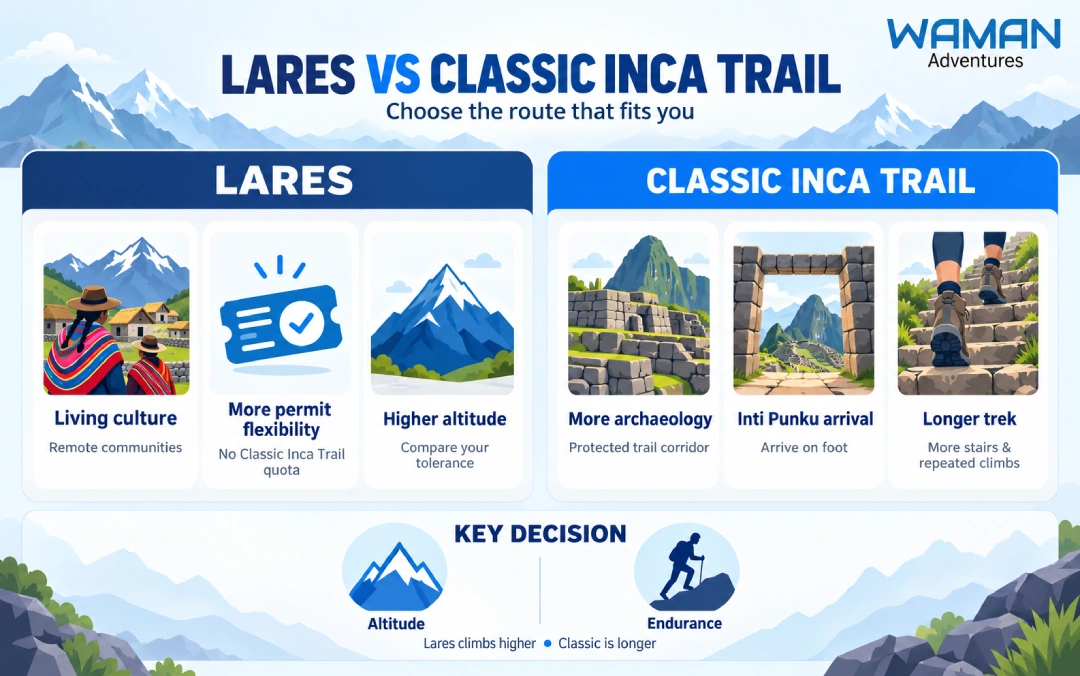
If you want elements of both experiences, the Lares Trek and Short Inca Trail 5D/4N combines the high-Andean Lares experience with a section of the regulated Inca Trail.
Plan the Machu Picchu trek that fits your trip
If the Lares route matches your preference for Andean communities, high passes and a more flexible trekking route, review the 4 Day Lares Trek to Machu Picchu. If archaeology, stone pathways and arriving at Machu Picchu on foot matter more, compare the 4 Day Classic Inca Trail.
Frequently asked questions about Lares Trek vs Inca Trail
Is Lares Trek harder than the Inca Trail?
Not in every way. Lares reaches a higher point at about 15,846 ft (4,830 m), while the Classic Inca Trail is longer and includes repeated stone staircases, ascents and descents. Which feels harder depends largely on how you respond to altitude and sustained hiking.
How high is the Lares Trek compared with the Inca Trail?
Waman’s current four-day Lares route reaches about 15,846 ft (4,830 m) at Sicllakasa Pass. The Classic Inca Trail reaches about 13,828 ft (4,215 m) at Warmiwañusca Pass, so Lares climbs approximately 2,018 ft (615 m) higher.
Does the Lares Trek require an Inca Trail permit?
No. The Lares hiking route does not use the regulated Inca Trail permit system. A complete Lares-to-Machu-Picchu itinerary still requires Machu Picchu admission and coordinated transportation, including the train connection used after the trek.
Can you hike Lares Trek or the Inca Trail in February?
The Classic Inca Trail is closed throughout February for annual conservation and maintenance. The Lares route is not subject to that same scheduled closure, but February falls within the wetter period and weather can affect trail and road conditions.
Does the Lares Trek arrive at Machu Picchu on foot?
Not on Waman’s standard four-day itinerary. The hiking section ends in the Lares region, after which travelers continue by road to Ollantaytambo and by train to Machu Picchu Pueblo before visiting Machu Picchu on Day 4.
Which route is less crowded, Lares Trek or Inca Trail?
Lares generally offers a quieter trekking environment because it is not part of the regulated Classic Inca Trail corridor. The Inca Trail has controlled daily access, but hikers share the same protected route, camps and archaeological sequence.
Is there a shorter alternative to the Classic Inca Trail?
Yes. The Short Inca Trail is a two-day option that covers a shorter section of the Inca route and still approaches Machu Picchu through the protected trail network. Travelers who want Lares plus an Inca Trail section can also consider the five-day Lares Trek and Short Inca Trail combination.
Share:



Related tours you might be interested in
Enjoy unique experiences in Cusco and Machu Picchu with the peace of mind that comes from working with a local travel agency

Choquequirao to Machu Picchu Trek 7 Days | Private Service
The most epic and challenging adventure awaits! Dare to push your limits and embark on the ultimate...

Choquequirao Hike 4D/3N
EXPLORE THE CHOQUEQUIRAO ARCHAEOLOGICAL PARK. THIS ADVENTURE AWAITS! If you are an adventure...

4 days Huchuy Qosqo and Short Inca Trail
EXPLORE THE ANCESTRAL MAGIC OF HUCHUY QOSQO AND THE INCA TRAIL TO MACHU PICCHU! Embark on an...

Inca Jungle Machu Picchu and Rainbow Mountain 07 Days
The most adventurous tour in Cusco, explore the green jungle and contrast with the natural rainbow!...
If you liked this article and the information you found, give us 5 stars!
Table of Contents
Related blogs
Get Inspired by 30 Short Inca Trail Facts for Your Next Adventure!
20 min of reading
MACHU PICCHU TRAVEL GUIDE: ROUTES, TIPS AND RECOMMENDATIONS
37 min of reading