+51 979858544

info@wamanadventures.com

+51 979858544

Backlinks SEO

Redes Sociales

  • Español
  • English

Waman Adventures

Waman Adventures
Esta laguna de Chinchero es uno de los principales atractivos del lugar.

5 Reasons Why Chinchero Cusco Will Transform Your Journey to Machu Picchu

5 Reasons Why Chinchero Cusco Will Transform Your Journey to Machu Picchu

Leandra
26 April, 2025
⏱ 6 min of reading
Ultima actualización en 26 April, 2025 por Waman Adventures
Last Updated on 26 April, 2025 by Waman Adventures

Chinchero Cusco is a small town in the Sacred Valley, about 28 kilometers (17 mi) from Cusco. This place is renowned for its natural beauty as well as its historical and cultural importance.

Visiting Chinchero Cusco before heading to Machu Picchu lets you dive deeper into the Inca legacy. Because it was a key hub of the empire, it remains essential for understanding the history and traditions of the wider Chinchero district and the entire Cusco region.

Historical Significance

The main square of Chinchero district offering a peaceful atmosphere.

Photo by: @solortizdezev
Relax and enjoy a slow-paced afternoon at Chinchero’s picturesque plaza.

This district of Chinchero Cusco held great importance for the Inca Empire. Here they built an extensive archaeological complex that includes agricultural terraces, a temple, and a central plaza.

Chinchero was also a vital warehouse and redistribution center for produce in the Sacred Valley. The colonial church in the heart of town rises atop an Inca temple foundation, showing the blend of Indigenous and Spanish cultures over the centuries.

Andean Textile Tradition

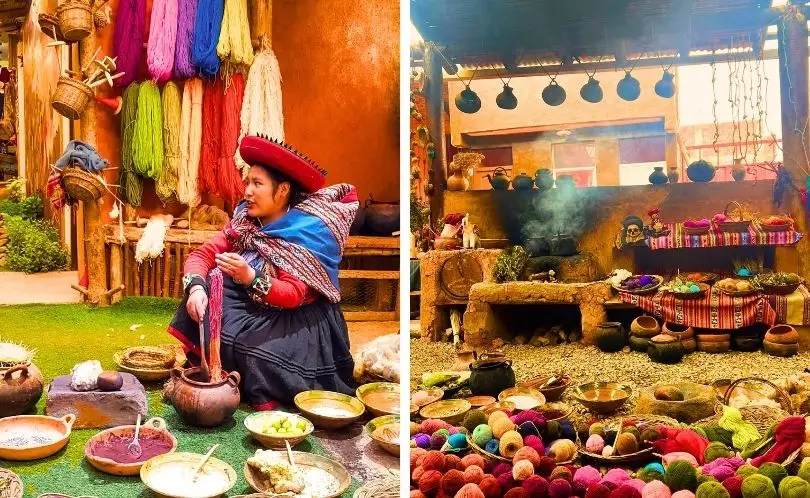
One of the biggest draws in Chinchero Cusco is its living textile tradition. Local families still weave garments with ancestral techniques that date back to Inca times.

You can watch how natural dyes, from plants, insects, and minerals, create vibrant yarns. Visitors see each step, from spinning alpaca wool to the final weave, and can purchase authentic hand-made pieces from Chinchero weavers.

Chinchero artisans demonstrating traditional weaving techniques in Chinchero.

Photos by: @p9olo24 @davidmarte2
Witness ancestral weaving practices passed down through generations.


  • Traditional fabrics: hand-made clothing and accessories such as ponchos, blankets, shawls, and scarves created with age-old methods.

  • Alpaca and sheep wool: high-quality pieces, sweaters, throws, rugs, made from these prized fibers.

  • Natural colors: textiles dyed with plants, insects, and mineral pigments.

  • Blankets and tapestries: decorative weavings featuring traditional motifs.

  • Hand embroidery: detailed needlework embellishing hats, bags, and more.

  • Ceremonial wear: garments used for festivals, including the iconic chullo hat.

  • Artisanal accessories: hand-crafted purses, totes, and backpacks.

  • Cloth and canvas: raw materials for countless weaving projects.

Textile Centers in Chinchero

Vibrant Traditional Market

The colorful fabrics and artisan crafts of Chinchero’s vibrant market.

Photo by: @davidmarte2 @guiamachupicchu
Dive into a lively market filled with handwoven textiles and local crafts.

The Chinchero market, best known as the Chinchero Sunday Market, is one of the most authentic experiences in the Sacred Valley. Held every Sunday, it bursts with local products, from textiles to fresh fruit and vegetables.

Did you know…?

It’s a perfect place to meet locals, learn about their way of life, and pick up genuine keepsakes. Age-old barter traditions still take place between residents and visitors.

  • Hand-woven textiles: ponchos, blankets, shawls, and more, crafted with ancestral techniques.
  • Traditional attire: garments such as chullos, hats, and Andean skirts.
  • Fresh produce: local fruit, vegetables, tubers, and herbs.
  • Ceramic goods: hand-made pottery and utensils.
  • Typical food: local dishes and snacks such as empanadas and traditional bread.
  • Medicinal herbs: plants and natural remedies used in Andean medicine.
  • Wood crafts: carved figurines and utensils.
  • Yarns and wool: alpaca and sheep fibers, both raw and dyed.
  • Leather goods: shoes, belts, and backpacks made by hand.

Impressive Colonial Architecture

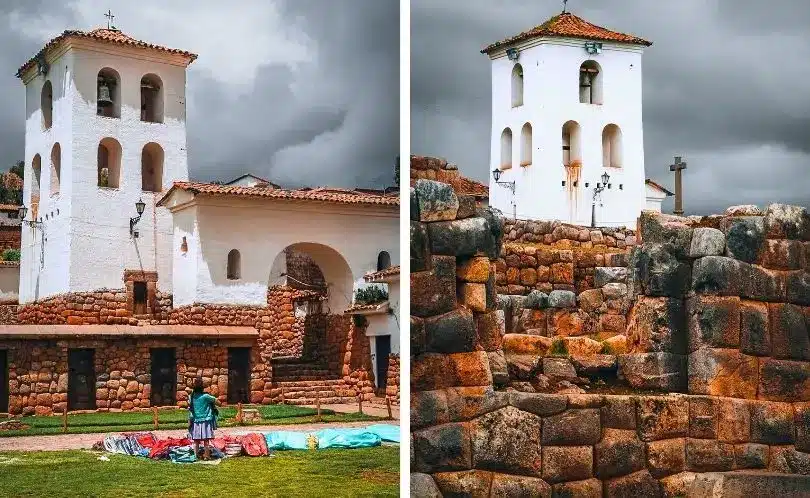
The colonial church of Chinchero blends Spanish and Inca traditions.

Photo by: @dantejavier.qp
Visit the historic church built over Inca foundations, symbolizing a fusion of eras.

The church of Chinchero, dedicated to the Virgin of the Nativity, is a fascinating example of Spanish colonial architecture built atop Inca temple foundations. Its façade is made of andesite stone, and its interior altars reveal strong colonial influences.

Did you know…?

Several colonial buildings around the church retain the style of that era, creating a unified historical landscape.

Stunning Natural Scenery

Panoramic view of Laguna de Piuray, a main attraction in Chinchero.

Photo by: @jose.peru.tours
Spend a relaxing day by the refreshing waters of Piuray Lagoon.

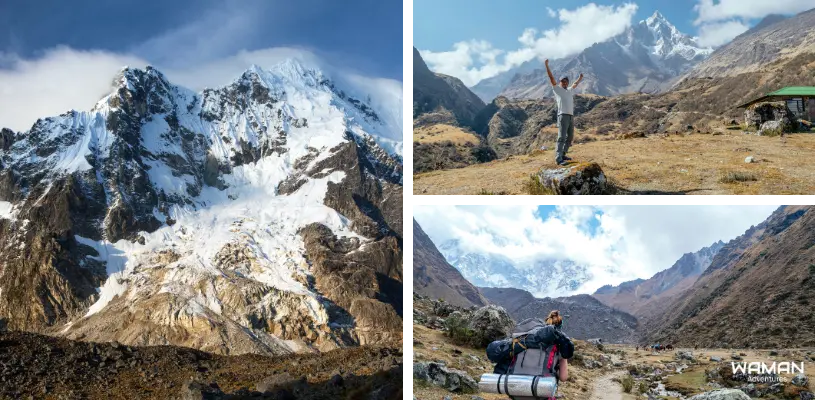
Chinchero Cusco also boasts spectacular natural scenery. Snow-capped peaks, terraced fields, and sweeping Sacred Valley views highlight the deep bond between the community and its environment.

Did you know…?

The contrast between the agricultural terraces and nearby lakes is perfect for travelers seeking an immersive nature experience.

Archaeological Sites to Visit in Chinchero

  • Chinchero ruins: the main attraction includes terraces, walls, and other Inca structures, plus the plaza and the Temple of the Virgin of the Nativity built atop an Inca shrine.

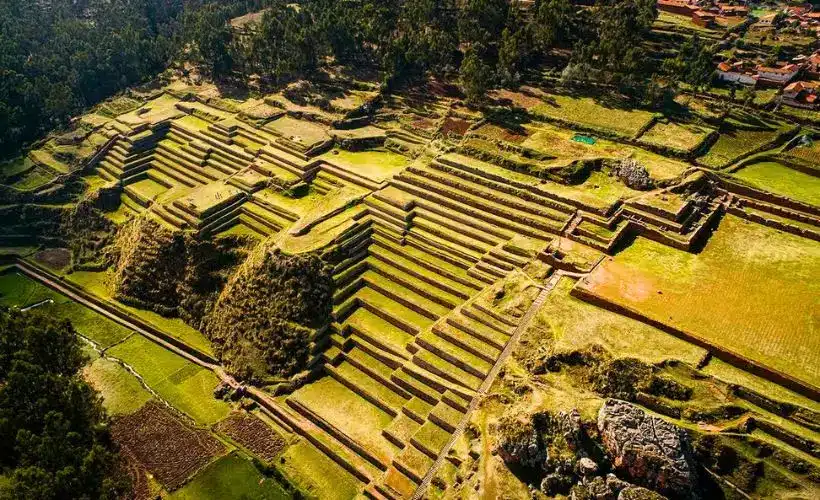
  • Chinchero terraces: hillside agricultural platforms once used to grow diverse crops, an impressive feat of Inca engineering.

  • Chinchero church: though technically colonial, this building atop an Inca temple holds enormous historical value and showcases the blend of two cultures.

  • Lake Piuray: prized for its beauty and historical role. During Inca times, it supplied water to Chinchero’s terraces.

Ancient Inca terraces form a breathtaking landscape in Chinchero’s highlands.

Photo by: @qhapaqnanperu
Marvel at the Inca civilization’s agricultural mastery carved into the hillsides.

Visitor Information

How to Get There

Chinchero is only 28 kilometers (17 mi) from Cusco, making it perfect for a day trip. You can reach it by bus or taxi in about 45 minutes. For those wondering how to get to Chinchero from Cusco, guided tours are also common and convenient.

Many agencies combine Chinchero with a tour Maras Moray Chinchero route, taking you straight to highlights like the plaza, market, temple, and surrounding terraces.

Best Time to Visit Chinchero Cusco

The dry season, from April to October, is ideal for exploring the archaeological site and enjoying the views.

The low season (November to March) is quieter and less crowded, though you may encounter occasional rain.
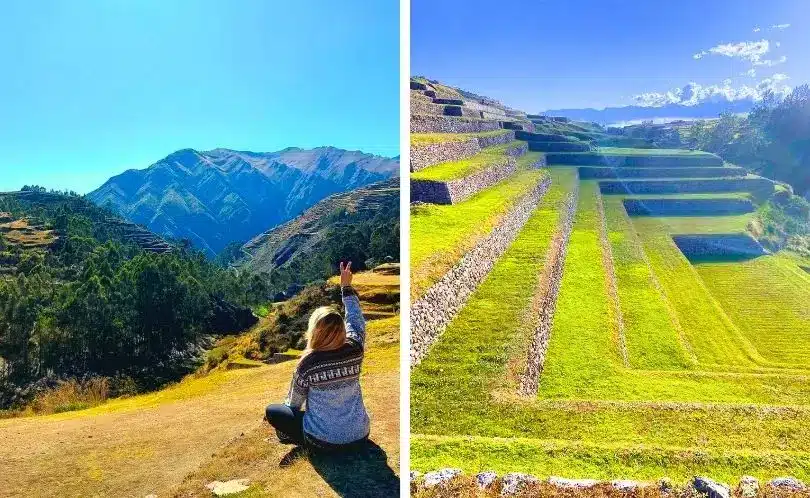
Panoramic view of Chinchero Cusco town with the Andean mountains behind.

Photos by: @lucarranza13 @toni_girones
Walk through cobbled streets and admire the mountain scenery in Chinchero.

What to Bring

Pack comfortable, lightweight clothing plus a jacket, temperatures shift quickly. Given Chinchero’s altitude of about 3,700 meters (12,140 ft), sunscreen, sunglasses, and a hat are essential.

Carry water and sturdy walking shoes because some areas of the site can be slippery.

With its fascinating history, vibrant textiles, and lively markets, Chinchero Cusco is a must-see where Inca and colonial cultures meet. If you’re ready to explore, Waman Adventures handles all the logistics so you can simply enjoy the moment.

Frequently Asked Questions

Can I visit Chinchero in one day from Cusco?

Yes. The short drive gives you plenty of time to tour the archaeological site, market, and church. Many Sacred Valley itineraries include Chinchero district on a day trip.

Are guided tours available in Chinchero?

Both small-group and private tours are available. Guides enrich your visit by explaining the history and meaning of the area’s cultural and archaeological sites.

What’s the best day to visit the Chinchero market?

The Chinchero Sunday Market is the most lively and authentic. On weekdays it’s quieter, yet you’ll still find a good variety of products.

Do I need a ticket for the archaeological site?

Yes. You can buy a ticket at the entrance or include it in the Sacred Valley tourist pass.

What is the elevation of Chinchero?

Chinchero sits at roughly 3,750 meters (12,303 ft). It’s wise to acclimate in Cusco first to avoid altitude sickness.

  • Leandra

    I'm passionate about singing and dancing, and I love exploring new places, especially around my beloved Cusco, a place I know well. I enjoy staying active with sports like swimming and volleyball. Salsa is my favorite music genre, and there's nothing like a sunny day surrounded by beautiful landscapes. I love sharing real experiences and inspiring journeys.

    Ver todas las entradas
Visited 445 times, 2 visit(s) today
View times Post on 26 April, 2025 6 min of reading

Share:

Related tours you might be interested in

Enjoy unique experiences in Cusco and Machu Picchu with the peace of mind that comes from working with a local travel agency

If you liked this article and the information you found, give us 5 stars!

(Ninguna valoración todavía)