The Mysterious Chinkanas of Sacsayhuaman: Underground Tunnels in Cusco
Ultima actualización en 28 January, 2026 por Amy Pérez
Last Updated on 28 January, 2026 by Amy Pérez
- Quick answer
- What is the origin of the Chinkanas?
- Which Chinkanas are found in Sacsayhuaman?
- What science says
- What local residents say
-
Frequently Asked Questions
- What are the chinkanas of Sacsayhuaman, and why do they attract so much attention?
- Where exactly are “Zone X” and the chinkanas located within Sacsayhuaman?
- Can you enter the Small Chinkana, and how long does the visit take?
- What is the Large Chinkana (or “Piedra Cansada”), and why is it closed?
- Does a tunnel really connect Sacsayhuaman with the Qorikancha?
- What should I bring, and what precautions should I take if I want to see the chinkanas?
- When is the best time to visit Sacsayhuaman and see the chinkanas in good weather?
- Do I need a special ticket to enter Sacsayhuaman, and where do I get it?
Quick answer
The Chinkanas of Sacsayhuaman, sometimes referred to as labyrinths, are underground passages carved into limestone. These chinkanas, or cave like passages, are located within the Sacsayhuaman Archaeological Park, specifically in the sector called Zone X, a nickname inspired by the X shaped junction where cavities intersect.
If you have walked through the Sacsayhuaman Archaeological Park, you have probably stopped in front of those limestone rock formations in the Rodadero area (smooth, sloped rocks that locals use as natural slides). Those are the famous chinkanas.
For the casual traveler, they are curious caves worth a photo. For locals, they are the source of countless stories about secret tunnels, lost treasures, and connections to the underworld. But how much of this is true? Here, we separate myth from reality using the most current research available.

The Chinkana Grande at Sacsayhuaman is a large subterranean passage carved into solid rock, thought to have served ceremonial or practical purposes during Inca times
What is the origin of the Chinkanas?
Their name comes from the Quechua word chinkay, meaning “to get lost.” Geologically speaking, they are natural caverns that the Incas carved and adapted in limestone rock. One leading interpretation suggests they were not military hideouts, but rather ritual spaces dedicated to Pachamama (Mother Earth), places meant to connect with the earth’s depths.
Which Chinkanas are found in Sacsayhuaman?
The Small Chinkana
This is the chinkana that appears in nearly every photo. It is located about 150 meters (492 ft; 0.09 miles) from the famous stone slide known as the Rodadero, also called Suchuna.
Can you enter? Yes. It is a short, narrow, and atmospheric passage. Crossing it takes just a few minutes and offers a manageable way to experience the site up close. Inside, there is no natural light at all, so bring a flashlight and go in with a specialist, such as a guide.

The Chinkana Chica is a small subterranean tunnel at Sacsayhuamán, believed to have been used for ritual, symbolic, or restricted access purposes during Inca times
The Large Chinkana
Also known as Piedra Cansada, this chinkana is located 200 meters (656 ft; 0.12 miles) from the small chinkana.
Can you enter? No. This chinkana is closed to the public by local authorities responsible for protecting Sacsayhuaman. Unlike the small chinkana, this one is a deep and complex network. It remains closed due to safety and conservation concerns, reinforced by longstanding reports of people becoming disoriented inside.
What science says
For decades, the idea of a tunnel connecting Sacsayhuaman with the Qorikancha (Temple of the Sun) was treated as folklore. However, modern technology has helped provide a more grounded answer.
In July 2025, a team of archaeologists reported new findings related to research on the chinkanas. Using ground-penetrating radar and related testing, the Chinkana Project identified signals consistent with an underground feature that could extend close to 2 kilometers (6,562 ft; 1.24 miles) in one direction, with an initial identified section measuring 1,750 meters (5,741 ft; 1.1 miles).
The layout of this discovery appears to align in direction toward the Qorikancha. While further excavation is needed to confirm whether it is passable or a modified geological fault, this represents the closest scientific evidence yet supporting what historians described over 400 years ago.
What local residents say
Important note:
These stories are part of Cusco’s oral tradition. They are not historical facts, but they are the mystical soul of the city.
The myth of the adventurers and the golden corn
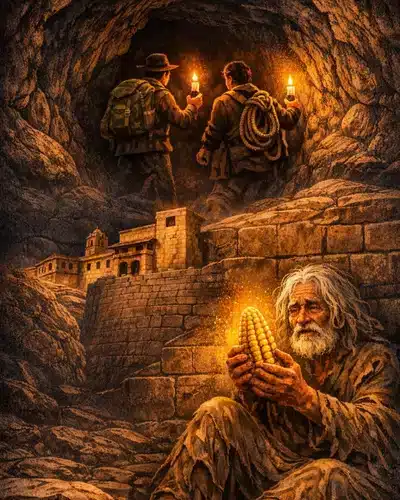
Legend says that two young men decided to explore the forbidden cave, equipped with ropes and candles. After months of disappearance, people claimed to hear knocking behind a wall in the Temple of Santo Domingo (Qorikancha). When it was opened, only one of them was found, aged and delirious, holding an ear of golden corn shortly before he died.
The 1923 expedition
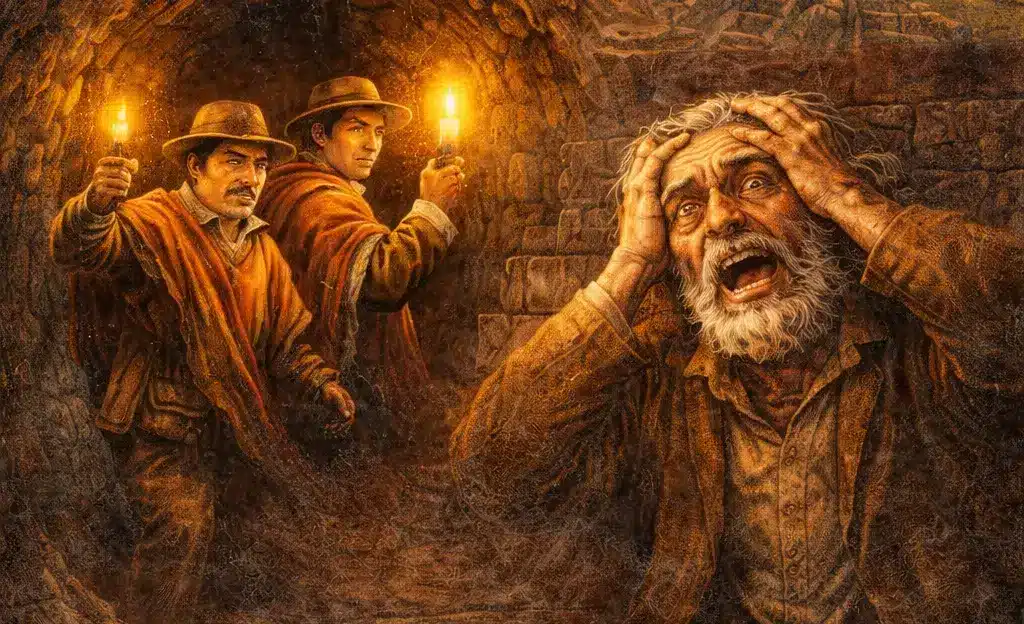
There are also stories of an expedition from Lima that attempted to map the tunnels about a century ago. Popular lore claims they entered through Cusco seeking an exit to the sea or the jungle, and after days of silence, the only survivor returned speaking of endless labyrinths and traps, having lost his sanity.
The chroniclers’ accounts
Even Garcilaso de la Vega wrote about a network of underground passages “as large as towers,” with streets and identical doorways that confused anyone who entered, and described a possible connection to the Qorikancha (Temple of the Sun).

Frequently Asked Questions
What are the chinkanas of Sacsayhuaman, and why do they attract so much attention?
Where exactly are “Zone X” and the chinkanas located within Sacsayhuaman?
Can you enter the Small Chinkana, and how long does the visit take?
What is the Large Chinkana (or “Piedra Cansada”), and why is it closed?
Does a tunnel really connect Sacsayhuaman with the Qorikancha?
What should I bring, and what precautions should I take if I want to see the chinkanas?
When is the best time to visit Sacsayhuaman and see the chinkanas in good weather?
Do I need a special ticket to enter Sacsayhuaman, and where do I get it?
Share:


Related tours you might be interested in
Enjoy unique experiences in Cusco and Machu Picchu with the peace of mind that comes from working with a local travel agency

Tour to Chinchero, Maras & Moray – Private Service
Discover with us this beautiful, charming and historic places, where we will visit the enigmatic...
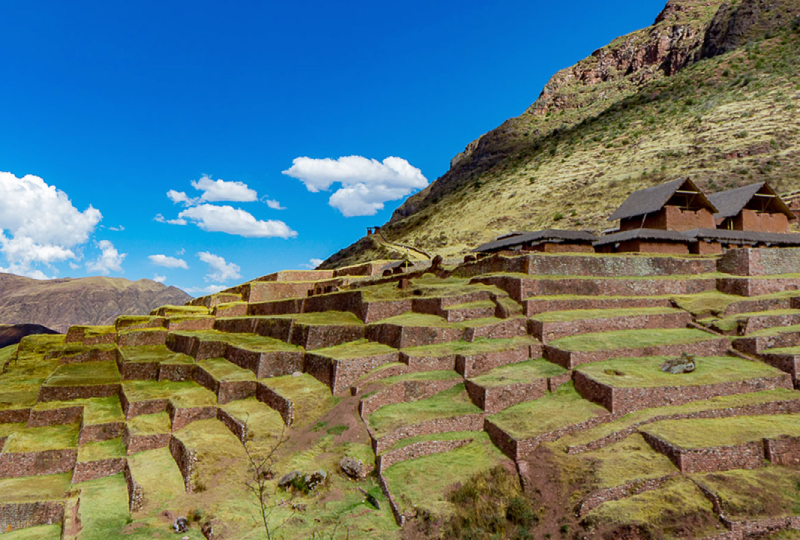
Huchuy Qosqo Hike – Full day
HUCHUY QOSQO: ADVENTURE, HISTORY, AND NATURE IN ONE DAY Perched high above the Sacred Valley,...
Pisac Lakes Trek: Three Sacred Andean Lagoons
A ONE-DAY ADVENTURE THROUGH HIGH-ANDES LAGOONS NEAR CUSCO Discover three high Andean lagoons on a...
Cusco Flavor Routes: Local Cuisine and Pisco Sour
LIVE THE LOCAL FLAVORS OF CUSCO AT SUNSET Step into Cusco’s everyday life as you wander through its...