Feel the Rhythm of the Andes through Cusco Traditional Dances
Ultima actualización en 12 November, 2025 por Waman Adventures
Last Updated on 12 November, 2025 by Waman Adventures
- Dance: Saqra
- Dance: Qhapaq Qolla
- Dance: Qhapaq Chuncho
- Dance: Qhapac Negro
- Dance: Qanchis of Mamuera
- Dance: Carnaval of Sayllapata
- Dance: Carnaval of San Pablo
- Dance: Wallatas
- Dance: Mestiza Qoyacha
- When and Where to See the Cusco traditional dances
- Curiosities and Symbolism of the Cusco traditional dances
- Gastronomy and Dances: A Cultural Complement
- Practical Tips to Fully Enjoy the Cusco traditional dances
-
Frequently Asked Questions About the Cusco traditional dances
- What are the most famous Cusco traditional dances?
- At what time of the year can I see more Cusco traditional dances?
- Is it necessary to pay to see the dances?
- Can tourists participate in any of the Cusco traditional dances?
- Are the dances only for tourists or are they still part of local life?
- What difference do Cusco traditional dances have with others from Peru?
- Where can I see a dance show if I don’t coincide with the main festivals?
- What type of clothing do the dancers wear and what does it symbolize?
Cusco traditional dances is a vibrant expression of Andean culture, blending history, faith, and community. Performed during religious and agricultural festivals, these dances feature colorful costumes and ancestral music filled with symbolism. In this guide, you will discover the most iconic dances, their origins, and where to experience them during your visit to Cusco.
Understanding these traditions will connect you more deeply with the living heritage of the Andes.
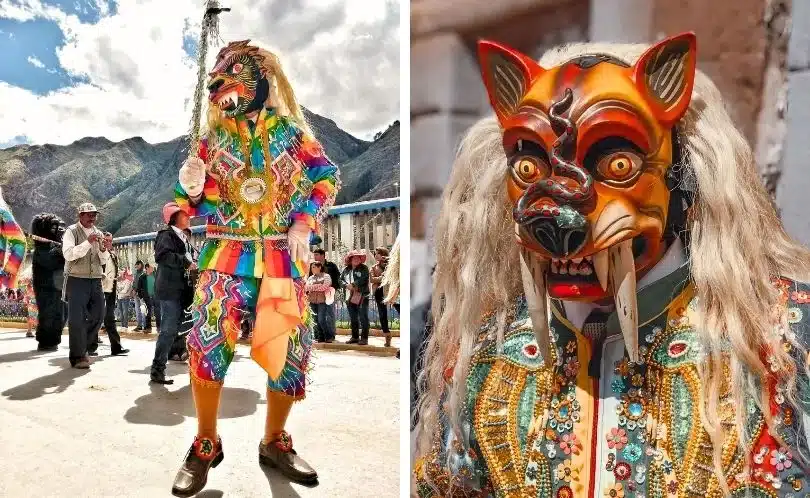
Dance: Saqra
- Location: Performed in the province of Paucartambo, in the Cusco region.
- History: The Saqra dance is a folk dance from the highlands of the Cusco region in Peru. The word “saqra” in Quechua means mischievous, restless, or little devil, and the dance represents an Andean and satirized version of the Christian devil.
- How it’s danced: The dancers perform very agile and playful movements, with jumps and theatrical gestures that bring a smile to your face, as they are in constant interaction with the spectators. This adds great dynamism to the performance.
- Costumes: They wear brightly colored costumes with sequined embroidery that stand out during the festivities. The most distinctive features are the masks, which represent animal heads with large wigs and horns. The dancers also wear gloves shaped like claws, and some carry a hook to symbolically move people out of the procession’s way.
- Music: Traditional Andean instruments are used, such as drums, quenas (Andean flutes), and fast rhythms that accompany the characteristic energy of this dance.
Dance: Qhapaq Qolla
- Location: Originates from the district of Paucartambo, in the Cusco region.
- History: The dance evokes the figure of the merchants from Qollasuyo (Altiplano, which today includes parts of Peru and Bolivia) who traveled to Paucartambo (part of Antisuyo) for the exchange of goods such as vicuña wool, textiles, and food.
- How it’s danced: It involves soft movements and very particular steps. Its rhythm is solemn and slow, with steps that evoke arduous walks in the Andes; likewise, its movements are measured and ceremonious, reflecting respect.
- Costumes: They focus on the waqollo (wool mask) and the montera (hat that symbolizes hail) as central elements. These are complemented by embroidered silk costumes and adornments that reflect the status of the “wealthy Qolla,” with each piece loaded with Andean symbolism and tradition.
- Music: It is characterized by being performed live by a typical Cusco orchestra, which uses instruments such as violins, accordions, quenas, and drums. The central element is the vocalization of songs in the Quechua language.

Dance: Qhapaq Chuncho
- Location: Festivities in the district of Paucartambo, in the Cusco region.
- History: When you watch this dance, you are witnessing a tribute to the Amazonian warriors. It is mainly performed during the festival of the Virgin of Carmen and symbolizes the strength, courage, and resilient spirit of the native peoples of the Peruvian jungle.
- How it’s danced: The dancers perform energetic movements, with quick jumps and fine turns. You will see them simulate battles with spears and bows, representing scenes of defense and resistance. The dance conveys dynamism, courage, and connection with nature.
- Costumes: The costumes include multicolored feather crowns known as “tocapu” or “chuku.” They are complemented by capes finely decorated with jungle iconography and symbolic accessories such as spears, bows, and arrows, which evoke the rich Amazonian flora and fauna. Each garment is meticulously designed to reflect the power, nobility, and beauty of the jungle warrior.
- Music: It is performed by a typical orchestra with instruments such as violins, quenas, accordions, and drums, which provide an agile and martial rhythm, in accordance with the warrior character of the dance. The music guides the energetic steps and demonstrations of strength by the dancers and often includes songs in Quechua.
Dance: Qhapac Negro
- Location: Its epicenter is in the province of Paucartambo, in the Cusco region.
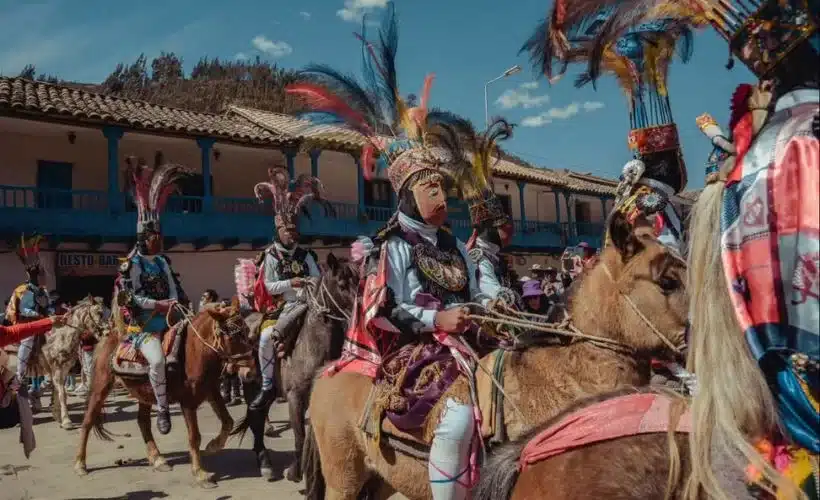
- History: It originated in the colonial era as a representation of the African slaves who were brought to Peru to work on haciendas and in mines. It is a symbol of resistance, historical memory, and the Afro-Peruvian cultural contribution.
- How it’s danced: They perform movements that evoke chains and forced labor, but with a rhythm that conveys hope and devotion. A central character is the “Black King” or “Caporal,” who directs the group with a rattle. The dancers alternate songs in Quechua and Spanish.
- Costumes: They wear brightly colored costumes and capes embroidered with gold and silver threads. They use black masks that represent African faces. The attire includes symbolic
chains, which are shaken to the rhythm of the music, and an elegant hat adorned with feathers or flowers. - Music: It is particularly emotive and vibrant. It combines Andean instruments with a rhythm that recalls African roots, using drums and violins to create an atmosphere of fervor. The verses or songs in Quechua and Spanish are a vital part, narrating the history of slavery and the miracle of the Virgin.

Did you know…?
Some dancers’ masks take up to 3 months to be handcrafted.
Dance: Qanchis of Mamuera
- Location: Originates from the community of Mamuera in the district of San Pablo, province of Canchis, in the Cusco region.
- History: It has roots that are lost in time, linked to oral tradition and the Andean worldview of the spirits of the earth and the underworld. An ancestral dance that connects the spiritual with agriculture, especially linked to the cultivation of corn, the basis of Andean food and culture.
- How it’s danced: The choreography is intense, representing agricultural tasks, with jumps and displacements, accompanied by two varayoc (community leaders) who direct the dance. Rituals are also performed, such as the k’intu (offering of coca leaves) and the ch’alla with chicha (corn beer), to ask for permission and thank the Pachamama (Mother Earth).
- Costumes: They are colorful and symbolic, with monteras (hats), llikllas (shawls), varayoc staffs, and other traditional elements that reflect Andean identity.
- Music: The rhythm is fast, cheerful, and very catchy, inviting movement. It is accompanied by traditional instruments such as quenas, drums, and songs specific to the community, which reinforce the ritual and collective character of the dance.
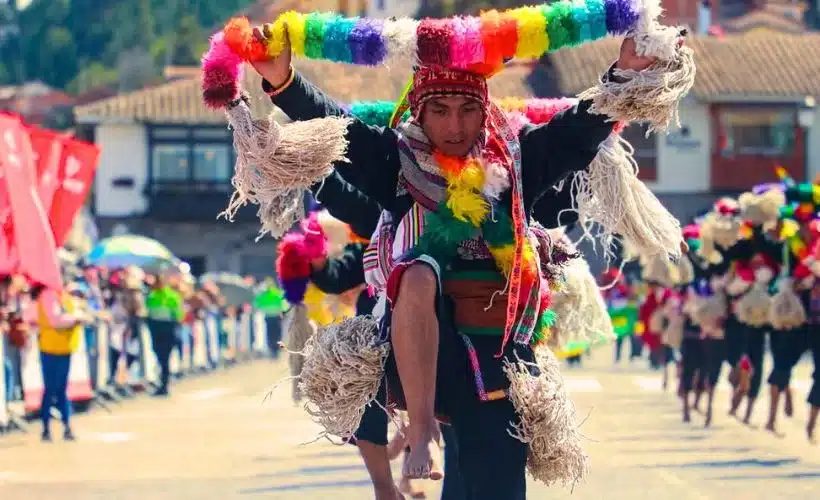
- Location: Originates from the community of Sayllapata, which belongs to the district of Colquepata, in the province of Paucartambo, Cusco region.
- History: It is mainly performed during the carnivals, where young people express their strength and gallantry, imitating the singing and flight of Andean birds such as the wakar.
- How it’s danced: The male dancers perform energetic movements that simulate the flight of birds, while the women respond with gestures of coquetry. The dance culminates with the symbolic transfer of the couple, as a sign of courtship and union.
- Costumes: The men wear an adorned poncho, bird feathers, ojotas (sandals), and other traditional elements. For their part, the women wear a distinctive multicolored skirt, monteras, and traditional earrings.
- Music: The music is festive, contagious, and full of life, performed by typical bands that use wind and percussion instruments such as quenas, violins, accordions, bass drums, and snare drums. The rhythm is cheerful and constant, marking the agile steps of the dancers.
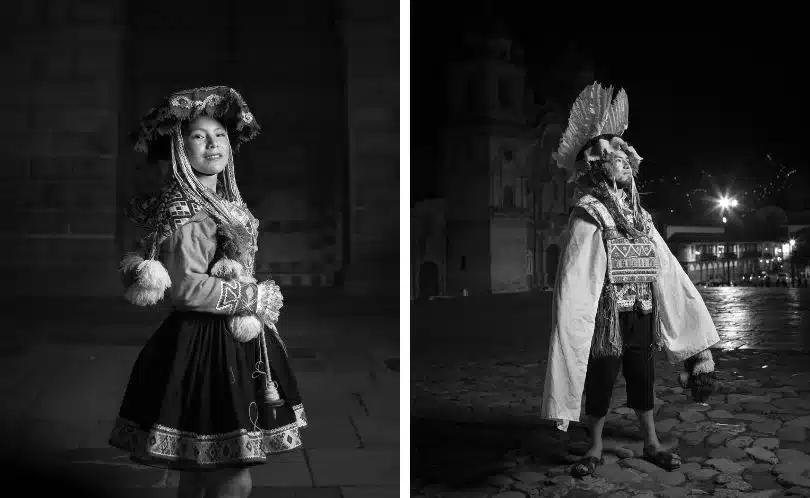
- Location: This traditional Cusco dance originates in the district of San Pablo, in the province of Canchis in the Cusco region.
- History: The festivity commemorates the flourishing of nature and the consolidation of social and family ties, being a propitious moment for the encounter between young people seeking a partner.
- How it’s danced: Men and women form groups that dance to the rhythm of the music, performing agile and flirtatious steps that reflect the game of “falling in love” and the vitality of youth.
- Costumes: They are colorful and representative of the typical attire of the Cusco highlands. The women wear several overlapping skirts in bright colors, embroidered blouses, and Andean hats. The men wear pants, shirts, and wool ponchos or vests, complemented by hats and sometimes additional skirts.
- Music: The emblematic instrument of the district is the bandurria (a stringed instrument), which, together with violins, quenas, and percussion (bass drums, snare drums), creates vibrant and catchy melodies. The songs, sung mainly in Quechua, are picaresque and cheerful verses that narrate community life.
Dance: Wallatas
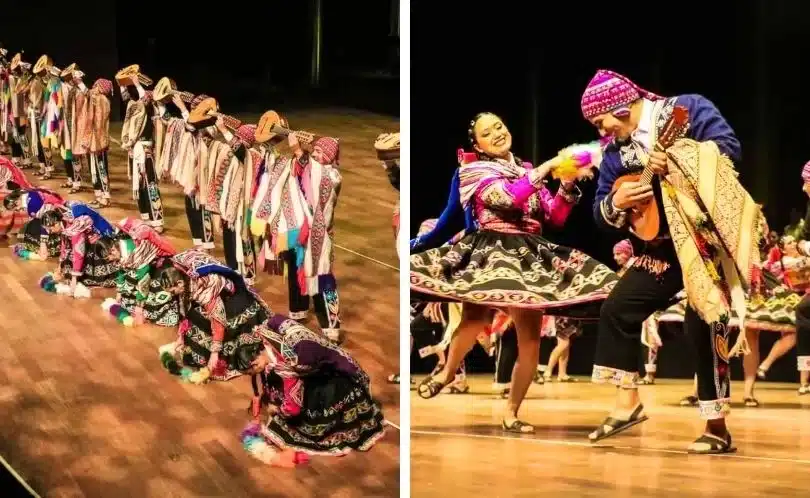
- Location: Originates from the district of Ollantaytambo, province of Urubamba, in the Cusco region.
- History: This dance represents the amorous courtship of the Andean geese (wallatas), symbolizing fidelity and balance in nature. This dance was declared Cultural Heritage of the Nation of Peru on October 30, 2008, in recognition of its deep symbolic content.
- How it’s danced: The choreography is soft, elegant, and mimetic. The dancers, in pairs, imitate the characteristic movements of the wallatas: the honking, the courtship, the preening of the feathers, and the flapping of wings.
- Costumes: The dancers wear costumes predominantly in black and white (like the plumage of the bird). The attire includes a small red poncho, a checkered shirt, pants, and a bayeta jacket. The men wear a chullo (Andean hat) and a montera, and the women wear skirts.
- Music: It uses instruments such as violins, quenas or flutes, accordions, and percussion (bass drums and snare drums). The melodies, full of a rhythmic cadence, seek to imitate the sounds of nature and the honking of birds. An essential and distinctive element is the singing in Quechua.
Dance: Mestiza Qoyacha
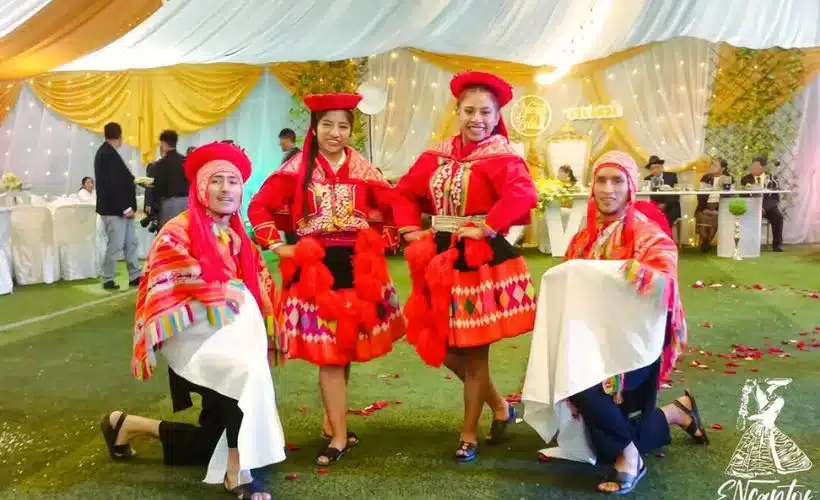
- Location: Originates from the province of Paucartambo, in the Cusco region. It has spread to other Cusco provinces where it is performed in patron saint celebrations and folk festivals.
- History: It represents the encounter and courtship between young mestizos from urban and rural areas of Cusco. The narrative focuses on the search for a partner and the celebration of social life, in a context of festivity and devotion to the Virgin.
- How it’s danced: The dancing couples perform turns, soft foot-tapping, and movements with handkerchiefs or hats, demonstrating coquetry and skill. The dance is characterized by its cheerful rhythm and constant interaction between the dancers.
- Costumes: They reflect mestizo elegance, combining European and indigenous elements. The men wear elegant pants, shirts, and vests, often with hats and handkerchiefs. The women wear long and colorful skirts, embroidered blouses, and a small shawl, in addition to adorned hats.
- Music: Instruments such as violins, accordions, quenas, charangos, and percussion are used. The rhythm is cheerful, danceable, and catchy, inviting celebration. The songs or verses, often in Quechua and Spanish, speak of love, the beauty of young women, and the festive atmosphere of the carnival or the patron saint festival, reflecting the cultural fusion of the dance.

When and Where to See the Cusco traditional dances
Corpus Christi (June): In this religious celebration, 15 saints are carried in procession to the Cusco Cathedral. During the procession, you can see different dance groups or troupes that accompany the saints they venerate. It is a great opportunity to observe traditional Andean dances such as Chunchos, Qhapac Qolla, Chunchachas, Majeños, Tupay, among others.
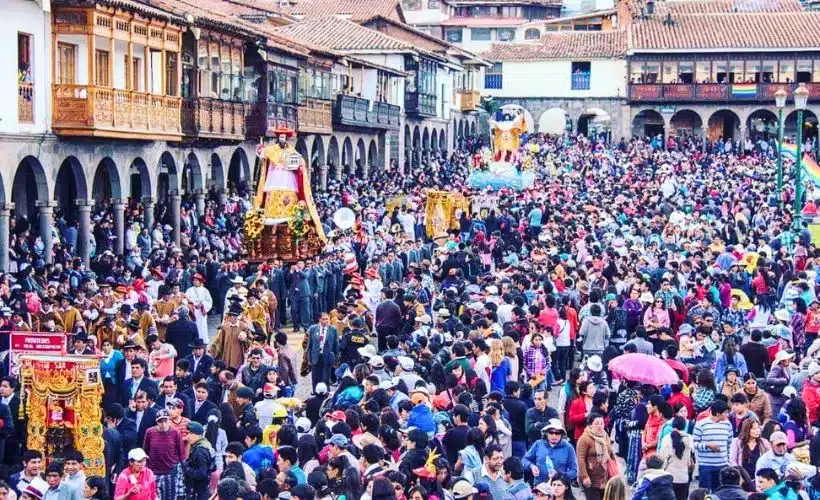
Festival of the Virgin of Carmen in Paucartambo: This solemn festival takes place from July 15 to 18, when thousands of devotees gather to pay tribute to the Mamacha Carmen. During these days, you can enjoy more than 20 traditional dances originating from Cusco, including Paucartampus, Qhapac Negro, Mestiza Qoyacha, Doctorcitos, Waca Waca, and many more.
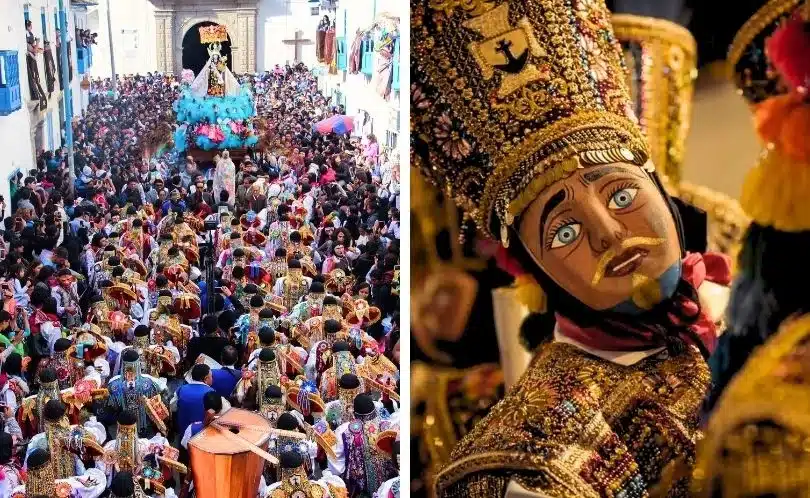
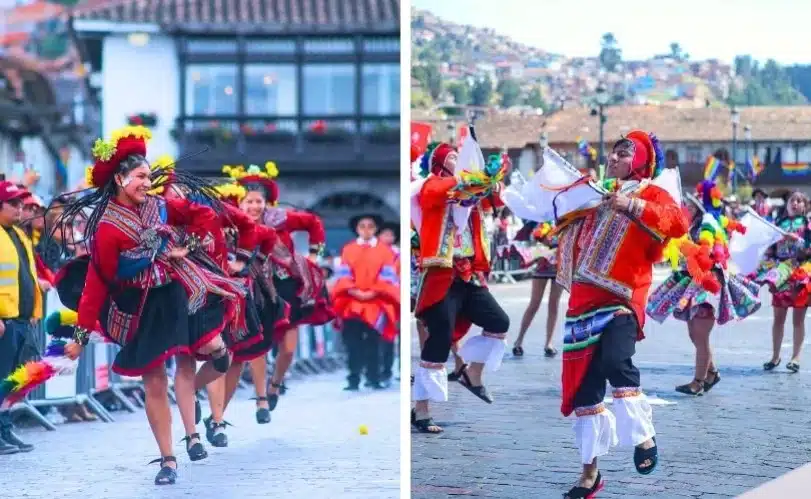
Month of June: During this jubilee month of Cusco, a large contest of typical dances from the Cusco region is held, from the smallest to the largest. At this time, you will see a wide variety of traditional dances of Cusco from different provinces, each one represented with heart and with the purpose of conveying the unique feelings of each dance.
Qosqo Center of Native Art: This institution, located in the heart of Cusco’s historic center, offers daily performances with live music and dance. In these presentations, you can see Cusco traditional dances such as carnival, warrior, agricultural, courtship dances, and many more.
Remember that:
The dances are not just a tourist show; they are expressions of identity, faith, and collective memory.
Curiosities and Symbolism of the Cusco traditional dances
Many Cusco traditional dances are dedicated to the apus (mountain spirits) and the Pachamama (Mother Earth), and if you observe carefully, many steps represent the daily life in agriculture.
The costumes are handmade, being original to the area. In many dances of Cusco, the embroidery techniques used in the costumes have been passed down from generation to generation; likewise, the multicolored skirts and the hats take several months to make.
The use of masks is not decorative. They represent mythical characters, sacred animals, colonial figures, or supernatural beings.
Far from being just a tourist attraction, these dances are a way of transmitting values. So the next time you see a Cusco traditional dance, look beyond the folklore. You are witnessing a living way of transmitting values, historical memory, identity, and ancestral spirituality.
Gastronomy and Dances: A Cultural Complement
During other festivities, you can also try oven-roasted pork with tamales, very popular in celebrations such as Inti Raymi or the Cusco Carnival. The traditional chicha de jora, an ancestral beverage, cannot be missed either, which is still consumed today as a symbol of community and gratitude to the Pachamama.
And if you visit Paucartambo during the Festival of the Virgin of Carmen, you will see that the dance troupes dance for hours, while visitors enjoy hot soups, traditional breads, and meals prepared by the communities themselves.
Practical Tips to Fully Enjoy the Cusco traditional dances
- Arrive early to the plazas on festive days, as the spaces tend to fill up.
- Bring sunscreen, a hat, and water, as many celebrations are outdoors.
- If you want to photograph the Cusco traditional dance performances, always respect the dancers and avoid interrupting their choreographies.
- Find out about the calendar of festivals before your trip to coincide with the most representative ones.
- Prefer shows organized by local communities, as your economic contribution helps keep the tradition alive.
The traditional dances of Cusco are a living expression of Andean history, spirituality, and culture, reflecting ancestral colors, rhythms, and movements.
If you don’t know how to plan your trip or are unaware of the exact dates to travel, at Waman Adventures we offer useful tips, comfort throughout your journey, and much more. Contact us and let us help you. Your adventure begins by enjoying the cultural richness!
Frequently Asked Questions About the Cusco traditional dances
What are the most famous Cusco traditional dances?
Many dances of Cusco stand out for their religiosity, such as the Saqras and the Qhapaq Qolla; as well as the agricultural ones, such as Qanchi de Madera and Papa Hallamay. On the other hand, there are those that represent courtship, such as Qoyacha, Carnaval of Sayllapata, among others.
At what time of the year can I see more Cusco traditional dances?
The months of June and July are the most intense in terms of festivities, with celebrations such as Corpus Christi, Inti Raymi, and the Festival of the Virgin of Carmen in Paucartambo.
Is it necessary to pay to see the dances?
Many traditional performances are held free of charge in public spaces, especially during patron saint or religious festivals. You can also attend paid cultural shows in spaces such as the Qosqo Center of Native Art, where professional groups perform with original costumes and instruments.
Can tourists participate in any of the Cusco traditional dances?
In general, traditional dances are reserved for local people, who prepare for months and know their ritual meaning. However, you can participate in workshops or interactive experiences offered at academies, art centers, and cultural projects.
Are the dances only for tourists or are they still part of local life?
Although many are shown in tourist spaces, the dances are a living expression of local culture. They are not empty spectacles, but deeply meaningful acts performed in honor of the saints, the Pachamama, or the apus.
What difference do Cusco traditional dances have with others from Peru?
The dances of Cusco have a strong connection with the Inca legacy and Andean spirituality. They are associated with agricultural rituals, syncretic religious festivities, and respect for the tutelary gods.
Where can I see a dance show if I don’t coincide with the main festivals?
If your visit does not coincide with festivities such as Inti Raymi or the Virgin of Carmen, don’t worry. You can attend the Qosqo Center of Native Art, which offers daily performances of folk music and dances.
What type of clothing do the dancers wear and what does it symbolize?
The traditional costumes that you will see in the dances of Cusco are elaborated with great detail and symbolism. They are handmade, using materials such as sheepor alpaca wool, and are adorned with embroidery, sequins, ribbons, and accessories that represent aspects of nature, spirituality, history, and community identity.

Share:



Related tours you might be interested in
Enjoy unique experiences in Cusco and Machu Picchu with the peace of mind that comes from working with a local travel agency

Tour to Chinchero, Maras & Moray – Private Service
Discover with us this beautiful, charming and historic places, where we will visit the enigmatic...

2-Day Trip to Machu Picchu from Cusco with Machu Picchu Mountain
LIVE A UNIQUE EXPERIENCE EXPLORING THE BREATHTAKING LANDSCAPES ON A 2-DAY JOURNEY TO MACHU PICCHU...
6-Day Tour Cusco, Sacred Valley, Machu Picchu and Rainbow Mountain
EXPERIENCE THE MAJESTY OF THE INCAS: SACRED VALLEY, MACHU PICCHU & RAINBOW MOUNTAIN IN ONE TRIP If...

6 Day Andean Adventures Tour│With Flights from Chile
ENJOY THE BEST OF CUSCO CITY – MUST VISIT DESTINATIONS ARE WAITING FOR YOU! Want to explore Cusco...
If you liked this article and the information you found, give us 5 stars!
Table of Contents
Related blogs
Best Way to Get to Machu Picchu — Which Route Fits Your Trip?
11 min of reading
Comparing Experiences to Machu Picchu: Inca Trail vs Inca Jungle
12 min of reading