An Intrepid Traveler’s Guide to Machu Picchu’s Secrets of Altitude
Ultima actualización en 1 April, 2026 por Waman Adventures
Last Updated on 1 April, 2026 by Waman Adventures
- What is the Altitude of Machu Picchu, and Why is it Important?
- How high is Machu Picchu?
- Altitude of Aguas Calientes
- Machu Picchu Mountain’s altitude
- Altitude of Huayna Picchu
- Altitude of Huchuy Picchu
- The altitude of Cusco
- What is altitude sickness and how does it affect people?
- Altitude sickness at Machu Picchu, and how it can affect travelers
- Tips to Minimize the Negative Effects of Altitude Sickness
- Preparing for Altitude in Machu Picchu
- How to Prepare for the Altitude Change in Machu Picchu?
- Do I Need Altitude Sickness Pills in Machu Picchu?
- Tips to Avoid Altitude Sickness
- The Altitude of Machu Picchu and Its Influence on Activities
- Machu Picchu and Altitude Sickness
- Conclusion about the altitude of Machu Picchu Peru
- Frequently Asked Questions about the altitude of Machu Picchu
Welcome, intrepid travelers, to a place where history and nature intertwine in a celestial dance: Machu Picchu. But before we delve into the wonders of this ancient Inca citadel, there’s a crucial factor to address: the altitude of Machu Picchu.
In this detailed blog, we will not only explore the challenges presented by the altitude of Machu Picchu but also strategies and tips to overcome them. Our goal is to ensure that each of you, dear travelers, can breathe deeply and fully immerse yourselves in the greatness of this unique destination in the world.
So join us on this journey of discovery and exploration, where the altitude of Machu Picchu is just the prelude to an experience that will take you to the highest heights of excitement and wonder. Let’s breathe in the magic of the Andes and uncover the secrets that await in this ancestral land together!
What is the Altitude of Machu Picchu, and Why is it Important?
The average elevation of the Machu Picchu Archaeological Complex is 2,430 m / 7,874 ft ASL. Despite this site being at a relatively low altitude compared to other places in Cusco, you may feel like you’re walking among clouds, as the steep surrounding slopes give the impression that you’re much higher than you are actually.
It’s not just the views that left you breathless, but also the hundreds of steps and the thin air at this altitude that make walking around the site feel like climbing a mountain. You’ll appreciate the views from the top!

Being comfortable is a must
How high is Machu Picchu?
If we talk about the area encompassing the archaeological complex, the maximum altitude lies at the top of Wayna Picchu mountain, which rises to approximately 2,720 m / 8,920 ft ASL.
Altitude of Aguas Calientes
Aguas Calientes, also known as Machu Picchu Pueblo, is located at 2,040 m next to the Vilcanota River. This location gives it its characteristic warm and humid climate, providing a cool experience during the mornings and warm evenings. Remember that this is the last town you will cross during your journey to Machu Picchu.

Machu Picchu Mountain’s altitude
Also known as the highest point of Machu Picchu, this place rises to about 3,082 m / 10,111 ft ASL, being part of the east slope of Salkantay Mountain. It stands out for offering you a privileged and open view of the Machu Picchu Archaeological Complex, as well as the smaller mountains known as Huayna Picchu and Huchuy Picchu.

Altitude of Huayna Picchu
The second-highest but steepest mountain at Machu Picchu roughly 2,693 m / 8,835 ft ASL.

Summit of Machu Picchu Mountain
Altitude of Huchuy Picchu
It is the smallest mountain at the Machu Picchu Archaeological site. It is located about 2,497 m / 8,192 ft ASL and is the easiest and ideal hike for elder people.

View from Huchuy Picchu Mountain
The altitude of Cusco
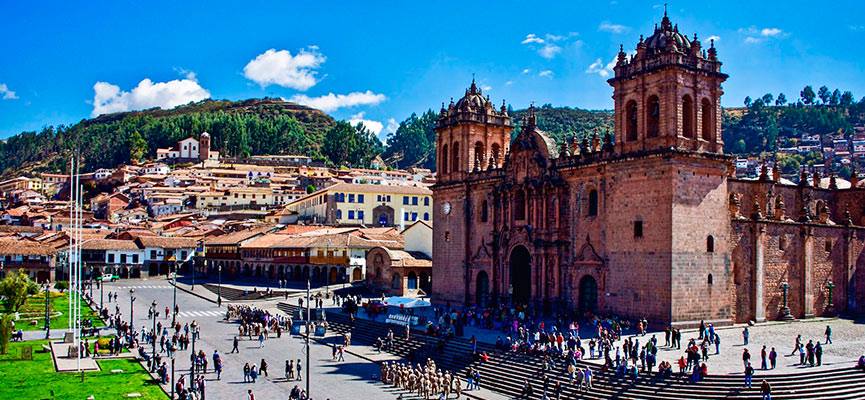
We’re sure that before making it to Machu Picchu, you will stay at least one night in Cusco in order to acclimatize and rest after your flight and arrival. This city lies in the Andes roughly at 3,400 to 3,800 m ASL. Its altitude and the bunch of touristic services make this city one of the best options to stay before facing any hike, too.

The city of Cusco
What is altitude sickness and how does it affect people?
Altitude sickness is a common illness that people feel when traveling above 3000 m / 9,842 ft ASL. People could be breathless and very tired due to this illness, so headaches, dizziness, fatigue, or throw up.

Some altitude sickness’ symptoms
Altitude sickness at Machu Picchu, and how it can affect travelers
Machu Picchu lies almost 1000 meters below Cusco. Although altitude sickness is not common at 2,430 m / 7,970 ft ASL, there are cases affecting some people there. So, once you enter Machu Picchu, I recommend you take it easy and walk at your own pace, otherwise you will fatigue and not enjoy your day there. But don’t worry because at that altitude the symptoms are mild since the trail is not steep and does not require such high physical effort.

Gorgeous view on different spots in Machu Picchu
Tips to Minimize the Negative Effects of Altitude Sickness
Acclimatization to the altitude of Machu Picchu
It is very important to know that upon arriving in Cusco, you should cool down for at least 2 to 3 days to acclimate correctly, as this city lies higher than Machu Picchu. This time will help mitigate the altitude sickness symptoms, which could jeopardize the enjoyment of your adventure in Machu Picchu.

Plenty of activities to do in Cusco
Preparing for Altitude in Machu Picchu
Do you need to cope with altitude sickness in Machu Picchu?
As I mentioned, Machu Picchu has a lower altitude than 3,000 m / 9,840 ft ASL, so coping with altitude sickness is not difficult. However, suppose you are not in the habit of hiking and going up and down. In that case, we recommend exercises to improve your physical and cardiovascular endurance while walking in Machu Picchu during your guided tour.

Training before traveling to Peru
How to Prepare for the Altitude Change in Machu Picchu?
To tell the truth, you don’t have to take care about altitude sickness in Machu Picchu. Why? Because once you get to Machu Picchu, I am pretty sure that you will be acclimatized and won’t have problems with it. However, I aim to follow the following tips:
- Pack only the essentials; remember that weight plays a significant role during the hike.
- Go at your own pace; take the necessary time to explore the archaeological complex, especially if you have tickets to Huayna Picchu or Machu Picchu Mountain.
Do I Need Altitude Sickness Pills in Machu Picchu?
No, you don’t. Those pills are not always necessary at higher elevations or before arriving in Cusco. For example, if you get sick, it would be fine to take a pill as long as you don’t have several allergies. Also, taking pills is something to be aware of because you just need to take them in an emergency, and before you take them check if you are not allergic to them.
Tips to Avoid Altitude Sickness
I told you not to worry about altitude sickness in Machu Picchu. Nevertheless, remember that you will have a guided tour inside Machu Picchu, and if you want to enjoy and learn from it to the fullest, you need to consider the following information.
- Constant hydration: Drinking plenty of water is essential to combat the effects of altitude sickness. Stay hydrated throughout the day, avoiding alcoholic and caffeinated beverages, as they can dehydrate you.
- Gradual ascent: If possible, try to ascend gradually to higher altitudes rather than abruptly. If you are traveling from a lower altitude area, consider spending a few days at an intermediate altitude before reaching Machu Picchu to allow your body to adapt slowly.
- Rest: Allow your body to rest enough, especially during the first days at high altitudes.
- Listen to your body: Pay attention to the signals your body sends to you, and do not ignore the symptoms of altitude sickness. If you experience dizziness, persistent headaches, difficulty breathing, or other severe symptoms, descend to a lower altitude immediately.
The Altitude of Machu Picchu and Its Influence on Activities
Is the altitude of Machu Picchu dangerous?
Fortunately, no, the altitude of Machu Picchu should not pose a danger to those who have acclimatized and followed the advice correctly. On the other hand, to ensure you have a safe trip, you should consider the following recommendations.
- Follow the signs; remember to respect the limits of the trails and trekking areas during your visit.
- Drink water; this will help mitigate possible symptoms such as dizziness or lightheadedness.
- If you are an older adult, you can carry oxygen (Oxishot) and use it if necessary.

Is it dangerous to visit the high areas of Machu Picchu?
When we talk about the high areas, Huayna Picchu Mountain and Machu Picchu Mountain stand out as the two highest spots. While it is true that both trails have their level of risk as outdoor activities, the reality is that they are not at all “dangerous” because they are well marked, have professional park rangers watching along the way, and the trails are in good condition.
Therefore, enjoy this adventure, just follow the instructions given by your professional guide and respect all signs. Remember that you are solely responsible for your safety.
Machu Picchu and Altitude Sickness
Can I suffer from Altitude Sickness at Machu Picchu?
The truth is that altitude sickness can occur at Machu Picchu, although it happens very rarely. Many travelers spend previous days in Cusco, which is significantly higher in altitude, taking part in light activities such as day tours or simply strolling Cusco’s streets. So, if you have followed the instructions correctly, your chances of experiencing any symptoms or discomfort are practically nil.
Altitude of Hikes to Machu Picchu
If you look for new adventures, I can say that the altitude of Machu Picchu is not a tough one. Nowadays, there are plenty of hiking trails to enjoy your vacation and time in our country. The Peruvian Andes are truly amazing, and the hikes we will describe are traced within the Andes.
Altitude of the Inca Trail to Machu Picchu
The Inca Trail has an average altitude of 3,000 m / 9,842 ft ASL, with the highest point being 4,215 m / 13,828 ft ASL, reached at Warmi Wañusca Pass. Achieving this altitude allows you to enjoy beautiful Andean landscapes and the lush jungle full of flora, fauna, and exclusive archaeological sites on the Inca Trail.

Different sections of the Inca Trail
Altitude of the Salkantay Trek
This hike is the second most famous trekking route reaching to Machu Picchu besides Inca Trail. Also, this is and incredible alternative or choise taking you through higher altitudes than Inca trail at Salkantay Pass, 4,620 m / 15,100 ft ASL. The highest point of this trek allows you to enjoy how the habitats change with the ecology and biodiversity.
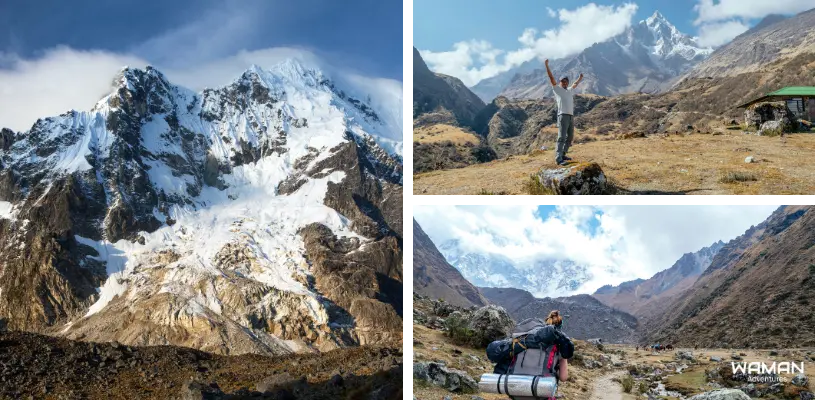
The Andes on the Salkantay trek
INCA JUNGLE TREK
The multi-sport tour to Machu Picchu. It is your ideal choice if you are a lover of extreme outdoor activities such as biking down from the highest altitude of 4,350 m / 14,271 ft ASL, rafting, and ziplining, a cluster of sports activities that you will enjoy while traversing a trail amid the Cusco jungle and relaxing in the Cocalmayo hot springs on the third day. It could be the best option for families or youth.
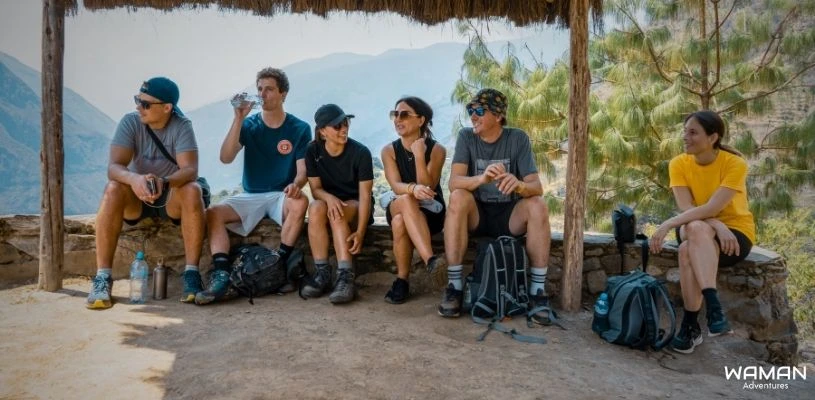
Altitude CHOQUEQUIRAO TREK TO MACHU PICCHU (07 DAYS)
In this particular matter, it’s worth noting that this is a tough trekking route, as it allows you to explore and contrast 2 of the most important Inca cities today (Choquequirao and Machu Picchu in a row). Ideal for the most adventurous travelers, as during the journey you’ll cross a pass that exceeds 4,800 meters above sea level, making it the highest altitude reached during a trek to Machu Picchu.

Conclusion about the altitude of Machu Picchu Peru
The altitude of Machu Picchu, with its imposing 2,430 meters above sea level, is a crucial clue for travelers who want to explore this fascinating archaeological site. As we delve into the wonders of this ancient Inca citadel, it is essential to take precautions to avoid the effects of altitude sickness and ensure a safe and enjoyable travel experience.
Frequently Asked Questions about the altitude of Machu Picchu
Is Arequipa at a higher altitude than Machu Picchu?
Arequipa is a little bit lower than Machu Picchu. If your travel package includes visiting Andean regions like Arequipa or Puno, you should consider that these cities are at higher altitudes than Machu Picchu. So, if you pass through them without any issues, your experience at the altitude of Machu Picchu will likely be positive.
Is Machu Picchu at a high altitude?
The definitive answer is no, as while the altitude of Machu Picchu ranges between 2,400 to 2,700 meters above sea level, compared to other attractions in Cusco like Rainbow Mountain or the Humantay Lagoon, Machu Picchu is at a lower altitude, which influences its difficulty and accessibility for all ages.

Rainbow Mountain and Humantay Lake lies very higher than Machu Picchu
Does Machu Picchu lie higher than Cusco?
No. Cusco stands at 3,400 m / 11,600 ft ASL. Once people get to Cusco, they must acclimate before taking off for new activities, such as treks and long tours. If you prefer a gentler experience, there is also the option of spending days in the Sacred Valley. Once the acclimatization days are over, the altitude of Machu Picchu will be just a fact, and you’ll simply enjoy your journey in the Inca city.
What is the altitude of the Sacred Valley?
Many travelers also choose to spend their pre-days in the Sacred Valley (Urubamba, Ollantaytambo, or Pisac), which is at a similar altitude to the Machu Picchu archaeological complex, thus obtaining equally effective acclimatization to avoid altitude sickness.
For those adventurers planning to explore this historical treasure, it’s important to remember to stay hydrated, ascend gradually, rest properly, and pay attention to your body’s needs. By following these practical tips, travelers can fully enjoy the beauty and history of Machu Picchu without worrying about the challenges posed by altitude.
So, dear travelers, as you prepare to embark on this exciting journey, remember that the altitude of Machu Picchu, Peru, is not an insurmountable obstacle, but rather an opportunity to immerse yourself in the majesty of the Peruvian Andes and the cultural richness of the Inca civilization with WAMAN ADVENTURES. May your journey be filled with unforgettable adventures and fascinating discoveries in this land of historical wonders!