Best beaches in Peru beyond sand and sun: Choose your beach today
Ultima actualización en 8 September, 2026 por Jhon Quispe
Last Updated on 8 September, 2026 by Jhon Quispe
What are the best beaches in Peru?
Some of the best beaches in Peru are Punta Sal for relaxed beach days and families, Máncora for surfing and nightlife, Vichayito for quieter stays, Punta Hermosa for surf near Lima, Huanchaco for waves and coastal culture, and La Mina or Playa Roja for Paracas scenery.
The best choice depends on what you want from the coast. Northern Peru generally works better for warmer beach-focused stays, Lima for urban surfing, and Paracas for wildlife and dramatic desert landscapes rather than a traditional resort vacation.
- Best beaches in Peru at a glance
- Northern Peru beaches
- Best beaches in Lima and near Lima
- Huanchaco for surf and coastal culture
- Southern Peru beaches and coastal scenery
- Choose a Peru beach by travel style
- When to visit Peru’s beaches
- What to pack for Peru’s coast
- Choose the Peru coast that matches your trip
-
Frequently asked questions about the best beaches in Peru
- What are the best beaches in Peru?
- Does Peru have good beaches?
- What are the best beaches in Peru for swimming?
- What are the best beaches near Lima?
- Are Peru’s beaches safe for swimming?
- What is the best time to visit Peru’s beaches?
- Which beaches in Peru are best for families?
- When can you see whales near Peru’s northern beaches?
Peru’s Pacific coastline ranges from the warmer beaches of Tumbes and Piura to Lima’s urban surf coast and the desert landscapes of Paracas. That contrast means the best beach depends on whether you want swimming, surfing, a quiet resort stay, nightlife, wildlife or dramatic coastal scenery.
Best beaches in Peru at a glance
| Beach | Region | Best for | Swimming note |
| Punta Sal | Tumbes | Relaxation and families | Strong option when daily sea conditions are calm |
| Máncora | Piura | Surf, nightlife and restaurants | Check swell, currents and warning flags |
| Vichayito | Piura | Couples and quieter stays | Suitable on days when local conditions allow |
| Los Órganos | Piura | Wildlife and quieter beach stays | Check currents and daily sea conditions |
| Zorritos | Tumbes | Quiet beach days | Check currents and local warnings |
| Huanchaco | La Libertad | Surf and coastal culture | Better known for waves and cultural character |
| Makaha and Waikiki | Lima | Urban surfing and city access | Not primarily calm-water swimming beaches |
| Punta Hermosa | Lima | Surfing | Depends on the specific beach and swell |
| Santa María del Mar | Lima | Families and summer beach days | Check local conditions before swimming |
| San Bartolo | Lima | Surf and beach-town atmosphere | Conditions vary by beach and swell |
| La Mina | Ica | Paracas beach day and scenery | Known for relatively sheltered water; check conditions |
| Playa Roja | Ica | Scenery and photography | Not a general swimming recommendation |
Northern Peru beaches
Tumbes and Piura are the strongest regions to compare if you want warmer coastal conditions and a more traditional beach-holiday atmosphere. The northern coast differs noticeably from Lima and much of central Peru, making it especially attractive for travelers who want to spend several days near the ocean.
Punta Sal
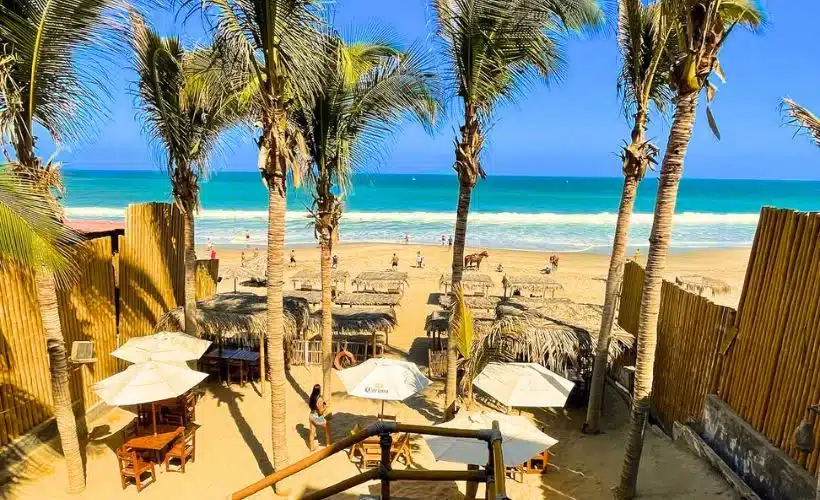
Punta Sal, in Tumbes, is one of the strongest options for travelers looking for a relaxed beach stay. Its atmosphere suits couples and families who prefer a quieter setting than the more active beach town of Máncora.
- How to get there: From Tumbes city, allow roughly 1 hour 15 minutes to 1 hour 30 minutes by road, depending on traffic and your final accommodation.
- Access: Beach access is generally free.
- Best for: Relaxation, couples, families and warmer northern conditions.
- Swimming: A strong starting point when daily currents and sea conditions are calm.
- Season: December through March brings hot summer conditions, although the area remains comparatively warm for more of the year.
Máncora
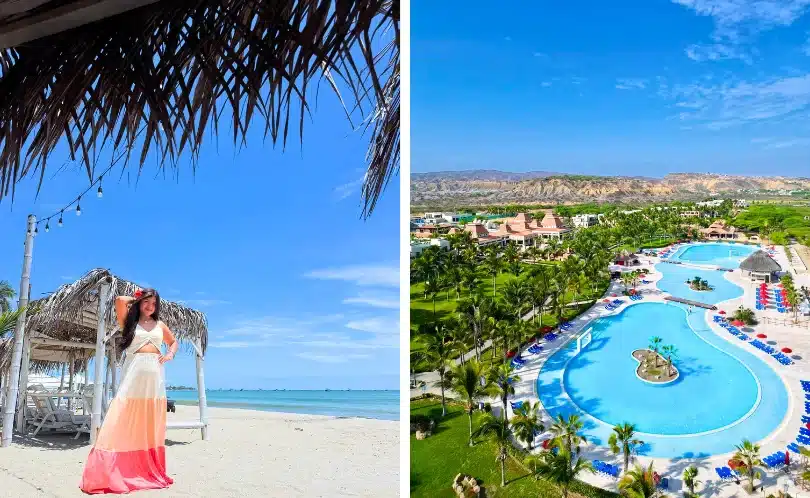
Máncora is one of Peru’s best-known beach towns and works especially well for travelers who want surfing, restaurants, nightlife and a wide range of beachfront accommodations in one place.
- How to get there: Fly from Lima to Talara, Piura or Tumbes, then continue by road. Talara is usually the most convenient airport for the final transfer.
- Access: Beach access is free.
- Best for: Surf, restaurants, nightlife and an active beach-town atmosphere.
- Swimming: Possible on suitable days, but check swell, currents and warning flags before entering the sea.
- Surfing: Conditions depend on swell and the specific break rather than one universal season.
Vichayito
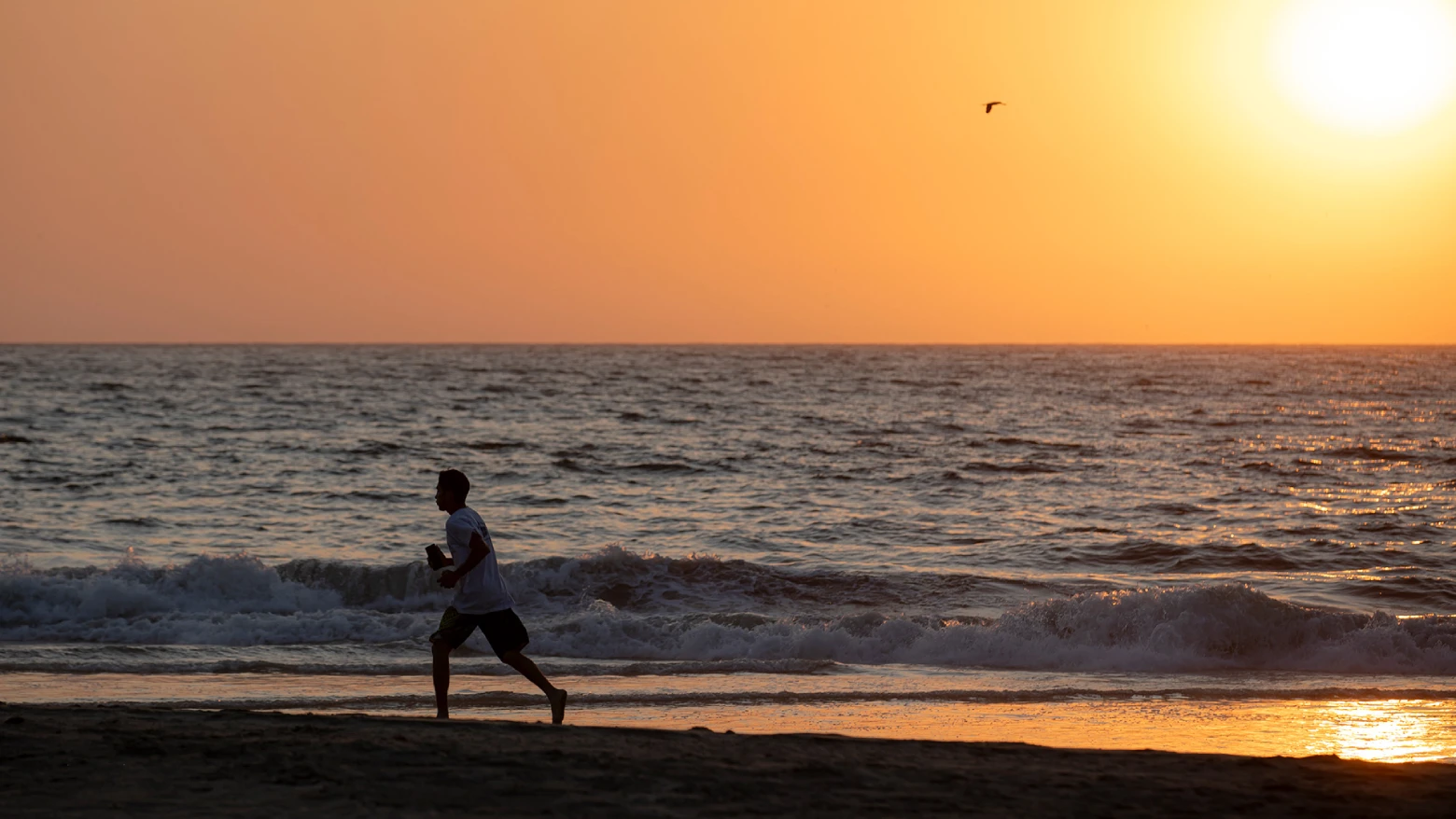
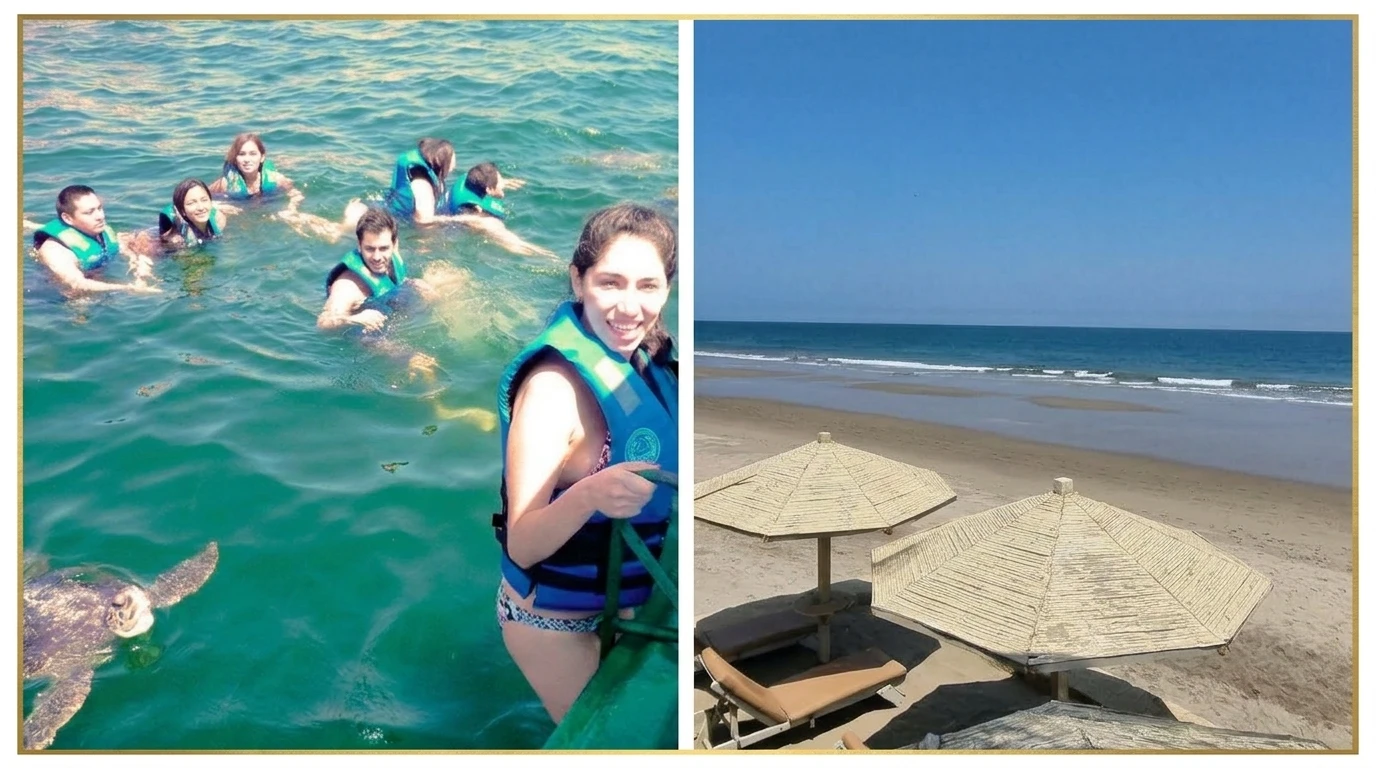
Vichayito sits between the main beach destinations of the Piura coast but generally offers a quieter atmosphere. Beachfront hotels, bungalows and smaller properties make it particularly attractive for couples and travelers who prefer downtime over nightlife.
- How to get there: Fly to Talara, Piura or Tumbes and continue by road.
- Access: Beach access is generally free.
- Best for: Couples, relaxing stays and beachfront lodging.
- Swimming: Check swell, rocks and local current conditions before entering.
Los Órganos
Los Órganos offers a quieter beach-town base north of Talara and is particularly useful for travelers interested in marine wildlife as well as time by the sea.
- How to get there: The most practical route is usually through Talara followed by a road transfer north.
- Access: Beach access is generally free.
- Best for: Wildlife, beach stays and a quieter alternative to Máncora.
- Whale watching: PROMPERÚ identifies July through October as the main humpback whale-watching season along the Piura and Tumbes coast.
Zorritos

Zorritos works well for travelers who want a slower coastal stay without the nightlife and tourism concentration found in Máncora.
- How to get there: From Tumbes, continue south by taxi or road transport; the drive is commonly around 30 minutes depending on your starting point.
- Access: Free.
- Best for: Quiet stays and relaxed beach time.
- Swimming: Check currents, flags and local guidance before entering the water.
Important note:
Northern Peru stays warmer than much of the central coast because of regional ocean conditions and its tropical location. El Niño is a variable climate phenomenon, not the permanent explanation for warmer northern beach conditions.
Best beaches in Lima and near Lima
Lima’s coastline is different from the resort-style northern beaches. Miraflores offers direct access to urban surf breaks below the city’s cliffs, while coastal districts south of Lima work better for summer day trips and beach-town stays.
Makaha and Waikiki in Miraflores
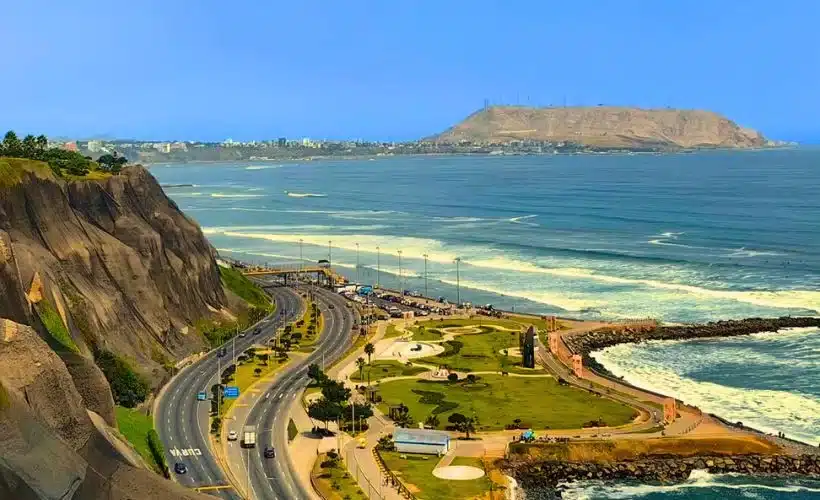
Makaha and Waikiki sit along Lima’s Costa Verde below Miraflores. They are particularly convenient for travelers who want to surf or see the Pacific without leaving the city’s main visitor districts.
- How to get there: Taxi or rideshare from Miraflores; travel time depends on the exact starting point and Lima traffic.
- Access: Free.
- Best for: Urban surfing, surf lessons and coastal access from Lima.
- Swimming: These are not primarily calm-water swimming beaches.
- Season: Lima’s warmest and sunniest beach weather generally occurs during austral summer.
Punta Hermosa
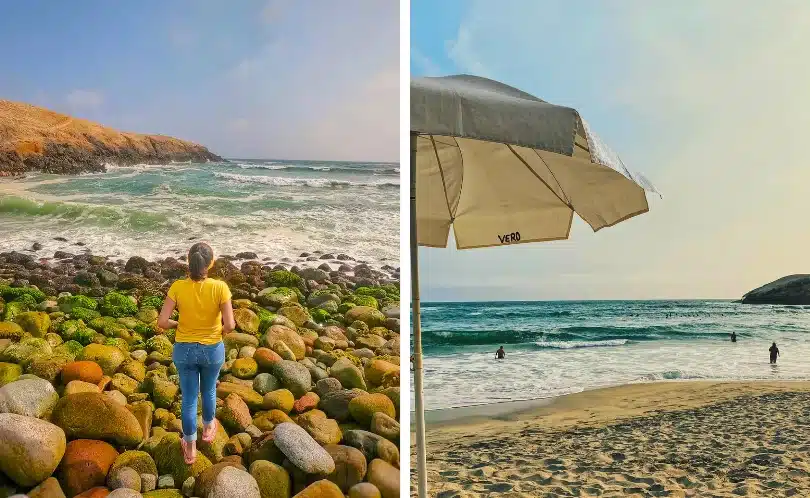
Punta Hermosa is one of Peru’s major surf destinations. The district contains several beaches and breaks with very different conditions, so it should not be treated as one uniform swimming area.
- How to get there: Around one hour south of central Lima by road in favorable traffic via the Panamericana Sur.
- Access: Generally free.
- Best for: Surfing and beach-town stays near Lima.
- Swimming: Check the specific beach, swell and lifeguard guidance.
Santa María del Mar
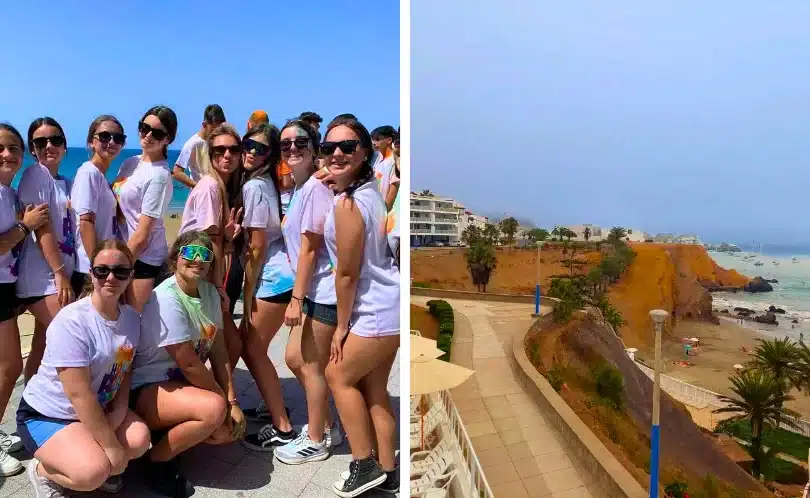
Santa María del Mar is a useful option for travelers looking for a traditional summer beach day without heading far from the capital.
- How to get there: Roughly 1 hour to 1 hour 15 minutes south of Lima in favorable traffic.
- Access: Generally free.
- Best for: Families and summer beach days.
- Swimming: Follow local warning flags and lifeguard guidance because conditions can change.
San Bartolo
San Bartolo combines a year-round surf community with a lively summer beach-town atmosphere.
- How to get there: Approximately 1 hour to 1 hour 15 minutes south of Lima in favorable traffic.
- Access: Generally free.
- Best for: Surf, restaurants and weekend coastal stays.
- Season: December through March is the main beach-day period, while surfing continues outside summer.
Huanchaco for surf and coastal culture
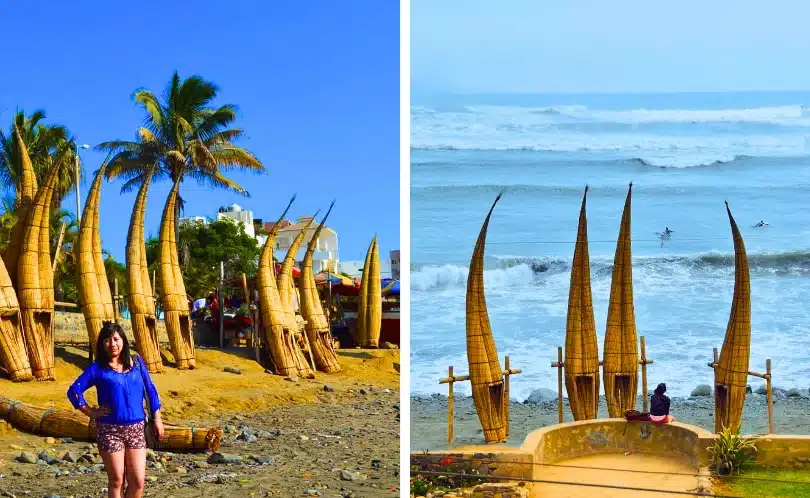
Huanchaco, near Trujillo in La Libertad, combines a long surfing tradition with the caballitos de totora, traditional reed watercraft that remain part of local artisanal fishing culture.
- How to get there: Continue from Trujillo by taxi, local transport or private transfer.
- Access: Free.
- Best for: Surfing, coastal culture and travelers combining the beach with attractions around Trujillo.
- Swimming: Wave and current conditions vary, so check locally before entering the sea.
Southern Peru beaches and coastal scenery
Paracas is primarily a coastal nature destination rather than a classic resort area. The Paracas National Reserve lies about 169 mi (272 km) south of Lima, with a road journey of roughly four hours depending on traffic and transport.
The reserve currently lists a general one-day entrance fee of S/11. SERNANP also maintains a promotional S/17 reference for combined access involving the Paracas National Reserve and the Ballestas Islands sector.
Current reserve information is available through the official SERNANP Paracas National Reserve page.

For the marine wildlife excursion itself, use the Ballestas Islands guide.
La Mina in Paracas National Reserve
La Mina is a better fit for a list of actual beaches than using “Paracas” as if the entire destination were one beach. Its sheltered setting and desert surroundings make it one of the reserve’s better-known beach stops.
- How to get there: Enter the Paracas National Reserve and follow the authorized visitor route toward the beach.
- Access: Included within the reserve entrance system.
- Best for: A beach stop combined with desert-coast scenery.
- Swimming: The setting can be more sheltered than exposed Pacific beaches, but daily conditions still need to be checked.
Playa Roja
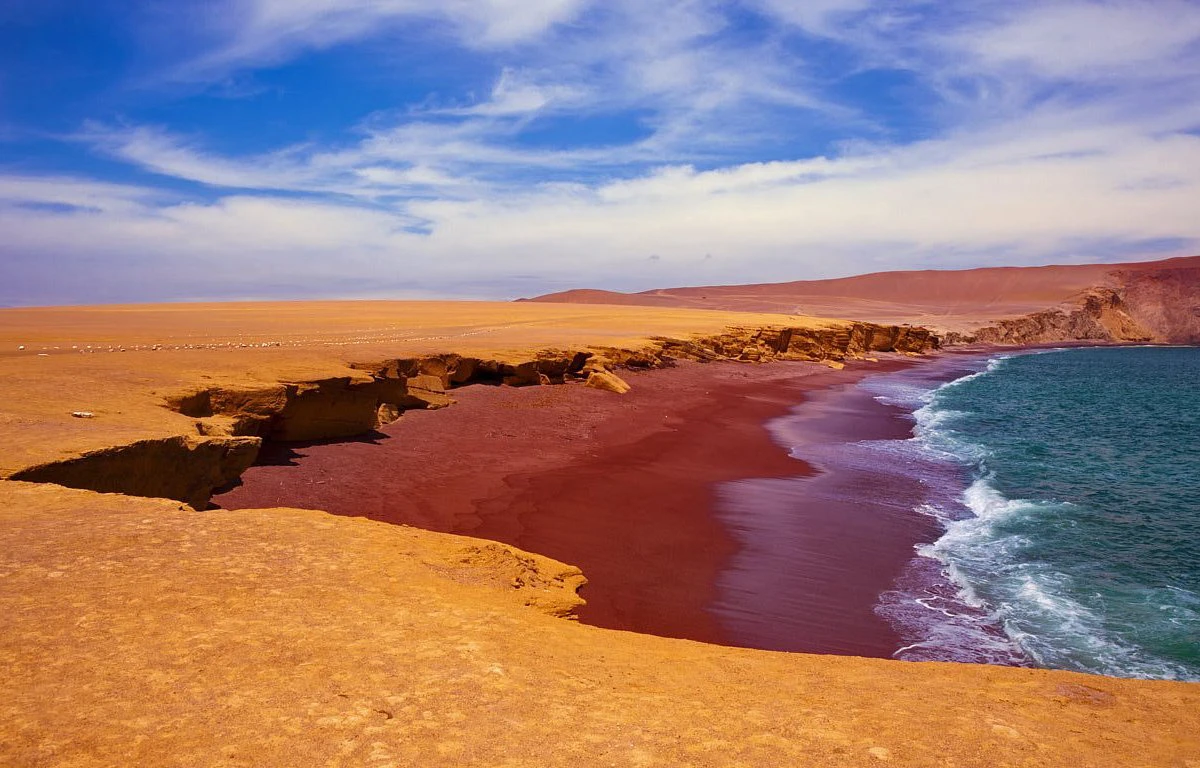
Playa Roja is one of Peru’s most distinctive coastal landscapes. Its reddish shoreline contrasts with the blue Pacific and surrounding desert, but its main value is scenery rather than swimming.
- How to get there: Visit via the authorized roads and visitor circuit inside Paracas National Reserve.
- Access: Included within the reserve visit.
- Best for: Photography, geology and desert-coast scenery.
- Swimming: Do not treat Playa Roja as a general swimming recommendation.
Choose a Peru beach by travel style
| Travel style | Strong options | Why |
| Relaxed swimming-oriented beach day | Punta Sal, Vichayito, La Mina | Useful starting points when daily sea conditions are suitable |
| Surfing | Máncora, Punta Hermosa, Makaha, Huanchaco | Established Pacific surf destinations with different breaks and skill levels |
| Families | Punta Sal, Santa María del Mar | Beach-day atmosphere and accommodation or services nearby |
| Nightlife and restaurants | Máncora | The strongest beach-town combination of nightlife, dining and lodging |
| Quiet stay | Vichayito, Zorritos, Los Órganos | Lower-key alternatives to the busiest northern beach towns |
| Coastal culture | Huanchaco | Surf heritage and the caballitos de totora tradition |
| Wildlife | Los Órganos, Paracas coast | Whale watching in the north and marine wildlife around Paracas |
| Scenery and photography | Playa Roja, La Mina | Desert coastline, unusual colors and reserve landscapes |
Warning:
A beach should not be assumed to be safe for swimming based only on its appearance. Check currents, warning flags, lifeguard guidance and the latest sanitary classification before entering the water. Peru’s DIGESA updates beach health evaluations through the Verano Saludable platform.
When to visit Peru’s beaches
The best beach season depends on the part of Peru you are visiting. December through March is the main summer period for Lima and much of the central coast, while Tumbes and Piura remain warmer and more beach-oriented for a larger part of the year.
| Coastal region | December–March | June–September |
| Tumbes / Piura | Hot summer conditions and strong beach-holiday atmosphere | Still comparatively mild; July onward also overlaps whale season |
| Lima | Warmest and sunniest period for beach days | Cooler, cloudier and more humid conditions |
| Paracas / Ica | Sunny desert-coast conditions with strong sun and wind possible | Cooler conditions, but the reserve remains useful for nature visits |
For northern wildlife trips, July through October is the main humpback whale-watching window identified by PROMPERÚ along the Piura and Tumbes coast.
What to pack for Peru’s coast

- Sunscreen.
- Hat or cap.
- Sunglasses.
- Swimsuit.
- Comfortable sandals or water-friendly footwear.
- Light layer for wind or cooler evenings.
- Reusable water bottle.
- Water-resistant protection for your phone and travel documents.
Choose the Peru coast that matches your trip
Northern Peru is the stronger choice if you want a multi-day beach stay with warmer conditions, while Lima makes it easier to combine surfing or a beach day with a city itinerary. Paracas is the better fit when marine wildlife and dramatic desert landscapes matter more than a traditional resort experience.
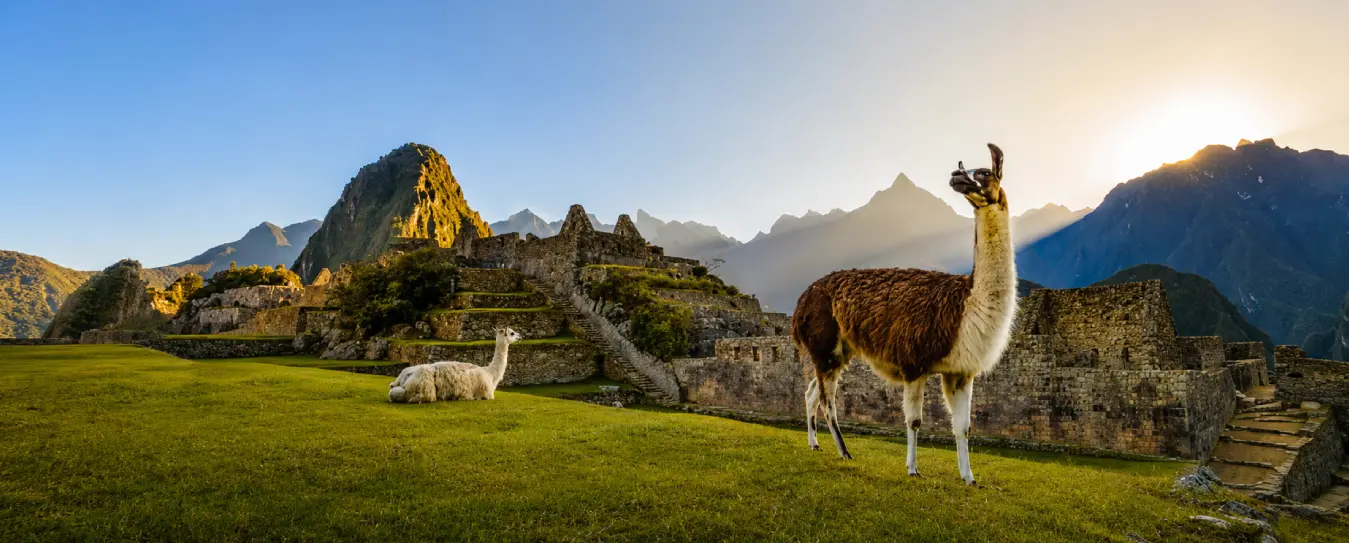
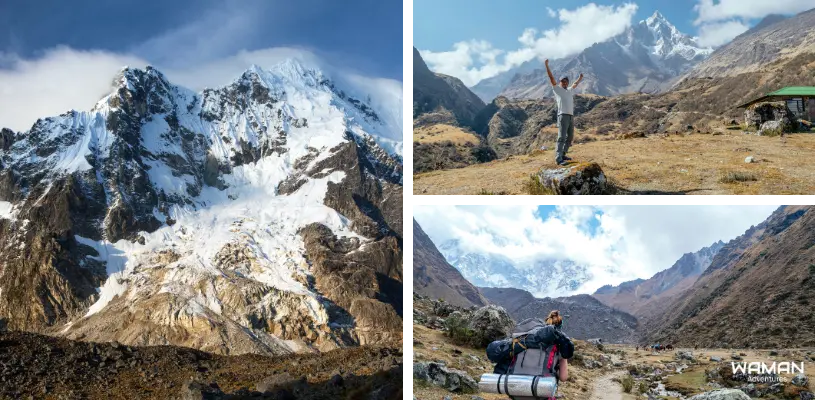
If you want to combine the coast with Machu Picchu, Cusco or other parts of the country, you can plan your Peru trip with Waman Adventures and organize the coast as part of a broader itinerary.
Frequently asked questions about the best beaches in Peru
What are the best beaches in Peru?
Does Peru have good beaches?
What are the best beaches in Peru for swimming?
What are the best beaches near Lima?
Are Peru’s beaches safe for swimming?
What is the best time to visit Peru’s beaches?
Which beaches in Peru are best for families?
When can you see whales near Peru’s northern beaches?

Share:



If you liked this article and the information you found, give us 5 stars!
Table of Contents
Related blogs


Hotels in Uyuni Salt Flats Offering Star Views and Andean Charm
12 min of reading
The Best Museums in Lima for Art, History, and Culture Lovers
8 min of reading