15 Stunning Places You Can Explore Maximizing Your Cusco Tourist Ticket
Ultima actualización en 29 November, 2024 por Waman Adventures
Last Updated on 29 November, 2024 by Waman Adventures
- WHAT YOU NEED TO KNOW ABOUT THE CUSCO TOURIST TICKET
- Archaeological sites you can visit with your Cusco tourist ticket
Welcome once again! Today we will discuss the best places to visit in Cusco with the famous Tourist ticket. Many visitors have questions about the Cusco tourist ticket, especially since most tours in the city require it. With this ticket, you can access numerous sites in Cusco and even some located just a few hours away. In total, there are 15 places that this ticket gives you access to. None of these sites offer individual entry tickets, so this information is essential for anyone who wants to explore these fantastic locations.

Plaza de Armas – Cusco
WHAT YOU NEED TO KNOW ABOUT THE CUSCO TOURIST TICKET
- It is personal and non-transferable.
- There are two types of tickets: General and Partial.
- General Ticket: Valid for 10 days and grants access to all sites.
- Partial Ticket: Valid for 2 days.
Where to Buy the Cusco Tourist Ticket?
You can purchase the Cusco tourist ticket at Avenida El Sol 103, from 8 AM to 6 PM, Monday through Sunday.
How much does the Cusco Tourist ticket cost?
- General Tourist ticket Cusco Foreign: 130 soles
- Cusco half ticket pass Foreign: 70 soles

General Entry Ticket
Archaeological sites you can visit with your Cusco tourist ticket
Sacsayhuamán
Known as the fortress of Sacsayhuamán, this is a truly one of a kind archaeological site located just a few minutes from the city of Cusco, at an altitude of 12,140 feet (3,700 meters). Built by the Inca Pachacutec in the 15th century and completed by the Inca Huayna Cápac in the 16th century, Sacsayhuamán is considered the greatest example of megalithic architecture in the Inca Empire.
Within the archaeological complex, there are several key areas you should not miss.
-
- Towers at Sacsayhuamán
The towers of Muyumarca, Sallaqmarca, and Paucarmarca are located at the top of the fortress in a straight line. These areas used to contain water, and today you can still see the aqueducts.
-
- Rooms at Sacsayhuamán
These are rectangular rooms with views of the city’s plazas, long and narrow, connected by narrow, trapezoidal doors.
-
- Doors at Sacsayhuamán
Located in the central area, the doors are trapezoidal and serve as the main entrances to the towers. Each of these doors has a different name: Tiopunku, Ajawanapunku, and Wiracochapunku.

Sacsayhuaman, Cusco-Peru
Qenqo
Located at the top of a small hill, Qenqo was a small Inca worship center. Its name comes from the Quechua word meaning “labyrinth.” This fascinating site stands out because of its numerous rock carvings. The entire complex is filled with countless intricate figures and staircases. At the top, there are rock formations that are believed to be a small solar clock used by priests and astronomers. A curious fact is that during the winter solstice, the first rays of the sun shine directly on this clock.
The site also contains mysterious underground tunnels, filled with stories yet to be told. These enigma-filled paths are carved with stairs, niches, and sacrificial altars. Qenqo is an unmissable site during your visit to Cusco, and you can also take some of the most Instagram-worthy photos in the eucalyptus forest nearby.
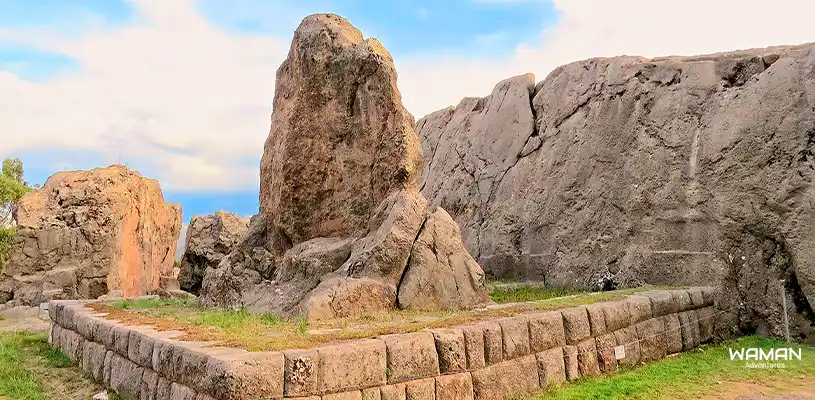
Qenqo Archaeological Site
Puka Pukara
Just 30 minutes from Cusco, at an altitude of 11,745 feet (3,580 meters), there is the red fortress of Puka Pukara. This site served as a military and administrative location designed to protect the Inca. Its strategic positioning offers panoramic views of the surrounding area, making it a must-see during your trip.
Tambomachay
Located very close to Puka Pukara, Tambomachay, also known as the Baths of the Inca, means “Place of Rest.” This site was dedicated to water and features multiple fountains, terraces, channels, and water sources.
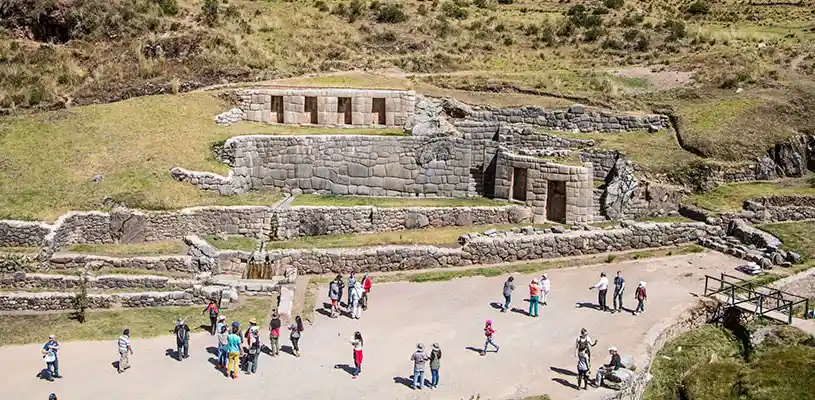
Tambomachay
Pisac
Pisac is one of the must-see destinations in Peru. Located 20.5 miles (33 kilometers) from Cusco in the Sacred Valley of the Incas, Pisac is an archaeological site with different kind of features such as terraces, aqueducts, and walls. The site spans an impressive 2.5 miles (4 kilometers).
Some of the places you will visit include:
- Terraces Group: Composed of 40 terraces that form a triangular shape, these terraces offer one of the first views of the entire Pisac area.
- Intiwatana District: This is the main area of Pisac, where there are the temples and palaces with more intricate architecture.
Other interesting places to explore include the Pisaq’a neighborhood, the Qanchisraqay neighborhood, and the K’allaqasa neighborhood.
Pisac is open daily from 7 AM to 4 PM.

Pisac Archaeological Site
Ollantaytambo
Located in the Sacred Valley, Ollantaytambo is one of the most important archaeological sites. Its name comes from the Quechua word meaning “place to look down.” Ollantaytambo is a great example of Incan military, agricultural, and astronomical site. It is well known for its terraces and temples built beneath the Andes Mountains. It is one of the few sites that has retained its original structure and maintains a very strong connection with the past.
During the Spanish conquest, Ollantaytambo served as the place of one of the greatest battles between the Incas and the Spanish forces.
The site features stunning Inca structures, including:
- The Royal House of the Sun
- The Temple of the Sun
- The Choqana Fortress
- The Ñusta Bath
- The Terraces
Ollantaytambo is also considered a living Inca urban center, as much of the original Inca layout and design is still visible today.

Credits: Ryan Somma, Mario Cuitiño
Moray
At first quick look, Moray might look like a small amphitheater, but it is actually a fascinating and breathtaking tourist site. The name Moray comes from the Quechua word meaning “land taken since earthquake times.” This place is very famous for its impressive system of terraces, which form concentric circles. These giant terraces were once used as an agricultural research center, where crops from different altitudes were cultivated. The multiple terraces create up to 20 different microclimates, each with different growing conditions.
Chinchero
Just 35 minutes away from Cusco, Chinchero is a perfect example of the huge syncretism between Inca and Spanish cultures. Here, there is the Chinchero Archaeological Park, an important site that belonged to the Inca Tupac Yupanqui in the 15th century. The archaeological center includes several huacas (sacred places), with one of the most notable being “Pumaqaqa,” where you can see two puma sculptures, their heads carved off.
The Chinchero Temple, built in the 16th century, is another must-visit spot. It has beatiful murals dedicated to the Virgin “Nuestra Señora de Montserrat de Chinchero.” You can also shop for souvenirs at the Chinchero market, and if its your desire to learn more about local textile traditions, visit one of the textile interpretation centers.
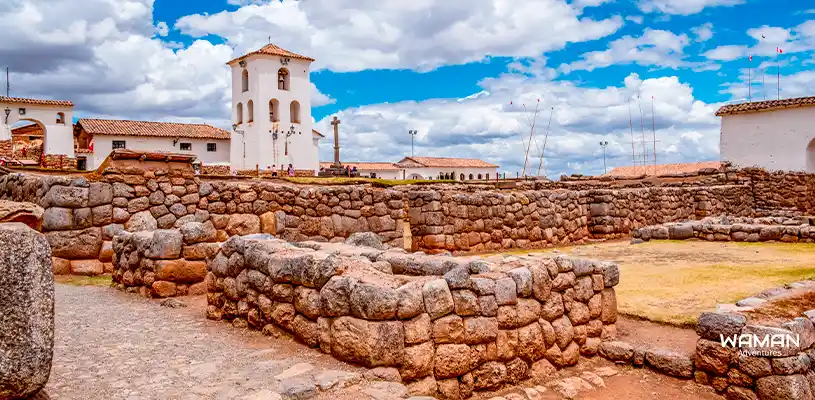
View of the Chinchero Church and Archaeological Site
Tipón
Tipón, located just 9 miles (15 kilometers) from Cusco, is an extraordinary site that highlights the advanced hydraulic engineering of the Incas. Here, we can find impressive water channels, terraces, and a series of perfectly structured irrigation systems. Tipón was used as an agricultural center and is a great place to marvel at Inca engineering and enjoy the beautiful natural surroundings.
The southern area of Cusco is where some incredible places captivate visitors by its astonishing constructions, and one of the most remarkable is the Tipon Archaeological Site. This site is considered a true masterpiece of hydraulic engineering, covering over 240 hectares and being part of the Qhapaq Ñan route.
In Tipon, it is possible to find impressive structures, terraces, irrigation works, and more. Among its main attractions are the Intiwatana, the viewpoint, and the Cruzmoqo. You can explore Tipon on your own, or you can join a South Valley tour to make the most of the experience.
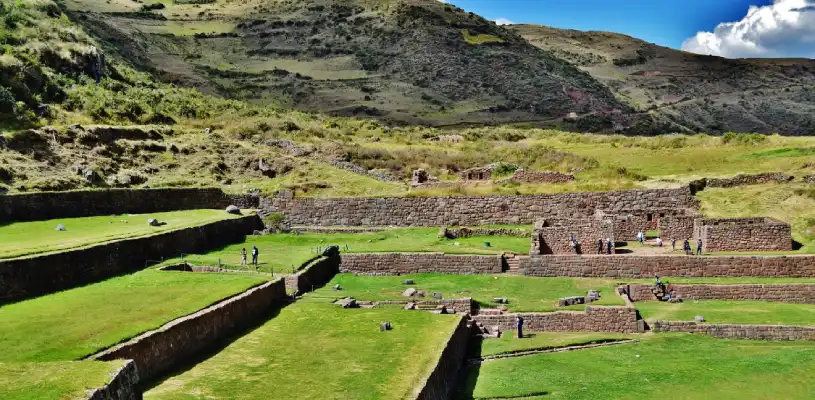
Tipon Archaeological Site
Pikillaqta
The Pikillaqta archaeological site is located in the district of Lucre, in the province of Quispicanchis, at an altitude of 11,000 feet (3,350 meters). It covers an area of 50 hectares, and Pikillaqta is a relic of the pre-Inca Wari culture, dating back to the 13th century. The name “Pikillaqta” comes from the Quechua words: Piki (flea or small) and Llaqta (town), meaning “The Town of Fleas” or “Small Town.”
The Wari civilization spread across much of Peru, and Pikillaqta is one of its finest examples of urban planning. You can visit this small town with a travel agency, and enjoy a tour that includes not only Pikillaqta but also Tipon and the Sistine Chapel of the Americas “Andahuaylillas”.

Pikillaqta Archaeological Site
Museums and Art Centers you can visit with your Cusco tourist ticket
Pachacutec Monument
Located just 10 minutes from the main square, the Pachacutec Monument was built in 1992 by the mayor of Cusco. Standing nearly 112 feet (34 meters) tall, the monument features a towering structure of the Inca Pachacutec himself, which reaches 37.7 feet (11.5 meters), while the cylindrical structure surrounding it reaches 73.2 feet (22.4 meters).
Inside, you can view an exhibition of photographs, infographics, maps, and historical panels explaining all the history of the city of Cusco. The museum is open daily from 9 a.m. to 7 p.m. and offers information in three languages: Spanish, English, and Quechua.

Inca Pachacutec Monument
Qosqo Native Art Center
The Qosqo Center showcases daily performances of music and dance. With a showcase of 50 traditional dances and a vast collection of traditional costumes, the center is home to 70 Peruvian artists who delight audiences with their talent. You can even take home a souvenir of the show by purchasing the DVDs with each dance performance.
Some of the dances you may see include:
- Cusco Carnival
- Tinta Carnival
- Checamarka Dance
- Qoyacha Dance
- Sonconacuy
The center offers performances every day starting at 8 p.m.
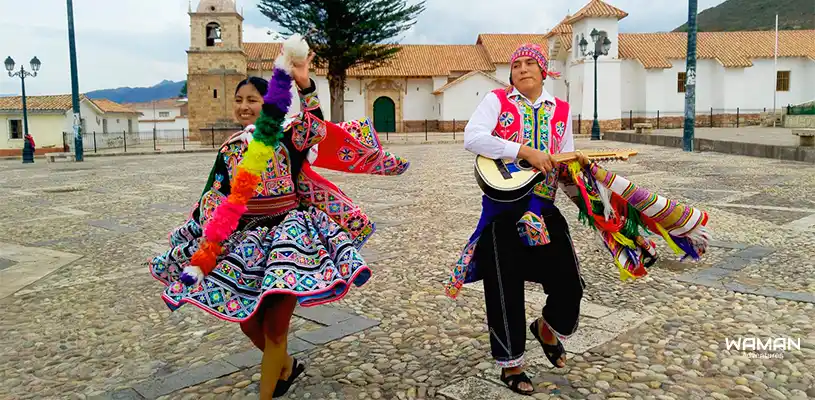
Tinta Carnival Dance
Qoricancha Site Museum
Located on the exact El Sol avenue, the Qoricancha Site Museum is a small space with five rooms that didactically teach the history and processes of human settlements that inhabited Cusco long time ago. Most of the exhibits are actually artifacts found there. Here, it is possible to find items such as pottery, metallurgy, textiles, paintings, sculptures, tools, and more.
The museum is open from 8:00 AM to 5:00 PM, and on Sundays, it is open from 2:00 PM to 4:00 PM. Entry is only permitted if you have a Cusco tourist ticket.
Popular Art Museum
At the Popular Art Museum, you can explore the finest collections of Cusco art since 1940. Among the showed pieces are works by famous artists such as Hilario Mendivil, Edilberto Mérida, and Antonio Olave. There are also numerous sculptures, ceramics, and photographs on display. One of the most iconic exhibits is the religious sculptures by the Mendivil family, known for their elongated necks, including the Virgin of Belen and the Holy Family. Another notable collection includes the “Manuelitos,” small ceramic figures of the child Jesus with a Cusco twist.
The museum is open Monday to Saturday from 8:30 a.m. to 6 p.m., and on Sundays and holidays, it is open from 8 a.m. to 1 p.m. Entrance is free with the Cusco tourist ticket.
Contemporary Art Museum
The Contemporary Art Museum houses more than 280 pieces from local, national, and international artists. Located in Cusco’s municipal building, the museum has three exhibition rooms. The oldest artwork in the collection is an oil painting of the “Vilcanota River” by Remigia Mendoza, created in 1897. The museum regularly hosts exhibitions and art events throughout the year. It is open from Monday to Saturday, from 9 a.m. to 1 p.m.
Regional Historical Museum
Housed in the former Inca Garcilaso de la Vega Chimpu Ocllo’s residence (considered the first mestizo), the Regional Historical Museum has 13 rooms showcasing paleontological, Inca, and colonial-era objects. On the first floor, it is viable to find artifacts and small sculptures from Cusco’s early populations, while the second floor focuses on the colonial, republican, and contemporary periods. The museum is open from 8 a.m. to 5 p.m., and on Sundays, it is open from 2 p.m. to 4 p.m. Access is only possible with a Cusco tourist ticket, which is a must-have for exploring the city’s attractions.
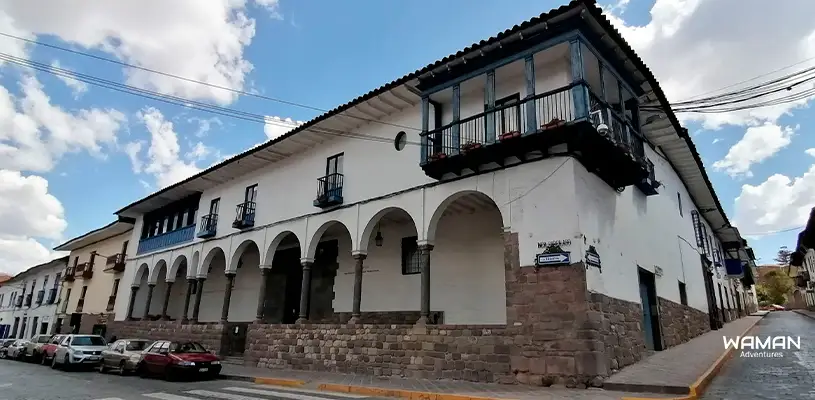
Regional Historical Museum
Don’t Miss Out: Explore More Treasures
If you are planning your trip to Cusco, the Cusco tourist ticket gives you access to a wide range of these incredible attractions, making it a fundamental tool for any first-time visitor. But the ticket doesn’t only cover historical sites—if you’re also looking for outdoor adventures, you can explore alternative marvelous hiking routes at Machu Picchu, the great and stunning Rainbow Mountain, Vinicunca, or read some key trekking tips to make your hike even more amusing.
Let’s summarize it:
If you are wondering where to buy the Cusco tourist ticket, you can get it directly at various authorized points in the city or conveniently buy the Cusco tourist ticket online before your trip. The Cusco tourist ticket price is a great deal considering all the attractions it grants access to, and it’s important to note that the full Cusco tourist ticket validity lasts for ten days, giving you the flexibility to explore at your own time, so you can visit more sites there!
So, if you are planning to make the most of your time in the Sacred Valley, remember to invest in the full Cusco tourist ticket, which includes different spectacular sites in Cusco and beyond. The Cusco Sacred Valley tourist ticket is particularly useful if you want to explore the Sacred Valley’s magnificent ruins and learn more about the rich history of the Incas.
No matter your preferences, the Cusco tourist ticket attractions offer something for everyone, from history geeks to nature lovers. Whether you are interested in Cusco Peru tourist ticket options or want to find out more about the Cusco tourist ticket worth it, is an essential part of your journey through this magical city.
Share:



If you liked this article and the information you found, give us 5 stars!
Table of Contents
Related blogs
Best Way to Get to Machu Picchu — Which Route Fits Your Trip?
11 min of reading
Route of the Sun: Cultural Highlights Between Cusco and Puno
6 min of reading