Cusco Souvenirs: Authentic Andean Crafts Every Traveler Should Bring Home
Ultima actualización en 21 November, 2025 por Waman Adventures
Last Updated on 21 November, 2025 by Waman Adventures
Buying Cusco souvenirs is one of the easiest and most beautiful ways to take a piece of the city’s culture home. In markets like San Pedro and San Blas, you’ll find alpaca textiles, ceramics, and handmade jewelry crafted by local artisans. Each item tells a story and reflects the living traditions of the Andean world. In this guide, you’ll learn how to choose wisely, identify authentic pieces, and support true Cusco craftsmanship.
What makes Cusco souvenir authentic
When you’re in Cusco and looking for that special memory to take home, remember that authentic souvenir isn’t just any pretty object: it’s piece holding living essence of Andean culture.
Genuine souvenir reflects history, identity, and work of communities that have transmitted their knowledge from generation to generation. That’s why each textile, each ceramic or jewelry has behind it talent of artisans still using same techniques as their ancestors.

Essential souvenirs to bring from Cusco
These are most representative items with greatest cultural value:
Alpaca and baby alpaca textiles
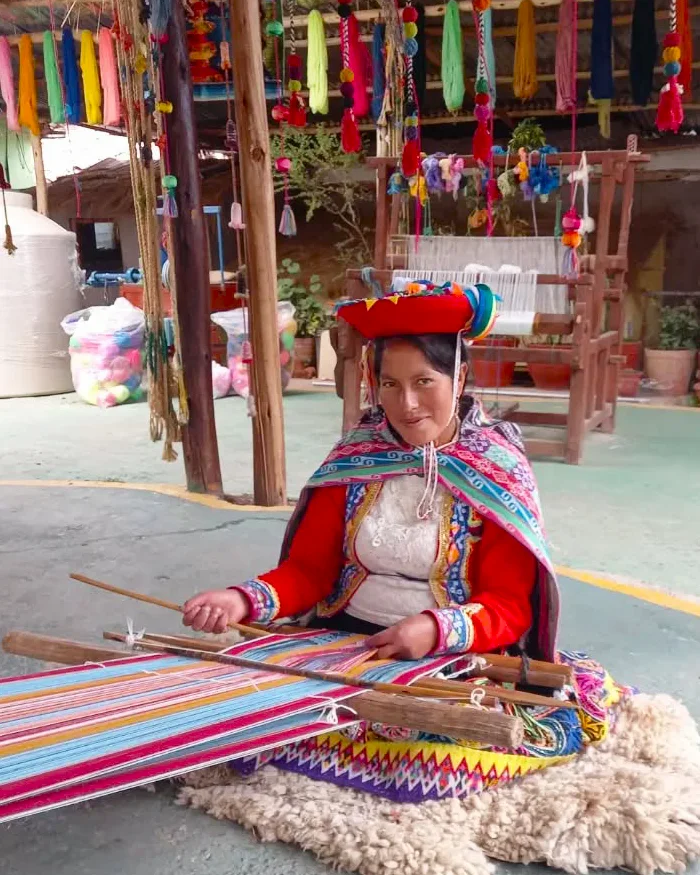
If there’s something distinguishing Cusco, it’s its textiles. Alpaca wool is one of most valued fibers of Andes because it’s warm, lightweight, hypoallergenic, and with excellent thermal insulation. That’s why you’ll see it in scarves, ponchos, blankets, and very high quality sweaters.
Each design has its own language. Geometric motifs, mountain figures, animals, and Andean crosses (chakana) represent Andean world’s worldview. Each community preserves its own style and combines colors expressing identity and territory. If you observe carefully, you’ll see no authentic textile is like another.
“Chullo” hats
You’ve surely seen them: those colorful hats with earflaps seeming made for high altitude cold. Chullo is quintessential Andean symbol. It’s hand knitted with alpaca, llama, vicuña, or sheep wool, depending on region.
Beyond being warm garment, each chullo has meaning. Its colors, patterns, and shapes can indicate which community wearer comes from. Formerly, it even served to distinguish lineage or marital status. Taking one is like carrying part of Andes’ living history.
Silver jewelry
If you prefer something small but with great symbolic value, look for Andean jewelry. Pieces are usually made in sterling silver (925 or 950) and decorated with sacred symbols like chakana, condor, sun, or coca leaf.
Each jewel has meaning: chakana represents universe’s balance, condor symbolizes connection with gods, and sun is source of life.
These pieces are manufactured in local workshops or specialized communities, and their value depends on design, metal purity, and artisan’s reputation. If you see sterling mark, it’s good sign of authenticity.
Did you know…?
Sterling silver is marked as 925/950; number indicates purity (92.5% or 95%).
Traditional ceramics: Pucará bulls, vessels, and decorative figures
Among most emblematic objects is Pucará Bull, Peruvian crafts classic. It was born in Checca Pupuja community, in Puno, and today adorns many Cusco rooftops as symbol of protection, prosperity, and fertility.
You’ll also find painted vessels, animal figures, ritual urns, and sculptures reflecting Andean life. Local ceramists use region’s clays and mineral pigments, and fire pieces in wood ovens, giving them that rustic and warm finish you won’t find in industrial pieces.
If you see figure has slight imperfections, don’t take it as defect on contrary it’s trace of artisan’s manual work.
Andean musical instruments
Music is also part of Cusco identity. In markets you’ll see zampoñas (sikus), quenas, and charangos, all handmade.
Zampoña produces those deep and melancholic melodies typical of Andes; quena, carved from reed or bamboo, has sweeter sound; and charango, similar to small guitar, is made with wood or, formerly, with armadillo shell.
If you’re passionate about music, don’t hesitate to take one. Some artisans even let you try them before buying.
Gastronomic souvenirs
Artisan chocolate, made with fine aroma cacao grown in Cusco jungle, is one of stars. You’ll find “bean to bar” bars, prepared from bean to packaging, with touches of quinoa or coffee.
Cusco coffee is also recognized for its quality: it’s grown in high areas, has complex aromatic profiles, and sold in specialty micro lots.
Additionally, you can buy Andean grains like quinoa, cañihua, kiwicha, or purple corn, and traditional herbs like muña, coca, or muña-coca. Just make sure packages are well sealed to transport them without problems.
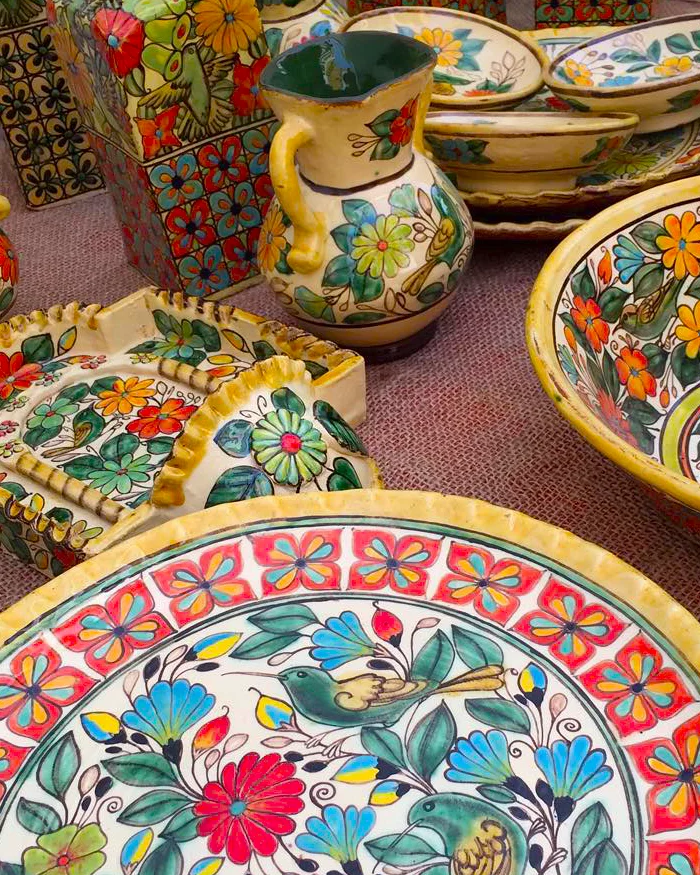
Where to buy souvenirs in Cusco
San Pedro Market
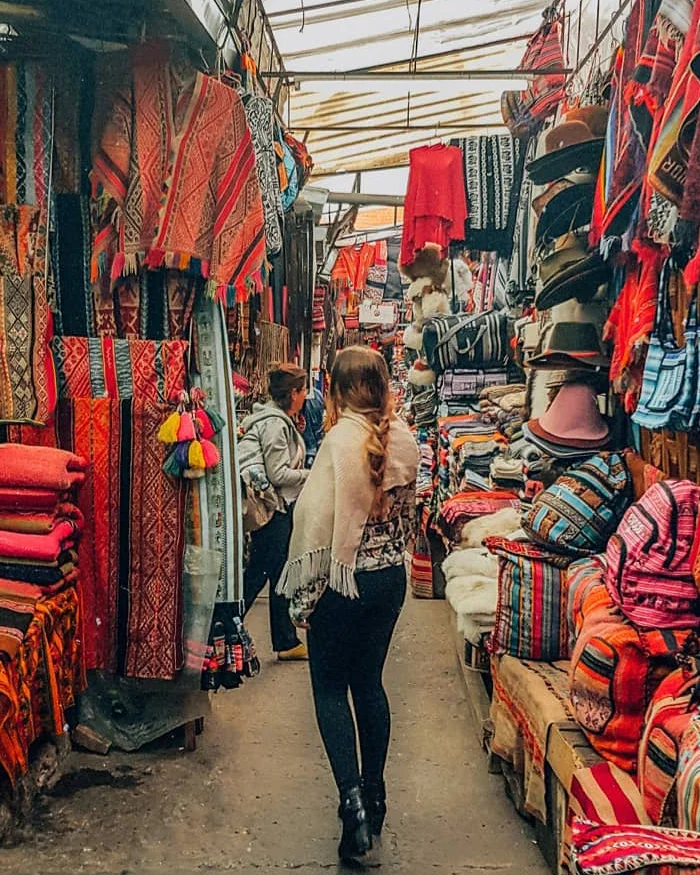
Just few blocks from Plaza de Armas you’ll find famous San Pedro Market, classic of Cusco’s historic center. It’s one of city’s largest and most varied markets. There you’ll see everything: groceries, fruits, natural juices, medicinal herbs and, of course, large crafts section.
In artisan area you can discover hand woven textiles, silver jewelry, traditional ceramics, and colorful souvenirs, all made by local artisans. It’s ideal place if you enjoy exploring stalls, comparing prices, and chatting with vendors.
Advantages
- Prices are usually lower than tourist center stores; if you look well, you can find true gems at very convenient prices.
- Atmosphere is completely local: you’ll see Cusco residents doing their shopping, hear Quechua, and feel city’s daily life.
- It’s authentic and cultural experience, perfect for those wanting to mix with local people.
Cusco Artisan Center (Av. El Sol and Tullumayo)
If you prefer quieter and more organized space, Cusco Crafts Center is great option. It’s located on Avenida El Sol itself, very close to bus terminal and several hotels.
This market was designed to offer more comfortable experience, stalls are organized, aisles are wide, and there’s wide variety of textiles, ceramics, jewelry, sculptures, and decorative paintings.
Advantages
- It’s more organized and safe place, ideal if you don’t want to deal with traditional markets’ bustle.
- You can speak directly with artisans, ask about their techniques and materials, and even learn meaning of designs.
- It has good quality price ratio, and its location is perfect if you plan to move around city or toward Sacred Valley.
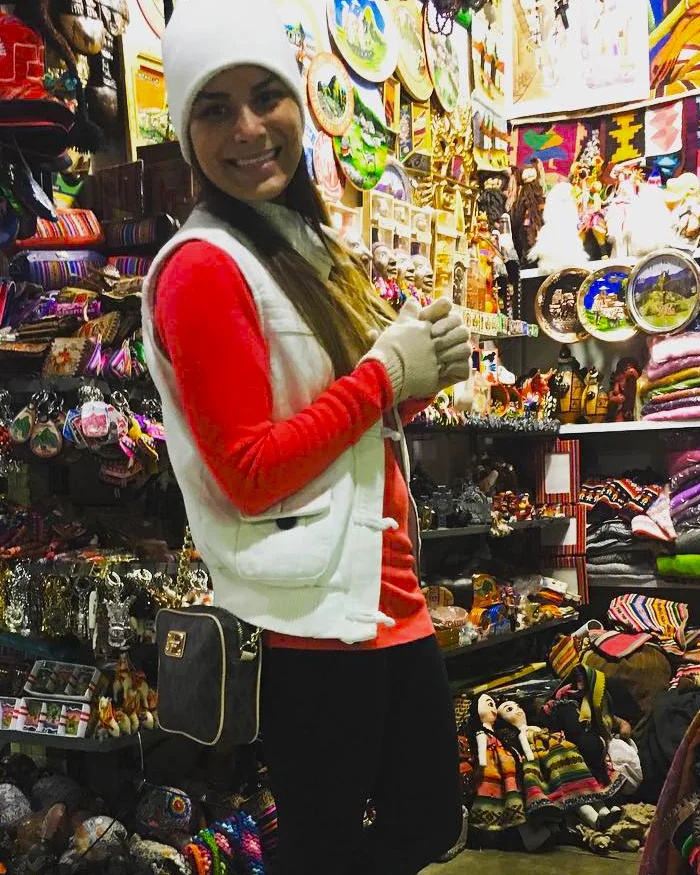
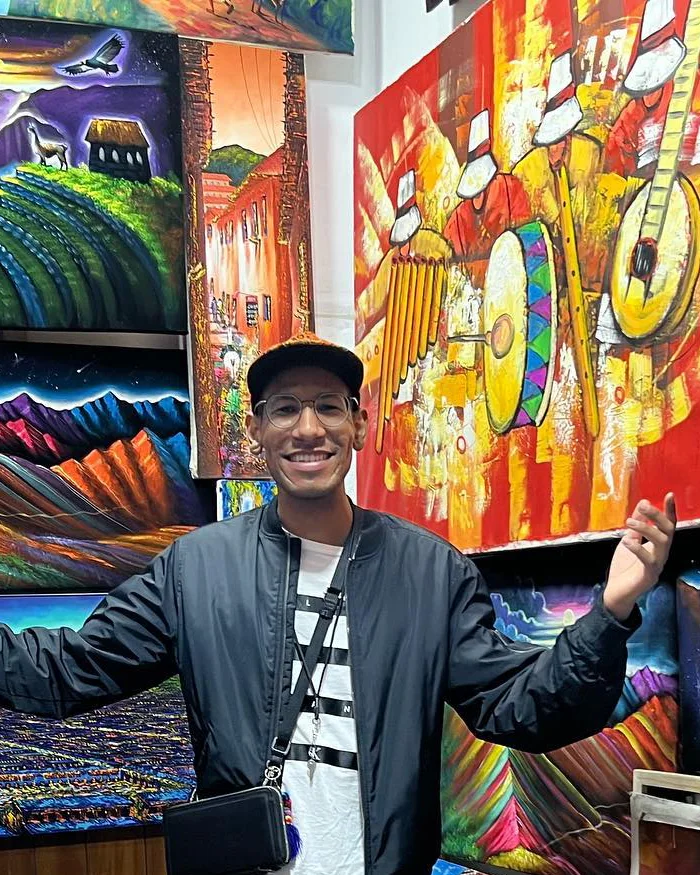
San Blas neighborhood
San Blas neighborhood is, without doubt, Cusco’s artistic heart. Its narrow cobblestone streets will lead you to workshops, galleries, and charming cafés.
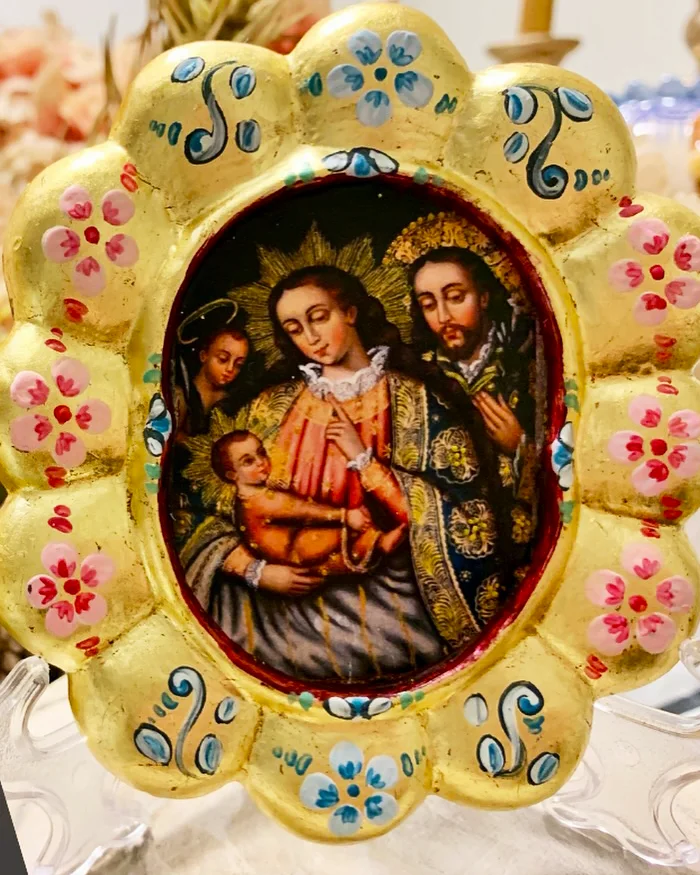
Here you can see artisans working in front of you, painting, carving, or weaving while talking about their art. If you seek something truly unique, in San Blas you’ll find author pieces, small sculptures, altarpieces, and contemporary works inspired by Andean tradition.
Advantages
- You have opportunity to buy directly from artist and see how they bring their work to life.
- It’s ideal if you like original art, with style and meaning.
- Neighborhood’s bohemian atmosphere, its city views, and small stores make experience charming.
Pisac Market (Sacred Valley)
If your route includes Sacred Valley, you can’t miss Pisac Market, one of Peru’s most famous. It’s less than hour from Cusco, in picturesque Pisac town.
Every Sunday, streets fill with life and artisans arrive from different communities to sell their products. You’ll see high quality textiles, ponchos, scarves, painted ceramics, jewelry, and decorative items.
Advantages
- You’ll find unique pieces not always seen in city markets.
- You can buy directly from artisans, supporting their work and learning their story.
- It’s excellent opportunity to combine your shopping with walk through Pisac ruins and Sacred Valley’s beautiful landscape.
Remember that:
Keep receipts they’re useful for exchanges, shipments, or to declare at customs if needed.
Chinchero Market
About 45 minutes from Cusco is Chinchero, Andean town famous for its traditional textiles. Here you’re not just buying, but seeing how weavers work with ancestral techniques, spinning wool, dyeing it with natural colors, and weaving on backstrap looms.
Their products are considered among Sacred Valley’s most authentic, because they come directly from communities without intermediaries.
Advantages
- Textiles are authentic and high quality, made with patience and ancestral knowledge.
- Rural and tranquil atmosphere lets you know more genuine and closer Cusco.
- You can observe entire artisan process and understand each piece’s real value.
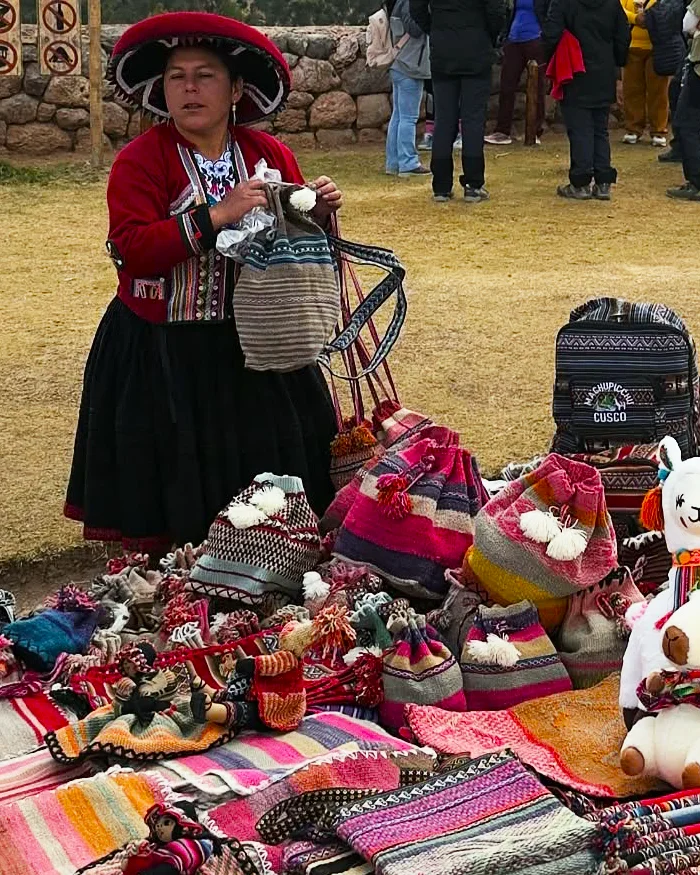
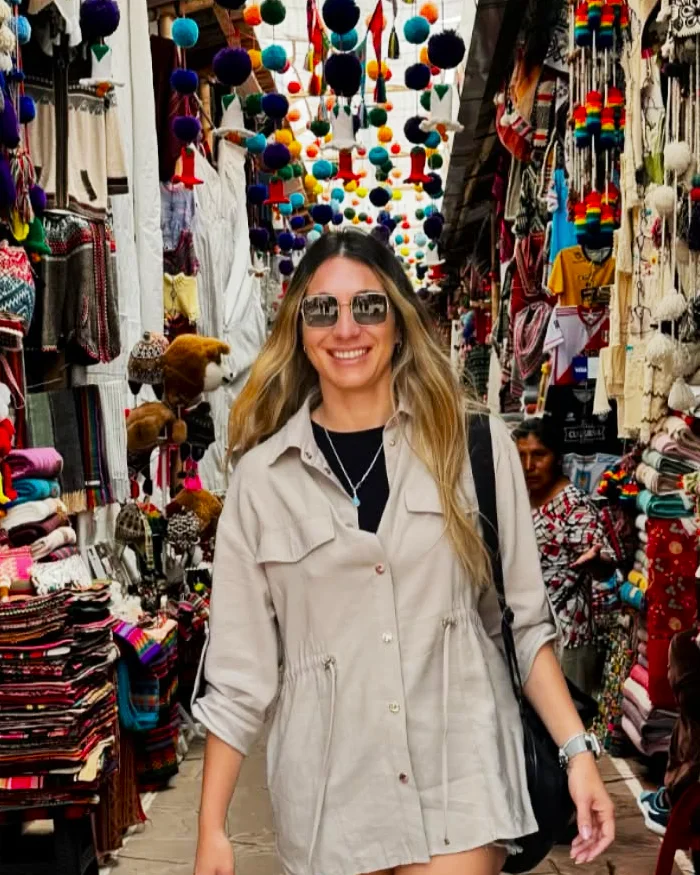
Cusco souvenirs how to recognize quality
If you’re going to buy Cusco souvenirs, especially textiles or jewelry, it’s important you know how to distinguish authentic from what only seems to be.
1. Touch, temperature, and weight test
Always start with touch: garment made with authentic alpaca feels soft, lightweight, and cool on contact with skin, never warm like synthetic fibers. Also, it shouldn’t itch or leave rough feeling.
When touching garment if it feels too light for its volume, it likely has mixture with acrylic or other synthetic material. Genuine alpaca has intermediate weight, feels firm and with natural drape.
2. Dyes, tonalities, and shine
Look at colors carefully. Authentic garments, dyed with natural pigments, show soft, earthy, or slightly irregular tones, as if color breathes. That natural variation is sign of artisan work.
If you see fluorescent, too bright, or even colors, it’s almost certain industrial dyes were used or garment is imitation.
Alpaca’s natural shine is elegant and discreet; in contrast, textiles with synthetic fibers usually have plastic shine, more “artificial.”
3. Seams, edges, finishes, and internal structures
It’s not enough to look at garment outside: flip it over and observe seams.
Good quality garment is recognized by its clean finishes, well hemmed edges, and carefully cut threads. Some are woven without visible seams, demonstrating high level of technique.
Weaving stitches should be uniform, but not perfectly identical. Slight irregularity indicates it was handmade, not by machine. Those small differences are artisan’s signature.
Prices
If price is too good to be true, it probably isn’t. Alpaca fiber, especially baby alpaca, is scarce and valuable, so its cost reflects work and material quality.
If they offer you “100% baby alpaca” sweater at very low price, it’s most likely mixture. It’s fine if you decide to buy it, but do so knowing what you’re paying for.
Comparing prices between stalls will help you recognize real range of each product type.
4. Jewelry: marks, alloys, and hallmarks
Authentic jewel usually has weight, natural shine and, often, hand carved symbolic details: chakana, sun, condor, or local stones like turquoise and Peruvian opal.
If you can, ask vendor about piece’s origin or workshop where it was made.
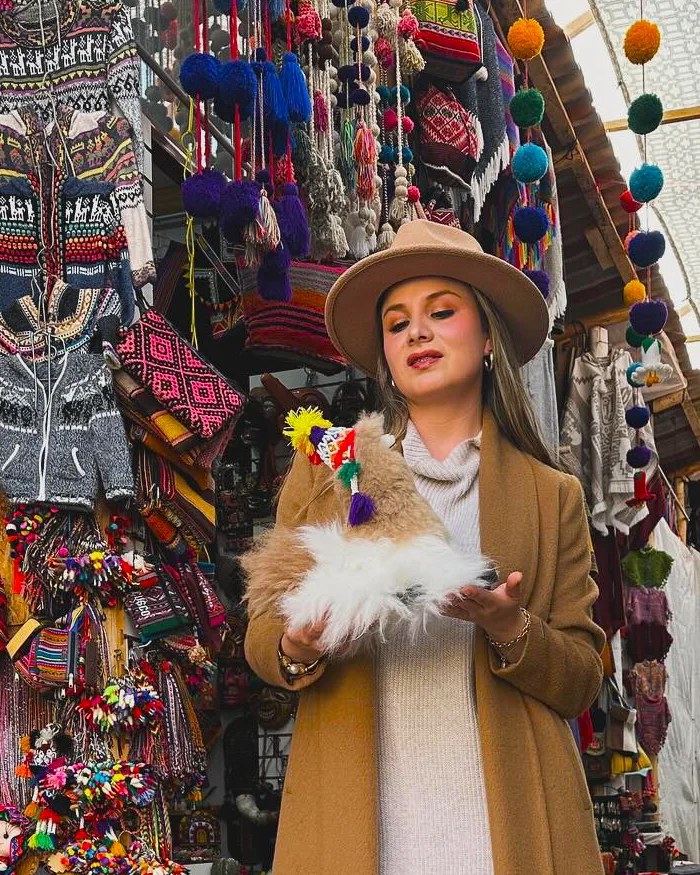
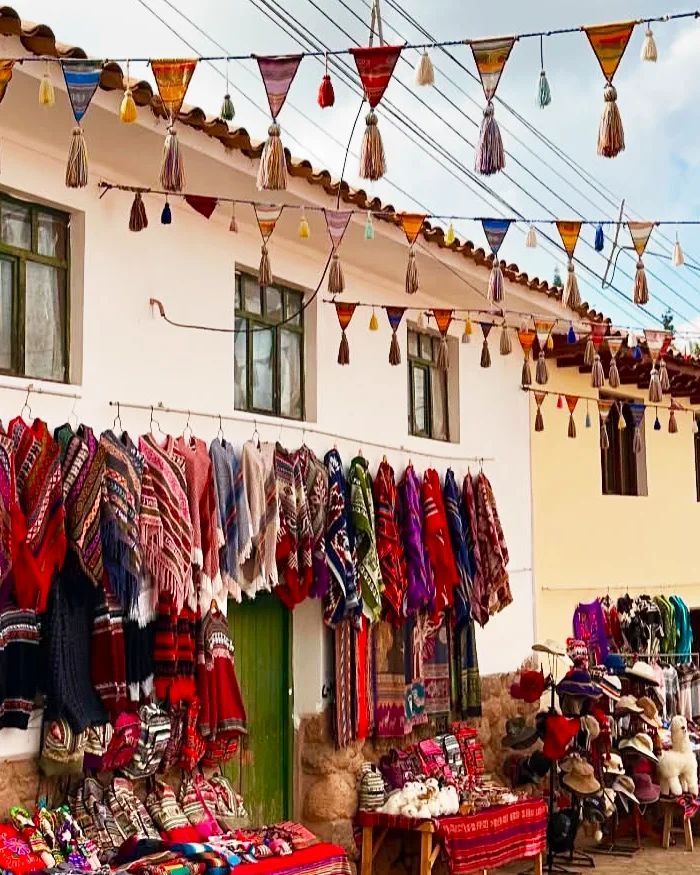
Reference prices (2025)
| Product | Average price (S/) | Approximate equivalent (USD) |
| Artisan chullo | 40 – 120 | $11 – $32 |
| Alpaca scarf | 80 – 250 | $21 – $66 |
| Baby alpaca poncho | 250 – 1,200 | $66 – $316 |
| Silver jewelry | 80 – 400 | $21 – $105 |
| Small altarpieces | 50 – 250 | $13 – $66 |
Carry your purchases without problems
- Wrap ceramics or glass with bubble wrap.
- Roll textiles to avoid wrinkles.
- Keep receipts or invoices.
- Make sure food items are packaged and sealed.
- Avoid buying wood or seeds without certificate.
- If you acquire large or fragile pieces, consider using courier service.
Responsible shopping
- Each of your purchases can make difference:
- Prefer buying directly from artisan.
- Ask if they use natural dyes and sustainable practices.
- Avoid materials from protected species.
- Prioritize few authentic pieces instead of many imitations
Bargain without making uncomfortable
- Offer between 20% and 30% less than initial price.
- Compare several stalls before deciding.
- Always thank, even if you don’t buy.
- Remember that in boutiques or stores with official labels bargaining is not customary.
Buying souvenirs in Cusco isn’t only way to remember your trip, but also authentic way to support Andean tradition and artisans keeping their heritage alive. If you still don’t know which pieces to choose or where to find them, at Waman Adventures we guide you to live this experience with confidence.
Let us accompany you to discover best markets, workshops, and local products. Contact us at +51 946 459 491 and start your journey connecting with Cusco’s art and living culture.
Frequently asked questions
What are best souvenirs from Cusco?
If you’re thinking about what to take as memory, bet on products representing Andean world’s essence. Alpaca and baby alpaca textiles, silver jewelry with Inca symbols, traditional ceramics, and Andean musical instruments are unique pieces with cultural value.
You can also find altarpieces, masks, and popular religious art reflecting Cusco’s spirit. Each tells story and carries work of communities keeping their traditions alive.
How to know if it’s real alpaca?
To recognize authentic garment, use your senses. Touch it: alpaca is very soft and doesn’t itch, unlike synthetic mixtures. Observe its drape: it should be light and fluid, without stiffness. Also notice colors, as natural tones are more subdued than excessively bright ones.
Finally, check if it has label or certification seal, like Alpaca Origin Mark, guaranteeing its authenticity.
Can I bargain?
Yes, in Cusco markets bargaining is common practice, but must be done with respect and good attitude. You can offer between 20% and 30% less than initial price, without exaggerating.
Compare prices at different stalls before deciding, so you’ll have fairer idea of real value. If vendor explains origin or technique of their product, value their work. And remember, smile always helps negotiate better.
What can’t I take to Mexico?
Keep in mind there are customs restrictions for certain products. You can’t bring fruits, vegetables, or fresh food without sealed packaging. Transporting seeds or plants without phytosanitary certificate is also not allowed, nor woods without declaration or certificate, especially if from protected species.
What is Santurantikuy?
Santurantikuy (or Santuranticuy) is traditional Cusco Christmas fair celebrated every December 24 at Plaza de Armas.
How to handle transporting fragile or bulky objects?
When packing your purchases, protect fragile pieces well with bubble wrap, cardboard, or soft clothing. If you bought textiles, roll them and store in bags to avoid moisture or wrinkles. Large or delicate objects should be sent by courier service or in carry on luggage.
When is best time to visit artisan markets?
Best time to tour markets is early morning, when there are fewer people and vendors are more willing to negotiate. If you visit Pisac market, Sundays are ideal, as fair fills with artisans from different communities.
Why are some crafts sold very expensive and others very cheap?
Price depends on several factors: material quality, production time, and artisan’s skill. For example, garment woven with pure alpaca costs more than mixture with acrylic. Pieces with fine details, natural dyes, or traditional techniques require more work and dedication.
Share:




Related tours you might be interested in
Enjoy unique experiences in Cusco and Machu Picchu with the peace of mind that comes from working with a local travel agency
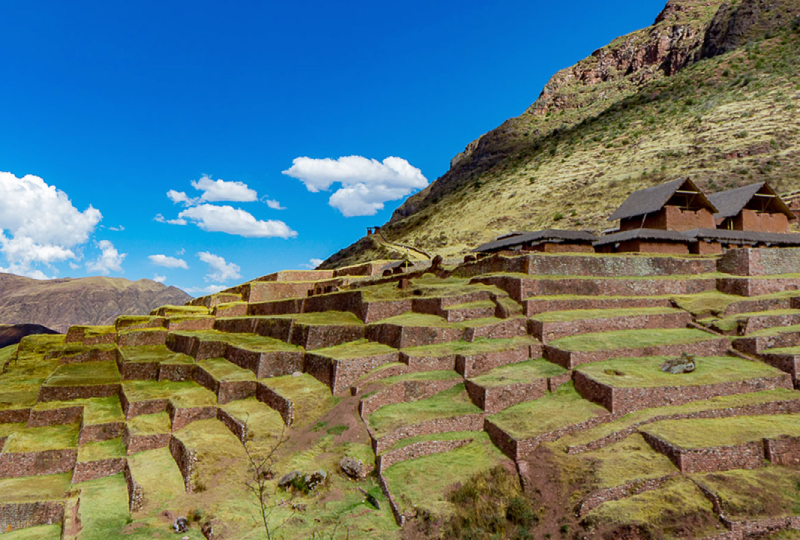
Huchuy Qosqo Hike – Full day
HUCHUY QOSQO: ADVENTURE, HISTORY, AND NATURE IN ONE DAY Perched high above the Sacred Valley,...
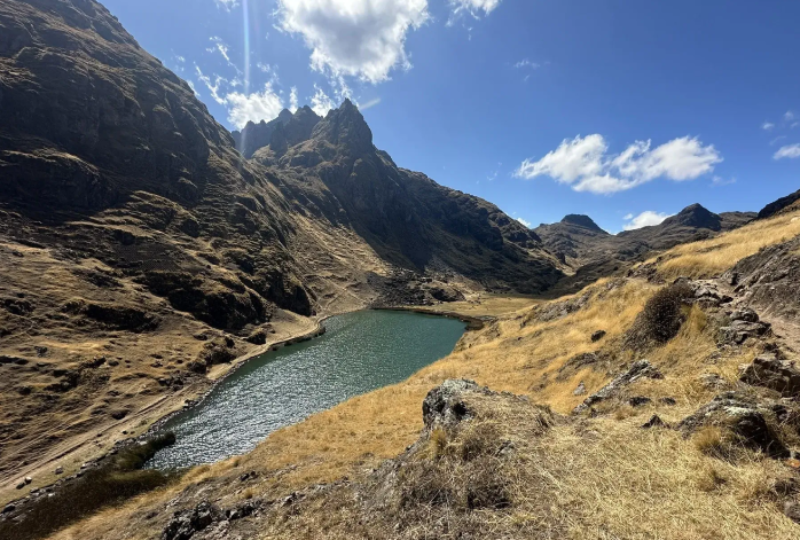
Pisac Lakes Trek: Three Sacred Andean Lagoons
A ONE-DAY ADVENTURE THROUGH HIGH-ANDES LAGOONS NEAR CUSCO Discover three high Andean lagoons on a...
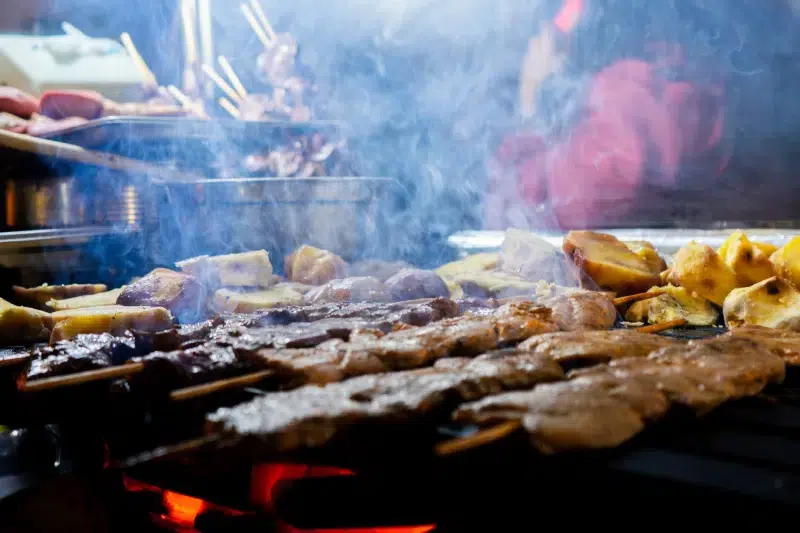
Cusco Flavor Routes: Local Cuisine and Pisco Sour
LIVE THE LOCAL FLAVORS OF CUSCO AT SUNSET Step into Cusco’s everyday life as you wander through its...
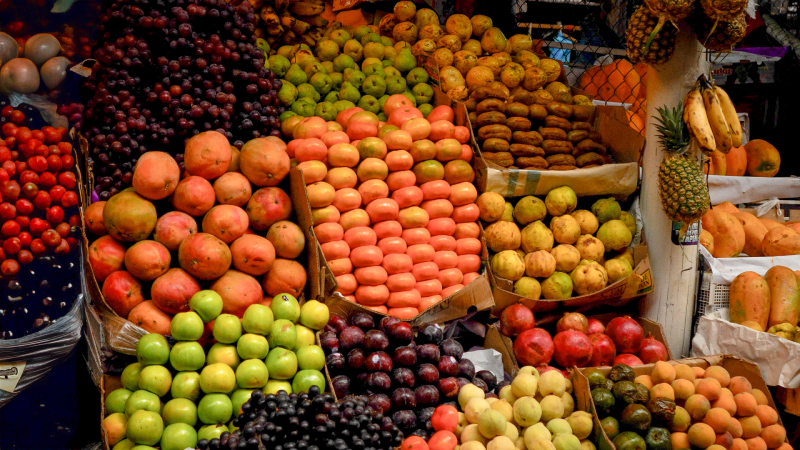
Cusco Market Tour and Local Flavors
EXPERIENCE THE AUTHENTIC MARKETS OF CUSCO LIKE A LOCAL Immerse yourself in the daily essence of...
View tourIf you liked this article and the information you found, give us 5 stars!
Table of Contents
Related blogs
Private tour to Machu Picchu and why travelers love them.
9 min of reading
7 Best Tourist Places You Need to Visit in Paraguay
7 min of reading
When the Sun Kisses the Salt: The Uyuni Sunset Experience
10 min of reading