Experience Qeswachaka: Peru’s Best-Kept Cultural Secret
Ultima actualización en 6 November, 2024 por Waman Adventures
Last Updated on 6 November, 2024 by Waman Adventures
- WHERE IS QESWACHAKA LOCATED?
- WHY VISIT QESWACHAKA?
- LEGENDS AND MYTHS OF THE QESWACHAKA BRIDGE
- THE ANNUAL RENEWAL EVENT: UNINTERRUPTED TRADITION
-
HOW TO GET TO QESWACHAKA?
- How to get to Qeswachaka on Your Own
- Getting to Qeswachaka with a Travel Agency
- OUR QESWACHAKA + 4 LAKES TOUR – INCA BRIDGE OF QESWACHAKA PRIVATE SERVICE
- What will we see on the Qeswachaka Bridge Tour?
- What does the Qeswachaka and 4 Lakes Tour include?
- What is not included in the Qeswachaka and 4 Lakes Tour?
- What to Bring to the Qeswachaka Tour?
- CULTURAL EXPERIENCE: INTERACTION WITH LOCAL COMMUNITIES
- ADDITIONAL ACTIVITIES IN THE AREA: EXPLORING THE SURROUNDINGS
- PRACTICAL TIPS FOR THE QESWACHAKA TOUR
- HOW IS THE WEATHER IN QESWACHAKA?
- DISCOVER THE ANNUAL CLIMATE IN QESWACHAKA HERE
- SO, WHEN IS THE BEST SEASON TO VISIT QESWACHAKA BRIDGE?
- HOW TO ACCLIMATE TO REACH THE QESWACHAKA BRIDGE?
- WHAT IS ALTITUDE SICKNESS?
- ENVIRONMENTAL RESPECT: KNOW THE FLORA AND FAUNA SURROUNDING THE QESWACHAKA BRIDGE
- CRAFTS AND SOUVENIRS: SUPPORTING LOCAL COMMUNITIES
- PHOTOGRAPHY AT QESWACHAKA: CAPTURING UNFORGETTABLE MOMENTS
Can you imagine walking over a treasure declared “Intangible Cultural Heritage“? And exploring the amazing Inca engineering of a hanging bridge made of woven straw ropes using the Ancestral Q’eswa Technique In this blog, I invite you to be part of this incredible adventure in the Cusco department. Join us on a hike that will not only take you to the Qeswachaka Bridge but will also immerse you in the history, culture, and natural majesty of the region. Are you ready to discover the ultimate travel guide to the Qeswachaka Inca Bridge? Keep reading and get ready for a unique experience with Waman Adventures!

WHERE IS QESWACHAKA LOCATED?
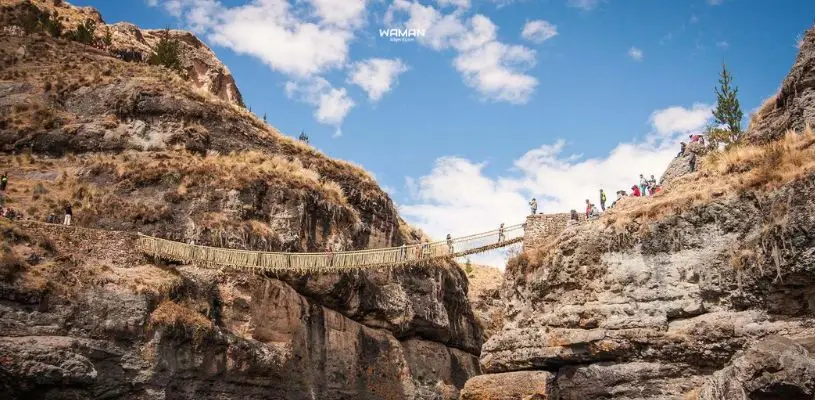
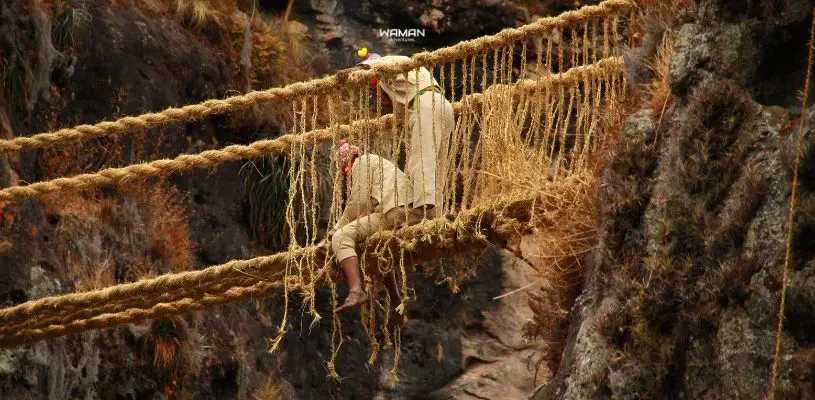
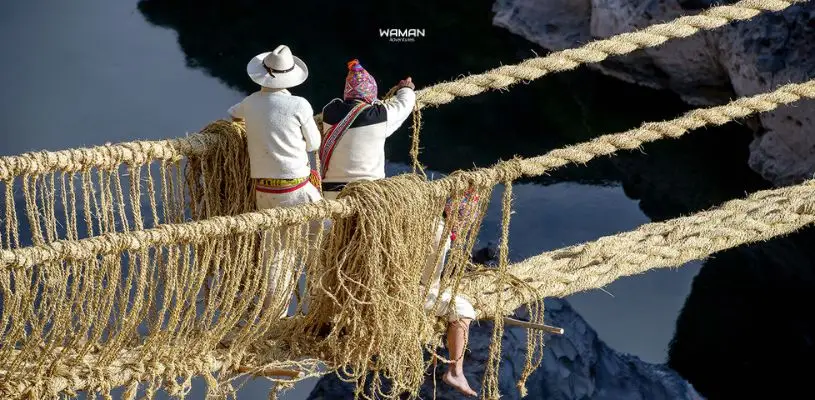
The Qeswachaka Inca Bridge is a masterpiece of Inca engineering located in the Quehue district, Canas province, Cusco – Peru. It sits at an altitude of 12,139 feet above sea level / 3,700 meters, over the Apurímac River. It has an approximate height of 15 meters. The Qeswachaka bridge is made of plant fiber ropes, primarily ichu. It is supported by two large stone pillars. It is a traditional hanging bridge that has stood for centuries. The area surrounding the Qeswachaka Inca bridge is a dreamy landscape. The surrounding mountains are covered in greenery, and the Apurímac River winds at its feet.
If you’re looking for a different way to experience new adventures, the best travel choice is to take the Qeswachaka Tour in Cusco, Peru.
WHY VISIT QESWACHAKA?
Here are the main reasons to include the Qeswachaka Inca Bridge Tour on your list of activities for your next trip to CUSCO:
- You will get to know QESWACHAKA “INTANGIBLE CULTURAL HERITAGE OF HUMANITY.”
- You will admire the impressive Inca engineering.
- You will enjoy a scenic hiking experience.
- You will learn about the history and living culture in Cusco.
- You will be part of the local community.
- You will discover an unusual destination.
- You will participate in a guided tour by expert professionals.
- You will have a unique and unparalleled experience.
- You will engage in an adventure activity.
- You will learn about Inca culture.
LEGENDS AND MYTHS OF THE QESWACHAKA BRIDGE
Over time, the surrounding inhabitants of the famous Qeswachaka bridge have passed down legends and myths about this masterpiece of Inca engineering from generation to generation. These stories, combining elements of reality and fantasy, add a touch of mystery and magic to the experience of visiting the Qeswachaka Inca Bridge. Here are some of these fantastic tales:
A Bridge Between Man and Nature
In ancient times, when the Apurímac River obstructed travel, locals struggled against the currents in fragile rafts. A brave Inca warrior, Apu Inti, challenged the river with ingenuity and courage. Assisted by his animal spirit, the condor, Apu Inti created a bridge of ichu, the Inca plant fiber, descending from the heavens.
Since then, the Qeswachaka symbolizes the connection between man and nature, not only as a physical bridge but also as a lasting spiritual bond.
The Legend of Sacrifice at Qeswachaka
A darker narrative recounts that to erect the Qeswachaka Inca bridge, the Incas performed a human sacrifice. The oracle advised the wise Inca that the bridge could only be constructed through a sacrifice to the gods.
Fearful of divine wrath, the Incas chose to sacrifice an innocent young person. Chosen for their purity, they were taken to the Qeswachaka bridge and thrown into the river. The fall strengthened the ichu ropes, allowing the completion of the bridge. This dark legend adds an intriguing layer to the story of Qeswachaka.
The Myth of the Qeswachaka Bridge Guardian
According to legend, the Qeswachaka Bridge is under the watch of a protective spirit known as “Apu Qeswachaka.” This being is symbolically represented by a condor, tasked with safeguarding the bridge’s integrity.
It is said that the Apu Qeswachaka manifests before those who show respect for both the bridge and the local community. To those who demonstrate this consideration, the spirit grants its protection, allowing them to cross the bridge without risk.
THE ANNUAL RENEWAL EVENT: UNINTERRUPTED TRADITION
Every year, local communities from the towns of Huinchiri, Chaupibanda, Qollana Quehue, and Chocayhua gather to renew the Qeswachaka Inca Bridge. This event, which takes place over four days, is an uninterrupted tradition dating back to Inca times.
DAY 1: HARVESTING ICHU
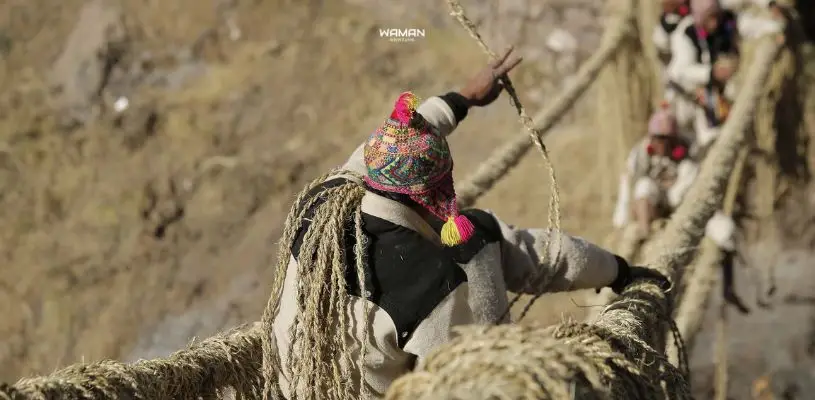
The Qeswachaka Bridge renewal begins with the collection of ichu, a plant fiber used to make the ropes that support the bridge. The men from the communities cut the ichu into long pieces and carry it to the location where the renewal will take place.
DAY 2: WEAVING ROPES AND CORDS
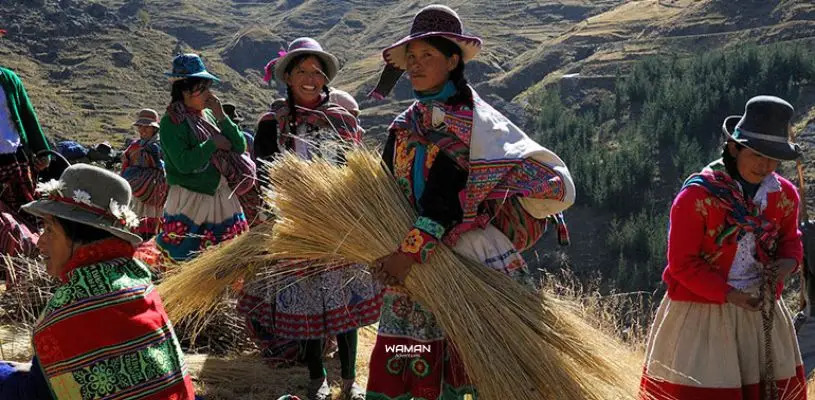
Once the ichu is gathered, the women from the communities weave the ropes. The weaving is done according to a traditional technique that has been passed down through generations.
DAY 3: RENEWAL OF THE QUESHUACHAKA BRIDGE
On the third day of the renewal, the ropes are placed on the bridge. This process is overseen by master builders, who ensure that the Qeswachaka Inca Bridge is well-constructed and safe.
The renewal of the bridge is a celebration of Inca culture and tradition. It is a time for local communities to come together and work collaboratively to preserve their cultural heritage.
DAY 4: CELEBRATION
On the last day of the annual renewal, the locals gather to celebrate the completion of Qeswachaka the Last Inca Bridge through dances, food, traditional dances, and more activities to which all participants are invited.
Importance of Local Community Participation
The participation of local communities is fundamental to the success of the bridge renewal event. Men, women, and children from the communities come together to collect ichu, weave the ropes, and place them on the bridge.
This participation is a way for local communities to preserve their culture and traditions. It is also a way for communities to unite and work together to achieve a common goal.
HOW TO GET TO QESWACHAKA?
Getting to Qeswachaka the Last Inca Bridge is not only easy but also an adventure that starts in Cusco, and you’ll have the chance to enjoy the beauty of the Canas region! Currently, there are two ways to get to Qeswachaka: going on your own or with a travel agency.

How to get to Qeswachaka on Your Own
This option is characterized by being a unique experience that requires more thorough planning.
Step 1: Get to Combapata
- The first part of the trip involves getting to Combapata. You can take a bus from Cusco to Combapata in about 3 hours.
Step 2: Get to Yanaoca
- From Combapata, you can take a bus to Yanaoca in about 1 hour.
Step 3: Get to the Town of Quehue
- From Yanaoca, you can take a taxi or a collective to the town of Quehue. The walk from Yanaoca to Quehue takes about 4 hours.
Transportation Options from Yanaoca:
There are two main options to get to the town of Quehue from Yanaoca:
- Taxi: A taxi costs about 200 soles (60 USD) and takes about 1 hour.
- Collective: A collective costs about 10 soles (3 USD) and takes about 2 hours.
Getting to Qeswachaka with a Travel Agency
Getting on the Qeswachaka Tour with Waman Adventures is the perfect choice. This option is not only comfortable, allowing you to fully enjoy the journey, but also safe, as we are a highly qualified tour operator that guarantees quality services. Trust us for a unique experience! Below, I share our travel package in general.

OUR QESWACHAKA + 4 LAKES TOUR – INCA BRIDGE OF QESWACHAKA PRIVATE SERVICE
The Qeswachaka Full Day Tour will take you to see one of the oldest hanging bridges in the world. The trail is gentle, and the maximum altitude is 3,700 meters above sea level, making it ideal for people of all ages and fitness levels.
Our Inca Bridge of Qeswachaka private service guarantees a personalized and exclusive experience. You will have an expert guide who will tell you all about the history, culture, and traditions of the Quechua people. You will also enjoy a traditional Peruvian lunch and a return transfer to Cusco.
- DURATION: Full Day
- MINIMUM ALTITUDE: 11,811 ft / 3,600 m.
- MAXIMUM ALTITUDE: 12,139 ft / 3,700 m.
- DIFFICULTY: Light
What will we see on the Qeswachaka Bridge Tour?
- Pomacanchi.
- Acopia.
- Asnaqocha.
- Pampamarca or Tungasuca.
What does the Qeswachaka and 4 Lakes Tour include?
- Local expert guide
- Professional guide with English/Spanish language skills for all tours.
- Transportation
- Pick up, transfer to the Qeswachaka tour, and return to your hotel.
- Lunch
What is not included in the Qeswachaka and 4 Lakes Tour?
- Water and tips.
- Travel insurance.
What to Bring to the Qeswachaka Tour?
- Personal documents.
- Mountain/trekking boots.
- Waterproof jacket/rain poncho.
- Quick-drying shirts.
- Trekking pants.
- Sun hat.
- Sunblock (SPF 35+) and/or hat.
- Camera and camcorder.
CULTURAL EXPERIENCE: INTERACTION WITH LOCAL COMMUNITIES
To fully enjoy your trip, consider the following recommendations for interacting with residents, especially if you decide to engage in “LIVING TOURISM.”
- Research the culture and significant traditions of nearby communities: As an informed traveler, it’s essential to have this information, both to foster greater interaction with the locals and to avoid being a victim of misinformation.
- Ask before taking photos or recording videos: Some residents may find it disrespectful to photograph their way of life and may feel uncomfortable. Therefore, it is necessary to ask before taking photos.
- Be respectful of the environment: As part of your packing list, consider bringing a trash bag. This way, you contribute to environmental care and respect. Remember, during your trip, you will observe diverse flora and fauna, species that also deserve protection.
- Support local entrepreneurs: Most residents in the area are now engaging in tourism, leading them to create handicrafts to contribute economically to their homes. Therefore, it would be wonderful to help financially through the purchase of products, food, crafts, souvenirs, etc.
- Respect cultural norms: “When in Rome, do as the Romans do” is a common phrase that we should practice demonstrating our education, empathy, tolerance, and respect for norms and customs away from home.
- Talk with the locals: Nothing beats chatting with residents, who will gladly share their lifestyle with us. If we have time, we might even learn some words in Quechua (their mother tongue).
- Participate in all possible activities: Set aside shyness and dare to engage in unusual activities like “milking cows” if you are doing experiential tourism.
- Consult your guide with any questions: Your guide will be your best support during the trip; don’t hesitate to let them know your concerns.
ADDITIONAL ACTIVITIES IN THE AREA: EXPLORING THE SURROUNDINGS
The Qeswachaka Bridge Tour is a must-visit for anyone traveling to Cusco. However, there are many other activities and places of interest nearby that travelers can enjoy.
VISIT THE FOUR LAKES
The route to the Qeswachaka Inca Bridge is beautifully adorned with the area’s diverse flora and fauna. Among the main attractions is a visit to the 4 beautiful Lakes:
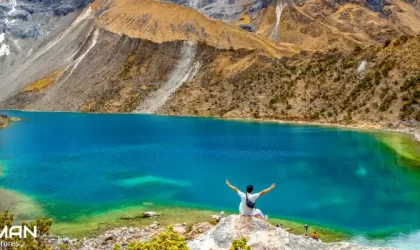
- Pomacanchi: The beautiful Pomacanchi Lake is located at 3,700 m above sea level in Cusco, surrounded by mountains, forests, peaks, and snow-capped mountains. It is also an excellent tourist destination.
- Acopia: Acopia Lake has an area of 2.2 square kilometers and is located at 3,707 m above sea level. Its waters are turquoise blue and are surrounded by mountains and vegetation. It is part of the 4 Lakes circuit.
- Asnaqocha: Located at 3,900 m above sea level, it is next to the Pampamarca Lakes, separated by the town of Mosocllaqta in Anta, Cusco. The beauty of Asnaqocha Lake stands out due to its spectacular landscape, surrounded by mountains, peaks, and snow-capped mountains.
- Pampamarca or Tungasuca: Located at 3,780 m above sea level, it is near the town of Mosoc Llacta, Anta in the Cusco region. It is a popular place for nature lovers and outdoor sports. Activities such as hiking, cycling, fishing, and kayaking can be practiced in the area.
VISIT THE SMALLEST INACTIVE VOLCANO IN THE AREA | PABELLONES VOLCANO
The Pabellones volcano is located in the town of Yanaoca, district of Tungasuca, Cusco. It measures approximately 4 meters in diameter. It is precisely due to its size that it attracts locals and visitors alike. You can visit the volcano at any time of the day throughout the year. Currently, the volcano is inactive.
PRACTICAL TIPS FOR THE QESWACHAKA TOUR
- Prepare for the altitude: The Qeswachaka Bridge Tour is situated at an altitude of 3,700 meters above sea level. If you are not accustomed to the altitude, it is important to take your time to acclimate.
- Wear comfortable and appropriate clothing for the weather: The weather in the Southern Valley of Cusco can be variable. It’s important to wear comfortable and suitable clothing for the climate, including waterproof attire.
- Bring enough water and food: The trip to the Qeswachaka Bridge Tour can be long, so it’s important to bring sufficient water and food.
- Choose a good tour operator: Waman Adventures would love to take you to the famous Qeswachaka Bridge.
HOW IS THE WEATHER IN QESWACHAKA?

The Qeswachaka Inca bridge, being part of Cusco, experiences two distinct seasons throughout the year: the rainy season and the dry season. The climate is characterized as mild and dry, with an average annual temperature of 59.00ºF / 15ºC.
This climate provides ideal conditions for outdoor activities such as hiking, cycling, and rafting. However, it is essential to be prepared for cold and dry weather, especially during the winter months.
- Rainy season: Begins in November and ends in March. This season is characterized by frequent rainfall. The rains can be heavy and may even cause flash floods.
- Dry season: Starts in April and ends in October. The weather is typically dry and sunny, with temperatures reaching up to 77ºF / 25ºC. During this period, rainfall is scarce compared to the rainy season, thanks to the presence of mountains and snow-capped peaks. Therefore, it is advisable to be prepared with appropriate clothing.
DISCOVER THE ANNUAL CLIMATE IN QESWACHAKA HERE
QESWACHAKA IN JANUARY
The temperature during January on the route to Qeswachaka varies between 22-25°C; however, this month is quite rainy with frequent precipitation.
Advantages of visiting Queswachaka in January
- Fewer tourists: The low tourist season in Queswachaka begins in January, meaning visitors can enjoy the trail with fewer crowds.
- Lower prices: Accommodation, tour, and other service prices tend to be lower during the low season.
Disadvantages of visiting Queswachaka in January
- Rain: Rain can make the path slippery and difficult. It can also hinder visibility and photography.
- Humid weather: Humid weather can cause clothes and gear to get wet and dirty.
Queswachaka in February
The temperature in February is very similar to that in January, ranging from 22-25°C. However, it is one of the rainiest months of the year, with frequent precipitation.
Advantages of visiting Queswachaka in February
- Lush landscapes: The rains in February create a lush landscape with wildflowers and vibrant vegetation.
- Fewer crowds: The low tourist season in Queswachaka begins in February, allowing visitors to enjoy the trail with fewer people.
Disadvantages of visiting Queswachaka in February
- Frequent rain: Rain can make the path slippery and difficult, also affecting visibility and photography.
- Humid weather: Humid weather can make clothes and gear wet and dirty.
Queswachaka in March
In March, temperatures range from 23-26°C; the weather is generally cool and humid, with occasional rain, while the days become warm.
Advantages of visiting Queswachaka in March
- Dry trails: The trail is relatively dry, making hiking easier.
- Less rain: Rain is occasional, reducing the risk of landslides and other hazards.
- Low prices: Accommodation, tour, and other service prices tend to be lower at the end of the rainy season.
Disadvantages of visiting Queswachaka in March
- The pace of hiking: The lack of rain might still affect the pace of hiking, as the trail can be dusty or slippery.
Queswachaka in April
The temperature in April ranges from 25-28°C; the weather is generally sunny during the day, and it doesn’t feel very cold at night.
Advantages of visiting Queswachaka in April
- Dry season: The weather is ideal for hiking, as the trail is dry and there is no risk of landslides.
- Natural beauty: The landscape is spectacular, with mountains, valleys, and lush forests.
- Tourist influx: The number of tourists is lower than in other months, allowing for a more tranquil experience.
Disadvantages of visiting Queswachaka in April
- Higher prices: Accommodation, tour, and other service prices tend to be higher during peak season.
Queswachaka in May
In May, temperatures remain between 25-28°C, with warm and sunny weather.
Advantages of visiting Queswachaka in May
- Ideal hiking weather: The trail is dry, and there is no risk of landslides.
- Natural beauty: The landscape is spectacular, with mountains, valleys, and lush forests.
- Lower tourist influx: The number of tourists is lower than in peak season, allowing for a more peaceful experience.
Disadvantages of visiting Queswachaka in May
- Occasional rain: There may be occasional rain at the end of the month, which can make hiking difficult.
- Higher prices: Accommodation, tour, and other service prices tend to be higher during peak season.
Queswachaka in June
The temperature in June ranges from 26-29°C, with warm and sunny weather and occasional rain.
Advantages of visiting Queswachaka in June
- Ideal hiking weather: The trail remains dry, with little risk of landslides.
- Less rain: The rainy season has ended, so it is unlikely to encounter landslides on the way to Queswachaka.
Disadvantages of visiting Queswachaka in June
- Increased tourist influx: The number of tourists rises in June, which may hinder a peaceful enjoyment of the site.
- Higher prices: Accommodation, tour, and other service prices tend to be higher during peak season.
WATCH THE VIDEO: QESWACHAKA BRIDGE
Queswachaka in July
The temperature in July ranges from 26-29°C, with warm and sunny weather and occasional rain.
Advantages of visiting Queswachaka in July
- Ideal hiking weather: The trail is dry, with little risk of landslides.
- Less rain: The rainy season has ended, so heavy rain is unlikely.
Disadvantages of visiting Queswachaka in July
- Increased tourist influx: The number of tourists rises in July, which may hinder a peaceful enjoyment of the site.
- Higher prices: Accommodation, tour, and other service prices tend to be higher during peak season.
Queswachaka in August
In August, temperatures range from 26-29°C, with warm and sunny weather and occasional rain.
Advantages of visiting Queswachaka in August
- Ideal hiking weather: The trail is dry, with little risk of landslides.
- Less rain: The rainy season has ended, so heavy rain is unlikely.
Disadvantages of visiting Queswachaka in August
- Increased tourist influx: The number of tourists rises in August, which may hinder a peaceful enjoyment of the site.
- Higher prices: Accommodation, tour, and other service prices tend to be higher during peak season.
Queswachaka in September
The weather in Queswachaka in September is mild and dry, with average temperatures between 25-28°C. The days are sunny and warm, with occasional rain.
Advantages of visiting Queswachaka in September
- Ideal hiking weather: The trail is dry, with little risk of landslides.
- Less rain: The rainy season has ended, so heavy rain is unlikely.
Disadvantages of visiting Queswachaka in September
- Occasional precipitation: There may be occasional rain, which can make hiking difficult.
- Slippery trails: Rain can make trails slippery, increasing the risk of accidents.
- Increased tourist influx: The number of tourists rises in September, which may hinder a peaceful enjoyment of the site.
Queswachaka in October
The weather in Queswachaka in October is mild and dry, with average temperatures of 21°C. The days are sunny and warm, with very little rain.
Advantages of visiting Qeswachaka in October
- Ideal hiking weather: The trail is dry, and there is little risk of landslides.
- Less rain: The rainy season has not yet begun, so heavy rains are unlikely.
Disadvantages of visiting Qeswachaka in October
- Occasional rainfall: There may be occasional rain, which can make hiking difficult.
- Slippery trails: Rain can make the trails slippery, increasing the risk of accidents.
- Increased tourist influx: The number of tourists rises in October, which can make it challenging to enjoy the site peacefully.
- Higher prices: Tourist service prices are higher during peak season.
Qeswachaka in November
The weather in Qeswachaka in November is mild and humid, with average temperatures of 22°C. The days are sunny but with frequent rain.
Advantages of visiting Qeswachaka in November
- Ideal hiking weather: The trail is wet, but there is no risk of landslides.
- Greater biodiversity: The rainy season attracts a wide variety of flora and fauna.
Disadvantages of visiting Qeswachaka in November
- Frequent rain: It may rain throughout the day, making hiking difficult.
- Slippery trails: Rain can make the trails slippery, increasing the risk of accidents.
- Increased tourist influx: The number of tourists rises in November, which can make it challenging to enjoy the site peacefully.
Qeswachaka in December
The weather in Qeswachaka in December is mild and humid, with average temperatures of 22°C. The days are sunny but with frequent rain.
Advantages of visiting Qeswachaka in December
- Lower tourist influx: The number of tourists decreases in December, allowing for a more peaceful experience.
- Greater biodiversity: The rainy season attracts a wide variety of flora and fauna.
Disadvantages of visiting Qeswachaka in December
- Frequent rain: It may rain throughout the day, making hiking difficult.
- Slippery trails: Rain can make the trails slippery, increasing the risk of accidents.
SO, WHEN IS THE BEST SEASON TO VISIT QESWACHAKA BRIDGE?
According to the information provided earlier, the best season to visit the Qeswachaka Inca Bridge is undoubtedly during the dry season, which runs from April to October. During these months, rainfall is minimal, allowing for perfect blue skies in Cusco.
For the days, it is recommended to wear hats, sunglasses, and sunscreen, and to stay hydrated as much as possible. At night, it is advisable to bundle up, as there can be intense cold in the Cusco nights.

HOW TO ACCLIMATE TO REACH THE QESWACHAKA BRIDGE?
- Travel gradually; try to arrive in Cusco 2 or 3 days before your trip.
- Stay hydrated; it is necessary to drink plenty of water, as this will facilitate oxygenation in your body when adapting to a new climate and temperature.
- Avoid consuming alcoholic beverages, as these substances can lead to dehydration and worsen altitude sickness symptoms.
- Prepare physically by exercising regularly; this will help improve blood circulation and lung capacity. In this way, you can enjoy your stay in Cusco better.
- Rest adequately; while in Cusco, you may feel tempted to go out and enjoy the Cusco nights. However, it is recommended to avoid this, as you might miss a significant travel experience or not make the most of your visit to Qeswachaka.
WHAT IS ALTITUDE SICKNESS?
Altitude sickness, known as mountain sickness in Peru and in various parts of the world, is also referred to as “soroche” in Cusco. It is characterized by physical discomfort caused by breathing difficulties when adjusting to changes in altitude. In simple terms, some bodies struggle to adjust to climatic variations due to the low oxygen pressure at high altitudes.
Although most cases of altitude sickness are mild to moderate, there are also complicated situations that, in extreme cases, can lead to death. Symptoms commonly affect travelers who undertake extensive hikes at high altitudes, such as those seeking to reach Machu Picchu from Cusco via less conventional routes to enjoy the beautiful landscapes.
According to clinical studies, while many people can ascend from 1500 to 2000 meters above sea level in a single day without experiencing respiratory problems, there are groups of travelers who venture to altitudes exceeding 3000 meters above sea level, thus increasing the likelihood of experiencing symptoms of altitude sickness.
SYMPTOMS OF ALTITUDE SICKNESS
- Difficulty sleeping.
- Dizziness or a feeling of vertigo.
- Headache.
- Lack of appetite.
- Nausea or vomiting.
- Rapid pulse (heart rate).
- Breathing difficulties with exertion.
If you find yourself on the way to the Qeswachaka Bridge and experience any symptoms of altitude sickness, do not hesitate to inform your group guide. This way, we can help you overcome altitude sickness.
HOW TO OVERCOME ALTITUDE SICKNESS AND REACH THE QESWACHAKA BRIDGE
- If during your trip to Qeswachaka, you experience any of the symptoms mentioned above, the first thing you should do is stay calm and rest until you feel better.
- To know how to cope with altitude sickness in Qeswachaka, Cusco, it is advised for passengers to take necessary precautions and stay well hydrated.
- It is recommended to avoid going to parties and especially to refrain from consuming alcoholic beverages, as this could increase possible symptoms of altitude sickness.
- During the hike, some symptoms may appear. To relieve them, it is suggested to chew coca leaves. If you don’t like this idea, you can drink coca tea and then rest. However, for health reasons, it is important to note that no more than 4 cups of coca tea should be consumed.
- If symptoms persist, it is advisable to consult a doctor for guidance on how to deal with altitude sickness in Qeswachaka, Cusco.
ENVIRONMENTAL RESPECT: KNOW THE FLORA AND FAUNA SURROUNDING THE QESWACHAKA BRIDGE
FAUNA IN QESWACHAKA
- Tarucas: An elegant deer from Huchuy Qosqo, notable for its branching antlers, contributing to the majesty of the local fauna.
- Condors: A majestic Andean bird, soaring the skies of Huchuy Qosqo, adding grandeur to its landscape.
- Ukuku or Spectacled Bear: The spectacled bear, native to the Andes, is the only South American bear and is endangered.
- Wild Cat: The wild cat, a wild feline, inhabits the Andes and is known for its agility and spotted fur.
- Llamas: Relatives of camels, they are domesticated animals in the Andes used for carrying and wool. Their fur is soft and woolly.
- Alpacas: Valued for their soft wool, they are Andean camelids bred by the Incas. Their fur is varied and of natural colors.
- Skunk: Known for its distinctive stripe and chemical defense, it inhabits Huchuy Qosqo, contributing diversity to the local fauna.
- Andean Eagle: Majestic in the skies of Huchuy Qosqo, it stands out with its powerful flight and contributes to the biodiversity of the area.
FLORA IN QESWACHAKA
- Ichu: Ichu is a plant fiber that grows in the Andes. It is strong, and durable, and is used to weave the ropes of Qeswachaka the Last Inca Bridge in Cusco.
- Kantu: An emblematic flower of the Andes, it decorates the landscapes of Huchuy Qosqo with its vibrant colors.
- Cactus: Hardy and spiny, they are part of the arid landscape that characterizes some sections of the route to Huchuy Qosqo.
- Beomelias: With their leaves arranged in rosettes, they add color and texture to the flora of Huchuy Qosqo.
- Pisonay: A majestic Andean tree, it stands out with its pink flowers in the flora of Huchuy Qosqo.
- Yanay: A beautiful Andean flower, it adds color to the flora of Huchuy Qosqo with its yellow petals.
- Aliso: A native tree of the Andes, known for its durable wood and for contributing to biodiversity in the region.
CRAFTS AND SOUVENIRS: SUPPORTING LOCAL COMMUNITIES
SYMPTOMS OF ALTITUDE SICKNESS
- Difficulty sleeping.
- Dizziness or a feeling of vertigo.
- Headache.
- Loss of appetite.
- Nausea or vomiting.
- Rapid pulse (heart rate).
- Breathing difficulty with exertion.
If you find yourself en route to the Qeswachaka Bridge and experience any symptoms of altitude sickness, don’t hesitate to inform your group guide. This way, we can help you overcome altitude sickness.
PHOTOGRAPHY AT QESWACHAKA: CAPTURING UNFORGETTABLE MOMENTS

IS THE TOUR SUITABLE FOR EVERYONE? CONSIDERATIONS FOR TRAVELERS OF ALL AGES
The trip to reach the Qeswachaka Bridge is suitable for all the public. Therefore, minors can indeed participate in the tour. However, some considerations must be considered:
- The journey from Cusco to the Qeswachaka Bridge takes approximately 4 to 5 hours by car, followed by at least 1 hour of hiking. Therefore, children should be prepared for an easy-level hike.
- The path to the Qeswachaka Bridge is diverse; some parts are flat, while others are somewhat rocky. Therefore, children need to wear appropriate hiking footwear.
- The Qeswachaka Bridge is a place of great historical and cultural value that deserves deep respect. Therefore, it is the responsibility of parents to teach their children to understand the importance of Qeswachaka the Last Inca Bridge, and to foster a respectful attitude during their visit.
These recommendations also apply to families with older travelers.
In summary, the Qeswachaka Bridge is a historical gem waiting to be discovered, traversed, and admired for its significant contribution to Cusco’s history and culture. Waman Adventures invites you to be part of this Inca narrative. Are you ready to explore the past? Book your visit now and let yourself be captivated by the magic of this unique place in Cusco!
Share:



Related tours you might be interested in
Enjoy unique experiences in Cusco and Machu Picchu with the peace of mind that comes from working with a local travel agency
Rural and Agritourism Experience in Chichubamba
TRADITIONAL LIFE IN THE HEART OF THE SACRED VALLEY Let yourself be immersed in the mystique and...

Birdwatching Experience at Chacán Dam & Ensifera Camp
BIRD WATCHING IN CUSCO: CHACÁN & ENSIFERA CAMP Cusco is far more than history and dramatic...

Cusco Soccer Game Experience
EXPERIENCE CUSCO SOCCER LIKE A LOCAL Immerse yourself in one of Cusco’s most intense cultural...
Huacarpay Birdwatching Experience
HUACARPAY: ANDEAN BIRD SANCTUARY Discover the natural richness of Huacarpay, a high-Andean wetland...
If you liked this article and the information you found, give us 5 stars!
Table of Contents
Related blogs