Flights to Uyuni Salt Flat: where to fly, what to expect, and how to prepare
Ultima actualización en 18 May, 2026 por Waman Adventures
Last Updated on 18 May, 2026 by Waman Adventures
- Why Is Flying the Best Option to Get to Uyuni?
- Frequent Routes to Bolivia
- How to Get There from the US: Flights and Connections
- High Altitude Landing: Arrival at Uyuni/Joya Andina Airport
- What’s Better, Flying or Going by Land Transport to Uyuni?
- Tour Options: Day vs. Multi Day
- Best Times to Fly and Visit
- What to Pack and How to Prepare Before the Flight
- Cultural and Mythical Context
- Traveling Responsibly: Sustainable Tips
- What to Do and What to Avoid
-
Frequently Asked Questions
- Can I book flights to Uyuni salt flat the same day as the tour?
- Are flights reliable all year round?
- Is altitude a health problem upon arrival?
- Can I bring a drone on flights to Uyuni salt flat?
- What airport logistics should US travelers know?
- How long should I stay in Uyuni?
- Are the tours eco friendly?
- Are flights reliable all year round?
- What luggage can I bring on domestic flights to Uyuni?
Do you want to visit the Uyuni Salt Flat and are looking for the fastest and most comfortable flights to Uyuni salt flat? If you’re traveling from the United States or any country with international flights to Bolivia, in this guide you’ll find routes, airlines, schedules, and prices to plan your arrival and enjoy your adventure without complications.
Why Is Flying the Best Option to Get to Uyuni?
Flying is the best way to reach the Uyuni Salt Flat. From the US or Europe you can land in La Paz or Santa Cruz, and from there take a direct domestic flight to Uyuni. This way you reduce to just 60 minutes a journey that by land would take between 8 and 12 hours.
International flights to Bolivia have good frequencies and recognized airlines like American Airlines, Avianca, and LATAM, which ensures a comfortable experience from the start.
Frequent Routes to Bolivia
Safe International Connections
| Route | Airlines | Stops | Total Duration | Estimated Round Trip Price |
| Miami-Bogotá-La Paz | American / Avianca | 1 | 11-14 h | $480-650 USD |
| Dallas – Lima – Santa Cruz | American / LATAM | 1 | 12-15 h | $520-700 USD |
| New York – São Paulo – La Paz | LATAM / Avianca | 1 | 14-17h | $550-750 USD |
| Mexico City – Lima – La Paz | Aeroméxico / LATAM | 1 | 8-10 h | $400-580 USD |
| Madrid – São Paulo – La Paz | Iberia / LATAM | 1 | 15-17 h | $600-800 USD |

Reliable Domestic Flights in Bolivia
| Airline | Stops | Duration | Estimated Price | Weekly Frequency |
| Boliviana de Aviación (BoA) | Direct | 1 h | $106–190 USD (promos from $66) | 7-11 flights |
| Ecojet | Direct | 1 h | $100–180 USD | Lower frequency |
Remember that:
Both airlines usually have daily departures, although during high season you should book in advance.
Time and Physical Effort Savings
If you decide to travel by land, the journey from La Paz to Uyuni can take between 8 and 12 hours, generally on buses or minibuses that usually operate at night. On the other hand, if you choose to fly, that route is reduced to just 60 minutes. This option is perfect if you have few days and want to avoid physical wear to fully enjoy your experience at the Uyuni Salt Flat.
How to Get There from the US: Flights and Connections
To reach the Uyuni Salt Flat from the United States, you’ll need to combine international flights with domestic connections within Bolivia:
1. International flight US → La Paz (LPB) or Santa Cruz (VVI): Airlines like Avianca, LATAM, and American Airlines offer routes from various US cities to La Paz or Santa Cruz. Normally, you’ll need to make a stopover in Bogotá, Lima, or São Paulo, depending on the itinerary and airline.
2. Domestic flight Bolivia → Uyuni (UYU): Boliviana de Aviación (BoA) airline offers direct flights between La Paz and Uyuni, with an average duration of 60 minutes. Departures are usually in the morning and around 11 weekly flights are scheduled, although this may vary depending on the season.
3. I recommend booking flights at least 40 to 60 days in advance to get better rates. BoA occasionally launches promotions for domestic flights. If you hire a specialized agency, they can handle all the air logistics, making the process easier and guaranteeing a better experience.

High Altitude Landing: Arrival at Uyuni/Joya Andina Airport
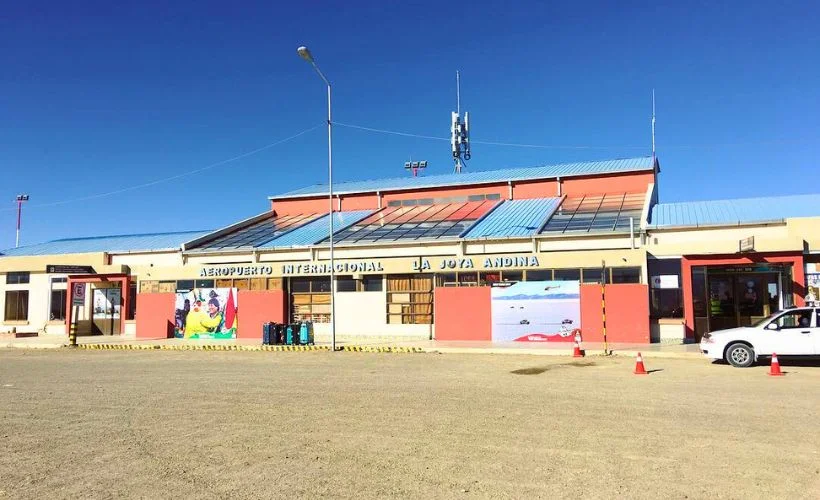
Joya Andina Airport (code UYU, ICAO) is located at 12,024 feet (3,665 m.a.s.l.), making it one of Bolivia’s highest airports. Its infrastructure is modern and the runway is completely paved, which guarantees a safe landing.
The main signs of discomfort are:
- Headache.
- Dizziness or mild confusion.
- Nausea.
- Difficulty breathing.
How to Prevent Altitude Sickness?

The most advisable thing is to consult with your doctor before the trip, so they can prescribe specific medications like acetazolamide (Diamox). You can also opt for natural remedies like mate de coca or muña tea, which are usually sold at airports and accommodations. These infusions help relieve symptoms naturally and are widely used by travelers visiting the Bolivian highlands.
What’s Better, Flying or Going by Land Transport to Uyuni?

| Option | Duration | Price | Advantages | Disadvantages |
| Overnight bus | 8-12 h | $25-35 | Economical, you save a night of hotel. | Long, less comfortable and tiring. |
| Flight | 1 h | $106-190 | Fast, comfortable, you make the most of more days. | Higher cost. |
Tour Options: Day vs. Multi Day
| Tour | Ideal For | Includes |
| 1 day | If you arrive in the morning and return the next day. | Train Cemetery, Colchani, Incahuasi Island, main salt flat. |
| 2-4 days | If you want to explore the highlands in depth. | Laguna Colorada, geysers, Dalí Desert, Salt Hotel. |
Planning your visit to the Uyuni Salt Flat involves choosing between a quick one day experience or a deeper multi day adventure. Here I present updated information so you can choose the option that best fits your expectations:
1 Day tour: This option is ideal if you arrive in the morning and must return in the afternoon or the next day. One day tours usually start between 10:00 and 10:30 a.m., either from the town of Uyuni or directly from the airport. This tour includes:
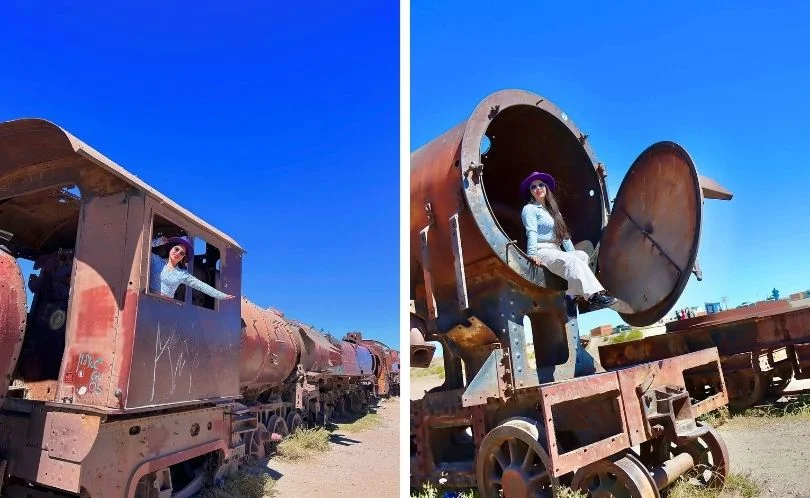
- The Train Cemetery.
- Incahuasi Island.
- Main salt flat.
- Colchani.
2–4 Day tour: If you want to explore the Bolivian highland landscapes in depth, this option is for you. On these tours you immerse yourself in impressive natural landscapes and local culture. The usual itinerary is:
- Day 1: Train Cemetery, Colchani, Salt Flat, Incahuasi Island, and a night at the salt hotel.
- Day 2: Entry to Eduardo Avaroa National Reserve: Laguna Colorada, Cañapa, and Hedionda, plus the deserts and the famous Stone Tree.
- Day 3: Sol de Mañana Geysers, hot spring baths, passing through the Dalí Desert.

Best Times to Fly and Visit
| Season | What to See | Advantages | Disadvantages |
| December – April | Mirror like salt flat | Surreal photos, flamingos. | Possible closed routes, rain delays. |
| June – October | Dry salt flat | Complete tour, clear skies. | Extreme cold at night. |
| April – November | Transition | Some mirror + dry zones, fewer tourists, low prices. | Variable conditions. |
Mirror season (December to April): During these months, rains cover the salt flat surface with a thin layer of water, transforming it into the famous “mirror of the sky.”

Dry season (June to October): During these months, the salt flat is completely dry, allowing you to tour all its areas without restrictions.
High season (July and August): coincides with summer vacations in the US, Europe, and several Latin American countries.
Transition season (April, November): the salt flat begins to dry, but you can still find sectors with small water mirrors.
What to Pack and How to Prepare Before the Flight

Essential luggage
- Layered clothing: start with a thermal layer (shirt and leggings), add a warm middle layer, and finish with a waterproof jacket.
- Hat, cap, gloves, and scarf: don’t forget to protect your nose and mouth from cold wind and salt flat dust, especially on 4×4 journeys.
- Sunglasses with UV protection + SPF 50 sunscreen: solar radiation at altitude is intense, even on cloudy days. Take care of your skin and eyes.
- Sturdy boots or trekking shoes: choose appropriate footwear for walking on salt, mud, or even snow.
- Altitude medication and supplements: consult with your doctor before traveling.
- You can bring a camera with tripod and accessories, for panoramic and nighttime photos.
- Additional batteries: cold and altitude quickly drain camera and cell phone batteries.
- A small backpack to store your essentials.
Cultural and Mythical Context
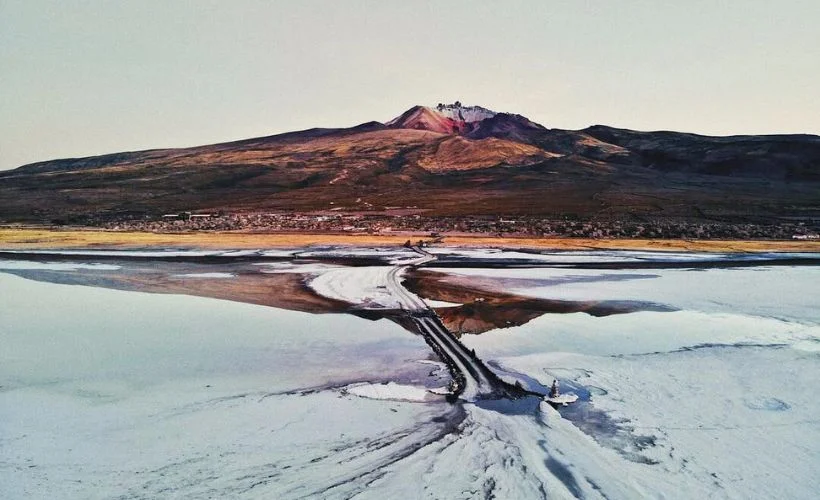
Its formation dates back about 40,000 years, when this region was part of the enormous Lake Minchin. Over millennia, that lake evaporated and left as a legacy the current salt desert.
According to local legends, the volcanoes surrounding the salt flat were once giants with human emotions. Tunupa, a female deity, fell in love with Kusku, but he abandoned her for Kusina. Grief stricken, Tunupa cried while nursing her child, her tears and milk created the salt flat. This is one of the mythical interpretations that area residents pass down from generation to generation.
Did you know…?
With these offerings, harmony with nature and good omens for community life are sought.
Traveling Responsibly: Sustainable Tips
- Respect natural structures.
- Take your trash with you.
- Choose operators committed to the environment.
- Support local tourism with your trip.
- Respect rural communities.

What to Do and What to Avoid
Must See:
- Train Cemetery.
- Incahuasi Island and its giant cacti.
- Photo session on the salt flat “mirror.”
- Stay at a salt hotel, like Luna Salada.
- Flights at sunrise or sunset for magical light.
If you want to discover surreal landscapes and immerse yourself in the ancestral culture of Bolivia, it’s essential that you inform yourself well about flights to Uyuni salt flat, trip logistics, and the best times to visit. Make sure to experience an adventure without setbacks with Waman Adventures.
Frequently Asked Questions
Can I book flights to Uyuni salt flat the same day as the tour?
It depends on the schedule. Many flights arrive in the morning at Uyuni (UYU), allowing you to join a short tour that same day. However, if you plan to do a multi day tour, it’s most advisable to arrive one or two days in advance to acclimatize well.
Are flights reliable all year round?
During the dry season (May to October), flights are usually punctual and reliable. On the other hand, during the rainy season (November to April), there may be delays or cancellations due to low visibility.
Is altitude a health problem upon arrival?
Yes. Uyuni is located at about 12,000 feet (3,656 m.a.s.l.), and that can cause altitude sickness, with symptoms like headaches, nausea, or dizziness. Ideally you should rest the first day, drink plenty of water, drink mate de coca, or consider taking medications like Diamox.
Can I bring a drone on flights to Uyuni salt flat?
Yes, but keep in mind that in Bolivia you must register any drone weighing more than 200 g with the General Directorate of Civil Aeronautics (DGAC). Flying it near airports, military zones, or over crowds is prohibited. In open places like the salt flat, it’s generally allowed, but you should always respect local communities.
What airport logistics should US travelers know?
You can travel with just carry on luggage or also checked luggage, depending on the airline. It’s advisable to bring US dollars (USD) and bolivianos (BOB), as outside Uyuni there are few ATMs and most payments are made in cash.
How long should I stay in Uyuni?
One day may be enough to see the Train Cemetery and the salt flat. However, if you want to enjoy a more complete experience, ideally you should take a 2 or 3 day tour.
Are the tours eco friendly?
Some agencies work under sustainability principles, support local communities, and have environmental certifications. Still, it’s important that you ask directly about their ecological policies before hiring.
Are flights reliable all year round?
During dry season (May–October) yes. During rainy season there may be cancellations.
What luggage can I bring on domestic flights to Uyuni?
On internal flights within Bolivia, such as those going from La Paz or Santa Cruz to Uyuni, companies usually allow carry on luggage up to 5kg and one checked bag of 20–23 kg at no additional cost, according to each company’s policy; depending on company policies.

Share:



If you liked this article and the information you found, give us 5 stars!
Table of Contents
Related blogs


Route of the Sun: Cultural Highlights Between Cusco and Puno
6 min of reading