HUAYNA PICCHU OR MACHU PICCHU MOUNTAIN – WHICH IS BETTER?
Ultima actualización en 19 May, 2025 por Waman Adventures
Last Updated on 19 May, 2025 by Waman Adventures
-
HUAYNA PICCHU
- Huayna Picchu Height
- Characteristics of Huayna Picchu
- Huayna Picchu Hike
- How long does it take to climb Huayna Picchu?
- Rest areas during the Huayna Picchu hike
- Views from the summit of Huayna Picchu
- Difficulty of the Huayna Picchu hike
- Entry to Huayna Picchu: 3A Circuit + Huayna Picchu
- Entry times and groups
- Age restrictions for Huayna Picchu
- Specific rules for the Huayna Picchu hike
-
MACHU PICCHU MOUNTAIN
- Height and Location of Machu Picchu Mountain
- The Machu Picchu Mountain Hike
- Entry times and groups
- Note: It’s essential to arrive on time, as schedules are strict and no entry is allowed outside the established slots.
- Limited Spots
- Ticket Price
- How difficult is it to climb Machu Picchu Mountain?
- The Ascent to Machu Picchu Mountain
- How long does it take to climb Machu Picchu Mountain?
- Are there any age or physical restrictions to climb Machu Picchu Mountain?
- How many people can climb Machu Picchu Mountain per day?
- Views from the summit of Machu Picchu Mountain
- SIMILARITIES BETWEEN HUAYNA PICCHU AND MACHU PICCHU MOUNTAIN
- HUAYNA PICCHU vs. MACHU PICCHU MOUNTAIN
Can you imagine being on top of the world, discovering one of the Wonders of the World? That’s exactly what you’ll experience at Machu Picchu.
If you’re passionate about photography and adventure, this hike is a must; however, you need to choose carefully which mountain you want to climb: Machu Picchu Mountain or Huayna Picchu. Each one has its own charms, challenges, and rewards.
Do you want to know which option is best for you? Then keep reading. Together with Waman Adventures, we’ll tell you everything you need to know about these two amazing mountains and how to conquer them.
HUAYNA PICCHU
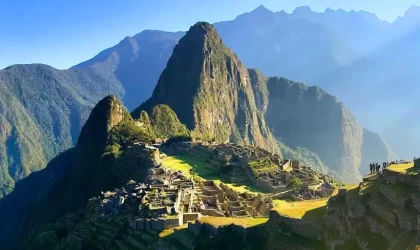
“Huayna Picchu” is the peak that appears tall and imposing in the classic photos of Machu Picchu and is what gives the archaeological complex its iconic backdrop.
At the top of this mountain, there are numerous archaeological sites perched on the edge of the abyss, apparently for agricultural, ceremonial, and astronomical purposes. Likewise, there are remnants of a temple, although it’s unclear whether construction was never completed or if it was partially destroyed. From this point, you can appreciate the Main Plaza of Machu Picchu, located about 400 meters (1,312 ft) below, as well as the canyon of the Urubamba River.

Panoramic view of Huayna Picchu
Huayna Picchu Height
It is located at 2,667 meters (8,750 ft). Its elevation from the ground is 360 meters (1,181 ft), and the total distance to cover is 4 kilometers (2.5 miles) round trip. Machu Picchu and Huayna Picchu are both situated in the cloud forest region (the border between the Andes and the Amazon), also known as the Amazonian Andes.
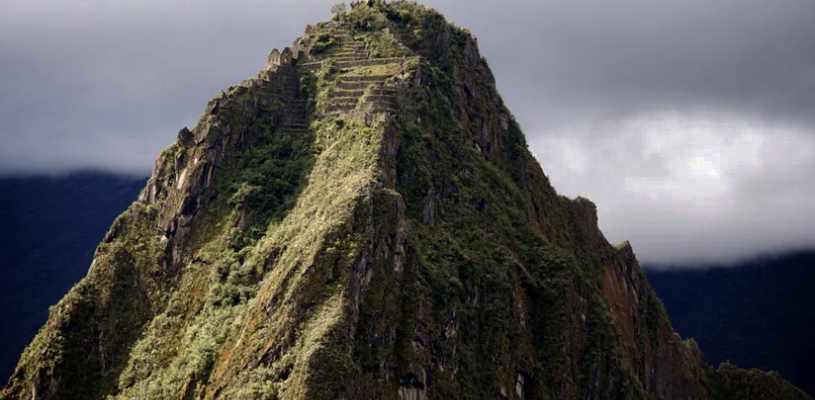
Huayna Picchu Mountain elevation
Characteristics of Huayna Picchu
- The trails are steep, and you will traverse stairways built into the rock.
- During the hike, you’ll get the best panoramic views of the Inca citadel and the surrounding mountains.
- The landscape is typical of the cloud forest, home to various species of birds, butterflies, and insects.
- Remember that the entry times (7 am and 9 am) are strict and non-negotiable. It’s important to arrive promptly at your designated time.
- The 3A Circuit will take you to the entrance of Huayna Picchu.
- The access point is located in the Sacred Rock sector, where you will find the checkpoint to enter Wayna Picchu.
Huayna Picchu Hike
PART 1: THE START
Your guided tour of the Machu Picchu citadel should end near the Sacred Rock. From there, you’ll stop at the checkpoint to enter Huayna Picchu.
Before entering, you’ll be asked to fill out some information in a registration book. You must provide your name, passport number, and the time of day you will start your hike.
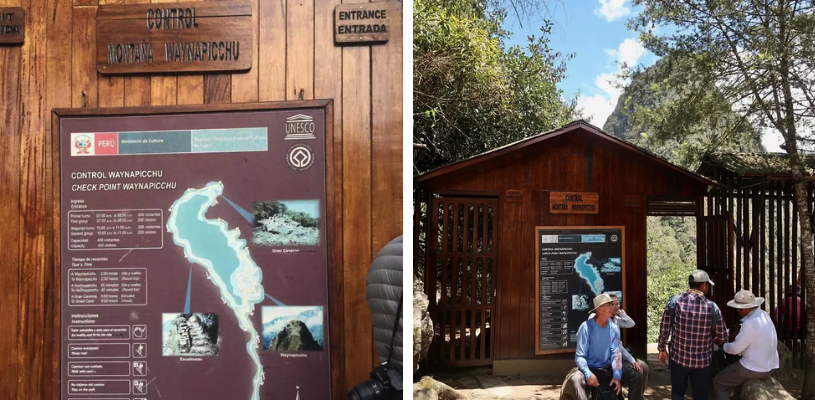
Checkpoint before starting the Huayna Picchu hike
PART 2: THE ASCENT
At the beginning of the trail, you’ll follow a narrow path that lasts about 15 to 20 minutes until the route splits into a high trail (extending to the top of the mountain) and a low trail (which circles the base of the mountain before climbing to the summit). In certain sections, there are steel cables embedded in the mountainside to hold onto.
Initially, the view is enveloped by the lush vegetation typical of the cloud forest. However, eventually the path opens up, revealing the surrounding mountains. Huayna Picchu Mountain is in the foreground and appears incredibly steep, but don’t worry: It’s not as dangerous to hike as it looks!
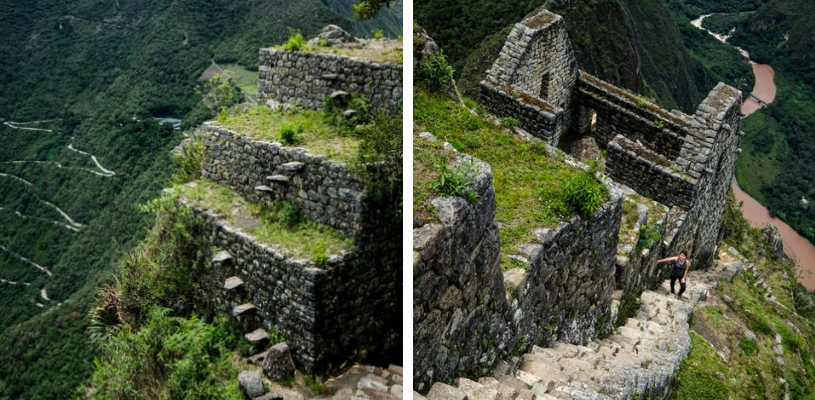
The ascent to Huayna Picchu
PART 3: THE STONE STAIRS
Once you’ve climbed most of the mountain, you’ll come across the death stairs, staircases dating back to the 15th century, an impressive feat of Inca engineering.
There are over 750 steep and narrow stone steps that make up the famous “Death Stairs” leading to the summit of Huayna Picchu. But there’s nothing to fear; despite the name, there have been no recorded deaths. They can simply be challenging for some hikers due to their steep nature.
Stick to the inside walls and try not to look down!

Climbing the Death Stairs
PART 4: THE SUMMIT
At the summit, you will find two areas:
- The first area: A spacious, flat place with a sign reading “Wayna Picchu.” Here, you can enjoy an impressive view, take a moment to meditate, have a snack, or simply rest.
- The second area: The space is narrower, marking the official summit of Huayna Picchu. Here, you’ll enjoy 360-degree panoramic views of the Machu Picchu citadel.
The descent is steep but has railings and ropes to make your way down easier. You’ll also go through a small cave, and once you exit, you’ll be treated to a fantastic view of the citadel.
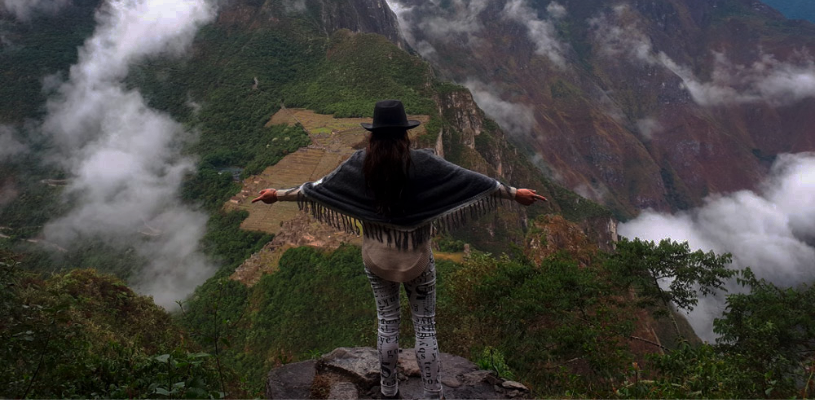
Summit of Huayna Picchu
PART 5: THE DESCENT
Regardless of which route you choose, you’ll descend the mountain via the same trail you took to go up. Be cautious on the stairs and hold onto the cables along the way. Once you have returned to the Huayna Picchu checkpoint, you’ll sign out in the visitor book and then head back to Machu Picchu.
How long does it take to climb Huayna Picchu?
Approximate duration of the hike: 2 hours or more (round trip)
Time breakdown:
- 40 minutes to reach the summit.
- 30 minutes to take photos and rest on some of the terraces with incredible views of Machu Picchu.
- 30 minutes to descend.
- 20 extra minutes for those who need to go slowly due to fitness level or altitude.
These times are estimates and may vary depending on each hiker.
Rest areas during the Huayna Picchu hike
Although there are no specific rest stops, near the mountain’s summit you’ll find a spacious, flat area with a distinctive sign: “Wayna Picchu.” Here, you can comfortably enjoy the landscape, have a snack, meditate, chat with other hikers, or simply rest.
Given the physical demands of the hike, we suggest taking breaks whenever needed, moving at your own pace without rushing, and enjoying both your hike and the impressive views.

Wayna Picchu sign
Views from the summit of Huayna Picchu
Huayna Picchu Mountain is largely covered in forest and vegetation, but the view from the summit is well worth the climb. From there, hikers can enjoy phenomenal aerial views of Machu Picchu and the surrounding mountains—perfect for photography.
Take a break, soak in the scenery, and don’t leave until you feel completely satisfied that you made it to the top.
While descending, you can also snap some incredible shots, as many Inca structures are visible from different vantage points.

Panoramic view of Huayna Picchu
Difficulty of the Huayna Picchu hike
The difficulty level largely depends on your physical condition, but overall it’s considered moderate to challenging.
On a scale from 1 to 10, we’d rate it a 7, mainly due to the route’s potential risk (steepness and narrow paths) rather than lack of oxygen.
Entry to Huayna Picchu: 3A Circuit + Huayna Picchu
- The 3A Circuit, known as “Machu Picchu + Huayna Picchu,” allows you to explore the lower part of the Inca citadel (“Circuit 3”) and then ascend the iconic Huayna Picchu Mountain.
- This is probably one of the most demanded tickets by visitors.
- The Huayna Picchu ticket format has not undergone significant changes compared to previous versions.
- Before starting the route toward Huayna Picchu, you can do a tour of Machu Picchu. This route is very similar to that of the “Royal Route.”
- During the visit to the Machu Picchu archaeological site, you’ll have access to emblematic places like the lower part of the Temple of the Sun and the Temple of the Three Windows.
- Upon reaching the Sacred Rock, you must register at the control post. You will need to specify the entry time and the names of the visitors.
- The ascent to Huayna Picchu is via a trail built by the Incas. This path is steep and consists of several flights of stairs, some of which may challenge those with acrophobia.
Below are some key points to help you plan your visit.
Entry times and groups
| Group | Huayna Picchu Entry | Number of spots |
| Group 1 | 7:00 am | 200 |
| Group 2 | 9:00 am | 200 |
- Group 1: Enter Machu Picchu between 6:00 and 6:30 am; access to Huayna Picchu is until 8:00 am; approximate exit is 12:00 pm.
- Group 2: Enter Machu Picchu between 9:00 and 9:30 am; access to Huayna Picchu is until 11:00 am; approximate exit is 3:00 pm.
Note: This ticket does not allow access to the Guardian’s House or the main temples like the Temple of the Three Windows or the Main Temple.
Availability and reservations
- Daily quota: 2 groups of 200 people.
- Advance reservation:
- Low season (November to May): 1 to 2 months in advance.
- High season (June to October): 3 months in advance.
Tip: Due to high demand, it’s essential to book well in advance to secure your entry.
Age restrictions for Huayna Picchu
Only people over 12 years of age may climb Huayna Picchu.
If you’re traveling with younger children, we recommend purchasing the Machu Picchu-only ticket, or if you really want to visit one of the adjacent mountains, we suggest the Machu Picchu + Machu Picchu Mountain ticket.
Specific rules for the Huayna Picchu hike
To preserve the Inca constructions and limit overcrowding, the Ministry of Culture has imposed stricter regulations at Machu Picchu. Here are some key points to keep in mind:
- You’ll need your original passport to enter Machu Picchu.
- Each circuit is one-way only, and backtracking is not allowed.
- Re-entry to Machu Picchu is not permitted once you exit.
- Photography is allowed, but tripods and drones are prohibited.
- There is a loosely enforced time limit of up to 4 hours once inside Machu Picchu.
MACHU PICCHU MOUNTAIN
In the classic photos of Machu Picchu, the mountain behind the famous Inca citadel is Huayna Picchu, which means Machu Picchu Mountain is not visible. Why? Because the person taking the photo is standing right on this mountain. Often overshadowed by Huayna Picchu, this impressive mountain offers a unique experience for those seeking stunning landscapes, tranquility, and a deep connection with nature.
But remember, don’t confuse Machu Picchu Mountain with the Machu Picchu citadel or Machu Picchu llaqta, even though they share the same name.
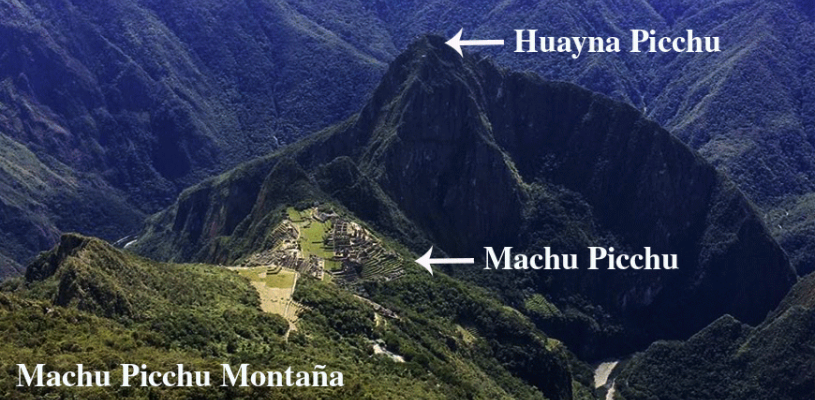
Machu Picchu Mountain or Old Mountain
It’s the highest mountain in the entire Machu Picchu area, offering the best views of the entire Machu Picchu Citadel.
The Machu Picchu Mountain Hike
- It’s a simple but extensive hike with a total distance of 3.9 kilometers (2.4 miles). It takes around 3 hours round trip. It’s steep almost all the way to the top, and there are few flat trails where you can take a breather.
- The trail is in good condition and clearly marked; however, there are many stone steps that are quite irregular.
- The hike to Machu Picchu Mountain is a challenging experience covering approximately 3.9 kilometers (2.4 miles) round trip, with an estimated duration of 3 hours. The trail is well signposted but steep, ascending from 2,430 meters (7,972 ft) at the Machu Picchu Citadel up to 3,082 meters (10,111 ft), with a gain of roughly 652 meters (2,139 ft). Along the way, you’ll tackle more than 1,600 stone steps—some irregular—that require attention and physical effort. As you climb, you’ll enjoy panoramic views of the Inca citadel and the surrounding mountains, with rest points and viewpoints enhancing the experience. Be sure to be physically prepared, wear appropriate footwear, and consider the effects of altitude to fully enjoy this unique adventure.

Panoramic photograph of the citadel from Machu Picchu Mountain
Entry times and groups
| Group | Machu Picchu Mountain Entry | Number of spots |
| Group 1 | 6:00 am | 200 |
| Group 2 | 8:00 am | 200 |
Note: It’s essential to arrive on time, as schedules are strict and no entry is allowed outside the established slots.
Limited Spots
- Daily capacity: 400 visitors per day.
- Distribution: 200 visitors per group.
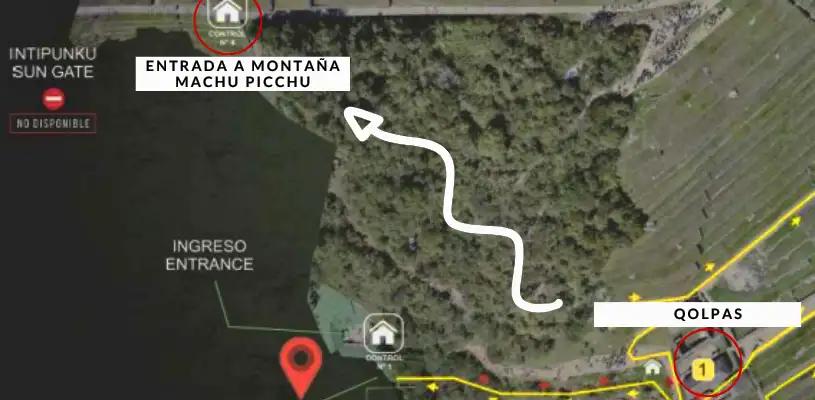
3 + Machu Picchu Mountain Circuit
Ticket Price
The ticket for Machu Picchu Mountain includes access to the Machu Picchu citadel and the hike to the mountain. Approximate prices:
- Adults: S/ 200 (about $52 USD).
- Peruvians: S/ 112 (about $30 USD).
- ISIC card students: S/ 125 (about $33 USD).
- Children (3-17 years): S/ 118 (about $31 USD).
Tip: During the high season (June to October), it’s recommended to book tickets 2-3 months in advance to secure your spot.
How difficult is it to climb Machu Picchu Mountain?
Machu Picchu Mountain is a relatively moderate but physically demanding hike, arguably tougher than Huayna Picchu since most of the trail is an uphill climb. Although it’s not as steep as Huayna Picchu, it does require stamina and preparation. On a scale from 1 to 10, we’d rate its difficulty around 6/10.
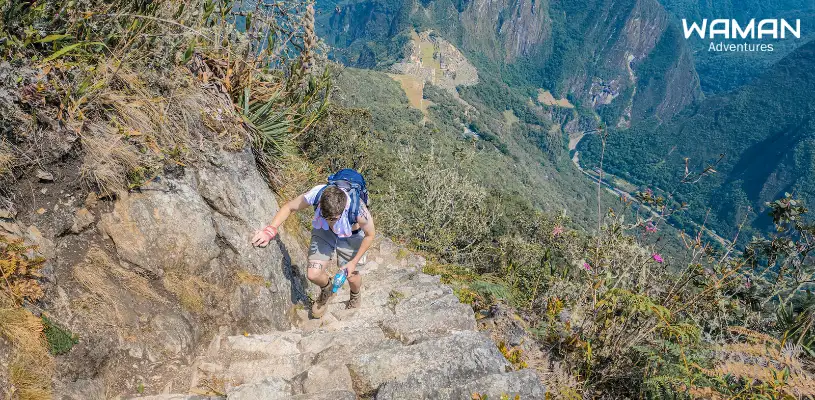
How difficult is the Machu Picchu Mountain hike?
How many steps are there on the way to Machu Picchu Mountain?
There are approximately 1,600 stone steps dating back to the Inca period—one of the hike’s most striking features.
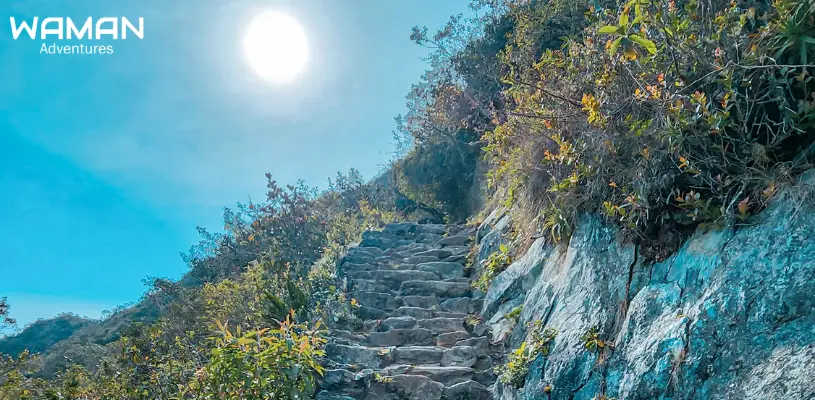
Stone staircase on the Machu Picchu Mountain trail
The Ascent to Machu Picchu Mountain
Part 1: The Start
Your hike begins at the upper terraces of Machu Picchu. Before starting, you must register at the checkpoint, providing your name, passport number, and the exact start time. The first section is relatively simple, with well-marked trails winding through the region’s characteristic vegetation.
Part 2: The Climb
The trail grows progressively steeper, and as you ascend, the views of Machu Picchu and the Urubamba River valley become increasingly breathtaking. You’ll encounter stairs built by the Incas, which provide stability and a glimpse into ancient engineering. The hike includes sections of natural rest points, ideal for recharging and taking in the scenery.
Part 3: The Summit
The summit of Machu Picchu Mountain is spacious, allowing you to rest, meditate, or simply admire the surroundings. From here, you can enjoy a 360-degree panoramic view that includes:
- The Machu Picchu citadel in all its glory.
- The Urubamba River winding through the mountains.
- The imposing Andean peaks that surround the site.
It’s the perfect spot for memorable photos and for reflecting on the magnitude of this historic place.
Part 4: The Descent
The return follows the same path as the ascent. While easier, it still requires caution, particularly on the steep stairs. Take your time and use the available handrails for a safe descent.
How long does it take to climb Machu Picchu Mountain?
Duration: Approximately 3 to 4 hours (round trip).
Time breakdown:
- Ascent: Between 1 hour 30 minutes and 2 hours, depending on pace and fitness level.
- Summit stay: Around 20 to 30 minutes to rest, enjoy the views, and take photos.
- Descent: Between 45 minutes and 1 hour 30 minutes.
Note: These times are estimates and may vary based on the hiker’s experience and weather conditions. It’s recommended to bring water, wear comfortable clothing, and allow enough time to fully enjoy the trek.
Are there any age or physical restrictions to climb Machu Picchu Mountain?
There are no specific age restrictions for climbing Machu Picchu Mountain, but we recommend a minimum age of 8 to comfortably enjoy the hike. Hikers should be in good physical condition.
It’s important to assess your ability, especially if you have a fear of heights, have never hiked before, or have any heart condition. If so, this route might not be suitable.
Take precautions, especially if traveling with children or older adults.
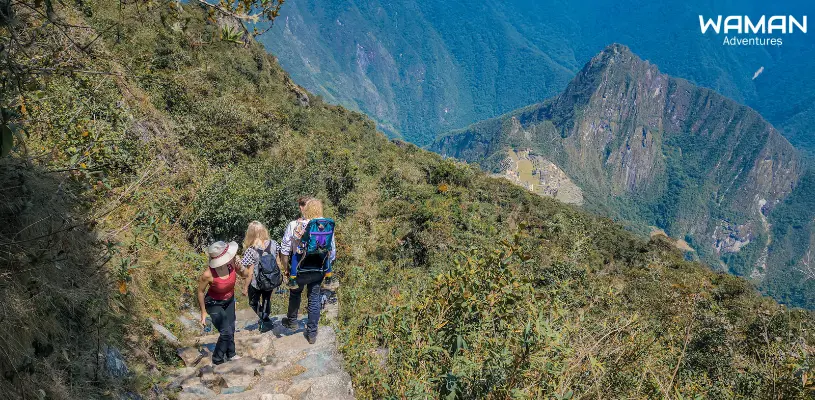
Age restrictions for climbing Machu Picchu Mountain
How many people can climb Machu Picchu Mountain per day?
According to the Ministry of Culture, only 400 people can climb Machu Picchu Mountain daily, split into two groups of 200 each.
Views from the summit of Machu Picchu Mountain
The views from the summit of Machu Picchu Mountain are breathtaking. You’ll enjoy a 360-degree view of the entire Machu Picchu citadel, the Vilcanota River, and the surrounding mountains.
If we compare the scenery offered by the three Machu Picchu hikes (Huchuy Picchu, Huayna Picchu, and Machu Picchu Mountain), the best panoramic views are arguably from Machu Picchu Mountain.

Machu Picchu Mountain is well worth the hike
SIMILARITIES BETWEEN HUAYNA PICCHU AND MACHU PICCHU MOUNTAIN
Is it necessary to reserve tickets in advance for both hikes?
Yes, it’s recommended to buy Huayna Picchu tickets at least 3 to 6 months in advance because availability is limited.
For Machu Picchu Mountain, we suggest booking at least 3 months in advance.
Equipment for both hikes
Huayna Picchu and Machu Picchu Mountain are both within the Machu Picchu Sanctuary, where the weather is unpredictable year-round. For this reason, we recommend wearing layers, as mornings in Machu Picchu can be chilly.
Below are some items recommended for your hike:
- A backpack no larger than 9.8 x 8.6 x 19.6 inches (25 x 22 x 50 cm).
- Waterproof jacket
- Cotton t-shirt
- Windbreaker
- Waterproof and convertible pants
- Leggings (for women)
- Cotton socks
- 1 liter of water
- Insect repellent
- Sunscreen
- Sun hat
- Hiking boots/shoes with a good grip
- Camera
- Portable charger
- Tickets for your respective tour circuits
- Original passport
Wearing shorts or skirts is not recommended due to the mosquitoes in the area.
If you’re traveling with children, it’s important to bring a baby carrier and both light and warm clothing.
An additional tip is to choose the right trekking shoes—ones that are comfortable, durable, and have good traction. Why? Because both the Huayna Picchu and Machu Picchu Mountain hikes involve climbing to a summit through slippery terrain and stone steps. Keep the following points in mind when selecting proper trekking shoes:
- Cushioning reduces impact when hiking. EVA materials (in the forefoot) and PU (also in the forefoot) are commonly used in trekking shoe midsoles.
- The fit of trekking shoes provides stability, cushioning, and protection against injuries, as well as overall comfort.
- Lack of breathability can lead to blisters. We therefore recommend leather trekking shoes.
- The grip and traction of the sole prevent slipping on unstable surfaces; soles should be made of rubber (blown rubber and carbon rubber).
- The weight of trekking shoes should be light, because heavier shoes require more muscular effort to move.
- A pair of trekking shoes should protect your feet from harsh trail conditions, including cold, damp environments and hard, rough surfaces.
- Remember, trekking shoes must provide maximum comfort so you can complete the hike successfully.

Characteristics of good trekking shoes for Cusco treks
Can both hikes be done without a guide?
Regulations state that a certified tour guide is mandatory to enter the Machu Picchu citadel. Guides are available for hire at the entrance for the main tour. However, it is not mandatory to hire a guide for Huayna Picchu or Machu Picchu Mountain, although we do recommend it. A guide provides detailed information about the site, enriches your experience, and can be vital for safety, especially on challenging terrain.
Physical preparation for both hikes
As with any hike, getting in shape beforehand will help you enjoy the journey more.
We recommend starting your training at least one month before your trip. After all, visiting Machu Picchu is a once-in-a-lifetime experience.
If possible, combine stretching, squats, lunges, jogging, and practice hikes. For expert advice on how to prepare physically for hiking, check out the following training guide:
Safety on both hikes
Both hikes are safe if you listen to your guide and follow regulations. Below are some tips:
- Follow the signs posted along the mountain trails.
- The descent path is steep but has railings to assist you.
- If you suffer from acrophobia, please avoid the Huayna Picchu hike.
- Always watch your step during both hikes.
- Park rangers are stationed at the summits to ensure your safety.
- All selfies with cliff edges in the background are prohibited.
The Huayna Picchu hike is not suitable for those with a fear of heights, as some sections of the trail are steep. In particular, during the descent, you’ll encounter a series of very narrow stone steps known as the Death Stairs.
The Machu Picchu Mountain hike, on the other hand, is more demanding in terms of physical effort since about 80% of the hike is uphill, and there aren’t many flat sections to rest.
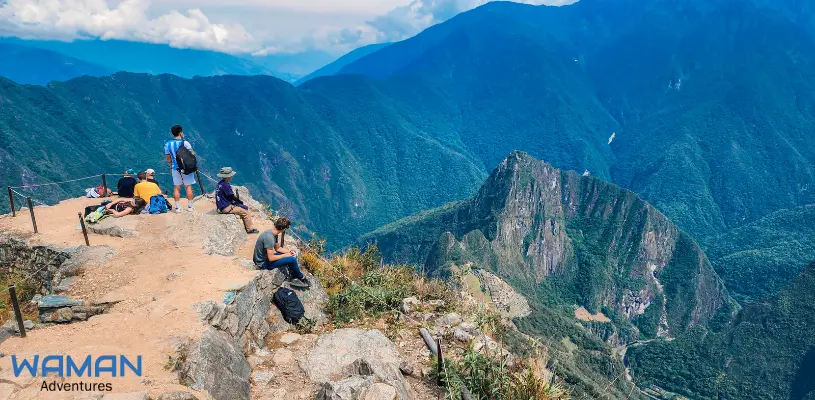
Summit of Machu Picchu Mountain
Flora and Fauna
In addition to its fascinating archaeological structures, Machu Picchu and the surrounding cloud forests are home to a variety of flora and fauna.
These are just some of the species found in the ecosystems near Huayna Picchu:
- Mammals (77 species): Andean bear, dwarf brocket deer, puma, etc.
- Birds (443 species): Cock-of-the-rock, Andean condor, hummingbirds.
- Butterflies (377 species): Morpho butterfly, heliconia, common yellow butterfly.
- Amphibians (16 species): Rhinella inca toad, checella frogs, marsupial frog, gray toad.
- Reptiles (26 species): Ochoa’s lizard, slender Peruvian snake, etc.
- Orchids (370 species): Epidendrum birostratum, Masdevallia veitchiana, Vasqueziella boliviana.
- Bromeliads: Plants with unique rosette-shaped leaves that often collect water in their centers, creating miniature ecosystems.
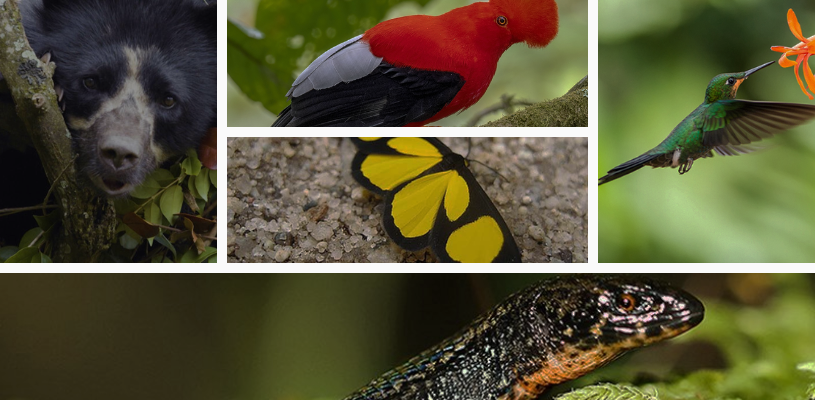
Fauna and flora on the hike to Huayna Picchu or Machu Picchu Mountain
HUAYNA PICCHU vs. MACHU PICCHU MOUNTAIN
| DIFFERENCES | HUAYNA PICCHU | MACHU PICCHU MOUNTAIN |
| LOCATION | North of Machu Picchu | South of Machu Picchu |
| ALTITUDE | 2,667 meters (8,750 ft) | 3,082 meters (10,111 ft) |
| KILOMETERS | 2 km (1.2 miles) | 4 km (2.5 miles) |
| AVAILABLE CIRCUIT | 3A Circuit | 1A Circuit |
| TIME (APPROX) | 2 to 3 hours approx. | 3 to 4 hours approx. |
| DIFFICULTY | Moderate – Challenging | Moderate – Challenging |
| RECOMMENDED AGE | 12 and older | 12 and older |
| TYPE OF PHOTOS | Landscape photos from the mountain | Classic postcard shots and landscape photos from the mountain |
| AVAILABLE TICKETS | 400 tickets in two time slots | 400 tickets in two time slots |
| IT’S THE IDEAL OPTION BECAUSE… | A steep, narrow trail adds excitement to the hike.
Offers a more intense trek and closer views of the Inca citadel. |
The hike is challenging but less steep than Huayna Picchu. It offers broader landscapes and more time to enjoy the hike. |
Now that you have more information about the Machu Picchu Mountain and Huayna Picchu hikes, don’t miss the chance to enjoy the most spectacular views of the citadel. Push your limits by climbing stone steps and capture the best photos during your visit to Machu Picchu. Let us accompany you; we are Waman Adventures and offer the best tours within the citadel. Book now.


Share:


Related tours you might be interested in
Enjoy unique experiences in Cusco and Machu Picchu with the peace of mind that comes from working with a local travel agency

10 Days Andean Dreamscapes – Lima, Ica, Cusco & Puno with Local Flights
YOUR NEXT DESTINATION IS PERU, THE LAND OF FASCINATING STORIES AND OUTSTANDING LANDSCAPES! With our...

07 Day Echoes of Peru – Lima, Ica & Cusco with Flights
IMAGINE YOUR PERFECT ESCAPE PLAN IN PERU, WHERE EVERY DAY IS THE PERFECT OPPORTUNITY TO EXPLORE AND...
10 Day Millenary Peru – Coast, Andes & Jungle
EXPERIENCE THE BEST OF PERU: ADVENTURE, ICONIC SIGHTS, AND UNIQUE FLAVORS AWAIT! Enjoy an...

02 DAY «EXPLORING» THE SACRED VALLEY AND MACHU PICCHU
CHINCHERO, MARAS AND MORAY WILL ENVELOP YOU IN THE MAGIC OF THE SACRED VALLEY. EACH EXPERIENCE WILL...
If you liked this article and the information you found, give us 5 stars!
Table of Contents
Related blogs

Don’t buy your Machu Picchu Bus ticket until you read this
11 min of reading
Machu Picchu animals: discover Peru’s wild heart beyond the ruins
10 min of reading
Discovering The Amazing History of Machu Picchu
13 min of reading