Machu Picchu animals: discover Peru’s wild heart beyond the ruins
Ultima actualización en 25 October, 2025 por Waman Adventures
Last Updated on 25 October, 2025 by Waman Adventures
- What Animals Live at Machu Picchu?
- Iconic Mammals of the Sanctuary
- Notable Birds
- Where and When Are You Most Likely to Spot Wildlife?
-
Frequently Asked Questions About Machu Picchu Wildlife
- What animals are exclusive to Machu Picchu?
- Can I see llamas at Machu Picchu?
- Do I need special equipment to observe animals?
- Are there specialized wildlife observation tours?
- Is it common to see bears or pumas during the trek?
- What is the best month to see birds or butterflies?
- Are there dangerous animals in the area?
- Is it a good idea to visit Machu Picchu with children if there are animals?
- Do I need binoculars or a special camera to see animals at Machu Picchu?
- What time of day is best for seeing active animals?
- What should I do if I encounter an Andean bear or a puma?
- Do animals approach visitor or trekker areas?
- Where can I see the cock of the rock in the wild?
- Are there poisonous animals at Machu Picchu?
- Is it allowed to feed the animals if they approach?
- What type of butterflies can be seen in the Mandor area or the Inca Trail?
- Are Machu Picchu animals protected by law?
- Are there conservation centers or refuges near the area?
- Can I also see animals in the surroundings of Aguas Calientes?
Exploring the archaeological complex and the Machu Picchu animals is immersing yourself in a unique experience where ancestral history intertwines with exceptional biodiversity. Beyond its imposing terraces and architecture, this place harbors a rich variety of wildlife that inhabits cloud forests, rugged mountains, and deep valleys. Now discover which species you can see on your impressive adventure.
What Animals Live at Machu Picchu?
The Machu Picchu Historic Sanctuary is a natural paradise that protects impressive biodiversity. With an area of over 79,800 acres (32,500 hectares), this natural and cultural area recognized by UNESCO serves as a refuge for a wide variety of wild species.
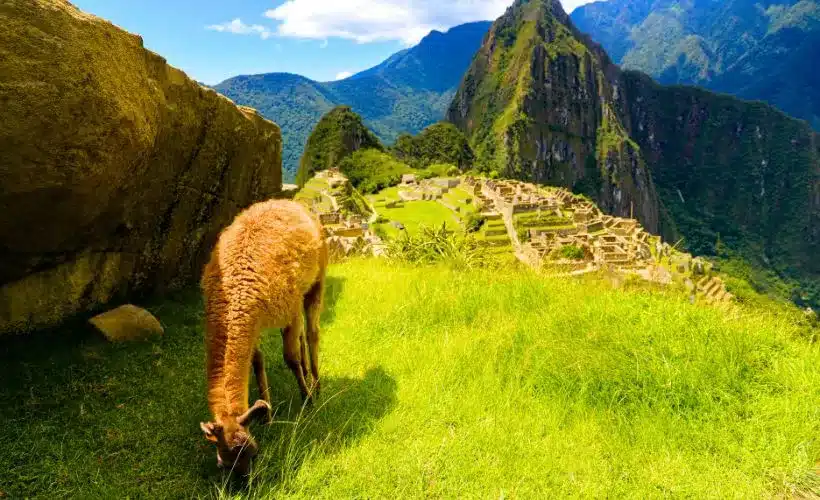
Thanks to its geography and climate, the sanctuary shelters unique ecosystems that favor life for an extensive variety of animals.
Among the most notable species are:
- 70 mammal species
- 420 bird species
- 300 butterfly species
- 22 reptile species
- 13 amphibian species
This natural richness makes Machu Picchu an ideal place for nature lovers and wildlife observation. Each hike along its trails is an opportunity to encounter unique species and experience a connection with Andean nature.
Iconic Mammals of the Sanctuary
When you visit Machu Picchu, you not only marvel at its archaeological legacy, but you also enter a unique ecosystem where wildlife coexists in harmony with the cloud forests, rugged mountains, and deep valleys that surround it. During your tour of the sanctuary, if you keep your senses alert and have a bit of luck, you could spot some of the most emblematic mammal species of the Andean Amazonian region:
During your tour, if you are lucky and keep your senses alert, you might spot some of the following representative mammals:

- Spectacled bear (Tremarctos ornatus): It is the only native bear of South America and is listed as a vulnerable species. It mainly inhabits areas of dense vegetation and is difficult to see due to its solitary and cautious behavior. Its presence is essential for ecological balance, as it helps disperse seeds in the forest.
- Andean puma (Puma concolor): Plays a key role as a regulator of other animal populations. It is very reserved and therefore rarely seen, but its tracks and traces are sometimes identifiable.
- Vizcacha (Lagidium peruanum): This small rodent, similar to a chinchilla, is easily recognizable by its long tail and rounded ears. It lives among the cracks of rock formations and usually comes out to sunbathe during the early hours of the day.
- Taruca or Andean deer (Hippocamelus antisensis): This deer species is endemic to the Andes and is endangered due to habitat loss and poaching.
- Sachacabra or pudu (Pudu mephistophiles): Considered the smallest deer on the planet, it measures barely 12 to 16 inches (30 to 40 centimeters) tall. It lives in areas of dense vegetation and is extremely elusive.

Did you know…?
In Andean cosmovision, the spectacled bear is considered a mediator between the world of the living and the dead.
Notable Birds
The Machu Picchu Historic Sanctuary not only captivates you with its archaeological legacy and mountain landscapes, but also offers you the opportunity to explore exceptional biodiversity. During your visit, you can marvel at the diversity of birds, butterflies, reptiles, and amphibians that inhabit this unique environment.
Notable birds:
- Cock of the rock (Rupicola peruvianus): National bird of Peru, recognizable by its intense orange plumage and fan shaped crest. It usually performs courtship dances accompanied by a vibrant song. You can spot it in areas like the Mandor Gardens.
- Andean condor (Vultur gryphus): One of the largest flying birds in the world, with a wingspan of up to 10 feet (3 meters). It soars over canyons and high peaks in search of carrion, being a symbol of the Andes and Andean cosmovision.

- Giant hummingbird (Patagona gigas): The largest hummingbird, which despite its size maintains the characteristic agility of its species, hovering among flowers to feed on nectar. It is common to see it in open and sunny areas.
- Tanagers and toucans: These colorful birds are found in the cloud forests, bringing vitality and diversity to the ecosystem.
- Butterflies: It is also home to an impressive variety of insects, among which butterflies occupy a special place. More than 300 butterfly species have been identified.

Reptiles and amphibians
Although less visible, reptiles and amphibians are also an essential part of the sanctuary’s ecosystem. At least 22 reptile species have been documented, including lizards and more.
Did you know…?
The condor reaches sexual maturity between 5 and 6 years of age and usually lays one egg every two or three years
Where and When Are You Most Likely to Spot Wildlife?
Spotting animals of Machu Picchu in their natural environment is one of the most rewarding experiences you can have during your visit. To increase your chances of encountering local fauna, it is important to consider the time of day, season, and strategic locations.
Best Time to Observe Animals: Early Morning Hours
Dawn is the ideal time for wildlife sighting. Between 5:30 a.m. and 8:00 a.m., many species are in full activity. Mammals, such as vizcachas, deer, and small rodents, take advantage of the morning coolness to leave their shelters. Butterflies begin to spread their wings as the sun warms the environment.

Areas with Greater Sighting Probability
The sanctuary is a living ecosystem; some sectors are especially conducive to finding fauna.
- Mandor Gardens: Located near Aguas Calientes, these gardens are a natural ecological reserve with trails surrounded by dense vegetation.
Dry Season
During the months from April to October, weather conditions are more stable, with clear skies and less rainfall. In the dry season, vegetation tends to be less dense, allowing you to see animals more clearly. Additionally, many birds and butterflies take advantage of this period to reproduce.
Your visit to Machu Picchu goes beyond admiring structures; it is the perfect time to discover the animals that inhabit this sanctuary, giving you a deeper perspective on the importance of preserving these unique ecosystems. Remember that by exploring with respect and attention, you contribute to the preservation of this natural heritage. It is time for you to discover a new experience with Waman Adventures in a responsible way.
Frequently Asked Questions About Machu Picchu Wildlife
What animals are exclusive to Machu Picchu?
The Machu Picchu Historic Sanctuary harbors notable species diversity, many of them endemic to the region. Among them is the cock of the rock, Peru’s national bird, and other exclusive bird species. Additionally, 23 bird species, 9 mammals, 9 reptiles, and 7 amphibians native to the area have been recorded.
Can I see llamas at Machu Picchu?
Yes, it is common to see llamas roaming freely through the terraces and structures of the citadel. These animals were domesticated since pre Inca times, so they are part of the cultural landscape and are accustomed to the presence of people.
Do I need special equipment to observe animals?
It is not mandatory, but bringing binoculars and a camera with good zoom will be very helpful for observing birds and butterflies. These items will allow you to appreciate details that might go unnoticed with the naked eye and will enrich your experience.
Are there specialized wildlife observation tours?
Yes, many agencies offer tours focused on the region’s biodiversity, including bird watching excursions in mountainous areas and more.
Is it common to see bears or pumas during the trek?
Although the spectacled bear and Andean puma inhabit the sanctuary, they are solitary and elusive animals. Therefore, it is difficult to see them, as they live in remote areas.
What is the best month to see birds or butterflies?
The dry season, which runs from April to October, is ideal for observing birds and butterflies, as weather conditions are more stable and there is greater activity of these species.
Are there dangerous animals in the area?
In general, the fauna does not represent a danger to visitors. However, it is important not to approach or feed the animals in machu picchu, so you should follow the instructions of guides and park rangers to have a safe and respectful experience.
Is it a good idea to visit Machu Picchu with children if there are animals?
Yes, Machu Picchu is an excellent place to visit as a family. It is a unique opportunity for little ones to learn about nature and conservation. With proper supervision, you will have an educational and incredible experience.
Do I need binoculars or a special camera to see animals at Machu Picchu?
A pair of binoculars or a camera with good zoom can make a big difference when observing small birds or animals.
What time of day is best for seeing active animals?
The best time to observe animals at Machu Picchu is early, from 6 a.m. to 9 a.m., as during those hours many species are active and you are more likely to observe birds, butterflies, and many small mammals moving around.
What should I do if I encounter an Andean bear or a puma?
If you happen to see one of these animals at Machu Picchu, the most important thing is to stay calm. Do not approach, do not run, and do not make sudden movements. Simply back away slowly without turning your back. The recommendation is to move away calmly.
Do animals approach visitor or trekker areas?
Yes, some species such as llamas, vizcachas, or small birds may approach areas more frequented by tourists. Although they seem like friendly animals, it is ideal not to touch or disturb them so as not to alter their natural behavior.
Where can I see the cock of the rock in the wild?
This colorful bird inhabits humid forests, and the archaeological complex is one of the perfect places to spot them. Likewise, the Mandor Gardens, which are located on the outskirts of Aguas Calientes, are a good place to observe them, as are some sections of the Inca Trail.
Are there poisonous animals at Machu Picchu?
No poisonous species that pose a danger to visitors have been reported. However, you should avoid touching unknown insects, reptiles, or amphibians and stay on marked trails.
Is it allowed to feed the animals if they approach?
No, it is completely prohibited to feed wildlife within the archaeological center, as this practice can alter the natural behavior of animals.
What type of butterflies can be seen in the Mandor area or the Inca Trail?
At Machu Picchu and nearby areas such as the Mandor Gardens, you can see more than 300 butterfly species, many of them native. Their unique colors and patterns are part of the sanctuary’s natural attraction.
Are Machu Picchu animals protected by law?
Yes, the sanctuary is a natural area protected by the Peruvian State and international regulations. The animals at Machu Picchu are protected by conservation laws that seek to preserve their ecosystem.
Are there conservation centers or refuges near the area?
Yes, there are local projects and institutions working on biodiversity conservation, such as the orchid nursery in Aguas Calientes or Andean bear protection initiatives.
Can I also see animals in the surroundings of Aguas Calientes?
Yes, in natural areas near Aguas Calientes, such as the Mandor Gardens or the route to the Allcamayo waterfalls, it is possible to observe birds, butterflies, insects, and small mammals.

Share:




Related tours you might be interested in
Enjoy unique experiences in Cusco and Machu Picchu with the peace of mind that comes from working with a local travel agency

02 DAY «EXPLORING» THE SACRED VALLEY AND MACHU PICCHU
CHINCHERO, MARAS AND MORAY WILL ENVELOP YOU IN THE MAGIC OF THE SACRED VALLEY. EACH EXPERIENCE WILL...

Full Day – «Exploring» Machu Picchu
MACHU PICCHU EPIC ADVENTURE TOUR FROM CUSCO This full-day option is an excellent opportunity to...

04 DAY CUSCO – SACRED VALLEY – MACHU PICCHU
DISCOVER THE MAGIC OF CUSCO, THE SERENITY OF THE SACRED VALLEY AND THE GRANDEUR OF MACHU PICCHU On...

10 Days Andean Dreamscapes – Lima, Ica, Cusco & Puno with Local Flights
YOUR NEXT DESTINATION IS PERU, THE LAND OF FASCINATING STORIES AND OUTSTANDING LANDSCAPES! With our...
If you liked this article and the information you found, give us 5 stars!
Table of Contents
Related blogs
Walking With the Llamas in Machu Picchu: A Journey Through Time
8 min of reading