Travel Guide Uyuni: Everything you need to know before visiting
Ultima actualización en 18 May, 2026 por Waman Adventures
Last Updated on 18 May, 2026 by Waman Adventures
- Overview of the Uyuni Salt Flat
- Climate at the Uyuni Salt Flat
- Best Season to Visit the Uyuni Salt Flat
- How to Get to the Uyuni Salt Flat
- Guided Tours vs. Adventure on Your Own
- Must See Itineraries
- What to Bring
- Gastronomy in Uyuni
- Practical and Health Tips
- Local Culture and Curious Facts
-
Frequently Asked Questions About the Travel Guide Uyuni
- Do I need a tour guide in Uyuni?
- Do I need an English speaking guide in Uyuni?
- What’s the best time to see the mirror effect?
- Can you visit the salt flat in a single day?
- Is it safe to travel with altitude sickness?
- Do I need a visa to enter Bolivia?
- Can I drive through the salt flat without a guide?
- How much time is recommended to visit the salt flat?
- Can you go with children?
- Where can you see the sunset?
Planning a trip to Bolivia and wondering if you need a travel guide Uyuni? Here’s everything you need to plan your adventure, including how to get there, the best time to visit, and the unmissable wonders that make this salt flat one of the most extraordinary places on Earth.
Overview of the Uyuni Salt Flat
What Is the Uyuni Salt Flat?
It’s the world’s largest salt layer, with over 6,213 square miles (10,000 km²). It has a crust several meters thick, with a brine base rich in lithium, potassium, and magnesium. It’s estimated to harbor between 50% and 70% of the world’s lithium reserves, crucial for batteries and electric cars.
Where Is It Located?
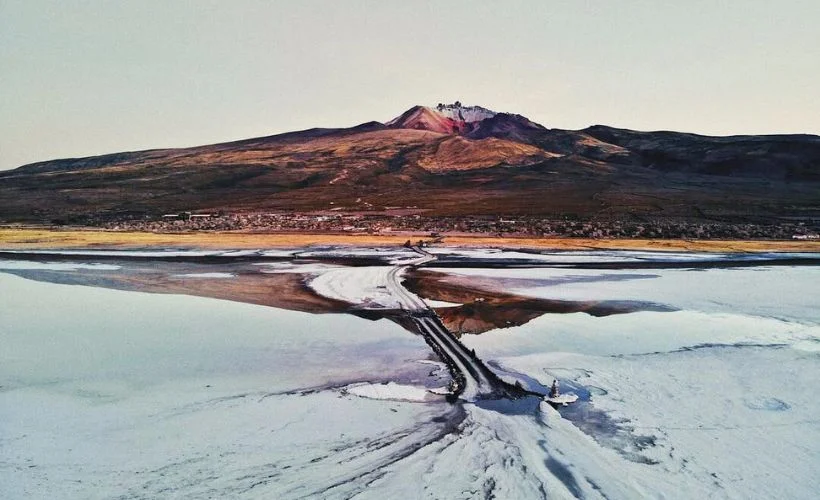
It’s found in the department of Potosí, Bolivia, at over 11,811 feet (3,600 m.a.s.l.), surrounded by mountains, active volcanoes like Tunupa, and Andean towns that maintain their millenary traditions.
From the Uyuni district, the area’s center, the salt flat is about 20 to 25 minutes away by vehicle.
Why Is It So Famous?
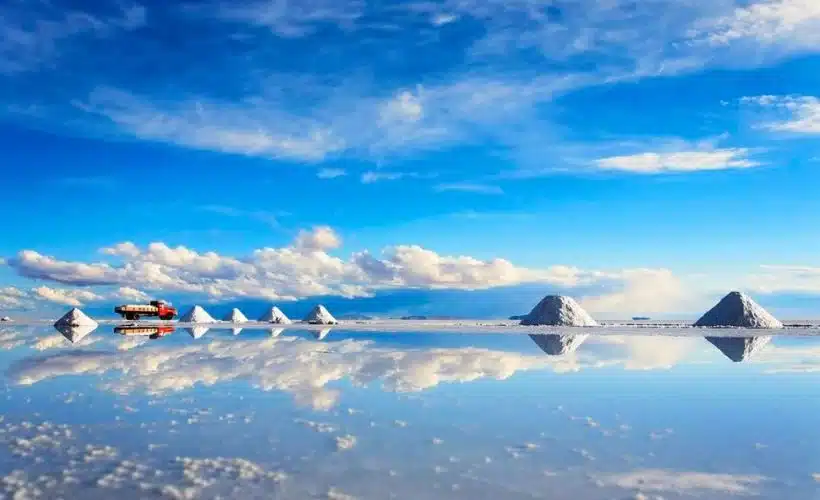
The Uyuni Salt Flats are known around the world for their breathtaking mirror effect during the rainy season, considered one of the most beautiful natural phenomena on Earth. It is also a paradise for photographers, where the endless horizon allows you to play with perspective and create surreal images. In addition, any travel guide Uyuni will mention its growing importance for astrotourism, as its clear night sky offers one of the best views of the Milky Way anywhere in the world.
Is It Worth Visiting?
Absolutely. The Uyuni Salt Flats often appear on lists of the world’s must-see destinations for good reason. Many travelers exploring the Atacama Desert in Chile or Machu Picchu in Peru include Uyuni as part of their journey, drawn by its surreal landscapes and unforgettable beauty.
Did you know…?
The salt flat is located on the high Andean plateau, an area that also contains volcanic, fluvial, and lacustrine deposits.
Climate at the Uyuni Salt Flat
Characteristics Throughout the Year
Dry season (May to October): completely clear skies, very cold nights (down to 5°F/–15°C), ideal for seeing the Milky Way and touring distant areas.
Rainy season (January to March): the salt flat is covered with a layer of water that creates the mirror effect. Nighttime temperatures are less extreme (32°F to 41°F/0°C to 5°C), but some routes may close.
Transition months (November and April): the salt flat is partially dry and there are areas with reflections.
Tips for Facing the Climate
- Use 50+ SPF sunscreen and category 3 or 4 UV sunglasses.
- Bring windbreaker jacket, hat, gloves, and thermal clothing.
- Acclimatize first in the cities of La Paz or Sucre.

Best Season to Visit the Uyuni Salt Flat
Dry Season vs. Rainy Season
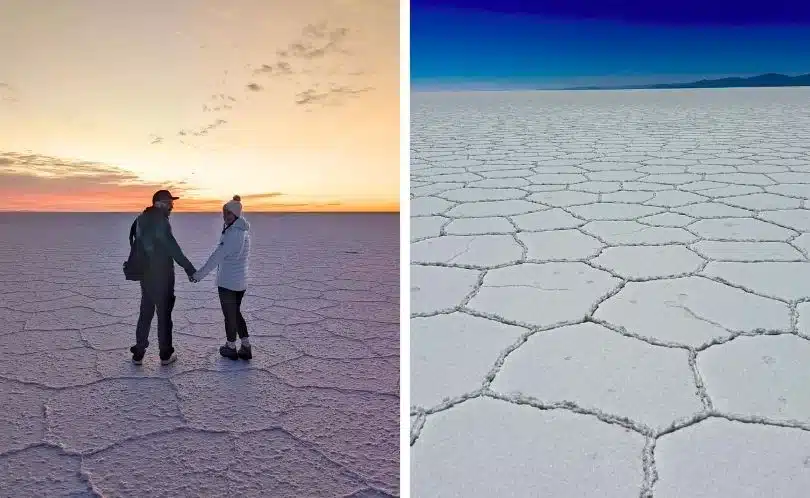
- Dry: it’s easier to reach places like Incahuasi Island or highland lagoons. You’ll also see the polygonal salt floor perfect for perspective photography.
- Rainy: you’ll have the iconic mirror effect, but some roads may be closed. Therefore, you need a flexible tour.
When Can I See the Mirror Effect?
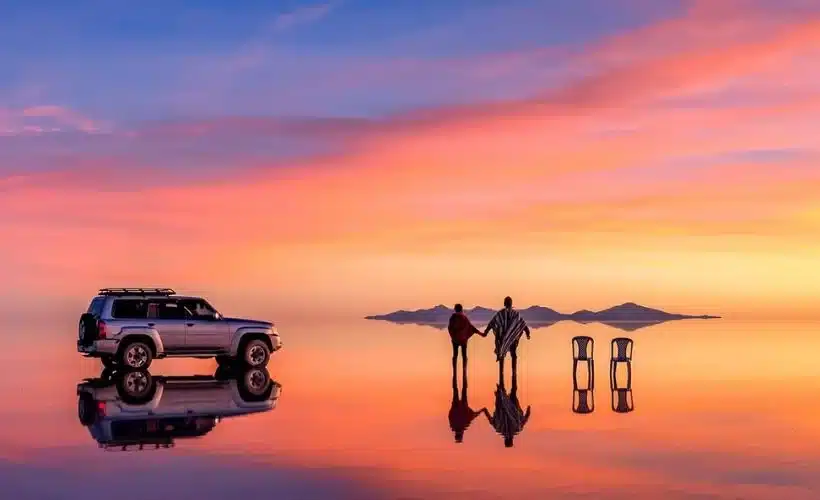
Between January and March, although it depends on each year’s rainfall amount. But February is the month with the most mirror days, but also with risk of storms.
When Can I See the Salt Polygons?
Between May and October, when the salt flat is totally dry. You can walk without getting wet and cover long distances.
| Months | What to See? | Advantages | Disadvantages |
| May to October | Hexagons, starry sky. | Easy access, long tours. | Very cold nights. |
| January to March | Mirror effect. | Unique photographs. | Possible closed roads. |
| April to November | A bit of both worlds. | Fewer tourists. | Unpredictable weather. |
How to Get to the Uyuni Salt Flat
From US and Mexico:
- Flight to La Paz (LPB) or Santa Cruz (VVI).
- Typical airlines: LATAM, Avianca, Copa, American.
From La Paz:
- Internal flight (BoA, Ecojet): 50 to 60 minutes. From $120 to $180 USD round trip.
- Overnight bus (Todo Turismo, Panasur): 10 to 12 hours, $30 to $40 USD.
From Chile: tours departing from San Pedro de Atacama, crossing the border to Bolivia and ending in Uyuni or making a circular route. They include transportation, meals, and guides.
Useful Tips
If you arrive by land, have cash for border fees ($20 to $180 USD depending on nationality). Some countries require visas, like the US (it can be processed at the land crossing, but it’s slow).
Guided Tours vs. Adventure on Your Own
1 Day vs. 3 Day Tours
- 1 day: Train Cemetery, Colchani, salt flat, Incahuasi Island. Ideal if you have little time.
- 3 days: add highland lagoons, Sol de Mañana geysers, Stone Tree, hot spring baths, and optional crossing to Chile.
Is It Better with a Guide or on Your Own?
Going alone is not recommended. The salt flat has no signage and there are areas with hidden brine pools that can sink a vehicle. Additionally, GPS fails due to high mineral concentration.
What Does an Organized Tour Include
Hiring an organized tour to the Uyuni Salt Flat is the safest, most practical, and complete way to visit this natural wonder. These packages usually include the following:
- 4×4 vehicle: ideal for traveling over the salt crust and highland dirt roads.
- Driver: most tours offer an experienced driver.
- Oxygen tank: if you value higher quality attention, you can opt for an English speaking guide and also choose private rooms: it’s normal for them to carry a small portable oxygen tank for emergencies.
- Accommodation on route: you’ll have the option to choose between rustic or salt hotels, according to your budget.
Book 1 to 2 months in advance, especially for salt hotels or bilateral tours.

Must See Itineraries
Classic 1 Day Tour
- Train Cemetery: abandoned English locomotives from the 19th century.
- Colchani: artisans working with salt, local market, small museums.
- Salt flat: photo session with perspective tricks.
- Incahuasi Island: walk among giant cacti (some over 1,200 years old).
Expert tip:
Take advantage of the salt flat’s wet areas to take creative photos with perfect reflections, especially if it has rained recently.
3 Day Adventure
- Day 1: you’ll see the cemetery, Colchani, salt flat, Incahuasi, night at salt hotel.
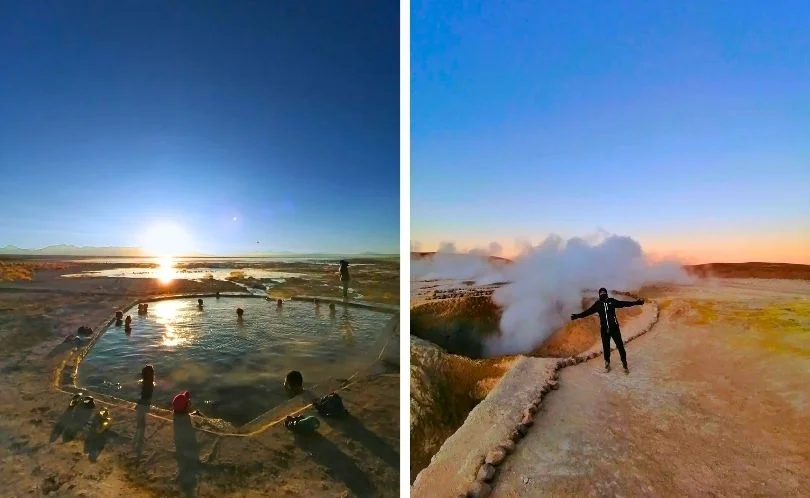
- Day 2: you’ll discover active geysers at almost 16,404 feet (5,000 m), baths in Polques hot springs, Laguna Colorada with thousands of flamingos.
- Day 3: Stone Tree, Siloli desert, Green Lagoon (at the foot of Licancabur volcano).
What to Bring
- Thermal and layered clothing, gloves, hat.
- Dark glasses and 50+ sunscreen.
- Energy snacks, reusable bottle.
- Microfiber cloth to clean cameras and drones.
- Pills for altitude sickness or coca leaves.
Gastronomy in Uyuni
You can choose from a variety of typical dishes such as:
- Quinoa soup.
- Filled salteñas.
- Hot empanadas.
- Peanut soup.
- etc.
As for traditional infusions, try:
- Coca tea.
- Muña tea.
- Mint tea.
Featured restaurants: Minuteman (inside Hotel Tonito): homemade pizzas with local products.
Tika: Bolivian haute cuisine, with dishes like high loin with Andean herb reduction.
Other recommended options are: Luna Salada, Casa de Sal, Cristal Samaña, and Atipax, which combine comfort with unique design.

Practical and Health Tips
- Avoid physical exertion the first day, try to walk slowly and drink coca tea.
- Buy bottled water, because tap water is not potable.
- Don’t hire tours without first making sure they’re authorized companies, so verify their credentials.
Local Culture and Curious Facts
Local legend tells that the salt flat was born from the tears of the Andean goddess Tunupa, a powerful deity related to thunder, lightning, and volcanoes. She’s considered the guardian of the salt flat and nearby volcanoes. For many Aymara communities, this place is sacred, and traditional offerings and rituals are performed there.
Remember that:
From ancient Andean beliefs to its rich biodiversity and its importance in the economy of the future, visiting Uyuni connects you with a place that’s unique both spiritually and strategically.
Are you ready to experience an adventure? Then it’s time to plan with a travel guide Uyuni, so you can enjoy comfort and the best possible experience. At Waman Adventures we’re ready to help you plan this unique trip, with guaranteed departures and personalized attention. Book now and discover why Uyuni is the most impressive natural mirror on the planet. Don’t wait any longer!
Frequently Asked Questions About the Travel Guide Uyuni
Do I need a tour guide in Uyuni?
Do I need an English speaking guide in Uyuni?
If you don’t speak Spanish, it’s best to hire a bilingual guide. Nowadays, most tour agencies offer this service, as they understand the importance of language for improving your experience.
What’s the best time to see the mirror effect?
The ideal season is between January and March, when rains create a thin layer of water covering the salt flat and generating the famous sky reflection. It’s an impressive spectacle that attracts photographers from around the world.
Can you visit the salt flat in a single day?
Yes, it’s possible to do an express tour from Uyuni covering the Train Cemetery, Colchani, and Incahuasi Island. However, if you want to explore highland lagoons, geysers, and other wonders, a 2 or 3 day itinerary is better.
Is it safe to travel with altitude sickness?
With necessary precautions, yes. Ideally you should acclimatize at least 1 to 2 days beforehand in cities like La Paz, Sucre, or Potosí. Stay well hydrated, eat light, avoid alcohol the first day, and bring pills or coca tea.
Do I need a visa to enter Bolivia?
It depends on your nationality. For European Union, Chile, Mexico, or Argentina citizens, only a valid passport is required. If you’re from the US you must process a visa, which you can obtain before the trip or at the border, although doing it previously is faster.
Can I drive through the salt flat without a guide?
It’s not recommended because the terrain has little signage and there may be unstable or dangerous areas, so it’s easy to get disoriented and run unnecessary risks.
How much time is recommended to visit the salt flat?
Ideally 3 days to include Incahuasi Island, highland lagoons, geysers, and the border with Chile. If you only have one day, opt for the basic circuit from Uyuni.
Can you go with children?
Yes, many travelers do it as a family. Make sure to bring warm clothing and games to entertain them during long 4×4 journeys.
Where can you see the sunset?
Guides usually plan stops in clear sectors of the salt flat or at viewpoints near Colchani so you can capture the sun setting behind the white horizon.

Share:



If you liked this article and the information you found, give us 5 stars!
Table of Contents
Related blogs

Why Choose Circuit 2 Machu Picchu: Temples, Viewpoints, and Routes
10 min of reading
Find the Top Sacred Valley Hotels for Your Dream Trip to Cusco!
12 min of reading