50 Inca Jungle Trek Facts to Know Before Visiting Machu Picchu
Ultima actualización en 29 October, 2026 por Jhon Quispe
Last Updated on 29 October, 2026 by Jhon Quispe
What should you know about the Inca Jungle Trek?
The Inca Jungle Trek is a multi-activity route to Machu Picchu, commonly completed in 4 days and 3 nights. It combines hiking and downhill biking, with rafting or ziplining depending on the tour. The journey typically passes Abra Málaga at about 14,270 ft (4,350 m) before descending into warmer valleys.
- MachupicchuMachu Picchu & Humantay Lake
- Basic facts about the Inca Jungle Trek
-
Route, activities and altitude facts
- 5. What activities are included in the Inca Jungle Trek?
- 6. Where does the Inca Jungle Trek start?
- 7. How far is the Inca Jungle Trek?
- 8. What is the highest point of the Inca Jungle Trek?
- 9. What is the lowest point of the route?
- 10. What is the average altitude of the Inca Jungle Trek?
- 11. How many hours do you walk each day?
- Weather and best season facts
- Altitude, health and emergency facts
- Nature and wildlife facts
- Difficulty, fitness and food facts
- Accommodation and facilities facts
- Safety and packing facts
- Booking, prices and cancellation facts
- Machu Picchu tickets and independent travel facts
- Final planning facts before booking
- Choose the Inca Jungle experience that fits your plans
-
Frequently asked questions about the Inca Jungle Trek
- Is the Inca Jungle Trek suitable for first-time trekkers?
- Is rafting included in every Inca Jungle tour?
- Can you skip biking or another adventure activity?
- Does the Inca Jungle require Classic Inca Trail permits?
- Are Machu Picchu entrance tickets included?
- What should you confirm before booking an Inca Jungle tour?
- Does travel insurance need to cover adventure sports?
The biggest difference between Inca Jungle itineraries is not always the number of days. Activity inclusions, route changes, accommodation standards and Machu Picchu tickets can vary by operator, making it useful to distinguish fixed route characteristics from details that must be confirmed before booking.
Important note:
Inca Jungle itineraries are not standardized. The number of activities, hiking distance, accommodation, transportation and included entrance tickets may differ between operators and packages. Verify the specific itinerary before booking.
Basic facts about the Inca Jungle Trek
1. What is the Inca Jungle Trek?
The Inca Jungle Trek is a multi-activity journey toward Machu Picchu that combines hiking with downhill mountain biking and, depending on the package, adventure activities such as rafting and ziplining.
Unlike a conventional hiking route, the Inca Jungle uses a combination of roads, walking paths and transportation through different parts of the Cusco region.
It is also different from the permit-controlled Classic Inca Trail, which follows a regulated archaeological trekking route.
2. Where is the Inca Jungle Trek located?
The route takes place in southeastern Peru, within the Cusco region. Common itineraries travel from the highlands near Abra Málaga toward the warmer valleys around Santa María and Santa Teresa before continuing to Aguas Calientes and Machu Picchu.
The journey crosses contrasting mountain environments, making changes in scenery and elevation an important part of the experience.
3. How long does the Inca Jungle Trek last?
The most common format is 4 days and 3 nights, although shorter options lasting 3 days and 2 nights may also be available.
The number of days does not automatically determine the activities included. Some itineraries dedicate more time to hiking, while others incorporate additional transfers or adventure experiences.
For the full daily route and typical sequence of activities, consult the Inca Jungle Trek guide.
4. Is the 4-day or 3-day Inca Jungle Trek better?
The four-day itinerary generally provides more flexibility to combine hiking with outdoor activities and overnight stops.
A three-day itinerary usually follows a more compressed schedule and may reduce or omit particular activities.
The best option depends on your available time, physical condition and preferred activities. Compare daily walking times, transfers, accommodation and Machu Picchu admission before choosing.
Route, activities and altitude facts
5. What activities are included in the Inca Jungle Trek?
The Inca Jungle commonly combines hiking and downhill mountain biking. Some packages also include or offer rafting and ziplining, depending on the operator and itinerary.
The activities are not interchangeable. Cycling requires balance and confidence on descents, while rafting depends on river conditions and specialized equipment.
Confirm whether each activity is included in the published price or charged separately.

Inca Jungle itineraries combine hiking with different outdoor adventure activities.
Warning:
Rafting difficulty and cycling conditions must be assessed for the actual route and travel date. A published river classification does not guarantee that the activity is suitable or risk-free for every traveler.
6. Where does the Inca Jungle Trek start?
Most organized itineraries begin with pickup in Cusco, located at approximately 11,150 ft (3,400 m) above sea level.
Transportation commonly travels toward Abra Málaga before the downhill biking section begins.
The exact biking departure point may change because of weather, road conditions and the operator’s safety assessment.
7. How far is the Inca Jungle Trek?
There is no universal total hiking distance because Inca Jungle itineraries combine cycling, walking and vehicle transfers.
Some descriptions mention approximately 37–43 miles (60–70 km) across portions of the journey, but this should not be interpreted as the distance every traveler walks.
Before booking, request the actual walking and cycling distances for the specific itinerary.
8. What is the highest point of the Inca Jungle Trek?
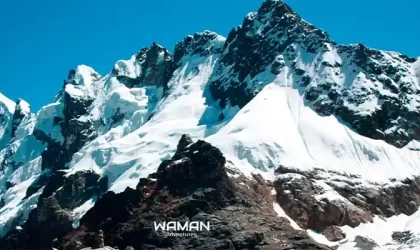
Abra Málaga is commonly the highest point reached during transportation on the route, at approximately 14,270 ft (4,350 m).
Conditions at this elevation can be cold and windy even when the journey later continues into warm valleys.
The altitude is especially relevant for travelers arriving from low-elevation destinations because the route involves a substantial change in elevation.

The route descends from high Andean terrain toward warmer valleys.
9. What is the lowest point of the route?
Santa María lies at approximately 4,100 ft (1,250 m) above sea level.
However, the exact lowest point depends on the itinerary, route variations and transportation used.
The transition from Abra Málaga to lower valleys is one of the Inca Jungle’s distinctive geographical characteristics.
10. What is the average altitude of the Inca Jungle Trek?
A single average altitude is not particularly useful because the route changes elevation substantially.
Travelers commonly move from Cusco at about 11,150 ft (3,400 m) to Abra Málaga at approximately 14,270 ft (4,350 m), before descending toward Santa María and continuing through lower valleys.
This variation makes weather and clothing requirements different from those of a route that remains at a relatively constant elevation.
11. How many hours do you walk each day?
Walking time depends on the itinerary and the activities scheduled for each day.
Some hiking sections may require approximately five to eight hours on foot, while other days involve more cycling, transportation or sightseeing.
These times should not be interpreted as a fixed daily walking requirement. Ask the operator for each day’s estimated walking duration, terrain and elevation changes.
Weather and best season facts
12. Why does the weather change along the route?
The Inca Jungle crosses several elevations and ecological environments. Travelers may experience cold mountain conditions near Abra Málaga and warmer, more humid weather in valleys such as Santa María and Santa Teresa.
Rain, cloud and temperature changes can occur during the same day, which makes layered clothing and accessible rain protection useful.
13. What is the weather like during the Inca Jungle Trek?
Cusco and Abra Málaga can be cold, particularly early in the morning. Lower valleys are generally warmer and more humid, while Aguas Calientes often experiences mild, damp conditions.
Weather should be assessed for the different stops on the itinerary rather than relying exclusively on the forecast for Cusco city.
14. Is the Inca Jungle Trek available throughout the year?
Operators may offer departures during much of the year, but availability and activity conditions are not guaranteed.
Heavy rain can affect mountain roads, hiking paths, cycling and river activities. Some departures may require changes or cancellations when local conditions become unsuitable.
Confirm current operations before traveling, particularly during wetter months.
15. What is the best season for the Inca Jungle Trek?
The generally drier period from April through October is often preferred for outdoor activities, with May through September usually providing the most consistently dry conditions.
Lower rainfall can improve the predictability of hiking and biking, but the best month also depends on visitor demand, scenery and activity availability.
For a detailed comparison of the months, see the best time to do the Inca Jungle Trek.
16. What is the least favorable season?
November through March is generally the wetter period, with January and February often among the rainiest months.
Rain can affect trails, roads and river conditions, making activity schedules less predictable.
This does not mean every departure is impossible. Travelers visiting during wetter months should allow flexibility and confirm operating conditions with their tour provider.
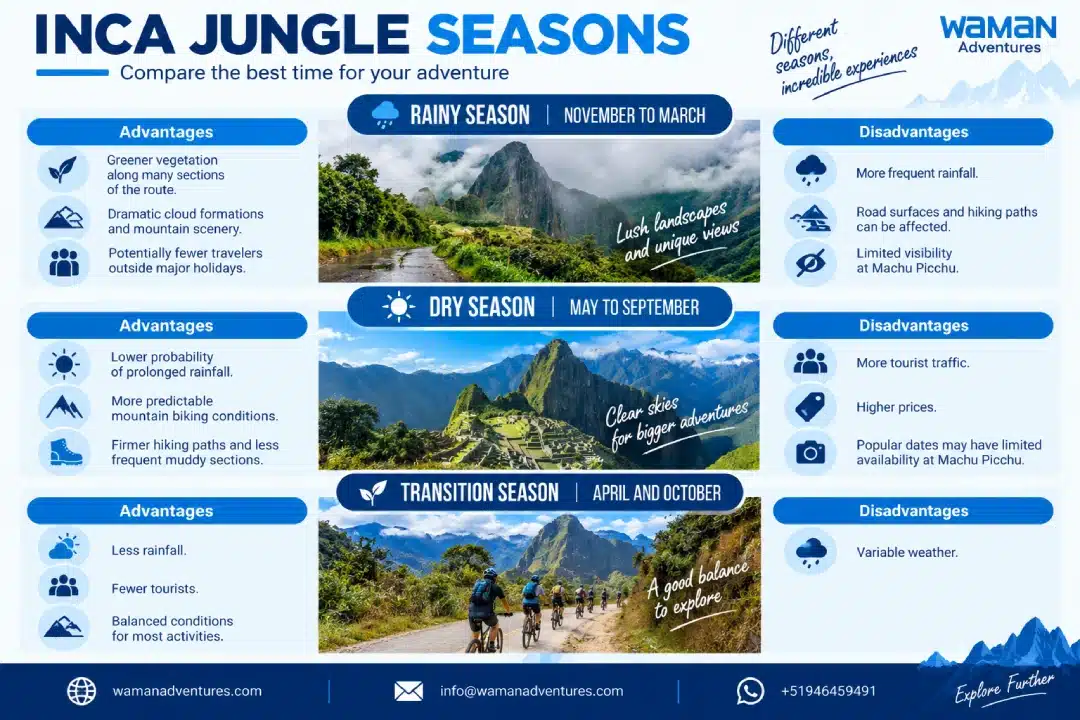
Seasonal conditions influence biking, hiking and other outdoor activities.
Altitude, health and emergency facts
17. Can altitude sickness affect the Inca Jungle Trek?
Yes. The route passes through high-elevation areas around Cusco and Abra Málaga, where travelers who have not acclimatized may develop altitude-related symptoms.
Headache, nausea, dizziness and unusual fatigue can occur at altitude. Symptoms that worsen or become severe should not be dismissed as ordinary tiredness.
18. Is acclimatization important before the Inca Jungle?
Allowing time to adjust to Cusco’s elevation before undertaking demanding activities is sensible, particularly for travelers arriving from near sea level.
Spending some time in the region before departure may help, although no particular acclimatization schedule guarantees prevention of altitude illness.

Acclimatization and physical fitness are different aspects of mountain travel preparation.
19. How can travelers reduce altitude-illness risk?
Gradual acclimatization, avoiding unnecessary strenuous activity immediately after rapid ascent and monitoring symptoms are important considerations.
Travelers with previous altitude problems or relevant medical conditions should discuss preventive measures with a qualified healthcare professional.
Physical fitness does not prevent altitude illness.
Warning:
Confusion, loss of coordination or breathing difficulty at rest are serious warning signs at altitude. Seek urgent medical care and follow professional guidance on descent and evacuation.
20. What happens if an emergency occurs during the tour?
Emergency response depends on the location, communication coverage, transportation access and the operator’s preparedness.
Before booking, ask about guide training, first-aid equipment, emergency communication and evacuation procedures.
Travelers should inform their operator in advance about relevant medical needs that could affect participation in hiking, biking or river activities.
Nature and wildlife facts
21. What plants can you see along the Inca Jungle?
Vegetation changes as the route descends from high Andean terrain toward warmer and more humid valleys.
Travelers may see mountain grasses, ferns, orchids, bromeliads and other plants associated with suitable cloud-forest habitats.
Cultivated areas may also contain crops such as coffee and coca. Exact plant sightings depend on the itinerary, season and local environment.

22. Is birdwatching possible during the trek?
Yes. Forested sections and quieter areas can provide opportunities to observe birds, including hummingbirds and other species associated with Andean and humid-forest environments.
The Andean cock-of-the-rock may occur in suitable habitat, but sightings are not guaranteed.
Travelers interested in birdwatching may find binoculars useful, particularly during quieter periods of the day.
23. Are mosquitoes common on the Inca Jungle route?
Biting insects can be present in the warmer and more humid valleys, especially near vegetation and water.
Insect repellent and lightweight long-sleeved clothing may help reduce exposure.
Travelers should follow current destination-specific health recommendations rather than assuming insect conditions are identical across every elevation.
Difficulty, fitness and food facts
24. How difficult is the Inca Jungle Trek?
Difficulty depends on the itinerary and the activities included.
Hiking may be manageable for active travelers, but downhill mountain biking, rafting and extended walking require different abilities.
Fitness alone does not determine suitability. Confidence on a bicycle, balance, experience and the conditions of individual activities also matter.
For a detailed assessment, see the Inca Jungle difficulty guide.

25. Do you need previous adventure experience?
Previous multi-day trekking experience is not always required, but travelers should have a realistic understanding of their abilities.
Beginners may be comfortable with hiking sections while needing more preparation or guidance for downhill cycling and rafting.
Ask whether instruction, activity alternatives or opt-out arrangements are available before reserving the tour.
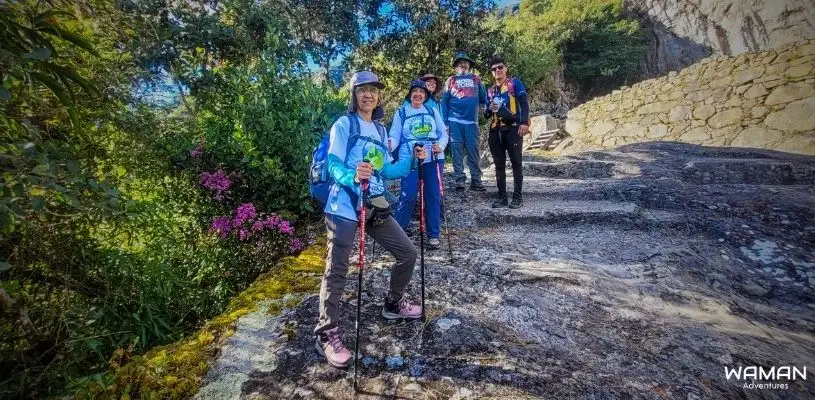
26. How should you prepare physically?
Regular walking, cycling and basic strength exercises can help prepare travelers for the physical effort of an Inca Jungle itinerary.
Hill walking is particularly useful for hiking endurance, while cycling practice helps build confidence and control on a bicycle.
Training should be gradual and appropriate for the traveler’s fitness and health.
27. What training is most useful?
Longer walks, hill climbing, cycling practice, balance exercises and basic leg-strength training are useful options.
Travelers who have little experience with downhill cycling should discuss that activity with the operator before departure.
Being able to complete a long walk does not automatically mean someone has the skills needed for a mountain-road bicycle descent.
28. What should you eat before and during the trek?
Familiar balanced meals and portable snacks can support longer periods of activity.
Nuts, dried fruit and energy bars are examples of foods some travelers find convenient, although individual dietary needs differ.
Drink according to personal needs, activity and conditions. Confirm which meals and safe drinking-water arrangements are included in the selected package.
Accommodation and facilities facts
29. Where do travelers sleep during the Inca Jungle?
Many itineraries use guesthouses or simple lodgings in towns along the route and accommodation in Aguas Calientes before visiting Machu Picchu.
The accommodation category, room arrangement and overnight locations depend on the package.
Request confirmation of the hotels or lodging standards included before booking.
30. Are hot showers available?
Showers are common in many guesthouses and hotels used along the route, but hot-water availability and reliability can vary.
Travelers should confirm whether bathrooms are private or shared and what facilities are provided at each overnight stop.
31. Is Wi-Fi available during the trek?
Some accommodations and restaurants may offer Wi-Fi, particularly in populated areas.
However, connections can be slow, intermittent or unavailable.
Download important travel documents and information before leaving Cusco rather than relying on continuous internet access.
32. Will your phone have mobile signal?
Mobile coverage varies by network provider, valley and surrounding terrain.
Some populated areas may have service, while remote road and hiking sections can have limited or no signal.
Travelers should not assume they can communicate continuously throughout the itinerary.
33. Are bathrooms available along the route?
Restrooms are generally available at accommodations, restaurants and some service stops.
However, facilities may be unavailable during remote hiking or biking sections.
Carrying tissues and hand sanitizer is useful, and travelers should follow local waste-disposal requirements.
Safety and packing facts
34. Is the Inca Jungle Trek dangerous?
The Inca Jungle includes activities with real risks, particularly mountain-road cycling, rafting, hiking on uneven terrain and travel during changing weather.
Appropriate guides, suitable equipment, responsible operational decisions and clear emergency procedures can reduce risk.
However, no provider can guarantee a completely risk-free experience.
35. What should you pack for the Inca Jungle?
Pack clothing and equipment suitable for both high-altitude cold and warmer valleys.
Useful essentials include:
- Identification matching your Machu Picchu reservation.
- Comfortable hiking footwear with reliable grip.
- Waterproof jacket or rain protection.
- Warm layer for high-elevation sections.
- Breathable clothing for warmer valleys.
- Sun protection.
- Insect repellent.
- Personal medication.
- Small daypack.
- Reusable water bottle.
- Some Peruvian cash.
Confirm luggage limits and any activity-specific equipment supplied by the operator.
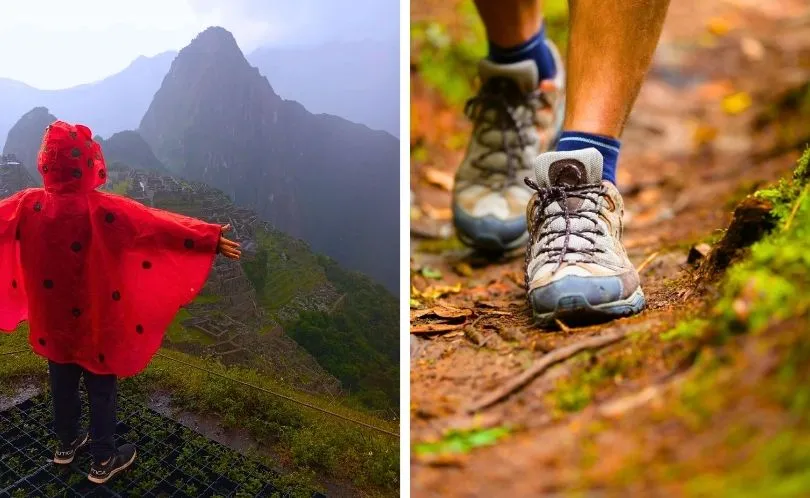
36. Are trekking poles necessary?
Trekking poles are optional for many travelers, although they may improve balance during uneven walking sections.
They are not used while cycling or rafting.
Check current Machu Picchu visitor regulations before assuming trekking poles are permitted inside the archaeological site.
37. What shoes are best for the Inca Jungle?
Comfortable trail or hiking shoes with good grip are generally useful for the varied walking surfaces.
Travelers should consider muddy paths, stone steps and uneven terrain when choosing footwear.
Heavy mountaineering boots are not automatically necessary, but footwear should fit well and be tested before departure.
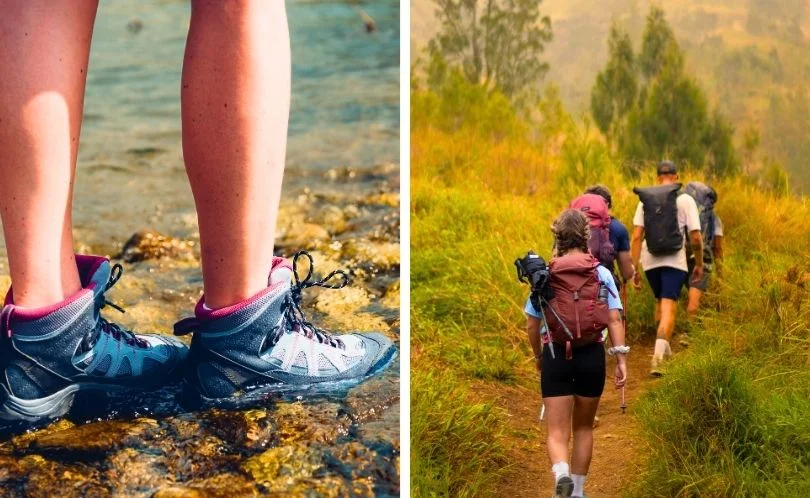
38. What should you leave behind?
Travelers can usually avoid carrying unnecessary valuables, excessive luggage and heavy equipment without a clear purpose.
Check the operator’s luggage arrangements before leaving essential belongings behind.
Also confirm restrictions relating to drones, single-use plastics and prohibited items at Machu Picchu and other protected sites.
39. Can anyone participate in the Inca Jungle Trek?
Suitability depends on health, physical condition, age-related requirements and the specific adventure activities included.
No single age range guarantees that everyone can safely participate.
Families, older travelers and people with mobility concerns should discuss activity demands and possible alternatives with the operator.
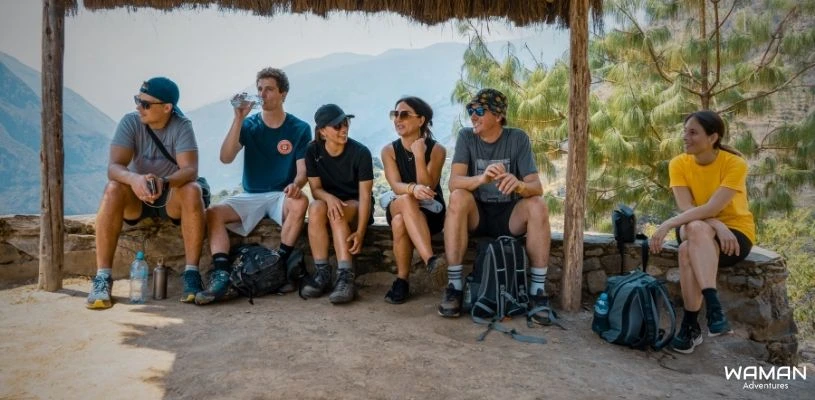
Booking, prices and cancellation facts
40. How far in advance should you book?
Booking lead time depends on the travel season, activity availability and Machu Picchu admission.
During popular travel periods, securing the correct Machu Picchu entrance date and route early is particularly important.
Before paying, confirm the complete itinerary and cancellation conditions rather than relying on general booking recommendations.
41. How much does the Inca Jungle Trek cost?
There is no single price that applies to every Inca Jungle package.
Costs depend on the itinerary duration, accommodation, group size, included meals, transportation, adventure activities and Machu Picchu admission.
Older price ranges should not be treated as current quotations.
Compare a written, itemized offer that clearly identifies what is included and which activities or services require additional payment.
42. How do cancellation policies work?
Cancellation conditions depend on the operator’s written terms, the services included and the refundability of third-party tickets or reservations.
There is no universal cancellation percentage applicable to all Inca Jungle tours.
Before booking, ask how refunds, changes, weather-related cancellations and optional activity suspensions are handled.
Machu Picchu tickets and independent travel facts
43. Do you need a Machu Picchu entrance ticket?
Yes. Visiting the Machu Picchu archaeological complex requires a valid admission ticket for the selected date, entry time and authorized visitor route.
The current system is organized around three principal circuits with specific routes. Not all tickets provide access to the same archaeological sectors or viewpoints.
Check the official Machu Picchu ticketing platform for current options and availability.
Important note:
Do not assume your Inca Jungle booking automatically includes every Machu Picchu visitor route. Confirm the specific admission ticket included in the package before making your reservation.
44. How is the Inca Jungle different from the Classic Inca Trail?
The Inca Jungle combines roads, hiking sections and optional adventure activities such as cycling, rafting and ziplining.
The Classic Inca Trail follows a regulated archaeological trekking route with permits and designated camps.
These are different experiences with distinct logistical arrangements, activity requirements and visitor rules.
45. Can you organize the Inca Jungle independently?
Some transport, accommodation and walking segments may be arranged independently.
However, coordinating mountain biking, rafting, transfers and safety arrangements requires additional planning.
Travelers choosing independent arrangements should verify authorized access, transport connections and the qualifications of activity providers.
46. Can you do the Inca Jungle without a guide?
Some individual walking or transport segments may be possible without a guide, depending on local rules and access.
However, guided participation is strongly advisable for activities such as rafting and technical mountain biking.
Machu Picchu admission and visiting rules remain separate and must be followed regardless of how the earlier journey was organized.
Final planning facts before booking
47. Should you have a medical evaluation before the trek?
A pre-trip consultation may be particularly useful for travelers with significant heart or lung conditions, previous serious altitude illness, limited exercise tolerance or concerns about participating in adventure sports.
A qualified clinician can provide individualized advice about altitude and activity-related precautions.
48. Is the Inca Jungle Trek worth doing?
The Inca Jungle can be an appealing experience for active travelers who want to combine outdoor adventure with a visit to Machu Picchu.
Travelers who prefer a quieter hiking experience or want to prioritize archaeology over adventure activities may find another trekking route more suitable.
The best choice depends on interests, physical comfort, travel dates and expectations rather than the number of activities advertised.
49. Do you pay extra for Cocalmayo Hot Springs?
The Cocalmayo thermal baths near Santa Teresa may have a separate admission fee.
Whether a visit is included in an Inca Jungle package depends on the itinerary and operator.
Fees and operating arrangements can change, so confirm the current cost and inclusion rather than relying on an old published price.
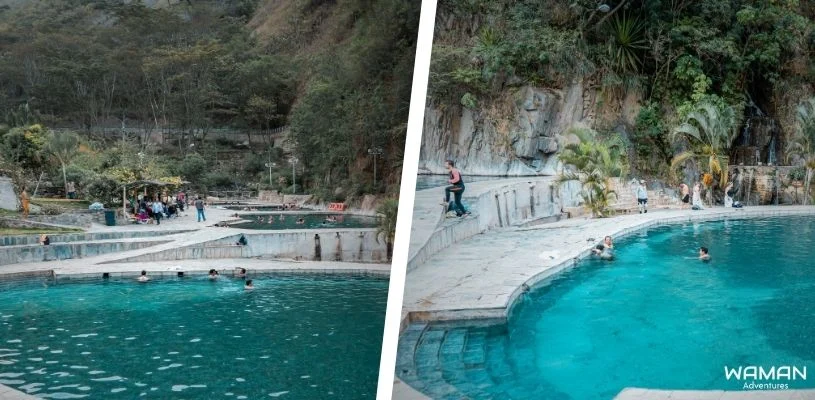
Cocalmayo is an optional stop on some Inca Jungle itineraries.
50. Do you need travel insurance?
Travel insurance is strongly recommended for an itinerary that may involve cycling, hiking and rafting.
Not every standard policy covers adventure sports, high-altitude activities or emergency evacuation.
Before purchasing insurance, check whether it covers the exact activities, elevations, medical assistance and evacuation arrangements relevant to your itinerary.
No particular insurance provider should be assumed to offer suitable coverage without reviewing the actual policy.
Choose the Inca Jungle experience that fits your plans
The right Inca Jungle itinerary depends on your available time, comfort with outdoor activities and expectations for accommodation and Machu Picchu. Before booking, compare the 4-day Inca Jungle itinerary or talk to a travel specialist about the activities and services that matter most to you.

Frequently asked questions about the Inca Jungle Trek
Is the Inca Jungle Trek suitable for first-time trekkers?
Is rafting included in every Inca Jungle tour?
Can you skip biking or another adventure activity?
Does the Inca Jungle require Classic Inca Trail permits?
Are Machu Picchu entrance tickets included?
What should you confirm before booking an Inca Jungle tour?
Does travel insurance need to cover adventure sports?
Share:



Related tours you might be interested in
Enjoy unique experiences in Cusco and Machu Picchu with the peace of mind that comes from working with a local travel agency
6-Day Tour Cusco, Sacred Valley, Machu Picchu and Rainbow Mountain
EXPERIENCE THE MAJESTY OF THE INCAS: SACRED VALLEY, MACHU PICCHU & RAINBOW MOUNTAIN IN ONE TRIP If...
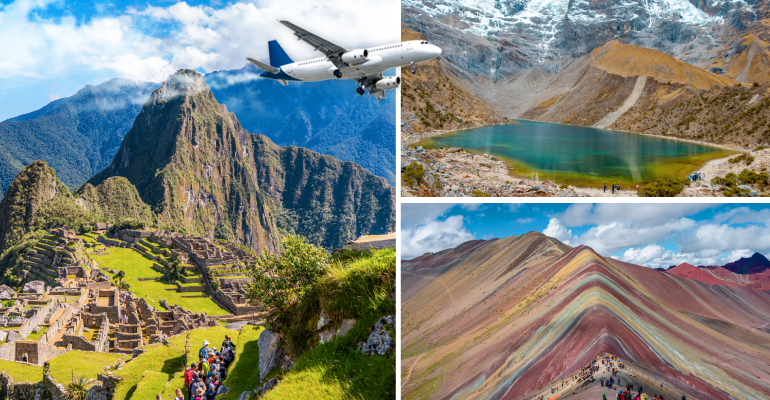
6 Day Andean Adventures Tour│With Flights from Chile
ENJOY THE BEST OF CUSCO CITY – MUST VISIT DESTINATIONS ARE WAITING FOR YOU! Want to explore Cusco...
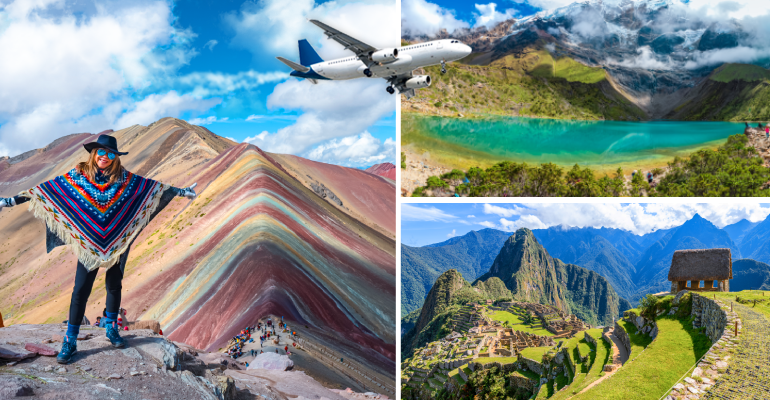
6 Days Andean Adventure │ With Flights from Mexico
EXPERIENCE THE BEST OF CUSCO – THE MOST BREATHTAKING DESTINATIONS AWAIT Do you want to explore...
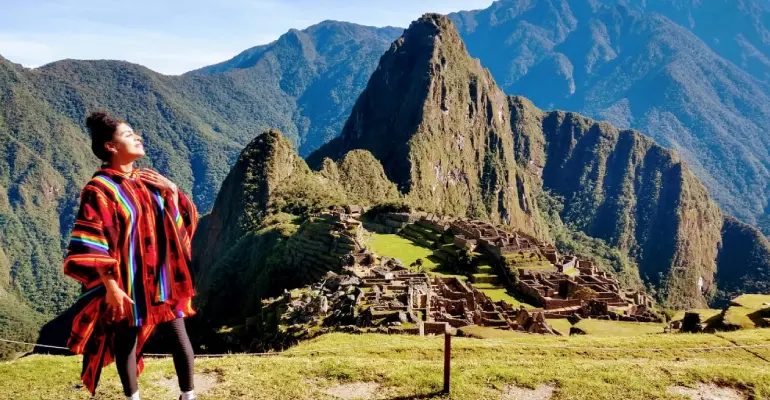
5 Day Cusco, Sacred Valley and Machu Picchu
DISCOVER THE MAJESTY OF MACHU PICCHU AND THE BEAUTY OF THE SACRED VALLEY IN ONE EPIC JOURNEY! The...