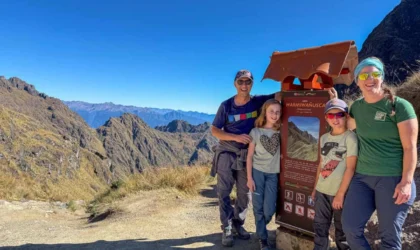
Inca Jungle Trek Guide to Routes, Activities and Costs
Ultima actualización en 16 November, 2026 por Jhon Quispe
Last Updated on 16 November, 2026 by Jhon Quispe
What is the Inca Jungle Trek to Machu Picchu?
The Inca Jungle Trek is a 3- or 4-day adventure route from Cusco to Machu Picchu combining downhill biking, hiking and optional rafting or ziplining. The journey usually crosses Abra Málaga at approximately 14,270 ft (4,350 m) before descending into warmer valleys around Santa María and Santa Teresa. Activities and services depend on the tour selected.
- Inca Jungle Trek overview
- What is the Inca Jungle Trek?
- Inca Jungle Trek 3 days vs 4 days
- Altitude along the Inca Jungle Trek
- How difficult is the Inca Jungle Trek?
- Activities during the Inca Jungle Trek
- Weather during the Inca Jungle Trek
- How to book the Inca Jungle Trek
- Inca Jungle Trek prices
- What to pack for the Inca Jungle Trek
- How to dress for the Inca Jungle Trek
- Physical and mental preparation
- How to get to the Inca Jungle Trek
- Safety considerations for the Inca Jungle Trek
- Inca Jungle Trek vs Classic Inca Trail
- Is the Inca Jungle Trek worth it?
-
Frequently asked questions about the Inca Jungle Trek
- How long is the Inca Jungle Trek?
- Is the Inca Jungle Trek suitable for beginners?
- What is the highest altitude on the route?
- Are rafting and ziplining included?
- Do you need a Classic Inca Trail permit?
- Can you travel the Inca Jungle without a guide?
- How much does the Inca Jungle Trek cost?
- Can you visit Cocalmayo Hot Springs?
- Is the Inca Jungle Trek dangerous?
- Does the trip return to Cusco?
The Inca Jungle takes a different approach to reaching Machu Picchu. Instead of following one continuous mountain trail, travelers move through Andean roads, rural communities, agricultural areas and humid valleys. The main decision is whether the shorter three-day itinerary or the more extensive four-day journey better suits their time, activity preferences and physical abilities.
Inca Jungle Trek overview
The Inca Jungle combines outdoor adventure with travel through contrasting landscapes in the Cusco region. It is especially suitable for visitors who enjoy varied activities rather than a trekking itinerary focused exclusively on walking.
| Travel detail | Planning reference |
| Location | Cusco region, southeastern Peru |
| Duration | 3 days / 2 nights or 4 days / 3 nights |
| Departure city | Cusco, approximately 11,150 ft (3,400 m) |
| Highest travel point | Abra Málaga, approximately 14,270 ft (4,350 m) |
| Main activities | Downhill biking and hiking |
| Additional activities | Rafting, ziplining and Cocalmayo, depending on the package |
| General difficulty | Moderate hiking, with activity-specific physical demands |
| Accommodation | Guesthouses, homestays or hotels, depending on the itinerary |
| Preferred weather period | May to September for generally drier conditions |
| Final destination | Machu Picchu archaeological site |
| Entrance requirements | Valid Machu Picchu ticket for the assigned circuit, route and entry time |
Important note:
Inca Jungle itineraries vary between operators. The duration does not guarantee that rafting, ziplining, hot springs, accommodation categories or return transportation are included. Review the complete service description before booking.
What is the Inca Jungle Trek?
The Inca Jungle Trek is an alternative adventure journey to Machu Picchu that combines transportation, hiking and outdoor activities across different environments of the Cusco region.
Most itineraries begin with an early departure from Cusco, cross the Sacred Valley area and reach Abra Málaga, where the downhill cycling section commonly begins.
The route then descends toward the warmer areas around Santa María and Santa Teresa. Depending on the tour, travelers may participate in rafting, walk through agricultural landscapes, visit Cocalmayo Hot Springs or try ziplining before continuing toward Aguas Calientes.
The journey concludes with a visit to the Machu Picchu archaeological complex, followed by return transportation according to the package.
Unlike the Classic Inca Trail, this experience does not follow one continuous permit-controlled archaeological path. Its character comes from combining several activities and transportation stages.
Where is the Inca Jungle Trek located?
The Inca Jungle route takes place in southeastern Peru, connecting the Andean highlands of Cusco with warmer valleys on the edge of the upper Amazonian environment.
The principal places associated with the journey are:
- Cusco: the main departure city.
- Ollantaytambo and the Sacred Valley: areas commonly crossed during the initial road transfer.
- Abra Málaga: the high mountain pass associated with the biking descent.
- Huamanmarca and Santa María: locations connected with the descent into lower valleys.
- Santa Teresa: an important stop for accommodation, optional activities and Cocalmayo.
- Hidroeléctrica: a transport and walking connection toward Aguas Calientes.
- Aguas Calientes: the gateway town below Machu Picchu.
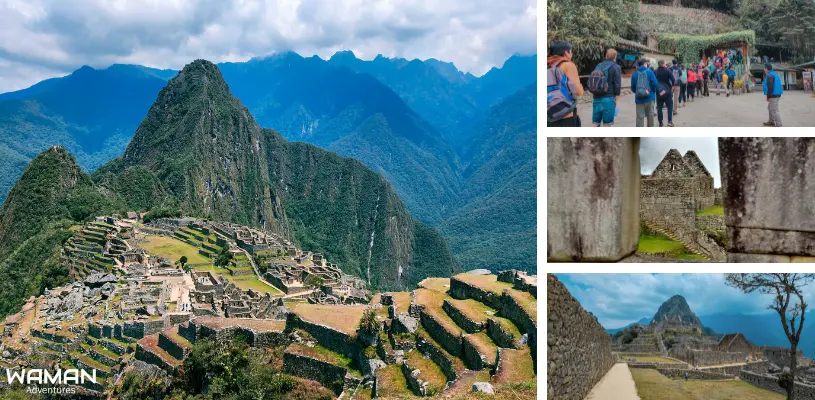
- Machu Picchu: the final archaeological destination.
These locations form a travel corridor rather than a single uninterrupted hiking trail. The exact route, stopping points and transport arrangements may change according to the itinerary and local conditions.
Inca Jungle Trek 3 days vs 4 days
The main difference between the three-day and four-day Inca Jungle options is how much time each itinerary allocates to hiking, outdoor activities and transportation.
Both routes usually begin in Cusco and finish with Machu Picchu, but a shorter itinerary may compress or omit certain experiences.
| Feature | 3-day Inca Jungle | 4-day Inca Jungle |
| Duration | 3 days / 2 nights | 4 days / 3 nights |
| Schedule | More compact | More time for trekking and activities |
| Mountain biking | Usually Day 1 | Usually Day 1 |
| Rafting | Depending on package and conditions | Depending on package and conditions |
| Hiking | Concentrated into fewer days | Additional trekking day |
| Ziplining | May be offered on Day 2 | May be offered on Day 3 |
| Machu Picchu visit | Usually Day 3 | Usually Day 4 |
| Best suited for | Travelers with limited time | Travelers seeking a more extensive adventure |
Inca Jungle Trek 3 days and 2 nights
The three-day version is designed for travelers who want a combination of adventure activities and Machu Picchu within a shorter vacation.
A representative itinerary follows this sequence:
- Day 1: Travel from Cusco through Abra Málaga, downhill biking, rafting when operating and transfer toward the overnight destination.
- Day 2: Ziplining when included, hiking and onward travel to Aguas Calientes.
- Day 3: Guided Machu Picchu visit and return toward Cusco.
The shorter format involves a more concentrated schedule. Travelers should examine the amount of transportation and walking rather than assuming it includes the same experiences as the four-day route.
For the current schedule, services and departures, consult the 3-day Inca Jungle itinerary.
Inca Jungle Trek 4 days and 3 nights
The four-day itinerary provides additional time for the route between Santa María, Santa Teresa and Aguas Calientes.
A representative journey follows this sequence:
- Day 1: Cusco, Abra Málaga, biking, optional or included rafting and Santa María.
- Day 2: Hiking through rural and warmer valley environments toward Santa Teresa.
- Day 3: Ziplining when included, walking or transportation toward Hidroeléctrica, and onward travel to Aguas Calientes.
- Day 4: Machu Picchu visit followed by the return journey to Cusco.
This option can be more suitable for travelers interested in spending additional time walking through agricultural landscapes and experiencing the transition from the Andes to warmer valleys.
However, the extra day does not automatically make every activity less strenuous. Daily walking distances, cycling arrangements and transport conditions should still be reviewed.
Pro tip:
Compare the activities and transfers included on each day rather than selecting a tour by duration alone. Two packages with the same number of days may provide different experiences.
Altitude along the Inca Jungle Trek
One of the distinctive features of the Inca Jungle is the considerable elevation change between the Andean highlands and lower, warmer valleys.
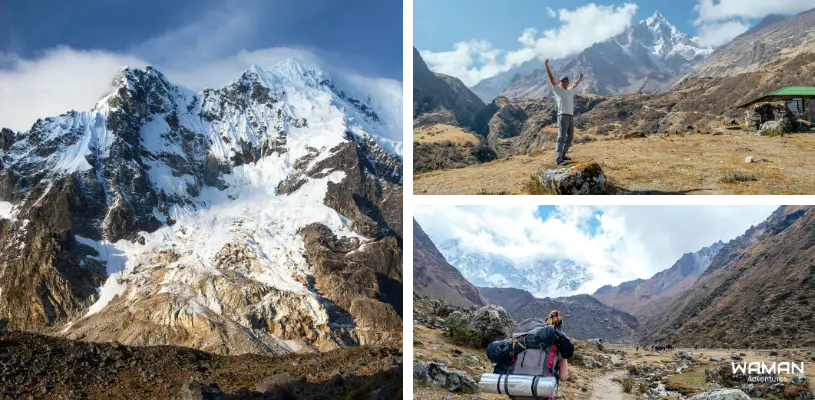
The route commonly reaches its highest point near Abra Málaga before descending toward Santa María, creating substantial differences in temperature and vegetation along the journey.
| Location | Approximate altitude |
| Cusco | 11,150 ft (3,400 m) |
| Abra Málaga | 14,270 ft (4,350 m) |
| Huamanmarca | 5,167 ft (1,575 m) |
| Santa María | 3,937–4,101 ft (1,200–1,250 m) |
| Santa Teresa | 5,085 ft (1,550 m) |
| Aguas Calientes | 6,693 ft (2,040 m) |
| Machu Picchu | 7,972 ft (2,430 m) |
These elevations are approximate references. Actual readings may differ according to the location, route and measurement source.
Abra Málaga is the highest point
Abra Málaga is a mountain pass at approximately 14,270 ft (4,350 m) above sea level. Travelers generally reach this area by vehicle before beginning the downhill biking activity.
The pass can experience wind, cold temperatures, fog and rain even when conditions in Santa María or Santa Teresa are warm.
Its elevation also deserves attention from travelers arriving directly from low-altitude destinations.
Acclimatization before the trek
Spending time at altitude before starting strenuous activities can be useful, particularly for visitors who have recently arrived in Cusco from near sea level.
However, physical fitness does not prevent altitude illness, and no specific acclimatization schedule can guarantee that symptoms will not occur.
Travelers with previous serious altitude illness or relevant medical conditions should seek individualized medical advice before departure.
Warning:
Confusion, loss of coordination or difficulty breathing at rest are serious warning signs at altitude and require urgent medical attention. Severe or worsening symptoms should not be dismissed as normal hiking fatigue.
How difficult is the Inca Jungle Trek?
The Inca Jungle is often described as moderately challenging overall, but that rating does not fully describe its individual activities.
Long walks require endurance, downhill biking requires control and balance, and rafting introduces risks that depend on water conditions and technical supervision.
Factors affecting difficulty
- Altitude: the route commonly passes Abra Málaga before descending toward lower valleys.
- Terrain: walking sections can include dirt paths, slopes, uneven ground and wet surfaces.
- Weather: rain and fog can affect visibility, road conditions and trail grip.
- Outdoor activities: cycling and rafting require abilities beyond ordinary walking.
- Daily duration: the physical workload changes according to the itinerary.
- Experience: cycling confidence and comfort with outdoor activities vary between travelers.
Travelers who already walk regularly may find some hiking sections manageable, but that does not establish suitability for every activity.
For a more detailed assessment of physical demands, read the Inca Jungle difficulty guide.

Inca Jungle itineraries combine travel toward Machu Picchu with adventure activities that differ from traditional trekking routes.
Activities during the Inca Jungle Trek
The Inca Jungle stands out because of the activities combined along the route. Their availability depends on the selected package, local conditions and the qualifications of the providers.
Mountain biking from Abra Málaga
Downhill mountain biking is one of the best-known parts of the Inca Jungle experience.
The cycling activity commonly begins near Abra Málaga and continues downhill toward lower elevations, passing mountain scenery and changing vegetation.
Some itineraries describe cycling sections of approximately 13 mi (21 km) or more, although the actual route and distance depend on road access, weather and the operator.
The descent may involve paved roads, curves, traffic, changing visibility and wet surfaces.
Participants should receive a suitable helmet, a properly maintained bicycle and a safety briefing. Travelers who lack confidence on downhill roads should discuss available alternatives beforehand.
Rafting on the Vilcanota River
Rafting may be offered on the Vilcanota River near the Santa María area.
Its difficulty depends on the selected river section, water levels and recent rainfall. Some itineraries describe Class III or IV rapids, which require appropriate expertise and should not be presented as suitable for everyone.
Before participating, confirm that the provider uses suitable helmets, life jackets, qualified guides and appropriate emergency arrangements.
Activities may be postponed, modified or cancelled when river conditions are unsuitable.
Trekking through the Cusco jungle
Walking sections connect rural settlements, agricultural areas and humid mountain landscapes on the way toward Aguas Calientes.
Travelers may encounter coffee plantations, coca fields, tropical crops and viewpoints overlooking the surrounding valleys.
Some itineraries also incorporate paths associated with historic Inca routes, although they should not be confused with the regulated Classic Inca Trail.
Walking distances and elevation changes vary between the three-day and four-day packages.
Ziplining near Santa Teresa
Ziplining is another activity offered on some Inca Jungle itineraries, particularly around Santa Teresa.
Participants use a harness and safety equipment to travel along suspended cables above the landscape.
The number of cables, height, participant restrictions and availability vary by operator.
Travelers should confirm whether ziplining is included, optional or subject to an additional fee. Operating conditions, safety equipment and supervision must also be checked.
Cocalmayo Hot Springs
Cocalmayo is a thermal bathing complex near Santa Teresa that may be included as an optional stop during the Inca Jungle journey.
The pools provide an opportunity to rest after outdoor activities, but admission and transportation are not automatically included in every package.
Before traveling, confirm whether the excursion includes time at Cocalmayo and whether entrance fees are covered.
Weather during the Inca Jungle Trek
Weather varies considerably between the high mountain pass and the lower valleys.
Abra Málaga can be cold and windy, while Santa María and Santa Teresa generally experience warmer and more humid conditions.
The following table provides broad seasonal reference points rather than a forecast for any specific departure.
Monthly weather and planning conditions
| Month | Typical conditions | Planning implications |
| January | Wet and humid | Rain may affect roads, rafting and hiking trails |
| February | Frequently wet | Greater need for flexibility and activity checks |
| March | Rainfall may gradually decrease | Trail surfaces can remain slippery |
| April | Transition toward drier weather | Often favorable with some remaining rainfall |
| May | Generally drier | More predictable conditions for many activities |
| June | Dry with cool highland mornings | Clearer views are common; demand increases |
| July | Generally dry | Popular tourism month requiring earlier planning |
| August | Generally dry and sunny | Favorable visibility possible, with strong sun exposure |
| September | Often relatively dry | Generally suitable for outdoor activities |
| October | Transition toward wetter conditions | Weather becomes more variable |
| November | Increasing rainfall | Outdoor plans may require more flexibility |
| December | Rainy and humid in lower valleys | Check road, river and activity conditions |
January to March
This is generally among the wetter periods of the year. Vegetation can be particularly green, but rainfall may affect roads, trails and river conditions.
January and February deserve additional attention because adventure activities may require adjustments or cancellation when local conditions become unsuitable.
March may begin transitioning toward drier weather, although rainfall can remain significant.

April to June
Rainfall generally becomes less frequent through these months. April is a transition period, while May and June tend to offer more favorable conditions for biking and hiking.
Lower valleys can remain warm, but mornings near higher elevations may be cold.
June also coincides with strong tourism demand in Cusco and the surrounding region.
July to September
July and August fall within the core drier period and often provide favorable conditions for outdoor activities.
These months can also be busy, so Machu Picchu entrance availability and accommodation should be considered early.
September often retains many dry-season advantages, although rainfall may become more frequent as the year progresses.

October to December
October is a transition month with a growing probability of rain.
November and December usually bring wetter conditions, particularly in lower valley areas.
Travelers should check local forecasts and activity arrangements close to their departure dates.
For a month-by-month comparison and a more detailed analysis of weather-related tradeoffs, see the best time to do the Inca Jungle Trek.
How to book the Inca Jungle Trek
Booking should begin with the intended travel dates, the desired itinerary duration and the availability of appropriate Machu Picchu admission tickets.
The next step is confirming the activities, lodging and transportation included in the package.
Step 1 — Choose your itinerary duration
Decide whether a three-day or four-day journey better suits your schedule.
Review how each option distributes hiking, biking, optional activities and transfers rather than assuming the difference is only one additional overnight stay.
Step 2 — Verify Machu Picchu ticket availability
Admission to Machu Picchu requires a ticket for a specific date, entry time and authorized visitor route.
The current visitor system includes three principal circuits:
- Circuit 1 — Panoramic: routes centered on elevated views and specific panoramic or mountain experiences.
- Circuit 2 — Classic: routes associated with the conventional archaeological visit.
- Circuit 3 — Royalty: lower archaeological sectors and specific route extensions.
These circuits comprise ten officially designated routes, some of which operate seasonally.
A ticket for one route does not provide unrestricted access to the entire archaeological complex.
The official purchasing platform is Tu Boleto, managed by Peru’s Ministry of Culture.
Step 3 — Review services and exclusions
Before making a payment, check the complete inclusions and exclusions.
| Service | What to confirm |
| Transportation | Pickup, road transfers, return train and final transfer to Cusco |
| Machu Picchu | Admission route, entry time, guide and shuttle arrangements |
| Accommodation | Hotel category, room type, bathroom and location |
| Meals | Number of breakfasts, lunches and dinners |
| Mountain biking | Bicycle condition, helmet, support vehicle and safety arrangements |
| Rafting | Inclusion, operating conditions, protective equipment and alternatives |
| Ziplining | Inclusion, participant restrictions and equipment |
| Cocalmayo | Entrance fees and transfer arrangements |
| Cancellation | Deposits, refund rules and weather-related changes |
Step 4 — Confirm the reservation
Once the itinerary and relevant availability are confirmed, follow the operator’s official booking process.
Personal information used for Machu Picchu tickets should match the traveler’s official identification document.
Payment schedules, deposit amounts and cancellation terms must be reviewed before completing the reservation.
Inca Jungle Trek prices
The cost of an Inca Jungle package depends on its duration, accommodation standard, transportation, group size, included activities and Machu Picchu arrangements.
Waman Adventures publishes starting rates for its group itineraries. These are booking references rather than guaranteed final prices for every departure.
| Itinerary | Published starting reference | What affects the final cost |
| 3 days / 2 nights | From approximately US$479 per person | Departure, accommodation, activities and selected services |
| 4 days / 3 nights | From approximately US$559 per person | Departure, accommodation, activities and selected services |
The confirmed price may change with promotions, dates, optional activities or additional services.
Travelers should request the final total and compare exactly what each package includes before booking.
Important note:
A lower advertised price does not always mean a lower total trip cost. Compare Machu Picchu admission, return transport, accommodation, meals and optional activities before choosing an itinerary.
What to pack for the Inca Jungle Trek
The route involves different climates, so packing should balance protection from mountain cold, warm valley conditions and possible rain without creating unnecessary luggage.
Clothing
- Lightweight, breathable hiking shirts.
- Comfortable trekking pants.
- Waterproof jacket.
- Warm layer for highland mornings.
- Spare socks and underwear.
- Dry clothing for evenings.
- Swimwear if visiting Cocalmayo.
Footwear
- Comfortable hiking shoes with good traction.
- Hiking socks suitable for longer walks.
- Optional lightweight footwear for accommodation stops.
Equipment
- Comfortable daypack.
- Reusable water bottle.
- Rain cover or waterproof storage.
- Phone and charging equipment.
- Power bank when needed.
- Headlamp if required by the itinerary.
- Optional trekking poles, subject to local restrictions.
Health and personal items
- Prescription medication.
- Insect repellent.
- Sunscreen and sunglasses.
- Sun hat or cap.
- Personal hygiene items.
- Travel insurance information.
Documents and money
- Passport or identification matching the Machu Picchu ticket.
- Booking confirmations.
- Emergency contact details.
- Some Peruvian soles for personal expenses.
Luggage limits and the handling of bags between accommodations should be checked with the operator.
How to dress for the Inca Jungle Trek
Layered clothing is more useful than relying on one type of outfit for the entire journey.
The first day may begin in cold high mountain conditions, while lower valley sections can become warm and humid.
A breathable base layer, warm garment and waterproof jacket allow travelers to adapt to those changes.
Hiking footwear with good traction is particularly useful on uneven or wet surfaces.
For biking, ordinary hiking clothing should not be treated as a substitute for the protective equipment required by the activity provider.
Physical and mental preparation
The Inca Jungle combines several physical demands. Walking endurance helps with trekking sections, but balance and cycling confidence are particularly important for the downhill biking activity.
Physical preparation
Useful training activities include:
- Cardiovascular training: walking, cycling, swimming or other aerobic exercise.
- Leg strength: squats, lunges and controlled step-ups.
- Hill walking: gradual training on slopes and stairs.
- Balance: exercises that improve stability on uneven ground.
- Cycling skills: practice with braking, steering and controlled descents.
Travelers should build fitness progressively rather than attempting unusually demanding workouts immediately before departure.

Mental preparation
Comfort with heights, moving water and mountain-road cycling varies between travelers.
Anyone uncomfortable with a particular activity should discuss the requirements and possible alternatives before booking.
Understanding the itinerary and knowing when an activity can be declined helps travelers make informed decisions.
How to get to the Inca Jungle Trek
Most international travelers arrive in Cusco before joining an organized Inca Jungle departure.
Traveling from Lima to Cusco
Flying from Lima to Cusco is a common and time-efficient way to reach the departure city.
After arriving in Cusco, travelers normally join an early transfer toward the Sacred Valley and Abra Málaga.
Pickup times and locations depend on the tour arrangements.
Where does the route end?
The main destination is Machu Picchu, reached from Aguas Calientes.
After the archaeological visit, packaged itineraries usually include return transportation toward Cusco through a combination of rail and road services.
Final transportation arrangements should be confirmed in advance because they may differ between services.
Safety considerations for the Inca Jungle Trek
The Inca Jungle includes outdoor activities with real risks, especially biking descents, river rafting and hiking on uneven surfaces.
A responsible operator should assess equipment, weather, road conditions and traveler ability before activities begin.
Mountain biking safety
The descent from Abra Málaga requires attention to road surfaces, traffic, speed and visibility.
Participants should receive suitable helmets, properly maintained bicycles and a safety briefing.
Travelers without sufficient cycling experience should discuss their concerns and alternatives before departure.
Rafting and ziplining safety
These activities require appropriate equipment, trained supervision and suitable environmental conditions.
Before participating, confirm activity restrictions, emergency procedures and the arrangements available if weather forces a cancellation.
Travel insurance
Travel insurance is recommended for an itinerary involving adventure activities.
Coverage should explicitly include the activities you plan to do, together with altitude, medical assistance and evacuation where applicable.
Do not assume that every standard travel policy covers mountain biking, rafting or ziplining.
Inca Jungle Trek vs Classic Inca Trail
Both routes lead toward Machu Picchu, but they serve different interests.
| Feature | Inca Jungle Trek | Classic Inca Trail |
| Main experience | Multi-activity adventure | Multi-day archaeological trekking |
| Activities | Biking, hiking and optional rafting or ziplining | Hiking and archaeological exploration |
| Common duration | 3 or 4 days | Typically 4 days |
| Route character | Mountain roads, rural valleys and walking paths | Regulated historic Inca route and mountain passes |
| Permit arrangements | Machu Picchu admission and activity arrangements | Regulated Inca Trail permits and Machu Picchu admission |
| Best suited for | Travelers seeking varied adventure activities | Travelers prioritizing hiking and archaeological heritage |
Neither route is universally better. The choice depends on interests, hiking ability, available days and the type of experience preferred.
Is the Inca Jungle Trek worth it?
The Inca Jungle is a good option for active travelers who want varied outdoor experiences on the way to Machu Picchu.
The combination of mountain scenery, warmer valleys, agricultural areas, biking and trekking creates a journey that differs substantially from a conventional archaeological hike.
However, visitors seeking an uninterrupted hiking route or a stronger emphasis on Inca archaeological sites may prefer another trekking option.


Frequently asked questions about the Inca Jungle Trek
How long is the Inca Jungle Trek?
Is the Inca Jungle Trek suitable for beginners?
What is the highest altitude on the route?
Are rafting and ziplining included?
Do you need a Classic Inca Trail permit?
Can you travel the Inca Jungle without a guide?
How much does the Inca Jungle Trek cost?
Can you visit Cocalmayo Hot Springs?
Is the Inca Jungle Trek dangerous?
Does the trip return to Cusco?
Share:


Related tours you might be interested in
Enjoy unique experiences in Cusco and Machu Picchu with the peace of mind that comes from working with a local travel agency
Rural and Agritourism Experience in Chichubamba
TRADITIONAL LIFE IN THE HEART OF THE SACRED VALLEY Let yourself be immersed in the mystique and...

Birdwatching Experience at Chacán Dam & Ensifera Camp
BIRD WATCHING IN CUSCO: CHACÁN & ENSIFERA CAMP Cusco is far more than history and dramatic...
Cusco Soccer Game Experience
EXPERIENCE CUSCO SOCCER LIKE A LOCAL Immerse yourself in one of Cusco’s most intense cultural...
Huacarpay Birdwatching Experience
HUACARPAY: ANDEAN BIRD SANCTUARY Discover the natural richness of Huacarpay, a high-Andean wetland...
If you liked this article and the information you found, give us 5 stars!
Table of Contents
Related blogs

How to Get to Machu Picchu from the US: Flights, Airports and Routes
13 min of reading
What to Do in Cusco at Night – Culture, Views or Nightlife?
11 min of reading