Discover the Ballestas Islands: Peru’s wild heart on The Pacific
Ultima actualización en 24 September, 2026 por Jhon Quispe
Last Updated on 24 September, 2026 by Jhon Quispe
What Is the Ballestas Islands Tour Like?
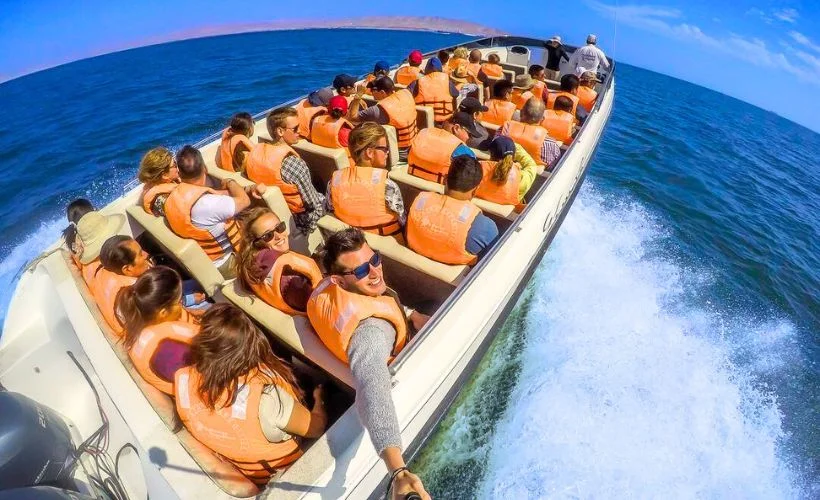
The Ballestas Islands tour is a roughly 2-hour wildlife boat trip from El Chaco in Paracas. Boats travel offshore to observe sea lions, Humboldt penguins, seabirds, marine rock formations, and usually the Paracas Candelabro, while passengers remain aboard throughout the visit. It is a wildlife-observation excursion, not a beach or swimming trip. Check wind, sea conditions, departure time, and operator charges before boarding.
- Ballestas Islands at a glance
- Ballestas Islands location and protected
- Ballestas Islands wildlife and boat-tour highlights
- Ballestas Islands tour logistics
- Best time and sea conditions for the Ballestas Islands
- Is the Ballestas Islands tour worth it?
- What to bring on a Ballestas Islands boat tour
- Ballestas Islands vs Paracas National Reserve
- Ballestas Islands conservation rules
-
Frequently asked questions about the Ballestas Islands
- How long is the Ballestas Islands boat tour?
- How much does a Ballestas Islands tour cost?
- Where do Ballestas Islands tours leave from?
- Can you visit the Ballestas Islands from Lima in one day?
- Can you swim with sea lions or land on the Ballestas Islands?
- Can you see Humboldt penguins at the Ballestas Islands?
- Can Ballestas Islands tours be canceled because of weather?
- Are the Ballestas Islands part of the Paracas National Reserve?
The Ballestas Islands are three protected rocky islands off Paracas, visited by boat from El Chaco. The route takes about 1 hour 40 minutes to 2 hours and focuses on sea lions, Humboldt penguins, seabirds, marine rock formations and the Paracas Candelabro. Visitors remain on the boat, and departures can change when sea or wind conditions are unsafe.
Ballestas is a wildlife-observation experience rather than an island beach excursion. The main planning decisions are choosing a morning departure, understanding the protected-area and boat costs, and coordinating Paracas with Lima, Ica or Huacachina without confusing the islands with the separate Paracas National Reserve.

Ballestas Islands at a glance
| Detail | Planning reference |
| Location | Off Paracas in Peru’s Ica region |
| Protected area | RNSIIPG, separate from the Paracas National Reserve |
| Main islands | Ballestas Norte, Centro and Sur |
| Departure point | El Chaco waterfront in Paracas |
| Boat-tour duration | About 1 hr 40 min on the official route; commercial schedules commonly allow around 2 hr |
| Main wildlife | Sea lions, Humboldt penguins, Peruvian boobies, pelicans and other seabirds |
| Candelabro | Standard sightseeing routes normally pause offshore to view it |
| Landing on the islands | Not part of the standard tourist visit |
| Visit season | Year-round, subject to sea and wind conditions |
| Official visitor hours | 6:00 a.m.–1:00 p.m.; individual boat departure times vary |
Ballestas Islands location and protected
The Ballestas Islands, or Islas Ballestas in Spanish, lie off the coast of Paracas in southern Peru. The protected sector consists of Ballestas Norte, Centro and Sur.
The islands form part of Peru’s National Reserve System of Guano Islands, Islets and Points, generally abbreviated as RNSIIPG. Their cliffs, caves and exposed rock formations provide habitat for marine mammals and large colonies of seabirds associated with the nutrient-rich Humboldt Current.
The tourist experience is observational. Authorized boats approach the islands so passengers can see wildlife and geological formations, but visitors do not normally land or walk on the protected islands.
The Ballestas Islands and the Paracas National Reserve are often visited on the same day, but they are separate protected areas. Ballestas belongs to the RNSIIPG, while the Paracas National Reserve protects a different coastal-desert and marine landscape nearby.
Ballestas Islands wildlife and boat-tour highlights
Sea lions
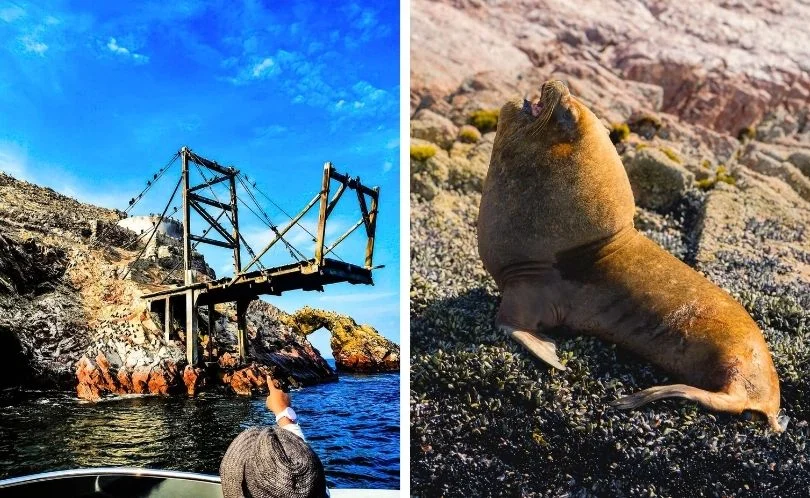
South American sea lions are among the most recognizable animals around the Ballestas Islands. They can often be seen resting in groups on rocky shores or swimming close to the islands.
The breeding period is concentrated during the austral summer, with many births occurring around January and February. Colony size and animal positions change naturally, so no specific wildlife encounter should be treated as guaranteed.
Humboldt penguins
Humboldt penguins are another characteristic species of the Ballestas protected sector. They may be seen standing on rocky ledges or swimming near the islands when conditions and natural movement bring them into view.
The species occurs along the Pacific coast of Peru and Chile and depends on the productive marine ecosystem associated with the Humboldt Current.
Peruvian boobies and guano birds
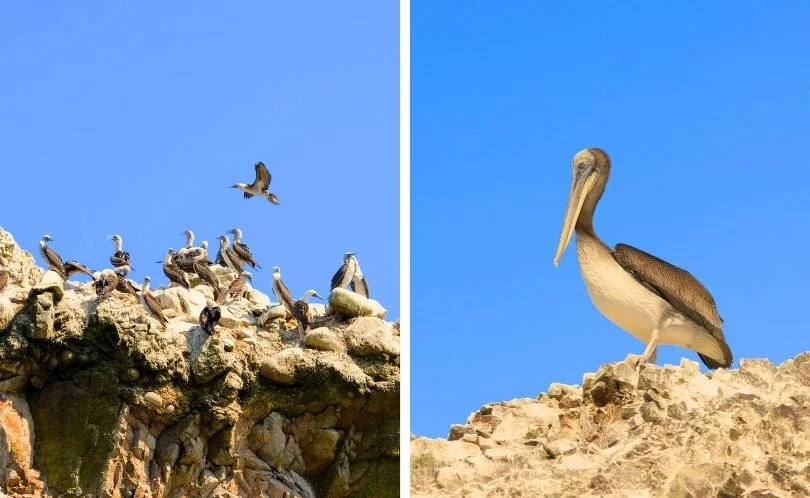
The islands support large colonies of seabirds, including Peruvian boobies, pelicans and cormorants. These birds are part of the coastal ecosystem historically associated with Peru’s guano islands.
Peruvian boobies can often be observed resting along the cliffs or diving into the Pacific in search of fish such as anchovies.
Rock arches and marine formations
Marine erosion has shaped the islands into cliffs, caves, arches and narrow rock formations. These structures create resting and nesting areas for wildlife while also making the landscape visually distinctive.
Tour boats remain outside sensitive rock areas rather than entering or landing within them, helping reduce disturbance to the colonies.
Paracas Candelabro
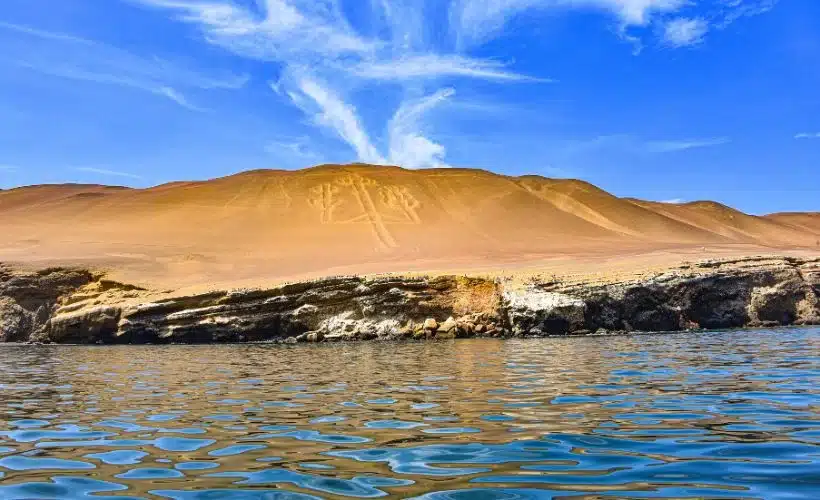
The standard boat route from El Chaco normally includes an offshore viewing stop at the Paracas Candelabro before continuing toward Ballestas.
The geoglyph extends approximately 558 ft (170 m) across the northern slope of the Paracas Peninsula. MINCETUR also records the names Tridente and Tres Cruces and notes that it was declared Cultural Heritage of the Nation in 2016.
Its creator, exact age and original purpose remain uncertain. Several explanations have been proposed over time, but none should be presented as established archaeological fact.
For the official archaeological description, see the MINCETUR inventory for the Paracas Candelabro.

Ballestas Islands tour logistics
Tour duration and departure hours
SERNANP currently gives an approximate route duration of 1 hour 40 minutes, while many commercial operators schedule around 2 hours for the Ballestas excursion.
The protected area’s official visitor hours are currently listed as 6:00 a.m.–1:00 p.m. from Monday through Sunday. Each authorized operator sets its own check-in and boat departure time within the operational framework.
Allow extra time for check-in, waiting and boarding at El Chaco. Reserving about 2–3 hours from arrival at the waterfront until the excursion finishes gives you a more comfortable planning margin.
Warning:
Ballestas Islands tours operate year-round, but strong wind or unsafe sea conditions can delay, modify or cancel a departure. Check your operator’s status close to boarding time.
Entrance fees and boat-tour costs
The total Ballestas Islands cost is normally made up of more than one payment. The protected-area entrance is separate from the private boat service, and a local or port-related charge may also apply depending on the operator.
| Cost component | Current planning reference |
| SERNANP Ballestas entrance | Current public tariff lists S/11 for national adults and S/3 for national minors |
| Local resident rate | S/5 for local adults and S/3 for local minors with the required identification |
| Ballestas + Paracas promotional entrance | S/17 promotional admission for the two protected areas under the current published tariff |
| Boat tour | Private operator price; varies by company and service |
| Port or local charge | May be separate depending on the departure arrangement |
Important note:
Do not treat the published S/11 national-adult rate as a universal foreign-visitor price. The current public SERNANP page lists national and local categories clearly, so international travelers should verify the applicable category in the official ticketing system before paying.
Private boat prices are set by individual operators, so an old fixed US-dollar figure should not be treated as the universal cost of a Ballestas Islands tour.
For the latest protected-area fees and conditions, use the official SERNANP Ballestas Islands visitor page.
From Lima
Paracas is approximately 161 mi (259 km) south of Lima. SERNANP gives an indicative road time of around 3.5 hours, although traffic, stops and the transport service can extend the journey.
A same-day Ballestas Islands tour from Lima requires an early departure because the boats operate during the morning visitor window. Independent travelers should match their road arrival with the boat check-in time before booking separate services.
From Ica or Huacachina
Ica is approximately 44 mi (71 km) from Paracas, with SERNANP listing around 1 hour of road travel. Huacachina lies just outside Ica, so pickup location and traffic can add some additional transfer time.
Combining Ballestas with Ica and Huacachina in one day is possible, especially with organized transportation, but it creates a long itinerary. Build the day around the morning boat first rather than assuming every coastal and desert stop fits comfortably into the schedule.


Best time and sea conditions for the Ballestas Islands
The Ballestas Islands can be visited throughout the year. SERNANP currently lists all year as the recommended visiting season, so there is no single month that guarantees the best overall experience.
For the boat trip itself, wind and sea conditions matter more directly than a universal “best month.” Strong marine conditions can delay or suspend navigation even during an otherwise favorable travel period.
Wildlife also follows its own seasonal patterns. South American sea-lion breeding activity is concentrated during the austral summer, while penguin and seabird sightings depend on natural movement, colony activity and feeding conditions.
Morning tours are standard because they fit the protected area’s visitor window and the operating pattern used by most boat companies. Always confirm the actual check-in and departure time with your operator.
Is the Ballestas Islands tour worth it?
The Ballestas Islands tour is a strong fit if you want marine wildlife, photography and a short coastal excursion without hiking. In roughly two hours on the water, travelers can potentially observe sea lions, Humboldt penguins, seabird colonies, marine rock formations and the Paracas Candelabro.
It may be less suitable if you strongly dislike small boats, are highly prone to seasickness or expect a beach-style island experience. Passengers remain aboard the boat, and wildlife encounters depend on animal behavior rather than a staged interaction.
The excursion also fits well into a wider southern Peru itinerary because its morning schedule can leave the rest of the day available for Paracas, Ica or Huacachina when transportation is coordinated carefully.

What to bring on a Ballestas Islands boat tour

The infographic highlights practical items for a boat excursion, including sun and wind protection, wildlife-viewing gear and basic preparation for motion at sea.
Keep loose items secure and avoid carrying unnecessary bulky equipment that will be difficult to protect from wind and sea spray.

Ballestas Islands vs Paracas National Reserve
The Ballestas Islands and Paracas National Reserve are close enough to combine in one day, but they are different protected areas and provide different experiences.
| Ballestas Islands | Paracas National Reserve |
| Part of the RNSIIPG | Separate protected natural area |
| Visited mainly by boat | Explored mainly by road, viewpoints and authorized coastal stops |
| Main focus is marine wildlife | Main focus is desert coast, geology, beaches and wildlife |
| Visitors remain aboard the boat | Visitors stop at authorized land-based sectors and viewpoints |
Visiting both is a practical way to combine the marine ecosystem around Ballestas with the desert coastline of Paracas without treating them as the same reserve.
Ballestas Islands conservation rules
Ballestas Norte, Centro and Sur are protected wildlife habitat managed within the RNSIIPG. Tourism is designed around observation from authorized boats rather than physical access to the islands.
- Wear the provided life jacket during navigation.
- Do not feed or attempt to touch wildlife.
- Keep unnecessary noise to a minimum near animal colonies.
- Do not attempt to land on the islands.
- Do not throw waste into the sea.
- Follow instructions from the boat crew and protected-area staff.
For current visitor conditions and regulations, consult the official SERNANP Ballestas Islands page.
Frequently asked questions about the Ballestas Islands
How long is the Ballestas Islands boat tour?
SERNANP gives an approximate route duration of 1 hour 40 minutes, while many commercial operators schedule around 2 hours. Allow additional time for check-in, waiting and boarding at El Chaco.
How much does a Ballestas Islands tour cost?
The total usually combines the protected-area entrance, the private boat operator’s rate and any applicable local or port charge. SERNANP currently lists S/11 for national adults and a S/17 promotional Ballestas + Paracas entrance, but international travelers should verify the visitor category that applies to them before paying.
Where do Ballestas Islands tours leave from?
Most sightseeing boats depart from the El Chaco waterfront in Paracas. The exact check-in point and departure time depend on the authorized operator.
Can you visit the Ballestas Islands from Lima in one day?
Yes. Paracas is approximately 161 mi (259 km) south of Lima, with an indicative road time of about 3.5 hours. A same-day trip requires an early departure so you can reach El Chaco before the morning boat.
Can you swim with sea lions or land on the Ballestas Islands?
No as part of the standard tourist visit. Ballestas is a wildlife-observation boat experience. Visitors do not normally swim with the sea lions or land and walk on the protected islands.
Can you see Humboldt penguins at the Ballestas Islands?
Yes. Humboldt penguins are characteristic wildlife of the protected Ballestas sector and SERNANP identifies a penguin colony among its attractions. Sightings depend on natural wildlife movement and are not guaranteed on every departure.
Can Ballestas Islands tours be canceled because of weather?
Yes. Strong winds, rough seas or other unsafe navigation conditions can delay, modify or cancel boat departures even though the islands can generally be visited throughout the year.
Are the Ballestas Islands part of the Paracas National Reserve?
No. The Ballestas Islands belong to the RNSIIPG, Peru’s protected system of guano islands, islets and points. The Paracas National Reserve is a separate nearby protected area, although travelers commonly visit both on the same day.

Share:




If you liked this article and the information you found, give us 5 stars!
Table of Contents
Related blogs

Best month to visit Uyuni salt flats and what each season offers
7 min of reading

Short Inca Trail to Machu Picchu Route, Itinerary and Permits
8 min of reading