Best month to visit Uyuni salt flats and what each season offers
Ultima actualización en 18 May, 2026 por Waman Adventures
Last Updated on 18 May, 2026 by Waman Adventures
- Seasons in Uyuni What You Should Know
- Climate and Conditions of the Best Time to Visit Uyuni Salt Flats
- Ideal Month for Your Adventures
- Practical Tips for Your Uyuni Trip
- Responsible Tourism
-
Frequently Asked Questions About When to Visit Uyuni
- What months should I visit Uyuni to see the mirror effect?
- What’s the best month to visit Uyuni if I want to avoid crowds?
- What is the best month to visit Uyuni for perfect weather?
- In what months can I see stars in Uyuni?
- What month should I choose if I want to see both reflections and starry skies in Uyuni?
- In what month is it most difficult to access the Uyuni Salt Flat?
- What’s the best month to visit Uyuni if I don’t like cold?
- What months are high season in Uyuni?
- What months to visit Uyuni if I want to take the best photos?
If you’re wondering what the best month to visit Uyuni Salt Flats is, the answer depends on the kind of experience you’re looking for the stunning mirror effect, breathtaking starry nights, or the vast dry landscape that stretches endlessly. Understanding how each season transforms the salt flats will help you plan your trip wisely and make the most of every moment. Here’s everything you need to know to live an unforgettable Uyuni adventure.
Seasons in Uyuni What You Should Know
Rainy Season (January to March)
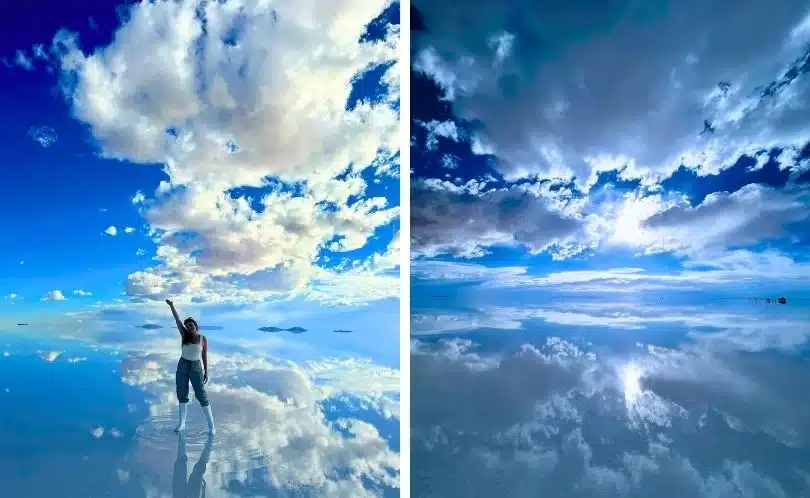
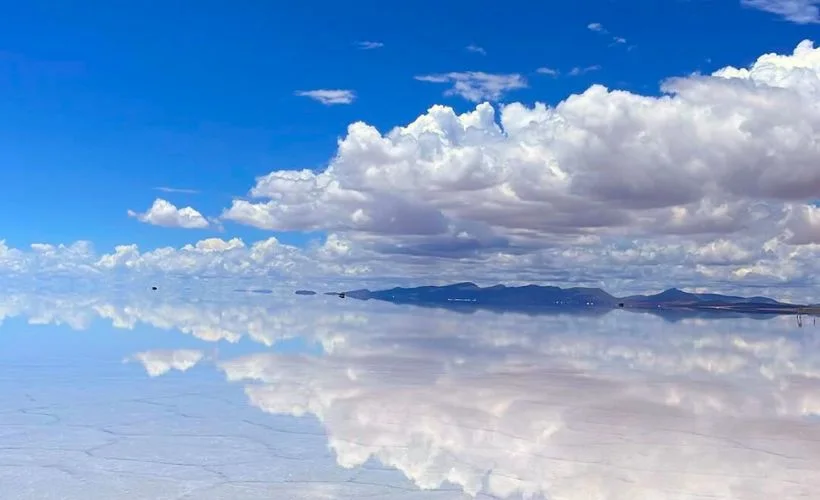
During these months, the Uyuni Salt Flat floods with a thin layer of water generating the famous mirror effect. It’s a unique phenomenon that turns the salt desert into a surface reflecting the sky, creating an impressive visual illusion.
Key aspects:
- Frequent rains, especially in January and February.
- The mirror effect reaches its peak.
- Some salt flat areas may be closed for safety.
- Mild daytime temperatures (59-68°F/15-20°C).
- Limited access to sites like Incahuasi Island.
Intermediate Season (April and November)
These months offer a balance between good weather and accessibility, with possibilities of seeing soft reflections in some salt flat areas. Routes are mostly enabled, and there are fewer visitors than during high season.
Main advantages:
- Possibility of partial reflections, especially at sunrise.
- Stable weather and accessible routes.
- Lower tourist influx and lower prices.
- Clear skies ideal for stargazing.

Dry Season (May to October)
During this time, the salt flat is completely dry and compact. Although there’s no mirror effect, these are the best months to tour it in its entirety and visit more remote places like highland lagoons or Eduardo Avaroa Reserve.
Highlights:
- Firm ground, with no water presence.
- Clear skies almost every day.
- Mild days, but very cold nights (down to 14°F/-10°C).
- Excellent visibility for photography and stargazing.
- Full access to all salt flat areas and surroundings.

Climate and Conditions of the Best Time to Visit Uyuni Salt Flats
| Month | Season | Estimated Climate | Reflections Available | Accessibility |
| January | Heavy rains | 59-68°F (15-20°C), rainy | Yes (mirror effect) | Partial |
| February | Heavy rains | 57-66°F (14-19°C), rainy | Yes (mirror effect) | Limited |
| March | Transition | 55-64°F (13-18°C), light rains | Partial reflections | Progressive improvement |
| April | Intermediate | 54-68°F (12-20°C), dry | Soft reflections | High |
| May | Dry | 50-70°F (10-21°C), dry | No | High |
| June | Dry | 46-66°F (8-19°C), dry | No | High |
| July | Dry | 43-64°F (6-18°C), dry | No | High |
| August | Dry | 46-68°F (8-20°C), dry | No | High |
| September | Dry | 50-72°F (10-22°C), dry | No | High |
| October | Transition | 54-72°F (12-22°C), dry | No | High |
| November | Intermediate | 57-73°F (14-23°C), possible rains | Light reflections | High |
| December | Start of rains | 59-72°F (15-22°C), first rains | Initial reflections | Partial |

Ideal Month for Your Adventures
If you want the mirror effect, visit in January or February when rains create a thin water layer that perfectly reflects the sky.
For dry and easy exploration, go between May and October roads are open for 4×4 tours and hikes.
If stargazing is your goal, June to August offers clear, dark skies with no light pollution.
And to avoid crowds and enjoy mild weather, April and November are the best time to visit Uyuni Salt Flats, with fewer tourists and better prices.
Practical Tips for Your Uyuni Trip
How to Get There
From La Paz: daily flights to Uyuni airport (1 hour duration)
From Santa Cruz: generally fly first to La Paz and then to Uyuni
There are also overnight buses from La Paz, although the journey is long (10 to 12 hours)

Altitude and Acclimatization
Uyuni is located at over 11,811 feet (3,600 meters). It’s recommended to acclimatize for at least one day in cities like La Paz or Potosí before starting the tour.
Recommendations
- Stay constantly hydrated.
- Avoid alcohol the first days.
- Eat light.
- Bring altitude sickness medications if necessary.
Recommended Luggage
| Season | Recommended Clothing | Other Useful Items |
| Rainy | Raincoat, water resistant boots. | Camera protector, light clothing for daytime. |
| Dry | Thermal clothing, thick coat for nighttime. | Sunscreen, sunglasses, flashlight |
| Year Round | Thermal clothing, thick coat for nighttime. | Small backpack, reusable bottle, snacks. |

Advance Reservations
High season in Uyuni includes two key periods:
- January to March, for the famous salt flat mirror effect.
- July and August, for international winter vacations.
Responsible Tourism
- Use responsible tour operators.
- Respect marked routes.
- Don’t leave waste.
- Support local economy.
- Care for fauna and natural environment.
- Reduce plastic use.
Now that you know the best month to visit Uyuni salt flats according to weather and the experience you want to have, you just need to choose the perfect date. Prepare for altitude, travel responsibly, and book with Waman Adventures. Let us accompany you on this unique adventure through the world’s largest salt desert.
Frequently Asked Questions About When to Visit Uyuni
What months should I visit Uyuni to see the mirror effect?
The famous mirror effect occurs between January and March, during rainy season. During these months, the salt flat is covered by a thin layer of water reflecting the sky like a giant natural mirror. It’s ideal for impressive photographs and unique views. If this phenomenon is your main objective, it’s crucial that you schedule your trip within this period.
What’s the best month to visit Uyuni if I want to avoid crowds?
If you prefer a quieter trip, the best months are April, May, September, and November. These belong to low or intermediate season. There are fewer tourists, prices are more accessible, and you can enjoy the salt flat without crowds. They’re perfect if you value calm, uninterrupted photography, and a more intimate experience.
What is the best month to visit Uyuni for perfect weather?
April and November offer very balanced weather: there are no heavy rains or extreme temperatures. During these months, roads are accessible, the sky is usually clear, and you can still see some reflections if there’s ground moisture. They’re also ideal for combining daytime visits with stargazing.
In what months can I see stars in Uyuni?
From May to October, especially in June and July, the sky remains clear and with little light pollution. These conditions make the Uyuni Salt Flat one of the world’s best places to see the Milky Way and constellations with great clarity. Yes, prepare for very cold nights.
What month should I choose if I want to see both reflections and starry skies in Uyuni?
April and November are more versatile and best for those wanting an intermediate stage. They can also find sectors with moisture allowing soft reflections, and additionally enjoy starry skies at nightfall. It’s an excellent option if you want to experience both landscapes without extreme weather limitations or excess visitors.
In what month is it most difficult to access the Uyuni Salt Flat?
February usually presents the greatest challenges for entering the salt flat. Rains can cause flooding blocking roads or preventing access to places like Incahuasi Island. If you decide to travel this month, make sure to book with experienced and flexible tour operators.
What’s the best month to visit Uyuni if I don’t like cold?
For those seeking warmer weather, ideal months are between December and March. Daytime temperatures are moderate and pleasant, although you should consider it’s also rainy season. If you prioritize thermal comfort during the day, this time may be a good option.
What months are high season in Uyuni?
High season comprises January to March (mirror effect) and July to August (international vacations). During these months, there’s more tourist influx, prices rise, and tour and lodging availability reduces. It’s advisable to book in advance to ensure the best services.
What months to visit Uyuni if I want to take the best photos?
- January to March: best months to capture mirror effect.
- May to October: ideal for dry salt flat photos, with marked hexagonal patterns and clear skies.
- April and November: perfect if you want to capture both scenarios, with good light, starry skies, and some reflections.

Share:



If you liked this article and the information you found, give us 5 stars!
Table of Contents
Related blogs