Llama vs Alpaca: 8 Key Differences and Where to See Them in Peru
Ultima actualización en 19 November, 2026 por Jhon Quispe
Last Updated on 19 November, 2026 by Jhon Quispe
Llama vs alpaca: quick answer
The quickest way to tell a llama from an alpaca is size and ears. Llamas are about twice as big, standing roughly 5.5–6 ft (1.7–1.8 m) tall at the head and weighing 280–450 lb (130–200 kg), with long, banana-shaped ears. Alpacas are smaller, about 3–4 ft (0.9–1.2 m) at the head and 100–175 lb (45–80 kg), with short, pointed ears and a fluffy, flat face. Llamas were bred to carry loads; alpacas were bred for their soft, fine fiber.
- Llama vs alpaca at a glance
- The 8 key differences between llamas and alpacas
- Do llamas and alpacas spit?
- Alpaca wool vs llama wool: which is better?
- Llamas and alpacas in Peru
- Where to see llamas and alpacas in Peru
- See llamas and alpacas on your Peru trip
- Frequently asked questions about llamas and alpacas
Both animals come from the Andes, and Peru is the best place in the world to see them side by side: the country is home to most of the world’s alpacas and hundreds of thousands of llamas. This guide explains the eight differences that matter, which one spits, how their wool compares and where you can meet both on a trip to Cusco and Machu Picchu.
Llama vs alpaca at a glance
| Feature | Llama | Alpaca |
| Height at the shoulder | About 42–46 in (107–117 cm) | About 34–36 in (86–92 cm) |
| Height at the head | About 5.5–6 ft (1.7–1.8 m) | About 3–4 ft (0.9–1.2 m) |
| Weight | About 280–450 lb (130–200 kg) | About 100–175 lb (45–80 kg) |
| Ears | Long and curved, banana-shaped | Short, straight and pointed |
| Face | Long face with less hair | Short, flat face covered in fluffy fiber |
| Back | Long and flat | Rounder and more compact |
| Fiber | Coarser, with guard hairs | Fine, soft and very warm |
| Bred for | Carrying loads; also meat and wool | Fiber |
| Temperament | Independent, confident; used as guard animals | Shy, gentle, herd-oriented |
| Wild ancestor | Guanaco | Vicuña |
| Lifespan | About 15–25 years | About 15–20 years |
The 8 key differences between llamas and alpacas
1. Size and weight
A llama is roughly twice the size of an alpaca. An adult llama can look you in the eye, while an alpaca usually reaches about chest height on an adult. The weight gap is even bigger: a large llama can weigh more than twice as much as an average alpaca.
2. Ears
The ears are the easiest way to tell them apart. Llamas have long ears that curve inward like bananas. Alpacas have short, straight, spear-shaped ears, often hidden in fluffy fiber.
3. Face
Llamas have a long face with short hair; alpacas have a short, blunt face that looks almost squashed, covered in soft fiber. Many people describe the alpaca’s face as “teddy bear-like”.
4. Body and back
Llamas have a long, straight back and long legs, a build suited to carrying loads. Alpacas are rounder and more compact, and their thick fleece makes them look even fluffier.
5. Fiber and wool
Alpaca fiber is much finer and softer than llama wool. Alpacas were bred for thousands of years for their fleece, which is light, very warm and contains little or none of the coarse guard hair found in llama coats. Llama wool is coarser and is traditionally used for ropes, rugs, blankets and outer garments, although fiber from young llamas can be quite soft.
That is why most sweaters, scarves and shawls sold in Cusco are made from alpaca. If you plan to buy some, read our guide to Cusco souvenirs and how to spot real alpaca.
6. Purpose
Llamas are working animals; alpacas are fiber animals. In Inca times, caravans of llamas carried goods along the mountain roads, and they are still used as pack animals in some Andean communities. Alpacas were never used to carry loads; they were raised for their fleece.
7. Temperament
Llamas are more independent and confident; alpacas are shyer and prefer to stay close to their herd. Llamas are so alert that farmers in many countries use them as guard animals for sheep and alpacas. Alpacas are gentle but usually do not like being touched.
8. Wild ancestors
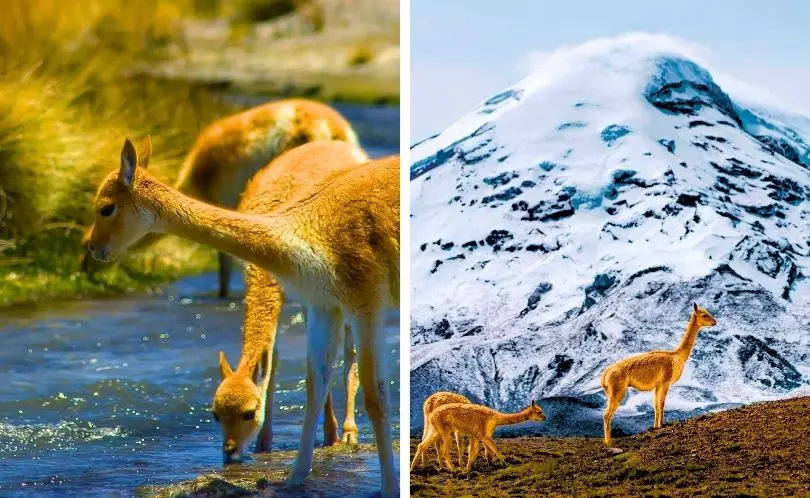
The llama descends from the guanaco, and the alpaca descends from the vicuña. Both wild species still live in South America. The vicuña, the smallest and most delicate camelid, lives in the high grasslands of Peru and produces one of the finest and most expensive fibers in the world.
Do llamas and alpacas spit?
Yes, both can spit, but they rarely spit at people. Spitting is mostly how they communicate with each other: to defend their food, settle who is in charge or reject an unwanted mate. A llama or alpaca usually spits at a person only when it feels cornered, stressed or mistreated.
If you visit them in Peru, keep a calm distance, move slowly and let them come to you. If its ears go flat against its head and it lifts its chin, it is warning you to back off.
Did you know…?
Llamas and alpacas can breed with each other. The cross, called a huarizo, is common in Andean communities where both animals graze together, and it looks like something in between: bigger than an alpaca, fluffier than a llama.
Alpaca wool vs llama wool: which is better?
| Feature | Alpaca | Llama |
| Softness | Very soft and fine, especially “baby alpaca” (the finest grade, not the age of the animal) | Coarser, with guard hairs |
| Warmth | Excellent warmth for its weight | Warm and durable |
| Typical products | Sweaters, scarves, shawls, gloves | Rugs, blankets, ropes, bags |
| Where to buy in Peru | Cusco, Arequipa and Puno shops and markets | Local markets and textile communities |
For clothing, alpaca is the better choice: it is softer, lighter and less itchy. Llama wool is valued for sturdy, long-lasting textiles.
Llamas and alpacas in Peru
Peru has the largest alpaca population in the world. According to Peru’s 2012 agricultural census, the country is home to about 3.7 million alpacas, around 87% of the world total, and roughly 750,000 llamas. Bolivia has the largest llama population.
Most of Peru’s alpacas live in the southern highlands, especially in the regions of Puno, Cusco and Arequipa, at around 12,500 to 16,400 ft (3,800 to 5,000 m). Two alpaca breeds are raised: the fluffy Huacaya, by far the most common, and the Suri, whose fiber hangs in long, silky locks.
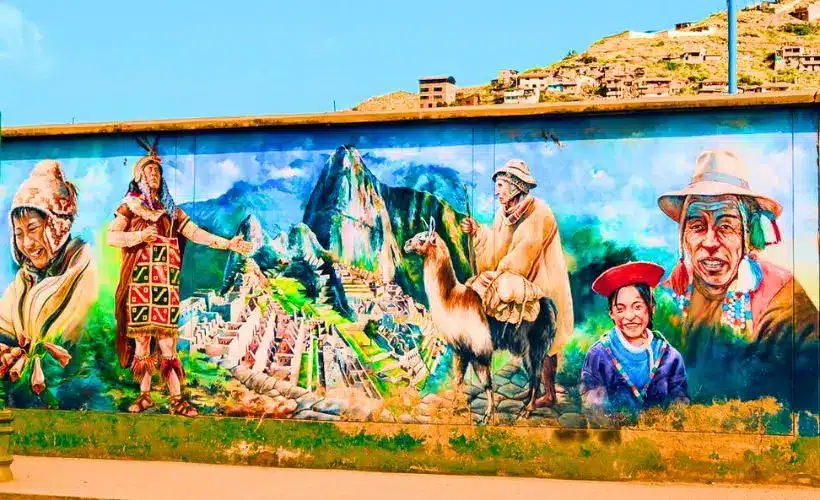
Where to see llamas and alpacas in Peru
| Place | What you will see |
| Cusco’s historic center | Women in traditional dress walking with llamas and baby alpacas, offering photos for a tip |
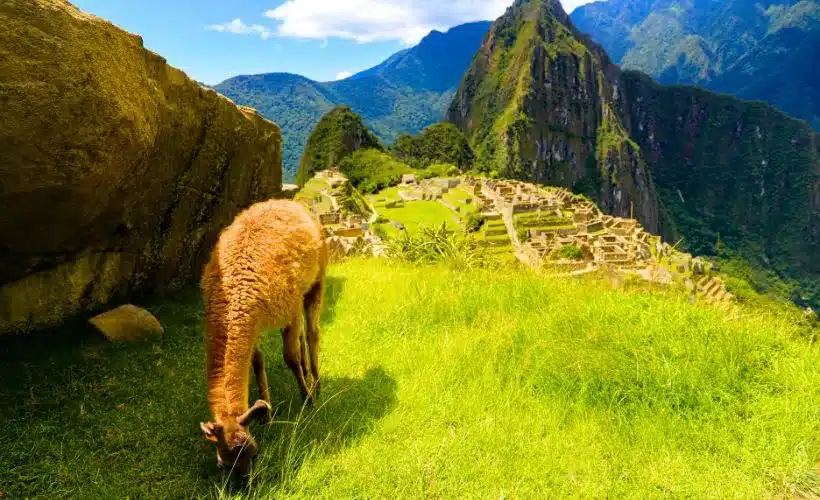
| Machu Picchu | A resident herd of llamas grazing on the Inca terraces; alpacas are rare |
| Sacred Valley | Family farms and textile centers with llamas and alpacas, plus weaving demonstrations |
| Rainbow Mountain | Herds of llamas and alpacas grazing in the high puna along the trail |
| Humantay Lake | Llamas and horses on the route from Soraypampa |
| Puno and Lake Titicaca | The region with the most alpacas in Peru |
Llamas at Machu Picchu
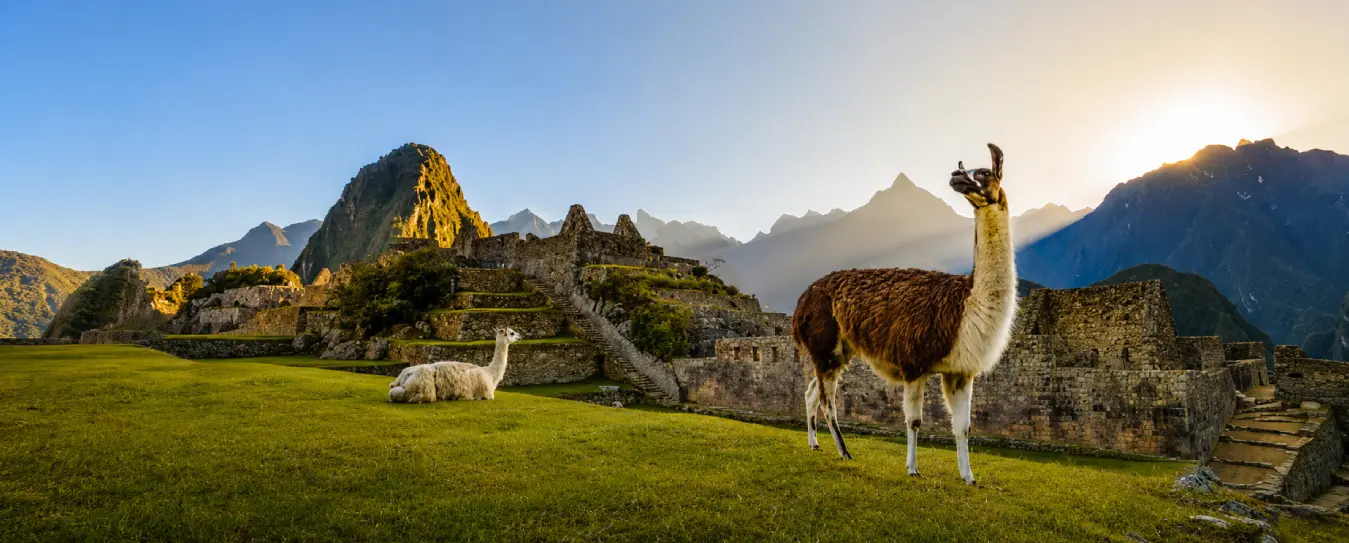
The famous animals at Machu Picchu are llamas, not alpacas. A small herd lives freely on the terraces and is one of the most photographed sights in the citadel. Learn why they are there and where to find them in our guide to Machu Picchu llamas.

Llamas and alpacas at Rainbow Mountain
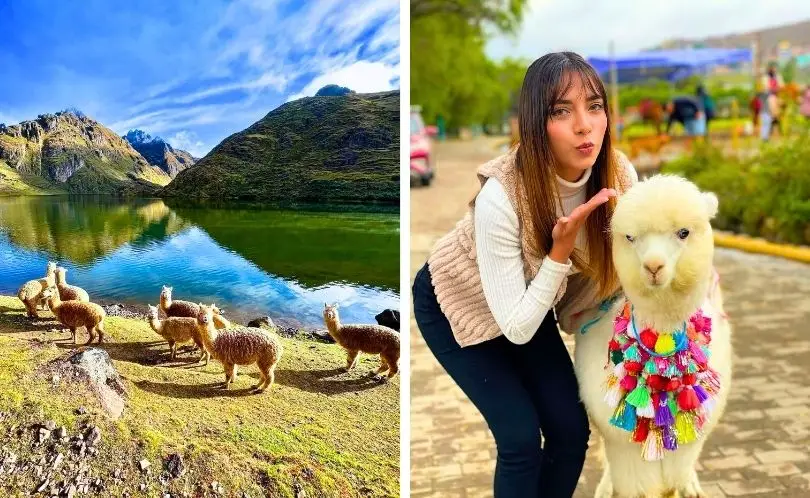
The road and trail to Rainbow Mountain cross high grasslands where local families graze large herds of both animals. It is one of the best places to see llamas and alpacas in their natural setting. Plan your visit with our Rainbow Mountain Peru guide, or compare it with Humantay Lake if you only have time for one hike.

Llamas in Cusco
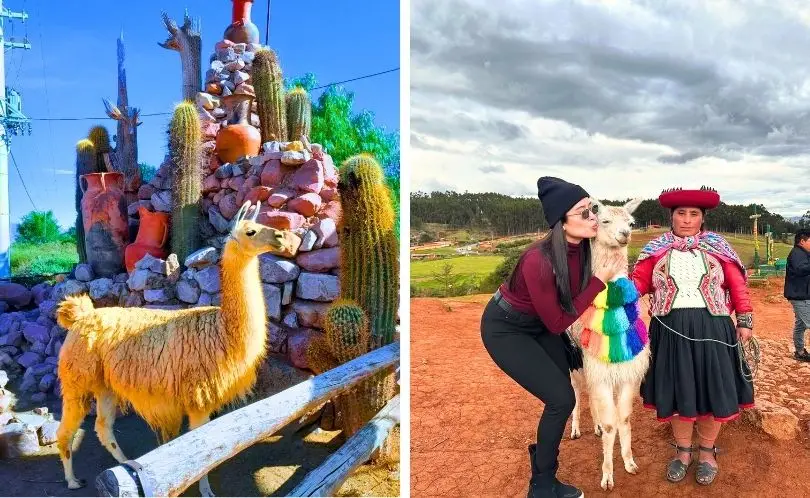
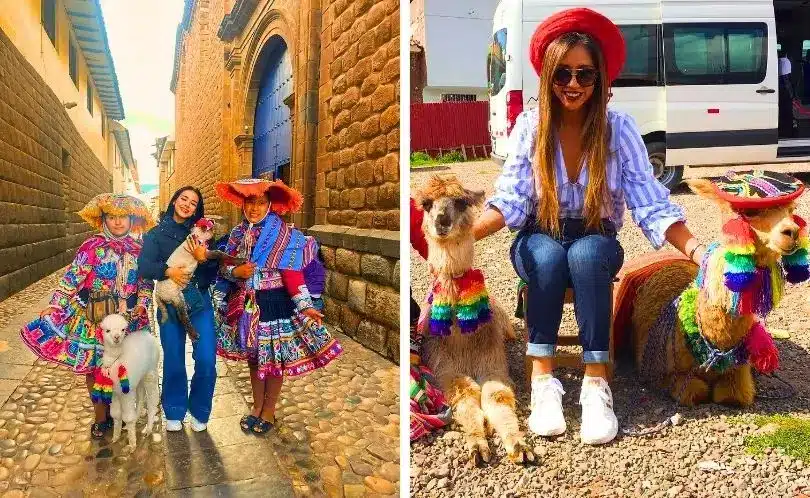
In Cusco’s historic center, you will meet women in colorful traditional dress walking with llamas and baby alpacas. They offer photos in exchange for a small tip, which is the easiest way to get a close-up picture with both animals.
Expert Tip:
If you are photographed with a llama or alpaca in Cusco, agree on the tip before taking the photo, and keep small coins in soles handy.
See llamas and alpacas on your Peru trip
The best way to meet both animals is to combine Cusco, Machu Picchu and the high Andes in one trip. Our 6-day tour includes Machu Picchu, where llamas graze on the terraces, plus Rainbow Mountain and Humantay Lake, where herds of llamas and alpacas roam the highlands. Tell us your dates and a travel specialist will help you plan the details.
Frequently asked questions about llamas and alpacas
Which is bigger, a llama or an alpaca?
What is the easiest way to tell a llama from an alpaca?
Do alpacas spit?
Which is friendlier, a llama or an alpaca?
Is a llama a type of alpaca?
Does Peru have llamas or alpacas?
Are there alpacas at Machu Picchu?
Is alpaca wool better than llama wool?
Share:




Related tours you might be interested in
Enjoy unique experiences in Cusco and Machu Picchu with the peace of mind that comes from working with a local travel agency
If you liked this article and the information you found, give us 5 stars!
Table of Contents
Related blogs

Private tour to Machu Picchu and why travelers love them.
11 min of reading
Exploring Red Valley Cusco: A Hidden Paradise Next to Rainbow Mountain
10 min of reading