Walking With the Llamas in Machu Picchu: A Journey Through Time
Ultima actualización en 26 April, 2025 por Waman Adventures
Last Updated on 26 April, 2025 by Waman Adventures
- Importance of Llamas in Inca Culture
- Role of Llamas in Andean Society
- DIFFERENCES BETWEEN LLAMAS, ALPACAS, AND VICUÑAS
- Presence of Llamas in Machu Picchu
- Why Are There Llamas in Machu Picchu
- Llamas in Other Famous Places in Cusco
- Interaction with Llamas During Your Visit
- Photography with Llamas
- FREQUENTLY ASKED QUESTIONS
Machu Picchu, recognized as one of the Seven Wonders of the World, is a Historic Sanctuary that impresses not only with its Inca architecture but also with its rich biodiversity, hosting numerous species of flora and fauna, including the emblematic llamas. These camelids, which roam freely through the ancient citadel, play an essential role in the ecological balance of the site.
The llamas in Machu Picchu don’t remain in specific areas, as they move freely throughout the archaeological complex. They graze on the terraces and green areas, allowing tourists to observe their natural behavior in a historical environment. Additionally, llamas, domesticated by the Incas, were fundamental for transporting loads and obtaining wool, which makes their presence in Machu Picchu add authenticity to the site.
Llamas have been essential in Andean culture since ancient times. Today, there is an effort to recover their cultural and spiritual significance, symbolizing the connection between Andean communities and their environment. Discover how these animals continue to be a living symbol of Andean culture, learn more here.
Importance of Llamas in Inca Culture

Llamas were fundamental in the Inca Empire, playing essential roles in the economy, society, and religion. Their ability to transport moderate weight loads across diverse Andean terrains made them a key means of transportation, facilitating trade.
Important note:
Their wool was used for making textiles, and their meat as a food source. Their presence in daily life and in the spiritual practices of the Incas reflects the close relationship they had with nature and their worldview.
Role of Llamas in Andean Society
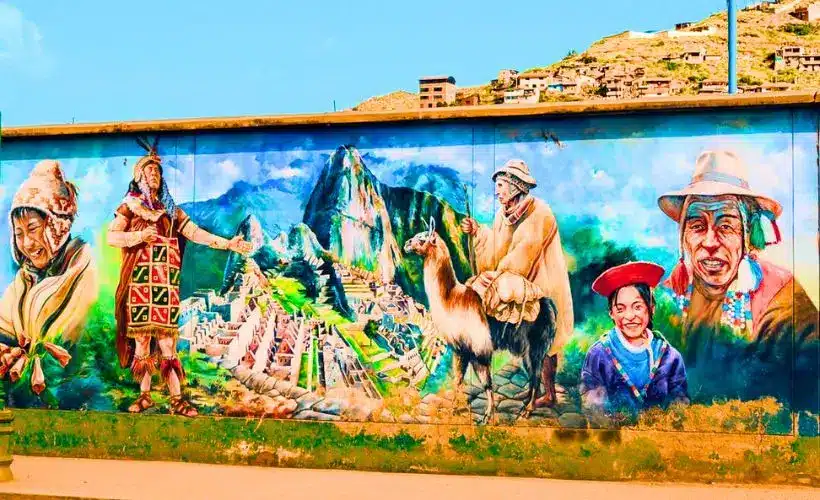
In Andean society, llamas played multiple essential roles:
-
Pack animals: Their ability to carry weight and move through difficult paths made them fundamental for trade in Andean regions, allowing for more fluid communication.
-
Resource source: Llamas provided two very important resources: wool and meat. Although their wool wasn’t as soft as alpaca’s, it was used to make warm clothing and blankets. Additionally, their meat was a fundamental food source, especially in highland areas. Thus, for Andean families, llamas were key to covering basic needs.
-
Cultural and religious significance: They were not only working animals but also held a special place in Andean spiritual life. They participated in important rituals, such as offerings to Pachamama, as they were believed to connect people with nature and the gods.
DIFFERENCES BETWEEN LLAMAS, ALPACAS, AND VICUÑAS
Characteristics of Each Species
Llamas
-
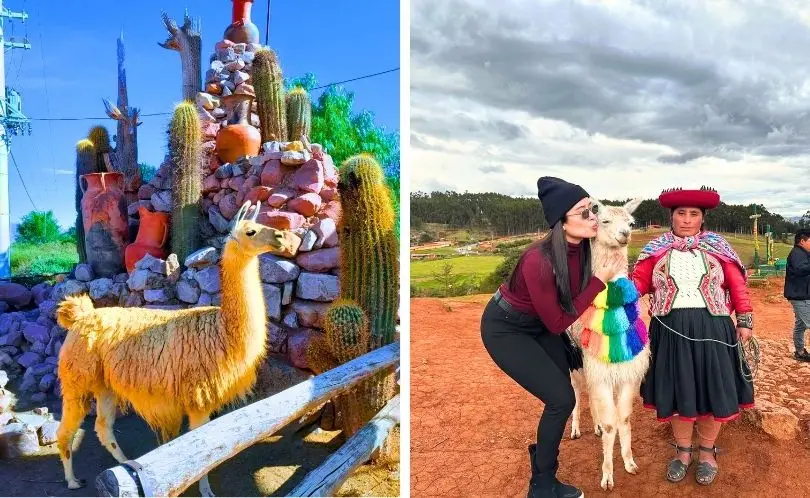
Size and physique: They are large, robust with long necks. Their fur is thicker than alpacas’ and comes in various colors such as white, brown, black, and gray, although it’s not as fine.
-
Use: They were primarily used as pack animals. In ancient times, they were essential for transporting products through mountain trails where vehicles couldn’t access.
-
Behavior: They tend to be independent, territorial, and temperamental, especially the males. If they feel threatened, they may spit, although they usually do this among themselves and not toward people, unless they are excessively bothered.
Alpacas:
-
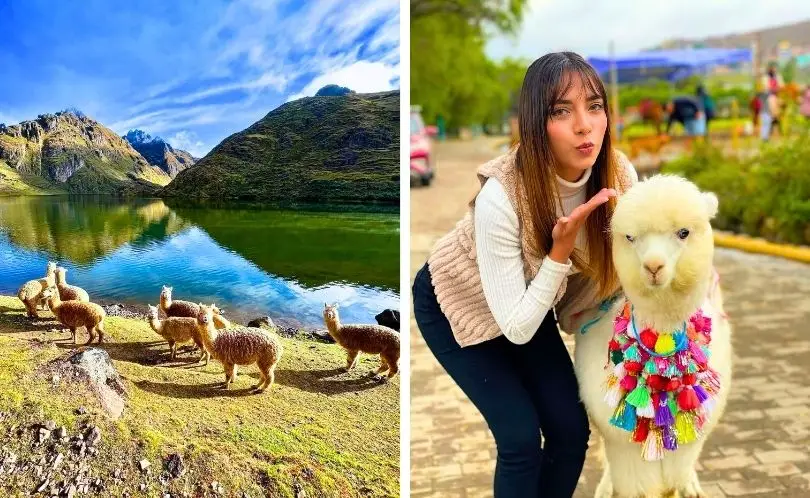
Size and physique: They are smaller and more delicate, with a woollier and rounder appearance. Their fur presents a range of colors such as white, brown, gray, and black, making their wool highly sought after across many continents.
-
Use: They are raised and appreciated mainly for their fine, soft, high-quality wool. Due to its high market value, many families raise them as a source of economic sustenance.
-
Behavior: They are docile and prefer to move in groups. For this reason, they are easier to handle compared to llamas.
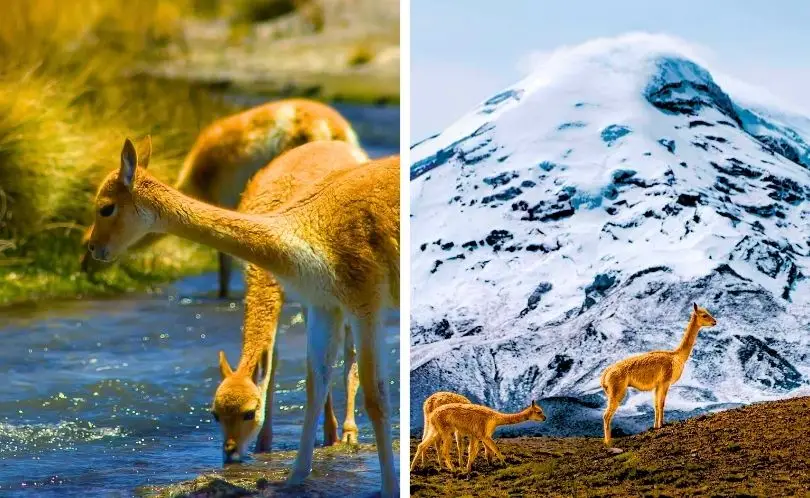
Vicuñas:
-
Size and physique: They are slender, with long legs and an elegant bearing. Their appearance is more delicate compared to llamas and alpacas. Their fur is short, brown in color, with a white chest.
-
Habitat: Unlike other camelids, they enjoy their freedom and live in small family groups.
-
Characteristics: Their wool is one of the finest and most expensive in the world; it’s very soft and warm, and its rarity makes it highly valuable. In the Inca era, vicuñas were exclusive to nobility. Today, their production is regulated to protect the species.
Presence of Llamas in Machu Picchu
Number and Distribution of Llamas at the Site
Llamas are an emblematic presence in Machu Picchu, contributing both to the tourist attraction and the ecological maintenance of the site. There are llamas in Machu Picchu that play a valuable role in the ecosystem of this World Heritage Site.
Most Common Areas Where They Can Be Seen
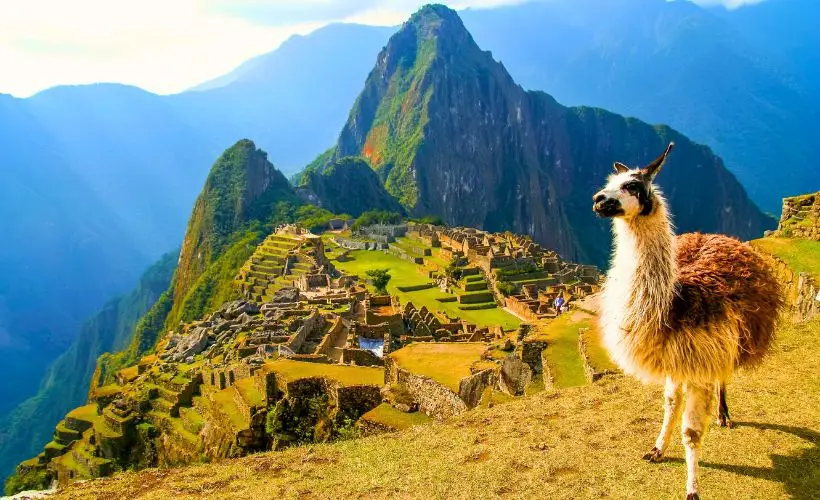
Their encounters make the citadel even more memorable and authentic.
-
Agricultural terraces: They usually graze on the terraces, helping to keep vegetation under control and contributing to the care of the site.
-
Main Plaza: It’s common to see them resting in this central area, sometimes interacting with visitors.
-
Guardian’s House Zone: They frequent this viewpoint, thus offering unique opportunities to take photographs with these animals and Machu Picchu in the background.
Why Are There Llamas in Machu Picchu

Llamas in Other Famous Places in Cusco
Besides Machu Picchu, llamas are also present in other emblematic places in Cusco, such as:
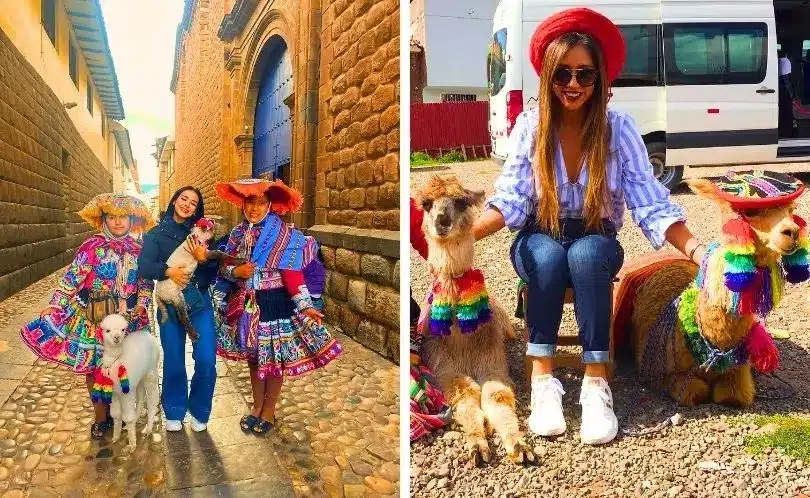
- Plaza de Armas in Cusco: In the city center, it’s common to see local women walking with llamas and alpacas, offering tourists and residents the opportunity to take photographs with these beautiful animals in exchange for a tip.
- Sacred Valley: In different localities, it’s possible to visit family farms where llamas and alpacas are raised. Additionally, in Chinchero, walks accompanied by these animals are offered.
Interaction with Llamas During Your Visit
Best Time of Day to See Them
If you want to see llamas in their full splendor, the ideal time is early in the morning, as that’s when they are most active, walking and moving around. This way, you’ll have a good opportunity to observe them and take photos with the morning light.
Appropriate Behavior When Approaching Llamas
When interacting with llamas, it’s essential to:
-
Don’t get too close: Give them their space. They don’t like feeling crowded.
-
No food: Even if they look at you with puppy eyes, don’t give them anything. Their diet is controlled to keep them healthy.
-
Move slowly: Avoid sudden movements, as they scare easily.
Did you know…?
In some tourist places, locals may offer the opportunity to interact more closely with llamas.
Photography with Llamas
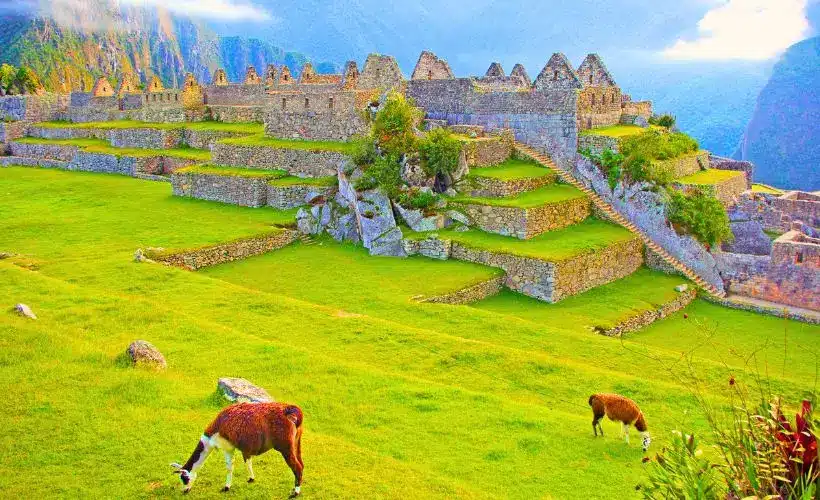
The llamas in Machu Picchu are quite friendly and allow visitors to approach them for photos. However, it’s important to follow certain recommendations:
-
Avoid using flash: Strong light bothers them, so it’s better not to use it.
-
Don’t get too close: Give them their space; they don’t like feeling cornered.
-
Patience and respect: If you wait for them to approach you, you’ll get more natural photos and, in this way, you won’t stress them.
It’s time to embark on this impressive wonder. Tour its plazas, enclosures, and temples, and experience the magic of every corner. Additionally, you’ll have the opportunity to meet the llamas in Machu Picchu and immerse yourself in an environment of natural beauty and connection with nature. With Waman Adventures, dare to discover the unique landscapes of Peru and have an unforgettable experience!
FREQUENTLY ASKED QUESTIONS
Are the llamas in Machu Picchu wild or domesticated?
The llamas in Machu Picchu are domesticated and live freely within the archaeological site. They were introduced to help maintain the sanctuary, in addition to adding a special touch to the landscape. Although they are not aggressive, it’s important to treat them with respect to ensure a unique experience.
Is it safe to approach the llamas?
It’s fine to approach the llamas, but when you do, avoid making strange movements and don’t try to touch them. If you keep a prudent distance and observe how they behave, everything will be good.
Where are you most likely to find llamas in Machu Picchu?
They can typically be found in various areas of the archaeological site, especially in the agricultural terraces and grassland areas, where they walk freely. There are several llamas in the complex, so it’s very likely that when visiting Machu Picchu, you’ll find many of them.
Are there llamas in Machu Picchu all year round?
The llamas in Machu Picchu are present throughout the year, and it’s now customary to see them in different enclosures of the archaeological zone. Their habitat in this place is carefully protected by the site authorities to preserve the ecosystem’s balance.

Share:




Related tours you might be interested in
Enjoy unique experiences in Cusco and Machu Picchu with the peace of mind that comes from working with a local travel agency

02 DAY «EXPLORING» THE SACRED VALLEY AND MACHU PICCHU
CHINCHERO, MARAS AND MORAY WILL ENVELOP YOU IN THE MAGIC OF THE SACRED VALLEY. EACH EXPERIENCE WILL...

Full Day – «Exploring» Machu Picchu
MACHU PICCHU EPIC ADVENTURE TOUR FROM CUSCO This full-day option is an excellent opportunity to...

04 DAY CUSCO – SACRED VALLEY – MACHU PICCHU
DISCOVER THE MAGIC OF CUSCO, THE SERENITY OF THE SACRED VALLEY AND THE GRANDEUR OF MACHU PICCHU On...

10 Days Andean Dreamscapes – Lima, Ica, Cusco & Puno with Local Flights
YOUR NEXT DESTINATION IS PERU, THE LAND OF FASCINATING STORIES AND OUTSTANDING LANDSCAPES! With our...
If you liked this article and the information you found, give us 5 stars!
Table of Contents
Related blogs