Best time to visit Uyuni Salt Flats: Seasons, reflections, and the sky that touches the earth
Ultima actualización en 18 May, 2026 por Waman Adventures
Last Updated on 18 May, 2026 by Waman Adventures
- Seasons at the Uyuni Salt Flats
- A Guide to Choosing Your Route Based on What You Want to See
- What to Pack and How to Prepare
- Travel Tips: How to Get There and Book Smart
-
Frequently Asked Questions About the Best Time to Visit Uyuni
- What’s the best time to visit the Uyuni Salt Flats?
- How many days does a tour to see the mirror effect last on average?
- What type of footwear is best according to the season?
- When do prices usually rise the most?
- Is it difficult to travel during the rainy season?
- When are there fewer tourists and better prices?
- Is it better to book the tour from Uyuni or from La Paz?
- How does altitude affect you and what to do to acclimatize?
Choosing the best time to visit Uyuni salt flats amd will make your trip truly unique. This salt desert changes completely depending on the season: sometimes it becomes an enormous mirror that duplicates the sky, and other times it looks like a cracked white sea, perfect for exploring. Here we tell you what the best time to visit Uyuni salt flats is according to what you dream of experiencing, so you can plan with confidence and not end up arriving in the wrong month.

Seasons at the Uyuni Salt Flats
| What Do You Want to See? | Best Time | What to Expect? |
| Sky reflection/mirror effect. | January to March. | The salt flats are covered with water, duplicated landscapes, unique photos, ideal for professional and Instagram worthy photography. |
| Dry geometric shapes. | May to November. | You’ll find a cracked surface, with access to various places, being able to cross it by 4×4, walks, or bike touring. |
| Stars and night photography. | June to August | You’ll see clear skies, low light pollution, for this reason the stars can be seen more clearly. |
| Few tourists and pleasant weather. | April, May, October, and November | Fewer visitors, prices are more comfortable, you’ll have more temperate weather. |
Rainy Season: Mirror Magic (December–April)
During these months, the Uyuni Salt Flats transform into a gigantic natural mirror. The thin layer of water that accumulates over the salt reflects the sky with astonishing perfection, creating the illusion of a duplicated horizon. If you’re a photography lover, this is your opportunity to capture unique and totally Instagram worthy images.
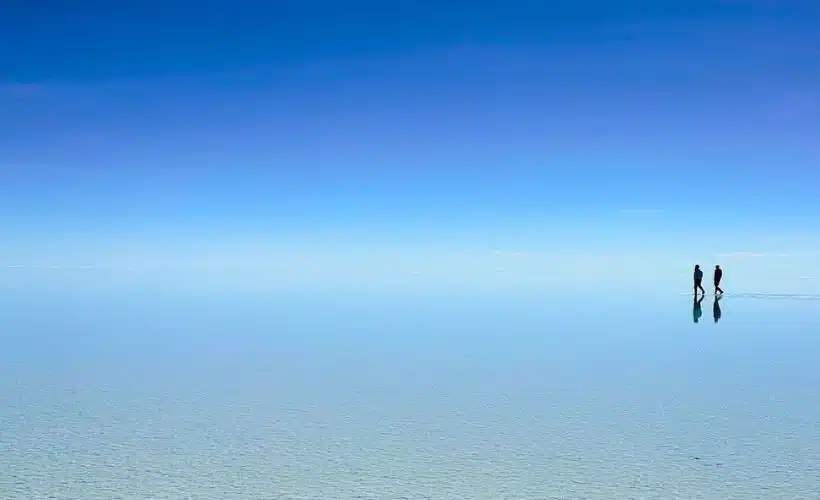
The best time to visit the Uyuni salt flats and enjoy the famous mirror effect is between January and March, when rains are most consistent. During these months, daytime temperatures usually range between 53°F (12°C) and 64°F (18°C), while at night the weather remains relatively temperate.
Keep in mind that some areas, like Incahuasi Island, may be closed due to flooding. Therefore, before traveling, make sure to check tour conditions with the agency or tour operator you choose.
Dry Season: Endless White Horizon (May–November)
The salt flats appear completely dry, causing the surface to crack into hexagonal shapes. This image gives you the sensation of being in front of a solid salt desert, under a completely clear blue sky.
If you want to cover long distances within the salt flats, this is the Uyuni salt flats best time to go, as all points of interest are accessible and you can enjoy mostly clear night skies.
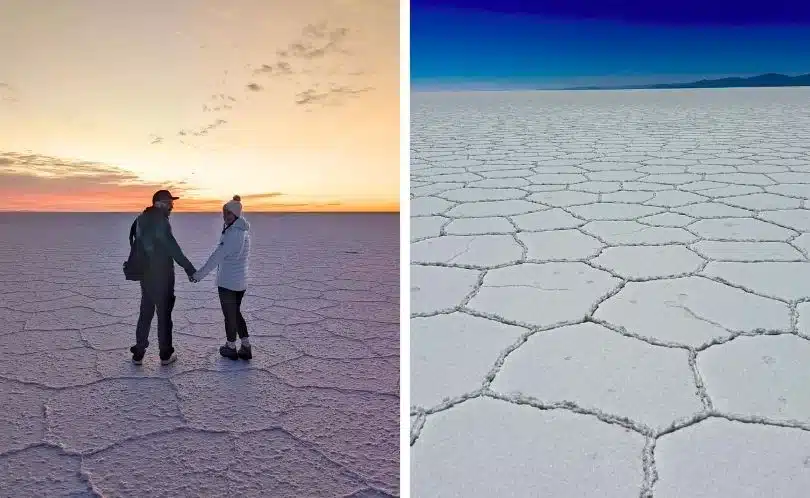
This period is ideal for walks, 4×4 truck journeys, astrophotography, and exploring islands like Incahuasi or Fish Island. Daytime temperatures usually range between 59°F and 68°F (15°C and 20°C), but prepare for very cold nights, as they can drop to 23°F (-5°C).
Intermediate Months: The Best of Both Worlds (April–May, October–November)
If you can’t decide between seeing the salt flats as a mirror or completely dry, the transition months are perfect for you to enjoy a bit of both landscapes. In April, for example, you can still find puddles of water that create reflections in some areas, while in others you can already see the dry formations of the salt flats.
Remember that:
The weather is usually more pleasant, there are fewer tourists, and prices are lower compared to high season. Therefore, these months offer an ideal balance between accessibility and landscape variety.

A Guide to Choosing Your Route Based on What You Want to See
Deciding what the best time to visit Uyuni salt flats is may depend on what you’re looking for. Whether you want to enjoy mirrored landscapes, admire the geometric salt formations, contemplate starry nights, or simply experience a quieter time, here we help you make the best decision:
Mirror effect and reflective photography: If you want to enjoy the sky’s reflection on the salt flat surface, this marvel occurs during the rainy season, between December and April. The best time to visit the Uyuni salt flats is when the magic happens: the terrain creates an infinite illusion where sky and earth seem to unite in a single horizon. It’s an experience especially recommended for photographers and travelers seeking a unique visual experience.

Did you know…?
The mirror effect can intensify after rains at sunset or sunrise
Dry patterns and exploration: during this season, the salt flats are in their purest and driest state, showing the characteristic hexagonal geometric salt formations. For this reason, the best months to visit are between May and November.
During this time, the ground is completely solidified, which allows you to access many places like Incahuasi Island, the highland lagoons, and the geysers found in the surroundings. Additionally, you can cover long distances in 4×4 vehicles without restrictions. It’s the ideal time to enjoy active tourism, walks, bike touring, and excursions through the salt flat islands.
Night photography and stargazing: in the highlands, you can contemplate clear skies with very little light pollution, making it an exceptional place during the dry season. This makes it perfect for stargazing and night photography. However, with a bit of luck and the right conditions, the mirror effect can also reflect the stars during the rainy season, creating a doubly magical spectacle.
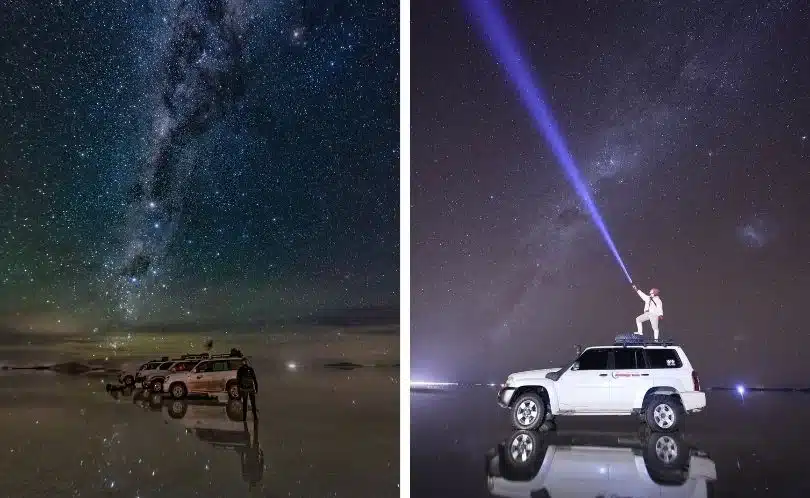
Tranquility and fewer crowds: the intermediate months (April–May and October–November) are usually the most relaxed, as during these transition periods there’s lower tourist influx. This gives you a quieter atmosphere, with greater accommodation availability and more accessible prices.
The weather during these months is moderate, with pleasant temperatures and the possibility of enjoying both partial mirrors and dry areas of the salt flats.
What to Pack and How to Prepare
Regardless of the best time to visit Uyuni salt flats, preparation is key. Here are some essentials:
Layers of clothing: bring thermal shirts, fleeces, windbreaker or down jackets, gloves, wool hat, and scarf. If you travel during the rainy season, don’t forget to include waterproof clothing, as it’s common to walk over puddles and flooded areas.

Sun protection: the Uyuni Salt Flats are located at over 11,811 feet (3,600 m.a.s.l.), so solar radiation is much more intense, especially due to the reflection of the white salt that amplifies UV rays. Use high SPF sunscreen, sunglasses, and a hat or cap.
Comfortable and waterproof footwear:
- Dry season: opt for comfortable sneakers or trekking boots with good soles for walking on hard and abrasive surfaces.
- Rainy season: Bring waterproof boots. They’re essential to prevent salt water from damaging your shoes and causing discomfort. Remember to clean your footwear well after the tour, as salt can damage it quickly.
Camera: whether you want to capture perfect reflections or play with forced perspectives of the landscape, you won’t want to miss the opportunity to take spectacular visual memories.
- Bring a good quality camera or smartphone.
- A tripod is highly recommended, especially if you’re interested in night or long exposure photography.
Water and snacks: many tours last all day or even several days. It’s essential to bring enough water and some snacks to stay energized and well hydrated during the tour.
Travel Tips: How to Get There and Book Smart
How to Visit the Salt Flats

The most common and recommended way to visit the Uyuni Salt Flats is through an organized tour. Most of these tours depart from the city of Uyuni and last one to three days, depending on the itinerary. It’s essential that you book with reliable travel agencies with good reputations, to ensure your safety and enjoy a quality experience.
The most practical and safe way to explore the salt flats is in 4×4 vehicles, operated by specialized agencies. To plan your visit well, you should consider how to get to Uyuni:
- By air: there are daily flights from La Paz to Uyuni, with a duration of approximately 1 hour.
- By land: you can also arrive by overnight bus from: La Paz (10 to 12 hours) Potosí (around 7 hours) Sucre (8 to 9 hours).
Culture and Responsible Tourism
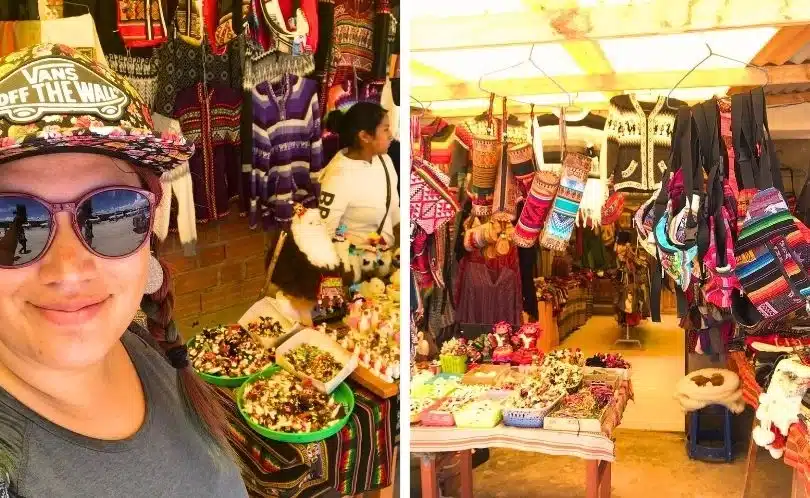
Tips for conscious tourism
- Don’t leave trash: always take your waste with you and deposit it in appropriate places.
- Respect nature: don’t damage the salt formations or deviate from established routes.
- Support the local economy: buy handicrafts, textiles, and foods directly from producers and families in the area.
- Value traditions: listen respectfully when guides share myths, legends, and Andean rituals related to this unique region.
According to your preferences, choose the best time to visit the Uyuni salt flats. Analyze the weather, what you dream of seeing, and prepare well to enjoy it to the fullest. At Waman Adventures we’ve guided thousands of travelers through this unique place; we can advise you according to the season and landscape you’re looking for. Write to us to receive personalized recommendations or book your tour with us and experience this magical adventure with confidence.
Frequently Asked Questions About the Best Time to Visit Uyuni
What’s the best time to visit the Uyuni Salt Flats?
The “best time to visit Uyuni salt flats” will depend on the month and what you want to experience:
- Perfect mirror effect reflection: January to March is the ideal period.
- Clear skies and dry salt flats: June to September you’ll enjoy infinite white landscapes and complete access to the islands.
- Starry skies: between June and August, clear nights are perfect for astronomical observation.
How many days does a tour to see the mirror effect last on average?
Most tours to see the mirror last between 2 and 3 days. This increases your chances of finding the best conditions and exploring other nearby attractions like highland lagoons or geysers.
What type of footwear is best according to the season?
In rainy season (January to March): waterproof boots, for walking on salt water.
In dry season (May to November): comfortable sneakers or trekking boots, for long walks on hard surfaces.
When do prices usually rise the most?
During high season: it’s in January, February (due to the mirror effect), July (mid year vacations), and during Bolivian holidays. Book in advance if you travel during those months.
Is it difficult to travel during the rainy season?
It can be in certain areas. For example, Incahuasi Island usually floods and becomes inaccessible. Some roads may be muddy, and tours might modify their routes for safety. That’s why it’s key to consult beforehand with your trusted tour operator.
When are there fewer tourists and better prices?
The best time to visit Uyuni salt flats where there are better prices is during the intermediate months, like April, May, October, and November, which are perfect if you’re looking to avoid crowds. Additionally, you’re more likely to find more accessible prices and greater availability in accommodations and tours.
Is it better to book the tour from Uyuni or from La Paz?
If you’re looking for flexibility and more competitive prices for the best time to visit Uyuni salt flats, it’s best to book from Uyuni. From La Paz they’re usually complete packages (transportation + tour), ideal if you want to travel with everything organized.
How does altitude affect you and what to do to acclimatize?
The salt flats are at about 12,139 feet (3,700 m.a.s.l.). You may feel headaches, fatigue, or nausea. It’s best to acclimatize one or two days beforehand in La Paz or Sucre, drink water, avoid heavy meals, and try coca infusions.

Share:



If you liked this article and the information you found, give us 5 stars!
Table of Contents
Related blogs