Choquequirao Trek vs Inca Trail: The Ultimate Guide to Choosing the Best Machu Picchu Adventure!
Ultima actualización en 15 October, 2026 por Jhon Quispe
Last Updated on 15 October, 2026 by Jhon Quispe
Is Choquequirao Trek or the Inca Trail better?
Choose the Choquequirao Trek for a remote archaeological site, fewer visitors and demanding canyon hikes, usually over 4–5 days. Choose the Classic Inca Trail for a 4-day historic route leading directly to Machu Picchu, with regulated permits and a highest pass near 13,830 ft (4,215 m). Both require good preparation, but their main destinations are different.
- Choquequirao Trek vs Inca Trail at a glance
- Key differences between Choquequirao and the Inca Trail
- Choquequirao Trek route and experience
- Classic Inca Trail route and experience
- Which trek is better for your travel style?
- Best time and booking requirements
- Trekking costs and included services
- Physical preparation and common mistakes
- Choose the right Inca trek for your Peru trip
-
Frequently asked questions about Choquequirao vs Inca Trail
- Is Choquequirao Trek harder than the Classic Inca Trail?
- Does the Choquequirao Trek finish at Machu Picchu?
- Which trek is better for beginners?
- Which trek requires advance permits?
- Is Choquequirao less crowded than the Inca Trail?
- Can you combine Choquequirao and Machu Picchu?
- Which trek is better if you only have four days?
The biggest difference is not simply which hike is harder. Choquequirao involves steep descents into the Apurímac Canyon followed by demanding climbs, while the Classic Inca Trail combines high mountain passes with a succession of archaeological sites. The right choice depends on your preferred destination, available days and trekking experience.
Choquequirao Trek vs Inca Trail at a glance
Both treks offer opportunities to explore Peru’s Inca heritage, but they lead to different archaeological destinations and involve distinct physical challenges. The Classic Inca Trail is more structured because of its regulated permits and designated campsites, while Choquequirao generally provides a quieter experience on steep canyon trails.
| Comparison | Choquequirao Trek | Classic Inca Trail |
| Main destination | Choquequirao archaeological complex | Machu Picchu archaeological site |
| Typical duration | 4–5 days | 4 days / 3 nights |
| Approximate distance | Often around 30–40 mi (48–64 km) round trip, depending on the trailhead and itinerary | Approximately 26–28 mi (42–45 km) |
| Main physical challenge | Steep descents and sustained climbs in the Apurímac Canyon | High mountain passes, stone stairways and consecutive hiking days |
| Important elevation | Choquequirao archaeological complex at approximately 10,000 ft (3,050 m) | Warmiwañusca Pass at approximately 13,830 ft (4,215 m) |
| Permits | Archaeological-site entry requirements; no equivalent Classic Inca Trail trekking permit | Regulated trekking permit required in advance |
| Visitor numbers | Generally fewer visitors | Popular regulated trekking route |
| Accommodation | Camping, with limited basic facilities in some areas | Designated campsites on the standard four-day route |
| Equipment support | Pack animals and support staff, depending on the operator | Porters according to the booked service |
| Best suited for | Hikers seeking solitude, challenging terrain and remote archaeology | Travelers prioritizing Machu Picchu, historic paths and multiple Inca sites |
Important note:
The traditional four- or five-day Choquequirao Trek does not finish at Machu Picchu. Visiting both archaeological sites requires a longer combined expedition or separate arrangements. The Classic Inca Trail, by contrast, leads directly to Machu Picchu.
Key differences between Choquequirao and the Inca Trail
The main decision factors are destination, terrain, altitude, archaeological experience, visitor numbers and the logistics required to complete each trek.
Destination and archaeological experience
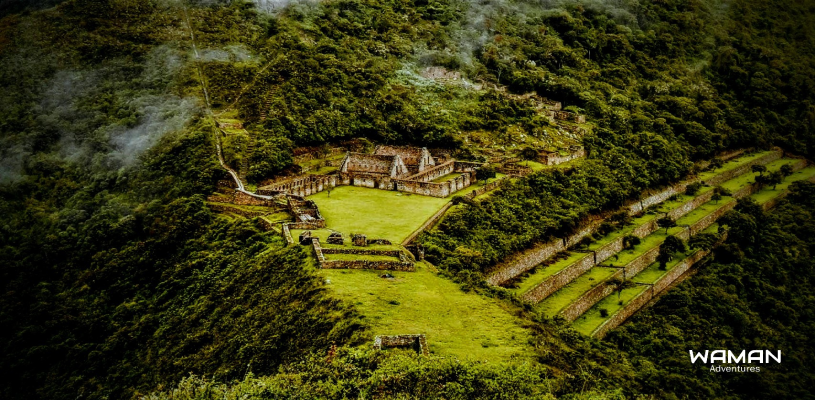
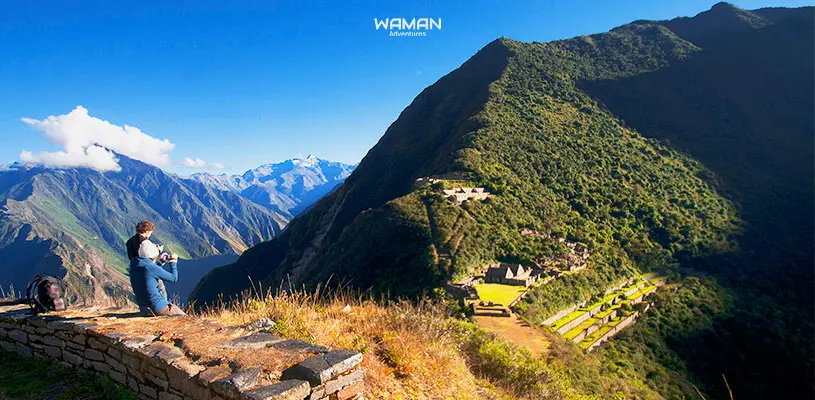
The Choquequirao Trek leads to an extensive Inca archaeological complex overlooking the Apurímac Canyon. Its terraces, plazas and stone structures are distributed across steep mountain slopes, creating an experience centered on exploring a remote archaeological site.
The Classic Inca Trail follows part of the historic Inca road network toward Machu Picchu. Hikers encounter several archaeological sites before reaching the final destination.
For travelers who specifically want to arrive at Machu Picchu on foot, the Classic Inca Trail is generally the more suitable choice.
Choquequirao is better suited to those who want to discover a less-visited Inca complex and are comfortable with the additional physical effort required to reach it.
Difficulty and physical effort
Both treks are physically demanding, but they challenge hikers in different ways.
Choquequirao: The traditional route involves descending into the Apurímac Canyon and then climbing steep slopes toward the archaeological complex. Much of this elevation change must be repeated on the return journey.
Long descents place considerable demands on the knees and leg muscles, while the sustained climbs require cardiovascular endurance.
Classic Inca Trail: The route combines long hiking days, stone steps, uneven mountain paths and high-altitude passes.
The climb toward Warmiwañusca is one of the most demanding sections because hikers reach approximately 13,830 ft (4,215 m).
Choquequirao may feel harder for hikers who struggle with repeated steep climbs and descents. The Inca Trail may be more difficult for travelers sensitive to high altitude.
Altitude and acclimatization
The Classic Inca Trail reaches a higher mountain pass than the altitude of the Choquequirao archaeological complex.
However, those two figures describe different points: the highest pass on one route and the archaeological destination on the other. They are not directly equivalent measurements of overall trekking difficulty.
Choquequirao should not be considered an easy trek simply because its archaeological site is located at a lower elevation. Its canyon terrain requires significant physical effort.
Both journeys typically begin with travel arrangements in the Cusco region, so allowing time to adjust to altitude is sensible, particularly after arriving from near sea level.
Physical fitness does not eliminate the possibility of altitude illness. Travelers with previous serious symptoms or relevant medical conditions should seek individualized medical advice.
Crowds and trail atmosphere
Choquequirao generally receives fewer visitors than the Classic Inca Trail and Machu Picchu.
The relative isolation can appeal to travelers who prefer quieter trails and want to spend time at an archaeological site away from the busiest tourist routes.
However, fewer visitors also means more limited infrastructure. Accommodation and other services along the traditional Choquequirao route are generally simpler.
The Classic Inca Trail has a regulated reservation system with authorized groups, designated campsites and controlled access.
It offers a structured trekking experience but requires more advance planning because trekking permits are limited.
Permits, accommodation and trekking support
Logistical differences are important when comparing the overall experience.
| Planning requirement | Choquequirao Trek | Classic Inca Trail |
| Entry arrangements | Archaeological-site admission and current access rules | Advance regulated trekking permit and Machu Picchu arrangements |
| Overnight accommodation | Camping and limited basic lodging, depending on itinerary | Designated campsites on the standard four-day route |
| Luggage transportation | May use mules and support staff | Porters according to the service purchased |
| Infrastructure | More limited in remote sections | Structured around the regulated trekking route |
| Availability | Depends on route access, services and current operating conditions | Depends on official permit availability and operator arrangements |
Neither route should be booked solely on the assumption that camping equipment, baggage transportation or personal support will be identical between providers.
Confirm the services included and the current operating conditions before paying.
Choquequirao Trek route and experience
The Choquequirao Trek leads to an extensive archaeological complex in the Vilcabamba region of southern Peru. The ruins stand on mountain slopes overlooking the Apurímac Canyon.
The traditional route is commonly completed over four days, although five-day itineraries may offer a different distribution of hiking and archaeological exploration.
Starting point and canyon route
The traditional approach commonly begins with transportation from Cusco toward Cachora and the Capuliyoc trailhead.
Cachora functions as an important gateway community, while Capuliyoc is frequently used as the starting point for the actual hike.
From the trailhead, hikers descend toward the Apurímac River before climbing the opposite slopes toward Choquequirao.
The route includes substantial elevation changes, and the return journey involves additional climbing after descending from the archaeological site.
The exact starting point, campsites and route can vary depending on road access and the itinerary selected.
Choquequirao archaeological highlights
Choquequirao contains several archaeological sectors reflecting Inca architecture, agriculture and adaptation to steep mountain terrain.
Important features include:
- Agricultural terraces: extensive platforms constructed along mountain slopes.
- Ceremonial and residential sectors: stone structures associated with different functions within the complex.
- Plazas and stairways: spaces connecting different levels of the settlement.
- Irrigation infrastructure: channels and agricultural terraces showing the management of water and cultivated land.
- Llama terraces: distinctive llama-shaped stone mosaics incorporated into terrace walls.
The archaeological complex extends across a large area. The number of sectors visitors can explore depends on the available time and their itinerary.

Four-day and five-day Choquequirao options
A four-day Choquequirao itinerary generally focuses on reaching the archaeological complex, exploring its principal sectors and returning through the canyon route.
Five-day variations may distribute the physical effort differently or allow more time for archaeological exploration.
Both options commonly involve camping and sustained hiking.
Longer expeditions can connect the Choquequirao region with routes toward Machu Picchu, but these should be treated as separate itineraries rather than extensions automatically included in the standard trek.
For the specific route, services and current departures, review the four-day Choquequirao Trek itinerary.
Accommodation and physical preparation
Camping is common along the traditional Choquequirao route. Some communities may offer basic facilities, but these should not be confused with the hotels and broader services available in Cusco or Aguas Calientes.
Guided packages may include tents, meals, cooking equipment and baggage support using pack animals.
Physical preparation should focus on walking for several consecutive days and managing significant climbs and descents.
Training on hills and stairs can help prepare the legs for the route’s sustained changes in elevation.

Classic Inca Trail route and experience
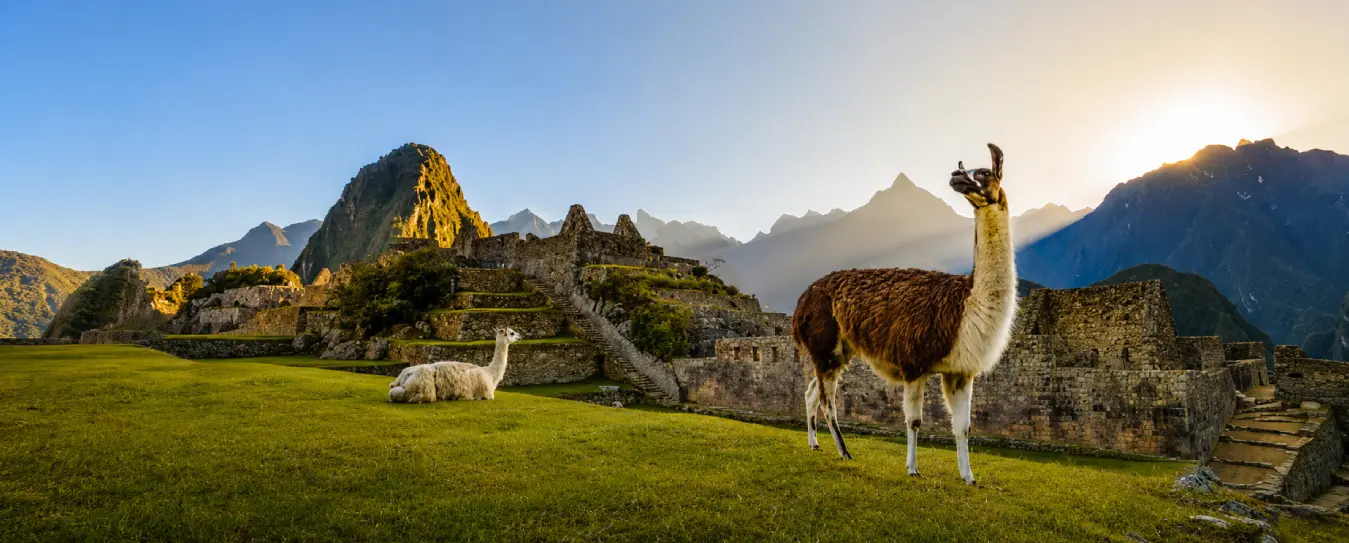
The Classic Inca Trail follows part of Peru’s historic Inca road network toward Machu Picchu.
The standard four-day itinerary crosses high mountain passes, stone paths and archaeological sites before reaching the famous Inca citadel.
It differs from Choquequirao because the journey connects multiple archaeological locations along a regulated route rather than concentrating on one remote destination.

Starting at Kilometer 82
The traditional four-day route commonly begins at Piscacucho, also known as Kilometer 82.
Travelers generally reach this starting point by road from Cusco through the Sacred Valley.
Ollantaytambo is an important town along the transfer route, but it should not be confused with the conventional hiking entrance at Kilometer 82.
Four-day route and archaeological highlights
The Classic Inca Trail commonly covers approximately 26–28 mi (42–45 km), depending on the measurement and itinerary.
A representative four-day route follows this sequence:
- Day 1: Begin at Kilometer 82 and hike through Andean landscapes toward the first designated campsite.
- Day 2: Climb toward Warmiwañusca Pass before descending toward the next camp.
- Day 3: Continue along mountain paths and archaeological sectors such as Runkurakay, Sayacmarca and Phuyupatamarca.
- Day 4: Approach Inti Punku and Machu Picchu according to the itinerary and authorized access arrangements.
The route’s archaeological attractions include Patallacta, Runkurakay, Sayacmarca, Phuyupatamarca, Wiñay Wayna and Inti Punku.
These sites provide opportunities to observe Inca architecture, mountain settlement patterns and the construction of paths across challenging terrain.

Accommodation on the traditional four-day itinerary is provided at designated campsites. Travelers usually sleep in tents arranged through the trekking operator.
Porters commonly help transport camping equipment, food and permitted luggage according to the booked service.
The exact personal baggage allowance, sleeping equipment and support arrangements should be confirmed before departure.
Short Inca Trail alternative
The Short Inca Trail offers a shorter historic trekking experience for travelers who cannot commit to the full four-day itinerary.
It commonly takes two days, with the principal hiking section completed on the first day and a Machu Picchu visit on the second.
The traditional route has been associated with Kilometer 104 and archaeological places such as Chachabamba, Wiñay Wayna and Inti Punku.
However, access arrangements can change because of landslides, infrastructure conditions or conservation requirements.
Important note:
Following an access disruption in 2026, authorities enabled an alternative Short Inca Trail approach through Kilometer 106. Confirm the currently authorized starting point with the trekking operator before departure rather than assuming Kilometer 104 or Kilometer 106 will be used on every date.
The shorter route still involves uphill hiking, stone steps and regulated access requirements.
It can be a practical option for travelers with fewer available days, but it should not automatically be considered suitable for everyone regardless of fitness.

Inca Trail permits and video
The regulated Inca Trail requires advance permits associated with specific travelers and departure dates.
These permits are limited and must be arranged through an authorized trekking operator.
The Classic Inca Trail also normally closes during February for annual maintenance and conservation work, subject to official announcements.
Current access and conservation information should be verified with the Peruvian Ministry of Culture and the authorized tour operator.
Which trek is better for your travel style?
The strongest choice depends on what you most want to experience rather than which route is more famous.
| Your priority | Recommended trek | Main reason |
| Reach Machu Picchu on a historic hiking route | Classic Inca Trail | The itinerary finishes at Machu Picchu |
| Visit a remote Inca archaeological complex | Choquequirao | The route focuses on the Choquequirao site |
| Experience fewer visitors | Choquequirao | Generally quieter and more remote |
| Explore several Inca archaeological sites | Classic Inca Trail | Connects multiple archaeological sectors |
| Enjoy demanding canyon hiking | Choquequirao | Includes substantial elevation losses and gains |
| Follow a regulated historic trekking route | Classic Inca Trail | Uses the Inca road network and designated campsites |
| Complete a shorter archaeological hike | Short Inca Trail | Two-day option with a shorter hiking section |
| Avoid steep canyon terrain | Consider an Inca Trail alternative | Choquequirao’s descents and climbs are particularly demanding |
Choose Choquequirao for solitude and a physical challenge
Choquequirao is especially appealing to hikers who value quiet mountain landscapes, remote archaeology and sustained physical effort.
The demanding canyon terrain is central to the journey, so hikers should be comfortable with long descents and steep climbs.
Choose the Inca Trail for history and Machu Picchu
The Classic Inca Trail is generally the stronger option for travelers who want to follow historic Inca paths, visit several archaeological sites and reach Machu Picchu on foot.
However, it still requires preparation for altitude, mountain terrain and several consecutive days of hiking.
Choose the Short Inca Trail for a shorter experience
The two-day Short Inca Trail can suit travelers who want to experience part of the historic route without committing to the full four-day trek.
It remains a physically active experience and requires advance authorization and current access confirmation.
Best time and booking requirements
Both Choquequirao and the Classic Inca Trail are influenced by the seasonal weather patterns of the Peruvian Andes.
The broader drier period generally extends from April through October, with May through September often providing more consistently dry conditions.
Dry-season trekking conditions
During drier months, trails are often less muddy, and clear mountain views may be more likely.
However, the exposed slopes around Choquequirao can experience strong sun and significant heat during the day, while the Inca Trail’s higher passes can remain cold.
Popular dry-season months also coincide with increased demand for regulated Inca Trail permits and Machu Picchu arrangements.
Rainy-season trekking conditions
November through March generally brings more frequent rainfall.
On the Choquequirao route, wet conditions can make steep canyon paths slippery and increase the difficulty of descents and climbs.
On the Inca Trail, rainfall may also affect trail surfaces and visibility. The usual February closure of the regulated route must be considered when selecting departure dates.
Permits and current route access
The Classic Inca Trail requires a regulated trekking permit, so booking depends on official availability for the desired departure date.
Choquequirao does not use the same Classic Inca Trail permit allocation system, although current archaeological-site admission rules and access restrictions still apply.
Neither trek should be treated as automatically accessible simply because the date falls in the dry season.
Important note:
Weather damage, maintenance, conservation restrictions or other operational changes can affect access to mountain routes. Confirm the current status of the selected trek before booking nonrefundable services.
Trekking costs and included services
The total cost of each trek depends on the itinerary duration, group size, accommodation, guiding arrangements, transportation, camping equipment and support staff.
It is not accurate to assume that Choquequirao is always cheaper than the Classic Inca Trail.
Choquequirao Trek costs
Choquequirao packages may include transportation from Cusco, guides, meals, camping equipment and baggage support using pack animals.
Prices can vary with the number of trekking days, private or group service, campsite arrangements and the amount of support provided.
Classic Inca Trail costs
The Classic Inca Trail price generally reflects regulated permits, guide services, camping equipment, meals and support staff.
Personal porter arrangements, rented sleeping equipment, private services and other upgrades may affect the final cost.
What to compare before paying
| Service | What to verify |
| Guides | Qualifications, language, group size and support arrangements |
| Admission | Archaeological tickets or regulated trekking permits included |
| Transportation | Trailhead transfers, return transportation and railway services when applicable |
| Accommodation | Camping equipment, tent arrangements and any basic lodging |
| Meals | Number of included meals and dietary arrangements |
| Baggage support | Porters or pack animals and permitted luggage weight |
| Emergency arrangements | First aid, communication, evacuation and insurance considerations |
| Cancellation conditions | Deposits, refunds and permit-related restrictions |
For a commercial reference, the Classic Inca Trail four-day itinerary details the services available through Waman Adventures.
Final prices, permits and availability should always be confirmed for the actual travel date.
Physical preparation and common mistakes
Both routes require realistic expectations about the physical effort involved. Training, suitable equipment and an understanding of local conditions can improve preparation.
Physical preparation
Regular hiking, walking on hills and aerobic activity are useful for both treks.
For Choquequirao, training for steep descents is particularly important because the canyon route places repeated demands on the legs.
For the Classic Inca Trail, consecutive hiking days and uphill walking at altitude deserve additional attention.
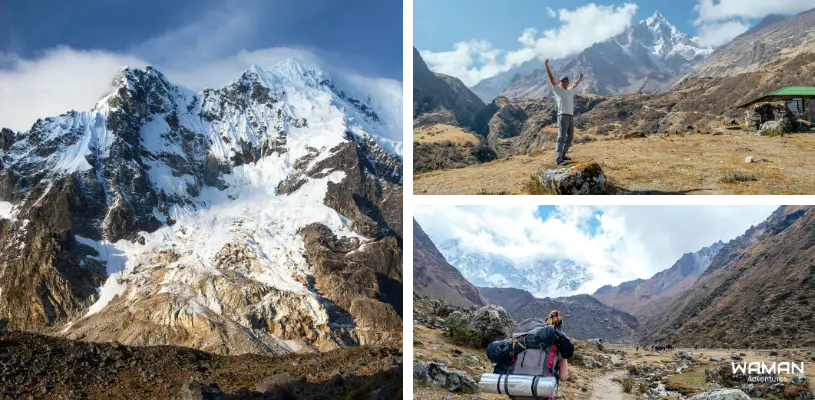
Equipment and clothing
Both routes generally require:
- Comfortable hiking footwear with reliable traction.
- Breathable clothing for warmer conditions.
- Insulating layers for cold mornings and high elevations.
- Waterproof rain jacket.
- Sun protection, including sunscreen, sunglasses and a hat.
- Comfortable daypack.
- Reusable water bottle and confirmed safe drinking-water arrangements.
- Personal medication and hygiene supplies.
- Passport or the required identification document.
Sleeping equipment and baggage allowances depend on the tour arrangements and should be confirmed before departure.
Common mistakes when comparing these treks
- Assuming both routes reach Machu Picchu: the standard Choquequirao Trek visits Choquequirao and returns along the canyon route.
- Comparing only maximum altitude: the steep descents and climbs at Choquequirao can be exhausting even though the site is lower than the Inca Trail’s highest pass.
- Using outdated permit information: access regulations and official route conditions can change.
- Expecting hotels on the Classic Inca Trail: the traditional four-day itinerary uses designated campsites.
- Comparing advertised prices without inclusions: guides, meals, equipment, baggage support, transportation and permits affect total costs.
- Underestimating physical preparation: both treks require sustained walking and suitable conditioning.
- Ignoring weather-related access changes: landslides and heavy rain can affect mountain routes.
Environmental responsibility
Both routes pass through environmentally and culturally important mountain areas.
Travelers should remain on authorized paths, carry out waste, respect archaeological structures and avoid disturbing local wildlife.
Following the instructions of authorized guides and site authorities supports safer visits and helps protect the landscapes and cultural heritage encountered during the journey.
Choose the right Inca trek for your Peru trip
Choquequirao is a strong choice for experienced hikers seeking remote archaeology and challenging canyon trails, while the Classic Inca Trail is better suited to travelers who want to reach Machu Picchu along a historic route. If you are comparing available dates, permits and trekking services, talk to a travel specialist about choosing the itinerary that matches your goals and preparation.
Frequently asked questions about Choquequirao vs Inca Trail
Is Choquequirao Trek harder than the Classic Inca Trail?
Choquequirao can be harder on the legs because of its steep descent into the Apurímac Canyon and sustained climbs. The Classic Inca Trail presents different challenges, including a higher mountain pass and long sections of stone steps.
Does the Choquequirao Trek finish at Machu Picchu?
No. The traditional four- or five-day Choquequirao Trek visits the Choquequirao archaeological complex and returns along the canyon route. Reaching Machu Picchu requires a longer combined expedition or separate travel arrangements.
Which trek is better for beginners?
Neither standard multi-day trek is effortless. Active beginners may prefer to consider the Short Inca Trail, although suitability still depends on fitness, altitude adjustment and comfort walking on uneven mountain terrain.
Which trek requires advance permits?
The Classic Inca Trail requires regulated trekking permits booked through an authorized operator. Choquequirao does not use the same permit system, but archaeological admission requirements and access restrictions must still be followed.
Is Choquequirao less crowded than the Inca Trail?
Generally, yes. Choquequirao tends to receive fewer visitors and offers a more remote atmosphere. However, its limited infrastructure and steep access route also make the journey more demanding.
Can you combine Choquequirao and Machu Picchu?
Yes, but this requires a longer combined trekking expedition or separate transportation and Machu Picchu admission arrangements. The traditional Choquequirao itinerary does not automatically include Machu Picchu.
Which trek is better if you only have four days?
Choose the Classic Inca Trail if reaching Machu Picchu is your main goal and permits are available. A four-day Choquequirao Trek is better suited to travelers who want a remote archaeological destination and challenging canyon hiking instead.
Share:



Related tours you might be interested in
Enjoy unique experiences in Cusco and Machu Picchu with the peace of mind that comes from working with a local travel agency
Rural and Agritourism Experience in Chichubamba
TRADITIONAL LIFE IN THE HEART OF THE SACRED VALLEY Let yourself be immersed in the mystique and...

Birdwatching Experience at Chacán Dam & Ensifera Camp
BIRD WATCHING IN CUSCO: CHACÁN & ENSIFERA CAMP Cusco is far more than history and dramatic...

Cusco Soccer Game Experience
EXPERIENCE CUSCO SOCCER LIKE A LOCAL Immerse yourself in one of Cusco’s most intense cultural...
Huacarpay Birdwatching Experience
HUACARPAY: ANDEAN BIRD SANCTUARY Discover the natural richness of Huacarpay, a high-Andean wetland...
If you liked this article and the information you found, give us 5 stars!
Table of Contents
Related blogs
Cusco Handicrafts Where to Buy Art Textiles and Jewelry
13 min of reading