Cusco SIM Card: Your Essential Guide to Staying Connected During Your Trip
Ultima actualización en 17 September, 2026 por Jhon Quispe
Last Updated on 17 September, 2026 by Jhon Quispe
What SIM card should tourists use in Cusco?
Choose a local prepaid SIM if you want a Peruvian phone number and direct operator support, or a tourist eSIM if you mainly need mobile data and prefer faster setup. For a local Peruvian line, expect identity verification and bring your original passport. Before choosing an operator, check coverage for your exact Cusco, Sacred Valley and Machu Picchu stops rather than relying on a general “best network” ranking.
- Cusco SIM card options at a glance
- Physical SIM vs eSIM in Cusco
- Prepare your phone before arriving in Cusco
- Where to buy and register a SIM card in Cusco
- Using a foreign phone with a Peruvian SIM
- Mobile coverage in Cusco, Sacred Valley and Machu Picchu
- Common Cusco SIM card mistakes
-
Frequently asked questions about SIM cards in Cusco
- Can tourists buy a SIM card in Peru?
- Do tourists need a passport to buy a prepaid SIM in Peru?
- Is a physical SIM or eSIM better for Cusco?
- How much does a tourist SIM cost in Peru?
- How much mobile data do I need for one week in Cusco?
- Is there cell service at Machu Picchu?
- Can I keep my WhatsApp number with a Peruvian SIM?
- Do I need to register my foreign phone in Peru?
Mobile service is generally easier to arrange in Cusco than to maintain continuously once you enter valleys, mountain roads or trekking areas. The practical goal is to have maps, WhatsApp, reservations and transport information available when you need them, while keeping essential travel documents accessible offline as a backup.
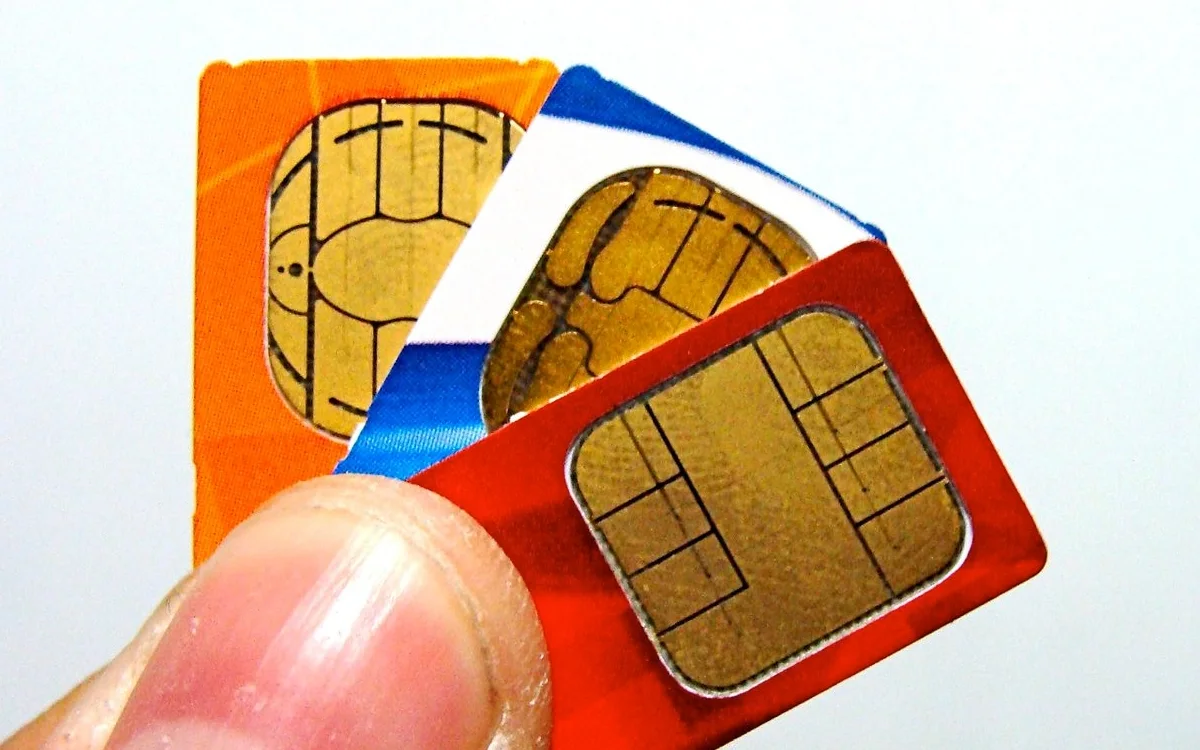
Cusco SIM card options at a glance
| Option | Best for | Important detail |
| Local prepaid SIM | Travelers who want local data and a Peruvian phone number | Requires operator registration and identity validation |
| Local operator eSIM | Travelers with compatible phones who prefer no physical chip | Activation procedures vary by operator and product |
| Tourist / travel eSIM | Travelers who mainly need data and want fast setup | Many products focus on data rather than a standard local voice line |
| International roaming | Short trips where keeping the home number matters most | Price and data allowance depend on your home carrier |
Physical SIM vs eSIM in Cusco
A physical local SIM and an eSIM can both work well in Cusco. The better choice depends on whether you need a Peruvian number, how quickly you want to activate service and whether your phone supports eSIM.
| Factor | Physical local SIM | eSIM |
| Phone requirement | Unlocked phone with a compatible physical SIM slot | Unlocked eSIM-compatible phone |
| Setup | Usually completed through an operator or authorized seller | Can use a QR profile, but the activation process depends on the product |
| Local number | Normally included with a local mobile line | Depends on the product; many travel eSIMs focus on data |
| Best for | Longer stays, local calls and operator support | Fast setup, shorter trips and data-focused use |
Local operator eSIM vs tourist eSIM
A local operator eSIM is still a Peruvian mobile-service product and may follow operator-specific registration and activation procedures.
A tourist or travel eSIM is usually designed for simpler short-term data access. It can be useful if you want connectivity immediately after arrival and do not need a conventional Peruvian phone number.
Claro currently offers its OLO eSIM product with fully digital purchase options, while procedures for other local operator eSIM products can differ.
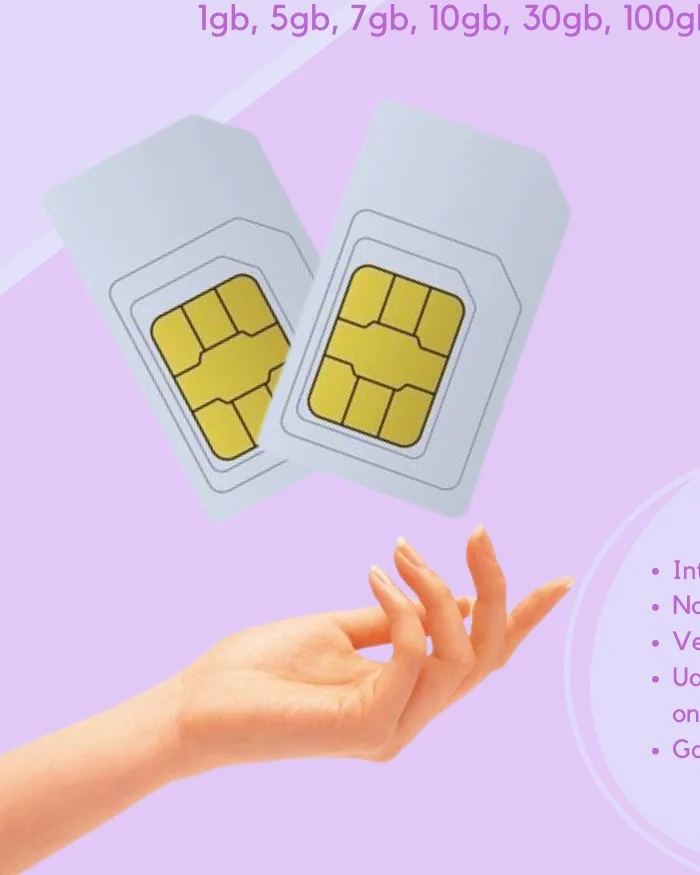
Tourist SIM and eSIM examples in September 2026
Prices and packages can change, so these should be treated as dated planning references rather than permanent rates.
| Product | Published September 2026 reference |
| Bitel Tourist prepaid SIM | S/20 for a new tourist line with 7 GB of high-speed data, unlimited domestic calls and SMS, 30 minutes to selected international destinations and 7-day validity |
| Claro OLO eSIM | Published options include 7 days for S/49, 15 days for S/89 and 30 days for S/139; verify current terms before purchase |
Check the operator or the official tariff database before purchasing because data allowances, promotions and validity can change.
Prepare your phone before arriving in Cusco
Check that your phone is unlocked
A carrier-locked device may reject a Peruvian SIM even when the hardware itself supports the network.
Before traveling, check the phone settings or contact the carrier that sold the device and confirm that it is unlocked for use with another mobile provider.
Confirm eSIM compatibility
If you plan to use an eSIM, verify the exact phone model rather than assuming every version of the same device supports it.
Compatibility can differ according to model number, country of sale or manufacturer configuration.
Set up dual SIM correctly
If your phone supports a physical SIM plus eSIM, or multiple active eSIM profiles, you may be able to keep your home number active while using a Peruvian or travel line for mobile data.
Set the Peruvian or travel line as the preferred data line if you want to reduce the risk of accidental roaming charges.
Your original number can remain useful for banking verification or other incoming messages if your home carrier permits service abroad.
For most recent international smartphones, these practical checks are more useful than memorizing long mobile-frequency tables. Verify your exact model against the operator if compatibility is uncertain.
Where to buy and register a SIM card in Cusco
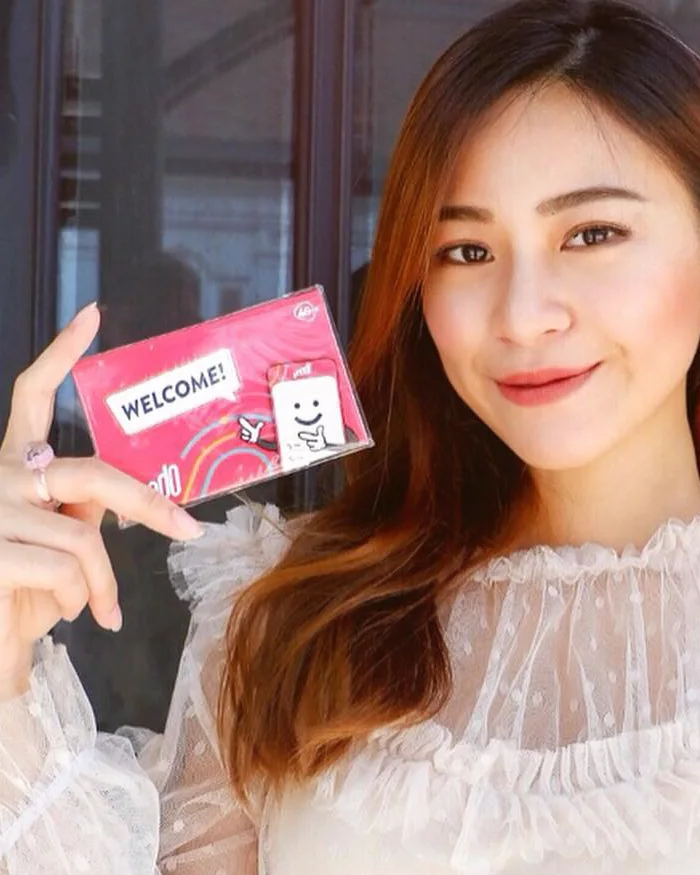
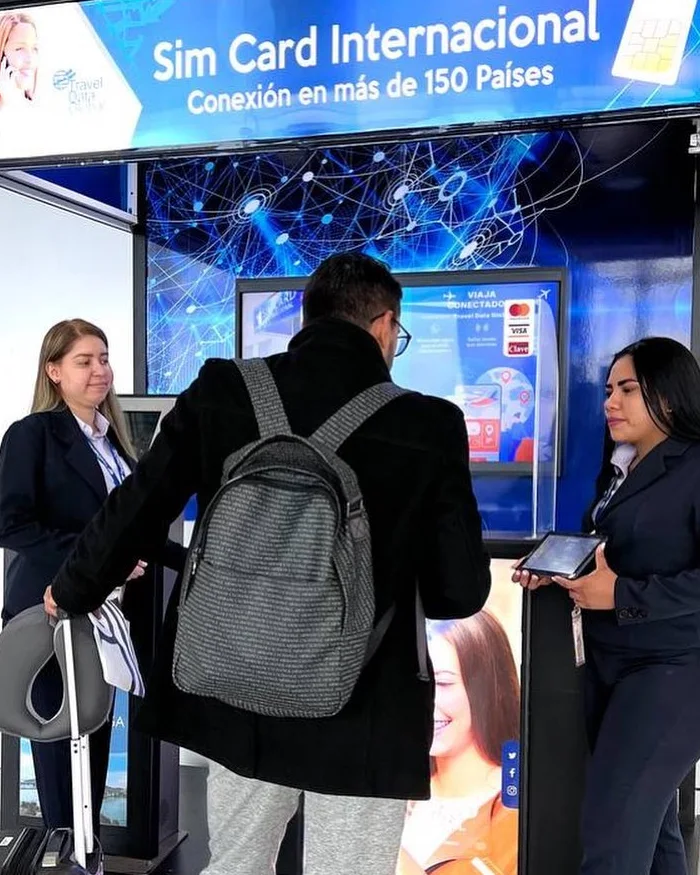
The safest way to obtain a local Peruvian line is through an official carrier location or an authorized sales channel that can complete the required registration correctly.
Peru’s main mobile operators include Claro, Movistar, Entel and Bitel.
Buying from an official or authorized point is useful because staff can explain the current activation procedure, register the line, verify the product conditions and help you test the service before leaving.
Prepaid SIMs may also be sold through authorized retailers. The important issue is not whether the seller is a large store or a small counter, but whether the line is being registered correctly under your own details.
Passport and identity verification
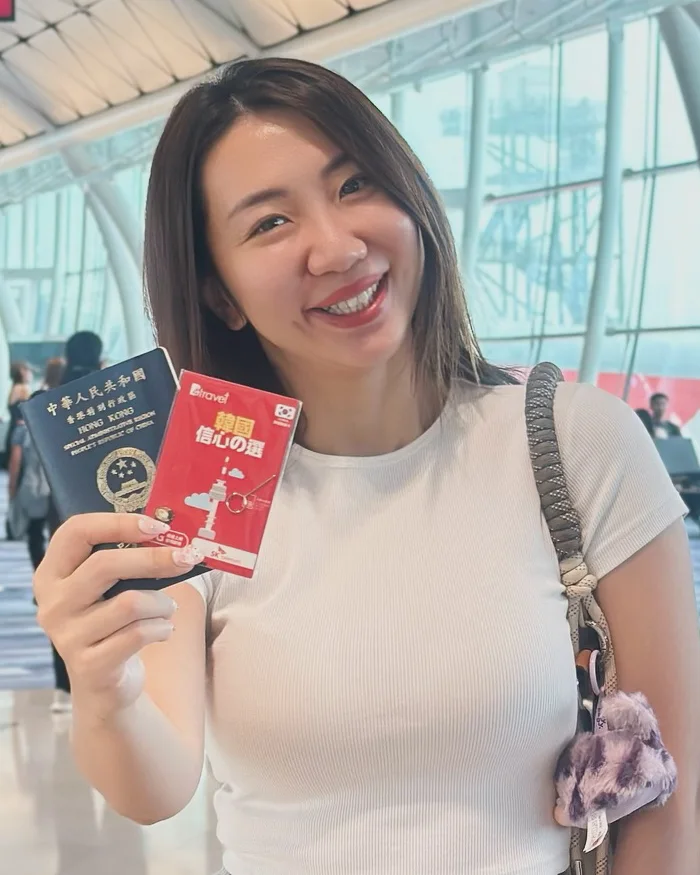
Foreign travelers should bring their original passport when arranging a local mobile line.
Current OSIPTEL security measures require mobile-service contracting by foreign users to follow an in-person identity-validation process under the applicable identification rules.
Tourist-specific products can have their own conditions. For example, Bitel’s currently published Tourist prepaid plan is specifically offered to foreign travelers with a passport.
Do not assume that presenting a passport automatically creates the same activation workflow with every operator. Ask the chosen company which identity-validation process applies to your product.
For current rules, review OSIPTEL’s mobile-service security requirements.
Important note:
Do not use a SIM that is already registered to another person. Buy through an official or authorized channel and complete the required registration under your own identity.
Activate and test the line
Before leaving the sales point:
- Confirm the plan price and validity.
- Check the included data allowance.
- Ask whether calls and SMS are included.
- Complete the required registration.
- Insert the SIM or install the eSIM profile.
- Set the new line as the preferred mobile-data line.
- Open a webpage and send a message.
- Save the operator’s recharge and support information.
OSIPTEL’s current security rules state that a newly contracted prepaid service can be cancelled if it shows no voice or data traffic during the three calendar days after activation.
Keep this in mind:
Use and test a newly activated prepaid line soon after purchase. Do not leave it unused for the first three calendar days and assume it will remain active automatically.

Using a foreign phone with a Peruvian SIM
A tourist bringing a phone purchased outside Peru should also understand the country’s Renteseg equipment-registration rules.
If you continue using international roaming with the SIM supplied by your foreign operator, OSIPTEL states that tourists do not need to complete the local equipment-registration procedure.
The situation changes when you install a SIM from a Peruvian operator. A phone brought from abroad may need to be registered in the valid-equipment list through the operator providing the Peruvian mobile service.
The operator verifies the phone’s IMEI and follows the applicable registration process. OSIPTEL states that this procedure is free.
Important note:
If you use a Peruvian SIM in a phone purchased abroad, ask the operator whether the device needs Renteseg registration. If you receive an IMEI or registration warning, do not ignore it.
You can review the official procedure in OSIPTEL’s foreign-purchased phone registration guidance.
Mobile coverage in Cusco, Sacred Valley and Machu Picchu
There is no reliable universal answer to “which mobile carrier is best in Cusco?” because coverage varies by street, valley, road, terrain and network technology.
Rather than choosing only from a national ranking, compare the places that actually appear on your itinerary.
| Operator | What to check |
| Claro | Coverage at your Cusco and Sacred Valley stops plus the type of SIM or eSIM you need |
| Movistar | Coverage for your exact destinations and current physical SIM or eSIM activation options |
| Entel | Coverage along your route and the mobile product available for your phone |
| Bitel | Coverage on your itinerary and whether its current tourist prepaid plan fits your stay |
Use OSIPTEL Checa tu señal to compare operator coverage for specific locations.
The official tool allows you to compare 2G, 3G, 4G and 5G and distinguishes between guaranteed coverage and broader total coverage, where actual performance may be more variable.
Cusco city
In Cusco’s urban area, the main operators provide mobile coverage, although reception and speed can still change inside buildings, on narrow streets or during periods of network congestion.
Your hotel Wi-Fi can reduce mobile-data use, but a local connection remains useful once you leave the property.
Sacred Valley
Towns such as Pisac, Urubamba and Ollantaytambo have mobile service, but mountains and less populated stretches between towns can affect signal strength.
Do not assume that coverage in central Cusco will automatically continue at the same quality along every Sacred Valley road.
Does Machu Picchu have cell service?
Mobile service can work in parts of the Machu Picchu area, but terrain and network conditions make coverage inconsistent.
Do not rely on continuous mobile data inside the archaeological site or on mountain approaches. Save your ticket, train details, hotel information and important contact numbers offline before leaving Cusco or the Sacred Valley.
For current admission information, use the Machu Picchu entrance ticket guide.
When mobile signal disappears
Prepare for periods without usable data by downloading maps, saving reservation files locally and taking screenshots of important transportation details.
If your phone supports dual SIM, keeping a second line available can provide another option when networks differ, but it still does not guarantee signal in mountainous terrain.
Use hotel or restaurant Wi-Fi for data-heavy activities when practical and keep essential travel information available without an internet connection.
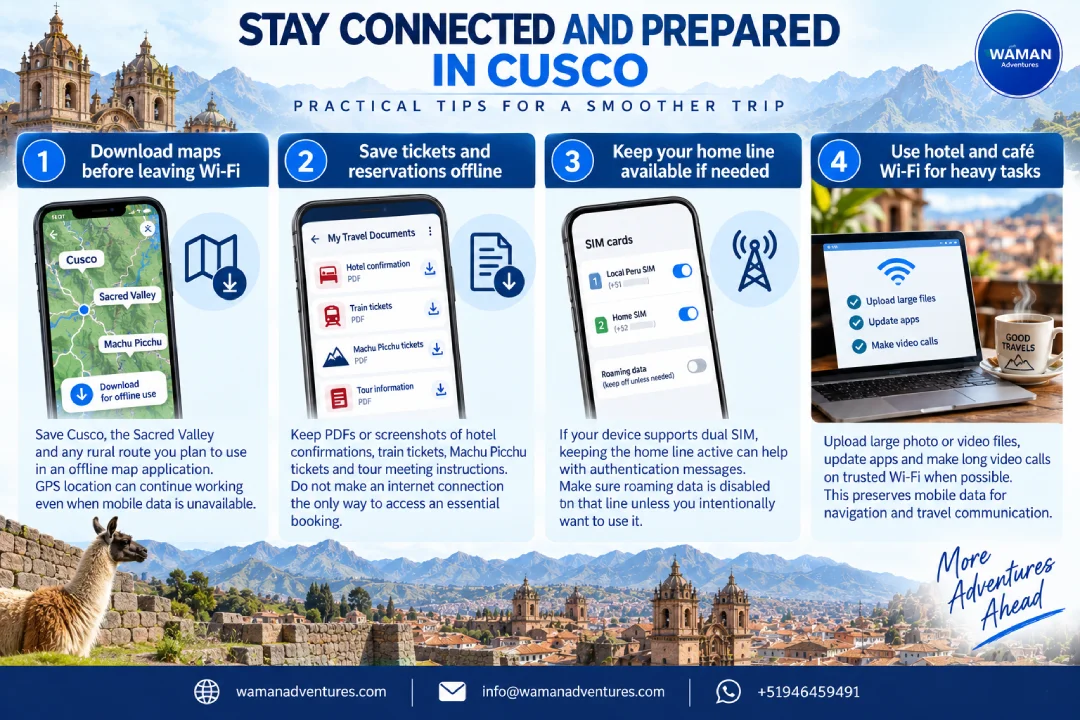
Offline files and maps reduce dependence on continuous mobile coverage.
Common Cusco SIM card mistakes
- Choosing an operator only from a generic ranking: compare coverage for the actual places on your itinerary.
- Buying a SIM registered to another person: use an official or authorized seller and register the line under your own identity.
- Assuming every eSIM activates the same way: local operator and tourist eSIM procedures can differ.
- Forgetting to unlock your phone: a carrier lock can prevent a local SIM from working.
- Assuming a passport creates the same activation process with every carrier: ask the operator which validation procedure applies to foreign users.
- Leaving a new prepaid line unused: current security rules allow cancellation when no voice or data traffic occurs during the first three calendar days.
- Ignoring a Renteseg or IMEI warning: a foreign-purchased phone used with a Peruvian SIM may need registration.
- Assuming Machu Picchu will have continuous data: save essential travel files offline.
- Relying on an old fixed price: tourist plans, data allowances and validity periods can change.
Frequently asked questions about SIM cards in Cusco
Can tourists buy a SIM card in Peru?
Do tourists need a passport to buy a prepaid SIM in Peru?
Is a physical SIM or eSIM better for Cusco?
How much does a tourist SIM cost in Peru?
How much mobile data do I need for one week in Cusco?
Is there cell service at Machu Picchu?
Can I keep my WhatsApp number with a Peruvian SIM?
Do I need to register my foreign phone in Peru?

Share:




If you liked this article and the information you found, give us 5 stars!
Table of Contents
Related blogs


Best beaches in Peru beyond sand and sun: Choose your beach today
12 min of reading
Cusco Instagram spots to fall in love with history and views
11 min of reading