Salkantay Trek vs Inca Trail: From glaciers to cloud forests and how to choose your perfect route
Ultima actualización en 25 October, 2025 por Waman Adventures
Last Updated on 25 October, 2025 by Waman Adventures
- What Is the Inca Trail?
- What Is the Salkantay Trek?
- Salkantay Trek vs Inca Trail
- What Landscapes Can I See on Each Route?
- Permits and Accessibility: Advance Planning
- Budget for Salkantay Trek or Inca Trail
- Cultural Interaction: Connection with Local Communities
- Combining Both Routes: The Ultimate Adventure
- What to Bring: Preparing for the Adventure
- Best Time to Hike: Weather and Crowds
-
Frequently Asked Questions
- Which route is more demanding?
- Do I need a guide for these hikes?
- Can I combine both routes in a single journey?
- What’s the cost difference between both routes?
- Which route offers greater landscape diversity?
- How far in advance should I book the Inca Trail?
- Do both routes end directly at Machu Picchu?
- Which route suits me if I want to learn more about local culture?
Salkantay Trek vs Inca Trail: Hiking to Machu Picchu is a unique experience. Both the Inca Trail and Salkantay Trek offer journeys filled with history, nature, and culture. This guide will help you understand each option so you can experience an adventure tailored to you. Discover all the essential details you need to plan your dream trip.
What Is the Inca Trail?
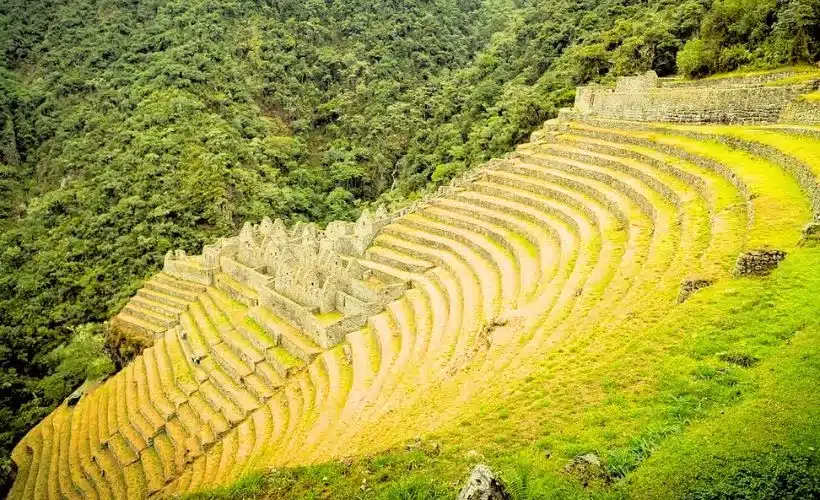
It’s the road network built by the Inca Empire to connect its vast territory. This historic route covers about 26 miles (42 km) from kilometer 82 of the Cusco-Machu Picchu railway. This trail features many archaeological attractions like Wiñay Wayna and Phuyupatamarca, until reaching the Sun Gate (Inti Punku).
Keep in mind that a permit is mandatory and can only be obtained through authorized agencies.
What Is the Salkantay Trek?
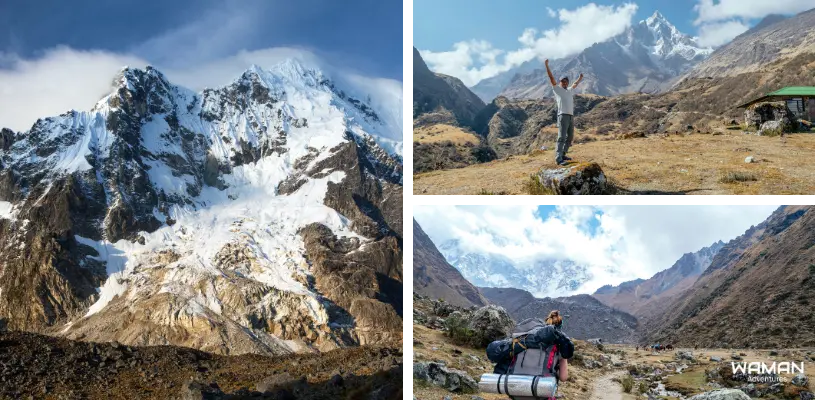
It’s an alternative route that the Incas also used to reach Machu Picchu, although it’s not an official part of the Qhapaq Ñan. It’s famous for its landscape diversity: from imposing snow capped mountains, like Abra Salkantay. This hike doesn’t require special permits, offering more flexibility with dates.

Salkantay Trek vs Inca Trail
| Characteristics | Inca Trail | Salkantay Trek |
| Distance | 26 miles (42 km) | 37-45 miles (60-72 km) |
| Tour Duration | 4 days and 3 nights | 5 days and 4 nights |
| Maximum Altitude | 13,828 feet (4,215 m.a.s.l.) (Warmiwañusca) | 15,256 feet (4,650 m.a.s.l.) (Abra Salkantay) |
| Difficulty Level | Moderate to demanding. | High. |
| Special Permit Required | Yes | No |
| Type of Landscape | Cloud forests, Inca ruins. | Snow capped mountains, lagoons, jungle. |
| Cultural Interaction | With guides and local porters. | Greater contact with communities. |
| Arrival at Machu Picchu | Hiking to the Sun Gate. | By train or bus from Hidroeléctrica. |
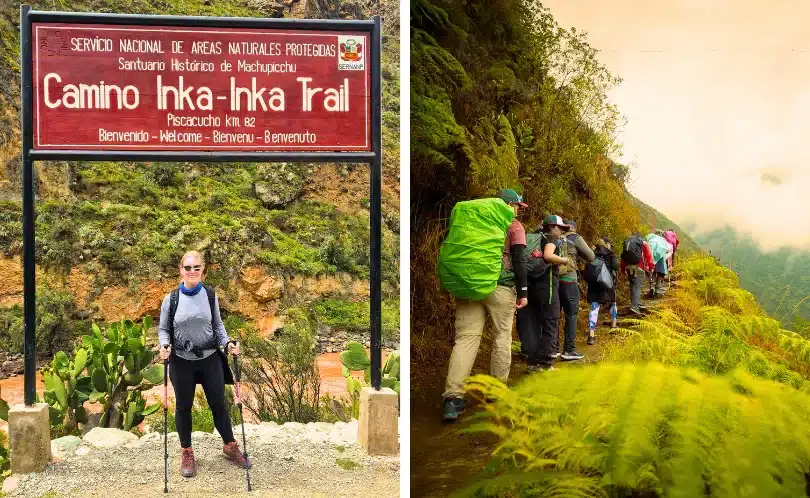
The Inca Trail begins in the Piscacucho district.
What Landscapes Can I See on Each Route?
Inca Trail:
This route is famous for combining history and natural beauty. Along its 26 miles (42 kilometers), you’ll walk through diverse ecosystems, from inter Andean valleys to lush forests full of life. During the journey, you’ll have the opportunity to observe a great variety of colorful flora and animals typical of the Andean region.
Additionally, you’ll cross imposing mountains and peaks that will give you truly impressive landscapes. One of the most special moments of the Inca Trail is when you arrive at the famous Sun Gate, also known as Inti Punku, from where you’ll have your first panoramic view of Machu Picchu.
Salkantay Trek:
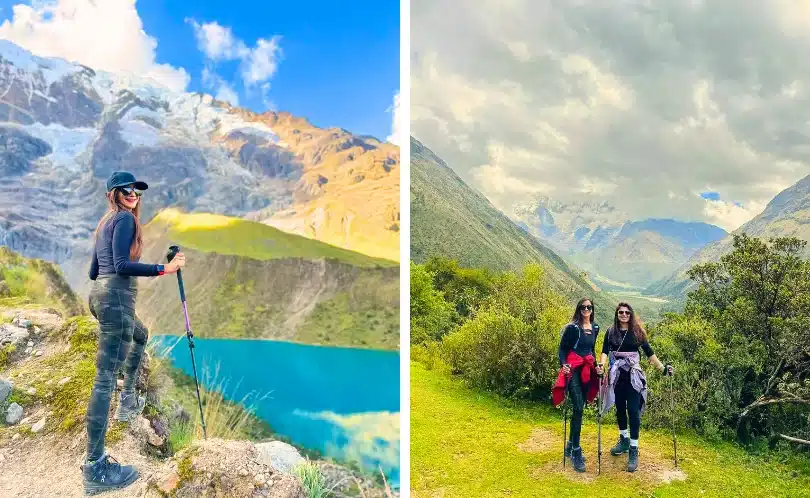
This route is characterized by its impressive ecological diversity. You’ll begin the journey in the high areas of the Andes and reach the cloud forest. One of the most demanding and spectacular points is Abra Salkantay, at 15,256 feet (4,650 m.a.s.l.), being the highest point of the route. Then you’ll descend through Andean valleys surrounded by abundant flora and fauna that will change as you advance through the different climates of the journey.
Did you know…?
The Inca Trail remains intact after more than 500 years, resisting rains and earthquakes.
| Characteristic | Inca Trail | Salkantay Trek |
| Distance | 26–27 miles (42–43 km) | 37–45 miles (60–72 km) |
| Duration | 4 days / 3 nights | 5 days / 4 nights |
| Maximum Altitude | 13,828 feet (4,215 m) (Warmiwañusca Pass) | 15,256 feet (4,650 m) (Salkantay Pass) |
| Difficulty | Moderate to demanding | High |
| Permit Required | Yes | No |
| Type of Experience | Cultural and historical | Natural and scenic |
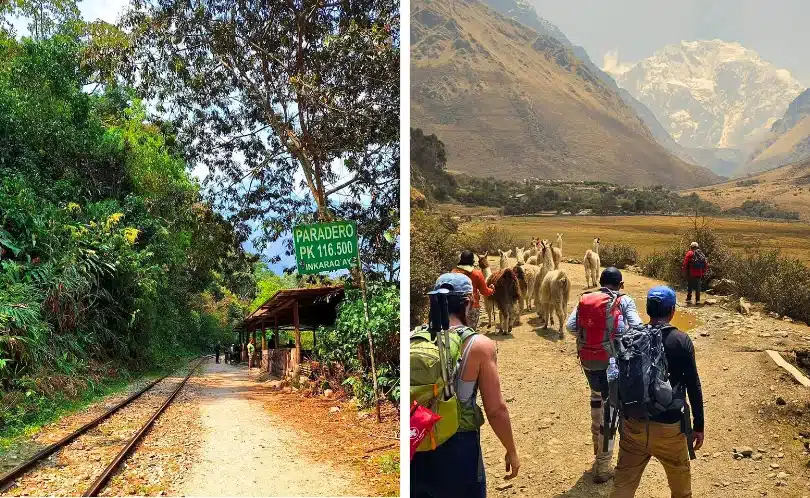
Along the way you can see llamas and alpacas.
Permits and Accessibility: Advance Planning
Inca Trail: This route is highly regulated due to its historical and ecological importance. The Peruvian government only releases 500 daily permits for those wishing to trek the Inca Trail. These permits include tourists, guides, and porters, so the quantity available for visitors is limited.
To obtain your permit, it’s mandatory to book through a certified and authorized travel agency, as you cannot access the Inca Trail independently. Due to high demand, especially during high season, we recommend booking at least 6 to 8 months in advance to secure your spot.
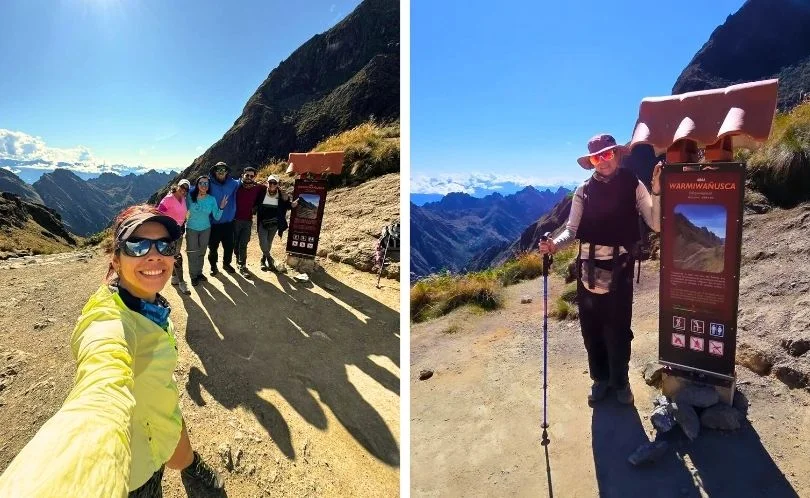
Salkantay Trek: This route doesn’t require special permits, which gives you greater flexibility to plan your trip. You can organize your trek with less advance notice, but although official permits aren’t needed, it’s essential to respect local and environmental regulations to protect the natural and cultural beauty of the region.
Budget for Salkantay Trek or Inca Trail
| Route | Price Range per Person | Usually Includes |
| Inca Trail 4 days | Approximately $700–$950 USD | You need an official permit, with guides, transportation, camping equipment, meals, Machu Picchu entrance, return train and bus. |
| Salkantay Trek 5 days | Approximately $300–$700 USD | You need guides, basic equipment, meals, Machu Picchu entrance, return train and bus. |
Factors that affect the price:
- Tour duration.
- Type of accommodation.
- Included services.
- Season of the year.
Remember that Inca Trail permits are limited, so it’s essential that you book in advance to secure your spot.
Salkantay Trek: This is a more economical option, with prices ranging from $300 to $700 USD per person, depending on the service level you select.
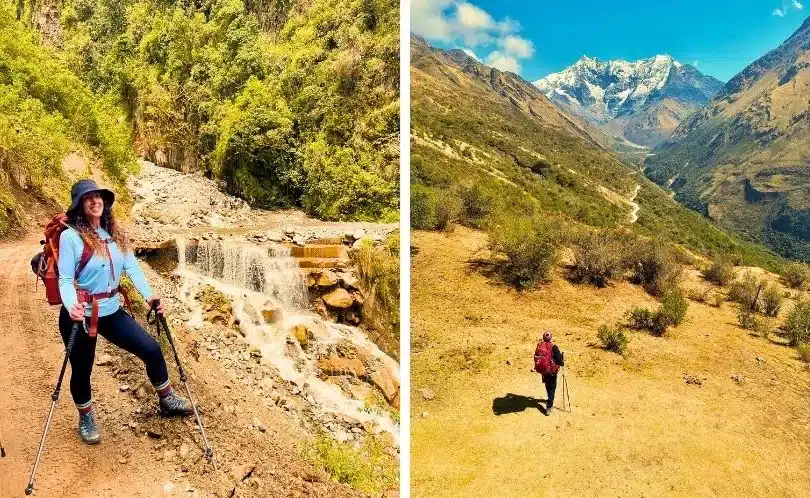
Additional costs to consider:
- Machu Picchu entrance.
- Equipment rental (if necessary).
- Accommodation along the route.
Cultural Interaction: Connection with Local Communities
Inca Trail
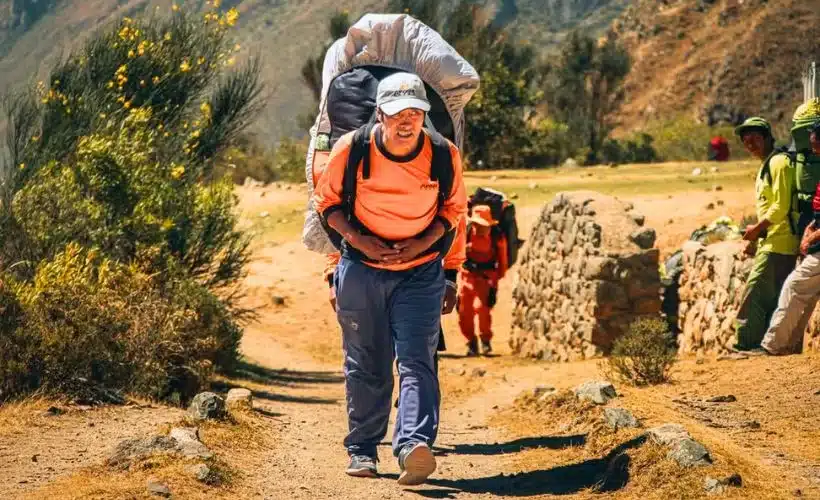
- You’ll have contact with porters and guides who come from rural communities.
- You’ll discover the Quechua language, customs, and a traditional way of working.
Salkantay Trek:
- You can stay in family lodgings or rural houses managed by local residents of the area.
- You can also participate in agricultural activities and share daily experiences, supporting rural tourism.
Combining Both Routes: The Ultimate Adventure
The combination of these two routes allows you to enjoy a hike that goes from impressive snow capped peaks to Andean valleys full of natural beauty.
A typical itinerary could be the following:
- Cusco – Humantay Lagoon – Soraypampa
- Soraypampa – Salkantaypampa – Pampa Japonesa
- Pampa Japonesa – Inkachiriaska – Paucarcancha
- Paucarcancha – Wayllabamba – Ayapata
- Ayapata – Warmiwañusca Pass – Chaquicocha
- Chaquicocha – Phuyupatamarca – Wiñay Wayna
- Wiñay Wayna – Machu Picchu – Cusco

The services normally included in this type of tour are:
- Professional guides.
- Porters.
- Meals during the journey.
- Camping equipment.
- Inca Trail and Machu Picchu entrance tickets.
- Transportation to and from Cusco.
Expert tip:
You can adapt better to altitude before doing either of these treks. Spend at least 2 or 3 days in Cusco acclimatizing
What to Bring: Preparing for the Adventure

Clothing
- Thermal layers to adapt to temperature changes.
- Waterproof or windbreaker jacket.
- Lightweight gloves for the cold.
- Sun hat and a warm hat for evenings.
Footwear
- Sturdy trekking boots, preferably already broken in to avoid blisters.
Accessories
- Trekking poles (optional, but highly recommended for steep sections).
- Lightweight and waterproof backpack.
- Rain cover to protect the inside of your backpack.
Protection
- High factor sunscreen.
- Insect repellent.
- Sunglasses with UV protection.
Health
- Personal medications and for altitude sickness (consult with your doctor before the trip).
- Basic first aid kit with bandages, pain relievers, and hand sanitizer gel.
Documents
- Original passport (mandatory to enter Machu Picchu).
- Printed tickets or entrance passes.
- Additional identification and some cash in soles.
Food and Water
- Energy snacks like bars, dried fruits, or chocolates.
- Reusable bottle or camelback to stay hydrated.
Looking for a complete and visual list? Explore our practical guide on: Inca Trail packing list: simple guide to enjoy every step
Best Time to Hike: Weather and Crowds
The dry season: In the Cusco region, the dry season runs from May to September, these being the ideal months for hiking. During this period, skies are usually clear and rainfall is scarce, allowing you to enjoy a calmer and safer journey.
Inca Trail: During these months the weather is dry and temperate, although you should keep in mind that during nights, especially in higher elevation areas, it can get quite cold. Additionally, in February the Inca Trail closes to the public due to heavy rains and this time is used for maintenance and conservation work.

Salkantay Trek: Just like the Inca Trail, between May and September the sky is usually clear and landscapes show themselves in all their splendor. However, temperatures can drop even more, especially in higher altitude areas. During the rainy season, between November and March, the terrain can become slippery and make hiking more difficult.
Still can’t decide between the Salkantay Trek vs Inca Trail? At Waman Adventures, authorized operators with over 10 years of experience, we help you choose the ideal route according to your fitness level, budget, and the type of adventure you dream of. Contact us today and secure your spot on one of the most incredible hikes in the world to Machu Picchu.
Frequently Asked Questions
Which route is more demanding?
The Salkantay Trek is usually considered more challenging due to its higher altitude and distance. You cover approximately 46 miles (74 km) and cross the highest point at Salkantay Pass, at 15,190 feet (4,630 m.a.s.l.). Along the way, you’ll pass through snow capped mountains, Andean valleys, and tropical jungles.
In contrast, the Inca Trail covers around 26 miles (42 km). Although it also presents challenges, such as steep steps and altitude variations, it’s usually considered less demanding than the Salkantay.
Do I need a guide for these hikes?
For the Inca Trail, yes, it’s mandatory to hire an authorized agency, according to Peruvian government regulations. In the case of the Salkantay Trek, it’s not a formal requirement, but going with a guide is recommended. This not only makes the route easier, as it can become complicated in some sections, but also provides you with valuable information and greater safety.
Can I combine both routes in a single journey?
Yes, some agencies offer a combined 7 day itinerary that unites the Salkantay Trek with the Inca Trail. It’s an excellent option if you want to experience the best of both routes in a single adventure.
What’s the cost difference between both routes?
The Inca Trail is usually more expensive due to high demand and the limited number of daily permits. Tickets sell out months in advance. On the other hand, the Salkantay Trek is a more economical and flexible alternative, with comfortable accommodation options. Even so, the final price will depend on the type of experience you choose.
Which route offers greater landscape diversity?
The Salkantay Trek is famous for its incredible variety of landscapes. In a single journey you can admire lagoons with crystal clear waters, cloud forests, and subtropical areas. It’s a route that gives you unique and unforgettable natural contrasts.
How far in advance should I book the Inca Trail?
For the Inca Trail you should book at least 6 to 8 months in advance, as permits are limited and sell out quickly, especially during high season. On the other hand, you can book Salkantay 2 or 3 months in advance.
Do both routes end directly at Machu Picchu?
The Inca Trail arrives by foot at the Sun Gate, with the first magical view of Machu Picchu. The Salkantay ends at Hidroeléctrica, and then you take a train or walk to Aguas Calientes.
Which route suits me if I want to learn more about local culture?
On the Inca Trail you’ll have interaction with guides and porters who share their traditions. The Salkantay offers more contact with rural communities, where you can stay or participate in agricultural activities.