THE EPIC TREK: HOW HARD IS SALKANTAY TREK?
Ultima actualización en 5 November, 2024 por Waman Adventures
Last Updated on 5 November, 2024 by Waman Adventures
- WHAT IS THE SALKANTAY TREK?
- WHAT IS THE AVERAGE ALTITUDE ON THE SALKANTAY TREK?
- HOW DIFFICULT IS SALKANTAY TREK?
- HOW TO PREPARE FOR THE SALKANTAY TREK?
- PREPARE YOURSELF MENTALLY FOR THE SALKANTAY TREK
- ACCLIMATISATION BEFORE THE SALKANTAY TREK
- EVERYTHING YOU NEED TO KNOW FOR THE SALKANTAY TREK
-
COMMON QUESTIONS
- WHERE IS THE SALKANTAY TREK LOCATED?
- WHAT IS THE AVERAGE ALTITUDE ON THE SALKANTAY TREK?
- IS THE SALKANTAY TREK DANGEROUS?
- IS THE SALKANTAY TREK WORTH IT?
- WHAT IS THE BEST SEASON TO DO THE SALKANTAY TREK?
- WHO WILL CARRY MY LUGGAGE ON THE SALKANTAY TREK?
- HOW MANY KILOGRAMS OF LUGGAGE ARE ALLOWED ON THE SALKANTAY TREK?
- IS THERE INTERNET OR PHONE SIGNAL ON THE SALKANTAY TREK?
- ARE THERE TOILETS IN THE SALKANTAY TREK?
If you are planning an unforgettable adventure in Peru and wondering: “How hard is Salkantay Trek?“, you are in the right blog. The Salkantay Trek to Machu Picchu is unique in the Peruvian Andes or the Vilcabamba Mountain Range, and ends at the enigmatic Inca citadel of Machu Picchu. This trek is an excellent choice for intrepid travellers who wish to explore the diversity of landscapes that Peru has to offer.
From towering snow-capped mountains to evergreen valleys, breathtaking waterfalls and dense cloud forests, the Salkantay trek will immerse you in stunning ecosystems. Considered sacred by the Incas, this trek offers a more challenging experience, rewarding adventurers with breathtaking views and lush beauty. So much so that National Geographic Adventure Travel magazine has ranked it as one of the top 25 treks in the world.
So, how hard is Salkantay Trek? Travellers in Peru have described it as a slightly more challenging trek than the classic Inca Trail. It is rated as 3 to 4 on a scale of up to 7, according to experts. In this blog, we will provide you with valuable information to successfully face the Salkantay Trek challenge and make the most of this exciting adventure.
WHAT IS THE SALKANTAY TREK?
The Salkantay trek route in Peru has gained considerable attention in recent years as an alternative to the iconic Inca Trail; both reach Machu Picchu. This trek is named after the Salkantay mountain (6,271 m/20,574 ft), which is one of the most prominent mountains in the Cusco region. Contrary to the Inca Trail, the Salkantay trek does not require a special permit and provides a true hiking experience in the Andes.

Hikers hiking throughout the Salkantay Trek.
WHAT IS THE AVERAGE ALTITUDE ON THE SALKANTAY TREK?
Throughout the Salkantay trek, you trek upwards and downwards in rough mountains, so altitude variations as you progress through the different stages of the trek. This is one of the aspects of the trek that make it so challenging and exciting.
Starting the route, you will walk at lower altitudes, starting at Soraypampa (3,900 m/12,795 ft). As you progress, you will climb higher altitudes up to Salkantay Pass at approximately 4,600m/15,092ft, and then descend into the thick cloud forest.
HOW DIFFICULT IS SALKANTAY TREK?
Several factors affect the difficulty of the Salkantay trek, including physical stamina, weather conditions, and season. Due to its location in the Andes and the Vilcabamba mountain range, the Salkantay trek’s difficulty ranges from tough to challenging! Therefore, you need to be in good physical condition to tackle this trekking successfully.
Altitude is one of the real challenges, as the trek reaches higher altitudes on the Salkantay Pass. Therefore, a proper acclimatisation is essential to minimise altitude sickness risks.
Here are some things to consider about the Salkantay Trek difficulty:
- Altitude: The trek reaches altitudes of up to 4,600 m/15,091 ft, which can cause altitude sickness in tourists. It is important to acclimatise in Cusco or the Sacred Valley to reduce altitude sickness.
- Distance: The Salkantay trek covers around 70 – 78 kilometres (43 – 48 miles) in 4, 5 or 7 days, the latter in combination with the Inca Trail.
- Uneven terrain: Trekkers traverse varied terrain including mountain roads, jungle and cobbled paths. This can be challenging for legs and feet. The Salkantay Trek includes steep climbs and descents, which can be strenuous and challenging, especially if you are not used to walking in mountainous terrain.
- Weather conditions: The weather in the Andes varies significantly throughout the trek, from cooler temperatures at higher altitudes to warmer and more humid conditions in the cloud forest area. The changing weather conditions makes the trek harder and require appropriate mountain gear.
VERSIONS OF THE SALKANTAY TREK AND ITS HARDNESS:
SALKANTAY TREK TO MACHU PICCHU 4 DAYS.
The Salkantay Trek has beautiful trails that take you through several landscapes and ecosystems. Start by admiring the majestic Salkantay Mountain and challenge your limits crossing the Salkantay Pass. On the third day, you will venture into the jungle and explore the citadel of Machu Picchu on the last day.
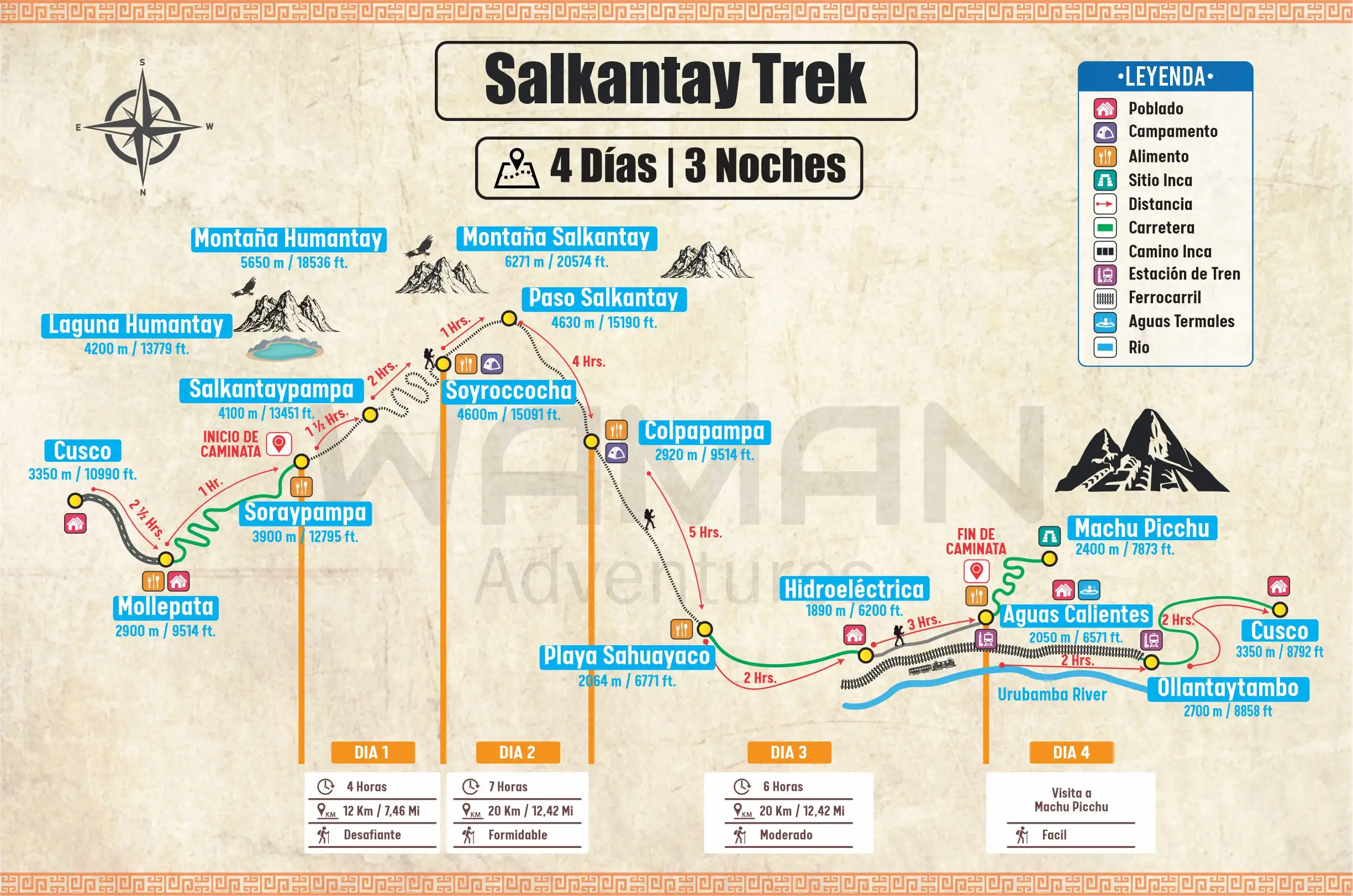
Illustrative map of the Salkantay trek 4 days/3 nights
- Day 1: This day is usually challenging due to the 4 hours of ascending. Steep and winding sections are traversed reaching altitudes of around 4,400 m/14435 ft.
- Day 2: This is considered one of the most difficult days of the trek and of formidable difficulty. You must ascend towards Salkantay Pass (4,600 m/15,091 ft). This ascent can be strenuous and even more so in cold weather with hail or snow.
- Day 3: This day has a formidable difficulty level, as you will walk for 10 hours apprx. You will cross landscapes with extensive vegetation and waterfalls.
- Day 4: The last day is the easiest because most of it is by bus and train. There will be a guided tour of the citadel of Machu Picchu in an average time of 2 hours.
HOW HARD IS SALKANTAY TREK 4 DAYS?
The level of difficulty of the Salkantay trek to Machu Picchu in 4 days is challenging.
- Altitude: During the trek, trekkers experience significant altitude variations reaching heights up to 4,600m/15,091ft at Salkantay Pass. This can trigger altitude sickness symptoms such as shortness of breath or fatigue.
- Distance and duration: The trek covers a distance of 70km/43 miles along the entire tre. Also consider that you will hike for several hours per day.
- Uneven and steep terrain: The trek terrain is uneven and tough at several points, which requires physical fitness and be in shape to conquer these challenges.
- Weather: Weather conditions vary throughout the year, with the possibility of rain and strong winds at high altitudes, which can make the trek even more challenging.
SALKANTAY TREK TO MACHU PICCHU 5 DAYS
The 5 day Salkantay trek is one day longer and a less rushed version of this trek than the 4 day Salkantay trek.
Enjoy panoramic views of Salkantay Mountain and Humantay Lake on the first day. Cross the impressive Salkantay Pass on the second day and explore lush forests on the third day. The fourth day takes you to Aguas Calientes and finally, Machu Picchu. This trek is a transformative experience you can share in a group or family, connecting with fellow trekkers and building lasting bonds.

Illustrative map of the Salkantay Trek to Machu Picchu 5 days/4 nights
- Day 1: On this tough day, you will face a steep ascent towards Humantay Lake in the afternoon whereas almost flat ascending trek in the morning to Soraypampa from Challacancha.
- Day 2: The difficulty is formidable due to the constant ascent and high altitude. You will cross the Salkantay Pass to enjoy panoramic views from the top of the trek.
- Day 3: You will venture into the jungle, traversing diverse terrain with beautiful scenery and local villages. Therefore, the trek’s difficulty is tough.
- Day 4: This trekking day is mild. You will climb Llactapata, which gives you a memorable view of Machu Picchu. Afterwards you will rest in Aguas Calientes.
- Day 5: This last day is really easy as you will only explore the wonder Machu Picchu on a guided tour of approximately 2 hours.
HOW HARD IS SALKANTAY TREK 5 DAYS?
The 5 day Salkantay Trek to Machu Picchu has a difficulty level ranging from tough to challenging due to the following aspects:
- Altitude: During the 5 days of trekking, you will cross altitudes from 2,100 m/6,900 ft to 4,600 m/15,091 ft. Acclimatisation and precautions are essential to not to experience altitude sickness.
- Uneven terrain: The trails are uneven and steep in several sections demanding additional physical exertion. The trails are rocky and steep increasing the challenge.
- Distance: The trek lasts 5 days. Each day you will walk 15 to 20 kilometres. Also, this requires you to be in peak physical condition and have the stamina to complete daily hikes.
- Weather: Weather conditions can vary throughout the year, with possible rain and strong winds especially at higher altitudes. Trekkers should be prepared for changing weather conditions.
HUMANTAY LAKE & SALKANTAY PASS 2 DAYS
The Humantay Lagoon trek guides you through stunning snow-capped peaks and picturesque villages, standing out as one of the most beautiful and accessible treks in Cusco. Enjoy the magical and dazzling natural beauty, with breathtaking views of the snow-capped peaks of Humantay and Salkantay. You will also reach the Salkantay Pass (4,600 m/15,091 ft).
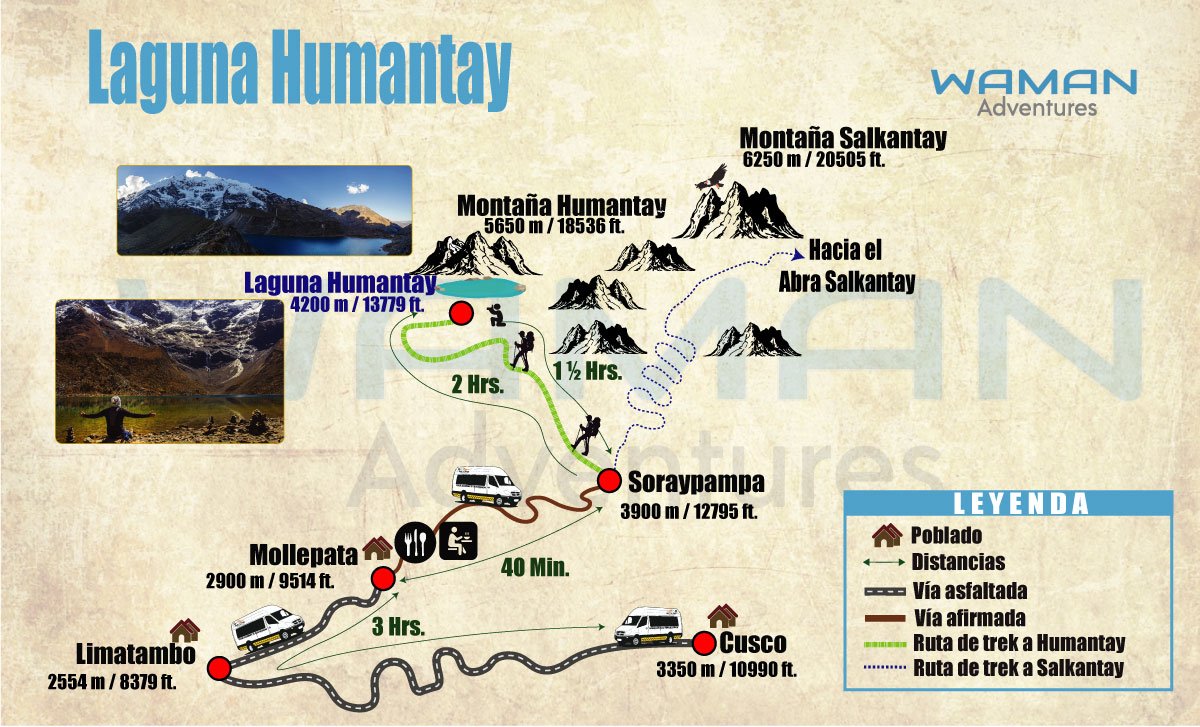
Trekking map of the tour Humantay Lake & Abra Salkantay 2 days/1 night
- Day 1: On this first day a tough hike to the impressive Humantay Lake is the first challenge. Furthermore, you will head to Soyroccocha in the afternoon. On both, you will experience a gradual ascent on steep trails demanding physical effort and stamina, but do not worry because the landscapes, mountains and biodiversity are your reward.
- Day 2: The second day involves a more challenging climb ascending to Salkantay Pass over 4600 m.s.n.m. This stretch demands physical endurance and is considered challenging due to the altitude and variable weather conditions.
HOW HARD IS THE HUMANTAY LAKE & SALKANTAY PASS 2 DAY TOUR?
The Humantay Lake & Salkantay Pass 2 days Trek has tough difficulty of trekking.
- Altitude: The trek includes high altitudes, such as the Humantay Lake at 4,200 m/13,779 ft and the Salkantay Pass at 4,600 m/15,091 ft. Acclimatisation is essential due to altitude effects on breathing and physical capacity. Listening to your body is crucial.
- Distance: The tour is spread over 2 days, involving hiking on uneven terrain and steep trails for several hours each day.
- Uneven terrain: The trails along the trek are irregular and steep requiring good physical condition.
- Weather: Weather conditions can vary, with cold and windy conditions, especially at higher altitudes.
SALKANTAY TREK + INCA TRAIL 7 DAYS
The Salkantay Trek + Inca Trail is the right choice for travellers looking to get away from conventional routes. It starts in Challacancha, with the dazzling Humantay Lake and majestic snow-capped peaks such as the Humantay and Salkantay mountains. On the Inca Trail, it crosses mountain ranges, winds through lush cloud forests and visits historic Inca places. The trek culminates at the shady citadel of Machu Picchu, one of the 7 wonders of the modern world.
- Day 1: The first day is a challenging 6 hour hike from Cusco to Soraypampa, which includes a demanding ascent to Humantay Lake, due to the altitude and steep terrain.
- Day 2: The second day presents a challenging level of difficulty due to the significant ascent, involving a hike over uneven terrain at high altitude for 7 hours. Tackling this day will require considerable physical and mental effort.
- Day 3: This day is formidable for the altitude over 5000 m.a.s.l.! The terrain is uneven and rocky requiring caution and physical stamina. The estimated walking time is 6 hours.
- Day 4: The difficulty level of this day is tough. During the hike, which lasts about 7 hours, you will descend on uneven terrain and cobblestone steps.
- Day 5: The fifth day of this trek has a formidable level of difficulty, as it is one of the most demanding days of the trek crossing the Dead Woman’s Pass. This day lasts approximately 11 hours of hiking.
- Day 6: Despite the trekking duration of 10 hours, the day is rated as mild difficulty, as you will only descend until you reach the last camp, located in Wiñay Wayna.
- Day 7: The last day of the trek is easy difficulty level, and its estimated trekking time is 2 hours before you reach Inti Punku “Sun Gate”. This is the most relaxing day of the trek.
HOW HARD IS SALKANTAY TREK + INCA TRAIL 7 DAYS?
The Salkantay trek + Inca Trail is one of the most challenging trekking in Cusco. It combines two famous treks in a row.
Altitude: During the Salkantay trek, high altitudes are reached, such as at the Inca Chiriaska Pass at 5,200 m/17,060 ft and at the Warmiwañusca pass 4,200 m/13,779 ft on the Inca Trail. The altitude can cause altitude sickness, so acclimatisation is essential before this rough trek.
- Distance and duration: The 7-day trek covers 78 km/48 miles, trekking 8-10 hours per day.
- Irregular terrain: You will traverse varied terrain, including mountains, rainforest and rocky trails. Walking over diverse and uneven terrain can be taxing on the body.
- Climate: Weather conditions can vary significantly along the trek, from cooler temperatures at higher altitudes to warmer and more humid conditions in rainforest areas.
HOW TO PREPARE FOR THE SALKANTAY TREK?
BEING IN SHAPE IS THE SECRET TO COMPLETE THE SALKANTAY TREK
Proper physical preparation is essential to enjoy the Salkantay Trek and minimise health risks, such as altitude sickness, diarrhea and others. Here are some guidelines on how to prepare physically for the Salkantay Trek:
- Cardiovascular and endurance: The Salkantay Trek involves walking long distances at high altitudes. We know that cardiovascular exercise, such as running, swimming, cycling or walking build your endurance and improve your lung capacity. Try to reach a level where you can walk for several hours without difficulty.
- Outdoor activities: Taking part in these activities will allow you to become familiar with the Salkantay Trek conditions, such as the trails, campsites, and weather.
- Muscle strength: Strengthen your muscles, especially your legs, back and core, as you will need strength to walk on uneven terrain and carry a backpack. Do strengthening exercises, such as squats, lunges, push-ups and back exercises.
- Altitude training: It’s better to participate in outdoor activities in the mountains and valleys. This activity must help you adjusting your body to higher altitudes before arriving in Cusco. Also, remember that you must acclimatized at least two day in Cusco before trekking to Salkantay.
- Proper nutrition: Maintain a balanced and healthy diet to ensure energy during the trek. Eat foods rich in carbohydrates, protein and healthy fats.
- Hydration: Get into the habit of drinking plenty of water, as hydration is essential at high altitudes.
- Rest: Make sure you get adequate rest before the trek. Sleep is essential for muscle recovery and acclimatisation.

All you need to do to prepare for the Salkantay trek
Remember that physical training won’t only help you facing the challenges of the Salkantay Trek more efficiently, but it will also make the experience more enjoyable and rewarding. The key is to start preparing well in advance and gradually increase the exercise intensity so as not to strain your body before the trek.
WHAT LEVEL OF FITNESS IS REQUIRED TO SURVIVE THE SALKANTAY TREK?
Moderate to good fitness is required to tackle the Salkantay Trek successfully. This trek involves walking long distances, ascending over 4,600 metres above sea level through varied terrain. Cardiovascular endurance, muscular strength and acclimatisation to the altitude are essential to face the challenge safely and enjoy the experience.
It is important to exercise beforehand, including cardio exercises, muscle strengthening, altitude acclimatisation, and being mentally prepared for the emotional ups and downs that may be experienced during the trek. Hiking within the Peruvian Andes is a rewarding experience, but it is essential to be physically fit and well-prepared to fully enjoy it.
PREPARE YOURSELF MENTALLY FOR THE SALKANTAY TREK
Mental preparation is also essential for the Salkantay trek.
- Positive attitude: Focus on your goals and the exciting aspects of the trek. Visualise the success and reward at the end.
- Resilience: Understand that challenges will exist on the Salkantay Trek. Cultivate resilience to overcome obstacles. Face difficult moments with determination and confidence.
- Meditation: Find a quiet, comfortable place. Focus on your breathing and cultivate mindfulness.
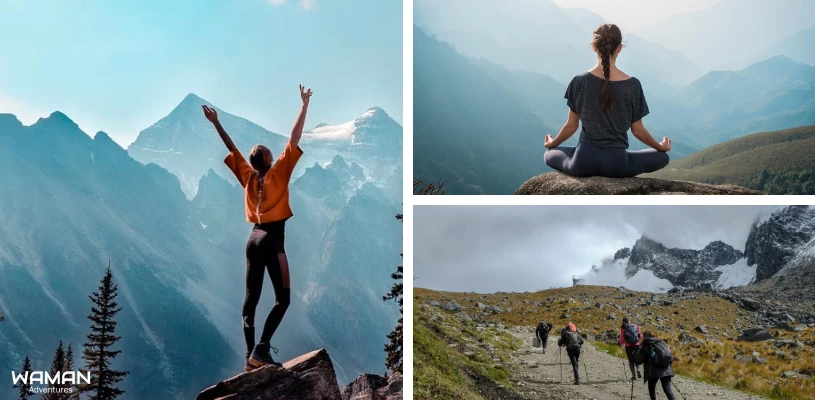
Meditation, optimism, and resilience are essential to be mentally prepared to trek the Salkantay Trek.
Remember that mental preparation is essential for the Salkantay Trek experience. By following these steps, you will be better qualified to face the challenges and fully enjoy this unique wilderness adventure. Good luck with your journey and meditation practice!
PACKING LIST FOR THE SALKANTAY TREK
Here is our list of what to pack for the Salkantay trek to Machu Picchu:
ESSENTIALS
- Original physical passport.
- ISIC card (students).
- Extra money (soles).
- Water bottle or camelback.
- Personal medication.
- Sunscreen (SPF 50+).
- Hat.
- Sunglasses.
- Mosquito repellent.
- Pain killers.
- Personal care items.
CLOTHING
- Trekking or trail running shoes.
- Sleeve T-shirts.
- Trekking pants (detachable).
- Waterproof jacket.
- Fleece jacket.
- Socks.
- Gloves.
- Wool hat.
- Underwears.
- Rain poncho.
- Swimbath.
- Sandals.
EQUIPMENT
- Trekking poles.
- Sleeping bag.
- Duffle bag.
- Medium trekking backpack.
- Tents.
RECOMMENDED
- Waterproof dry bags.
- Power bank.
- Camera.
- Headlamp.
- Notepad and pen.
- Snacks (Nuts, electrolytes, energy bars).
- Quick-drying towel.
- Wet towels.
- Alcohol.
- Cash (soles).

Packing list for the Salkantay Trek
ACCLIMATISATION BEFORE THE SALKANTAY TREK
HOW TO ACCLIMATISE FOR THE SALKANTAY TREK?
Acclimatisation is imperative before undertaking high-altitude treks like the Salkantay trek in Peru. It adjusts your body to gradually adapt to altitude reducing the risk of altitude sickness (soroche). Here are steps you can take to acclimatise before the trek:
- Arrive in Cusco early: Arrive in Cusco or a similar altitude at least two to three days before the trek begins. This will allow your body to adapt to the altitude.
- Hydration: Drink plenty of water to stay hydrated during your stay within the Andes.
- Light meals: Eat light, easy-to-digest meals for the first few days of your altitude stay. Avoid heavy, high-fat meals.
- Avoid alcohol: Limit or avoid alcohol, as it dehydrates you and hinders acclimatisation.
- Rest: Get enough rest and avoid excessive physical fatigue in your first few days at altitude. Allow yourself to get used to it gradually.
- Acclimatisation hikes: Take short or easy hikes near Cusco to help your body adjust to the altitude. This will also give you a chance to explore the city.
- Altitude sickness medication: If necessary, consult a doctor and consider taking altitude sickness medication (such as acetazolamide) and take it as directed.
- Keep warm: Wear warm clothing at night.
- Listen to your body: Pay attention to any symptoms of altitude sickness, such as headaches, nausea, extreme fatigue or shortness of breath. If you experience severe symptoms, you must seek professional attention.

Acclimatisation is so important before undertaking some tough treks.
Acclimatisation is a gradual process, and it is essential to take it easy. Everyone is different and may have a different response to altitude. Once you feel acclimatised and ready, you will be better prepared to enjoy the Salkantay Trek and minimise the altitude sickness risks.
EVERYTHING YOU NEED TO KNOW FOR THE SALKANTAY TREK
The Salkantay Trek is a challenging trek in a high mountain region of the Peruvian Andes. Taking precautions is essential to ensure a safe and enjoyable experience. Here is a list of precautions to take into account when undertaking the Salkantay Trek:
- Acclimatisation: Spend at least a couple of days in Cusco or other high mountain areas before starting the trek to help your body adapt to the altitude and reduce the risk of altitude sickness.
- Proper equipment: Make sure you bring the right equipment, including trekking shoes, waterproof clothing, layers of clothing to adapt to temperature changes, a comfortable and sturdy backpack, a suitable sleeping bag, etc.
- Sun protection: Use broad-spectrum sunscreen, sunglasses and a hat to protect you from strong sunlight and UV radiation.
- Hydration: Drink enough water to stay hydrated, as altitude and physical exertion can cause dehydration. You can also carry oral rehydration tablets or solutions.
- Food: Carry energy snacks and light meals to maintain energy levels during the hike. Carbohydrate and protein-rich foods are good choices.
- Respect the environment: Respect the natural environment and leave no trace.
- Reliable guide and agency: Look for a travel agency with experience and a good reputation.
- Travel insurance: Consider travel insurance that covers emergency medical evacuations in case of serious injury or health problems.
- Communication: Carry a mobile phone or emergency communication device, as signal reception may be limited in some areas.
- Respect for the local community: Show respect for the local people you may meet along the trek. Something common is to take them photos without permission.
- Physical exertion: Be physically prepared for the trek. Do endurance exercises and hikes to strengthen your legs and improve your stamina.
- Weather conditions: Be prepared for changing weather conditions including rain, wind, hail, sun and snow at high altitudes.
Remember that safety is the most important thing on treks. By following these precautions and being aware of your health and well-being, you will be able to enjoy this unforgettable experience safely.
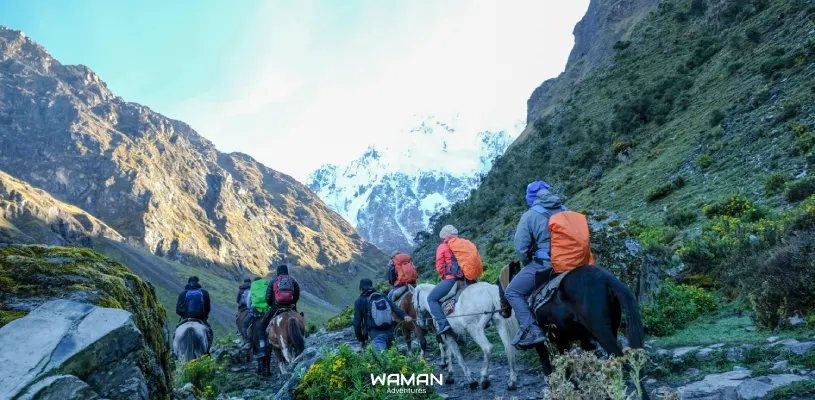
Horseriding towards Salkantay Pampa
COMMON QUESTIONS
WHERE IS THE SALKANTAY TREK LOCATED?
It is located in southern Peru, in Cusco. In more accurate terms, the Salkantay Trek belongs to the Vilcabamba Mountain Range which is widespread between the Cusco and Apurimac region.
WHAT IS THE AVERAGE ALTITUDE ON THE SALKANTAY TREK?
Throughout the Salkantay trek, you trek upwards and downwards in rough mountains, so altitude variations as you progress through the different stages of the trek. This is one of the aspects of the trek that make it so challenging and exciting.
Starting the route, you will walk at lower altitudes, starting at Soraypampa (3,900 m/12,795 ft). As you progress, you will climb higher altitudes up to Salkantay Pass at approximately 4,600m/15,092ft, and then descend into the thick cloud forest.
IS THE SALKANTAY TREK DANGEROUS?
The Salkantay trek is not dangerous in itself if you take the right precautions and are well prepared. However, like any outdoor and adventure activity, there are risks to consider:
- Some sections of the Salkantay trek are steep and rocky, making it challenging to trek.
- The Salkantay trek reaches high altitudes, especially at the Salkantay pass (4,600 m) and at the Incachiriasca pass at 5,092 m (Salkantay + Inca Trail), so you may have problems with altitude sickness or soroche.
- The Andes weather is unpredictable, with possible rainfall and cold temperatures during the rainy season.
- As with any outdoor activity, there is always the possibility of minor accidents, such as sprains or falls.
IS THE SALKANTAY TREK WORTH IT?
Without a doubt, conquering the Salkantay trek is a worthwhile experience! This is especially true for those who seek a challenging adventure in the wilderness and wish to enjoy the Andes‘ beauty. Here are some reasons you must do it:
- The trek immerses you in breathtaking landscapes, from snow-capped mountains to subtropical jungles, turquoise lakes and ancient Inca ruins, giving you a visually stunning experience.
- The trek presents physical challenges, such as crossing the Salkantay Pass, which are rewarding for trekking and adventure lovers.
- During the trek, you will interact with locals and learn about their culture and life, enriching your trekking experience.
- The Salkantay Trek culminates in exploring Machu Picchu, one of the greatest archaeological wonders in the world, making the journey a complete experience from nature to culture.
- Although its populararity, the Salkantay Trek tends to be less crowded than the Inca Trail, allowing for a quieter experience in nature.
WHAT IS THE BEST SEASON TO DO THE SALKANTAY TREK?
The best season to do the Salkantay trail is generally between April to October. During this period, you can expect better weather, clear skies and less rainfall. Specifically, the dryest months run from June to August, coinciding with the Andes winter season. However, it is important to be prepared for temperature variations, as although the days are usually warm and sunny, the nights can be quite cold.
WHO WILL CARRY MY LUGGAGE ON THE SALKANTAY TREK?
On the Salkantay trek, luggage is carried by mules. These are trained to carry camping equipment, food and other necessary supplies for hikers.
HOW MANY KILOGRAMS OF LUGGAGE ARE ALLOWED ON THE SALKANTAY TREK?
On the Salkantay trek, you are generally allowed to carry between 6 and 7 kilograms of personal luggage, which must be put in a duffle bag. However, it is essential to remember that of those 7 kilograms; 2 kilograms are usually intended for your sleeping bag, which means that you will have approximately 4 to 5 kilograms for your personal belongings.
IS THERE INTERNET OR PHONE SIGNAL ON THE SALKANTAY TREK?
Signal availability is absent for the first two days of trekking. However, on the fourth night, staying in a hotel in Machu Picchu (Aguas Calientes), you will enjoy a more stable and convenient connection.
ARE THERE TOILETS IN THE SALKANTAY TREK?
Yes, along the Salkantay Trek route, toilets are at every campsite. It is essential to remember that these toilets are basic and shared, and consist of simple facilities such as latrines.
Ready to conquer the Salkantay Trek challenge and explore the breathtaking landscapes of Peru? Waman Adventures’ team has extensive experience in Peru. Discover our variety of travel options and specialised services to make your Salkantay Trek experience an unforgettable adventure. Book your adventure today and find out how difficult the Salkantay Trek is!
“SALKANTAY TREK, ONE OF THE 25 BEST TREKKING ROUTES AROUND THE WORLD”.
Share:



Related tours you might be interested in
Enjoy unique experiences in Cusco and Machu Picchu with the peace of mind that comes from working with a local travel agency

Choquequirao to Machu Picchu Trek 7 Days | Private Service
The most epic and challenging adventure awaits! Dare to push your limits and embark on the ultimate...

02 DAY «EXPLORING» THE SACRED VALLEY AND MACHU PICCHU
CHINCHERO, MARAS AND MORAY WILL ENVELOP YOU IN THE MAGIC OF THE SACRED VALLEY. EACH EXPERIENCE WILL...

Full Day – «Exploring» Machu Picchu
MACHU PICCHU EPIC ADVENTURE TOUR FROM CUSCO This full-day option is an excellent opportunity to...

04 DAY CUSCO – SACRED VALLEY – MACHU PICCHU
DISCOVER THE MAGIC OF CUSCO, THE SERENITY OF THE SACRED VALLEY AND THE GRANDEUR OF MACHU PICCHU On...
If you liked this article and the information you found, give us 5 stars!
Table of Contents
Related blogs

What to Do in Cusco at Night – Culture, Views or Nightlife?
11 min of reading