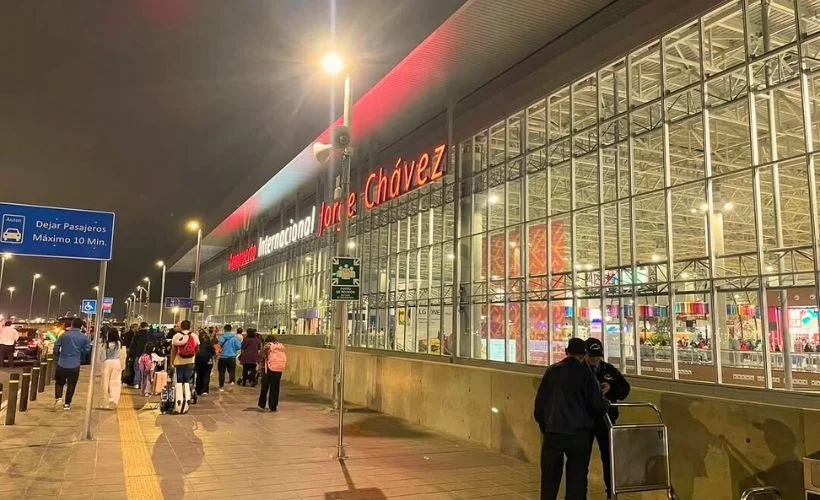
Lima International Airport Guide to the New Jorge Chávez Terminal
Ultima actualización en 24 September, 2026 por Jhon Quispe
Last Updated on 24 September, 2026 by Jhon Quispe
Lima International Airport (LIM) — What Travelers Need to Know
Jorge Chávez International Airport is Lima’s main commercial airport and is located in Callao. Its new passenger terminal handles both domestic and international flights, so travelers should use current airline and airport directions rather than older terminal maps or pickup points. Arrive about 3 hours before international departures and 2 hours before domestic flights, then add extra time for Lima traffic.
- Lima Airport at a glance
- One terminal for domestic and international flights
- Lima Airport terminal map and layout
- Domestic and international connections at Lima Airport
- How to get from Lima Airport to Miraflores and the city
- Services at Jorge Chávez International Airport
- What to do during a long layover at Lima Airport
- How early should you arrive at Lima Airport?
- New Lima Airport size and passenger traffic
- Common mistakes at the new Lima Airport
- Frequently asked questions about Lima International Airport
Jorge Chávez International Airport (LIM) has one passenger terminal for domestic and international flights. All regular passenger operations moved to the new terminal on June 1, 2025, so travelers do not transfer between a Terminal 1 and Terminal 2. Connections can still require immigration, baggage claim, customs, security or bag recheck depending on the itinerary.
Having one terminal simplifies navigation, but it does not eliminate connection time. The practical details that matter most are knowing where to enter the new airport, how baggage and immigration work on a connection, how to reach Miraflores and how much extra time Lima traffic adds before departure.
Lima Airport at a glance
| Detail | Current reference |
| Official name | Jorge Chávez International Airport |
| IATA code | LIM |
| Location | Callao, within the Lima metropolitan area |
| Passenger terminals | 1 terminal for domestic and international passenger flights |
| New terminal operations | Fully operational since June 1, 2025 |
| Terminal area | About 2.93 million sq ft (272,000 m²) after the 2026 expansion phase |
| Design capacity | Up to 40 million passengers per year |
| 2025 passenger traffic | About 25.5 million passengers |
| Main road access | Avenida Morales Duárez |
| Recommended arrival time | 3 hours before international flights; 2 hours before domestic flights |
One terminal for domestic and international flights
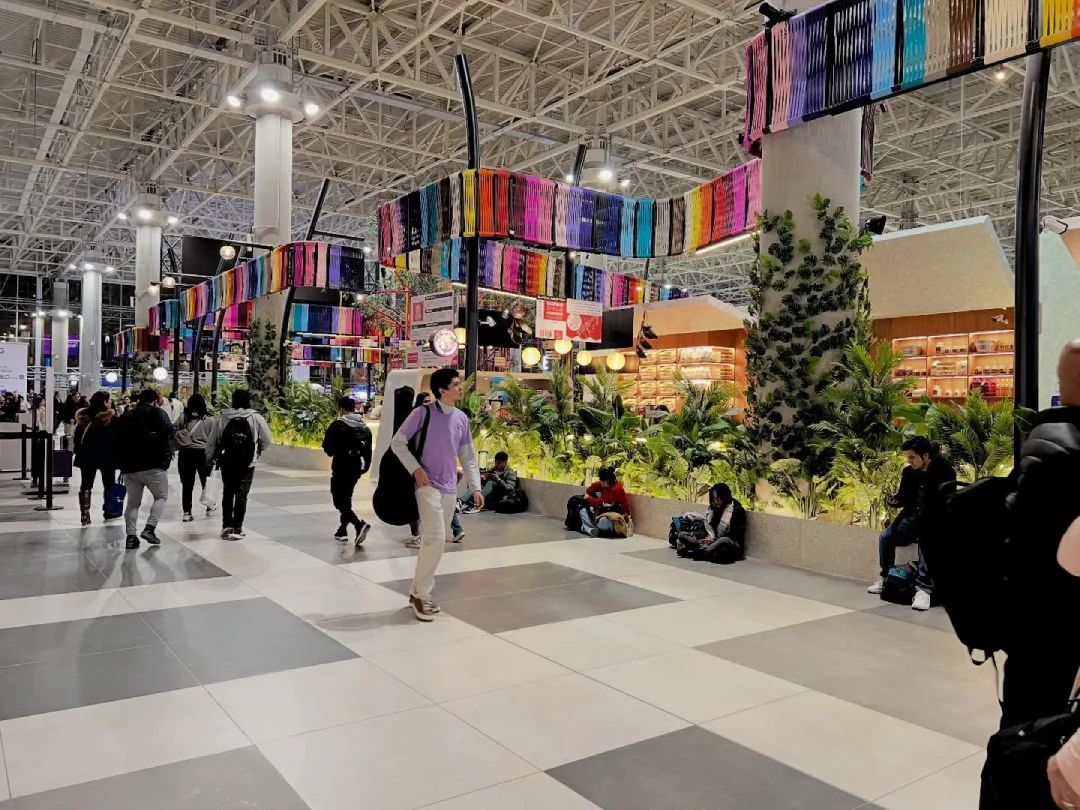
Jorge Chávez International Airport currently uses one passenger terminal for both domestic and international flights. Inside the same building, passenger flows are separated into domestic, international and mixed boarding areas, but these are not separate terminals.
This means you do not need to travel between a “Terminal 1” and “Terminal 2” when making a domestic-to-international or international-to-domestic connection. You may still need to pass immigration, security, baggage claim or airline check-in depending on your itinerary and whether your baggage is checked through.


Important note:
The former Jorge Chávez passenger terminal no longer handles regular passenger flights. Use the current address and entrance provided by your airline or Lima Airport rather than an old map or ride-hailing pin.
Lima Airport terminal map and layout
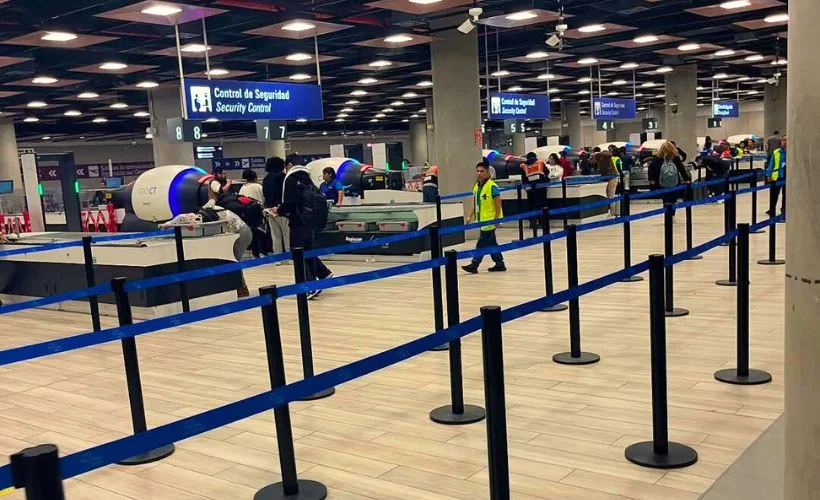
The new terminal concentrates arrivals, departures, commercial areas and passenger services in one building. Rather than memorizing every level, use the airport’s current digital map to locate your airline counter, boarding gate, lounge, restaurant or service because assignments and businesses can change.
The building includes public arrivals and commercial areas, check-in and departure zones, domestic and international boarding sectors, lounges, restaurants, baggage services and passenger-information points.
Use the official Jorge Chávez digital tools and airport map for the latest terminal layout.
Domestic and international connections at Lima Airport
The major practical change at the new Jorge Chávez Airport is that domestic and international passenger operations now share the same terminal. A connection no longer requires traveling to another passenger terminal, but the process still depends on your ticket and baggage arrangement.
- International to domestic: you may need to clear immigration, collect baggage, pass customs and recheck bags before the domestic flight.
- Domestic to international: allow time for airline check-in requirements, security and immigration.
- Through-ticket connections: ask the airline whether your baggage is checked through to the final destination.
- Separate tickets: allow a larger buffer because you are responsible for collecting baggage and completing the next check-in on time.
Do not assume that using one terminal makes every connection quick. Immigration queues, security, baggage handling and the distance to your next gate can still affect the time you need.

How to get from Lima Airport to Miraflores and the city
| Option | Best for | Current planning note |
| Airport Express Lima | Travelers staying in Miraflores | Dedicated airport bus with fixed Miraflores stops; verify the current timetable before travel |
| AeroDirecto | Budget and public-transport users | Six public bus routes currently connect the airport with areas of Lima and Callao |
| Authorized airport taxi | Door-to-door transport, luggage and late arrivals | Book through authorized counters in the arrivals area |
| Ride-hailing app | Travelers comfortable using mobile apps | Follow the pickup location shown in the app after landing |
| Private transfer | Families, groups or prearranged itineraries | Book in advance and confirm the meeting point with the provider |
| Rental car | Travelers continuing independently by road | More useful outside central Lima; city traffic can be difficult for first-time drivers |
Airport Express Lima to Miraflores
Airport Express Lima is designed mainly for travelers staying in Miraflores. Current official information lists stops around major areas including Larcomar / Marriott, Avenida Larco, Kennedy Park and Hotel Boulevard.
The currently published fare is S/20 for one passenger and S/15 per person when two or more passengers travel together. Fares and timetables can change, so verify them on the official Lima Airport bus page.
AeroDirecto public buses
AeroDirecto is a separate public-transport network connecting Jorge Chávez Airport with different sectors of Lima and Callao. It currently operates six routes: Sur, Centro, Quilca, Ventanilla, Norte and Terminal Norte.
Fares can vary by route and operating conditions, so check the current network and tariff before travel rather than relying on an older fixed price.
Use the official ATU AeroDirecto information for current routes and stops.
Authorized airport taxis
Authorized taxi companies have counters in the arrivals area and provide direct transport from the airport. This can be practical if you arrive late, have several bags or prefer door-to-door service without coordinating a bus stop.
Check the official Lima Airport taxi information for current providers.
Ride-hailing apps
Ride-hailing apps operate in Lima, but airport pickup procedures can change. After landing, use the pickup point shown inside the app rather than assuming the driver can collect you at any terminal door.
If you prefer a provider with a physical airport counter, use one of the authorized taxi companies in the arrivals area.
Private transfers and rental cars
A private transfer can be practical for families, groups or travelers continuing directly to a hotel with prearranged logistics. Confirm the meeting point before departure because the new terminal uses different access points from the former airport building.
Rental-car services are also available for travelers continuing independently by road, although driving through Lima traffic may not be the simplest option for a first visit.
Keep this in mind:
Lima traffic varies significantly by time of day. Compare the transport option with your hotel location and add road-traffic time on top of the airport’s recommended pre-departure margin.
Photo by: @datosdelima The new terminal includes accessible services and modern passenger waiting areas.

Services at Jorge Chávez International Airport
| Service | What travelers should know |
| Free Wi-Fi | The current official network is .FreeWifiJorgeChavez; follow airport signage if the network name or login steps change |
| Information | Passenger information points and digital tools help with gates, services and terminal navigation |
| Luggage storage | Left Luggage operates in the arrivals area and is currently available 24/7; verify the tariff at the service point |
| ATMs and currency exchange | Both are available; compare exchange rates before changing a large amount of cash |
| Food and shops | Restaurants, cafés, duty-free and Peruvian retail are available in public and passenger-only areas |
| Lounges | The Club facilities serve international and domestic departures; access depends on current membership, airline or paid-entry conditions |
| Sleepover | Paid sleeping spaces, showers and work areas for long waits or overnight connections |
| Accessibility | Elevators, adapted restrooms, tactile guidance and passenger-assistance infrastructure are available |
| Medical assistance | Emergency and health assistance is available within the airport |
Wi-Fi and information
Free Wi-Fi is useful immediately after landing for contacting your hotel, opening a transport app or checking an onward flight. The current official network is .FreeWifiJorgeChavez. If it does not appear automatically, confirm the network on airport signage rather than connecting to a similarly named public network.
Luggage storage
The airport’s Left Luggage service is useful during a long layover or when hotel check-in is still several hours away. It operates in the arrivals area and is currently available 24 hours a day.
Storage rates can change, so confirm the current tariff at the service point rather than relying on an older fixed US-dollar figure.
Lounges and Sleepover
The airport currently has The Club lounge facilities serving international and domestic departure areas. Access depends on the airline, membership program or paid-entry rules available on your travel date.
Sleepover is a separate rest service rather than an airline lounge. It can be useful during overnight connections because it offers sleeping spaces, showers and work areas.

What to do during a long layover at Lima Airport
Stay inside the terminal
For a short or overnight connection, remaining inside the airport is usually the simplest option. You can use Wi-Fi, eat, access commercial areas, visit a lounge, book a Sleepover rest space or store luggage when your itinerary requires it.
This is usually the safer planning choice when your connection still involves immigration, baggage collection, customs or a new airline check-in.
Leave the airport during a long layover
A long layover can make a short visit to Lima possible, but Jorge Chávez Airport is in Callao rather than Miraflores or Lima’s historic center. Road traffic can consume a significant part of the available time in both directions.
Before leaving the airport, calculate:
- immigration and baggage time after landing;
- road travel to the area you want to visit;
- road travel back to the airport;
- the recommended 3-hour international or 2-hour domestic pre-departure margin;
- whether you must clear security or immigration again.
If the available time is tight, staying at the airport is more practical than building the connection around ideal traffic conditions.
How early should you arrive at Lima Airport?
Jorge Chávez International Airport currently recommends arriving at least:
- 3 hours before an international flight
- 2 hours before a domestic flight
Those are airport-processing margins, not the time you should leave your hotel. Add Lima road traffic separately, especially when traveling from Miraflores, Barranco or another district during busy periods.
New Lima Airport size and passenger traffic
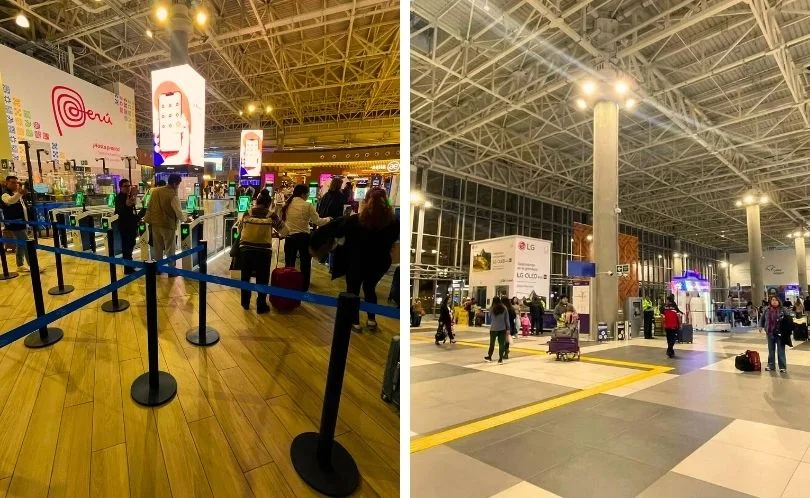
The new Jorge Chávez passenger terminal reached approximately 2.93 million sq ft (272,000 m²) after the 2026 expansion phase. Its infrastructure is designed for a maximum capacity of up to 40 million passengers per year.
That 40-million figure is a design capacity, not the number of passengers currently using the airport. Jorge Chávez handled approximately 25.5 million passengers in 2025.
The terminal also includes expanded boarding facilities, modern passenger-processing systems and seismic-isolation infrastructure. For travelers, the practical result is greater capacity inside one integrated passenger terminal rather than separate domestic and international buildings.
Common mistakes at the new Lima Airport
- Going to the former terminal entrance: regular passenger operations moved to the new terminal, so confirm the current access point before leaving your hotel.
- Looking for Terminal 1 or Terminal 2: domestic and international passenger flights use one terminal.
- Confusing Airport Express Lima with AeroDirecto: Airport Express focuses mainly on Miraflores, while AeroDirecto serves several areas of Lima and Callao.
- Using an old bus timetable: routes, frequencies and fares can change.
- Assuming ride-hailing pickup works like a normal city street: follow the current airport pickup point shown by the app.
- Arriving based only on flight time: add Lima traffic to the airport’s 3-hour international or 2-hour domestic recommendation.
- Assuming one-terminal connections are automatic: immigration, baggage collection, customs and recheck requirements still depend on the itinerary.
Frequently asked questions about Lima International Airport
What is Lima Airport’s code?
The IATA code for Jorge Chávez International Airport is LIM.
Is the old Lima Airport terminal still used?
The former passenger terminal no longer handles regular passenger flights. All regular operations moved to the new Jorge Chávez passenger terminal on June 1, 2025, so use current airline and airport directions rather than older maps.
Is Jorge Chávez Airport in Lima or Callao?
Jorge Chávez International Airport is physically located in Callao, within the Lima metropolitan area. Travelers commonly call it Lima Airport because it is the main commercial airport serving Lima.
Can I use Uber or another ride-hailing app at Lima Airport?
Ride-hailing apps operate in Lima, but airport pickup procedures can change. After landing, follow the pickup point shown inside the app. If you prefer a provider with an airport counter, use an authorized taxi service in arrivals.
Does Lima Airport have luggage storage?
Yes. Left Luggage operates in the arrivals area and is currently available 24/7. Rates can change, so confirm the current tariff at the service point.
Can you sleep overnight at Lima Airport?
Yes. Travelers can remain in the terminal during an overnight connection, and Sleepover provides paid sleeping spaces, showers and work areas. Lounge access is separate and depends on the facility and entry conditions.
Does Lima Airport have free Wi-Fi?
Yes. Jorge Chávez Airport provides free Wi-Fi. The current official network is .FreeWifiJorgeChavez, although network names and access procedures can change.

Share:




If you liked this article and the information you found, give us 5 stars!
Table of Contents
Related blogs