Fascinating Uyuni Salt Flats Facts and Natural Wonders Explained for Curious Travelers
Ultima actualización en 18 May, 2026 por Waman Adventures
Last Updated on 18 May, 2026 by Waman Adventures
- 1. About the Salt Flat and Its Surface
- 2. Its Geological Origin
- 3. Size and Precision
- 4. The Mirror Effect
- 5. Lithium and Salt Beneath Your Feet
- 6. Night Sky
- 7. Life in the White Desert
- 8. Human Footprint: Trains and Hotels
- 9. How to Get to the Uyuni Salt Flat and When to Go?
- 10. Responsible Tourism
- Curious Facts About the Uyuni Salt Flat
-
Frequently Asked Questions About the Uyuni Salt Flat
- What’s the best season to visit the salt flat?
- How do I handle altitude sickness?
- Is it safe to go without a guide?
- Can you see wildlife on the salt flat?
- What type of clothing should I bring for the visit?
- Do I need special equipment for night photography?
- Are there hotels inside the salt flat?
- How long do typical tours last?
- Can I fly direct to Uyuni from the US?
- What impact does tourism have on the salt flat?
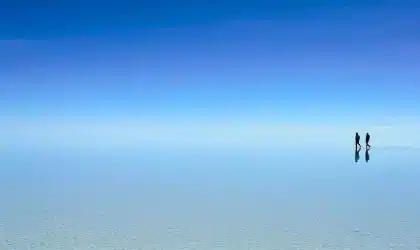
If you’re fascinated by starry skies and dreamlike places, Bolivia will amaze you with its surreal beauty. In this guide, you’ll discover the most fascinating Uyuni salt flats facts, from their mysterious origin and vast size to their unique wildlife and the reason they’re known as the largest natural mirror on Earth.
1. About the Salt Flat and Its Surface
The Uyuni Salt Flat: Where Sky Walks on Earth
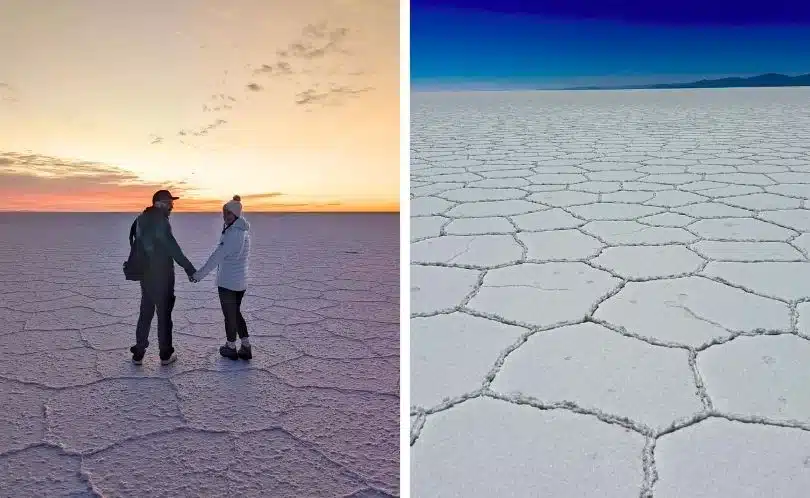
With 4,086 square miles (10,582 km²) of surface similar to Jamaica’s size, the Uyuni Salt Flat is the world’s largest salt desert. At first glance it seems like an infinite white blanket where sky and earth embrace.
Where the Earth Turns White and Endless: Welcome to Uyuni
The salt crust creates a hypnotic visual effect with hexagonal polygons so symmetrical they seem designed by human hand.
2. Its Geological Origin
A Sea That Evaporated: The Salt Flat’s Secret Origin
About 40,000 years ago, the highlands were covered by Lake Minchin, which later gave way to Lake Tauca 11,000 years ago. When they dried up, they left behind thick layers of salt and minerals.
How Lake Minchin Became a Sea of Salt
The remains of those lakes are today the Uyuni Salt Flat and Coipasa Salt Flat, along with Lakes Poopó and Uru Uru.

Did you know…?
Today, you walk on a salt crust that reaches between 3 and 36 feet (1 and 11 meters) thick, depending on the region, covering strata of clay and brine.
3. Size and Precision
Flatter Than the Ocean: The Salt Flat’s Perfect Geometry
The incredible thing is that the Uyuni Salt Flat presents a vertical variation of less than 3 feet (one meter) across its entire extension, something unique in the world.
Uyuni, the Planet’s Most Precise Natural GPS
Due to its smooth surface, agencies like NASA and ESA use it to calibrate satellite altimeters, even surpassing the precision offered by the sea.
4. The Mirror Effect
The World’s Largest Mirror: How Is It Formed?
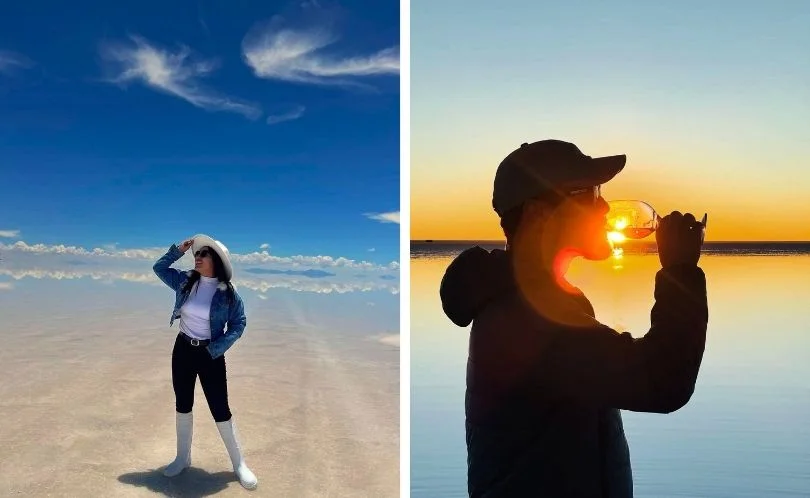
Between December and March, a thin layer of water 0.4 to 2 inches (10 to 50 mm) covers the salt flat, reflecting the sky with a clarity that seems unreal.
When Sky Reflects: The Salt Flat’s Visual Magic
The horizon disappears and you have the sensation of walking on clouds.
During this season, the salt flat transforms into the world’s largest natural mirror and gives you unique visual moments, combining sky, earth, and reflections in magical harmony, perfect for you who love nature and extraordinary landscapes.
5. Lithium and Salt Beneath Your Feet
Under the Salt Flat: A Hidden Treasure of Lithium and Salt
It’s estimated there are more than 10 billion tons of salt and between 11 and 21 million tons of lithium, a key resource for batteries and energy transition.
Did You Know You Walk on Millions of Tons of Energy?
Bolivia is part of the “Lithium Triangle,” along with Chile and Argentina, concentrating about 50% of world reserves.
Did you know…?
The lithium extracted, along with potassium, boron, and magnesium, projects this region as a strategic point for clean technology development in the future.
6. Night Sky
Sleeping Under Galaxies: Uyuni’s Stars
Among the Uyuni salt flats facts, we know it stands out for its altitude, dry air, and absence of artificial lights, making it one of the world’s best points for astrotourism.
Seeing the Milky Way from the Salt Flat: A Unique Experience
On clear nights, the salt flat becomes a stellar mirror where the Milky Way seems to settle on earth.

7. Life in the White Desert
The Uyuni salt flats facts tell us it harbors surprising species diversity adapted to extreme climate and salinity. Some animals you might find are:
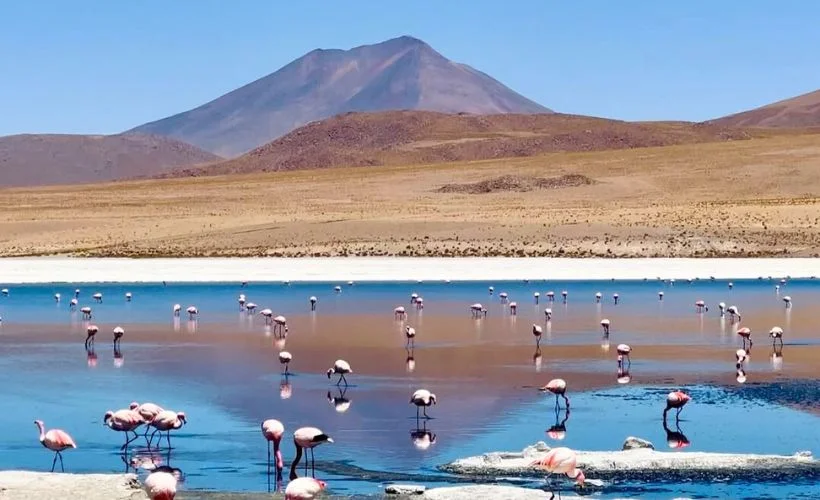
- Andean Flamingos: in elevated areas, between November and March, you can observe three different species: Chilean flamingo, Andean flamingo, and James’s flamingo. This place is one of the main breeding sites for these birds.
- Vicuñas: these camelids, valued for their fine wool, are usually found in highlands near the salt flat, especially where there’s water and some vegetation.
- Vizcachas: you can commonly see them on Incahuasi Island, as they prefer rocky areas. They feed on lichens and mosses, and obtain water directly from their diet.
- Andean foxes: although difficult to spot, these animals roam the salt flat’s more remote areas. They’re solitary and very stealthy hunters.
As for flora, you should know the salt flat’s main plain lacks vegetation. However, on nearby salt islands giant cacti, queñua shrubs, and medicinal plants grow that even help purify the air.

8. Human Footprint: Trains and Hotels
Time Tunnels: Rusted Trains and Salt Hotels
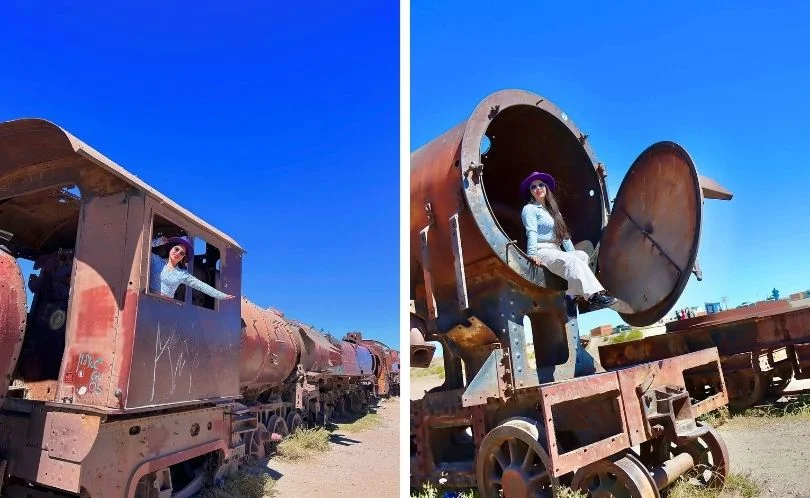
On Uyuni’s outskirts, the Train Cemetery shows 19th century locomotives corroded by time. Nearby, hotels built entirely with salt blocks offer a unique experience.
Human Footprints on the Salt Flat: Art, History and Architecture
These hotels comply with environmental regulations and are examples of how to integrate tourism with sustainability.
9. How to Get to the Uyuni Salt Flat and When to Go?
There are three options:
- By plane: you can fly directly to Uyuni from La Paz or Sucre. There are many flights operating in this area and travel time is approximately one hour.
- By bus: it’s the most popular and economical route, although the trip lasts between 12 and 15 hours. Overnight buses normally operate, allowing you to rest during the night and arrive in Uyuni at dawn. The most common places from which you can take these buses are Sucre, Cochabamba, and Oruro, although other routes are also available.
- By train: this is a less common but very picturesque experience. The journey lasts between 5 and 7 hours on an overnight train, ideal if you want to enjoy the highland landscape in a different way.
10. Responsible Tourism
Don’t Destroy It While Enjoying It: Travel Consciously
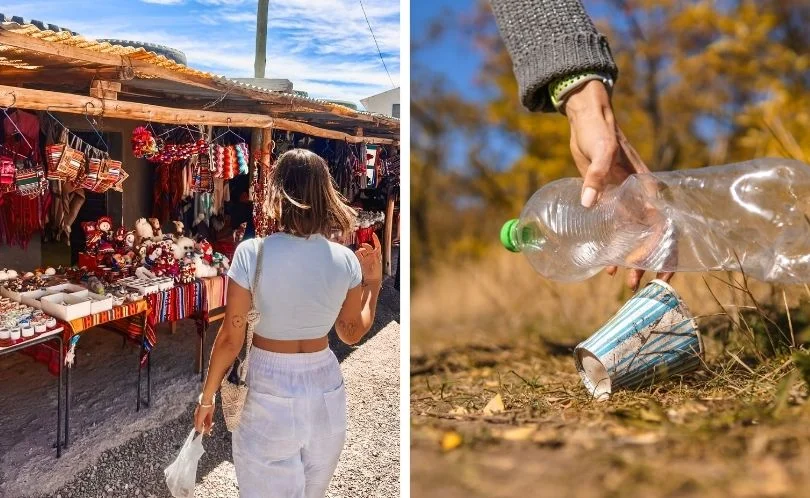
Don’t remove salt, don’t drive off routes, and avoid leaving trash. This ecosystem is fragile and any impact takes centuries to recover.
Leave Only Footprints, Not Trash: How to Protect Uyuni
Hire certified local operators and respect Andean rituals, which honor Pachamama with offerings to balance tourism with nature.
Curious Facts About the Uyuni Salt Flat
- It’s part of the so called “Lithium Triangle” and harbors almost 50% of known world reserves of this strategic metal.
- Its hexagonal patterns are so regular they seem designed by an artist.
- NASA and ESA calibrate their satellites here thanks to the salt flat’s incredible flatness.
- Under the crust there are layers of mud and brine reaching up to 394 feet (120 meters) deep.
- It was the setting for films like Star Wars: The Last Jedi and documentaries from BBC and National Geographic.
- Local communities perform rituals to Pachamama before extracting salt, combining tradition and respect for the ecosystem.
Now that you know some of the Uyuni salt flats facts, it’s time to discover them with Waman Adventures. We design safe and responsible experiences, so you can admire this natural treasure with respect and depth. Book your trip today!
Frequently Asked Questions About the Uyuni Salt Flat
What’s the best season to visit the salt flat?
If you want to enjoy the mirror effect, the ideal time is to travel during rainy season (December to March), when a thin layer of water 0.4 to 2 inches (10 to 50 mm) covers the surface and creates impressive reflections. On the other hand, if you prefer dry landscapes and clear skies, the best months are April, May, October, and November.
How do I handle altitude sickness?
The important thing is to acclimatize previously in cities like La Paz, Oruro, or Potosí before continuing to Uyuni. The journey may involve some physical effort. To relieve symptoms, you can help yourself with traditional remedies like coca leaf infusion, which is a great ally against soroche.
Is it safe to go without a guide?
It’s not recommended. The salt flat is extensive, without clear signage, and can become dangerous if weather changes suddenly. It’s best to hire an experienced agency that knows the area well and guarantees safe routes.
Can you see wildlife on the salt flat?
Yes. In nearby lagoons, especially between November and March, you can observe Andean flamingos — like Chilean flamingo, Andean, and James’s flamingo, which feed on microalgae and offer a unique natural spectacle.
What type of clothing should I bring for the visit?
Bring several thermal layers, a hardshell type jacket to protect yourself from wind and rain, plus hat, gloves, and scarf. During dry season, nights can reach down to 5°F (−15°C).
Do I need special equipment for night photography?
Yes. Make sure to bring a camera with manual mode, sturdy tripod, extra batteries (cold drains them quickly), and wide angle lens to capture the sky in all its magnitude.
Are there hotels inside the salt flat?
Not directly inside the salt flat, but in its surroundings. There you can stay in hotels built with salt blocks, like the famous Palacio de Sal, or in ecological domes with privileged views toward the salt flat.
How long do typical tours last?
You can choose between 1 to 4 day tours. The most popular include sunsets, starry nights, and unforgettable sunrises, as well as visits to highland lagoons, rock formations, the train cemetery, and other nearby destinations, depending on what you want to explore.
Can I fly direct to Uyuni from the US?
There are no direct flights from the United States to Uyuni. First you must arrive in La Paz (LPB) or Santa Cruz (VVI), and from there take a domestic flight to Uyuni or an overnight bus (lasting between 10 and 12 hours).
What impact does tourism have on the salt flat?
Mass tourism can cause trash accumulation, water pollution, and terrain deterioration. To protect this unique ecosystem, travel responsibly: don’t take salt, deposit your trash in designated places, and respect authorized routes.

Share:



If you liked this article and the information you found, give us 5 stars!
Table of Contents
Related blogs
Short Inca Trail to Machu Picchu Route, Itinerary and Permits
8 min of reading