Salkantay Trek vs Inca Trail: From glaciers to cloud forests and how to choose your perfect route
Ultima actualización en 16 November, 2026 por Jhon Quispe
Last Updated on 16 November, 2026 by Jhon Quispe
Is Salkantay or the Inca Trail better?
Choose the Classic Inca Trail for Inca archaeological sites, historic stone paths and the traditional approach to Machu Picchu. Choose the Salkantay Trek for snowcapped mountains, Humantay Lake and varied landscapes. Salkantay generally reaches a higher altitude and involves more walking, while the Inca Trail requires regulated permits and earlier booking.
- Salkantay Trek vs Inca Trail at a Glance
- What Makes Each Trek Different?
- Difficulty, Altitude, and Hiking Distance
- Scenery and Archaeological Sites Along Both Routes
- Permits, Availability, and Booking Requirements
- Accommodation, Porters, and Local Experiences
- Salkantay Trek vs Inca Trail Costs
- Can You Combine Salkantay and the Inca Trail?
- Which Trek Is Better for Your Travel Style?
- What to Bring for Either Trek
- Best Time to Hike Salkantay or the Inca Trail
- Common Mistakes When Comparing Salkantay and the Inca Trail
-
Frequently Asked Questions
- Which is harder, the Salkantay Trek or the Inca Trail?
- Which trek reaches a higher altitude?
- Does the Salkantay Trek require a permit?
- Which route has more Inca archaeological sites?
- Is Salkantay cheaper than the Inca Trail?
- Which trek is better for beginners?
- How far in advance should I book the Inca Trail?
- Do both treks reach Machu Picchu?
- Can I combine Salkantay and the Inca Trail?
- Which trek is better during the dry season?
Although both routes lead to Machu Picchu, they offer different experiences along the way. The Inca Trail follows protected archaeological paths with designated campsites, while Salkantay crosses high mountain terrain before descending toward the cloud forest. Your choice should depend on the landscapes you prefer, your hiking experience, budget, and how far in advance you can book.

Salkantay Trek vs Inca Trail at a Glance
The main differences involve the type of scenery, trail length, elevation, archaeological access, and permit requirements.
| Characteristic | Classic Inca Trail | Salkantay Trek |
| Typical duration | 4 days / 3 nights | 5 days / 4 nights; shorter 4-day options available |
| Approximate distance | 26–28 miles (42–45 km) | Approximately 43 miles (70 km) for a common 5-day itinerary; varies by route |
| Highest point | Warmiwañusca Pass, around 13,800 ft (4,200 m) | Salkantay Pass, approximately 15,190 ft (4,630 m) |
| Difficulty | Moderate to challenging | Challenging, especially at high altitude |
| Special trekking permit | Required through an authorized operator | No Classic Inca Trail permit required |
| Main attractions | Inca archaeological sites, original stone paths, cloud forest | Snowcapped mountains, Humantay Lake, Salkantay Pass, cloud forest |
| Accommodation | Designated campsites on the Classic 4-day route | Campsites, lodges, or hotels depending on the package |
| Arrival at Machu Picchu | On foot through the historic trail and Sun Gate approach | Usually via Aguas Calientes and a separately ticketed archaeological visit |
| Booking flexibility | Limited by official trekking permits | Generally more flexible, but Machu Picchu tickets remain limited |
| Best for | Travelers prioritizing history and archaeological sites | Travelers prioritizing high mountain scenery and varied ecosystems |
Important note: Salkantay does not require the regulated Classic Inca Trail trekking permit, but visiting Machu Picchu still requires valid admission for a specific date, entry time, and route. The two permissions should not be confused.
What Makes Each Trek Different?
Inca Trail — A historic route to Machu Picchu
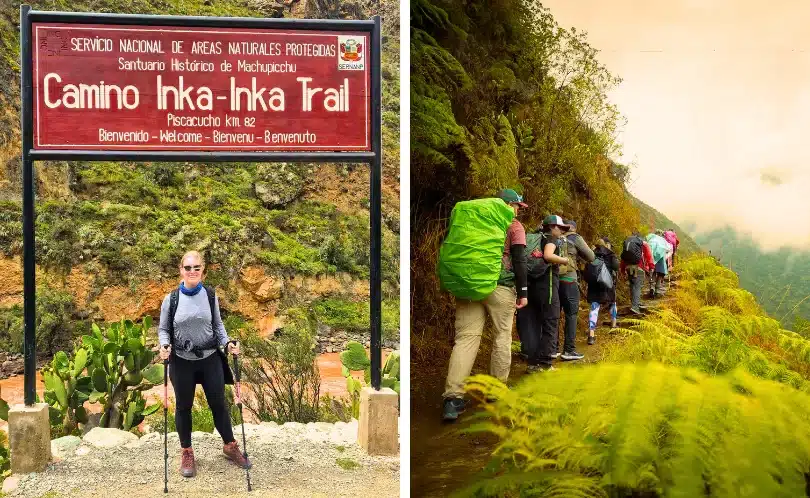
The Classic Inca Trail follows part of the historic Inca road network, known as the Qhapaq Ñan. The commonly used four-day itinerary begins at Piscacucho, also called Kilometer 82, and passes several archaeological sites before reaching Machu Picchu.
The route is known for its stone stairways, ceremonial sites, mountain passes, and carefully constructed paths.
Because the trail crosses a protected archaeological area, access is controlled through official trekking permits and authorized tour operators.
The experience is especially suitable for travelers interested in Inca engineering, archaeological history, and reaching Machu Picchu on foot through the historic approach.
Salkantay Trek — High mountains and changing landscapes
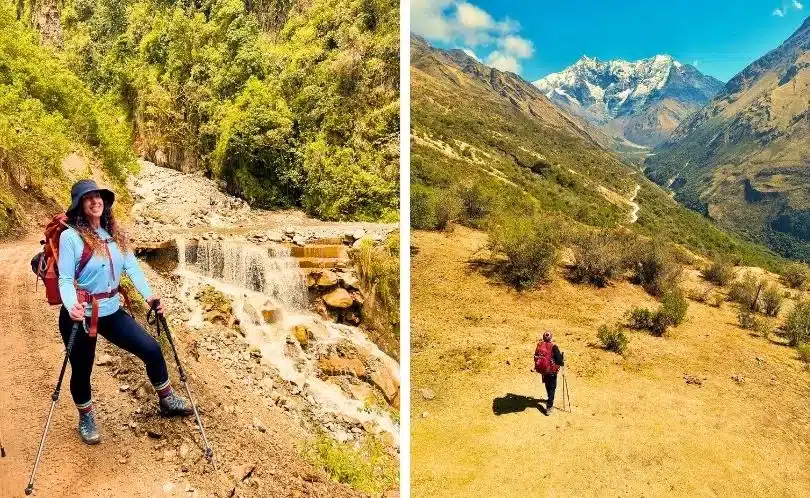
The Salkantay Trek is an alternative trekking route toward Machu Picchu, known for its proximity to the snowcapped Salkantay Mountain and its passage through contrasting ecosystems.
The standard five-day itinerary commonly begins in the Mollepata or Challacancha area, depending on the operator. It proceeds toward Soraypampa and Salkantay Pass before descending into lower valleys and cloud-forest environments.
Its principal attractions are natural rather than archaeological. Travelers may encounter glacial landscapes, Humantay Lake, high mountain grasslands, waterfalls, and warmer subtropical vegetation.
Unlike the Classic Inca Trail, Salkantay does not follow the regulated archaeological path directly to the Sun Gate.
For more detailed information about the route itself, the complete Salkantay Trek guide explains its variations, stages, and major natural attractions.
Difficulty, Altitude, and Hiking Distance
Both treks require endurance, but they challenge hikers in different ways.
Inca Trail difficulty
The Classic Inca Trail includes long walking days, uneven stone pathways, mountain passes, and extensive staircases.
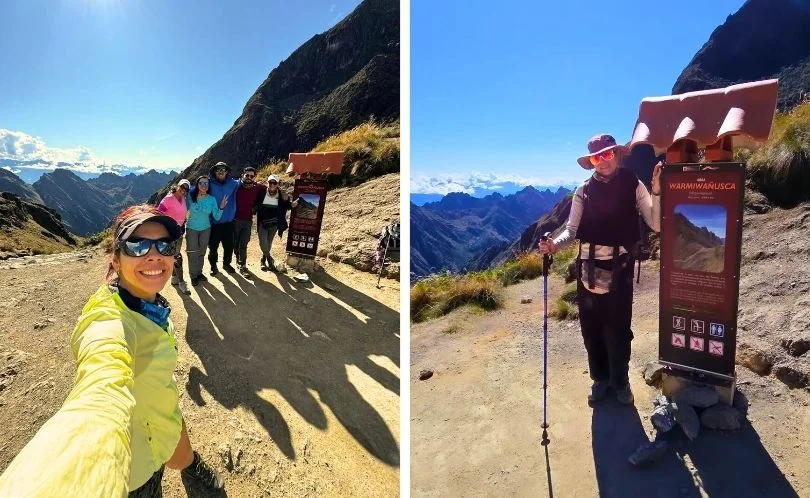
The highest point is Warmiwañusca, commonly known as Dead Woman’s Pass, at approximately 13,800 feet (4,200 meters).
Hikers must manage steep ascents and descents while adjusting to high-altitude conditions. The route can be demanding for travelers who have not prepared for consecutive days of mountain walking.
However, the Inca Trail is generally shorter than the standard five-day Salkantay Trek and follows an established network of designated trails and campsites.
Salkantay Trek difficulty
Salkantay is usually considered challenging because of its high elevation, longer walking distances, and varied mountain terrain.
The ascent toward Salkantay Pass is one of the most physically demanding parts. The pass is approximately 15,190 feet (4,630 meters) above sea level, around 1,400 feet (430 meters) higher than Warmiwañusca on the Inca Trail.
At this elevation, reduced oxygen availability increases the physical effort required, particularly for travelers who have recently arrived at altitude.
After crossing the pass, the route descends toward warmer valleys, where muddy paths and humidity may create different challenges.
The exact difficulty depends on the itinerary, pace, accommodation arrangements, and weather.
Travelers who want a more detailed explanation of the physical demands can consult the Salkantay Trek difficulty guide.
Differences in walking distance
The Classic Inca Trail generally covers about 26–28 miles (42–45 km) in four days.
A common five-day Salkantay itinerary covers approximately 43 miles (70 km), although some operators use transfers or different access points that change the total walking distance.
Shorter four-day Salkantay packages may cover approximately 32 miles (52 km), depending on the itinerary.
Neither distance should be treated as universal. The most useful figures to compare are the actual daily walking distances and elevation gain described in each tour.
Scenery and Archaeological Sites Along Both Routes
One of the clearest differences between the treks is what travelers see along the way.
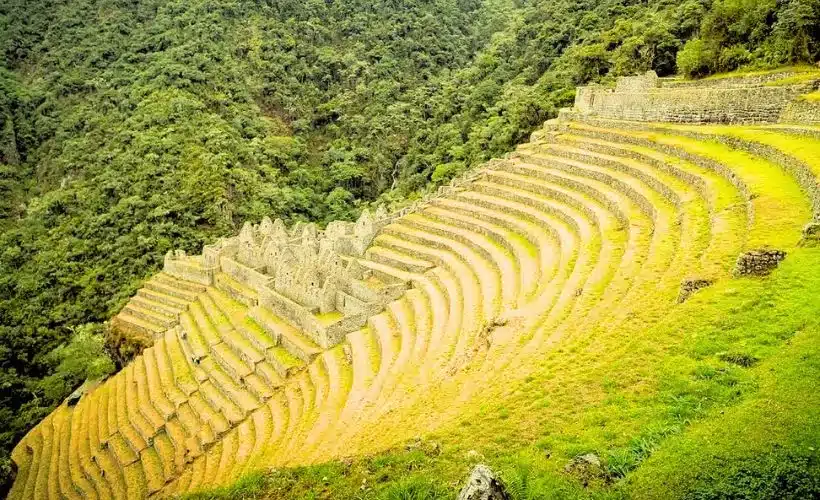
Inca Trail landscapes and archaeological sites
The Inca Trail connects mountain landscapes with archaeological remains that formed part of the historical Inca road system.
Depending on the itinerary, notable sites include:
- Patallacta: Agricultural terraces and archaeological remains visible in the early sections.
- Runkurakay: Stone structures near the mountain trail.
- Sayacmarca: An archaeological complex positioned above the surrounding valleys.
- Phuyupatamarca: An Inca site with terraces and mountain viewpoints.
- Wiñay Wayna: Agricultural terraces and buildings near the final approach.
- Inti Punku: The Sun Gate, historically associated with the arrival at Machu Picchu.
The landscapes change from open Andean valleys and high passes to more humid mountain vegetation.
For travelers interested in archaeology, these sites are a defining reason to choose the Inca Trail over alternative routes.
Salkantay Trek landscapes and natural attractions
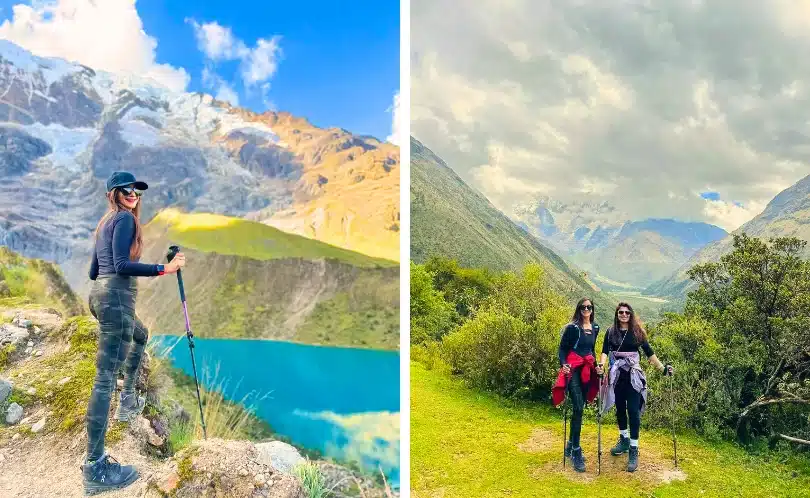
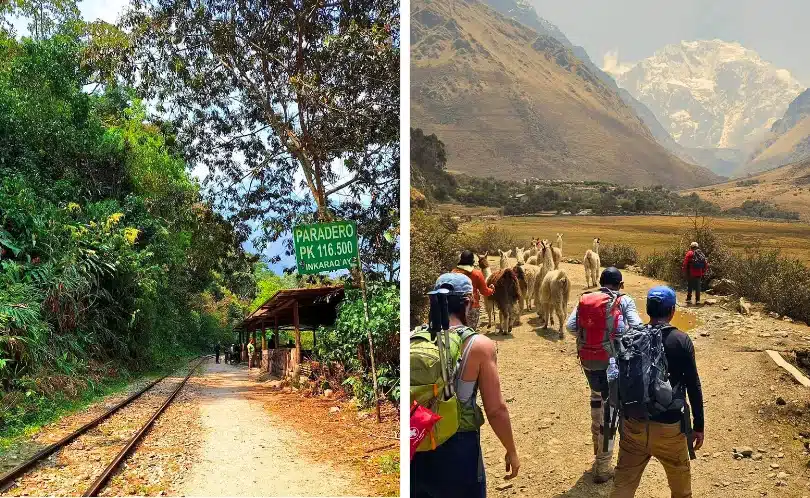
The Salkantay Trek is known for the contrast between high mountain terrain and the lower cloud-forest environment.
Important natural attractions commonly associated with its itineraries include:
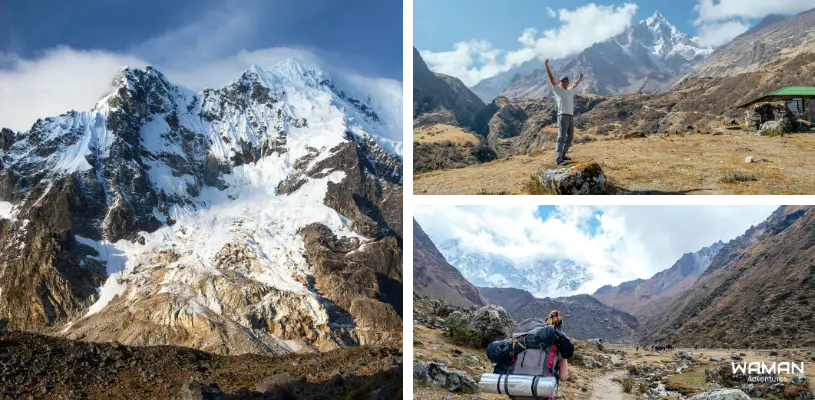
- Salkantay Mountain: A prominent snowcapped mountain in the Vilcabamba Range.
- Humantay Lake: A high-altitude lake known for its turquoise water, included in many but not all itineraries.
- Salkantay Pass: The principal high mountain crossing.
- Andean valleys: Open landscapes where hikers may encounter grazing livestock and mountain vegetation.
- Cloud forest: Warmer and more humid terrain encountered after descending from the mountains.
- Lower valley communities: Settlements and agricultural areas that may be included along the route.
These contrasts make Salkantay especially appealing to hikers who enjoy dramatic changes in landscape.
Permits, Availability, and Booking Requirements
Permit requirements are among the most important practical differences.
Inca Trail permits
The Classic Inca Trail is regulated because it passes through protected archaeological and environmental areas.
Travelers need an official trekking permit, normally arranged by an authorized tour operator using the required personal information and departure date.
Permit availability is limited. Popular dates may sell out several months in advance, particularly during periods of strong demand.
The exact daily allocation and remaining spaces should be confirmed through an authorized operator rather than relying on a historical fixed quota.
Advance reservations of six months or more can be helpful for popular dates, but this is a planning recommendation, not a universal deadline.
Before booking: Inca Trail permits are associated with specific travel dates and participant details. Confirm the operator’s current cancellation, date-change, and identification rules before submitting payment.
Salkantay Trek permits
The standard Salkantay route does not require the special regulated trekking permit used for the Classic Inca Trail.
This normally provides more flexibility when choosing departure dates.
However, local access conditions, environmental restrictions, accommodation availability, and individual attraction fees may still apply.
Travelers must also have the appropriate Machu Picchu admission ticket for the archaeological visit at the end of the itinerary.
The official admission system can be accessed through Tu Boleto of Peru’s Ministry of Culture.
Which trek is easier to book?
Salkantay generally offers greater booking flexibility because it is not subject to the same limited trekking permit system.
That does not mean last-minute space is guaranteed. Machu Picchu admission, accommodation, train reservations, and guided services may still become limited during busy periods.
For travelers with fixed dates, availability should be checked before choosing either route.
Accommodation, Porters, and Local Experiences
Accommodation styles can affect comfort, luggage arrangements, and the total price of each trek.
Accommodation on the Classic Inca Trail
The standard four-day Classic Inca Trail uses designated campsites inside the regulated trekking area.
Travelers sleep in tents, and tour operators normally coordinate camping equipment, food preparation, and support staff.
Hotels are not a regular alternative along the remote campsites of the Classic Inca Trail.
The quality and capacity of sleeping tents, sleeping bags, meals, and related equipment depend on the booked service.
Accommodation on the Salkantay Trek
Salkantay offers a wider variety of accommodation arrangements depending on the route and operator.
These may include traditional tents, mountain camps, basic lodges, specialized camping structures, or hotels in the lower valleys and Aguas Calientes.
However, not every itinerary includes these options, and more comfortable accommodation can increase the overall cost.
A package described as a lodge trek should be evaluated based on the actual properties and overnight stops rather than the label alone.
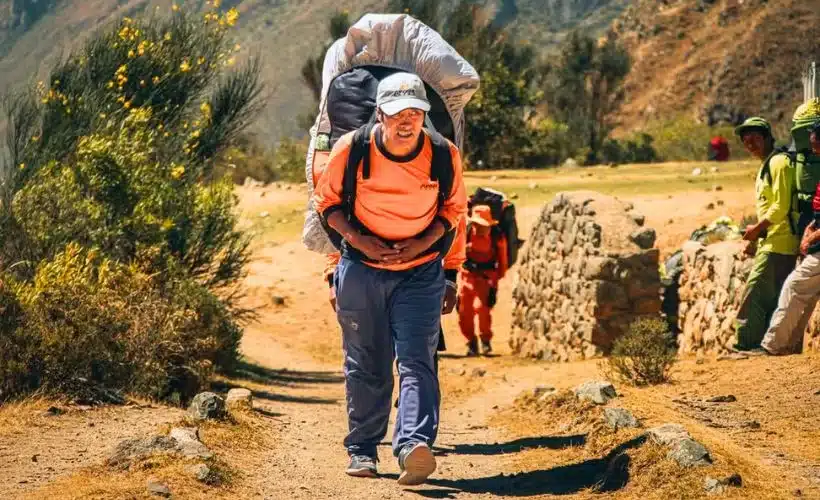
Porters and support staff
On the Classic Inca Trail, porters are essential to many organized expeditions. They transport camping equipment, food, and personal baggage within applicable regulations.
The amount of personal luggage included in porter services depends on the package.
On Salkantay, operators may use pack animals, muleteers, guides, and other support staff, depending on the route and terrain.
Travelers should confirm porter or baggage allowances before booking either trek.
Interaction with local communities
Both treks can provide opportunities to learn about local culture.
On the Inca Trail, visitors often interact with guides, cooks, and porters whose families come from different Andean communities.
On Salkantay, some itineraries include rural settlements, agricultural areas, or locally managed accommodation.
However, community visits and cultural activities are not guaranteed components of every Salkantay package. Their availability depends on the operator and specific itinerary.
Salkantay Trek vs Inca Trail Costs
The Inca Trail is often more expensive than a standard Salkantay group trek, largely because of regulated permits, logistical requirements, staffing, and the services associated with operating inside the protected trekking area.
However, prices differ significantly between operators and accommodation categories.
The figures below are general planning references rather than guaranteed quotations.
| Cost factor | Classic Inca Trail | Salkantay Trek |
| Usual pricing tendency | Often higher | Often lower for basic group services |
| Trekking permit | Required | No equivalent Classic Inca Trail permit |
| Accommodation | Designated camping | Camping, lodges, and hotels depending on itinerary |
| Support arrangements | Porters and camping teams | Guides and possible pack-animal support |
| Machu Picchu admission | Confirm inclusion and assigned route | Confirm inclusion and assigned route |
| Additional costs | Personal equipment, optional porter allowance, tips, and exclusions | Equipment, optional activities, extra transportation, and exclusions |
| Final price | Depends on current departure and inclusions | Depends on current departure and inclusions |
Why does the Inca Trail often cost more?
The Classic Inca Trail involves regulated archaeological access and a support structure designed for a multi-day trek through protected areas.
Permits, qualified guides, porters, food, and camping arrangements all contribute to the total operating cost.
The final price can also vary with group size, equipment standards, and the amount of personal baggage support included.
Why can Salkantay be more affordable?
Because Salkantay does not require the same special trekking permit, operators may have greater flexibility in designing routes and services.
Basic camping packages can be comparatively affordable, while premium lodge experiences or private departures may cost considerably more.
The best comparison uses current prices for packages with similar accommodation standards, transportation, meals, Machu Picchu tickets, and support services.
Can You Combine Salkantay and the Inca Trail?
Yes, specialized itineraries can connect sections of the Salkantay region with the regulated Inca Trail network.
However, these are not simply two conventional treks placed together. A combined expedition requires a specifically designed route, suitable permits, and additional physical preparation.
Some seven-day itineraries cross the Inkachiriaska area before connecting with sections of the Inca Trail.
These expeditions may exceed 17,000 feet (5,200 meters), significantly higher than the main pass on the standard Salkantay itinerary.
Example of a specialized combined itinerary
A combined trekking route may include locations such as:
- Challacancha and the Soraypampa area.
- Humantay Lake and high mountain landscapes.
- Salkantaypampa and the Inkachiriaska route.
- Paucarcancha and connections toward the regulated Inca Trail.
- Warmiwañusca and archaeological sections of the historic route.
- Phuyupatamarca and Wiñay Wayna.
- Machu Picchu.
The exact sequence, camping locations, route permissions, and daily distances depend on the specialized itinerary.
This option is better suited to experienced hikers comfortable with long consecutive days and significant elevation.

Important note: A combined Salkantay and Inca Trail itinerary requires more than ordinary hiking fitness. Higher passes, remote terrain, and regulated trail access make careful preparation and advance coordination particularly important.
Which Trek Is Better for Your Travel Style?
The better choice depends on the kind of experience you value most.
Choose the Inca Trail for history and archaeological sites
The Inca Trail is the stronger option for travelers who want to follow historic Inca roads and see archaeological complexes before arriving at Machu Picchu.
Its four-day duration, regulated access, and designated campsites create a structured trekking experience.
It is also particularly appealing to travelers who consider the traditional arrival through Inti Punku an important part of the journey.
Choose Salkantay for high mountain scenery
Salkantay is better suited to hikers who are especially interested in snowcapped peaks, mountain lakes, and the transition from alpine environments to cloud forest.
The standard route is generally longer and reaches higher altitude than the Classic Inca Trail.
Travelers who prioritize natural scenery over archaeological sites often prefer this route.
For travelers with limited vacation time
Both routes have four-day options, although the standard Salkantay journey is commonly completed in five days.
A shortened Salkantay itinerary can involve different walking distances and transport arrangements, so it should not be assumed to offer exactly the same experience as the five-day version.
If the Inca Trail permit is unavailable, Salkantay may provide another way to reach Machu Picchu, subject to the availability of entrance tickets and services.
For first-time high-altitude hikers
Neither route should be described as easy simply because it is popular.
The Inca Trail includes substantial elevation changes and repeated stone stairways. Salkantay reaches a higher pass and may involve longer walking distances.
Travelers with limited trekking experience should review daily distances, altitude exposure, and their physical condition before choosing.
What to Bring for Either Trek
Both routes require practical clothing and equipment suitable for cold highland weather, rain, sun exposure, and uneven walking surfaces.

Clothing
- Breathable hiking shirts and pants.
- Thermal layers for high-altitude mornings and nights.
- A waterproof jacket or rain shell.
- Warm gloves and a hat.
- Lightweight clothing for warmer lower-elevation sections.
- Extra socks and dry clothes.
Footwear and trekking equipment
- Well-fitting hiking boots or trail shoes with good traction.
- A comfortable daypack with a rain cover.
- Trekking poles where permitted.
- A reusable water bottle or hydration system.
- A headlamp for early departures or campsites.
Sun and insect protection
- Sunscreen suitable for strong high-altitude sunlight.
- Sunglasses with UV protection.
- A sun hat.
- Insect repellent for lower, warmer sections.
Health and personal items
- Personal prescription medications.
- Basic first-aid supplies.
- Hand sanitizer and personal hygiene products.
- Travel insurance information.
Documents and other essentials
- The original identity document matching your reservation.
- Inca Trail permit details, if applicable.
- Machu Picchu admission confirmation.
- Some cash in Peruvian soles.
- Portable charging equipment where needed.
For more detailed equipment recommendations, the Inca Trail packing list covers clothing and supplies for the regulated trekking route.
Best Time to Hike Salkantay or the Inca Trail
The Cusco region generally has a drier season from approximately April through October and a wetter season from November through March.
These patterns influence trail conditions, visibility, and the comfort of hiking, but actual weather varies with altitude and local geography.
Dry season from April to October
The drier months often provide more stable conditions for mountain trekking.
Clearer skies may improve views of snowcapped peaks and archaeological landscapes. However, cold nights, strong sunlight, and occasional rain remain possible.
May through September is frequently preferred for both routes, particularly by travelers who prioritize outdoor conditions.
These months also overlap with busy travel periods, so Machu Picchu admission and Inca Trail permits require advance attention.

Rainy season from November to March
Rainfall generally increases during these months.
On the Inca Trail, wet stone steps and mountain paths can become slippery. The Classic route normally closes during February for maintenance and conservation, subject to official announcements.
On Salkantay, rain and changing mountain conditions can affect access, camping, and the crossing of high passes.
Some operators modify or suspend sections when weather creates unacceptable risks.
Which route offers more seasonal flexibility?
Salkantay may offer more flexibility because it is not restricted by the Classic Inca Trail permit calendar.
However, flexibility does not mean the route is safe or fully accessible in every month. Heavy rainfall, road conditions, and high mountain weather can still affect operations.
Travelers should confirm the conditions and departure arrangements for their specific dates.
Common Mistakes When Comparing Salkantay and the Inca Trail
- Choosing only by price: Compare permits, accommodation, meals, transport, equipment, and baggage support before selecting a package.
- Assuming both routes arrive through the Sun Gate: The standard Salkantay itinerary normally reaches Machu Picchu through Aguas Calientes rather than the historic Inca Trail approach.
- Ignoring maximum altitude: Salkantay Pass is higher than Warmiwañusca, and both routes require attention to altitude-related risks.
- Assuming no Salkantay permit means no tickets: Machu Picchu admission is still required.
- Comparing different durations as equivalent: Four-day and five-day Salkantay packages may have different walking distances and transfers.
- Booking without checking the actual circuit: The Machu Picchu areas included depend on the assigned admission route.
- Underestimating weather: Dry-season conditions do not guarantee clear skies, and wet-season access can change.
Both require preparation, and the final decision should consider your available time, altitude tolerance, preferred accommodation, and booking flexibility. For travelers comparing organized departures, Waman Adventures offers a four-day Salkantay Trek and a separate Classic Inca Trail itinerary, with services and availability confirmed for the selected date.

Frequently Asked Questions
Which is harder, the Salkantay Trek or the Inca Trail?
Which trek reaches a higher altitude?
Does the Salkantay Trek require a permit?
Which route has more Inca archaeological sites?
Is Salkantay cheaper than the Inca Trail?
Which trek is better for beginners?
How far in advance should I book the Inca Trail?
Do both treks reach Machu Picchu?
Can I combine Salkantay and the Inca Trail?
Which trek is better during the dry season?

Share:



Related tours you might be interested in
Enjoy unique experiences in Cusco and Machu Picchu with the peace of mind that comes from working with a local travel agency
6-Day Tour Cusco, Sacred Valley, Machu Picchu and Rainbow Mountain
EXPERIENCE THE MAJESTY OF THE INCAS: SACRED VALLEY, MACHU PICCHU & RAINBOW MOUNTAIN IN ONE TRIP If...
6 Day Andean Adventures Tour│With Flights from Chile
ENJOY THE BEST OF CUSCO CITY – MUST VISIT DESTINATIONS ARE WAITING FOR YOU! Want to explore Cusco...
6 Days Andean Adventure │ With Flights from Mexico
EXPERIENCE THE BEST OF CUSCO – THE MOST BREATHTAKING DESTINATIONS AWAIT Do you want to explore...
5 Day Cusco, Sacred Valley and Machu Picchu
DISCOVER THE MAJESTY OF MACHU PICCHU AND THE BEAUTY OF THE SACRED VALLEY IN ONE EPIC JOURNEY! The...
If you liked this article and the information you found, give us 5 stars!
Table of Contents
Related blogs
How to Get to Uyuni Salt Flat from the US, Bolivia, Peru and Chile
14 min of reading