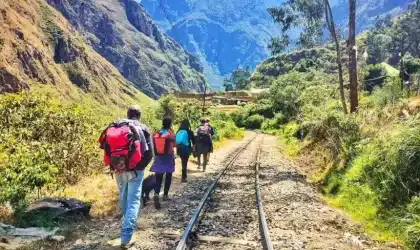
Chinchero Textile Dyeing where ancient colors come to life
Ultima actualización en 7 November, 2025 por Waman Adventures
Last Updated on 7 November, 2025 by Waman Adventures
- Chinchero: Epicenter of Andean Weaving and Dyeing
- Why Natural Dyes Make the Difference
- Plan Your Visit and Experience in Chinchero Textile Dyeing in Real Time
- A Step by Step Traditional Chinchero Textile Dyeing Experience
- Dyeing as Community Development
- Sustainable Practices and Environmental Respect
- Real Tips for Memorable Visit
-
Frequently Asked Questions
- Can I actively participate in dyeing workshops in Chinchero?
- What natural materials are used in dyes?
- How long does dyeing demonstration last?
- Is it necessary to book in advance?
- What dyed textiles can I take to U.S. without problem?
- How to identify traditionally dyed textile?
- How accessible is Chinchero for people with limited mobility?
- Is it appropriate to take photos or videos during demonstrations?
When you arrive in Cusco, you’ll step into the fascinating world of Andean textile art. In the town of Chinchero, ancient weaving and dyeing traditions are still alive through the practice of Chinchero Textile Dyeing. Here, you can join workshops where local artisans teach you to spin alpaca wool and create natural dyes from plants, insects, and minerals. If you want to learn how this ancestral process works and how to visit Chinchero, this guide will show you everything you need to know.
Chinchero: Epicenter of Andean Weaving and Dyeing

Chinchero, located in Sacred Valley, stands out as community that has preserved its textile legacy since Inca times, resisting even colonial transformations.
When you visit Chinchero Textile workshops, you’ll see how artisans use natural pigments such as cochineal, native plants, and minerals to bring vibrant colors to life. Each shade carries deep cultural meaning and reflects the Andean worldview that continues to guide these communities today.
Today, upon arriving in Chinchero, you’ll not only observe environment; you can also participate and witness textile process up close: from spinning wool on traditional spinning wheels to creating reversible designs loaded with history and meaning.
Expert tip:
Book your visit in advance if you want to actively participate in dyeing workshop.
Why Natural Dyes Make the Difference
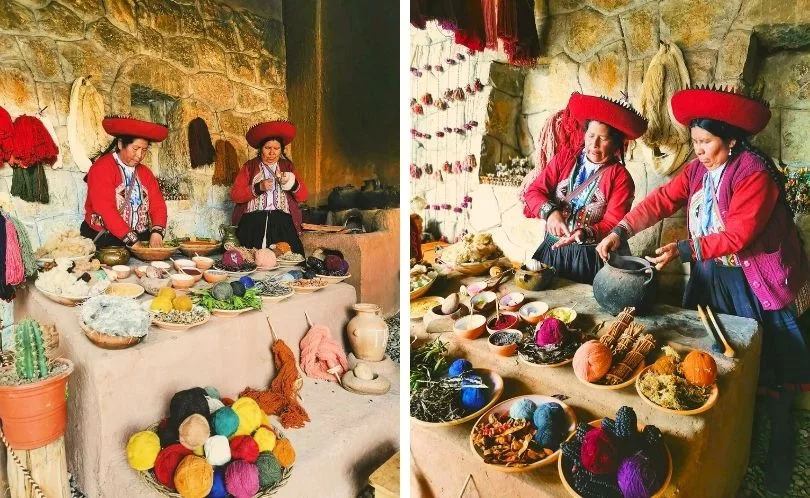
Chinchero artisans use dyes as way to connect culture with their environment, allowing you to understand that each color has deep meaning linked to Andean ecosystem. This knowledge is transmitted from generation to generation, and by witnessing it, you too become part of that living heritage.
| Color | Where It Comes From |
| Red | Comes from cochineal, insect living on cacti. |
| Yellow | Obtained from Q’olle, Andean flower; also from molle or kichu, and sometimes yanali tree. |
| Green | Achieved with chilca, combined with collpa, mineral, to achieve intense greens. |
| Blue | Traditionally indigo was used. |
| Purple | Emerges from combining cochineal with indigo or through variations. |
| Orange | They usually use barks like yanali and plants like Chapi or lichens like qaqa sunkha. |
| Brown and Black | Brown tones come from walnut. |
Plan Your Visit and Experience in Chinchero Textile Dyeing in Real Time

Organizing your visit to traditional dyeing process in Chinchero is much more than simple outing: it’s true cultural immersion. For your experience to be smooth and memorable, you must first make advance reservation. You can do it through agency you trust; in this case, Waman Adventures has operated these routes for long time. If you’re already in area, keep following in mind:
- Estimated travel time: you can arrive from Cusco in approximately 40 minutes by car or collective transport.
- Best time to go: mornings are ideal for taking advantage of natural light and enjoying active workshops from early. Many centers open between 7:00 and 8:00 a.m.
- Practical participation: upon arrival, many centers allow you to actively participate in different stages of dyeing in Chinchero. In some cases, lunch, materials, transportation, and comfortable space for activity are included.
- Cultural combination: it’s common to combine your dyeing experience in Chinchero with visit to nearby archaeological sites, like fortress, colonial church, central market, and other points of interest.
A Step by Step Traditional Chinchero Textile Dyeing Experience
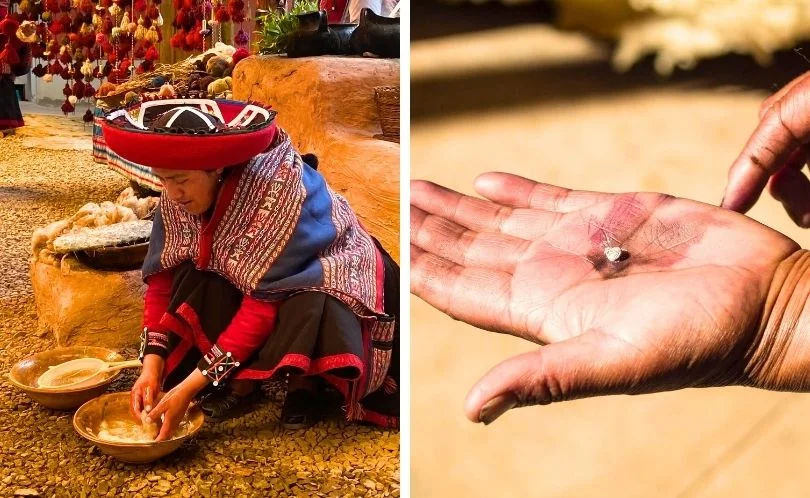
Exploring traditional dyeing process in Chinchero is for you opportunity to enter Andean textile art, where ancestral techniques combine, naturalist knowledge, and deep cultural connection.
| Step | Detailed Description |
| 1. Wash Wool | Wool (alpaca, llama, or sheep) is cleaned with saqta root which is natural detergent, for washing it passes through artisan strainer made of straw. |
| 2. Spin Fiber | Fibers are transformed into thread using pushka, manual spinning wheel. That community women know how to use since childhood. |
| 3. Prepare Dye | Dyes are extracted from cochineal, chilca, q’olle, purple corn, tara, among others. And color is fixed with lemon juice or alum stone. |
| 4. Dye Wool | Fiber is boiled for approximately 40 to 60 minutes, depending on color to be created; then proceed to dry it for 1 or 2 days. |
| 5. Loom Assembly | Warp is arranged on backstrap or four stick looms, establishing design and dimensions. |
| 6. Final Weaving | Weaving technique is used and reversible pieces without loose threads are created. They’re adorned with decorative tubular edges (ñawi awapa), which are final embroidery touch. |
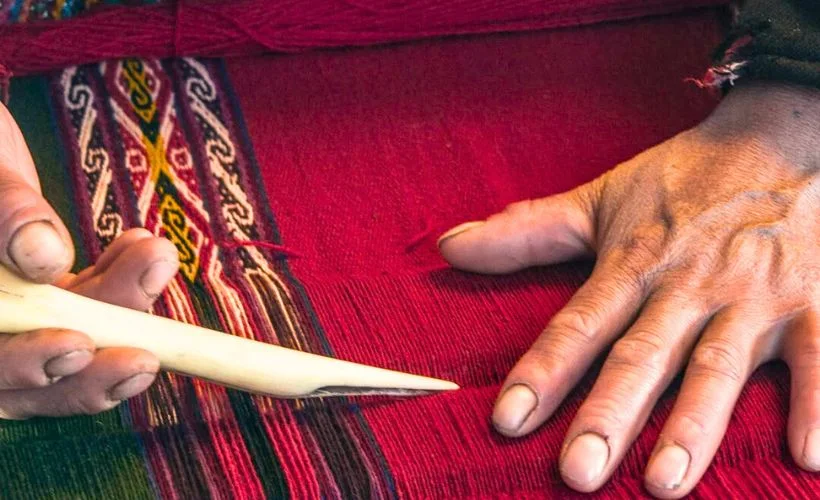
Did you know…?
Backstrap looms don’t require electricity: they’re 100% manual and sustainable.
Dyeing as Community Development
When you visit Chinchero, you encounter living community that has preserved its textile heritage thanks to constant work of Traditional Textiles Center of Cusco (CTTC). Since its founding in 1996, CTTC has played fundamental role in recovering ancestral textile art and strengthening communities like this one.
Here you’ll discover millenary techniques, especially in use of natural dyes and traditional weaving practices, that continue being transmitted from generation to generation.
Additionally, you can see how this work has contributed to weavers’ economic autonomy. Thanks to creation of sustainable income sources, many of them have achieved financial independence, significantly improving their quality of life and that of their families.
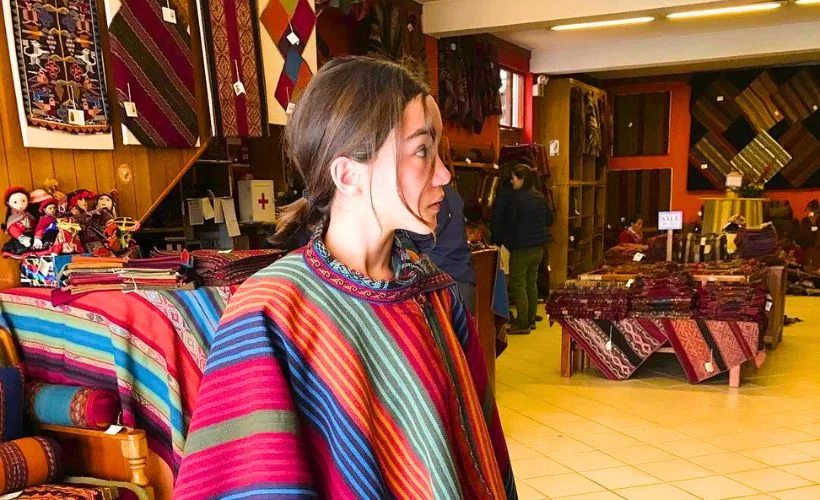
Origin and Mission of CTTC
CTTC was founded in 1996 by group of indigenous weavers from Chinchero, under direction of Nilda Callañaupa Álvarez, recognized promoter of Andean textile art. Its mission is to preserve and revitalize traditional textile knowledge in modern context, with respect for each community’s cultural identity.
Alliances With Multiple Communities
During your tour, you’ll notice CTTC doesn’t only work in Chinchero. It collaborates with weavers from ten high Andean Cusco communities: Accha Alta, Acopia, Chahuaytire, Chinchero, Huacatinco, Mahuaypampa, Patabamba, Pitumarca, Santa Cruz de Sallac, and Santo Tomás (Chumbivilcas). This network allows exchanging knowledge and strengthening textile heritage throughout region.
Recovery of Natural Dyes
One of CTTC‘s most important initiatives, which you yourself can observe during visit, is recovery of ancestral natural dyes. You’ll see how pigments like indigo (añil), cochineal, walnuts, as well as native plants like ch’illka and molle, among many others, have been reactivated. These pigments not only give color to textiles chinchero, but also transmit history, symbology, and connection with Andean natural environment.
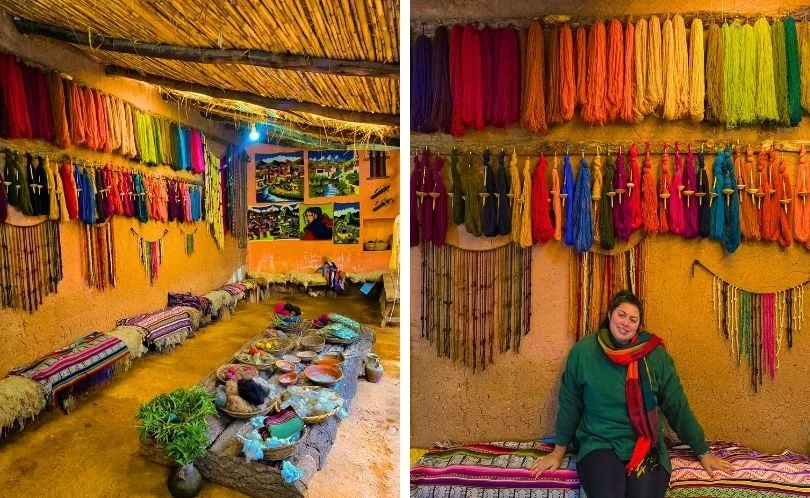
Sustainable Practices and Environmental Respect
When you take part in the traditional textile process in Chinchero, you connect with sustainable practices that honor nature. The use of natural dyes ensures biodegradable methods that help protect the local ecosystem. You will also work with alpaca and llama fibers, obtained from animals perfectly adapted to the Andes, making them a fully renewable resource.
Natural Dyes and Environmental Sustainability
By using natural dyes, you choose cleaner alternative to synthetic colorants. Although these processes aren’t exempt from challenges, like intensive water use or need for land to cultivate certain plants, you contribute to more environmentally respectful and culturally significant practice.
Alpaca Fiber
When you choose garments made with alpaca fiber, you’re opting for resistant, durable, and naturally varied material in tones. This not only allows your garments to last longer, but also reduces resource consumption, as they require less washing and maintenance.
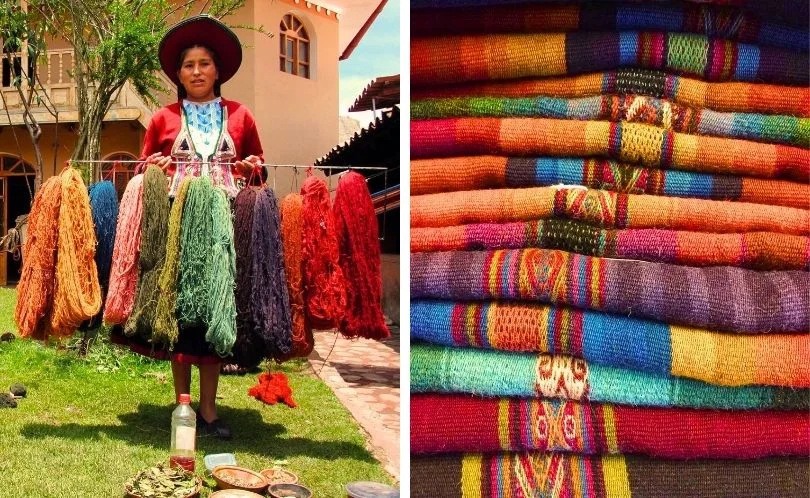
Backstrap Loom
When seeing or using backstrap loom, you’ll understand you’re before completely manual ancestral tool that doesn’t need electricity. Its use reflects living, sustainable, and harmonious tradition with natural environment.
Real Tips for Memorable Visit
- Acclimatization to highlands
- Hydration, diet, and activity pace
- Sun protection and skin care
- Traditional remedies against altitude sickness
- Photo etiquette and fair trade
Visiting Chinchero is much more than appreciating textiles chinchero; it’s experiencing up close use of natural dyes, local fibers, and ancestral looms. If you have doubts about how to organize your visit, what are best times, or how to participate in workshops, at Waman Adventures we’re here to help you. We offer personalized advice, transfers, and authentic experiences allowing you to closely know traditional dyeing process in Chinchero. It’s time to immerse yourself in Sacred Valley’s cultural richness. Contact us at +51 946 459 491 or write us at info@wamanadventures.com
Frequently Asked Questions
Can I actively participate in dyeing workshops in Chinchero?
Yes, many textile associations in Chinchero allow you to get directly involved in process: you can wash wool, prepare dyes, and participate in dyeing in Chinchero, always guided by local artisans sharing their ancestral knowledge with you.
What natural materials are used in dyes?
During your visit you’ll discover dyes are made with natural ingredients, traditionally collected. Some of most common are:
- Cochineal → intense red
- Ch’illka → dark green
- Chapi → coral tones
- Q’olle → bright yellow
Each dye has cultural meaning and particular preparation technique.
How long does dyeing demonstration last?
Generally, demonstrations last between 1 and 2 hours. If you choose more immersive experience including plant collection and dye preparation, process can extend for half day.
Is it necessary to book in advance?
Not always mandatory, but highly recommended to book in advance, especially if you travel in high season or seek personalized experience with more interaction.
What dyed textiles can I take to U.S. without problem?
You can take scarves, blankets, chullos, bags, or tapestries made with natural fibers, as long as they don’t contain restricted materials like feathers, exotic skins, or other protected elements.
How to identify traditionally dyed textile?
Pay attention to small irregularities in color or texture: they’re signs of handmade work. You can also request information about dye origin and verify if piece has label identifying artisan or community that made it.
How accessible is Chinchero for people with limited mobility?
Chinchero has some cobblestone and uneven areas, typical of its Andean geography. However, several workshops have adapted and can offer more comfortable access or assistance, as you need. We suggest coordinating in advance.
Is it appropriate to take photos or videos during demonstrations?
Yes, you can take photos or record videos, but always remember to ask permission first. This show of respect is valued by artisans, and often they themselves will encourage you to document process so you share it and help spread their dyeing art in Chinchero.

Share:



Related tours you might be interested in
Enjoy unique experiences in Cusco and Machu Picchu with the peace of mind that comes from working with a local travel agency

Tour to Chinchero, Maras & Moray – Private Service
Discover with us this beautiful, charming and historic places, where we will visit the enigmatic...

2-Day Trip to Machu Picchu from Cusco with Machu Picchu Mountain
LIVE A UNIQUE EXPERIENCE EXPLORING THE BREATHTAKING LANDSCAPES ON A 2-DAY JOURNEY TO MACHU PICCHU...
6-Day Tour Cusco, Sacred Valley, Machu Picchu and Rainbow Mountain
EXPERIENCE THE MAJESTY OF THE INCAS: SACRED VALLEY, MACHU PICCHU & RAINBOW MOUNTAIN IN ONE TRIP If...

6 Day Andean Adventures Tour│With Flights from Chile
ENJOY THE BEST OF CUSCO CITY – MUST VISIT DESTINATIONS ARE WAITING FOR YOU! Want to explore Cusco...
If you liked this article and the information you found, give us 5 stars!
Table of Contents
Related blogs
Inca Trail Explorer’s Guide: Your Roadmap to Machu Picchu
37 min of reading