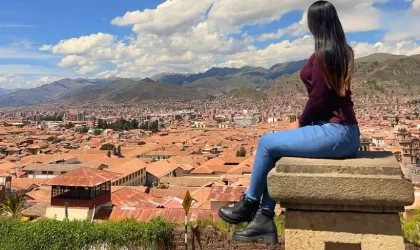
Pisac and Ollantaytambo Guide for Mexican Travelers
Ultima actualización en 29 October, 2026 por Jhon Quispe
Last Updated on 29 October, 2026 by Jhon Quispe
Can you visit Pisac and Ollantaytambo in one day?
Yes. Pisac and Ollantaytambo can be visited on a full-day Sacred Valley excursion from Cusco. Pisac is known for its artisan market and Inca terraces, while Ollantaytambo offers a monumental archaeological complex and preserved Inca streets. Both archaeological parks are included in the Cusco Tourist Ticket’s Circuit III, with a published foreign adult price of S/70.
- Pisac and Ollantaytambo at a glance
- How to visit Pisac and Ollantaytambo from Cusco
- Tickets and entrance fees for Pisac and Ollantaytambo
- Pisac and its Andean cultural traditions
- Ollantaytambo and its preserved Inca heritage
- Traditional food in Pisac and Ollantaytambo
- Practical travel information for Mexican visitors
- Plan your Pisac and Ollantaytambo experience
-
Frequently asked questions about Mexicans in the Sacred Valley
- Do Mexican citizens need a tourist visa to visit Peru?
- Can Mexican pesos be used in Pisac and Ollantaytambo?
- Can you visit Pisac Artisan Market on weekdays?
- Are artisan workshops in Pisac open to visitors?
- Are Pisac and Ollantaytambo accessible for travelers with limited mobility?
- Is the Pinkuylluna hike suitable for children?
These two towns reveal different sides of the Sacred Valley’s living heritage. In Pisac, markets and artisan traditions complement an archaeological site overlooking the valley. Ollantaytambo combines monumental terraces with streets and water channels that remain part of an inhabited town. The time available determines how much of each experience you can enjoy.

Pisac and Ollantaytambo at a glance
Pisac and Ollantaytambo are among the most interesting towns in Peru’s Sacred Valley. Both preserve Inca heritage, but the visitor experience is different.
Pisac combines an artisan market, living Andean traditions and a large archaeological complex overlooking the valley. Ollantaytambo is known for monumental Inca architecture, inhabited historic streets and its railway connection toward Machu Picchu.
| Planning detail | Pisac | Ollantaytambo |
| Location | Calca province, Sacred Valley | Urubamba province, Sacred Valley |
| Approximate town altitude | 9,750 ft (2,970 m) | 9,160 ft (2,790 m) |
| Distance from Cusco | Approximately 20 mi (32 km) | Approximately 45 mi (72 km), depending on the route |
| Main attractions | Artisan market, Inca archaeological complex and terraces | Archaeological complex, historic streets and water channels |
| Suggested visiting time | 2–3 hours or more for the town and archaeology | 2–3 hours or more for the town and archaeology |
| Archaeological admission | Cusco Tourist Ticket | Cusco Tourist Ticket |
| Additional interests | Artisan products, traditional food and cultural workshops | Pinkuylluna, overnight stays and train connections |
| Best for | Markets, local culture and archaeological landscapes | Inca engineering, history and travel toward Machu Picchu |
A full-day excursion can cover the principal attractions in both towns. Travelers who prefer to explore markets, archaeological sectors, traditional food and historic streets without rushing may find a two-day itinerary more comfortable.
How to visit Pisac and Ollantaytambo from Cusco
Pisac and Ollantaytambo can be visited separately or connected within the same Sacred Valley itinerary.
A common route travels from Cusco toward Pisac before continuing through the valley to Ollantaytambo.
The most practical schedule depends on the attractions selected, transportation, traffic and whether the journey finishes in Cusco or continues toward Machu Picchu.
One-day Sacred Valley itinerary
A full day can provide time for the most important archaeological and cultural attractions in both towns.
A practical sequence is:
- Morning departure: Leave Cusco and travel toward Pisac.
- Pisac Artisan Market: Explore the town center and browse textiles, ceramics and other products.
- Pisac Archaeological Park: Visit the terraces and principal accessible archaeological sectors.
- Journey through the Sacred Valley: Continue toward Ollantaytambo, allowing time for lunch.
- Ollantaytambo Archaeological Complex: Explore the terraces, stone stairways and principal monumental structures.
- Historic town: Walk through traditional streets and observe the surviving Inca water channels.
- Return or overnight stay: Return toward Cusco or stay in Ollantaytambo.
This schedule works best when it focuses on Pisac and Ollantaytambo rather than attempting to include every major Sacred Valley attraction.
If both archaeological complexes are priorities, leave enough time for walking, photography and transfers.
Two-day cultural itinerary
Two days provide a more relaxed experience, particularly for travelers who want to explore local food, workshops and the inhabited historic areas.
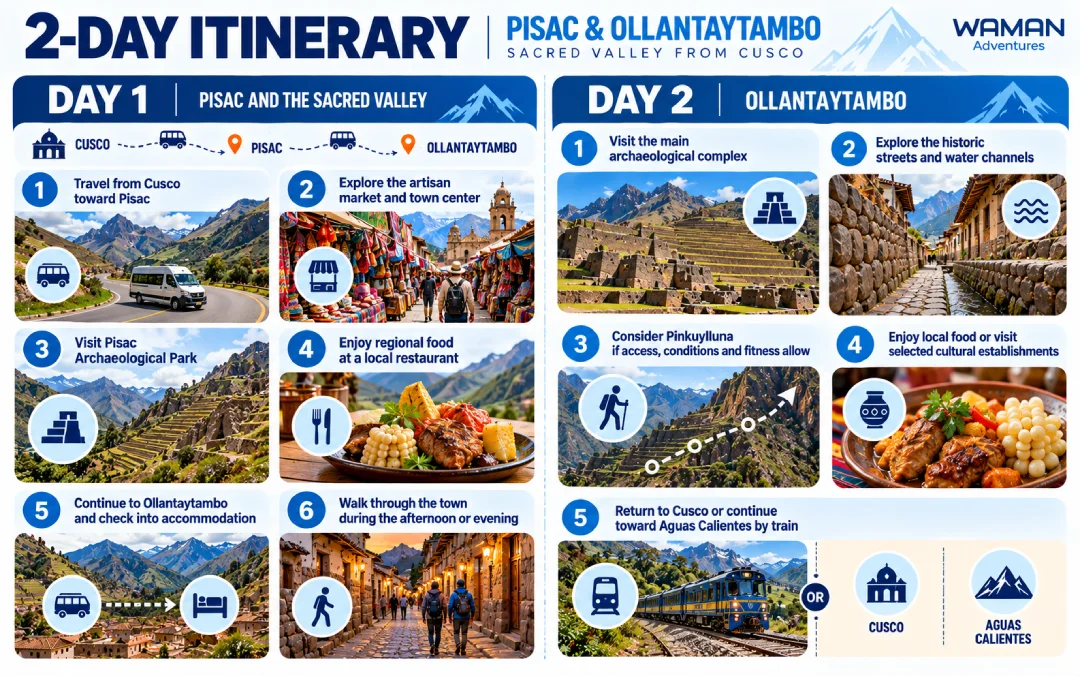
The infographic outlines a two-day itinerary through Pisac and Ollantaytambo
A railway connection to Machu Picchu requires separate train reservations and the appropriate archaeological admission ticket.
The two-day itinerary described here does not automatically include a visit to Machu Picchu.
Public, private and organized transportation
Travelers can visit Pisac and Ollantaytambo using shared transportation, private vehicles or organized excursions.
| Option | Main advantage | What to consider |
| Shared transportation or colectivo | Can reduce transportation costs | May require waiting times and additional connections |
| Private taxi or vehicle | Flexible visiting times and fewer transfers | Agree on the route, waiting time and total fare |
| Organized Sacred Valley tour | Coordinated transportation and scheduled visits | Check stops, guiding, entrance fees and meals |
Colectivos: Shared vehicles serve different towns and communities around Cusco and the Sacred Valley. Confirm the departure location, route and destination before boarding, since not every service stops directly at archaeological attractions.
Private transportation: A private driver can simplify visits to both towns, especially for families and small groups. Confirm whether the quotation includes waiting time and the return journey.
Organized tours: Group and private excursions may include Pisac, Ollantaytambo and other Sacred Valley attractions. Additional stops can reduce the time available at each location, so review the actual itinerary before booking.
Tickets and entrance fees for Pisac and Ollantaytambo
Both archaeological parks are included in the Boleto Turístico del Cusco, or Cusco Tourist Ticket.
The main options for foreign visitors are the partial ticket for the Sacred Valley circuit and the integral ticket covering additional attractions.
| Ticket | Published foreign adult price | Coverage and validity |
| Partial Tourist Ticket — Circuit III | S/70 | Pisac, Ollantaytambo, Chinchero and Moray; published validity of 2 days |
| Integral Tourist Ticket | S/130 | Multiple attractions across Cusco and the Sacred Valley; published validity of 10 days |
The Circuit III ticket may be sufficient for Mexican tourists planning to visit Pisac and Ollantaytambo together with other attractions included in that circuit.
The integral ticket may be more suitable when the itinerary includes additional archaeological sites and cultural attractions in Cusco.
These are published reference tariffs. Discounts, student eligibility, validity and official prices should be confirmed before purchase.
Consult the official Cusco Tourist Ticket tariff information from COSITUC before visiting.
Important note:
A guided tour does not automatically include the Cusco Tourist Ticket. Confirm whether archaeological admission is part of your package or must be purchased separately.
Pisac and its Andean cultural traditions
Pisac lies in Calca province, near the eastern entrance to the Sacred Valley of the Incas.
The town stands at approximately 9,750 ft (2,970 m) above sea level and is known for its artisan market, agricultural traditions and archaeological complex overlooking the valley.
Quechua cultural traditions remain present in local festivities, textiles, agricultural practices and community life.
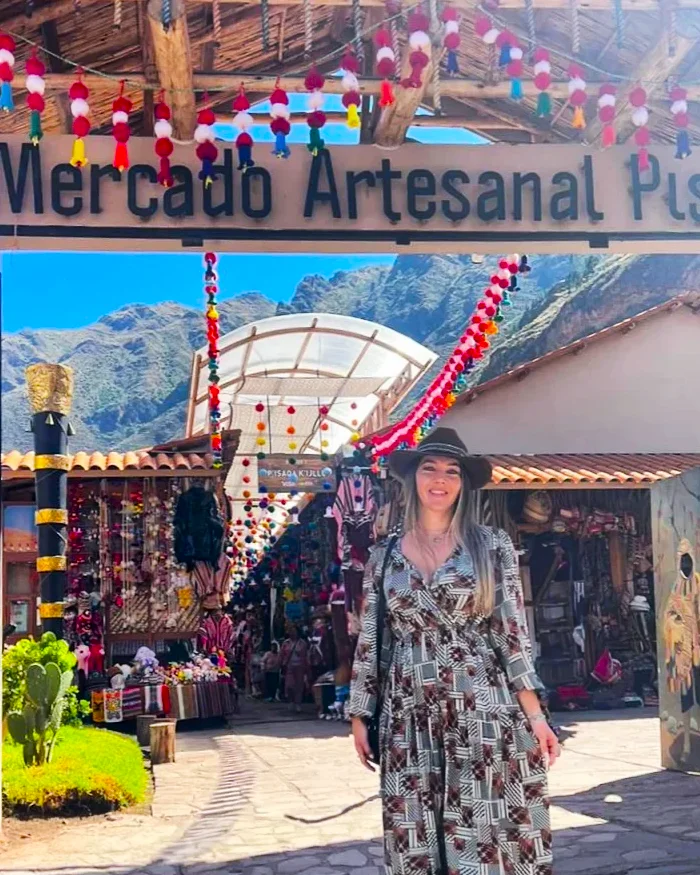
Pisac Artisan Market
The Pisac Artisan Market is one of the town’s best-known cultural attractions.
Located around central Pisac, the market offers an opportunity to explore artisan products, regional ingredients and local commercial traditions.
Visitors may find:
- Andean textiles: Ponchos, scarves, shawls, bags, blankets and woven accessories.
- Jewelry: Silverwork and decorative items inspired by traditional and contemporary Andean designs.
- Ceramics: Painted vessels, plates, decorative objects and souvenirs.
- Regional products: Seasonal produce, herbs and locally sold ingredients.
- Food and snacks: Empanadas, Andean corn, fresh juices and other foods depending on the day.
Not every product sold at the market is necessarily manufactured in Pisac.
Travelers interested in locally produced crafts can ask about their origin, materials and the techniques used by the makers.
Best days to visit the market
Commercial activity takes place on different days of the week, while Sundays have traditionally been associated with a particularly lively market atmosphere.
The number of stalls, opening arrangements and local activities can vary because of holidays, community events and changing schedules.
If a specific market experience is important to your trip, confirm current arrangements before visiting.
Shopping respectfully
Bargaining may be possible at some stalls, but it should be approached with consideration for the work involved in creating handmade items.
Textiles and other artisan products can require considerable time and specialized skills.
Asking about materials and production techniques is a useful way to learn more while supporting local makers.
Pro tip:
If traditional textiles are a priority, allow enough time to speak with artisans rather than limiting your visit to the busiest market stalls.
Pisac Archaeological Park
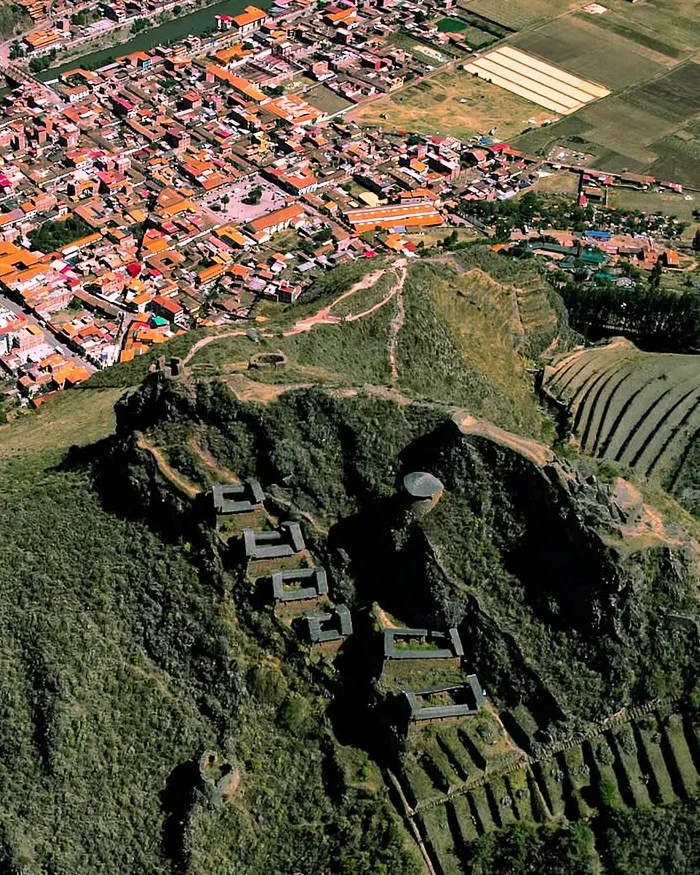
The archaeological complex is located on a mountainside above modern Pisac.
It contains extensive agricultural terraces, stone buildings, paths and ceremonial sectors associated with the Inca period.
The site demonstrates how Inca builders adapted architecture, agriculture and water management to steep terrain.
Main archaeological sectors
- Agricultural terraces: Extensive platforms built along the mountainside for cultivation and land management.
- Qallaq’asa: A sector containing stone structures on elevated terrain.
- Intiwatana: An important architectural and ceremonial sector associated with interpretations of solar observation.
- P’isaqa: A group of archaeological structures forming part of the larger settlement.
- Water channels: Engineering features associated with water management.
- Funerary areas: Archaeological remains visible on nearby slopes from authorized locations.
The archaeological park extends across a considerable area.
A visit to selected accessible sectors may take approximately one or two hours, while a more extensive exploration can require additional time and physical effort.
The elevation of the archaeological park may differ from the altitude of the town below.
Visitors should follow authorized routes and current archaeological conservation restrictions.
Artisan workshops and local experiences
Pisac also offers opportunities to learn about traditional Andean crafts and community activities.
Depending on availability, visitors may be able to:
- Observe weaving demonstrations.
- Learn about natural dyes and textile fibers.
- Visit ceramic or craft workshops.
- Participate in locally organized cultural experiences.
- Explore agricultural landscapes with an appropriate local guide.
These activities are not automatically included in every Sacred Valley excursion.
Visits to artisan workshops should be arranged with the participating makers, communities or service providers.
Ollantaytambo and its preserved Inca heritage
Ollantaytambo is located in Urubamba province at approximately 9,160 ft (2,790 m) above sea level.
The town is recognized for its monumental archaeological complex and the survival of important characteristics of Inca urban planning.
Its narrow streets, stone foundations and water channels remain part of an inhabited settlement.
Ollantaytambo is also an important railway gateway for travelers continuing toward Aguas Calientes and Machu Picchu.
Archaeological complex and Temple of the Sun
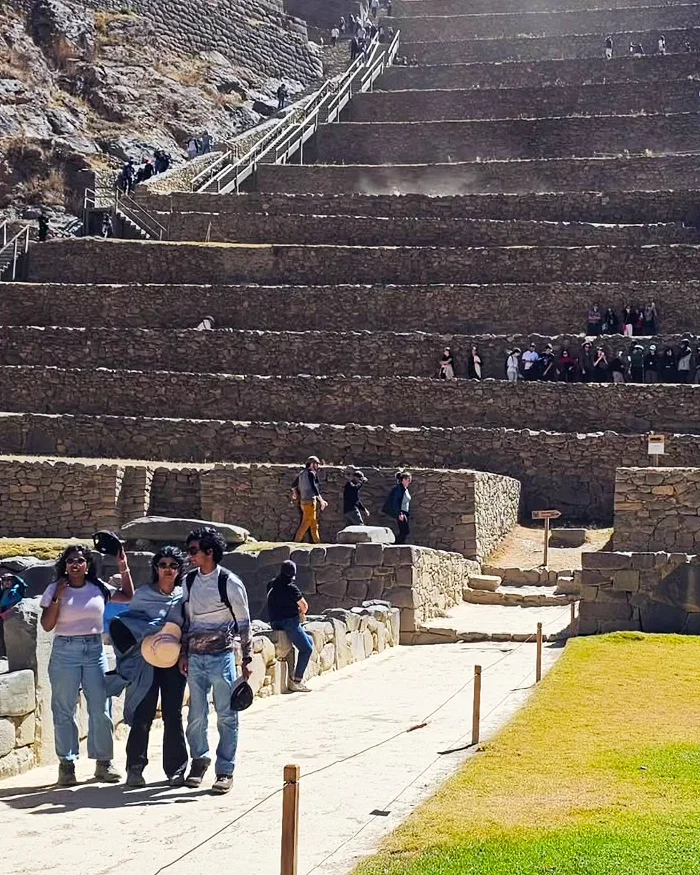
The main archaeological complex rises above the town on a steep hillside.
Its terraces, monumental stone walls, stairways and ceremonial structures demonstrate the architectural significance of Ollantaytambo during the Inca period.
The complex has been associated with agricultural, defensive, ceremonial and residential functions.
It also played an important role during the conflict between Manco Inca and Spanish forces in the sixteenth century.
Main archaeological features
- Temple of the Sun: A monumental sector containing carefully worked stone blocks.
- Agricultural terraces: Platforms rising above the town and offering views of the surrounding valley.
- Enclosure of the Ten Niches: A stone structure associated with interpretations of ceremonial use.
- Stone stairways: Routes connecting different terraces and archaeological sectors.
- Viewpoints: Elevated areas overlooking the inhabited town and mountains.
Some interpretations of the site’s astronomical or ceremonial functions remain subjects of archaeological study.
Visitors should allow approximately one or two hours for the main areas, with additional time for a slower visit or photography.
Stone steps and uneven surfaces may make higher sectors more demanding for travelers with limited mobility.

Historic streets and water channels
Ollantaytambo is particularly interesting because its archaeological heritage extends beyond the main monument.
Walking through the town reveals narrow streets, stone foundations and water channels associated with the Inca urban layout.
Some buildings combine original Inca stonework with later architectural additions.
This creates a different visitor experience from an archaeological complex preserved separately from modern settlement.
Traditional streets and stone walls
The town’s historic blocks preserve important features of the original layout.
Visitors can observe how the streets connect residential areas, public spaces and water channels.
Since Ollantaytambo remains inhabited, respect private homes and avoid blocking narrow passages during photography.
The historic water system
Water channels and fountains are important examples of Ollantaytambo’s engineering heritage.
Some remain operational today, although their current use and maintenance should not be assumed to be identical to their original Inca functions.
Did you know?
Ollantaytambo is both an archaeological destination and a living town where parts of the historic Inca street layout and water system remain visible.
Pinkuylluna and the Inca storehouses
Pinkuylluna is a hillside overlooking Ollantaytambo, opposite the main archaeological complex.
Stone structures commonly identified as Inca storehouses, or qolqas, remain visible on the slopes.
Their elevated position is associated with interpretations of how agricultural products were stored in the valley.
A hike toward authorized viewpoints can provide broad views of Ollantaytambo and its terraces.
However, the trail involves steep terrain, loose surfaces and exposed sections.
It should not be described as an easy walk for every traveler.
Access conditions can change, so confirm the permitted route before beginning the hike.
Traditional food in Pisac and Ollantaytambo
Food is an important part of exploring the living culture of the Sacred Valley.
Travelers from Mexico may recognize ingredients such as corn, potatoes and chili peppers, although local varieties and preparation methods differ from Mexican cuisine.
The dishes available depend on the market, restaurant, season and time of day.
Andean dishes and market snacks
Both Pisac and Ollantaytambo offer regional dishes and snacks associated with Cusco’s culinary traditions.
Foods to try in Pisac
- Cuy: Guinea pig prepared roasted or using other regional methods at selected establishments.
- Andean soups: Preparations with potatoes, grains, vegetables and local ingredients.
- Native potatoes: Traditional varieties served with different dishes.
- Empanadas: Baked pastries with fillings that vary by vendor.
- Choclo con queso: Large-kernel Andean corn served with fresh cheese.
- Tamales: Corn-based preparations with regional fillings and wrapping methods.
- Fresh juices: Drinks prepared using seasonal fruits.
Foods to try in Ollantaytambo
- Roasted or baked cuy: Available in some traditional restaurants.
- Anticuchos: Seasoned meat skewers prepared on a grill.
- Andean corn: Served as a snack or as part of a meal.
- Potato-based dishes: Preparations using local varieties.
- Empanadas and tamales: Convenient snacks available at selected establishments.


Traditional drinks
Several drinks are associated with the food traditions of Cusco and the Sacred Valley.
- Chicha de jora: A traditional fermented corn beverage containing alcohol.
- Chicha morada: A generally nonalcoholic drink made using purple corn.
- Muña infusion: A warm herbal drink prepared with an aromatic Andean plant.
- Other herbal infusions: Available in many restaurants and local establishments.
Herbal infusions should be presented as part of local food culture, not as scientifically established treatments for altitude illness or medical conditions.


For more information about regional ingredients and dishes, visit the Andean foods in Cusco guide.
Practical travel information for Mexican visitors
Travelers from Mexico can visit Pisac and Ollantaytambo without specialized trekking equipment, but they should prepare for mountain altitude, archaeological paths and variable weather. International travel requirements should also be checked separately from admission to local attractions.

The infographic summarizes practical guidance for Mexican travelers visiting the Peruvian Andes
Plan your Pisac and Ollantaytambo experience
Pisac and Ollantaytambo combine archaeological heritage, artisan traditions and historic Andean towns within the same Sacred Valley journey. If you prefer coordinated transportation and guided visits, explore the Sacred Valley tour or talk to a travel specialist about arranging your itinerary from Cusco.

Frequently asked questions about Mexicans in the Sacred Valley
Do Mexican citizens need a tourist visa to visit Peru?
Can Mexican pesos be used in Pisac and Ollantaytambo?
Can you visit Pisac Artisan Market on weekdays?
Are artisan workshops in Pisac open to visitors?
Are Pisac and Ollantaytambo accessible for travelers with limited mobility?
Is the Pinkuylluna hike suitable for children?

Share:




Related tours you might be interested in
Enjoy unique experiences in Cusco and Machu Picchu with the peace of mind that comes from working with a local travel agency
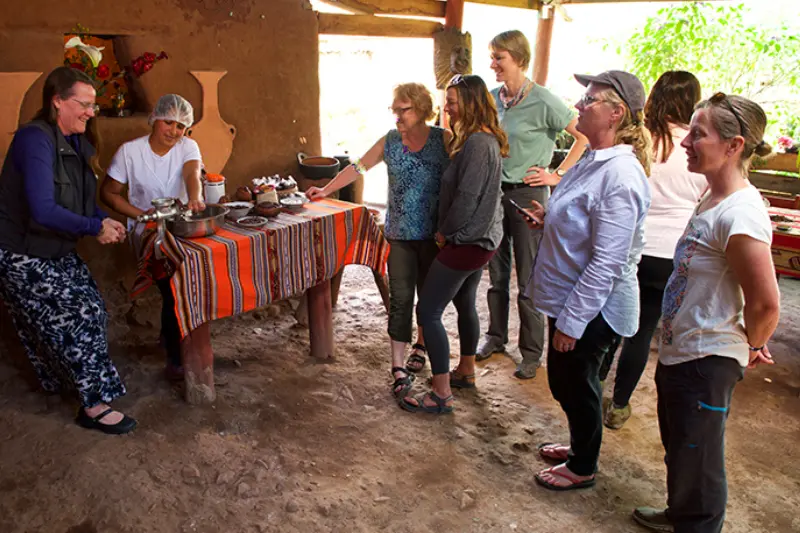
Rural and Agritourism Experience in Chichubamba
TRADITIONAL LIFE IN THE HEART OF THE SACRED VALLEY Let yourself be immersed in the mystique and...

Birdwatching Experience at Chacán Dam & Ensifera Camp
BIRD WATCHING IN CUSCO: CHACÁN & ENSIFERA CAMP Cusco is far more than history and dramatic...

Cusco Soccer Game Experience
EXPERIENCE CUSCO SOCCER LIKE A LOCAL Immerse yourself in one of Cusco’s most intense cultural...

Huacarpay Birdwatching Experience
HUACARPAY: ANDEAN BIRD SANCTUARY Discover the natural richness of Huacarpay, a high-Andean wetland...
If you liked this article and the information you found, give us 5 stars!
Table of Contents
Related blogs
Couples Trip from Mexico to Peru for a Romantic Vacation
15 min of reading
Explore Huayna Picchu like an expert: Our guide will take you gradually
12 min of reading