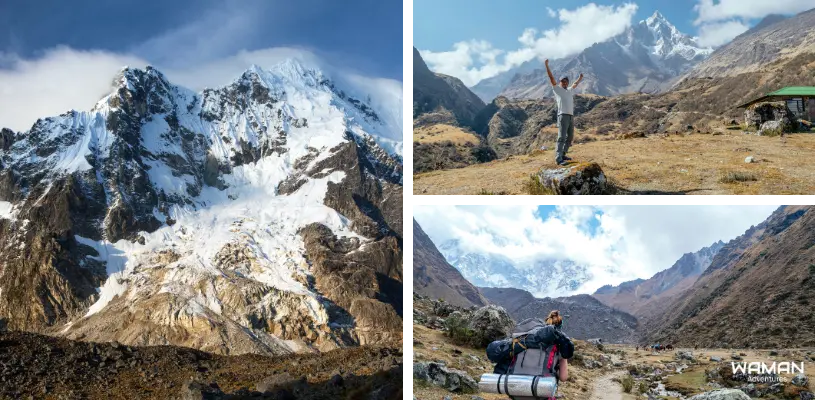
Cusco Instagram spots to fall in love with history and views
Ultima actualización en 12 November, 2025 por Waman Adventures
Last Updated on 12 November, 2025 by Waman Adventures
- Cusco Instagram Spots That Will Make You Fall in Love
- Cusco’s Historic Center
- Streets That Tell Stories: Cusco Instagram Spots
- Viewpoints With Spectacular Cusco Views
- Heritage Telling Stories in Each Stone
- Nature and Landscapes That Seem Almost Unreal
- Recommended Routes to Capture All Cusco’s Visual Essence
- Practical Tips Before Your Trip
-
Frequently Asked Questions
- Which cusco instagram spots require less physical effort?
- What’s the best time of day to photograph Cusco’s viewpoints?
- Is it safe to visit Humantay Lake without guide
- How do I avoid crowds at popular sites?
- Can culture be combined with photography?
- Is it worth bringing horse to climb Humantay or Vinicunca?
- What to avoid when photographing sacred places?
- How to reach viewpoints without wasting time?
Cusco Instagram spots are among the most stunning places in South America. From the cobblestone streets of the historic center to its incredible natural scenery, the city offers endless opportunities for photography lovers. In this guide, we show you the best places to capture unforgettable photos, including scenic viewpoints, colorful markets, and iconic destinations like Humantay Lake and Rainbow Mountain. You will also find useful advice on the best time to visit, how to get there, and how to make the most of the light to achieve exceptional shots during your trip.
Cusco Instagram Spots That Will Make You Fall in Love

Cusco is a city where history, color, and breathtaking landscapes come alive at every step. As you wander through its streets, you’ll find a perfect blend of Inca and colonial heritage reflected in landmarks like Qoricancha and the Plaza de Armas.
Beyond the historic center, some of the best Cusco Instagram spots await in the artistic neighborhood of San Blas and the cobbled streets of the Imperial City, where every corner tells a story and every view deserves a photo.
To make your photos stand out, embrace the authenticity of Cusco: use natural light, highlight local culture, and let each picture tell the story of this magical city.
Cusco’s Historic Center
Plaza de Armas
- Location: It’s located at 11,151 feet (3,399 meters) and is surrounded by Triunfo, Espaderos, Plateros, and Loreto streets.
- History: Previously it was known as Huacaypata, a political, religious, and social center. It was divided into two parts: Huacaypata (weeping) and Cusipata (rejoicing), separated by Saphy river. After conquest, you can see how Cathedral, Church of Company of Jesus, and several colonial mansions were built on Inca foundations.
You walk through a place that was scene of historic events like Túpac Amaru II’s execution (1781) and great celebrations like Inti Raymi.
What to see and why
- Monumental churches: Cathedral, Church of Company of Jesus, and portals decorating perimeter.
- In plaza’s center you’ll see fountain with Inca Pachacútec statue, placed in 2011.

Plaza Regocijo
- Location: Just one block southwest of Plaza de Armas, bordered by Espaderos, del Medio, Mantas, and Heladeros streets.
- History: It was part of ancient Inca Cusco (Cusipata) and festive space. During colonial period it was scene of bullfights, social events, and proclamations.
What to see and why
- Emblematic buildings: Cabildo Palace, current Contemporary Art Museum headquarters, and Garcilaso de la Vega House.
- Miota House, with rococo details, visible Inca foundations, and elegant balconies.
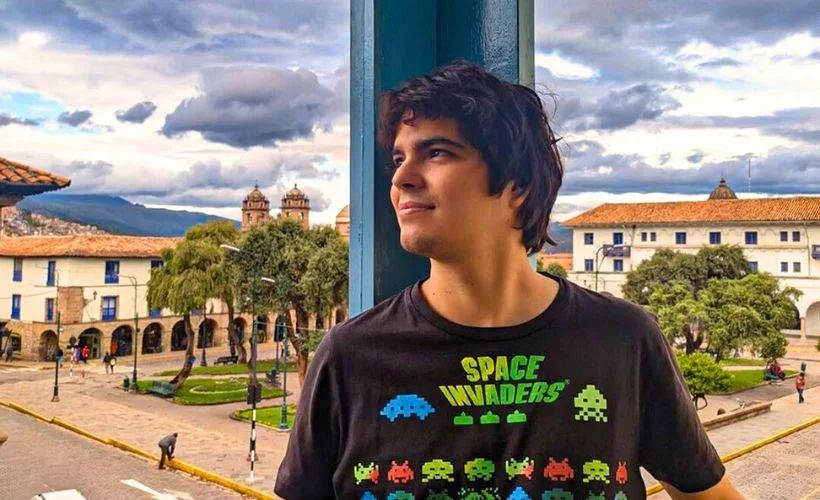
Important note:
A guide not only improves your experience, but helps you discover secret corners.
Streets That Tell Stories: Cusco Instagram Spots
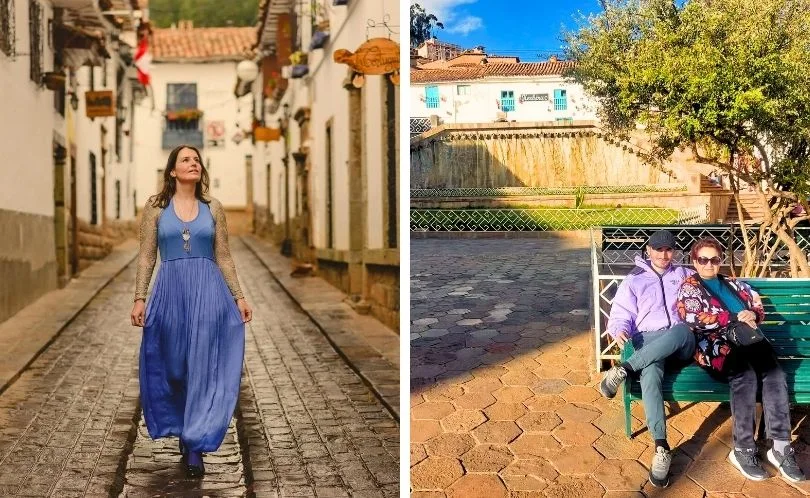
Siete Borreguitos Street
- Location: It’s in San Cristóbal neighborhood, a few minutes from Plaza de Armas.
- Brief history: Formerly, this street was known as “Chita Pata”, a grazing area where clothes were washed along Tullumayu river. The name “7 Borreguitos” comes from the number of sheep usually seen there and number seven, which has symbolic connotations in various cultures.
What to see
- Colonial stairs decorated with flowers and geraniums.
- Traditional houses with wooden balconies.
- Llamas and alpacas with local women dressed in traditional clothing (many pose for photos in exchange for tip).
- Picturesque facades with Andean details.
Practical advice
It’s advisable to visit street early morning to take advantage of soft light and avoid crowds. Have coins handy if you want to take photos with animals or local characters.

San Blas Neighborhood
- Location: You’ll find it 1,312 feet (400 meters) from main plaza, going up Hatun Rumiyoc street or Cuesta San Blas.
- Brief history: During colonial times, this place became indigenous artisans’ neighborhood. Here one of Cusco’s first Catholic churches was built.
What to see
- San Blas Church, with its famous cedar carved pulpit.
- San Blas Square, with its central fountain and artistic, tranquil atmosphere.
- Workshops and galleries, where Mendívil family stands out with long neck sculptures, and others like Olave and Mérida.
- Cobblestone streets and colonial houses, with blue doors and carved balconies.
- Panoramic view of Cusco center.
Practical advice
It’s ideal to visit it at late afternoon, when light highlights stone and adobe textures.
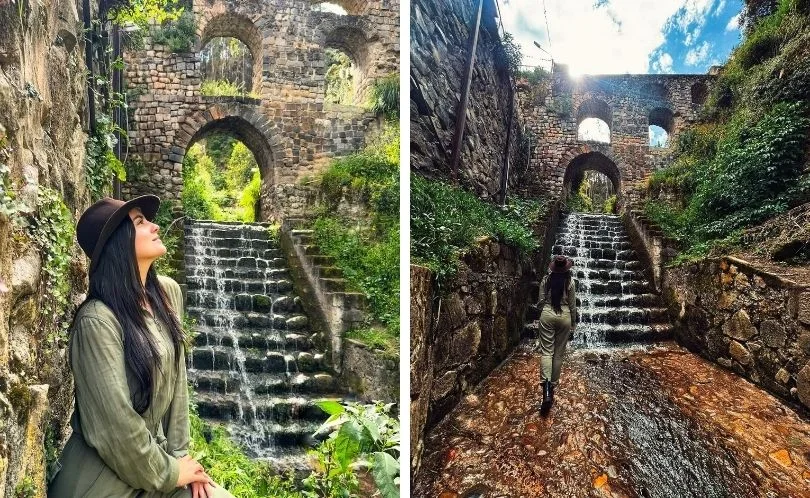
Sapantiana Aqueduct
- Location: You’ll find it between Qolqampata and Qantupata neighborhoods, approximately 15–20 minutes walking from Plaza de Armas, being one of cusco instagram spots.
- Brief history: It was built between 17th and 18th centuries by Jesuits, on an Inca canal bringing water from P’ujru river. At its time, it served to supply colonial center. It fell into disuse after 1950 earthquake.
What to see
- Three level aqueduct with round stone arches.
- Side stairs and green areas to rest.
- View toward Cusco center from certain angles.
- Good framing for symmetrical or minimalist photos.
Practical advice
It’s ideal to visit it in morning or before noon to take advantage of frontal light. Bring water and some warm clothing, as there’s shade and humidity.
Warning:
Be careful on stairs or wet stone paths, some sections can be slippery.
Viewpoints With Spectacular Cusco Views
Cristo Blanco Viewpoint
- Location: You’ll find it at Pukamuqu hill summit, approximately 1.2 to 3 miles (2–5 kilometers) from Cusco historic center.
- Brief history: There stands Jesus Christ statue, about 26 feet (8 meters) high. It was donated by Arab Palestinian community residing in Cusco in 1945. It was sculpted by Francisco Olazo Allende as symbol of protection and hope for city.
What to see
- You’ll have complete Cusco view: red tiles, Plaza de Armas, and Andean mountains surrounding city.
- From this point Sacsayhuamán and Ausangate snow peak also peek out.
- At night, illuminated statue stands out like spiritual beacon, visible from many city points.
Practical advice
There’s no entrance fee. You can arrive on foot or by taxi. Best moments to take photos are at dawn or dusk.

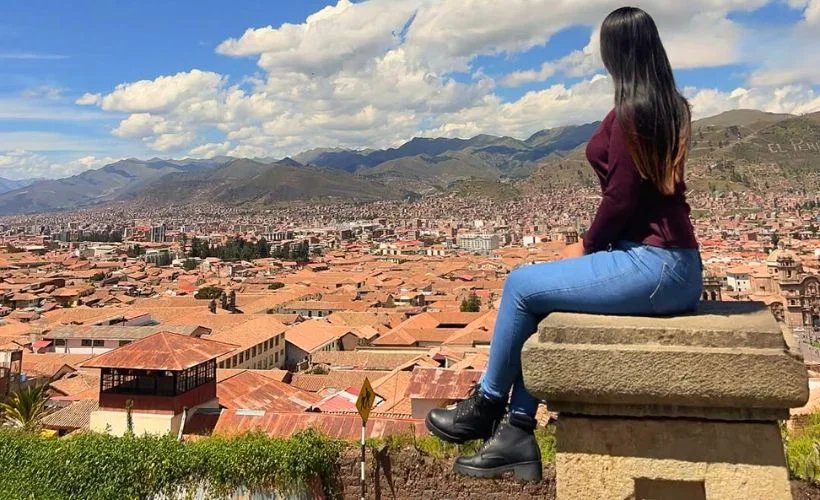
San Cristóbal Viewpoint
- Location: It’s situated on hill bearing same name, within traditional San Cristóbal neighborhood.
- Brief history: San Cristóbal Church was built in 16th century, on Inca prince Cristóbal Paullu’s lot. Temple was reformed after 1650 earthquake.
What to see:
- You have direct view toward Plaza de Armas, colonial churches, and all Cusco houses.
- Church giving name to site offers historic and architectural value.
- Quiet atmosphere, surrounded by cobblestone streets and local colonial architecture.
Practical advice
Access to this area is free and you can easily arrive walking, taking Plaza Mayor as reference. To capture best photographs, visit place in afternoon. Remember to bring warm clothing, as wind is usually felt strongly.
Heritage Telling Stories in Each Stone
Twelve Angle Stone (Hatun Rumiyoc)
- Location: It’s on Hatun Rumiyoc street, this connects San Blas Square with Plaza Mayor being other cusco instagram spots.
- Brief history: Stone forms part of wall belonging to Inca Roca palace (14th century reign). Its nature is diorite block with twelve perfectly carved angles, fitting precisely in Inca architecture.
What to see
- Twelve perfectly carved and assembled angles without mortar.
- Stone’s integration into Archbishop’s Palace, living testimony of epochs’ superposition.
Practical advice
You can visit during day, so you can better observe carving, remember it’s free and accessible.

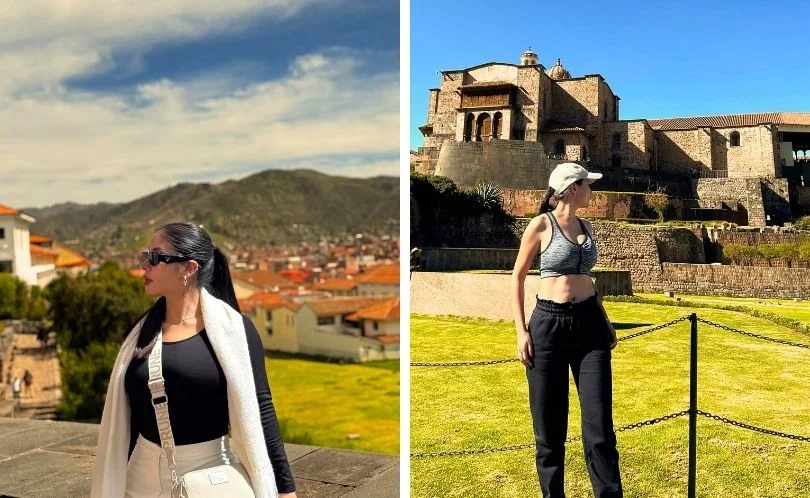
Qoricancha (Temple of the Sun)
- Location: It’s in Cusco historic center this is one of cusco instagram spots, and you can access easily because it’s near Plaza Mayor.
- Brief history: It was temple dedicated to Sun god, built in 15th century by Inca Pachacútec. Its walls were covered with gold and it was Inca Empire’s astronomical ceremonial center.
What to see:
- Original Inca walls, with millimetric union and anti seismic technique.
- Convent’s colonial atriums, with baroque finishes.
- Archaeological museum: ceremonial pieces, textiles, ceramics, ceremonial remains, and original temple models.
Practical advice
Visit in morning to avoid crowds and take advantage of best light for photos. Hiring guide at entrance improves experience, as you’ll learn important details.
Nature and Landscapes That Seem Almost Unreal
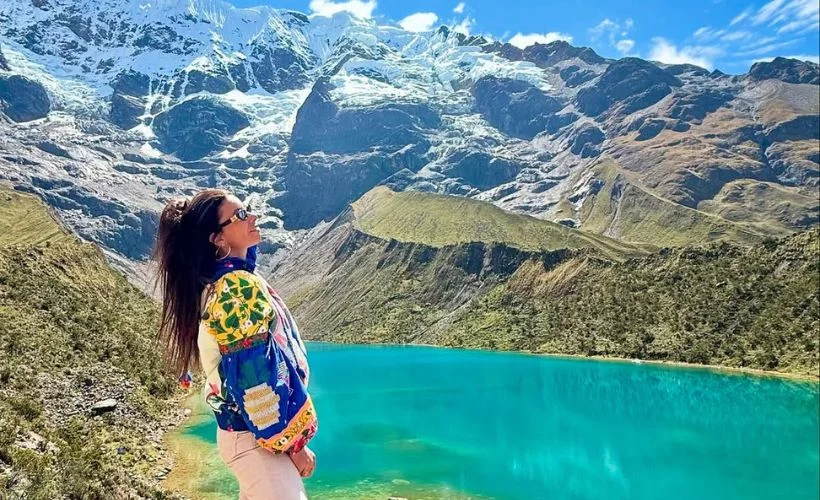
Humantay Lake
- Location: It’s located in Mollepata district (Anta), at about 13,780 feet (4,200 meters).
- Brief history: It’s glacial lagoon fed by Humantay Snow Peak, famous for its characteristic turquoise color.
What to see
- Its waters’ turquoise color, contrasting with snow and changing according to present minerals.
- Some tourists make apachetas and traditional offerings with coca leaves.
- Place’s vegetation filled paths, ideal for photographing.
Practical advice
It’s advisable to acclimatize a few days before in Cusco. Most tours leave very early to avoid crowds; you can also bring trekking poles, water, and appropriate clothing.
Maras Salt Flats and Moray Terraces
- Location: It’s in Sacred Valley, at about 11,089 feet (3,380 meters).
- Brief history:
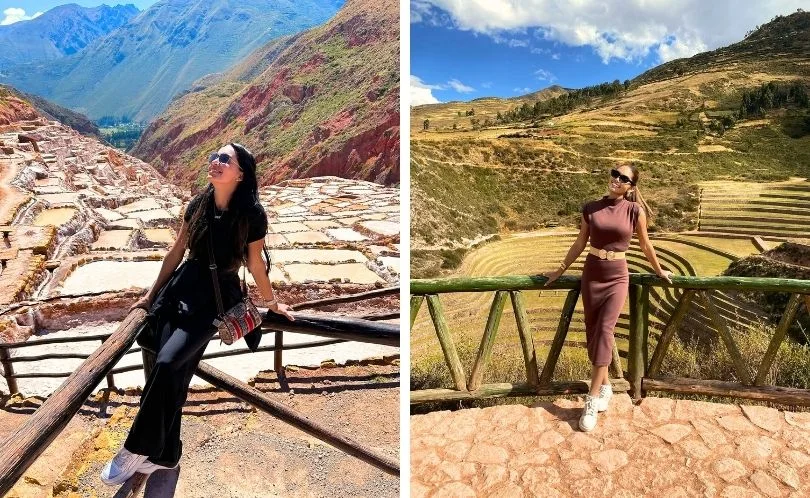
Maras, was exploited since pre Inca times. Incas took advantage of this source with stepped ponds to evaporate water and obtain artisan salt.
Moray, set of concentric circular terraces used as Inca agricultural laboratory.
What to see
- Maras: more than 3,000 salt ponds in different white and pink tones, forming geometric patterns. Artisans still collect salt by hand.
- Moray: circular terraces superimposed in natural amphitheater, where temperature differences between levels are noticed.
Practical advice
It’s better to visit during dry season (May to October) to see landscape with greater clarity. Bring water, sunscreen, and non slip footwear.
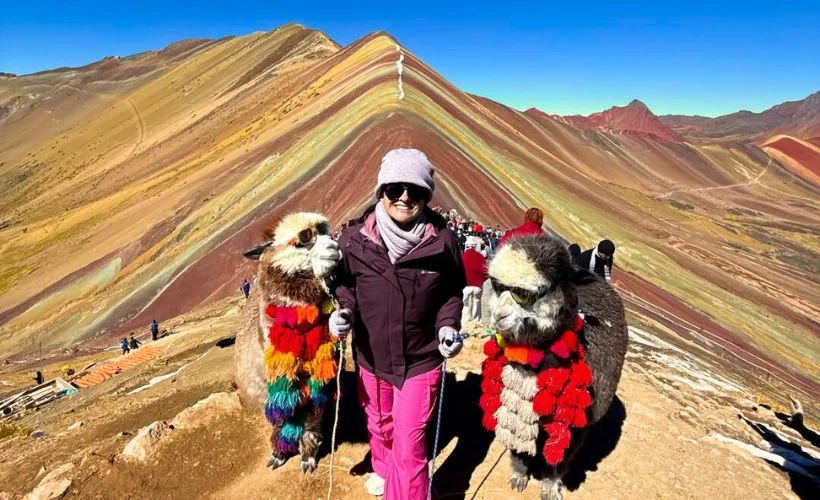
Rainbow Mountain (Vinicunca)
- Location: It’s also called Vinicunca, and is located at 16,404 feet (5,000 meters) altitude.
- Brief historyIts color is due to mineral formations like clays, sandstones, iron oxides, calcium carbonate, and others.
What to see
- Horizontal color stripes (reds, yellows, greens, and browns).
- Rock and mud valley, giving you views to Ausangate snow peak, ideal for dynamic photos.
Practical advice
Acclimatize before climbing, as hike is demanding and weather changes quickly. Best time to visit is August, when colors are most vibrant.
Recommended Routes to Capture All Cusco’s Visual Essence
|
Historic Center and Urban Photography |
|
| Suggested Itinerary | Plaza de Armas → Siete Borreguitos Street → San Blas Neighborhood → Sapantiana Aqueduct |
| Most Instagrammable | Colonial architecture, vivid colors, cobblestone alleys, art galleries, flowers, historic stairways. |
| Highlights |
|
| Useful Tips |
|
|
Cusco From Heights |
|
| Suggested Itinerary | San Cristóbal Viewpoint → Cristo Blanco Viewpoint |
| Most Instagrammable | You’ll get complete panoramic photos of historic center, colonial rooftops, morning fog, Andean sky, golden sunsets. |
| Highlights |
|
| Useful Tips |
|
Practical Tips Before Your Trip
- Prepare for altitude: acclimatize 1–2 days in center to avoid altitude sickness.
- Essential protection: bring sunscreen (SPF 50), hat, water, and layered clothing.
- Photography without crowds: rise early to take advantage of best light and fewer tourists.
- Cultural respect: don’t enter lagoons, don’t leave trash, and care for sacred sites.
Cusco instagram spots invite you to live the magic of a city full of history, culture, and landscapes that will leave you breathless. From enchanting Plaza de Armas to impressive Humantay Lake, every corner is perfect for keeping memories that will accompany you forever. At Waman Adventures we want to be part of your journey, helping you choose best tours, schedules, and places so you live an authentic and worry free experience. Write us at info@wamanadventures.com or +51 946 459 491 and let us accompany you on this unique adventure.
Frequently Asked Questions
Which cusco instagram spots require less physical effort?
If you seek Instagrammable spots without much effort, bet on Plaza de Armas, Siete Borreguitos Street, San Blas neighborhood, and accessible viewpoints like San Cristóbal. They’re areas with visual charm that don’t require long walks.
What’s the best time of day to photograph Cusco’s viewpoints?
To capture those magical moments at Cusco’s viewpoints, aim for sunrise or sunset. During those hours of soft, warm, and flattering light.
Is it safe to visit Humantay Lake without guide
Humantay Lake is at over 13,780 feet (4,200 m) altitude, exposing to possibility of altitude sickness. Therefore, although not mandatory, it’s recommended to go accompanied by guide to orient you in logistics.
How do I avoid crowds at popular sites?
Yes, key to avoiding crowds is arriving early, especially in high season. You can also explore less obvious angles or climb nearby viewpoint instead of main one to surprise with different view.
Can culture be combined with photography?
Of course. At sites like Qoricancha and San Blas you not only take beautiful photos, but you’re capturing living history and iconic architecture.
Is it worth bringing horse to climb Humantay or Vinicunca?
If you prefer to reduce physical effort, you can rent horse at starting points toward Humantay or Vinicunca. It facilitates ascent and allows you to concentrate on view.
What to avoid when photographing sacred places?
Don’t bathe or contaminate lagoons, don’t damage archaeological sites, or disrespect local rituals. This way your photos will be richer if they reflect your respect for culture and environment.
How to reach viewpoints without wasting time?
Cristo Blanco and San Cristóbal are accessible in few minutes from historic center. Good walking tour or short taxi ride avoids complex logistics.