Salkantay vs Pico de Orizaba: Which High Altitude Adventure Is Right for You?
Ultima actualización en 16 September, 2026 por Jhon Quispe
Last Updated on 16 September, 2026 by Jhon Quispe
Quick answer
For many travelers in Mexico, Pico de Orizaba is often the first reference point when you think about the country’s highest mountain. And when you look toward Peru, Salkantay Mountain is the snow-capped giant that commands the Cusco landscape. Comparing them makes sense for one simple reason: both involve high altitude, rapidly changing weather, and deep cultural significance, yet you experience each one in very different ways—similar to how choosing where to stay on the Choquequirao trek can shape the overall experience.
- Where are they located, and how high are they?
- Nevado Salkantay
- Pico de Orizaba
- Cultural and natural comparison: Salkantay vs Pico de Orizaba
- How to experience these mountains and what to expect along the way
- Altitude sickness or “soroche”
- What kind of adventure fits you best?
-
Frequently asked questions…
- What is the main experiential difference between Salkantay and Pico de Orizaba?
- How high are Salkantay and Pico de Orizaba, and how high does a typical traveler go?
- Where is altitude sickness more likely: Salkantay or Orizaba?
- Do I need technical or climbing gear for Salkantay or Pico de Orizaba?
- When is the best season for good weather and views on Salkantay vs Pico de Orizaba?
- What temperatures should I expect on Salkantay and Orizaba?
- How long does it take to get from Cusco to Soraypampa or Challacancha (Salkantay access points)?
- How do I know which one is right for me: Salkantay or Pico de Orizaba?
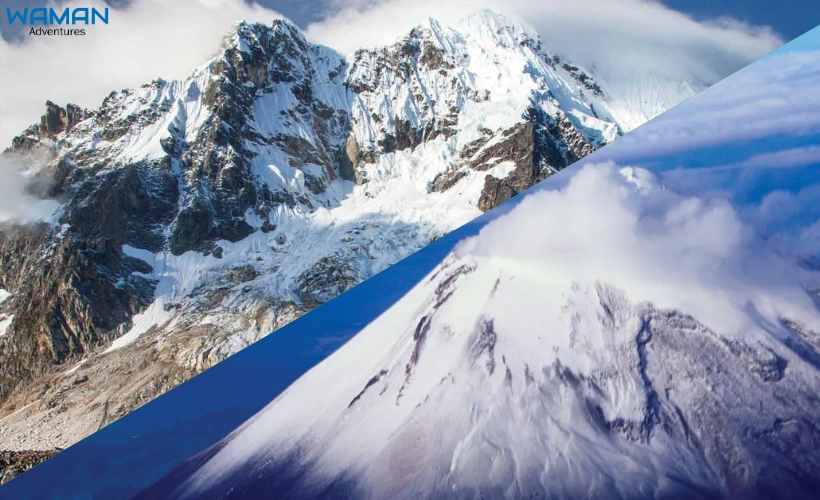
Salkantay Mountain is a snow-capped Andean peak known for its massive scale and its cultural importance as an Apu, a sacred mountain within the Andean world. Meanwhile, Pico de Orizaba is a stratovolcano and Mexico’s highest peak, located between Puebla and Veracruz, with glaciers and major hydrological and ecological importance in the region.
This Salkantay vs Pico de Orizaba guide is a comparison designed to help you understand how two enormous mountains are experienced in completely different contexts.

Where are they located, and how high are they?
Nevado Salkantay
Elevation
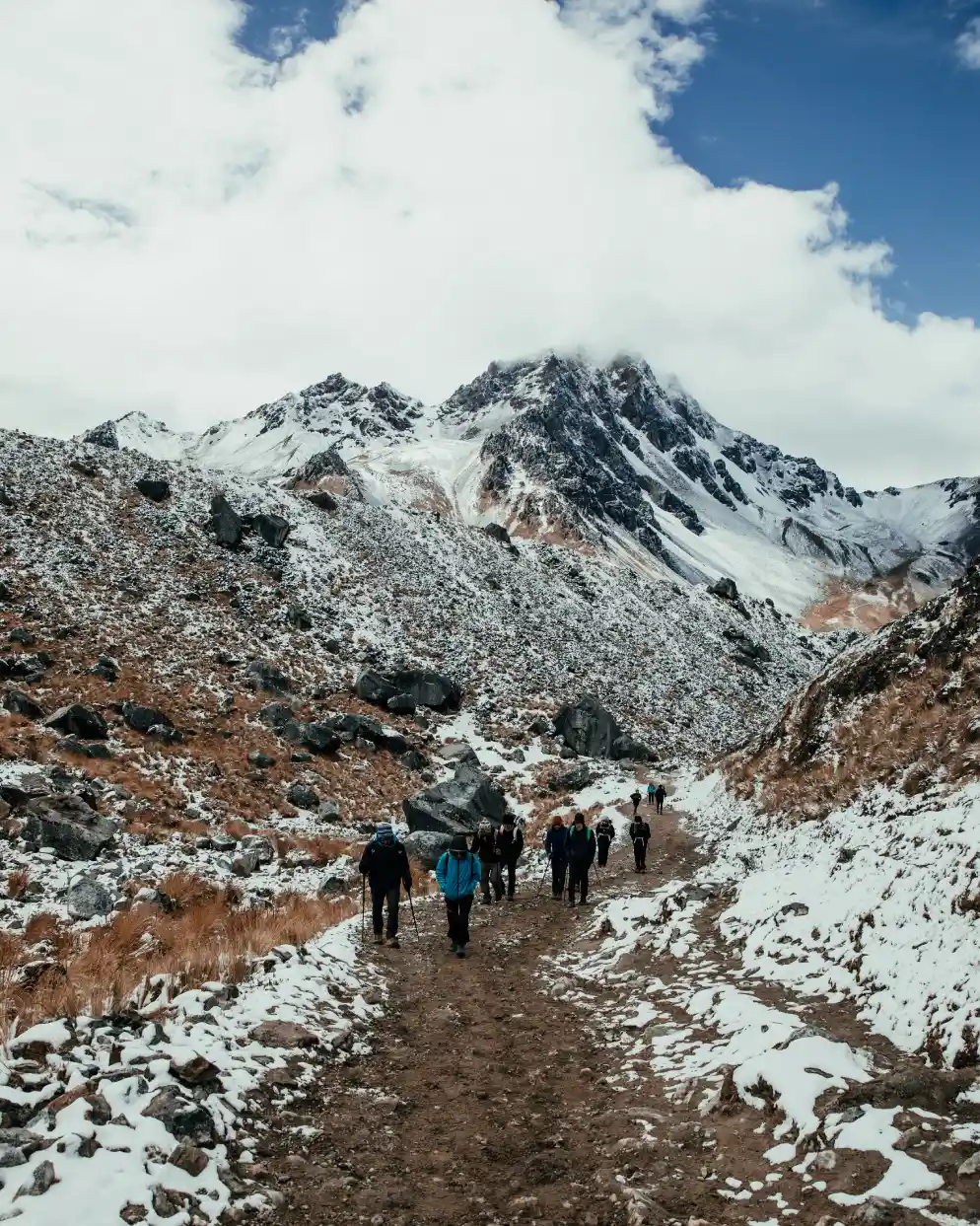
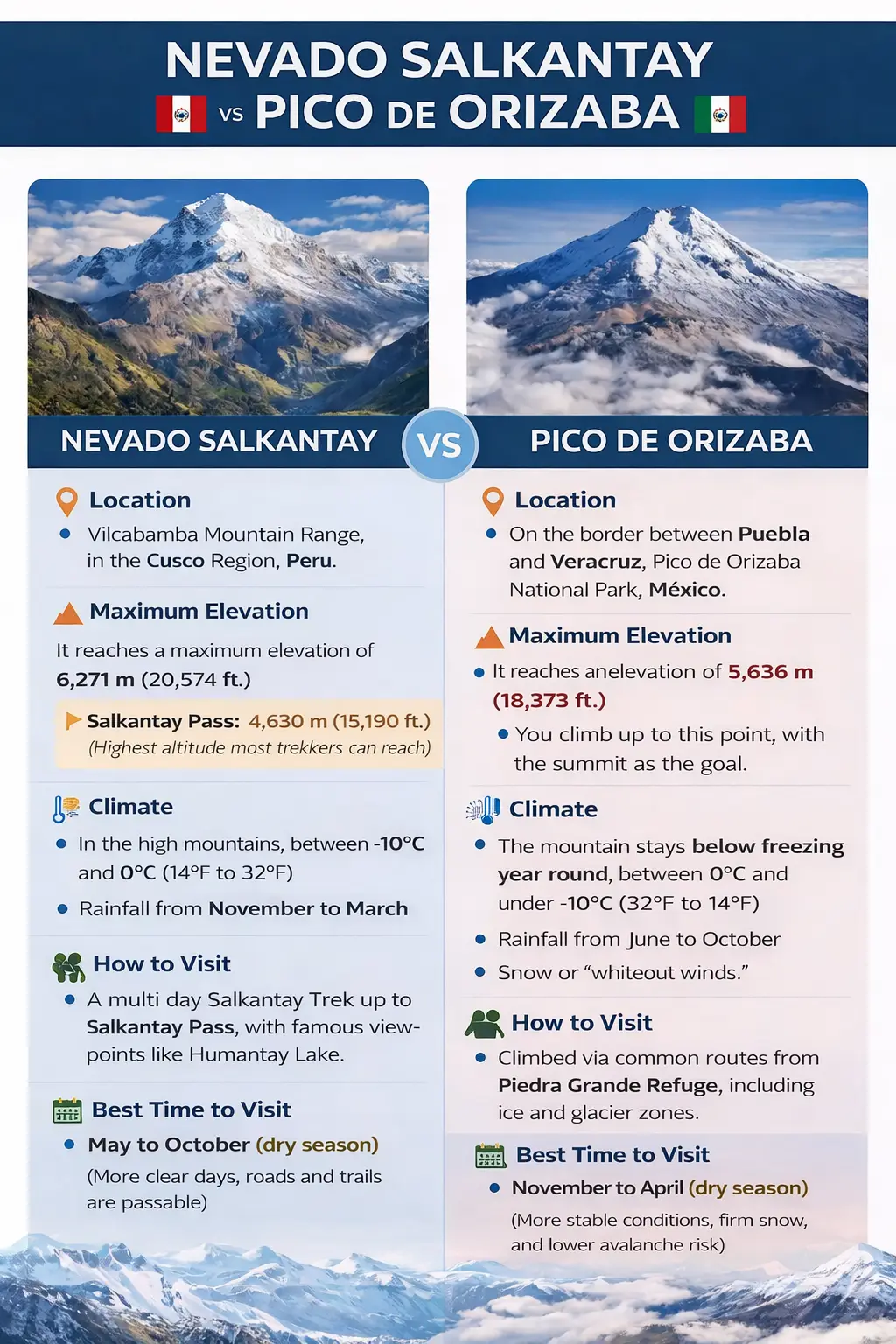
This mountain reaches a maximum elevation of 6,271 m (20,574 ft). That does not mean you will experience this altitude directly, since the highest point most travelers reach on the Salkantay Trek is the well-known Salkantay Pass at 4,630 m (15,190 ft).
Location
Salkantay sits in the Vilcabamba Mountain Range in the Cusco region. What matters most is that the massif spans several access points and surrounding jurisdictions. It is often referenced in connection with districts such as Santa Teresa, famous for the Cocalmayo hot springs, as well as areas linked to Mollepata or Limatambo.
From a practical standpoint, reaching Soraypampa or Challacancha typically takes about 3 to 4.5 hours from Cusco, almost always with a stop in Mollepata. These times should be treated as estimates, since weather and road conditions can slightly affect travel duration.
Climate
Average annual temperatures in the high mountain zone range from -10 to 0°C (14–32°F). The rainy season runs from November to March. Early mornings are usually cold and dry, while midday brings intense sun when skies are clear.
Pico de Orizaba
Elevation
This volcano rises to 5,610–5,636 m (18,406–18,491 ft), depending on the measurement reference used. In practical terms, you can reach above 18,000 ft (5,486 m). In this case, you do climb to this altitude, since part of the experience involves hiking up to that level, and the route from the Piedra Grande hut (refuge) is one of the most commonly used.
Location
Pico de Orizaba, also known as Citlaltépetl, lies on the border between Puebla and Veracruz. This iconic volcano is protected within the Pico de Orizaba National Park.
Climate
Near the summit, temperatures are typically below freezing, but wind is what truly amplifies the cold. To give you a sense of scale, the average year-round temperature in the highest sections is around -2°C (28°F). The rainier months generally run from roughly June to October, and snow or whiteout conditions can also occur.
Expert tip:
For both mountains, always pack layered cold-weather clothing, since wind can dramatically lower the perceived temperature, even on sunny days.
Cultural and natural comparison: Salkantay vs Pico de Orizaba
| Topic | Salkantay | Pico de Orizaba |
|---|---|---|
| Cultural meaning and names | Recognized as an Apu, a guardian or protective mountain in Andean belief. It is not just geography, but a living cultural symbol. | Citlaltépetl comes from Nahuatl and means “Mountain of the Star.” Traditional names such as Poyautécatl are also documented. |
| Mountaineering history | First documented ascent in 1952, noted by the American Alpine Club, and long considered a serious ice and altitude challenge in Vilcabamba. | First climbed in 1838, a prominent volcano with a broad snow-covered cone and a strong presence in regional mountaineering history. |
How to experience these mountains and what to expect along the way
Although both are giants of rock and ice, the way you experience them depends entirely on how much you want to walk. Not everything is about reaching the snow. You can enjoy each mountain in different ways, depending on how much effort you want to put in.
Nevado Salkantay
- For travelers chasing the photo without exhaustion, on clear days the mountain reveals itself from multiple points along the route. Your main challenge here is not fatigue, but cloud cover.
- If you want to feel the altitude, reaching Soraypampa is already a serious test, since you will be at 3,850 m (12,631 ft). It is very likely your body will notice the thinner air. Still, this is the perfect place to stand directly in front of the mountain without needing technical trekking equipment.
- The full Salkantay Trek experience is the best option if you want to be as close to the mountain as possible. The 4-day version strikes the right balance, allowing you to cross key points while enjoying dramatic climate changes, from snowfields to jungle. It is demanding, but it is what truly connects you with the Andean environment.
Pico de Orizaba
- Enjoying it as a postcard from the city is the right choice if you want to admire its perfect silhouette as a backdrop, without dealing with sustained cold or long hikes.
- Entering the National Park and feeling the volcano without climbing it is one of the most common options. You do not need to be a professional climber, but the cold and wind quickly remind you that you are standing in the territory of a giant.
- The high mountain refuge experience is the full adventure for those seeking more. Shelters such as Piedra Grande or Fausto González Gomar are igloo-style huts or alpine cabins with a pure mountain atmosphere. They serve as base camp for summit attempts or simply for those who want to experience the volcano’s absolute silence.


Altitude sickness or “soroche”
The number one risk when visiting these places is pushing your pace while your body is still trying to understand where it is. Most of the time, your body gives you clear signals. Headaches or deep fatigue are signs of low oxygen or dehydration. Here are a few tips to avoid ruining the trip:
- Before your excursion, give yourself the first 24 hours for acclimatization. Do not try to see everything on day one. Rest.
- Start hydrating early. If you are already sweating on the hike, add electrolytes to your water. Your body will thank you.
- The talking test means walking at a pace where you can still hold a conversation. If you cannot speak without gasping, you are moving too fast.
- Listening to your body is essential. If you feel unwell, stop and rest as long as needed. That pause often allows you to continue safely.
What kind of adventure fits you best?
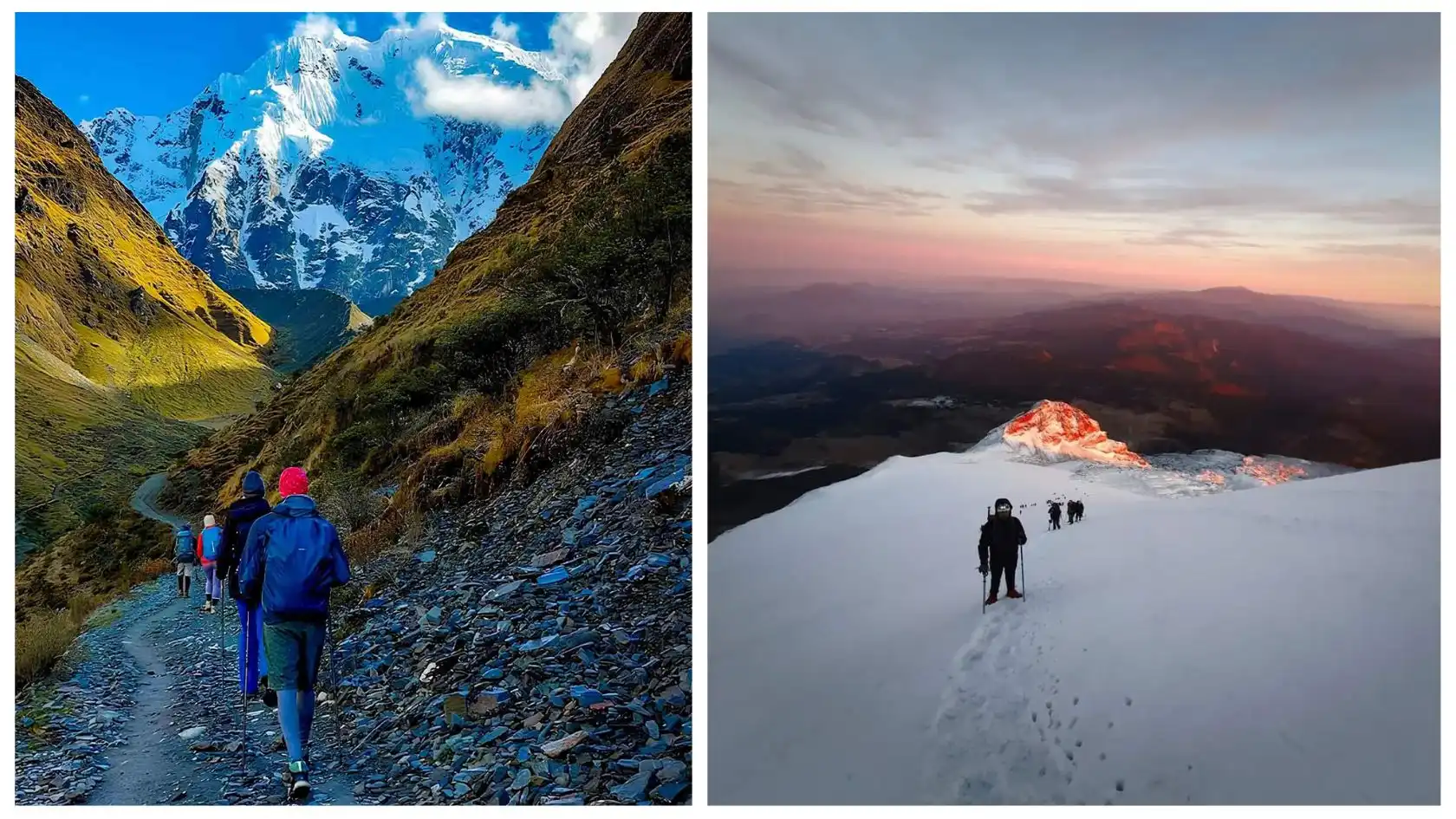
This section brings the Salkantay vs Pico de Orizaba comparison down to earth so you can choose based on your travel style.
- If you want an epic journey, Salkantay is the better choice. It suits travelers who love multi-day hikes, watching landscapes shift from glaciers to jungle, and feeling like they are walking a historic route. The challenge here is endurance and weather, but the visual payoff is constant.
- If you are drawn to the summit challenge, Pico de Orizaba is your answer. This is true high mountain terrain. Expect early starts, bone-chilling cold, and, in many cases, specialized gear. It is shorter in distance, but far more intense and technical.
In the end, neither option is better than the other. One is a long Andean trek, the other is a personal summit challenge.
Ready to start?
If reading this makes you feel that Salkantay is your kind of adventure, the next step is choosing how you want to experience it. You can stick with viewpoints or commit to the full journey on the classic Salkantay Trek.
If you prefer to enjoy the route without handling logistics, tight schedules, or acclimatization on your own, take a look at our options in Cusco. We handle the details so you can focus on enjoying the trail. This same planning mindset is helpful when researching where to stay on the Choquequirao trek, where logistics and pacing matter just as much.
Frequently asked questions…
What is the main experiential difference between Salkantay and Pico de Orizaba?
How high are Salkantay and Pico de Orizaba, and how high does a typical traveler go?
Where is altitude sickness more likely: Salkantay or Orizaba?
Do I need technical or climbing gear for Salkantay or Pico de Orizaba?
When is the best season for good weather and views on Salkantay vs Pico de Orizaba?
What temperatures should I expect on Salkantay and Orizaba?
How long does it take to get from Cusco to Soraypampa or Challacancha (Salkantay access points)?
How do I know which one is right for me: Salkantay or Pico de Orizaba?
Share:
Related tours you might be interested in
Enjoy unique experiences in Cusco and Machu Picchu with the peace of mind that comes from working with a local travel agency

Tour to Chinchero, Maras & Moray – Private Service
Discover with us this beautiful, charming and historic places, where we will visit the enigmatic...

2-Day Trip to Machu Picchu from Cusco with Machu Picchu Mountain
LIVE A UNIQUE EXPERIENCE EXPLORING THE BREATHTAKING LANDSCAPES ON A 2-DAY JOURNEY TO MACHU PICCHU...
6-Day Tour Cusco, Sacred Valley, Machu Picchu and Rainbow Mountain
EXPERIENCE THE MAJESTY OF THE INCAS: SACRED VALLEY, MACHU PICCHU & RAINBOW MOUNTAIN IN ONE TRIP If...

6 Day Andean Adventures Tour│With Flights from Chile
ENJOY THE BEST OF CUSCO CITY – MUST VISIT DESTINATIONS ARE WAITING FOR YOU! Want to explore Cusco...
If you liked this article and the information you found, give us 5 stars!
Table of Contents
Related blogs

Live the adventure: The Ultimate Guide to the Inca Jungle Trek
21 min of reading