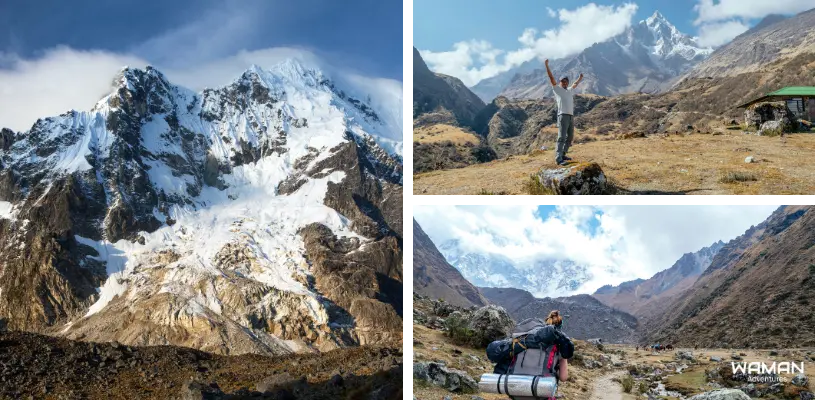
High in the mountains of Vilcabamba lies Choquequirao, the second Inca wonder of Peru. This incredible Inca construction has captivated visitors worldwide. Choquequirao is the second most important archaeological site after Machu Picchu. Its amazing structures and architectural design have been studied for years by archaeologists, historians, and anthropologists. This sacred site holds mysterious stories, incredible events, and numerous enigmas that researchers continue to uncover.
Only 40% of the ancient Choquequirao has been excavated and uncovered
WHAT IS CHOQUEQUIRAO PERU: THE SECOND INCA WONDER
What is Choquequirao?
The name “Choquequirao” comes from the Quechua word meaning “Cradle of Gold.” This archaeological monument is one of the most significant ancient sites in Peru. Its architecture, location, and huge surroundings make Choquequirao a hub of knowledge about the most important empire in South America. Researchers often refer to Choquequirao as another Cusco due to its role in the organizational structure of the territory.
Actually, Choquequirao has undergone different transformations, making it a subject of ongoing research to this day.
Where is Choquequirao?
Choquequirao is located in the eastern mountain range of southern Peru, specifically in the Vilcabamba mountain range. It is crossed by the Apurímac River, forming the breathtaking Apurímac Canyon, situated between the Andean highlands and the jungle.
What is the altitude of Choquequirao?
Choquequirao altitude ranges between 2,700 and 3,104 meters above sea level.
Llega a la hermana gemela de Machu Picchu con Choquequirao trek 5 dias.
Why is Choquequirao important?
Choquequirao played a strategic role in the Inca Empire due to its location, which perfectly connected the Andean highlands with the jungle. Its location allowed for efficient use of resources for both food and religious purposes. Notably, coca leaves—a sacred plant to the Andean worldview—were highly valued here.
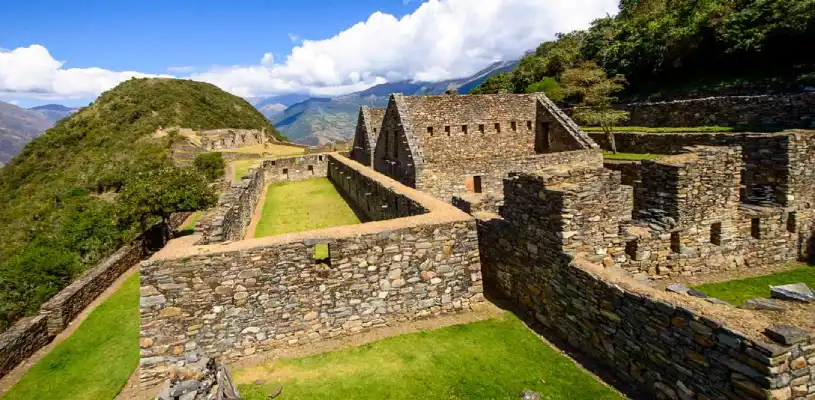
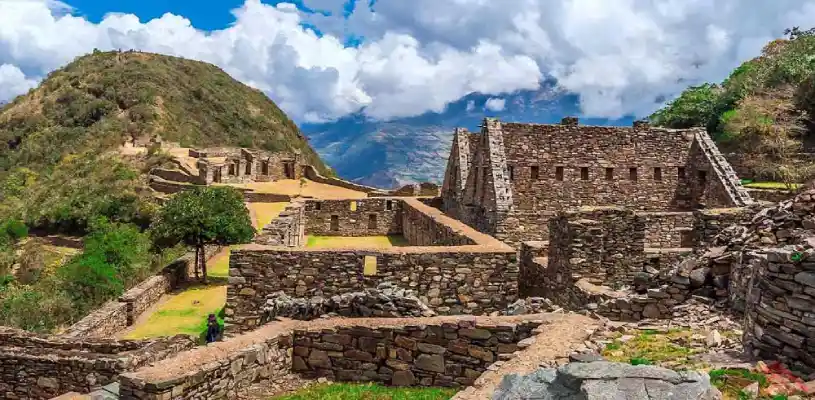
This site stands out for its architecture, geographical adaptation, and the integration of space within the landscape, reflecting the ideology of the ancient Inca society and engineering skills.
Geographical description of Choquequirao
Choquequirao spans different altitudinal zones, featuring rugged cliffs, valleys, mountains, and ravines that border the Apurímac River. This river, originating from the Pedrayoq Glacier, was vital for sustaining life in Choquequirao. These beautiful landscapes make the Choquequirao trek an extraordinary journey.
How Hard is the Choquequirao Trek?
The Choquequirao trek is considered to be of medium to high difficulty. It requires good physical condition because of the long walks and changes in altitude. The trail includes uneven dangerous terrains and steep paths, so preparation is an obligation.
For beginner tourists, it is highly recommended to train before your trip and consider hiring a guide to ensure safety and get the most out of your trekking experience.
How Long is the Choquequirao Trek?
The Choquequirao trek typically lasts between 4 and 6 days, depending mostly on the route you choose. This duration includes daily hikes and breaks to enjoy the stunning landscapes and explore the ruins.
Choquequirao Trail
The Choquequirao trail is the main path that connects the starting point of the trek with the ruins of Choquequirao. This trail traverses different incredible ecosystems, from high mountains to dense green jungles, offering a unique experience for nature and archaeology lovers.
When was Choquequirao built?
Studies suggest that Choquequirao was built during the reign of Tupac Inca Yupanqui (15th century) as part of the empire’s expansion. Other researchers argue that Pachacútec, the 9th Inca ruler, initiated its construction. Both theories may be correct in some way because Pachacútec focused on enhancing Cusco while Tupac Inca Yupanqui expanded the empire.
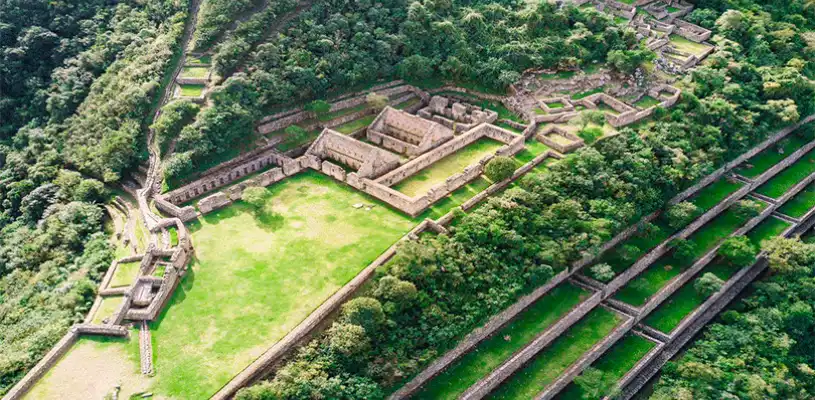
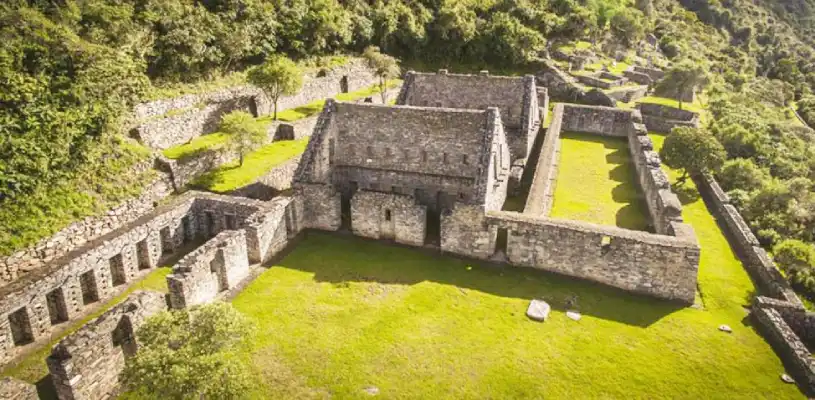
The construction began with central sectors (3 and 4), consisting of basic urban structures such as pacchas, kallankas, and ceremonial spaces. Over time, Choquequirao expanded, showcasing a clear evolution in its architectural complexity.
Recintos de Choquequirao
Historical references to Choquequirao
Historical references have provided valuable insights into Choquequirao, aiding its study and restoration:
1710: Juan Arias Díaz de Topete’s letter to Viceroy Manuel de Oms describes four villages discovered in the Vilcabamba mountain range, including Choquequirao.
1834: French diplomat Eugene de Sartiges visited Choquequirao and documented it in his journal, bringing the site international attention.
1847: French diplomat Leoncio Agrand created the first site maps, aiding future restoration efforts.
1909: Hiram Bingham visited Choquequirao, conducting small excavations and documenting its structures.
1964: Cusquean archaeologists Gustavo Alencastre Montufar and Fidel Ramos cleaned terraces and the main plaza.
1993: The COPESCO plan began restoration work.
2004-2008: Research and preservation efforts were conducted to enhance understanding of the site.
ARCHAEOLOGICAL DESCRIPTION OF CHOQUEQUIRAO
The archaeological site of Choquequirao is divided into twelve sectors, with the first topographic survey conducted in 1986 by Samanez and Zapata.
Sector 1:Hanan Temple, located north of the main plaza.
Sector 2: Comprising 17 buildings and 10 platforms, located to the east.
Sector 3: The main plaza, located at the center of the entire complex, consisting of three subsectors.
Sector 4: Situated south of the main plaza, referred to as the Sacred Monument.
Sector 5: Known as Ushno, located on the southern hill of the main plaza.
Sector 6: Southwest of Ushno, the Priest’s Residence.
Sector 7: Terraces located northeast of the main plaza, divided into five subsectors.
Sector 8: Llama Terraces, situated west of the main plaza.
Sector 9: Administrative sector located southeast of the main plaza, divided into two subsectors.
Sector 10: Cultivation terraces at Paraqtepata, on the right bank of the Ch’unchumayu stream.
Sector 11: Phaqchayoq, located in the middle section of the right bank of the Ch’unchumayu stream.
Sector 12: Pinchaunuyoq, another system of agricultural terraces located northwest of Choquequirao.
HOW TO GET TO CHOQUEQUIRAO
Visiting Choquequirao can be quite a challenge. It is because of the Inca Trail to Machu Picchu, this destination, requires quite physical effort and preparation. You can explore Choquequirao independently or with a travel agency, which is what we recommend. If you have trekking experience, or it is your second time visiting, you can go on your own. However, if you want to do the Choquequirao hike for the first time, it is highly recommended to book a guided trek with a travel agency.
Steps to Visit Choquequirao with a Travel Agency
Contact your preferred travel agency for detailed information.
Book your trip and choose the itinerary duration.
Make the required payment.
BEST SEASON TO VISIT CHOQUEQUIRAO
Choquequirao is open to the public year-round, but the region’s weather divides the year into two well-marked seasons: the rainy season and the dry season. The best time to visit is during the dry season, from April to October. While nights and mornings are often cold, daytime offers stunning views of the Choquequirao ruins in all their glory.
Do I Need to Book Choquequirao in Advance?
Yes, it is recommended to book Choquequirao in advance, especially if you plan to book the trek with a travel agency. This ensures availability and allows for better itinerary planning, guaranteeing a safer and more enjoyable experience for all the visitors.
Last reviewing
For beginner tourists interested in Choquequirao tours, consider the following aspects:
Physical Preparation: Ensure you are in good physical condition. Engage in training, hiking, and acclimating to the altitude.
Proper Equipment: Bring comfortable clothing, suitable trekking shoes, and functional gear such as waterproof jackets and sun protection.
Expert Guides: Hiring a guide can significantly enhance your experience by providing historical insights and ensuring your safety during the trek.
Accommodation and Food: Plan your accommodation and meal options during the trek. Some agencies offer complete packages that include these services.
There is still much to discover about Choquequirao, this breathtaking archaeological site. Research continues, revealing new aspects that make it even more special. If you are planning to visit Choquequirao, trust Waman Adventures. We are a specialized travel agency dedicated to providing quality services, ensuring an incredible experience for every traveler on all the Choquequirao Tours. We will be glad to hear from you!