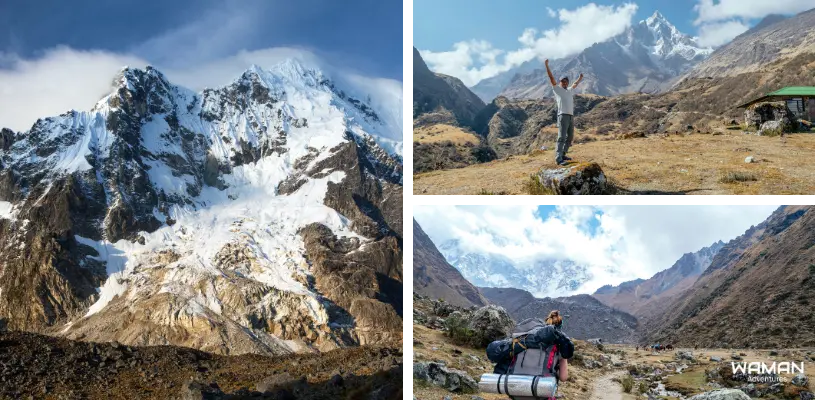
Is Inca Trail dangerous? Discover the answer to this exciting hike that challenges your limits and immerses you in the grandeur of the Andes.
Ultima actualización en 5 November, 2024 por Waman Adventures
Last Updated on 5 November, 2024 by Waman Adventures
- WHAT IS THE INCA TRAIL?
- WHY IS IT EXTREMELY FAMOUS?
- IS INCA TRAIL DANGEROUS?
- ACCIDENTS ON THE “DANGEROUS INCA TRAIL.”
- IT’S A CHALLENGING HIKE, BUT WORTH IT
-
GEOGRAPHICAL DESCRIPTION OF THE INCA TRAIL, CLIMATE CONDITIONS, AND BEST SEASON TO TRAVEL
- WHERE IS THE INCA TRAIL?
- HOW HIGH IS THE INCA TRAIL?
- ARE THERE LANDSLIDES?
-
WEATHER ALONG THE INCA TRAIL TO MACHU PICCHU
- IS THE INCA TRAIL DANGEROUS IN JANUARY?
- IS THE INCA TRAIL DANGEROUS IN FEBRUARY?
- IS THE INCA TRAIL DANGEROUS IN MARCH?
- IS THE INCA TRAIL DANGEROUS IN APRIL?
- IS THE INCA TRAIL DANGEROUS IN MAY?
- IS THE INCA TRAIL DANGEROUS IN JUNE?
- IS THE INCA TRAIL DANGEROUS IN JULY?
- IS THE INCA TRAIL DANGEROUS IN AUGUST?
- IS THE INCA TRAIL DANGEROUS IN SEPTEMBER?
- IS THE INCA TRAIL DANGEROUS IN OCTOBER?
- IS THE INCA TRAIL DANGEROUS IN NOVEMBER?
- IS THE INCA TRAIL DANGEROUS IN DECEMBER?
-
RESTRICTIONS, APPROPRIATE TREKKING EQUIPMENT, ACCLIMATIZATION TIPS, INFORMATION ON TOUR GUIDES AND RELIABLE AGENCIES
- ARE THERE AGE RESTRICTIONS FOR THE INCA TRAIL TREK?
- CAN PEOPLE OLDER THAN 60 YEARS COMPLETE THE INCA TRAIL PERU?
- CAN CHILDREN DO THE INCA TRAIL TO MACHU PICCHU?
- PACKING LIST FOR THE INCA TRAIL
- WHAT TO PACK IN MY DUFFLE BAG?
- IS THE INCA TRAIL DANGEROUS IF I DON’T PACK MY BACKPACK CORRECTLY?
- ALTITUDE SICKNESS ON THE INCA TRAIL PERU
- HOW TO ACCLIMATIZE FOR THE INCA TRAIL TOUR AND AVOID ALTITUDE SICKNESS?
- CHOOSING A TRAVEL AGENCY FOR THE INCA TRAIL
-
RISK ASSESSMENT: FAUNA, FLORA, TERRAIN CONDITIONS, RECOMMENDED SAFETY MEASURES WHILE TREKKING, TIPS TO AVOID ACCIDENTS AND INJURIES, INFORMATION ON CAMPS AND SAFE CAMPING AREAS
- IS THE INCA TRAIL TO MACHU PICCHU DANGEROUS?
- ARE THERE SNAKES ON THE INCA TRAIL TREK?}
- ARE THERE SPIDERS ON THE INCA TRAIL PERU?
- WHAT IS THE MOST DIFFICULT TRAIL SECTION OF THE INCA TRAIL?
- WHY ARE TREKKING POLES IMPORTANT?
- ARE TREKKING SHOES IMPORTANT FOR THE INCA TRAIL HIKE?
- INCA TRAIL CAMPING AREAS: ARE THEY DANGEROUS?
- IS THE 4 DAY INCA TRAIL DANGEROUS?
- IS THE 5 DAY INCA TRAIL DANGEROUS?
- IS THE SHORT INCA TRAIL DANGEROUS?
- IS THE 7-DAY INCA TRAIL + SALKANTAY TREK DANGEROUS?
- INFORMATION ABOUT FIRST AID KITS, DRINKING WATER AND FOOD
- SUM UP: IS THE INCA TRAIL DANGEROUS?
Is Inca Trail dangerous? Discover the answer to this exciting hike that challenges your limits whilst immersing you in the greatness of the Andes
Explore the famous Inca Trail and discover the answer to an intriguing common question: Is the Inca Trail dangerous? A question that immerses us in a journey full of emotion, fear, and hunger for discovery while remembering forgotten ancient Incan myths, or exploring ancient paths and natural wonders along the whole hiking route. Also, we have researched challenges and tips, which must be considered in order to undertake the most famous hike in South America, the Inca Trail.
WHAT IS THE INCA TRAIL?
It’s a legendary, tough and famous hiking route that is considered dangerous for many hikers; however, most of the time, this is a well-maintained and safe route for families and elder people also.
Furthermore, it was built by the Incas in order to reach Machu Picchu, one of the seven world wonders nowadays. In the Inca times, this route was a little patch of the “Qhapaq Ñan”, a great network of trails and roads connecting the Tawantinsuyo’s regions. This network through the entire Andes was used for religious, administrative, political, and military purposes.
According to chronicles and research, Cusco was the capital of the Incan territory and the main point where all roads and trails met together.

Machu Picchu is the last point of the classic Inca Trail
WHY IS IT EXTREMELY FAMOUS?
Indeed, the Inca Trail to Machu Picchu hike is the main tourist trail, which has been explored for thousands of intrepid trekkers, as it offers impressive natural sights full of biodiversity, towering towers, and exclusive archaeological places nestled beside the trail.
Hiking the Inca Trail is like experiencing how the real Incan people reached Machu Pichu hundreds of years ago. Bellow, some recognitions of the Inca Trail to Machu Picchu:
- Recognized as one of the 50 Best Trails by National Geographic.
- Featured as one of the 10 Best Treks in the World by Lonely Planet.
- Listed in 1983 as a Mixed World Heritage Site by UNESCO.
- Recognized among the 25 Best Routes in the World by Forbes.
IS INCA TRAIL DANGEROUS?
Perhaps you have heard that the Inca Trail to Machu Picchu is classified as dangerous, which is a totally crazy fact. On the other way around, it is a totally safe destination, as long as you follow your guide’s instructions and recommendations in this informative blog. Nonetheless, this hike is an adventure that has challenges and many rewards, especially Machu Picchu on the last day.

Hikers on the second day of the Inca Trail
ACCIDENTS ON THE “DANGEROUS INCA TRAIL.”
In the last 20 years, only 5 accidents have been recorded. So, the probability of suffering an accident is zero.
- 2004: Lightning struck a tourist while climbing Huayna Picchu Mountain.
- 2010: At the end of January, 2 tourists died during a mudslide.
- 2013: A tourist fell after crossing the security barrier.
- 2016: A tourist fell after crossing the security barrier when trying to take a selfie.
- 2020: The landslide occurred, taking a porter away.
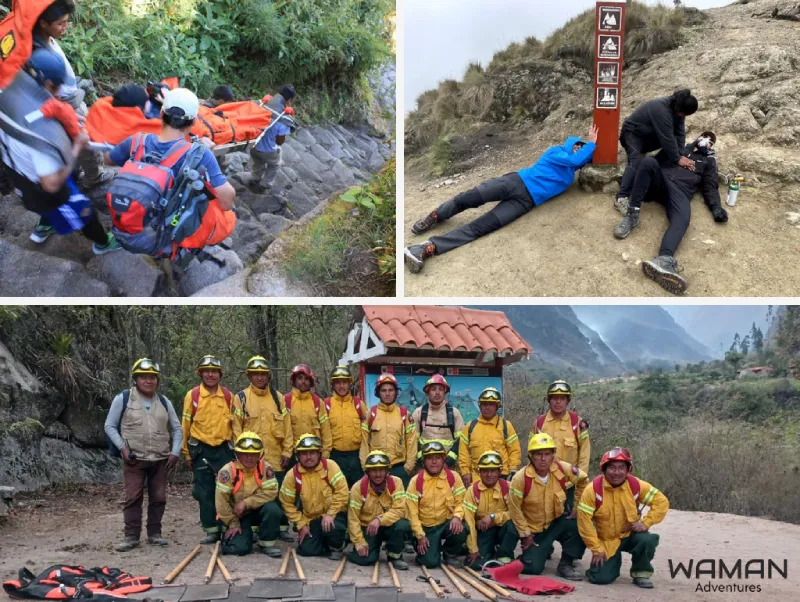
Respect the signs of the Inca Trail
IT’S A CHALLENGING HIKE, BUT WORTH IT
Let’s start by clarifying that you don’t need to be an expert in mountaineering, much less be in top-level physical condition. While it is true that the hitch of this trek is not something that can be determined, since each person perceives it differently, it is good to understand that this path to Machu Picchu is worth every step and effort you make. Discover your maximum potential on this incredible and globally valued tour.

Most unique landscapes on the trek
GEOGRAPHICAL DESCRIPTION OF THE INCA TRAIL, CLIMATE CONDITIONS, AND BEST SEASON TO TRAVEL
WHERE IS THE INCA TRAIL?
The Inca Trail lies roughly northwest of the Cusco region, between the Ollantaytambo and Aguas Calientes districts. Owing to its location close to the Amazon, the trail crosses high Andean ecosystems while entering the cloud forest, an important habitat that has wider biodiversity than high Andes, and also warmer weather. So, people usually think the Inca Trail is dangerous due to its terrain and location; on the other hand, these characteristics ensure and make it a better unique trekking experience worldwide.
HOW HIGH IS THE INCA TRAIL?
This hiking path crosses through different altitudes along its 4 days. Maybe this feature makes people ask, “Is Inca Trail dangerous?” However, I must say that you don’t have to worry as the hike is divided properly in order to make the hike suitable for everyone.
Furthermore, consider that along the whole route, there will be qualified trained staff for every situation.
INCA TRAIL (4 OR 5 DAYS)
- Highest altitude: 4,215 m / 14,815 ft.
- Lowest altitude: 2,709 m / 8,887 ft.

Warmi Wañuska is the hardest challenge of the Inca Trail
SHORT INCA TRAIL (2 DAYS)
- Highest altitude: 2,730 m / 8,956 ft.
- Lowest altitude: 2,100 m / 6,892 ft.

The highest point of the short Inca Trail
ARE THERE LANDSLIDES?
Landslides are one of the main reasons to consider the Inca Trail dangerous. However, natural events occur mostly during the rainy season, especially in February, known as the rainiest month. That is why the Inca Trail is closed throughout that month, to safeguard the integrity of all visitors and provide proper maintenance for the entire trail.
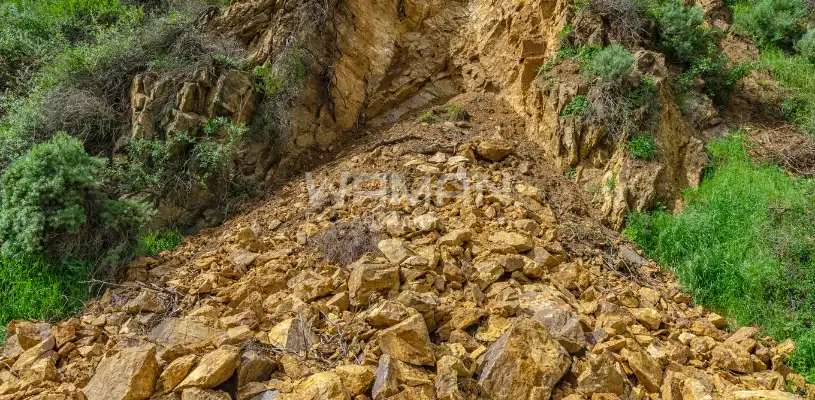
Landslide near the Inca Trail
WEATHER ALONG THE INCA TRAIL TO MACHU PICCHU
Many of the accidents or incidents on the Inca Trail have occurred in the wet season, so choosing the most convenient season to travel is very important. That’s why many people ask, “Is the Inca trail dangerous?” However, the reality is very different, as it is a trail authorized to be visited during 11 months of the year, except February. During this month, rainfall occurs constantly, thus the Peruvian State closed the Inca Trail and decided to maintain the whole path length.

A beautiful landscape at sunset, exclusive to the Inca Trail
IS THE INCA TRAIL DANGEROUS IN JANUARY?
It is the rainiest month to trek along this sacred trail. However, it’s one of the less crowded months, so you’ll not encounter many people on your 4-day hike. Also, witness lush green vegetation while trekking.
IS THE INCA TRAIL DANGEROUS IN FEBRUARY?
In this month, the Inca Trail is closed due to maintenance and weather.
IS THE INCA TRAIL DANGEROUS IN MARCH?
The Inca Trail is established for visitors. Rainfall decreases, and the weather is a little bit better. After February, you’ll find the path is in the best condition.
IS THE INCA TRAIL DANGEROUS IN APRIL?
The rainy season has come to an end this month, and the presence of people is still low compared to the high season. This month still offers you excellent views and dense vegetation thanks to the rains of the previous months.
IS THE INCA TRAIL DANGEROUS IN MAY?
The dry season begins this month and the high season too. You’ll meet many people each day, but also take amazing photos and enjoy the trails.
IS THE INCA TRAIL DANGEROUS IN JUNE?
The weather this month is really great. It has clear skies and hot days but colder nights compared to other months. June is also the month for tourism, and many Peruvian festivals like Inti Raymi are organized or celebrated.
IS THE INCA TRAIL DANGEROUS IN JULY?
This month is the most crowded one. The weather is still good, so waterproof clothing is not necessary. If you want to travel in July, you must book ahead in order to find and reserve entrance tickets and hotels.

Highlights of the Inca Trail
IS THE INCA TRAIL DANGEROUS IN AUGUST?
Cusco and the Inca Trail are still crowded. Also, August marks the end of the high season of tourism. The weather in August is very windy, clear, and sometimes foggy.
IS THE INCA TRAIL DANGEROUS IN SEPTEMBER?
Despite the sunny days, the dry season is ending, so rain is more likely. It is also a month when temperatures increase, so there is a warmer climate even at nighttime.
IS THE INCA TRAIL DANGEROUS IN OCTOBER?
Rainy season begins technically, but it is not synonymous with danger, since the days are still sunny, despite fewer visitors. Therefore, it is an ideal month to trek and visit Machu Picchu.
IS THE INCA TRAIL DANGEROUS IN NOVEMBER?
It can be a wet and muddy trekking experience, but the rains usually do not last all day and there are weeks without rain. Thanks to the rains, these months offer lush green landscapes and growing vegetation.
IS THE INCA TRAIL DANGEROUS IN DECEMBER?
December is still a good month for trekking. Rainy, snowy, and clear days are present in the Andes.
RESTRICTIONS, APPROPRIATE TREKKING EQUIPMENT, ACCLIMATIZATION TIPS, INFORMATION ON TOUR GUIDES AND RELIABLE AGENCIES
ARE THERE AGE RESTRICTIONS FOR THE INCA TRAIL TREK?
No, there isn’t an age restriction for trekking the Inca Trail. However, we recommend being between 12 and 55 years old, for the following reasons:
The trekking difficulty is tough to challenging. It means it required proper acclimatization and packing proper equipment in order to attempt this experience.
- This trail lies on foothills and has ups and downs paths while witnessing towering mountains.
- The second day is, for most hikers, the toughest one due to the Warmi Wañuska Pass, roughly at 4,200 m.a.s.l.
Important: This hike is suitable for most people who have acclimatized and invest a little more before attempting it. This is a one-in-a-lifetime Peruvian experience, so, if you are interested in the Inca Trail, click on it.
CAN PEOPLE OLDER THAN 60 YEARS COMPLETE THE INCA TRAIL PERU?
Indeed, many people over 60 years old have conquered the Inca Trail. Nevertheless, before taking the Inca Trail off, acclimatize, pack proper gear, and choose a reliable company like Waman Adventures. We recommend that you take into consideration the following information:
- If you are over 50, we recommend a fairly exhaustive medical check-up before traveling to Peru to attempt the Inca Trail.
- Training physically and mentally before attempting it.
- Choose the right gear for trekking. I mean, light, waterproof, a proper backpack, and so on.

Challenge the most beautiful South American trek with your favorite person
Recommendation: If you want less weight, you can hire a personal porter who will carry your backpack. Ask more about this extra to our team.
CAN CHILDREN DO THE INCA TRAIL TO MACHU PICCHU?
Of course, yes. The Inca Trail to Machu Picchu is not dangerous either for children or adults. The only thing you should consider is that, if you have children under 17 years of age, they must always be accompanied by a responsible adult in charge of them.

Have a family adventure
PACKING LIST FOR THE INCA TRAIL
Packing the right and necessary items for all your hiking days will make the “Inca Trail Dangerous” a totally spectacular and safe experience. In fact, as with most outdoor activities, there is always some degree of risk associated with it, and what better way to prepare yourself for any challenges and adversities that may arise during this adventure than to be well prepared? Packing well.
WHAT TO PACK IN MY DUFFLE BAG?
Although we already know that the Inca Trail is not as dangerous as many people think, we must reiterate that luggage is very important, which is why, days before your Inca Trail adventure, Waman Adventures will provide you with a duffle bag, where you can put everything you need for the trek (06 kg max per traveler), which will be transported by the porter in charge and will be available only in the rest camps. Therefore, what you should pack in the duffle bag is the following:
- Sleeping bag (rent from us).
- Light hiking shoes.
- Thermal jacket.
- 4 or 5 shirts.
- 2 to 3 trekking pants.
- 4 sets of underwear and socks.
- Quick Dry Towel.
- Toiletries.
IS THE INCA TRAIL DANGEROUS IF I DON’T PACK MY BACKPACK CORRECTLY?
No. Trekking items make your trekking days easier. Pack the following items.
- Hats and sunglasses.
- Waterproof jacket.
- Fleece jacket.
- Sunscreen.
- Insect repellent.
- Hand sanitizer.
- Toilet paper.
- Personal medication.
- Camera and batteries.
- Extra money for souvenirs, snacks, drinks and tips.

Proper backpack for the Inca Trail
ALTITUDE SICKNESS ON THE INCA TRAIL PERU
I remind you that height variations during this expedition are common in the first two days. During the first two days of trekking, you will travel through high Andean places that could cause the famous “Altitude Sickness, Mountain Sickness, or Soroche.” It makes the trek more challenging, affects the hiking experience, and is also one of the reasons why people ask, “Is the Inca Trail dangerous?”
HOW TO ACCLIMATIZE FOR THE INCA TRAIL TOUR AND AVOID ALTITUDE SICKNESS?
If you follow our tips, you’ll avoid illnesses that could make the Inca Trail dangerous. The main recommendation when acclimatizing is to take at least 3 days in Cusco (3,399 m), but you can take as many days as your body requires to adjust. Most of the tourist just spend one day or even hours before starting their activities.
For more effective acclimatization, follow the following steps:
- Eat lightly: the body works slower at altitudes above 3000 meters above sea level, and it is essential to avoid heavy meals that may affect your digestive system.
- Avoid alcohol: this causes dehydration and could seriously affect your health.
- Hydration: Drink plenty of water.
- Acclimatizing tour: while you are in Cusco, you can take 1-day pre-tours, which will allow you to better adapt to changes in altitude.

Nutrition to acclimate
CHOOSING A TRAVEL AGENCY FOR THE INCA TRAIL
It is absolutely necessary or mandatory to do the Inca Trail or any other trek with a legal, experienced, and recommended travel agency such as Waman Adventures in order to avoid following the myth of “Is the Inca Trail dangerous?”
Remember that outdoor activities always have their level of risk, adventure and challenge. Doing it with an agency that does not guarantee your safety during the tour would be very irresponsible on their part.

Important: Only authorized travel agencies by the Peruvian Government can operate and offer the Inca Trail to Machu Picchu.
RISK ASSESSMENT: FAUNA, FLORA, TERRAIN CONDITIONS, RECOMMENDED SAFETY MEASURES WHILE TREKKING, TIPS TO AVOID ACCIDENTS AND INJURIES, INFORMATION ON CAMPS AND SAFE CAMPING AREAS
IS THE INCA TRAIL TO MACHU PICCHU DANGEROUS?
Repeat, the Inca Trail is not dangerous, however, all outdoor activity is risky at some point. I mean, wild animals, slippery trails, weather, camping places, and so on. We always recommend you follow what the leader recommends to do in order to guarantee the safety of the whole group. If you want to have a more pleasant and safe experience, follow the following tips:
- Avoid alcohol and quick smoking
- Don’t become close to the cliffs.
- Please note the signs and advice along the trail.

ARE THERE SNAKES ON THE INCA TRAIL TREK?}
Yes, snakes are present along the Inca Trail and around Machu Picchu, too. Some of them are not poisonous and others, indeed, are. The most common viper snake you’ll find along the Inca Trail is a type of Fer De Lance, which mostly dwells in the rainforest at lower elevations. I know about some tourists bitted by viper snakes at Machu Picchu and Huayna Picchu mountain.
ARE THERE SPIDERS ON THE INCA TRAIL PERU?
Indeed. Spiders inhabit rocks, branches, trees, caves, the ground, etc. As a consequence, you’ll find many spiders and other insects while trekking. Remember that most of these animals are harmless unless you bother them.

Fauna of the Inca Trail to Machu Picchu
WHAT IS THE MOST DIFFICULT TRAIL SECTION OF THE INCA TRAIL?
Without a doubt, the second day that people are trying to overcome the Dead Woman Pass or Warmiwañusq’a Pass, over 4,215 m / 13,828 ft. However, this day doesn’t make the Inca Trail dangerous if you have acclimatized properly.

WHY ARE TREKKING POLES IMPORTANT?
If you’re worried about the risk of the Inca Trail due to its uneven cobblestone path, trekking poles are the best option against it and the backpack weight. Well, they make the trip less tough since they allow you to distribute the weight more evenly and also reduce knee impacts while hiking.
- Important: Metal-tipped poles are completely prohibited on the Inca Trail, as they could damage the trail infrastructure. You have to rent rubber-tipped poles (you can rent them in Cusco or directly with Waman Adventures).

No matter the route, a good trekking pole makes differences
ARE TREKKING SHOES IMPORTANT FOR THE INCA TRAIL HIKE?
Trekking shoes are a must. Please don’t attempt the Inca Trail wearing sports shoes. Also, consider the following characteristics before choosing your next hiking shoes.
- Waterproof/breathable: Gore-Tex or E-vent technology.
- Non-slip sole: avoid falling over using trekking shoes.
- High upper ankle support: keep your ankles safe and protected.
- Lighter: The less weight you carry, the less tired you will be.
- Resistant: Most of the hiking trails have 2 years of long-term use.
- Cushioning: It reduces the impact on your knees.

Trekking shoes
Keep these details in mind when purchasing trekking shoes.
INCA TRAIL CAMPING AREAS: ARE THEY DANGEROUS?
All camping areas on the Inca Trail are strategically located and arranged appropriately for use. They are completely safe and comfortable to overnight in tents. Get to know the camping areas of the most famous trek in South America.
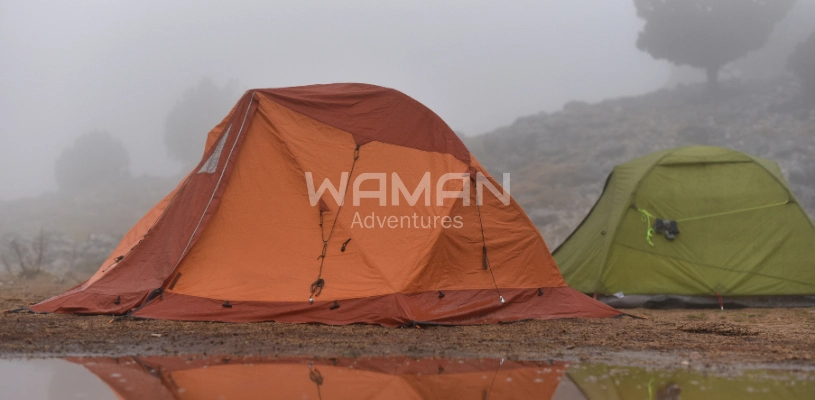
Camping areas in the rainy season
- Wayllabamba Camp: It is the first resting place after starting the route at 82 KM. It is located roughly at 3,000 m / 9,842 ft ASL. It is the first camping area we work with.
- Pacaymayo Camp: This camp lies about 3,580 m / 11,745 ft ASL. It is reached after overcoming the Warmiwañusca Pass or “Dead Woman’s Pass”. It lies at the tree-lined forest habitat.
- Phuyupatamarca Camp: Nestled about 3,600 m / 11,811 ft ASL, this is the best-located campsite to admire the sunset and sunrise on the Inca Trail.
- Wiñay Wayna Camp: An area that stands out for its agricultural terraces and proximity to Wiñay Wayna. It is located roughly 2,700 m / 8,858 ft ASL. It is the last camping area before reaching the Machu Picchu Archaeological Complex.

Camping tents
IS THE 4 DAY INCA TRAIL DANGEROUS?
No, it is not. It is only a version that requires good fitness and mental preparation in order to face its different challenges. During this trek, you will immerse yourself in 4 days full of exciting landscapes, archaeological centers, and the long-awaited arrival at Machu Picchu.
IS THE 5 DAY INCA TRAIL DANGEROUS?
Doubtless not, because unlike the Inca Trail 4 days, during this trail you travel more slowly through the different days safely and with peace. Ideal if you are traveling with your entire family (children and older adults) since you will not have to worry about finishing the trail like a race. Enjoy every view, history, and culture on the Inca Trail.
IS THE SHORT INCA TRAIL DANGEROUS?
If your dream is to travel a part of the Inca Trail more quickly, this is your option, as you will hike a little patch of the trail. Ideal for everyone who wants to explore and discover these ancient paths full of history and culture.
IS THE 7-DAY INCA TRAIL + SALKANTAY TREK DANGEROUS?
Definitively not as long as you prepare everything. This trek is designed for brave and adventurous hikers and requires good physical preparation and good health. During this 7-day trek, you will cross altitudes of more than 5000 m.a.s.l. and test your resistance until you reach the limit at Machu Picchu.
| INCA TRAIL VERSIONS | THE COMPARISON | |||||
| DIFFICULTY | LENGTH | HIGHEST ALTITUDE | ENTRANCES TICKETS | PORTERS | |
| Short Inca Trail 2 days | Mild – Moderate | 12 km | 2,730 / 8,956 ft | 250 | No |
| Inca Trail 4 Days | Moderate – Challenging | 46 km | 4,215 m / 13,779 ft | 500 | Yes |
| Inca Trail 5 Days | Moderate – Challenging | 46 km | 4,215 m / 13,779 ft | 500 | Yes |
| Salkantay + Inca Trail 7 Days | Challenging – Formidable | 82 km | 5,200 m / 17,060 ft | 500 | Yes |
INFORMATION ABOUT FIRST AID KITS, DRINKING WATER AND FOOD
FIRST AID KIT
Don’t worry about this item. Waman Adventures adds a first-aid kid for the Inca Trail. This first aid kit is usually useful in emergency cases only. We must pack and offer a first aid kit and always make sure of it.

SATELLITE PHONES
Along the entire route are park rangers, who have satellite phones to communicate any incident that occurs and to take the necessary measures to safeguard the integrity of the hikers. Remember that the Inca Trail is not dangerous following the rules and avoid demanding more from yourself.
GEL ALCOHOL AND TOILETRIES
Carry gel alcohol and use it before eating your snacks, fruits, and meals. Using alcohol prevents diarrhea and stomachache, which are illnesses that can destroy your trekking.
IS DRINKING WATER ON THE INCA TRAIL AVAILABLE?
No, there is no drinking water along the Inca Trail unless your company boils water for drinking. There are many streams, ravines, and even a river along the Sacred Valley; however, they are not drinking water along the Inca Trail.
Waman Adventure provides plenty of water at every meal to you, so you’ll not need to be worried about it. Thanks to our porters and cooks, the water is boiled, filtered, and cooled so that you can refill your camel bags and bottles.
WHAT FOODS ARE PROVIDED ON THE INCA TRAIL?
It’s up to the travel agency you choose. Nonetheless, Waman Adventures offers the widest delicacies on the Inca Trail, which 100% Andean dwellers’ chefs prepare.
Also, Waman Adventure trains our porters, guides, and Andean chefs to offer a better and safer hike annually.
Every day the offers vary and we show you a list of possible foods to enjoy:
- Breakfasts: hot chocolate, teas, coffee, coca tee, orange juice, papaya, toast, cereals, milk, oatmeal, scrambled eggs, omelets, or fruit salad.
- Lunch: quinoa soup, chaufa, vegetables, Papa Rellena, Ceviche, Meat skewers, chicken, fish, accompanied by appetizers and desserts.
- Dinner: Andean pizza, pasta, sautéed vegetables, and delicious desserts.
- Happy Hour: hot milk drinks, coffee, teas, cookies, popcorn.

Delicious gourmet dishes prepared by 100% Andean chefs
- Important: If you are vegetarian, vegan, or have a dietary restriction, you just have to inform us when making your reservation, and our professionals will be in charge of organizing and arranging your meal alternatives, at no additional cost.
SUM UP: IS THE INCA TRAIL DANGEROUS?
After showing all the factors that can influence your trip along the Inca Trail in any of its versions, we were able to determine that the trail is totally suitable and safe for your visit, regardless of whether you travel it during the rainy or dry season, you will arrive safely at your destination. Basically, the following factors make a difference:
- The right choice of an agency or tour operator like Waman Adventures.
- Each climate and season has its advantages and disadvantages, the choice is yours.
- Follow the instructions given by our professionals.
- Carry everything you need to overcome the challenges.
- Go at your own pace, don’t make the Inca Trail a race.
- The most important! Enjoy each landscape and archaeological center, the reward is all yours.
Now that you realize the Inca Trail is not dangerous, what are you waiting for to encourage you to travel this great ancient path with Waman Adventures? While you discover all its secrets and history that will captivate you throughout the whole trail. Taking the best pictures will be a permanent reminder that you managed to conquer the most beautiful path that takes you to the world wonder of Machu Picchu.