15 Reasons to Visit Machu Picchu and Why It Is Special
Ultima actualización en 16 November, 2026 por Jhon Quispe
Last Updated on 16 November, 2026 by Jhon Quispe
Why should you visit Machu Picchu?
Machu Picchu is worth visiting for its remarkable Inca architecture, mountain scenery, archaeological history and UNESCO-recognized cultural and natural heritage. Travelers can explore ancient terraces and temples, enjoy panoramic viewpoints and experience one of the most significant surviving sites of the Inca civilization.
- 15 reasons to visit Machu Picchu at a glance
- 1. Its remarkable Inca history
- 2. Its extraordinary architecture and engineering
- 3. Its extraordinary mountain setting
- 4. UNESCO recognizes its cultural and natural value
- 5. The Historic Sanctuary protects remarkable biodiversity
- 6. The Classic Inca Trail creates a different arrival
- 7. Different trekking routes offer different experiences
- 8. Its viewpoints offer unforgettable photographs
- 9. Important archaeological questions remain unanswered
- 10. Waynapicchu and Machu Picchu Mountain provide elevated perspectives
- 11. You can visit without completing a multi-day trek
- 12. Machu Picchu Pueblo can extend your experience
- 13. Machu Picchu is one of the New Seven Wonders
- 14. Machu Picchu connects with the wider Inca world
- 15. Conservation makes responsible tourism meaningful
- Which reasons matter most for your trip?
- Experience Machu Picchu in a way that fits your interests
-
Frequently asked questions about visiting Machu Picchu
- Why do people visit Machu Picchu?
- Why is Machu Picchu important to Inca history?
- What makes Machu Picchu different from other archaeological sites?
- Is Machu Picchu worth visiting without hiking the Inca Trail?
- Which Machu Picchu circuit offers panoramic views?
- Is Machu Picchu suitable for older travelers?
- How much time should you allow for a Machu Picchu visit?
What makes Machu Picchu memorable is the relationship between its buildings and the mountains around them. The Incas designed terraces, water channels and ceremonial spaces for a challenging landscape, while today’s visitor routes reveal different parts of that history depending on the entrance selected.
15 reasons to visit Machu Picchu at a glance
From archaeological discoveries to mountain landscapes and cultural traditions, Machu Picchu offers different experiences depending on what interests you most. These 15 reasons explain its significance and help you understand what makes a visit worthwhile.
| Reason | Why it matters |
| 1. Inca history | One of the most significant surviving archaeological complexes associated with the Inca civilization |
| 2. Architecture and engineering | Remarkable stonework, terraces, drainage and water-management systems |
| 3. Mountain setting | A dramatic location above the Urubamba River surrounded by Andean peaks |
| 4. UNESCO recognition | World Heritage status for both cultural and natural significance |
| 5. Biodiversity | A protected sanctuary containing forests, orchids, birds and native mammals |
| 6. Classic Inca Trail | A historic trekking approach combining archaeology and changing mountain environments |
| 7. Alternative trekking routes | Different opportunities to explore the Andes before reaching Machu Picchu |
| 8. Viewpoints and photography | Recognizable panoramic views and different perspectives from authorized routes |
| 9. Archaeological mysteries | Questions about the site’s functions and history continue to inspire research |
| 10. Mountain hikes | Waynapicchu and Machu Picchu Mountain offer elevated perspectives with specific tickets |
| 11. Accessible without a multi-day trek | Train and bus connections allow visitors to reach the archaeological entrance |
| 12. Machu Picchu Pueblo | An overnight stay can add flexibility and experiences around the archaeological visit |
| 13. New Seven Wonders recognition | Selected in the 2007 New7Wonders global vote |
| 14. Wider Inca cultural context | Connections with Cusco, the Sacred Valley and living Andean traditions |
| 15. Conservation | An opportunity to understand responsible tourism at a protected heritage site |
1. Its remarkable Inca history
Machu Picchu is one of the most important surviving archaeological complexes associated with the Inca civilization. Its construction is generally linked to the 15th century and the reign of Pachacutec, although researchers continue to examine how the settlement developed and what functions it served.
The site preserves evidence of Inca architecture, ceremonial activity, agricultural planning and adaptation to a demanding mountain environment. These remains help visitors understand the capabilities of a civilization whose political and cultural influence extended across a large part of the Andes.
Its modern history is also more complex than the familiar story of its discovery. Machu Picchu was not an unknown city suddenly found by Hiram Bingham. Local residents knew the area, and documentary references existed before his arrival.
Bingham’s 1911 expedition helped bring Machu Picchu to wider international and scientific attention, encouraging further archaeological investigation and conservation efforts.
This combination of Inca history, local knowledge and continuing research is one of the strongest reasons to visit the archaeological complex.

The Pachacutec Monument in Cusco recalls an influential Inca ruler.
2. Its extraordinary architecture and engineering
Machu Picchu demonstrates how Inca builders adapted monumental architecture to steep terrain, abundant rainfall and complex mountain geology.
Its carefully fitted stone walls are among the most recognizable elements of the archaeological site. Important ceremonial and elite structures contain finely worked stones assembled without mortar, demonstrating sophisticated construction techniques.
However, the engineering achievement extends far beyond the visible walls.
- Agricultural terraces: created usable growing areas and helped stabilize steep slopes.
- Drainage systems: helped manage rainfall and protect buildings and terraces.
- Water channels: distributed water through different parts of the settlement.
- Retaining walls: supported construction on difficult mountain terrain.
- Urban planning: arranged buildings, pathways and ceremonial spaces around the natural landscape.
The Incas did not simply build structures on top of a mountain. They developed a settlement whose architecture was closely connected to the surrounding terrain.
Seeing these details in person helps explain why Machu Picchu remains an important reference for the study of Inca engineering.

Terraces and stone structures reflect sophisticated Inca mountain engineering.
3. Its extraordinary mountain setting
Machu Picchu is memorable partly because of its location. The archaeological complex stands at approximately 7,970 ft (2,430 m) above sea level, surrounded by steep mountains and overlooking the Urubamba River valley.
Its location near the transition between Andean mountain environments and humid forest creates a landscape of dramatic slopes, dense vegetation and changing cloud cover.
The mountains were more than a background for the Incas. Their shape influenced where terraces, buildings, paths and water-management systems could be constructed.
Weather and cloud movement can also transform the experience. On some visits, the archaeological complex appears beneath clear mountain views; at other times, mist moves across the terraces and surrounding peaks.
Neither condition guarantees a better visit. Both reveal how closely the site is connected to its natural environment.
4. UNESCO recognizes its cultural and natural value
The Historic Sanctuary of Machu Picchu was inscribed on the UNESCO World Heritage List in 1983.
Its designation is particularly significant because it is recognized as a mixed cultural and natural World Heritage property.
This means its importance extends beyond the surviving Inca buildings. UNESCO also recognizes the exceptional relationship between the archaeological landscape and the surrounding natural environment.
The site’s cultural value includes its architecture, archaeological significance and relationship with the wider Inca world. Its natural value is connected with the dramatic mountain setting and important ecosystems of the protected landscape.
For visitors, this recognition provides context for understanding why the archaeological complex and its surroundings must be conserved together.
Additional information about the designation is available through the UNESCO World Heritage Centre.
5. The Historic Sanctuary protects remarkable biodiversity
The archaeological complex is only one part of the much larger Historic Sanctuary of Machupicchu.
According to SERNANP, the natural protected area covers approximately 32,592 hectares (80,537 acres). This is the protected-area figure and should not be confused with the separate boundary measurement used for the UNESCO World Heritage property.
The sanctuary contains different mountain and forest environments that support a remarkable variety of plants and animals.
Its biodiversity includes:
- Native Andean and montane-forest trees.
- Orchids and other flowering plants.
- Ferns, mosses and humid-forest vegetation.
- Birds associated with Andean and cloud-forest ecosystems.
- Butterflies and other invertebrates.
- Native mammals, including spectacled bears within the wider protected landscape.
However, species recorded in the sanctuary are not necessarily visible during a standard archaeological visit. Wildlife sightings depend on habitat, season and animal behavior.
Important note:
The biodiversity of the Historic Sanctuary should not be confused with guaranteed wildlife sightings at the archaeological complex. Animals such as spectacled bears live within the wider protected landscape but are rarely encountered during ordinary visitor circuits.

For more information about native species and the protected ecosystems, see the flora and fauna of Machu Picchu.
6. The Classic Inca Trail creates a different arrival
The Classic Inca Trail offers a different experience from reaching Machu Picchu directly by train and bus.
The traditional four-day route follows historic paths through Andean valleys, high mountain passes, archaeological sites and increasingly humid forest environments before approaching Machu Picchu through Inti Punku.
This progression allows travelers to experience the relationship between Inca roads, mountain geography and archaeological settlements before reaching the principal destination.
Several archaeological sites along the regulated trekking route are not part of a standard train-based Machu Picchu visit.
For travelers who enjoy hiking and are interested in archaeology, that sequence can make the arrival particularly meaningful. However, the Classic Inca Trail requires appropriate permits, physical preparation and several days of walking.

The Classic Inca Trail connects archaeological sites and changing mountain landscapes.
7. Different trekking routes offer different experiences
The Classic Inca Trail is not the only trekking experience associated with visiting Machu Picchu. Other routes offer different combinations of mountain scenery, local communities and outdoor activities.
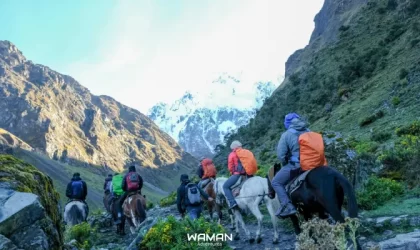
Salkantay Trek: The Salkantay Trek crosses high mountain environments before descending toward warmer valleys. It appeals to travelers who prioritize dramatic landscape changes and physically demanding hiking.
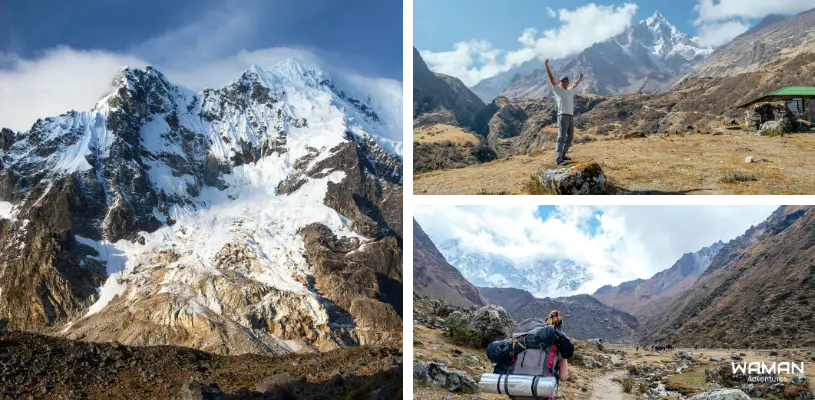
Salkantay offers a mountain-focused alternative to the Classic Inca Trail.
Lares Trek: The Lares Trek emphasizes high-Andean landscapes and cultural encounters in the Lares region. These itineraries typically connect with onward transportation to Machu Picchu.

Enjoy this one of a kind experience on the Lares Trek
Inca Jungle: The Inca Jungle combines travel toward Machu Picchu with adventure activities such as cycling and hiking. Some itineraries may include additional activities depending on conditions and the operator.

Inca Jungle combines outdoor adventure activities with travel toward Machu Picchu.
Choquequirao combinations: Specialized long-distance itineraries may combine Choquequirao with onward travel toward Machu Picchu. These routes require considerably more time and physical effort than a conventional visit and should not be treated as a short alternative connection.

Choquequirao and Machu Picchu share Inca architectural features, but their access and visitor experiences are very different.
Each option offers a different balance of trekking, cultural experiences and transportation. The best route depends on your interests, available time and hiking experience.
8. Its viewpoints offer unforgettable photographs
The familiar panoramic view of Machu Picchu is one of the most recognizable images of Peru. However, visitors should not assume that every entrance ticket provides access to the same viewpoint.
The official visitor system is organized into three circuits with ten established routes, including routes with different access conditions and seasonal availability.
Some routes focus on panoramic areas, while others provide access to specific archaeological sectors or mountain hikes.
That distinction matters when choosing an entrance. A traveler interested primarily in the classic panoramic photograph may need a different route from someone who wants to explore particular temples or other archaeological structures.
For the most reliable information, review the official Machu Picchu circuits and routes before purchasing a ticket.

Photograph of the Guardian’s House, very close to where the classic photograph of Machu Picchu was taken.
9. Important archaeological questions remain unanswered
Archaeologists have developed a much clearer understanding of Machu Picchu through excavation, architectural studies and historical research. Even so, not every question about the settlement has a definitive answer.
Researchers continue to examine how different sectors were used and how political, religious, residential and ceremonial activities may have been organized.
The relationship between the settlement and the surrounding mountains also remains an important subject for archaeological interpretation.
These questions are part of what makes Machu Picchu intellectually compelling. The site provides extensive physical evidence while still encouraging new research and discussion.
Some visitors describe Machu Picchu as peaceful or spiritual because of its scenery and cultural importance. Those impressions can be meaningful personal experiences, but they should not be presented as scientific evidence of supernatural or invisible energies.
10. Waynapicchu and Machu Picchu Mountain provide elevated perspectives
Visitors interested in additional hiking can consider mountain routes within the regulated Machu Picchu visitor system.
Waynapicchu, also commonly written Huayna Picchu, rises to approximately 8,835 ft (2,693 m). Its route includes steep sections and stone stairs above the archaeological complex.
Machu Picchu Mountain reaches approximately 10,112 ft (3,082 m) and provides another elevated perspective of the surrounding landscape.
Both hikes require the correct entrance option. They should not be treated as automatically included in a standard archaeological ticket.
The physical effort, available capacity and views differ between the two mountains. Travelers interested in either hike can consult the Waynapicchu and Machu Picchu Mountain comparison before choosing.

Waynapicchu offers elevated views through a steep mountain hiking route.
11. You can visit without completing a multi-day trek
One of the practical reasons to visit Machu Picchu is that reaching the archaeological complex does not require several days of trekking.
Many travelers take a train to Machu Picchu Pueblo, also known as Aguas Calientes, and then continue by bus toward the archaeological entrance.
This option makes a visit possible for people who do not have the time, interest or physical preparation required for a multi-day mountain trek.
However, reaching the entrance by transport does not mean that every visitor route is easy or fully accessible.
Within the archaeological complex, stone steps, sloping paths and uneven surfaces can create challenges for travelers with limited mobility.
Families, older travelers and visitors with mobility concerns should compare available circuits with their individual walking ability before selecting an entrance.

12. Machu Picchu Pueblo can extend your experience
Machu Picchu Pueblo, commonly called Aguas Calientes, is the gateway town below the archaeological complex.
Many travelers pass through on the same day as their visit, but staying overnight can create more flexibility around train schedules, entrance times and local activities.
The town offers accommodation, restaurants, shops and other visitor services. It also has thermal baths that can be visited separately from the archaeological complex.
These baths are an optional leisure activity rather than part of the Machu Picchu entrance ticket. Claims that the mineral waters cure medical conditions are unnecessary when describing the experience.
An overnight stay can be useful for travelers who prefer a less compressed itinerary or want more time to explore the town before or after their archaeological visit.

The thermal baths are located in Machu Picchu Pueblo and can be added separately to an overnight stay.
13. Machu Picchu is one of the New Seven Wonders
Machu Picchu was selected as one of the New Seven Wonders of the World in 2007 through the international New7Wonders voting campaign.
This recognition contributed to its global visibility and reinforced its position as one of the world’s most recognizable travel destinations.
However, the New7Wonders distinction should not be confused with UNESCO World Heritage status.
- UNESCO World Heritage: Machu Picchu received this designation in 1983 based on its cultural and natural significance.
- New Seven Wonders: the distinction resulted from a global popular vote announced in 2007.
Both recognitions contribute to Machu Picchu’s international reputation, but UNESCO’s designation is particularly important for heritage protection and conservation.

Machu Picchu combines globally recognized heritage with a remarkable landscape.
14. Machu Picchu connects with the wider Inca world
A visit to Machu Picchu becomes more meaningful when considered alongside Cusco, the Sacred Valley and other surviving elements of Inca civilization.
Cusco was the political and ceremonial center of the Inca state. The Sacred Valley preserves important archaeological sites, settlements and agricultural landscapes connected with that wider historical system.
Places such as Pisaq and Ollantaytambo reveal similarities with Machu Picchu, including:
- Carefully fitted stonework.
- Agricultural terraces built on steep terrain.
- Water-management structures.
- Urban planning adapted to mountain landscapes.
- The relationship between architecture and ceremonial spaces.
Exploring this broader context helps travelers see Machu Picchu as part of an extensive civilization rather than an isolated monument.
Contemporary Andean communities also maintain cultural traditions through textiles, music, agriculture and other practices. These living traditions should be understood on their own terms rather than presented as unchanged replicas of the Inca past.

Living Andean traditions add cultural context to a journey through Cusco.
15. Conservation makes responsible tourism meaningful
Machu Picchu’s importance also comes from the need to protect its archaeological structures and surrounding natural environment for future generations.
Visitor routes, entrance regulations and conservation measures help manage the impact of tourism within a fragile cultural landscape.
These rules may limit access to certain structures or viewpoints, but they form part of maintaining the site’s long-term condition.
Visitors contribute to conservation by respecting the established regulations:
- Follow the route assigned to your entrance ticket.
- Remain within authorized visitor areas.
- Avoid climbing or sitting on archaeological walls.
- Respect instructions from official site staff.
- Do not touch, remove or damage archaeological material.
- Avoid disturbing plants and wildlife.
- Check current entrance and visitor regulations before traveling.
Responsible tourism does not require treating Machu Picchu as a destination that must be visited before it disappears. Its long-term preservation depends on effective management and considerate visitor behavior.
Understanding those responsibilities is part of appreciating why Machu Picchu matters beyond its popularity as a travel destination.
Which reasons matter most for your trip?
Not every traveler visits Machu Picchu for the same reason. Identifying your main interests can help you choose the most suitable entrance route and decide whether to add trekking, nearby attractions or additional time in the region.
| Your main interest | What to prioritize |
| Inca history and archaeology | Archaeological sectors, stonework, temples and the wider Cusco historical context |
| Panoramic photography | Entrance routes that provide access to the viewpoint you want |
| Trekking and adventure | Classic Inca Trail or alternative mountain routes suited to your experience |
| Nature and biodiversity | The relationship between the archaeological complex and the wider Historic Sanctuary |
| Mountain hiking | Specific ticket options for Waynapicchu or Machu Picchu Mountain |
| A more relaxed visit | Consider an overnight stay in Machu Picchu Pueblo |
| Wider Inca culture | Combine Machu Picchu with Cusco and Sacred Valley archaeological sites |
The most suitable visit depends on your time, interests and physical comfort. No single entrance route includes every archaeological sector, mountain hike and famous viewpoint, so choosing what matters most is an important part of planning.
Experience Machu Picchu in a way that fits your interests
Whether you are drawn to Inca history, panoramic landscapes or the experience of approaching Machu Picchu on foot, the most rewarding visit is one that matches your interests and available time. To choose an itinerary that brings those elements together, talk to a travel specialist about your plans.

Frequently asked questions about visiting Machu Picchu
Why do people visit Machu Picchu?
Why is Machu Picchu important to Inca history?
What makes Machu Picchu different from other archaeological sites?
Is Machu Picchu worth visiting without hiking the Inca Trail?
Which Machu Picchu circuit offers panoramic views?
Is Machu Picchu suitable for older travelers?
How much time should you allow for a Machu Picchu visit?
Share:


Related tours you might be interested in
Enjoy unique experiences in Cusco and Machu Picchu with the peace of mind that comes from working with a local travel agency
6-Day Tour Cusco, Sacred Valley, Machu Picchu and Rainbow Mountain
EXPERIENCE THE MAJESTY OF THE INCAS: SACRED VALLEY, MACHU PICCHU & RAINBOW MOUNTAIN IN ONE TRIP If...
6 Day Andean Adventures Tour│With Flights from Chile
ENJOY THE BEST OF CUSCO CITY – MUST VISIT DESTINATIONS ARE WAITING FOR YOU! Want to explore Cusco...
6 Days Andean Adventure │ With Flights from Mexico
EXPERIENCE THE BEST OF CUSCO – THE MOST BREATHTAKING DESTINATIONS AWAIT Do you want to explore...
5 Day Cusco, Sacred Valley and Machu Picchu
DISCOVER THE MAJESTY OF MACHU PICCHU AND THE BEAUTY OF THE SACRED VALLEY IN ONE EPIC JOURNEY! The...
If you liked this article and the information you found, give us 5 stars!
Table of Contents
Related blogs

Huchuy Picchu or Huayna Picchu: How to choose the best mountain for you
11 min of reading
Best Time to Do the Inca Jungle Trek by Month and Season
13 min of reading