How Hard Is the Short Inca Trail? Your Complete Must-Read Guide To Prepare for An Unforgettable Experience!
Ultima actualización en 14 September, 2026 por Jhon Quispe
Last Updated on 14 September, 2026 by Jhon Quispe
How Hard Is the Short Inca Trail?
The Short Inca Trail is a moderate endurance hike for most reasonably active travelers. The main hiking day follows Route 5 for about 6.5 mi (10.5 km) and usually takes around 5–6 hours, with sustained uphill walking, many stone steps and uneven terrain. The climb from the traditional Km 104 access toward Wiñay Wayna is usually the hardest section. No technical climbing is required, but cardiovascular endurance and comfortable stair climbing make a noticeable difference.
- Short Inca Trail difficulty at a glance
- What makes the Short Inca Trail challenging
- The Km 104 to Wiñay Wayna climb is the hardest section
- Short Inca Trail distance and hiking time
- How altitude affects Short Inca Trail difficulty
- Fitness level needed for the Short Inca Trail
- How to train for the Short Inca Trail
- Weather can make the Short Inca Trail harder
- Factors that can make the hike feel harder
- How to make the Short Inca Trail more manageable
- Prepare for the Short Inca Trail with the right itinerary
-
Frequently asked questions about Short Inca Trail difficulty
- How difficult is the Short Inca Trail?
- What is the hardest part of the Short Inca Trail?
- Is the 2-day Inca Trail difficult?
- Can beginners hike the Short Inca Trail?
- Is there an age limit for the Short Inca Trail?
- Are there many stairs on the Short Inca Trail?
- How fit do you need to be for the Short Inca Trail?
- Do you need to train for the Short Inca Trail?
The Short Inca Trail concentrates most of its physical challenge into a single substantial hiking day. That makes it more approachable than a multi-day trek, but the combination of climbing, stone stairs, changing terrain and several hours on your feet means “short” should not be confused with “effortless.”

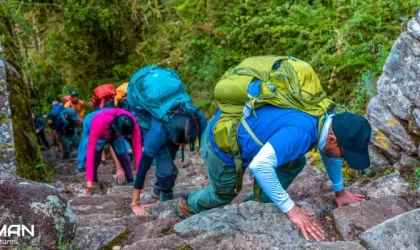
Sustained uphill walking is the main physical challenge on Route 5.
Short Inca Trail difficulty at a glance
| Difficulty factor | What to expect |
| Practical difficulty | Moderate for many reasonably active travelers |
| Official Route 5 distance | About 6.5 mi (10.5 km) |
| Main hiking time | Around 6 hours, depending on pace, stops and access conditions |
| Traditional starting point | Km 104 at Chachabamba |
| Starting elevation at Km 104 | About 7,054 ft (2,150 m) |
| Inti Punku elevation | About 8,924 ft (2,720 m) |
| Hardest section | Sustained climb from the traditional Km 104 access toward Wiñay Wayna |
| Terrain | Historic stone paths, irregular stairs and uneven surfaces |
| Technical climbing | Not required |
| Main fitness requirement | Endurance for several hours of uphill walking and repeated stairs |
| Camping | Not required on Waman Adventures’ standard 2-day itinerary |
The term “moderate” is a practical travel assessment rather than an official difficulty grade. How hard the route feels depends on recent activity level, walking pace, trail conditions, footwear and how comfortable you are with sustained uphill exercise.
For the full Route 5 itinerary, archaeological stops, permits and current access arrangements, use the Short Inca Trail to Machu Picchu guide.
What makes the Short Inca Trail challenging
The difficulty does not come from one extreme obstacle. It comes from combining several moderate physical demands during the same hiking day.
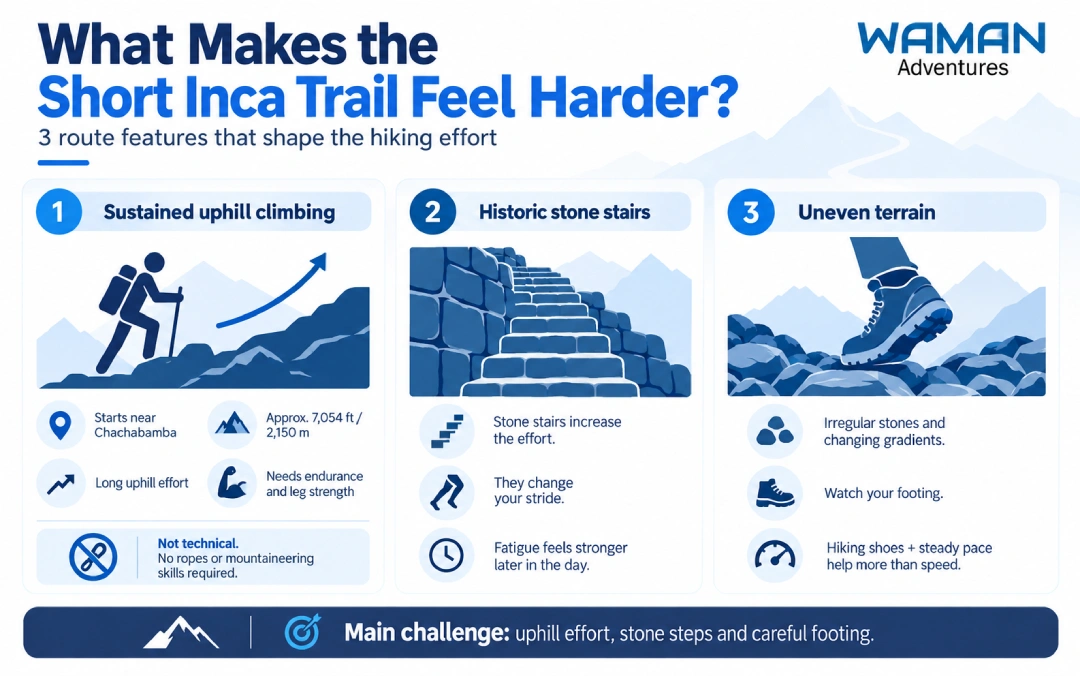
The infographic explains why parts of the Short Inca Trail can feel demanding, particularly because of sustained climbs, stone steps and the need for careful footing on uneven terrain.
The Km 104 to Wiñay Wayna climb is the hardest section
For travelers using the traditional Km 104 access, the sustained climb from Chachabamba toward Wiñay Wayna is usually the section that requires the most continuous effort.
The challenge is cumulative. Instead of facing one very short steep climb, hikers continue gaining elevation along the mountainside over an extended section of the route.
Starting too quickly can make the later part of this ascent unnecessarily tiring. A sustainable rhythm generally makes the climb more manageable than trying to match the pace of faster hikers.

Wiñay Wayna comes after the route’s longest sustained climbing section.
Important note:
Km 104 remains the traditional access for Route 5, but official 2026 operations have also allowed entry through Km 106 when route conditions require it. If your departure uses an alternative access, the exact difficulty sequence can differ from the traditional Km 104 description.
The final steep stairs before Inti Punku
After Wiñay Wayna, the route still contains uphill sections and steep stone steps before reaching Inti Punku.
These stairs are not technical climbing and do not require ropes, but they can feel harder because they come after several hours of walking. Some hikers may use their hands briefly for balance on steeper steps depending on trail conditions and personal comfort.
Their difficulty comes more from accumulated fatigue than from their overall length.

Inti Punku arrives near the end of the main hiking day.
Short Inca Trail distance and hiking time
SERNANP lists official Route 5 from Chachabamba through Wiñay Wayna and Inti Punku to Machu Picchu at approximately 6.5 mi (10.5 km).
MINCETUR describes the Km 104–Inti Punku section as roughly 6.2 mi (10 km) and about six hours on foot, followed by an additional section toward Machu Picchu. Differences between published figures reflect how the route is divided and measured rather than a completely different hike.
For practical planning, expect the Short Inca Trail to involve several hours of walking rather than judging the difficulty only by mileage.
Although Waman Adventures’ standard experience lasts 2 days and 1 night, almost all of the trekking effort is concentrated on Day 1. Day 2 is primarily dedicated to visiting Machu Picchu.
This distinction is important for searches such as “2 day Inca Trail difficulty”: it is a two-day itinerary, but not two full consecutive days of hiking.
How altitude affects Short Inca Trail difficulty
Altitude contributes to the effort, but the Short Inca Trail stays considerably lower than the highest sections of the Classic Inca Trail.
The traditional Km 104 access is about 7,054 ft (2,150 m), while the official Machu Picchu sanctuary map places Inti Punku at approximately 8,924 ft (2,720 m).
For comparison, the same official map places Warmiwañusqa, or Dead Woman’s Pass on the Classic route, at roughly 13,829 ft (4,215 m).
That difference is one reason the Short Inca Trail is generally more approachable from an altitude perspective. It does not mean every traveler will experience elevation in the same way.
Fitness and altitude response are also different issues. Someone with excellent cardiovascular fitness may still feel uncomfortable at elevation, while an acclimatized traveler can still find repeated stairs physically tiring.
Important note:
If symptoms during the trek concern you, tell your guide. A general trail difficulty rating cannot predict how an individual traveler will respond to sustained exercise or elevation.
Fitness level needed for the Short Inca Trail
You do not need elite fitness or technical trekking experience to complete the Short Inca Trail.
A more useful benchmark is whether you can walk for several hours, continue uphill after you are already somewhat tired and remain comfortable on repeated stairs and uneven ground.
Travelers who regularly walk, hike, cycle, run or perform other cardiovascular exercise will generally have an easier time adapting to the sustained climbing.
If your usual routine involves little physical activity, several weeks of progressive walking and stair practice can make the experience more comfortable.
Can beginners complete the 2-day Short Inca Trail?
Yes. Many first-time hikers can complete the Short Inca Trail because the trekking is concentrated into one main day and does not require technical climbing or several consecutive days on the trail.
However, beginner-friendly does not mean effortless.
A first-time hiker should still expect:
- Several hours of walking.
- A sustained uphill climb.
- Repeated stone stairs.
- Uneven terrain.
- Possible rain, humidity or strong sun.
- Accumulated fatigue before reaching Inti Punku.
Recent walking and stair practice can make a significant difference to how manageable the same route feels.
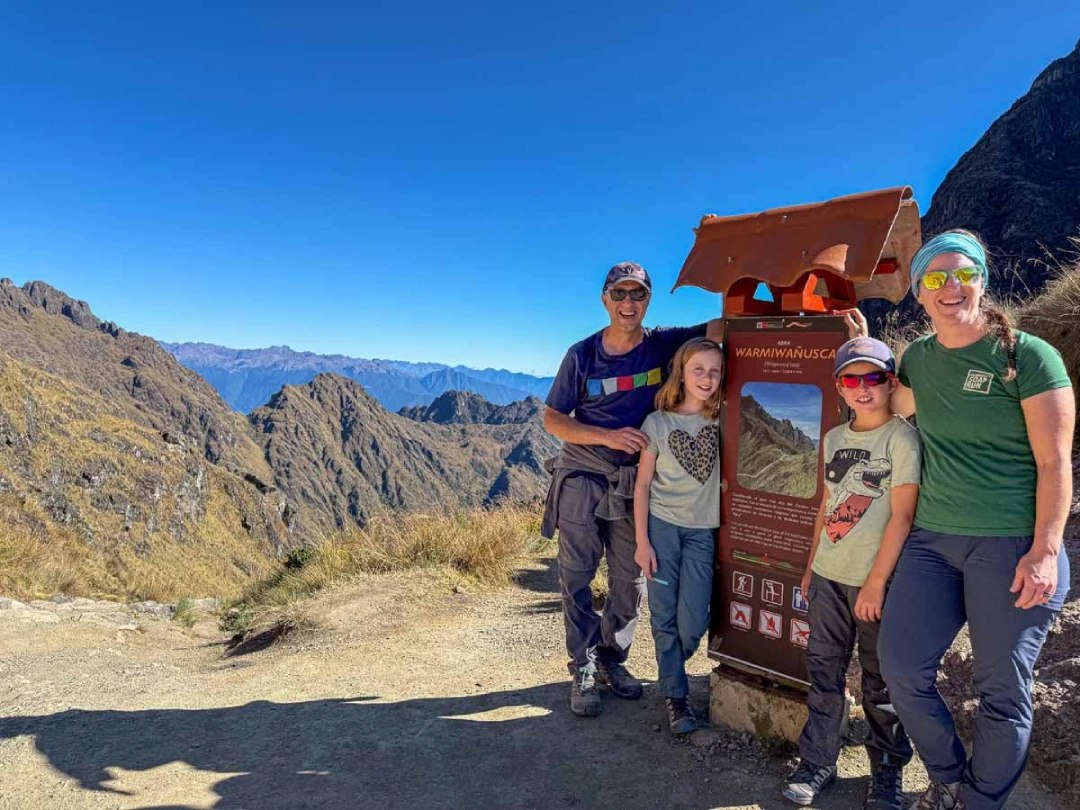
Is there an age limit for the Short Inca Trail?
There is no useful universal answer based only on age. SERNANP’s public Route 5 information focuses on regulated access and authorized operators rather than giving travelers one general age cutoff for the trail.
Individual tour operators may apply their own participation recommendations or policies, so families and older travelers should confirm the conditions of the specific service they intend to book.
For practical difficulty, walking experience, endurance, balance and comfort on stairs are usually more informative than age alone.
Children and older travelers
A child who already handles long walks and sustained stair climbing may be better prepared than an adult with very little recent physical activity. The same principle applies to older travelers who remain active and comfortable on uneven terrain.
Consider:
- Recent walking and hiking experience.
- Comfort on long staircases.
- Balance on irregular stone surfaces.
- Ability to maintain activity for several hours.
- Previous experience at elevation.
- Any individual health or mobility considerations.
Age alone should not be used as a guarantee that the route will feel easy or difficult.
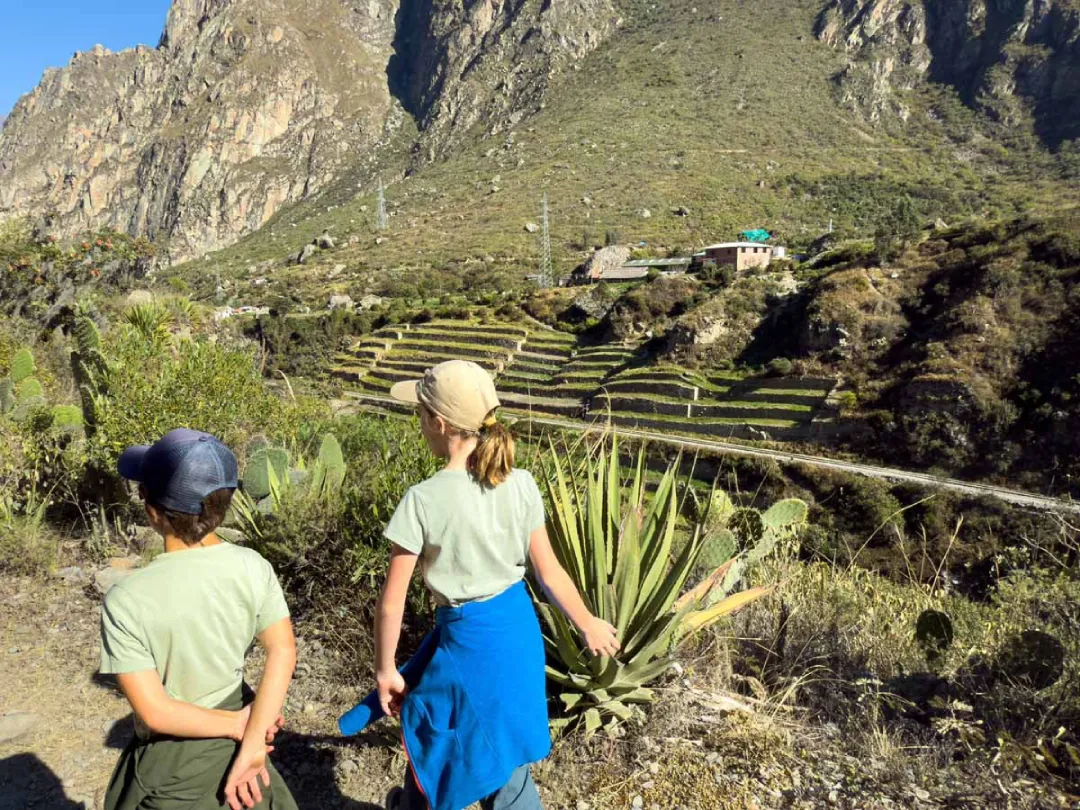
How to train for the Short Inca Trail
The most useful preparation resembles the physical demands of the actual hike.
Build walking endurance
Gradually increase the duration of your regular walks before traveling.
You do not need to begin by reproducing an entire six-hour trekking day. Consistent walking is more useful than completing one exhausting workout and then doing little activity afterward.
Add hills and stairs
Flat walking improves general endurance, but uphill training is more specific to the Short Inca Trail.
Use hills, staircases or an inclined treadmill to become more comfortable with repeated climbing and sustained leg effort.
Practice with your hiking shoes
Wear the footwear you plan to use on the trail before arriving in Peru.
This gives you time to identify pressure points, fit problems or discomfort before spending several hours on irregular stone terrain.
Carry a light daypack
Practice some walks with a small backpack similar to the one you expect to carry.
There is no reason to train with excessive weight for Waman Adventures’ standard 2-day Short Inca Trail because travelers do not carry the camping equipment associated with the multi-day Classic route.

Preparing for the Short Inca Trail can include regular walking, hill and stair training, breaking in hiking footwear and organizing a lightweight backpack for the route.
Weather can make the Short Inca Trail harder
Weather can change the way the same trail feels physically.
Wet stone reduces traction and often requires a slower, more deliberate walking pace. Rain can also make clothing and equipment uncomfortable if they are not properly protected.
During sunnier conditions, heat exposure, sun protection and hydration become more noticeable concerns.
The weather therefore changes how the hike is executed, but it does not change the basic difficulty profile: the Short Inca Trail is primarily an endurance hike with sustained climbing and stairs rather than a technical mountaineering route.
For seasonal planning rather than physical difficulty, use the main Short Inca Trail guide.
Factors that can make the hike feel harder
The route is the same for hikers using the same access, but personal preparation and trail conditions can substantially change the perceived effort.
| Factor | Why it matters | What can help |
| Limited recent exercise | Several hours of climbing can create fatigue earlier in the day | Regular walking, hills and stairs before the trip |
| Starting too quickly | Early effort can make the later ascent unnecessarily tiring | Use a sustainable pace from the beginning |
| Heavy daypack | Extra weight increases effort on climbs and stairs | Carry only the essentials needed for the day |
| Unfamiliar footwear | Blisters or poor grip can make uneven terrain more difficult | Break in your hiking shoes before traveling |
| Wet conditions | Stone surfaces can become more slippery | Use suitable footwear and slow down where needed |
| Poor balance on stairs | Irregular steps require more control than level walking | Practice stairs and use permitted trekking poles if appropriate |
| Tired travel schedule | Poor rest can reduce endurance before the hike begins | Avoid unnecessarily demanding plans immediately beforehand |
How to make the Short Inca Trail more manageable
Start at a sustainable pace rather than trying to move faster than necessary during the first part of the climb. Conserving energy early usually helps more than attempting to gain time before Wiñay Wayna.
Carry a light daypack, drink regularly, wear tested hiking shoes and use archaeological stops as natural opportunities to recover without turning the hike into a race.
Trekking poles can help some travelers with stability and repeated stairs when current trail regulations allow their use.
Communication with your guide also matters. If your pace needs to change, address it early rather than waiting until fatigue becomes difficult to manage.
From a purely physical perspective, the Short Inca Trail is substantially easier than the Classic Inca Trail because it concentrates most trekking into one day, stays at a much lower elevation and avoids several consecutive days of accumulated hiking fatigue.
If you are comparing the routes based on camping, duration, archaeological experience and overall travel style rather than just physical effort, use the Classic Inca Trail vs Short Inca Trail comparison.
Prepare for the Short Inca Trail with the right itinerary
If several hours of uphill walking, repeated stone stairs and uneven terrain fit your current fitness level, the Short Inca Trail can provide a manageable way to approach Machu Picchu through the historic Inca road network without committing to a multi-day camping trek.
Once the physical demands make sense for you, the next step is confirming Route 5 availability, the assigned access point and the complete itinerary. You can plan your 2-day Short Inca Trail with Waman Adventures and review exactly how the hiking day, Aguas Calientes stay and Machu Picchu visit are coordinated.
Frequently asked questions about Short Inca Trail difficulty
How difficult is the Short Inca Trail?
What is the hardest part of the Short Inca Trail?
Is the 2-day Inca Trail difficult?
Can beginners hike the Short Inca Trail?
Is there an age limit for the Short Inca Trail?
Are there many stairs on the Short Inca Trail?
How fit do you need to be for the Short Inca Trail?
Do you need to train for the Short Inca Trail?
Share:



Related tours you might be interested in
Enjoy unique experiences in Cusco and Machu Picchu with the peace of mind that comes from working with a local travel agency

Choquequirao to Machu Picchu Trek 7 Days | Private Service
The most epic and challenging adventure awaits! Dare to push your limits and embark on the ultimate...
HUMANTAY LAKE TOUR FULL DAY – Group Service
Venture to the heights with a dream trip to the Humantay Lagoon! In the depths of Peru's imposing...

Full Day to Rainbow Mountain / Vinicunca – Group Service
Be dazzled by the breathtaking and colorful natural landscape of the Andes! Enjoy the epic...

Tour to Chinchero, Maras & Moray – Private Service
Discover with us this beautiful, charming and historic places, where we will visit the enigmatic...