


Mexican Tourists at Moray and Maras: Terraces, Salt Mines, and Andean Traditions
Ultima actualización en 29 October, 2026 por Jhon Quispe
Last Updated on 29 October, 2026 by Jhon Quispe
Can you visit Moray and Maras in one day?
Moray and the Maras Salt Mines can be visited together on a half-day or full-day excursion from Cusco. Allow approximately 45–75 minutes for Moray and 30–60 minutes for Maras, plus transportation. Moray requires the Cusco Tourist Ticket, while the salt mines charge a separate entrance fee.
- Moray and Maras at a glance
- Moray and Maras entrance fees and tickets
- How to get to Moray and Maras from Cusco
- Moray and its Inca agricultural terraces
- Maras Salt Mines and traditional salt production
- Best time to visit Moray and Maras
- Activities around Maras and Moray
- What to bring and accessibility considerations
- Local food around the Sacred Valley
- Travel information for visitors from Mexico
- Plan your Moray and Maras experience
-
Frequently asked questions about Mexican Tourists at Moray and Maras
- Can you visit Moray and Maras with children?
- Can Moray and Maras be combined with Chinchero?
- Are English-speaking and Spanish-speaking guides available?
- Are Moray and Maras accessible for visitors with limited mobility?
- Can you fly a drone over Moray or the Maras Salt Mines?
- Do Mexican tourists need a visa to visit Peru?
Although these attractions are close to each other, they offer contrasting experiences. Moray is known for its circular Inca terraces and agricultural engineering, while Maras remains an active salt-production landscape managed by local producers. Understanding the ticket differences and transport connections makes a combined visit easier to plan.
Moray and Maras at a glance
Moray and the Maras Salt Mines are two of the most distinctive attractions in the Sacred Valley of the Incas, northwest of Cusco.
Moray is an archaeological complex known for its circular agricultural terraces. Maras is a working salt-production area where thousands of evaporation ponds cover a mountainside.
Although both destinations belong to the Maras district, they require different admission arrangements.
| Planning detail | Moray | Maras Salt Mines |
| Main attraction | Circular Inca agricultural terraces | Traditional salt evaporation ponds |
| Location | Maras district, Cusco region | Near Maras town, Cusco region |
| Approximate altitude | 11,483 ft (3,500 m) | 10,500–11,100 ft (3,200–3,380 m), depending on the reference point |
| Recommended visiting time | Approximately 45–75 minutes | Approximately 30–60 minutes |
| Main experience | Archaeology, terraces and Inca agricultural engineering | Salt production, landscapes and local heritage |
| Entrance | Cusco Tourist Ticket | Separate admission |
| Physical effort | Light walking on some uneven surfaces | Light walking around authorized viewpoints |
| Best combined option | Half-day or full-day excursion from Cusco | Half-day or full-day excursion from Cusco |
The times above are planning references, not fixed visiting limits. Transportation, photography stops, road conditions and the pace of your group can extend the excursion.
Important note: Moray and Maras are commonly visited together, but the Cusco Tourist Ticket does not cover the Maras Salt Mines. Budget for separate admission before traveling.
Moray and Maras entrance fees and tickets
Before arranging transportation, check which entrance tickets you need.
Moray belongs to the Cusco Tourist Ticket system, while the Maras Salt Mines have their own admission arrangements.
Moray and the Cusco Tourist Ticket
Moray is included in Circuit III of the Boleto Turístico del Cusco (BTC), administered by COSITUC.
Circuit III also includes archaeological attractions such as Pisac, Ollantaytambo and Chinchero.
The following published tariffs serve as references for foreign adult visitors.
| Ticket | Published price | Coverage and validity |
| Partial Tourist Ticket Circuit III | S/70 | Moray, Chinchero, Ollantaytambo and Pisac; published validity of 2 days |
| Integral Tourist Ticket | S/130 | Multiple attractions across the Cusco Tourist Ticket circuits; published validity of 10 days |
The partial ticket may be practical if you plan to visit several Sacred Valley archaeological attractions over a short period.
The integral ticket may be more appropriate when your itinerary includes additional sites in Cusco and nearby areas.
Student categories, eligibility requirements, validity and prices should be confirmed before purchasing.
The official reference is the COSITUC tariff information.
Maras Salt Mines admission
The Maras Salt Mines are not included in the Cusco Tourist Ticket.
The salt-production site has a separate admission fee established through its management arrangements.
Published admission references include:
| Visitor category | Published admission |
| International visitor | S/25 |
| National visitor | S/15 |
These are published reference prices, not a guarantee of the fee on every future date.
Confirm current admission categories, payment methods and access conditions through MARASAL’s official website before traveling.
Budget for visiting both sites
For an international adult visitor buying the published S/70 Circuit III ticket and the separate S/25 Maras admission, the combined reference cost is:
S/95 per person for both admission arrangements.
This amount does not include transportation, guiding, food or optional activities.
Additional expenses may include:
- Round-trip transportation from Cusco.
- Transfers between Maras, Moray and local roads.
- Professional guiding services.
- Meals and drinks.
- Optional ATV activities.
- Additional Sacred Valley stops.
When booking an organized excursion, check whether archaeological admission and the entrance to the salt mines are included or paid separately.
How to get to Moray and Maras from Cusco
Both attractions are northwest of Cusco and can be reached by road.
A combined visit is usually more efficient when transportation connects the two attractions directly rather than returning to Cusco between stops.
A common approach travels from Cusco toward the Sacred Valley and the Maras district.
Useful approximate distance references include:
- Cusco to the Maras area: Around 31 mi (50 km), depending on the chosen road and destination.
- Maras town to Moray: Approximately 4–5 mi (7–8 km), depending on the starting point.
- Maras Salt Mines: Accessed through local roads connected to the Maras area.
Actual driving distances and travel times depend on road conditions, traffic and the exact route.
Organized tours from Cusco
An organized excursion is a convenient way to visit both destinations without arranging each road connection separately.
These tours may include:
- Transportation from Cusco.
- Coordinated visits to Moray and Maras.
- A professional guide, depending on the package.
- Scheduled photography and sightseeing stops.
- Return transportation to Cusco.
Half-day excursions are practical for visitors with limited time.
Full-day programs may include additional Sacred Valley attractions, depending on the itinerary.
Always review which entrance fees are included before booking.
Public transportation and local taxis
Independent visitors may use transportation heading toward Urubamba or the Maras area.
However, shared transport does not necessarily take passengers directly to Moray or the salt mines.
A local taxi or another transfer may be required to reach the attractions from the main road.
This option offers some flexibility but requires more planning, especially for the return journey.
Confirm how you will return to Cusco before departing, particularly if your visit extends into the afternoon.
Private transportation
A private vehicle or taxi can be convenient for families, small groups and travelers who prefer to manage their visiting times.
It can also reduce the need for multiple transfers.
The total fare depends on the route, time required, waiting arrangements and services agreed with the driver.
Confirm whether the price includes both attractions and the return to Cusco.
Transportation options compared
| Transportation | Best for | Main consideration |
| Organized tour | First-time visitors and travelers with limited time | Fixed itinerary and package inclusions |
| Shared transport and local taxi | Independent travelers | Additional connections between attractions |
| Private vehicle | Families and small groups | Greater flexibility, with an agreed total fare |
| ATV excursion | Visitors interested in an additional adventure activity | Authorized riding routes may differ from attraction access |
Moray and its Inca agricultural terraces
Moray is an important archaeological complex in the Sacred Valley, recognized for its unusual circular and semicircular terraces.
Unlike conventional agricultural terraces built along mountain slopes, Moray’s platforms descend through natural depressions.
The arrangement reflects sophisticated Inca construction techniques and the adaptation of agricultural spaces to the Andean landscape.


Location, altitude and architecture
Moray is located at approximately 11,483 ft (3,500 m) above sea level.
Its altitude is higher than central Cusco and considerably higher than the Machu Picchu archaeological site.
Visitors who have recently arrived from lower elevations should consider how they feel before walking around the archaeological complex.
Moray’s architectural features include:
- Concentric terraces: Circular and semicircular platforms built at different levels.
- Stone retaining walls: Structures supporting the agricultural platforms.
- Drainage features: Elements associated with managing water within the depressions.
- Different environmental exposures: Changes in sunlight, depth and other local conditions.
- Landscape adaptation: Construction integrated into the natural terrain.
These features make Moray particularly interesting for travelers who want to understand Inca agricultural engineering.
Was Moray an agricultural laboratory?
Moray is frequently described as an Inca agricultural experimentation center.
One widely discussed interpretation is that differences in exposure and environmental conditions between terrace levels could have supported experiments involving crop cultivation or adaptation.
Potatoes, corn and other Andean crops are often mentioned in explanations of this theory.
However, the site’s exact original uses remain a subject of archaeological research.
There is insufficient evidence to assert that particular crops were tested on every level or that all terraces had a single experimentally proven purpose.
Moray is best understood as an important example of Inca agricultural engineering with functions that researchers continue to investigate.
Did you know? Moray’s terraces are often associated with agricultural experimentation, but this remains an interpretation of the site’s original functions rather than a fully established explanation of every structure.
What visitors can see at Moray
A visit to Moray focuses on the archaeological terraces and the surrounding landscape.
Travelers can:
- Observe the circular formations from designated viewpoints.
- Compare the shape and levels of the terraces.
- Learn about Inca agricultural construction.
- Photograph the archaeological landscape.
- Explore authorized walking areas.
- Learn about archaeological interpretations with a guide.
Some sections may be restricted to protect the archaeological remains.
Remain on designated paths and follow instructions issued at the site.
Maras Salt Mines and traditional salt production
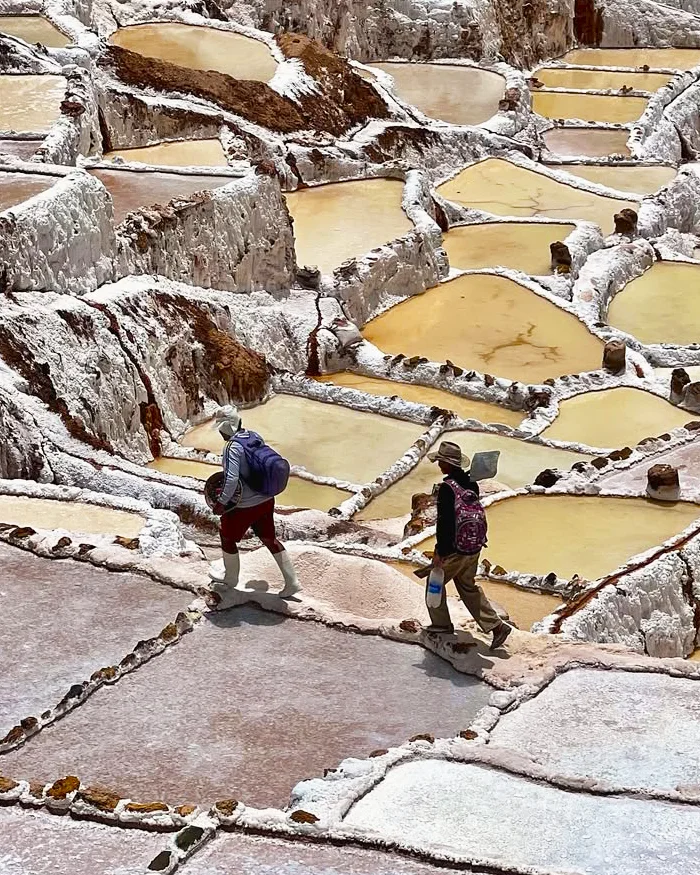
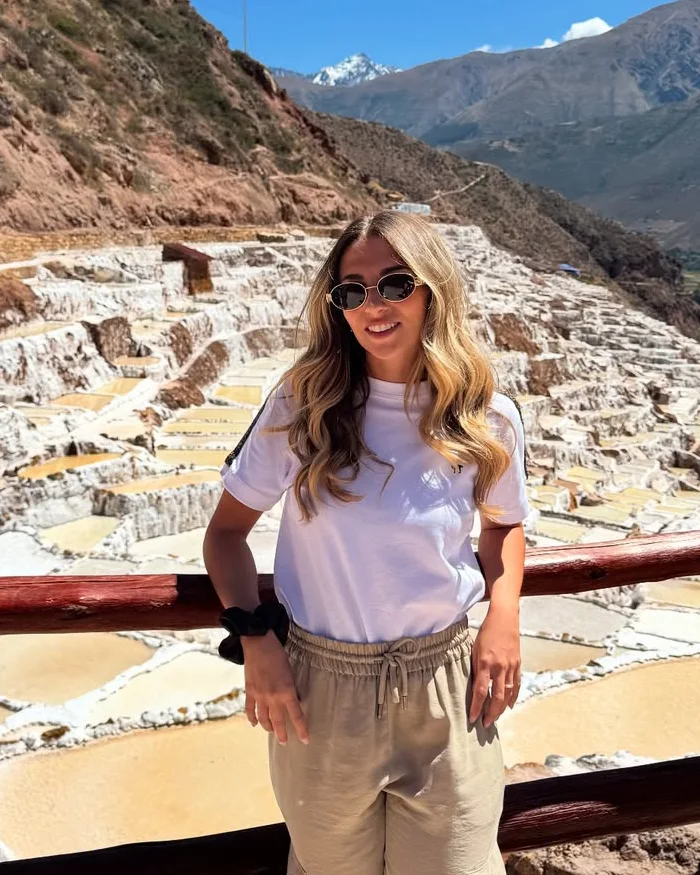
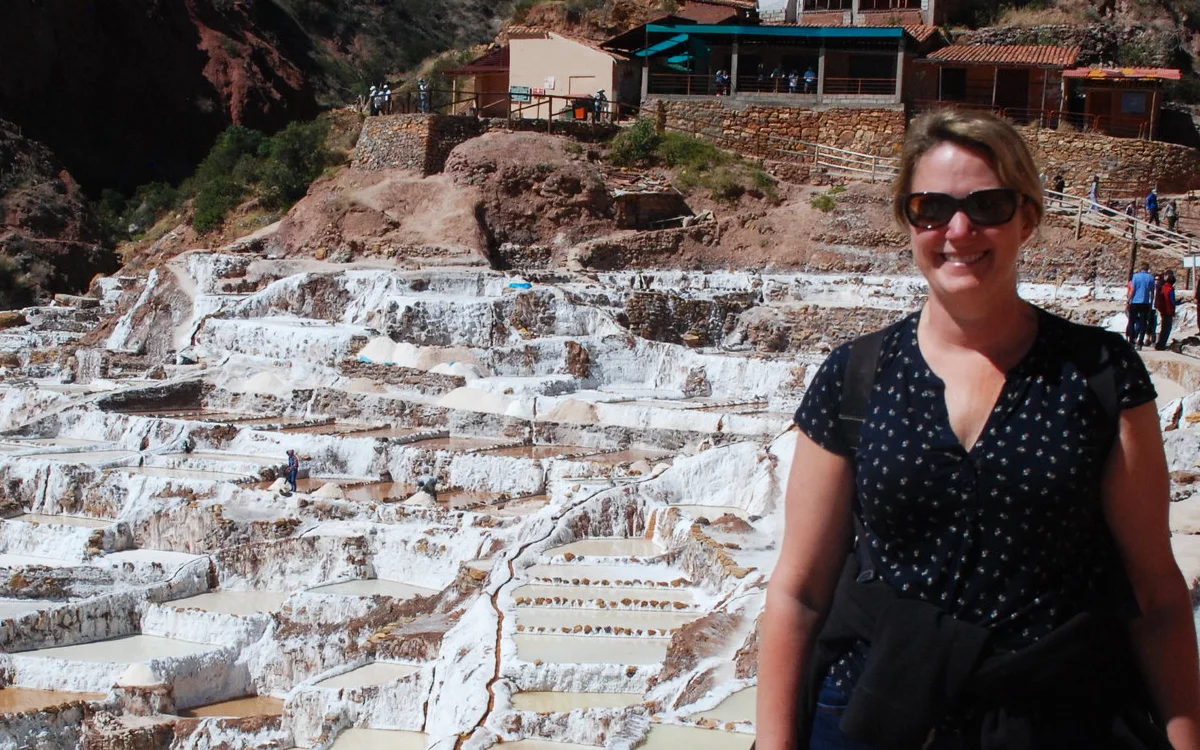
The Maras Salt Mines, also known as the Salineras de Maras, are among the Sacred Valley’s most recognizable landscapes.
Thousands of small salt ponds cover a mountainside, creating a geometric pattern that changes in appearance according to the water, minerals and production process.
Unlike Moray, which is preserved primarily as an archaeological site, the salineras remain associated with productive activity managed by local communities.
History and community-managed production
Salt extraction at Maras has roots in the pre-Hispanic history of the region.
The production techniques continued through the Inca period and subsequent generations.
The salineras remain connected to community knowledge, local livelihoods and the management of the saline water used in the ponds.
This continuity is one of the main reasons Maras offers a different cultural experience from a conventional archaeological attraction.
Visitors observe a working production landscape rather than a preserved agricultural monument.
How salt is produced at Maras
Salt production at Maras relies on naturally saline water, evaporation and manual work.
The process generally follows several stages:
- Saline water supply: Naturally salty water emerges from local springs.
- Distribution: Small channels direct water toward individual ponds.
- Evaporation: Environmental conditions gradually reduce the water volume.
- Crystallization: Salt forms as the water evaporates.
- Harvesting: Local producers collect the resulting salt.
- Processing and distribution: The salt is prepared for different uses and markets.
The time required for crystallization and harvesting varies according to weather, water conditions and the stage of production.
Why do the salt ponds have different colors?
The Maras salt ponds can appear white, pink, beige or brown.
Their appearance depends on several factors, including:
- Mineral composition.
- Water concentration.
- Sediment and natural materials.
- Stage of evaporation.
- Lighting and weather conditions.
Visitors may notice different colors across the same hillside because not every pond is at the same production stage.
These variations are particularly visible from elevated viewpoints.
Visitor viewpoints and access restrictions
The salt ponds are an active working area.
Visitors should not assume that entering the ponds or walking along production channels is permitted.
Access is controlled to protect the site and avoid interfering with workers.
Photography and observation should take place from authorized viewpoints.
Important note: The Maras Salt Mines remain an active production area. Follow current visitor boundaries and do not enter working salt ponds, even when nearby paths appear accessible.
Best time to visit Moray and Maras
Moray and Maras can generally be visited throughout much of the year, although weather influences road conditions, visibility and the appearance of the landscape.
The Cusco highlands experience a generally drier period from April through October and a wetter period from November through March.
Dry season from April to October
The drier months often provide clearer conditions and reduced rainfall.
May through September can be appealing for visitors interested in photographing the terraces and salt ponds beneath clearer skies.
However, these months may also bring greater visitor demand.
Strong sun is possible during the day, while highland mornings and evenings may feel cold.
Rainy season from November to March
During wetter months, surrounding hills often appear greener.
Rainfall can make unpaved surfaces slippery and affect road conditions.
Changing light and cloud cover can also influence photographs of Moray and Maras.
Visitors should carry rain protection and use footwear with reliable grip.
Transition months
April and October are transitional periods.
April may retain green landscapes after the wetter season, while October can have relatively dry conditions before rainfall becomes more frequent.
Actual weather changes from year to year.
Check the forecast close to the date of your excursion.


Activities around Maras and Moray
The attractions can be combined with other experiences in the surrounding Sacred Valley landscape.
However, additional activities should be selected according to the time available and the actual itinerary.
ATV and quad bike excursions
ATV tours are available in the broader Maras and Moray area.
These excursions usually follow designated rural routes with mountain scenery and scheduled stops.
The exact route depends on the operator.
Some tours may include visits to archaeological viewpoints or the Maras area, but an ATV excursion does not automatically provide admission to Moray or access inside the working salt ponds.
Before booking, confirm:
- Minimum age and driving requirements.
- Helmet and protective equipment.
- Safety instructions and guide supervision.
- Weather and road conditions.
- Locations included in the itinerary.
- Whether attraction admission is included.
Travelers interested in an additional adventure activity can explore the ATV excursion in Maras and Moray.


Rural scenery, village visits and photography
The village of Maras and its surrounding agricultural landscape can provide additional opportunities for sightseeing.
Visitors may enjoy:
- Walking through authorized village areas.
- Observing traditional highland architecture.
- Photographing agricultural fields and mountain landscapes.
- Stopping at designated scenic viewpoints.
- Learning about local activities and rural traditions.
Walking routes and accessibility vary.
Choose paths appropriate for your fitness, weather conditions and available time.
What to bring and accessibility considerations
Moray and Maras are located at high elevation, where strong sunlight, wind and changing temperatures can occur during a single excursion.
A small daypack is generally sufficient for a standard visit.
Recommended items include:
- Footwear: Comfortable walking shoes with good traction.
- Clothing: Breathable layers, a warm sweater and light rain protection.
- Sun protection: Sunscreen, sunglasses and a hat.
- Water: Reusable bottle containing safe drinking water.
- Snacks: Light food if the excursion is long.
- Documents: Identification and the required admission tickets.
- Money: Some Peruvian soles for transport and small purchases.
- Photography: Phone or camera with sufficient battery.
Altitude considerations
Moray stands at approximately 11,483 ft (3,500 m), so visitors who recently arrived in Cusco from lower elevations may feel the effects of altitude.
Even relatively short walks can feel more demanding than expected.
Travelers should consider their physical condition and avoid strenuous activities when feeling unwell.
Concerning or worsening symptoms require appropriate medical attention.
Tips for families and older travelers
Moray and Maras can be suitable for many families and older travelers, but the experience depends on individual mobility and comfort.
Some paths have uneven surfaces, slopes or limited accessibility.
A private vehicle may reduce the number of transfers and make it easier to organize stops around the group’s pace.
Visitors with mobility requirements should confirm the available viewpoints and access arrangements before departure.
Local food around the Sacred Valley
The towns and restaurants around Maras and the Sacred Valley offer opportunities to try regional ingredients and traditional Peruvian dishes.
Availability varies according to the establishment, season and selected itinerary.
Common regional foods and ingredients include:
- Native potatoes: Andean potato varieties served in different preparations.
- Choclo con queso: Large-kernel corn served with fresh cheese.
- Chuño: Traditionally preserved potatoes used in highland cooking.
- Olluquito con charqui: A dish combining olluco with dried meat.
- Trout: Served grilled or fried at some restaurants in the Cusco region.
Other Peruvian dishes, such as lomo saltado and ají de gallina, may be available, but they are not exclusive specialties of Maras or Moray.
For more regional food traditions, consult the Andean foods in Cusco guide.
Travel information for visitors from Mexico
Mexican travelers planning to visit Moray and Maras should distinguish international entry requirements from local admission tickets.
Passport rules apply to entering Peru, while the Cusco Tourist Ticket and Maras admission apply to the individual attractions.
Passport and visa requirements
Mexican citizens traveling with valid ordinary passports are generally exempt from obtaining a Peruvian tourist visa under the current bilateral arrangements.
However, the exemption does not eliminate other immigration requirements.
Travelers should verify passport validity, entry conditions and the authorized period of stay before departure.
Mexican travel guidance indicates a passport validity requirement of at least six months.
The duration of stay granted to a particular traveler is determined through the applicable immigration rules and official admission process.
It should not be assumed that every visitor automatically receives a 183-day stay.
Before traveling, consult Peru’s Ministry of Foreign Affairs and Mexico’s official travel guidance.
Currency and guide language
Peru uses the Peruvian sol (PEN).
Many established tourist businesses accept payment cards, but visitors should carry some cash for local transportation, small purchases and situations where electronic payment is unavailable.
For Moray and Maras, the published ticket prices are commonly expressed in soles.
Spanish-speaking guides are widely available in Cusco.
English-language tours are also offered by many operators, but the language of the actual service should be confirmed before booking.
Plan your Moray and Maras experience
Moray and Maras combine Inca agricultural heritage with one of the Sacred Valley’s most distinctive working landscapes. If you want to explore the area with an additional adventure activity, consider the Maras and Moray ATV excursion, or talk to a travel specialist about the best way to organize your visit from Cusco.

Frequently asked questions about Mexican Tourists at Moray and Maras
Can you visit Moray and Maras with children?
Can Moray and Maras be combined with Chinchero?
Are English-speaking and Spanish-speaking guides available?
Are Moray and Maras accessible for visitors with limited mobility?
Can you fly a drone over Moray or the Maras Salt Mines?
Do Mexican tourists need a visa to visit Peru?

Share:



Related tours you might be interested in
Enjoy unique experiences in Cusco and Machu Picchu with the peace of mind that comes from working with a local travel agency
Rural and Agritourism Experience in Chichubamba
TRADITIONAL LIFE IN THE HEART OF THE SACRED VALLEY Let yourself be immersed in the mystique and...

Birdwatching Experience at Chacán Dam & Ensifera Camp
BIRD WATCHING IN CUSCO: CHACÁN & ENSIFERA CAMP Cusco is far more than history and dramatic...

Cusco Soccer Game Experience
EXPERIENCE CUSCO SOCCER LIKE A LOCAL Immerse yourself in one of Cusco’s most intense cultural...
Huacarpay Birdwatching Experience
HUACARPAY: ANDEAN BIRD SANCTUARY Discover the natural richness of Huacarpay, a high-Andean wetland...
If you liked this article and the information you found, give us 5 stars!
Table of Contents
Related blogs

Explore Huayna Picchu like an expert: Our guide will take you gradually
12 min of reading
How to Get to Uyuni Salt Flat from the US, Bolivia, Peru and Chile
14 min of reading

