


Machu Picchu weather by month: Find your perfect travel time
Ultima actualización en 23 September, 2026 por Jhon Quispe
Last Updated on 23 September, 2026 by Jhon Quispe
What is Machu Picchu weather like throughout the year?
Machu Picchu has a humid cloud-forest climate at about 2,430 m (7,972 ft). November through March is generally the wetter period, while April through October is usually drier, although rain can occur year-round. January through March are among the wettest months, while June through August usually bring drier conditions and cooler mornings. The Inca Trail closes every February for annual maintenance, but Machu Picchu itself remains open. Pack rain protection, sun protection and layers in every season.
- MachupicchuMachu Picchu & Humantay Lake
- Machu Picchu climate at a glance
- Machu Picchu temperatures and rainfall by month
- Machu Picchu weather by month
- Dry season vs rainy season at Machu Picchu
- How weather can affect Machu Picchu travel
- Plan your Machu Picchu dates around the conditions you prefer
- Frequently asked questions about Machu Picchu weather
Machu Picchu is generally wetter from November through March and drier from April through October, although rain is possible year-round. In the climate dataset used here, average daytime highs stay around 75–79°F (24–26°C), while average lows range from about 48–55°F (9–13°C). March averages about 5.9 in (151 mm) of rain, while June averages about 0.7 in (17 mm).
Machu Picchu sits lower than Cusco and closer to the humid eastern-Andean cloud-forest environment, so conditions can shift between sunshine, cloud, mist and rain within the same day. Monthly averages are useful for packing and itinerary planning, but they should not be treated as a forecast for the exact date of your visit.
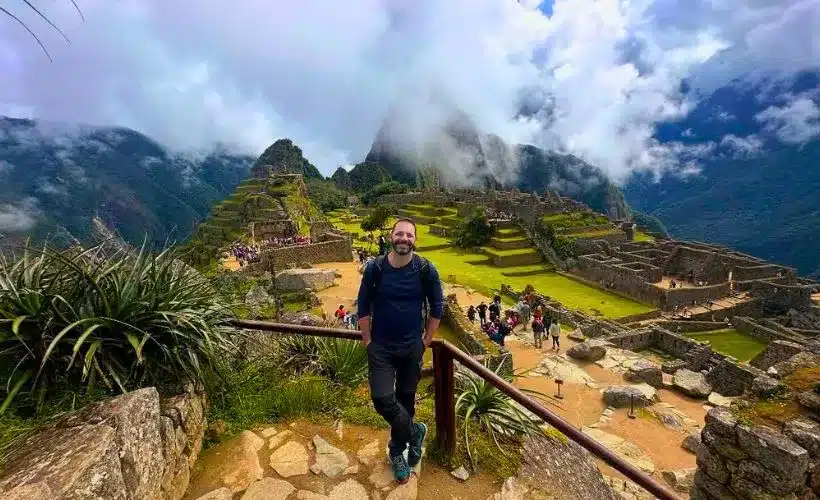
Machu Picchu climate at a glance
| Climate factor | Planning reference |
| Elevation | About 7,972 ft (2,430 m) |
| Wetter period | Generally November through March |
| Drier period | Generally April through October, with April and October as transition months |
| Typical conditions | Humid and changeable, with rain possible in every month |
| Coolest mornings | Usually June and July |
| February planning note | Machu Picchu normally remains open, while the regulated Inca Trail network closes for annual maintenance |
Machu Picchu temperatures and rainfall by month
Important note:
The monthly figures are approximate long-term climate averages from Weather2Travel, whose dataset uses information supplied by CRU at the University of East Anglia, the UK Met Office and KNMI. They are useful for comparing months, not for predicting the weather on a specific travel date.
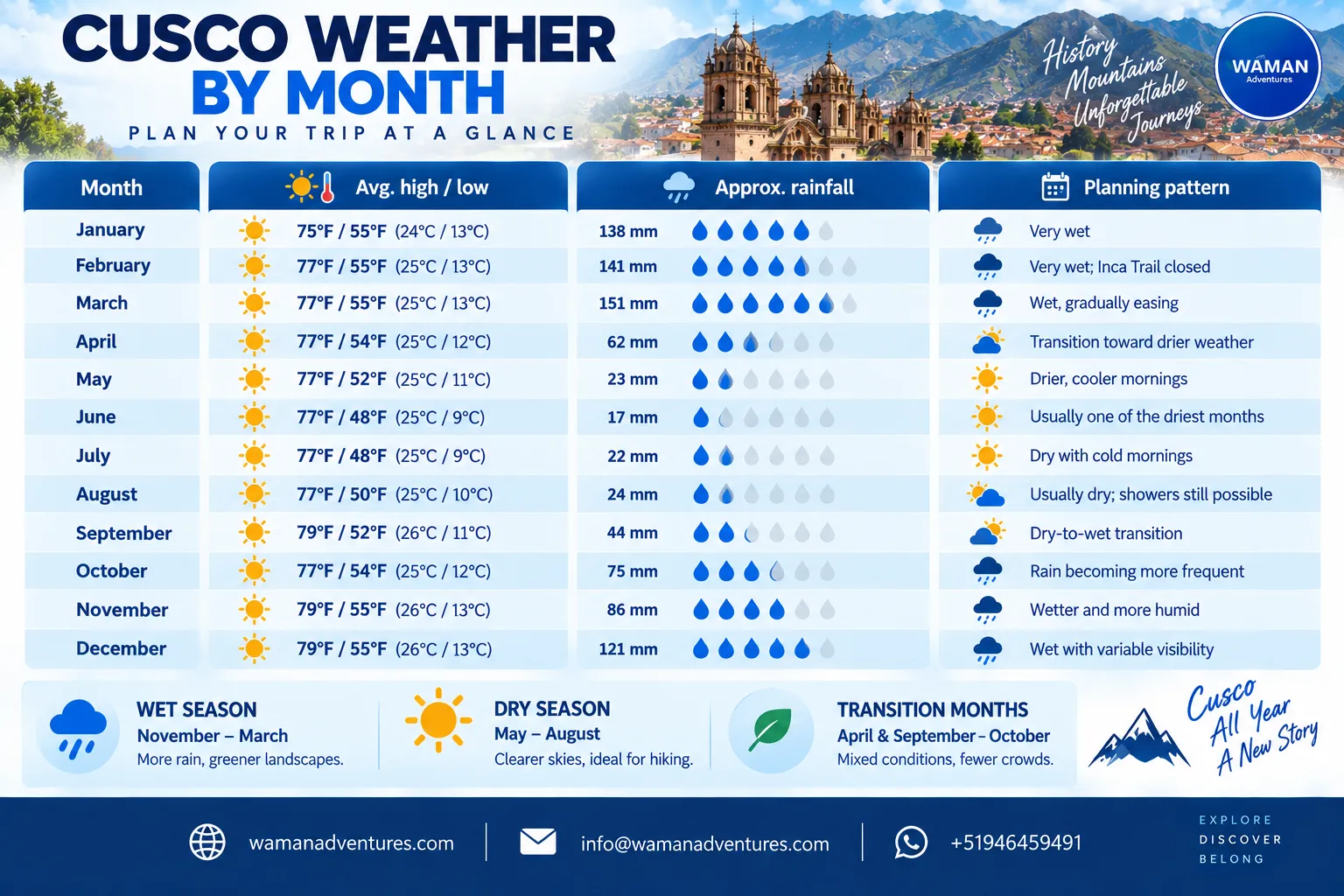
Monthly highs, lows and rainfall show Machu Picchu’s main seasonal weather changes.
Machu Picchu weather by month
January
- Average high: 75°F (24°C)
- Average low: 55°F (13°C)
- Average rainfall: 5.4 in (138 mm)
- Typical conditions: frequent showers, high humidity, cloud and changing visibility
- Pack: reliable rain protection, grippy footwear, backpack cover and quick-drying layers
January is part of the wettest period of the year. Rain does not necessarily fall continuously all day, but conditions can change quickly, so protect electronics and leave flexibility in transport plans.
February
- Average high: 77°F (25°C)
- Average low: 55°F (13°C)
- Average rainfall: 5.6 in (141 mm)
- Typical conditions: frequent rain, fog, high humidity and wet ground
- Pack: waterproof layers, water-resistant footwear and a warm layer for cooler periods
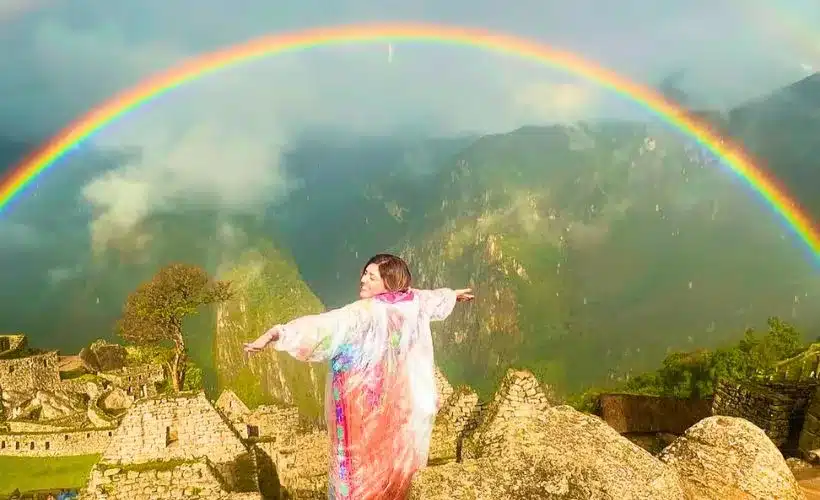
February remains firmly within the rainy season. Machu Picchu itself normally remains open, but wet weather can affect visibility, trail conditions and regional transport.
Important note:
The scheduled February closure applies to the regulated Inca Trail network, not to Machu Picchu itself. The Inca Trail closed throughout February 2026 for annual conservation and maintenance and reopened from March 1.
March
- Average high: 77°F (25°C)
- Average low: 55°F (13°C)
- Average rainfall: 5.9 in (151 mm)
- Typical conditions: wet and humid, with gradual movement toward the drier part of the year
- Pack: waterproof protection, grippy footwear, light layers and sun protection
March has the highest monthly rainfall figure in the climate dataset used here. The landscape is typically lush and green, but clouds and showers can still reduce visibility.
April
- Average high: 77°F (25°C)
- Average low: 54°F (12°C)
- Average rainfall: 2.4 in (62 mm)
- Typical conditions: transition toward drier weather with longer dry intervals
- Pack: light layers, compact waterproof shell, warm layer and sun protection
April is a transition month rather than a hard climatic boundary. Rain remains possible, but average rainfall falls sharply compared with January through March.

May
- Average high: 77°F (25°C)
- Average low: 52°F (11°C)
- Average rainfall: 0.9 in (23 mm)
- Typical conditions: much drier, with cooler mornings and more stable visibility
- Pack: breathable layers, warmer early-morning layer, sun protection and compact rain shell
May marks a clear change from the wetter first part of the year. Rain is still possible, but average precipitation is substantially lower and mornings begin to feel cooler.
June
- Average high: 77°F (25°C)
- Average low: 48°F (9°C)
- Average rainfall: 0.7 in (17 mm)
- Typical conditions: among the driest conditions of the year with cool early mornings
- Pack: warm morning layer, light daytime clothing, sun protection and lightweight waterproof layer
June has the lowest rainfall figure in the dataset used here. Clearer conditions are more common, but early mornings can feel cold before temperatures rise later in the day.
July
- Average high: 77°F (25°C)
- Average low: 48°F (9°C)
- Average rainfall: 0.9 in (22 mm)
- Typical conditions: generally dry with cool mornings and stronger temperature contrasts
- Pack: warm layer, wind protection, sunscreen, hat and comfortable walking shoes
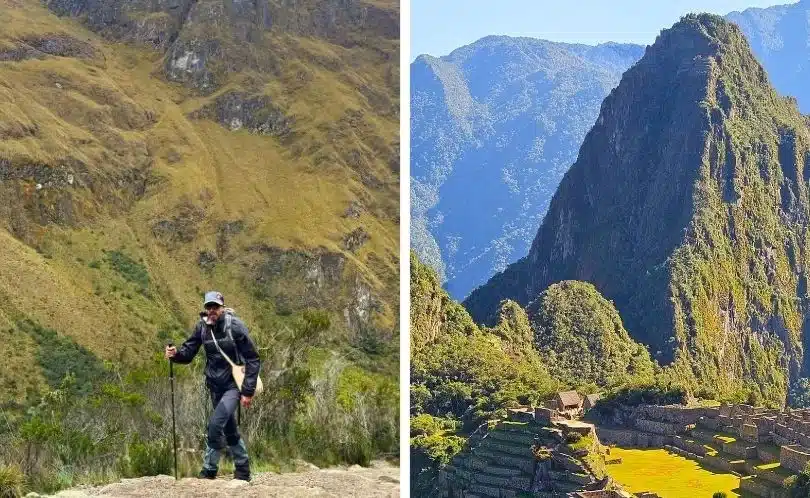
July remains very dry on average, but dry season does not mean consistently warm temperatures. Early departures can feel chilly even when afternoons become mild in direct sunshine.
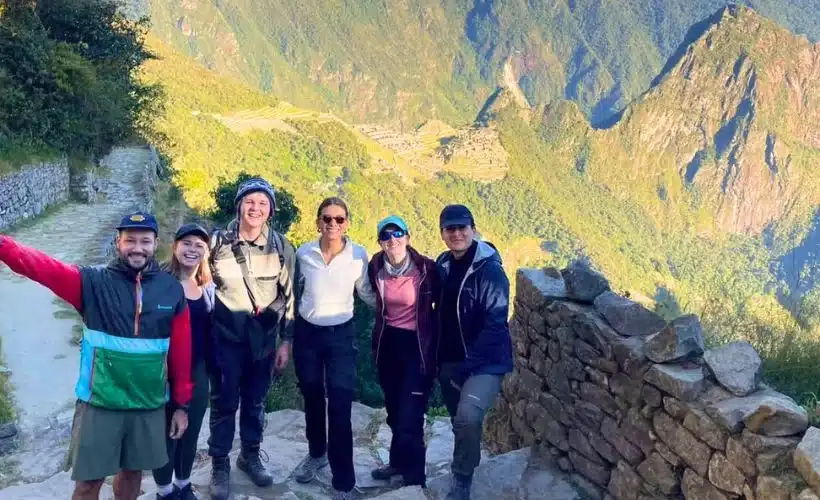
August
- Average high: 77°F (25°C)
- Average low: 50°F (10°C)
- Average rainfall: 0.9 in (24 mm)
- Typical conditions: generally dry and bright with occasional short showers still possible
- Pack: light layers, warm early-morning layer, sunscreen and compact rain protection
August remains within the drier period, but Machu Picchu’s humid mountain setting means showers cannot be ruled out. A lightweight waterproof layer is still useful.
September
- Average high: 79°F (26°C)
- Average low: 52°F (11°C)
- Average rainfall: 1.7 in (44 mm)
- Typical conditions: relatively dry but gradually transitioning toward wetter spring weather
- Pack: light daytime layers, waterproof shell, warm layer and sun protection
Rain becomes progressively more likely as September advances. Keep rain protection accessible rather than assuming dry-season conditions will last throughout every day.
October
- Average high: 77°F (25°C)
- Average low: 54°F (12°C)
- Average rainfall: 3.0 in (75 mm)
- Typical conditions: transition month with increasing rainfall, humidity and cloud
- Pack: waterproof shell, footwear with traction, sun protection and insect repellent
October marks a noticeable transition toward the wetter period. Clear morning conditions are possible, but rain should not be assumed to occur only in the afternoon.
November
- Average high: 79°F (26°C)
- Average low: 55°F (13°C)
- Average rainfall: 3.4 in (86 mm)
- Typical conditions: wetter, more humid and increasingly variable visibility
- Pack: waterproof shell or poncho, grippy footwear, quick-drying layers and sun protection
November usually marks a stronger shift into rainy-season conditions, but it is not automatically a washout. Bright periods can still occur between showers and cloudier intervals.
December
- Average high: 79°F (26°C)
- Average low: 55°F (13°C)
- Average rainfall: 4.8 in (121 mm)
- Typical conditions: frequent showers, high humidity and changing visibility
- Pack: waterproof shell or poncho, quick-drying clothing, grippy footwear and backpack protection
December is firmly within the wetter season. Rain and cloud are more frequent, while year-end travel demand can also affect trains and accommodation independently of the weather.
Dry season vs rainy season at Machu Picchu
| Factor | Drier period | Wetter period |
| Approx. months | April–October | November–March |
| Rain | Less frequent overall but still possible | More frequent and sometimes heavier |
| Visibility | Generally more stable | More variable because of cloud and mist |
| Trail conditions | Usually firmer | Can be wetter and more slippery |
| Landscape | Some vegetation can appear drier | Lush and intensely green |
| Main packing priority | Sun protection and layers for cooler mornings | Reliable waterproofing and quick-drying layers |
These seasonal labels are useful planning shortcuts, not guarantees. April and October are transition months, and short showers remain possible even during the driest part of the year.
If your question is broader than weather and you want to compare climate with crowds, ticket demand and travel style, use the best time to visit Machu Picchu guide.
For more detail specifically on November through March, use the Machu Picchu rainy season guide.
Regardless of the month, carrying sun protection and a compact waterproof layer is sensible. Adjust warm layers, footwear and rain protection using the monthly conditions above rather than packing for one fixed temperature.
How weather can affect Machu Picchu travel
Heavy rain can occasionally affect roads, rail operations and trekking routes in the Cusco region. A rainy day does not automatically mean a disruption, but severe weather can trigger temporary operational changes, so check transport notices near your travel date and avoid unnecessarily tight connections during periods of unstable weather.
The Inca Trail is a separate case because its February closure is scheduled annually for conservation and maintenance rather than being a day-to-day weather decision. For route-specific trekking conditions, use the Inca Trail guide.
Plan your Machu Picchu dates around the conditions you prefer
If lower rainfall and more stable visibility matter most, start by comparing the drier months. If you prefer greener landscapes and do not mind greater weather variability, the wetter period offers a different experience.
Once you narrow down your dates, compare weather with ticket availability and the rest of your itinerary in the best time to visit Machu Picchu guide, or talk to a Waman Adventures travel specialist about your Machu Picchu itinerary.
Frequently asked questions about Machu Picchu weather
What is the rainiest month at Machu Picchu?
In the climate dataset used in this guide, March has the highest monthly average at about 5.9 in (151 mm). January and February are also very wet. Different climate datasets can produce slightly different rankings, so January through March is better treated as the peak rainy period overall.
What are the driest months at Machu Picchu?
June, July and August are among the driest months in the dataset used here. June averages about 0.7 in (17 mm) of rainfall, while July and August average about 0.9 in (22–24 mm). Short showers are still possible.
Does it snow at Machu Picchu?
Snow is not a normal weather pattern at the Machu Picchu archaeological site at about 7,972 ft (2,430 m). Cold rain, mist and occasional hail are more realistic weather concerns, while regular snowfall is associated with much higher Andean elevations.
Is Machu Picchu open in February?
Machu Picchu normally remains open in February. The scheduled annual February closure applies to the regulated Inca Trail network, not to the archaeological site itself. Exceptional weather can still cause temporary operational changes.
How accurate are Machu Picchu monthly weather averages?
Monthly averages are useful for comparing seasons and deciding what to pack, but they cannot predict the conditions on one specific day. Machu Picchu’s mountain weather can change quickly, so check a short-range forecast close to your visit.
Can heavy rain affect trains to Machu Picchu?
Yes. Severe rain can occasionally contribute to delays, route inspections or temporary operational changes. This does not happen every rainy day, so check the rail operator’s current notices and leave additional schedule flexibility when weather conditions are unstable.
Do I need rain gear during the dry season?
Yes. Rain is less frequent during the drier months, but it remains possible in Machu Picchu’s humid mountain environment. A lightweight waterproof shell or compact poncho is useful throughout the year.

Share:



Related tours you might be interested in
Enjoy unique experiences in Cusco and Machu Picchu with the peace of mind that comes from working with a local travel agency

10 Days Andean Dreamscapes – Lima, Ica, Cusco & Puno with Local Flights
YOUR NEXT DESTINATION IS PERU, THE LAND OF FASCINATING STORIES AND OUTSTANDING LANDSCAPES! With our...

07 Day Echoes of Peru – Lima, Ica & Cusco with Flights
IMAGINE YOUR PERFECT ESCAPE PLAN IN PERU, WHERE EVERY DAY IS THE PERFECT OPPORTUNITY TO EXPLORE AND...
10 Day Millenary Peru – Coast, Andes & Jungle
EXPERIENCE THE BEST OF PERU: ADVENTURE, ICONIC SIGHTS, AND UNIQUE FLAVORS AWAIT! Enjoy an...

02 DAY «EXPLORING» THE SACRED VALLEY AND MACHU PICCHU
CHINCHERO, MARAS AND MORAY WILL ENVELOP YOU IN THE MAGIC OF THE SACRED VALLEY. EACH EXPERIENCE WILL...
If you liked this article and the information you found, give us 5 stars!
Table of Contents
Related blogs

Machu Picchu animals: discover Peru’s wild heart beyond the ruins
10 min of reading
What to Wear to Machu Picchu and Packing List 2026
9 min of reading

