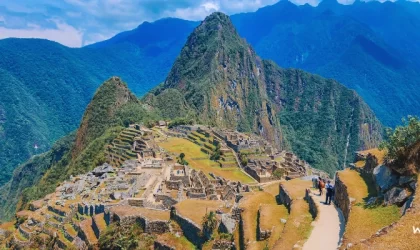
Inca Trail Flora and Plants Along the Route to Machu Picchu
Ultima actualización en 29 October, 2026 por Jhon Quispe
Last Updated on 29 October, 2026 by Jhon Quispe
What plants grow along the Inca Trail?
The Classic Inca Trail features molle trees, native high-Andean woodland including queñua, shrubs, orchids, ferns and mosses. Vegetation changes from relatively dry Andean valleys to exposed mountain terrain and humid cloud forest as the trail approaches Machu Picchu.
- Inca Trail flora at a glance
- How Inca Trail vegetation changes with elevation
- Trees and plants found along the Inca Trail
- Plants you should not expect to see on every hike
- How seasons affect Inca Trail vegetation
- How to observe plants without damaging the ecosystem
- Discover the Inca Trail’s changing landscapes
-
Frequently asked questions about Inca Trail flora
- Are there orchids on the Inca Trail?
- What trees grow near Dead Woman’s Pass?
- Where can hikers see cloud forest plants?
- When is Inca Trail vegetation at its greenest?
- Can visitors pick flowers or orchids on the Inca Trail?
- Can you see queñua trees on the Inca Trail?
- Is Inca Trail flora different from the flora around Machu Picchu?
The most noticeable change is not a single flower or tree but the landscape itself. As hikers climb toward Warmiwañusca and descend toward Wiñay Wayna, colder mountain vegetation gives way to increasingly humid forests, each supporting different plant communities.

The trail crosses contrasting mountain ecosystems before reaching Machu Picchu.
Inca Trail flora at a glance
| Trail environment | Approximate conditions | Plants to look for |
| KM 82 and lower Andean valleys | Around 8,700 ft (2,650 m); relatively dry | Molle, grasses, shrubs and cultivated vegetation |
| High-Andean slopes and Warmiwañusca sector | Cooler, exposed terrain; the pass reaches about 13,780 ft (4,200 m) | High-altitude grasses and shrubs; patches of queñua, unka and t’asta woodland in suitable sectors |
| Descent into humid montane forest | Increasing moisture and denser vegetation | Ferns, mosses, epiphytes and forest trees |
| Wiñay Wayna and the approach to Machu Picchu | Humid montane and cloud-forest environments | Orchids, ferns and lush forest vegetation |
Important note:
These are representative plant communities, not a guaranteed checklist. Sightings depend on habitat, flowering cycles, season and where each species naturally occurs.
How Inca Trail vegetation changes with elevation
The Classic Inca Trail crosses a considerable elevation range within the Historic Sanctuary of Machupicchu. Its ascent and descent pass through contrasting temperatures, rainfall patterns and levels of humidity. This explains why plants associated with dry inter-Andean valleys differ from those in the cloud forest closer to Machu Picchu.
Lower Andean vegetation near KM 82
The standard route begins near Piskacucho (KM 82), at approximately 8,700 ft (2,650 m). Compared with later forested sections, the lower valley has a relatively dry landscape with native shrubs, grasses, cultivated areas and trees adapted to inter-Andean conditions, including molle.
High-Andean vegetation near Warmiwañusca
The trail climbs toward Warmiwañusca, or Dead Woman’s Pass, at approximately 13,780 ft (4,200 m). Higher, colder and more exposed terrain supports grasses and shrubs, while surviving patches of native woodland grow in suitable protected locations around this mountain sector.
The woodland is not continuous across the entire pass. That distinction matters when planning what plants you may actually see.
Humid montane forest after the high passes
As the route descends, humidity gradually increases. Ferns, mosses, epiphytic plants and denser shrubs become more noticeable, with vegetation growing on shaded slopes and around trees. These changes are a consequence of both elevation and local moisture conditions.
Cloud forest near Wiñay Wayna and Machu Picchu
The later sections around Wiñay Wayna, Inti Punku and Machu Picchu enter greener, humid montane-forest environments. Cloud forest is not a promise of constant fog; it describes a moist mountain ecosystem where cloud, mist and humidity strongly influence the vegetation.
This is where orchids, ferns and numerous other moisture-loving plants become especially relevant to the trekking experience. For route logistics and the full itinerary, see the Classic Inca Trail guide.
Trees and plants found along the Inca Trail
The following examples explain the flora most useful for understanding the route. Some are associated with specific stretches of the trail, while others are documented in the wider sanctuary and are not guaranteed beside the walking path.
Molle tree
Molle (Schinus molle) is familiar in the lower and mid-elevation inter-Andean valleys of Peru. Its narrow, hanging leaves and clusters of small reddish fruits are useful visual clues. The tree tolerates relatively dry conditions and should not be presented as characteristic of the highest exposed passes.
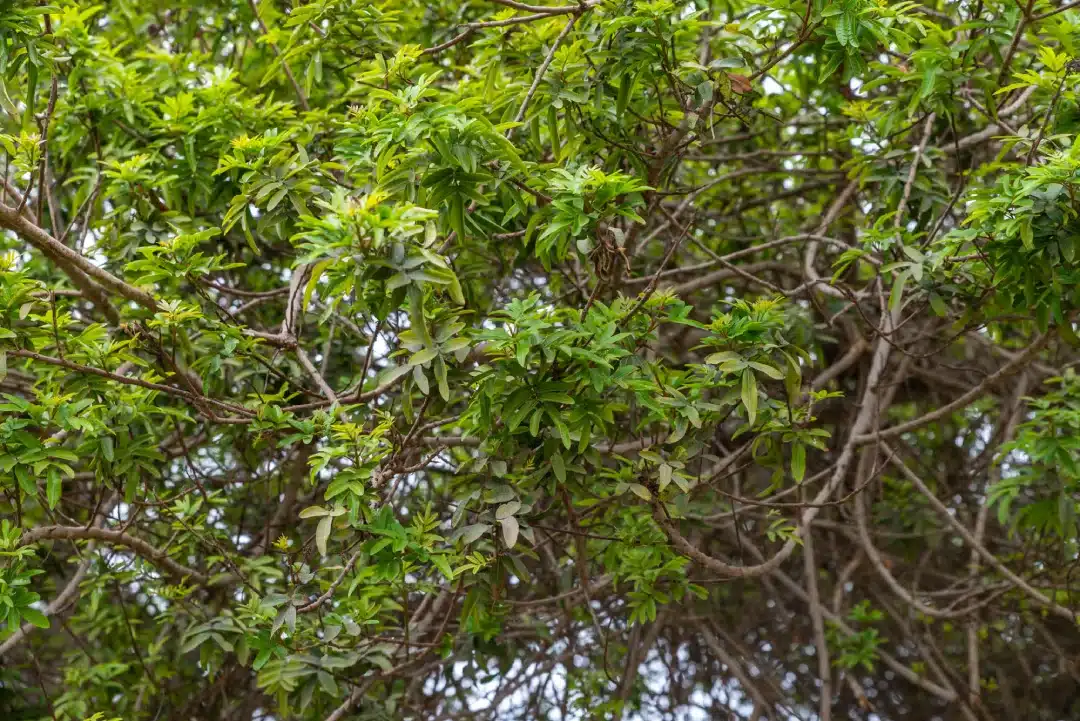
The Peruvian pepper tree is a South American native recognized by its abundant foliage and narrow leaves.
Queñua, unka and t’asta
Protected-area documentation records relict native woodland in the Warmiwañusca sector containing three notable trees. These are not species that blanket the entire pass; they survive where local soils, shelter and moisture allow woodland to develop.
| Common name | Scientific name | Identification or ecological context |
| Queñua | Polylepis racemosa | High-Andean tree; members of the genus are known for layered, often reddish bark |
| Unka | Myrcianthes oreophylla | Native tree recorded as part of the surviving mountain woodland |
| T’asta | Escallonia myrtilloides | Native tree associated with high-elevation woodland in the protected landscape |
Queñua trees in the genus Polylepis often have twisted trunks and bark that separates into thin layers. Their patchy high-elevation woodland is ecologically valuable, especially in landscapes where cold and exposure limit tree growth.
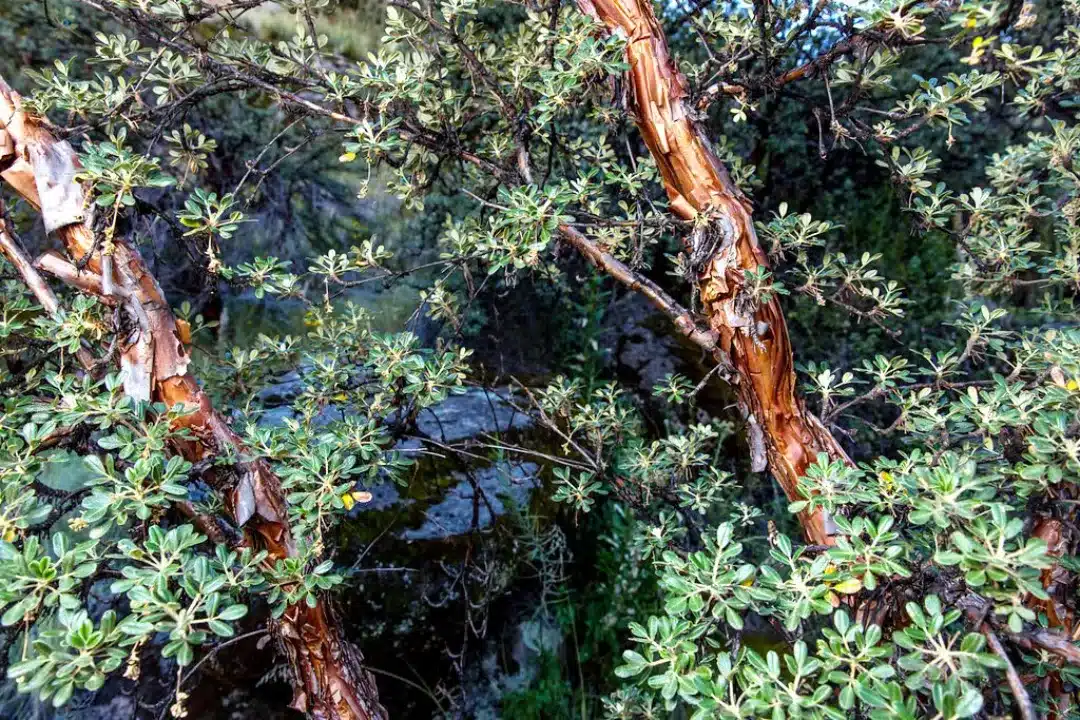
The queñua is characteristic of high Andean environments, recognizable by its layered bark and ability to grow in cold conditions where many other tree species are less common.
Orchids
Orchids are among the characteristic plants of the humid forest portions of the Inca Trail. Official descriptions of the protected Inca road network document orchids in genera including Epidendrum, Odontoglossum and Stelis.
Some orchids grow on trees as epiphytes, while others occur on rocks or in suitable ground habitats. Many have small flowers, making them easier to overlook than large ornamental orchids.
Claims that the trail itself contains 400 orchid species confuse the hiking route with the much larger Historic Sanctuary of Machupicchu. The biodiversity of the sanctuary cannot be treated as a list of plants that every hiker can find along the trail.

Orchids thrive in suitable humid forest habitats near Machu Picchu.
Ferns, mosses and epiphytes
Ferns become more prominent as the trail approaches humid forest. Mosses and plants growing on other vegetation help create the layered green appearance of shaded forest environments. Botanical work around the Wiñay Wayna sector has also documented fern diversity and other moisture-associated plant groups.
These smaller plants are part of the ecological transition, even when they are less conspicuous than orchids or trees.
Cedro blanco and other montane forest trees
Cedro blanco (Cedrela lilloi) is among the native montane-forest trees associated with the wider Machu Picchu region. It should be described as sanctuary flora rather than a tree all Classic Inca Trail hikers will necessarily identify along the path.
Its botanical and conservation relevance is more useful here than unsupported claims about medicinal or cosmetic properties of cedar oil.
Plants you should not expect to see on every hike
Not every plant associated with Peru or the Cusco region is a representative sighting on the standard Classic Inca Trail.
- Puya raimondii: this remarkable high-Andean bromeliad occurs in parts of the Peruvian Andes, including the wider Cusco region, but should not be promised along the KM 82 hiking route.
- Ornamental carnations: named garden varieties should not be listed as characteristic native plants without evidence from the trail itself.
- Angel’s trumpet (Brugmansia spp.): it may grow in suitable Andean environments, but its presence is not guaranteed on the Classic route. The plants are toxic and should not be ingested.
These distinctions help travelers focus on vegetation that is actually relevant to the habitats crossed by the trail.
How seasons affect Inca Trail vegetation
The landscape is generally greener during and shortly after the wetter months. Drier periods often bring more favorable walking conditions, but they do not mean the forest loses its character. Flowering varies among species, and no single month guarantees that every orchid or wildflower will bloom.
Weather and seasonal planning are covered in more detail in the best time to hike the Inca Trail guide.
How to observe plants without damaging the ecosystem
The Classic Inca Trail passes through a protected cultural and natural landscape. Even small plants growing along the trail edge are part of the local ecosystem.
- Stay on the established trail, especially around delicate vegetation.
- Do not pick orchids, flowers, seeds or leaves.
- Leave mosses, bark and other plant material where you find them.
- Avoid stepping off the trail to take close-up photographs.
- Do not carve, scratch or mark tree trunks.
- Follow the instructions of authorized guides and protected-area staff.
Observing plants in place protects localized populations and allows other hikers to experience the same environment.
For the wider sanctuary’s plants and animals, see the flora and fauna of Machu Picchu guide. Travelers deciding between different hiking routes can also consult the Classic and Short Inca Trail comparison.
Discover the Inca Trail’s changing landscapes
From relatively dry Andean valleys to the queñua woodland around high mountain sectors and humid forest near Machu Picchu, the Classic Inca Trail offers a remarkable change in vegetation. If you want to experience these environments while planning a route suited to your travel dates and interests, talk to a travel specialist about your options.

Frequently asked questions about Inca Trail flora
Are there orchids on the Inca Trail?
What trees grow near Dead Woman’s Pass?
Where can hikers see cloud forest plants?
When is Inca Trail vegetation at its greenest?
Can visitors pick flowers or orchids on the Inca Trail?
Can you see queñua trees on the Inca Trail?
Is Inca Trail flora different from the flora around Machu Picchu?
Share:



Related tours you might be interested in
Enjoy unique experiences in Cusco and Machu Picchu with the peace of mind that comes from working with a local travel agency
6-Day Tour Cusco, Sacred Valley, Machu Picchu and Rainbow Mountain
EXPERIENCE THE MAJESTY OF THE INCAS: SACRED VALLEY, MACHU PICCHU & RAINBOW MOUNTAIN IN ONE TRIP If...
6 Day Andean Adventures Tour│With Flights from Chile
ENJOY THE BEST OF CUSCO CITY – MUST VISIT DESTINATIONS ARE WAITING FOR YOU! Want to explore Cusco...
6 Days Andean Adventure │ With Flights from Mexico
EXPERIENCE THE BEST OF CUSCO – THE MOST BREATHTAKING DESTINATIONS AWAIT Do you want to explore...
5 Day Cusco, Sacred Valley and Machu Picchu
DISCOVER THE MAJESTY OF MACHU PICCHU AND THE BEAUTY OF THE SACRED VALLEY IN ONE EPIC JOURNEY! The...
If you liked this article and the information you found, give us 5 stars!
Table of Contents
Related blogs

50 Inca Jungle Trek Facts to Know Before Visiting Machu Picchu
18 min of reading
Machu Picchu 2026 Free Entry Fees and Closure Update
10 min of reading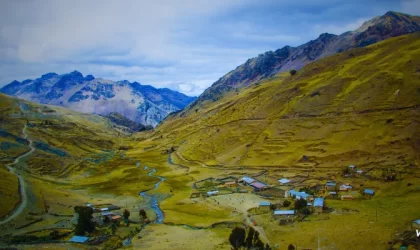
Lares Trek Difficulty Altitude and How to Prepare
9 min of reading