Andean Food in Cusco and Traditional Dishes to Try
Ultima actualización en 16 November, 2026 por Jhon Quispe
Last Updated on 16 November, 2026 by Jhon Quispe
What Are the Traditional Andean Foods in Cusco?
Cusco’s traditional food is built on native potatoes, chuño, corn, quinoa and regional peppers. The dishes most worth trying are chairo (a highland soup), chiri uchu (a cold plate tied to Corpus Christi), adobo cusqueño (pork stewed with chicha de jora), cuy, chicharrón, lechón, humitas and choclo con queso. Markets show the ingredients, and picanterías serve full meals.
- Andean foods in Cusco at a glance
- Traditional Andean ingredients in Cusco
- Traditional Cusco dishes to try
- Traditional Andean drinks in Cusco
- Cusco foods connected to festivals and traditions
- Where to try traditional Andean food in Cusco
- Andean food vs. popular Peruvian dishes
- Practical tips for trying traditional Cusco food
- Taste Cusco’s Traditional Flavors on a Local Food Experience
-
Frequently asked questions about Andean foods in Cusco
- What are the most traditional Andean foods in Cusco?
- What makes Cusco cuisine different from other Peruvian food?
- What is chiri uchu and when is it eaten?
- Is traditional Andean food spicy?
- Where can you try traditional Andean food in Cusco?
- Are vegetarian Andean dishes available?
- Is chicha de jora alcoholic?
- What are chuño and moraya?
- When is Corpus Christi in Cusco, and can I try chiri uchu then?
- What is the difference between chicha de jora and chicha morada?
Cusco’s culinary identity becomes clearer when you look at how ingredients are prepared and shared. Preserved potatoes appear in highland soups, corn is used in everyday snacks and fermented drinks, and certain dishes become especially meaningful during religious festivals and family celebrations.
Andean foods in Cusco at a glance
Cusco’s traditional cuisine combines ingredients cultivated in the Andes with regional cooking methods and cultural traditions. Some dishes are served regularly in homes and local restaurants, while others are particularly associated with celebrations.
| Traditional food | Main ingredients | When it is commonly eaten |
| Chairo | Potatoes, chuño, meat, vegetables and herbs | Traditional lunches and highland meals |
| Chiri uchu | Cuy, chicken, corn, cheese and other regional ingredients | Especially during Corpus Christi |
| Adobo cusqueño | Pork, chicha de jora, ají panca and spices | Often as a hearty morning or weekend meal |
| Cuy | Roasted or baked guinea pig with regional accompaniments | Family gatherings, celebrations and regional meals |
| Cusco-style chicharrón | Pork, mote, potatoes and salsa criolla | Regional meals, fairs and local restaurants |
| Lechón | Slow-roasted pork with traditional side dishes | Festivals and family celebrations |
| Humitas | Fresh corn dough with sweet or savory ingredients | Breakfast or snacks |
| Choclo con queso | Large-kernel Andean corn and fresh cheese | Markets, fairs and everyday snacks |
Important note:
Not every Peruvian dish sold in Cusco is a regional specialty. Traditional Cusco food is distinguished by its local ingredients, preparation styles and cultural associations, while many popular dishes reflect Peru’s broader national cuisine.
Traditional Andean ingredients in Cusco
Andean cuisine developed around crops adapted to mountain environments and agricultural traditions passed down through generations. Potatoes, corn, quinoa, native peppers and herbs continue to influence both everyday meals and dishes prepared for celebrations.
Native potatoes, chuño and moraya
Potatoes are among the most important ingredients in Andean food culture. Peru has an extraordinary diversity of native potatoes, and highland communities in the Cusco region have maintained cultivation practices adapted to different elevations and growing conditions.
Fresh potatoes appear in soups, stews, side dishes and regional preparations. They may be boiled, roasted, fried or combined with other ingredients depending on the dish.
Chuño is a traditional form of preserved potato produced through freezing and drying processes associated with the high Andes. Moraya, also called white chuño, undergoes a different preservation process that commonly involves soaking and drying.
These ingredients are especially important because they demonstrate how Andean communities developed food-preservation methods suited to cold temperatures and seasonal agricultural cycles.
Chuño remains a characteristic ingredient in highland dishes such as chairo, connecting present-day cooking with longstanding agricultural knowledge.


Corn, choclo and quinoa
Corn is another central ingredient in Cusco’s Andean cuisine. Large-kernel Andean corn, commonly known as choclo, is used in everyday meals, snacks and traditional preparations.
Choclo is frequently served with fresh cheese, while ground corn forms the base of foods such as humitas. Corn is also essential to chicha de jora, a fermented drink with longstanding cultural importance in the Andes.
Quinoa is a traditional Andean grain cultivated in the region for generations. It appears in soups, cooked grain dishes, breakfast preparations and hot drinks.
The continued use of these ingredients shows how highland agriculture remains closely connected to Cusco’s regional food traditions.
Andean peppers and aromatic herbs
Regional cuisine also uses peppers and herbs to create characteristic flavors. These ingredients contribute more than heat: they provide aroma, color and depth to soups, stews and sauces.
Common examples include:
- Ají panca: a dried red pepper often used in marinades and stews, including adobo cusqueño.
- Ají amarillo: a yellow-orange pepper used across Peruvian cuisine in sauces and cooked preparations.
- Rocoto: a pepper known for its distinct flavor and potentially strong heat.
- Huacatay: an aromatic herb used in regional sauces and seasonings.
- Muña: an Andean aromatic herb frequently prepared as an infusion.
The presence of ají or rocoto does not automatically mean a dish will be extremely spicy. The final heat level depends on how the ingredients are prepared and how much is used.
Traditional Cusco dishes to try
The following preparations are useful introductions to regional cuisine because they combine traditional Andean ingredients with cooking practices, family customs or celebrations associated with Cusco.
Chairo
Chairo is a traditional highland soup associated with southern Peru, including Cusco. Its ingredients vary according to the region and household, but recipes commonly combine fresh potatoes, chuño, meat, vegetables, fava beans, corn and aromatic herbs.
The use of chuño is particularly significant because it connects the dish with traditional high-altitude food preservation.
Chairo is commonly enjoyed as a substantial meal rather than a light appetizer. It can be found in traditional restaurants and market food counters, where warm soups remain part of everyday eating habits.
Although the soup is especially appealing during cold weather, its importance extends beyond providing a warm meal. It represents the continued use of ingredients cultivated and preserved in the Andes.
Chiri uchu
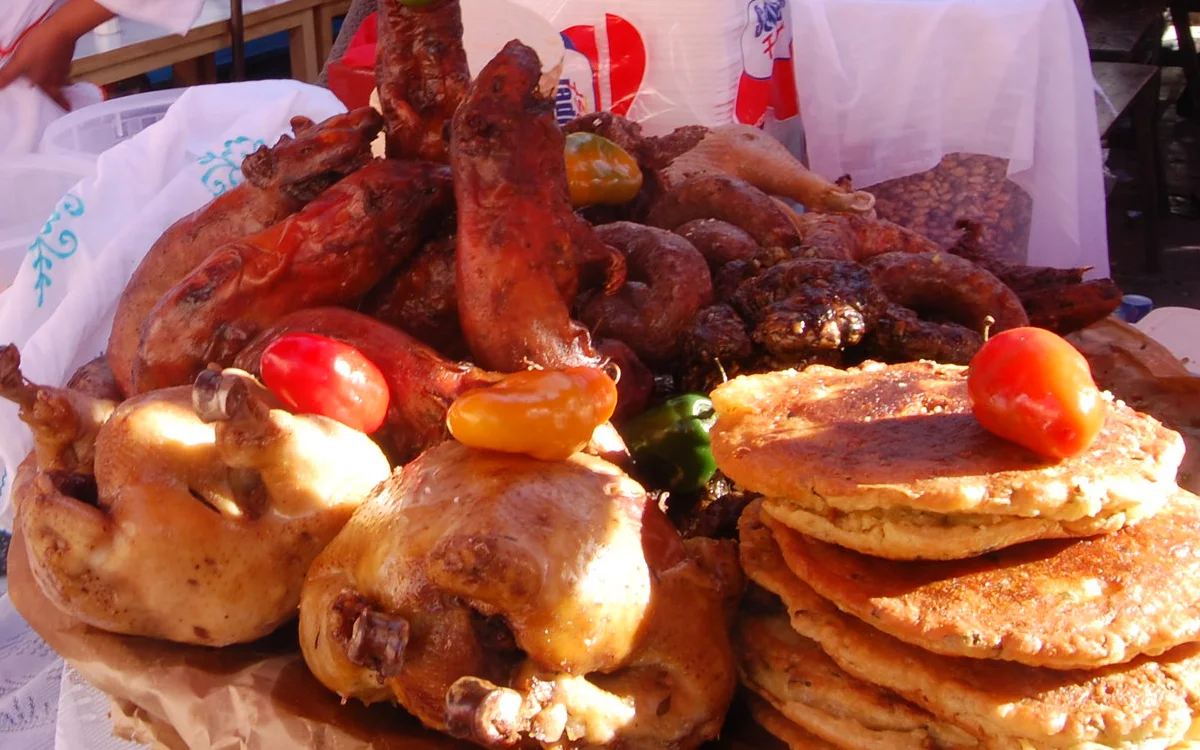
Chiri uchu is one of Cusco’s most recognizable festive dishes and is particularly associated with the Corpus Christi celebration.
Its Quechua name combines chiri (cold) and uchu (chili), and the dish is traditionally eaten cold.
Depending on the recipe, its components may include:
- Roasted cuy.
- Chicken.
- Charqui or preserved meat.
- Sausage and fish roe.
- Cheese.
- Toasted corn.
- Rocoto.
- Cochayuyo, a type of dried seaweed.
- Traditional corn-based fritters.
Its importance comes from the combination of ingredients and its connection with Cusco’s cultural and religious calendar.
During Corpus Christi, chiri uchu becomes particularly visible in food stalls, fairs and family celebrations. It may also be prepared at other times, but travelers should not assume it is equally available every day of the year.
Adobo cusqueño
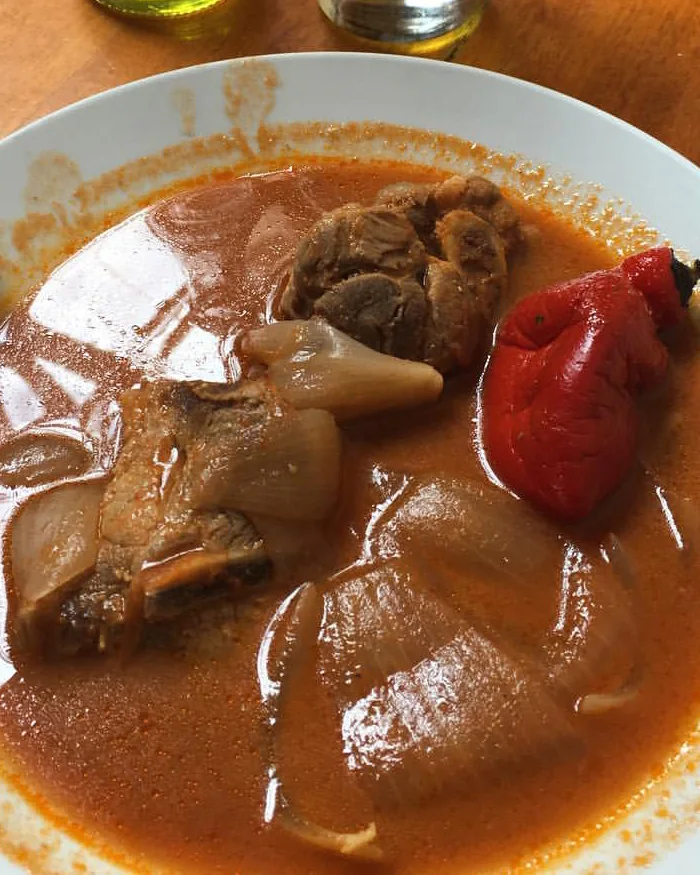
Adobo cusqueño is a traditional pork stew known for its deeply seasoned broth. It is commonly prepared with pork, chicha de jora, ají panca and spices.
The pork cooks slowly until tender, allowing the flavors of the marinade and broth to develop.
In Cusco, adobo is often served as a substantial morning or weekend meal, in the same spirit as the Sunday adobo breakfast that is best known in Arequipa.
It is commonly accompanied by bread, which can be used to enjoy the flavorful broth.
The chicha de jora marinade is one of the details that links adobo cusqueño to Andean cooking rather than to general Peruvian pork dishes.

Cuy
Cuy, or guinea pig, has deep historical and cultural roots in Andean food traditions. It continues to appear in regional restaurants, family gatherings and traditional celebrations throughout the Cusco region.
Preparations vary, with roasted and baked versions among those visitors may encounter.
Side dishes can include potatoes, corn, salads or other regional accompaniments depending on the establishment and recipe.
Cuy should not be presented as an everyday meal for every household. Its significance is also connected with special occasions, family traditions and community celebrations.
Cusco-style chicharrón
Chicharrón is prepared in different regions of Peru, so it is not exclusively a Cusco dish. However, Cusco has familiar regional serving styles that distinguish the local experience.
Cusco-style chicharrón commonly combines pork with mote, potatoes and salsa criolla.
The pork is cooked until tender and develops a flavorful exterior, while the accompaniments provide contrasting textures.
Visitors can find chicharrón in local restaurants, fairs and traditional food establishments. The dish also appears at family meals and celebrations.
Lechón
Lechón is a traditional preparation of slow-roasted pork associated with family gatherings, fairs and celebrations in Cusco and other Andean regions.
The meat is cooked until tender, often developing a browned exterior. Regional accompaniments may include corn, potatoes, tamales or moraya depending on the recipe and occasion.
Lechón is particularly useful for understanding the relationship between regional food and social celebrations, when larger meals are often prepared for families or groups.
Humitas and choclo con queso
Humitas and choclo con queso demonstrate the importance of corn in everyday Andean cooking.
Humitas are made from fresh ground corn wrapped in corn husks and cooked. They can be sweet or savory, with ingredients such as cheese, herbs, raisins or sugar depending on the preparation.
They are commonly eaten for breakfast or as a snack and can be found in markets, local food establishments and family kitchens.
Choclo con queso combines large-kernel Andean corn with fresh cheese. Its simplicity allows the flavor and texture of the ingredients to remain central.
This combination is particularly common in markets, fairs and informal food stops in Cusco and the Sacred Valley.

Traditional Andean drinks in Cusco
Traditional drinks also reflect the importance of corn, herbs and regional food practices. Some are fermented, while others are nonalcoholic refreshments or warm infusions commonly served in homes, markets and restaurants. For a wider look at Peruvian beverages, see the guide to Peruvian drinks.
Chicha de jora and chicha morada
Chicha de jora is traditionally made using germinated corn and fermentation. It has longstanding connections with Andean communities and remains part of regional food culture.
Its flavor, preparation and alcohol content can vary because traditional fermentation methods are not standardized across all producers.
Chicha de jora also appears as an ingredient in dishes such as adobo cusqueño, where it contributes to the preparation’s characteristic flavor.
Chicha morada, by contrast, is a nonalcoholic drink prepared from purple corn and commonly flavored with cinnamon, cloves and fruit.
Although chicha morada is widely consumed throughout Peru rather than being exclusive to Cusco, it demonstrates the continued importance of corn in the country’s food traditions.
Important note:
Chicha de jora is fermented and may contain alcohol. Its strength varies with preparation and fermentation time, so travelers who avoid alcohol should ask before drinking it. Chicha morada is normally prepared as a nonalcoholic beverage.

Coca tea and muña infusion
Warm herbal infusions remain part of everyday food culture in Cusco, particularly in its highland environment.
Coca tea is prepared from coca leaves and is widely offered in hotels, markets, restaurants and homes. The coca leaf has longstanding cultural importance in Andean societies.
Although coca tea is commonly associated with altitude discomfort, it should not be presented as a proven prevention or treatment for altitude illness. For practical altitude advice, see our guide to acclimatization in Cusco.
Muña infusion is prepared using an aromatic Andean herb with a distinctive fresh scent. It is commonly served warm, particularly after meals or during cold weather.
Both infusions can be described as traditional beverages without attributing unverified medical benefits to them.

Cusco foods connected to festivals and traditions
Some of Cusco’s most culturally significant foods are associated with particular celebrations, harvest activities or family gatherings.
Understanding these traditions helps explain why certain dishes have strong regional identities even when they are not prepared in the same way throughout the year.
Corpus Christi and chiri uchu
Corpus Christi is one of Cusco’s major religious and cultural celebrations, and chiri uchu has become closely associated with its festive food traditions. It falls on a Thursday in late May or June, and in 2027 the date is May 27.
During this period, food stalls and local cooks prepare the dish for residents and visitors, creating an important connection between gastronomy, public celebration and regional identity.
The dish may also be available outside Corpus Christi, but the celebration remains one of the most characteristic occasions for experiencing it.
All Saints and tantawawas
Tantawawas are decorated breads traditionally associated with All Saints and the Day of the Dead period in the Andes.
Their shapes and decorations vary among communities and families. They are part of food traditions connected with remembrance, family gatherings and seasonal celebrations.
Tantawawas demonstrate that Andean food culture includes more than everyday meals. Bread and other preparations can also carry social and symbolic meanings.
Harvest traditions and family celebrations
Traditional highland food is closely connected with agricultural cycles. Potatoes, corn and other crops form part of practices that extend from cultivation and harvesting to preparation and communal meals.
Watia or huatia is a traditional preparation associated with cooking potatoes and other foods using heated earth or stones, with methods varying among communities and regions.
It is particularly connected with rural agricultural traditions and helps illustrate how local food practices developed around available crops and the Andean environment.
Family celebrations and community events may also feature cuy, lechón, chicha and other regional foods, depending on local customs and the occasion.
Where to try traditional Andean food in Cusco
Travelers can encounter traditional Andean ingredients and dishes in markets, picanterías, chicherías, local restaurants and food fairs throughout the Cusco region.
The most suitable setting depends on whether you want to see raw ingredients, try prepared regional meals or experience foods connected with celebrations.
| Place or setting | What you can experience |
| San Pedro Market | Native potatoes, corn, grains, fresh produce, soups, prepared meals and local ingredients |
| Vinocanchón Market | Regional agricultural products, everyday produce and highland ingredients |
| Rosaspata Market | Neighborhood food culture, fresh produce and prepared foods |
| Traditional picanterías | Regional stews, soups and preparations associated with local cooking traditions |
| Chicherías | Traditional chicha and regional foods, depending on the establishment |
| Festivals and fairs | Seasonal dishes, celebratory foods and regional specialties |
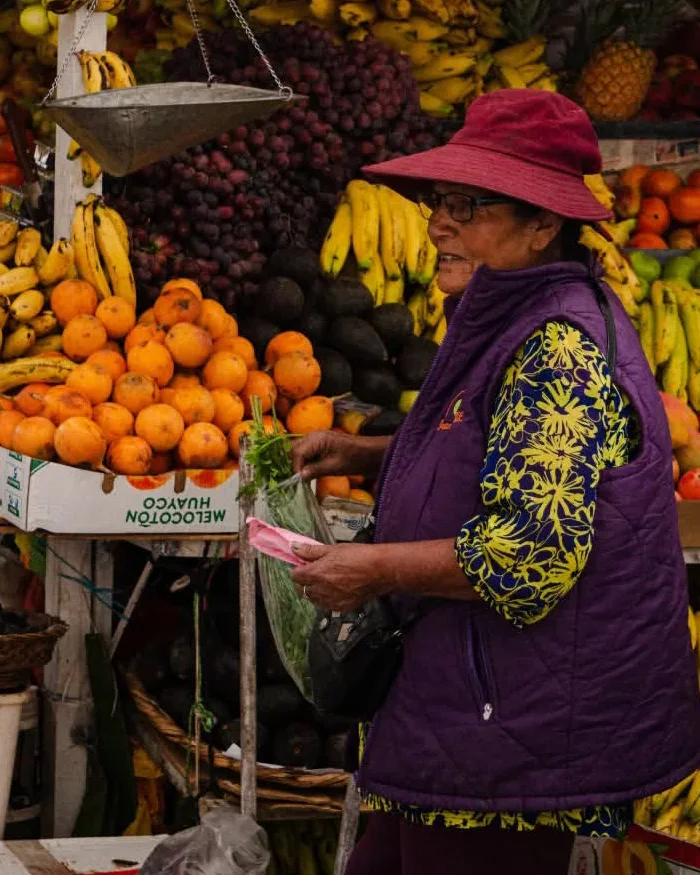
Markets are particularly useful for seeing how native ingredients remain part of everyday Cusco life, while regional restaurants and traditional food establishments provide opportunities to try complete meals.
For locations, shopping and a broader comparison of the city’s markets, see the guide to markets in Cusco.

Andean food vs. popular Peruvian dishes
Cusco restaurants offer regional specialties alongside dishes from other parts of Peru. Recognizing this difference helps travelers understand which preparations are closely associated with the Cusco region and which belong to broader Peruvian cuisine.
Ají de gallina is a well-known Peruvian dish made with shredded chicken in a creamy sauce commonly prepared using ají amarillo, bread, milk and seasonings. It is widely available in Cusco but is not a defining Cusqueño specialty.

Papa rellena is another food found throughout Peru. It consists of seasoned mashed potato surrounding a savory filling before being fried.
Tamales are prepared in different Peruvian regions, with variations in dough, fillings and cooking styles. They are also commonly eaten for breakfast in Cusco.
Rocoto relleno, a stuffed pepper dish, is more strongly associated with Arequipa’s regional cuisine and should not be presented as a defining Cusco specialty simply because rocoto is an important Andean ingredient.
These foods can be part of a culinary visit to Cusco, but the distinction between regional Andean dishes and nationally popular Peruvian preparations helps provide a more accurate understanding of local gastronomy.
Practical tips for trying traditional Cusco food
Exploring regional cuisine is easier when you consider ingredients, meal traditions and your own dietary needs.
- Ask about ingredients: soups, stews and sauces may contain meat, dairy or ingredients that are not immediately visible.
- Check vegetarian preparations: dishes without visible meat may still use meat stock or animal fats.
- Confirm spice levels: ají and rocoto provide different flavors and levels of heat depending on the recipe.
- Carry Peruvian soles: small denominations are useful in traditional markets and food stalls.
- Ask about chicha de jora: it is fermented and may contain alcohol.
- Consider festival dates: some regional specialties are especially common during particular celebrations.
- Try smaller portions: this can make it easier to sample several unfamiliar dishes during one visit.
- Pay attention to food handling: properly cooked food, clean utensils and appropriate storage matter, particularly in informal settings.
For travelers specifically interested in street stalls, typical prices, food markets and eating schedules, the Cusco street food guide covers those practical details.
Taste Cusco’s Traditional Flavors on a Local Food Experience
Cusco’s cuisine offers a different way to understand the region, from native Andean crops to meals connected with family life and traditional celebrations. Exploring these ingredients through local markets and regional cooking can add cultural context to a visit beyond the city’s archaeological attractions. Travelers interested in that experience can explore a local food experience in Cusco or talk to a travel specialist about including it in their itinerary.

Frequently asked questions about Andean foods in Cusco
What are the most traditional Andean foods in Cusco?
What makes Cusco cuisine different from other Peruvian food?
What is chiri uchu and when is it eaten?
Is traditional Andean food spicy?
Where can you try traditional Andean food in Cusco?
Are vegetarian Andean dishes available?
Is chicha de jora alcoholic?
What are chuño and moraya?
When is Corpus Christi in Cusco, and can I try chiri uchu then?
What is the difference between chicha de jora and chicha morada?

Share:




Related tours you might be interested in
Enjoy unique experiences in Cusco and Machu Picchu with the peace of mind that comes from working with a local travel agency
Rural and Agritourism Experience in Chichubamba
TRADITIONAL LIFE IN THE HEART OF THE SACRED VALLEY Let yourself be immersed in the mystique and...

Private Cusco Birdwatching Tour: Chacán Dam and Ensifera Camp
Join your own guide on a private half day around Cusco, from Andean waterbirds at Chacán Dam and...

Private Cusco Soccer Game Experience
Cheer with passionate Cusco fans at a live Liga 1 soccer match, with private hotel pickup for your...

Huacarpay Lake Birdwatching Tour
Spend a morning birding at Huacarpay Lake, a Ramsar wetland in Cusco's South Valley, with a...
If you liked this article and the information you found, give us 5 stars!
Table of Contents
Related blogs

Best Time to Do the Inca Jungle Trek by Month and Season
13 min of reading