The 13 UNESCO World Heritage Sites in Peru
Ultima actualización en 28 January, 2026 por Amy Pérez
Last Updated on 28 January, 2026 by Amy Pérez
- Quick answer
- 1. City of Cusco
- 2. Historic Sanctuary of Machu Picchu
- 3. Huascarán National Park
- 4. Chavín Archaeological Site
- 5. Chan Chan Archaeological Zone
- 6. Manú National Park
- 7. Historic Centre of Lima
- 8. Río Abiseo National Park
- 9. Lines and Geoglyphs of Nazca and Palpa
- 10. Historic Centre of the City of Arequipa
- 11. Sacred City of Caral Supe
- 12. Qhapaq Ñan Andean Road System
- 13. Chankillo Archaeoastronomical Complex
-
Frequently Asked Questions
- What does it mean for a place to be a World Heritage Site?
- How many World Heritage Sites does Peru have and how are they classified?
- Which World Heritage Sites are the easiest to visit?
- What is the best time to visit Cusco, Machu Picchu, and other sites for better weather?
- Do I need to buy tickets in advance for these sites?
- Can I visit these sites without a guide, or are there cases where it is better to go with someone?
- What practical recommendations should I keep in mind?
Quick answer
World Heritage Sites are cultural and natural places with outstanding universal value, recognized since 1972 under UNESCO’s World Heritage Convention to help preserve them. Today, there are more than 1,200 worldwide, and Peru stands out with 13 UNESCO World Heritage Sites (9 cultural, 2 natural, and 2 mixed), ranging from historic cities and archaeological centers to parks with unique biodiversity.
World Heritage Sites are some of the planet’s most important cultural and natural places, recognized for their “outstanding universal value” and designated for long-term preservation. Since 1972, they have been included on UNESCO’s World Heritage List (UNESCO is the UN agency for education, science, and culture).
Today there are 1,248 World Heritage Sites inscribed on UNESCO’s World Heritage List (including 972 cultural, 235 natural, and 41 mixed). These sites are spread across 170 States Parties. In Latin America and the Caribbean, the region’s 33 States Parties account for 147 listed properties.
Note:
In UNESCO language, a State Party is a country that has ratified or accepted an international treaty, in this case the one focused on protecting World Heritage.
Peru is a multicultural country filled with traditions, customs, cultural legacies, renowned cuisine, and abundant natural wealth. Among these extraordinary, one-of-a-kind places, UNESCO has declared 13 World Heritage Sites in Peru (9 cultural properties, 2 natural, and 2 mixed).
| Heritage | Location | Year inscribed | Category |
| City of Cusco | Cusco, Cusco Region | 1983 | Cultural |
| Historic Sanctuary of Machu Picchu | Machu Picchu, Urubamba, Cusco | 1983 | Mixed |
| Huascarán National Park | Various districts of Áncash | 1985 | Natural |
| Chavín Archaeological Site | Chavín de Huántar, Huari, Áncash | 1985 | Cultural |
| Chan Chan Archaeological Zone | Huanchaco, Trujillo, La Libertad | 1986 | Cultural |
| Manú National Park | Cusco and Madre de Dios regions | 1987 | Natural |
| Historic Centre of Lima | Lima, Lima | 1988 (extended 1991) | Cultural |
| Río Abiseo National Park | Huicungo, Mariscal Cáceres, San Martín | 1990 (extended 1992) | Mixed |
| Lines and Geoglyphs of Nasca and Palpa | Nazca and Palpa, Ica | 1994 | Cultural |
| Historic Centre of the City of Arequipa | Arequipa, Arequipa | 2000 | Cultural |
| Sacred City of Caral Supe | Supe, Barranca, Lima | 2009 | Cultural |
| Qhapaq Ñan Andean Road System | Argentina, Bolivia, Chile, Colombia, Ecuador, and Peru | 2014 | Cultural |
| Chankillo Archaeoastronomical Complex | Casma, Casma, Áncash | 2021 | Cultural |
So, are you ready to discover and enjoy the magic of these places?
1. City of Cusco
The capital of the Inca Empire reached its greatest splendor under Pachacútec in the 15th century. During the Viceroyalty of Peru, Cusco remained a key city, and in that era churches, palaces, and colonial plazas were built on top of earlier Inca enclosures and structures. Because of the number of monuments it holds, it is known as the “Rome of the Americas”. Cusco is recognized in Peru as the Historic Capital of the country and, in 1983, it was declared a UNESCO World Heritage Site for its outstanding universal value.

Located in southern Peru at 11,152 ft (3,399 m), Cusco is best enjoyed over 1 to 3 days, although you can cover the historic center in about 3 to 5 hours on foot if you want to see the essentials. To visit without a tour, the simplest plan is to start at the Plaza de Armas and walk through the old town at your own pace, stepping into churches, museums, and colonial courtyards on your own (each attraction usually has its own ticket and schedule). Cusco is also a natural planning base for bigger adventures, including deciding where to stay on the Choquequirao trek, since it is a regional hub for travelers. When it comes to weather, the driest season with clearer skies usually runs from May through October, while November through March tends to bring more rain; in any month, pack a warm layer because nights are often cold.
2. Historic Sanctuary of Machu Picchu
Machu Picchu is one of history’s greatest artistic and architectural achievements and is considered a masterpiece of Inca architecture and engineering. This stone city sits at 7,972 ft (2,430 m) and was built around the 15th century, in a dramatic setting of mountains and cloud forest that makes it even more unforgettable.

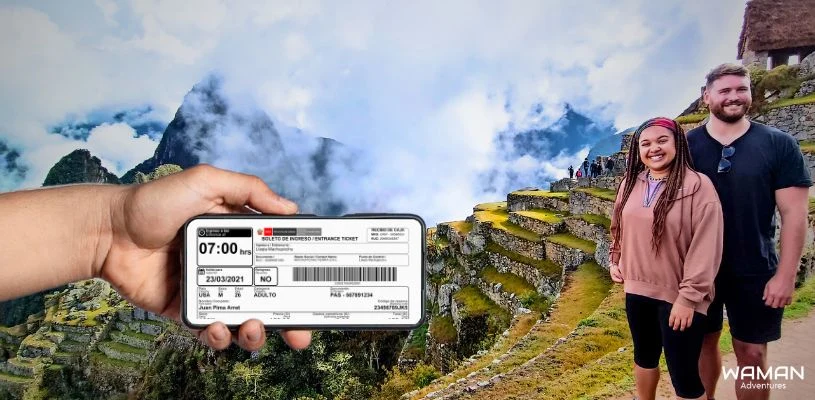
Since 1983, it has been on UNESCO’s list as a mixed World Heritage Site under the name “Historic Sanctuary of Machu Picchu,” and in 2007 it was recognized as one of the “New Seven Wonders of the Modern World.” To visit on your own, the key is planning ahead: entry is organized by time slots and circuits, and it is smart to buy your ticket early, especially in peak season. The most common way to get there is by train to Aguas Calientes, then up by bus or on foot to the main entrance. Weather-wise, the season with the best chance of clearer skies is usually May through October, while November through March brings more rain and mist; in any month, starting early often means better views and fewer crowds.
3. Huascarán National Park
Huascarán National Park sits in the heart of the Cordillera Blanca, in central Peru, protecting part of the world’s highest tropical mountain range. This is where you will find Nevado Huascarán, Peru’s highest summit, rising to 22,205 ft (6,768 m). The park’s biggest draw is the contrast of glaciated peaks, high-altitude lakes, and Andean valleys, and throughout the protected area you can experience striking biodiversity framed by many summits above 19,685 ft (6,000 m). Created on July 1, 1975, it was recognized as a Biosphere Reserve in 1977 and declared a UNESCO Natural World Heritage Site in 1985, with the goal of conserving high Andean ecosystems, geological formations, and landscapes of exceptional value.
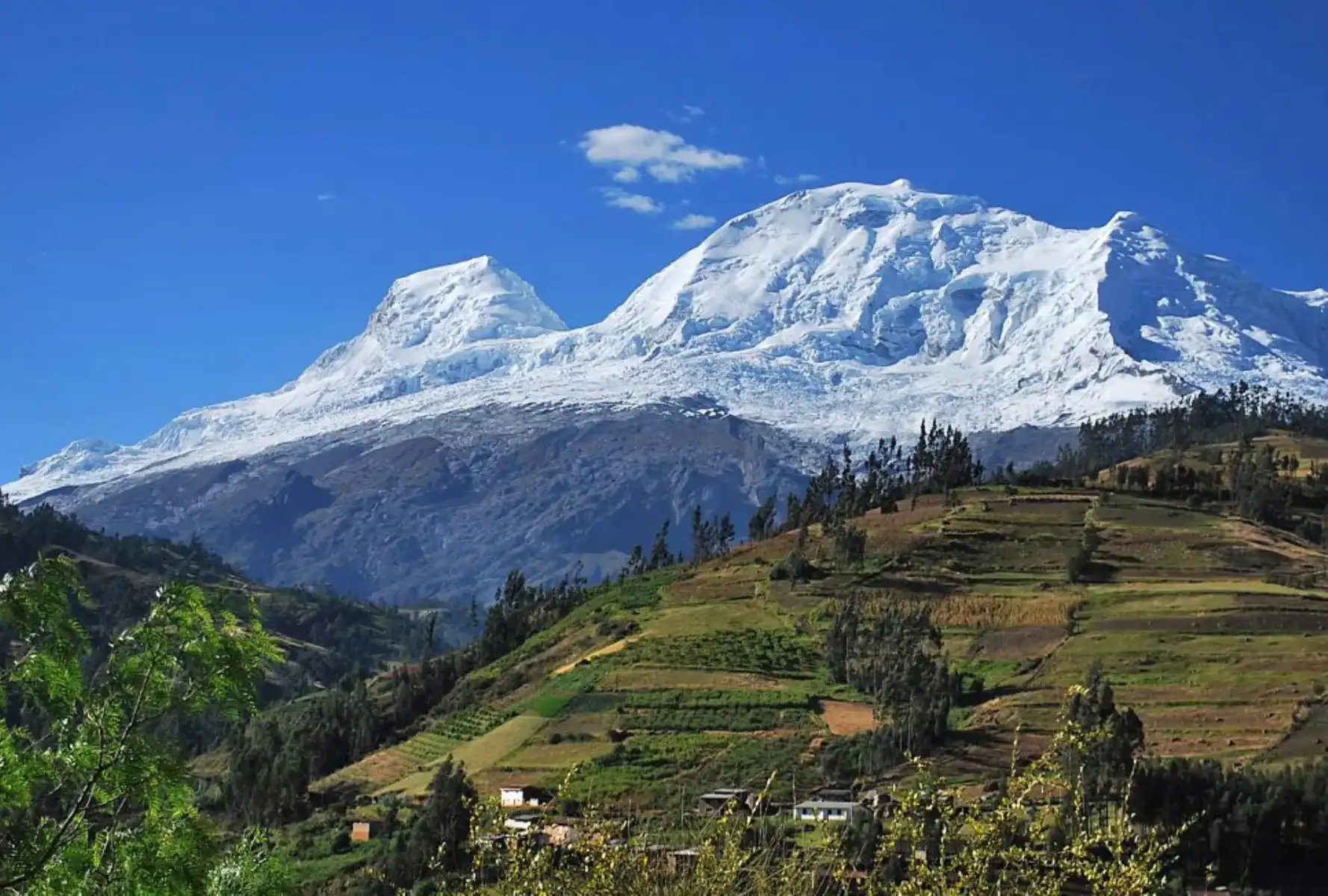
To visit without a tour, the most practical approach is to use Huaraz as your home base and organize day trips on your own to valleys, viewpoints, and accessible lakes, confirming route conditions, access, and current park rules in advance, since weather and safety can shift quickly at altitude. For timing, if you want a first taste, 1 day often works for a specific valley or lake, while seeing multiple areas at an easy pace usually calls for 2 to 4 days. The most stable season, with the best chance of clear skies, is usually May through September, while October through April tends to bring more rain and cloud cover; even in the dry season, cold and wind are common, especially early in the day and near sunset.
4. Chavín Archaeological Site
Chavín de Huántar was a major ceremonial center and a cultural and religious meeting point in the Peruvian highlands. The complex brings together monumental structures laid out with a design that defined the era known as the Early Horizon, and it sits at the confluence of the Huachecsa and Mosna rivers, within the upper Marañón River basin, an area that historically served as a natural corridor between regions.
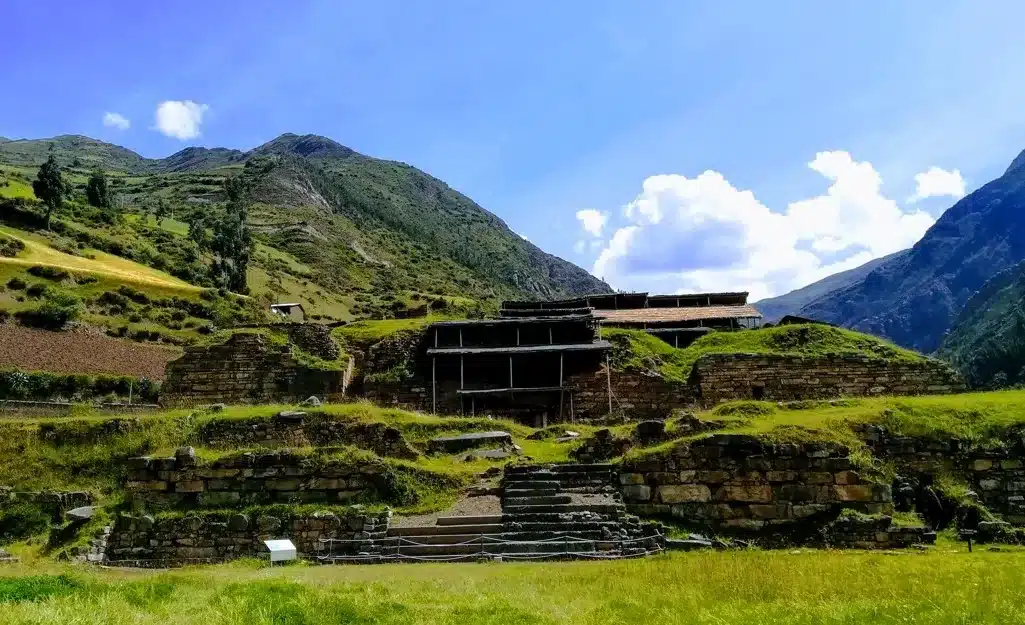
In 1985, Chavín de Huántar was inscribed as a UNESCO World Cultural Heritage Site for its exceptional value as evidence of some of the earliest pre-Columbian societies in the region. To visit without a tour, it is easiest to base yourself in Huaraz and travel by road to the town of Chavín; once there, it is worth pairing the main monument with the site museum to better understand the iconography, carvings, and ceremonial purpose of the complex. For time on site, plan 2 to 4 hours to see it comfortably, or a half day to full day if you are traveling out and back from Huaraz. Weather tends to be more comfortable and stable from May through October, while November through March is rainier, which can affect road conditions and the overall walking experience.
5. Chan Chan Archaeological Zone
Chan Chan is one of the most impressive constructions on Peru’s northern coast, built with remarkable ingenuity by the Chimú culture. Its urban layout shows how society was organized, with distinct spaces, enclosures, and sectors that reflect a strong hierarchy and different standards of living within the city. Often translated as “Radiant Sun”, it is the greatest expression of the Chimú world and, since 1986, it has been part of UNESCO World Cultural Heritage; it is also often described as the largest adobe city in the world.
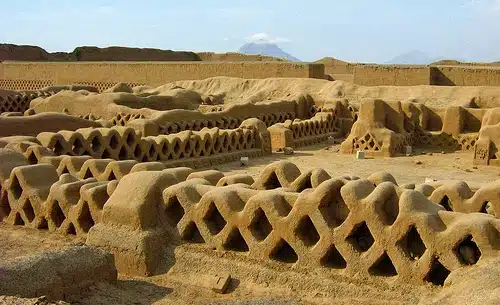
Chan Chan is located in Trujillo, in the La Libertad region, so it is easy to visit the complex; 2 to 3 hours is usually enough, especially if you add the interpretive museum. To visit without a tour, the simplest plan is to leave from central Trujillo by taxi or local transport, arrive at the main entrance, and follow the marked circuit at your own pace. The climate here is coastal and, in general, you can visit year-round; it is warmer from December through March, and the rest of the year tends to feel milder, though with the coastal cloudiness that is common in the region.
Note:
Chan Chan is also on the World Heritage in Danger list, mainly because its adobe architecture is extremely vulnerable to heavy rain and climate events, making preservation a constant challenge.
6. Manú National Park
Manú National Park protects one of the most valuable natural areas on the planet, famous for its extraordinary biodiversity and for holding completely different landscapes within a single protected space. Its vast expanse of more than 2,471,000 acres (1,000,000 hectares) stretches from cold puna grasslands above 13,451 ft (4,100 m), through forested mountains and cloud forests, all the way down to the Amazon lowlands around 492 ft (150 m). That range of elevation and ecosystems helps explain why thousands of plant species and an astonishing diversity of birds, mammals, amphibians, and insects coexist here, making it a key place for scientific research as well.
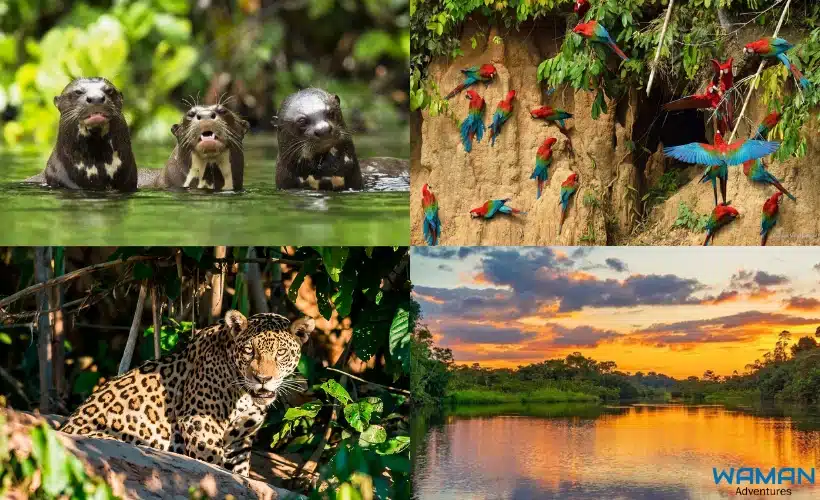
In terms of recognition, Manú was named a Biosphere Reserve in 1977, and in 1987 UNESCO inscribed it as a Natural World Heritage Site for its outstanding universal value. If you plan to visit without booking tours, it is important to understand that this is not a quick stop. Because of its remote location and conservation rules, visiting requires advance planning, defined routes, and in many cases local coordination for transportation and access to permitted zones. As a practical reference, most travelers dedicate 4 to 8 days for the trip to make sense (because of distances, road or river travel time, and checkpoints), and even then you only see a portion. The most stable season is usually May through October (less rain and more manageable roads), while November through March is wetter and can affect access, travel times, and navigation; in any season, bring protection for rain, humidity, and mosquitoes.
7. Historic Centre of Lima
Lima, the capital of the Republic of Peru, holds some of the most representative examples of the colonial era, and its Historic Centre preserves a distinctive atmosphere where plazas, balconies, and landmark buildings shape the story of the city. Plaza Mayor is the heart of this area and is often one of the most photogenic places to begin. Despite earthquake damage over the centuries, Lima still features standout monuments like the Chapel of the Sagrario, the Archbishop’s Palace, the Santo Domingo Church, and the San Francisco Convent, among others.

Inscribed by UNESCO in 1988 and extended in 1991, Lima’s Historic Centre is a UNESCO World Cultural Heritage Site for its historical and urban value. To visit without a tour, the most practical plan is to explore on foot during the day, focusing on Plaza Mayor and the main streets, and stepping into churches, convents, and museums on your own (each one sets its own ticketing and hours); if you go beyond the historic core, it is best to use a taxi or rideshare and avoid walking alone at night in quiet areas. Weather-wise, December through April tends to bring more sun and more comfortable temperatures for walking, while June through September is known for garúa mist, gray skies, and humidity with a cooler feel, though it is still very visitable with a light jacket.
8. Río Abiseo National Park
Río Abiseo National Park is located on the Amazon-facing slopes of Peru’s eastern mountain range, in a transition zone between the highlands and the Peruvian Amazon, and covers roughly 678,318 acres (274,520 hectares). Beyond its natural importance, the area also protects significant cultural evidence such as rock shelters and remains of structures tied to living spaces, ceremonies, and production, as well as ancient paths and burial areas that reflect early human presence in a difficult-to-access landscape.
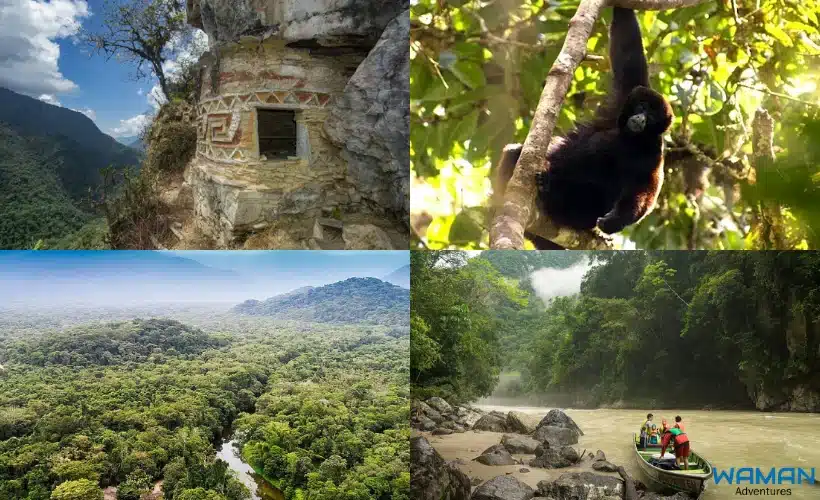
Rio Abiseo National Park
In terms of international recognition, it was inscribed on the World Heritage List in 1990 and extended in 1992 to include its cultural values as well, so today it is considered a site of both natural and cultural significance. Because of conservation priorities and the realities of the terrain, access can be restricted or dependent on current regulations, so before you plan a trip it is important to confirm whether tourism entry is allowed, by which route, and under what requirements. If a visit is permitted, it is usually planned as a full day experience or multiple days because of distance and logistics. The climate is humid and Amazonian, with more frequent rain from November through March; May through October tends to be relatively more stable, though fog, humidity, and sudden shifts can still happen.
9. Lines and Geoglyphs of Nazca and Palpa
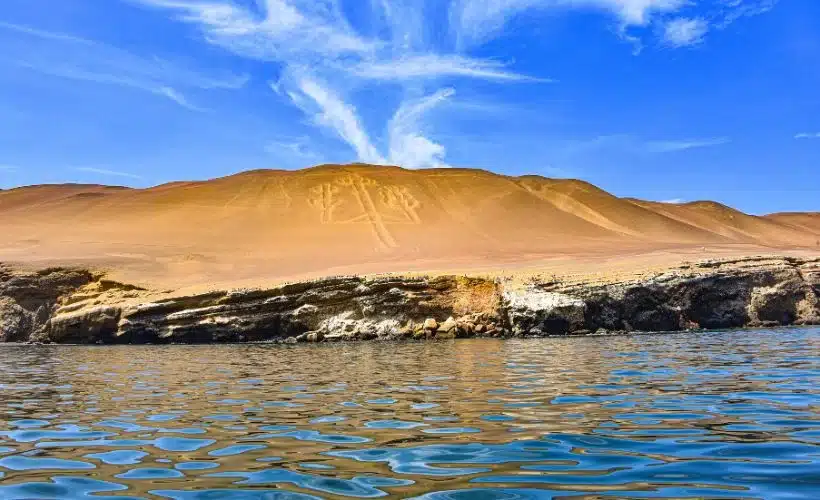
The Nazca Lines and the Geoglyphs of the Pampas de Jumana are among the most striking legacies of the Nazca culture. These are massive lines and figures etched into the desert, and because of their scale, you see them best from elevated viewpoints or from the air. People sometimes say they have not been deciphered, but the more accurate point is that their purpose is still debated. Common interpretations include ritual and symbolic meanings, along with possible connections to the landscape and astronomy. Popular theories also circulate, like the idea that they were “runways for aliens,” but there is no solid archaeological evidence to support that claim.

The site sits on the desert plain of southern Peru, between the provinces of Nazca and Palpa in the Ica region, and it was inscribed by UNESCO in 1994 as a World Cultural Heritage Site. To visit on your own, most travelers use Nazca as a base and choose one of two straightforward ways to see it. If you are short on time, the roadside viewpoint lets you spot a few figures without taking a flight. If you want the complete panorama, a flight over the lines is the most effective option, though it requires coordinating schedules and factoring in possible wait times. Weather-wise, this is a desert destination with intense sun and very little rain through the year, so bring water, a hat, and sunscreen, plus a light jacket for wind or late afternoon.
10. Historic Centre of the City of Arequipa
Arequipa is one of Peru’s most beautiful cities, and it often wins people over with its clear light and almost always blue skies. Its historic center reflects a very distinctive blend of European and local influences, developed in an earthquake zone where architecture learned to adapt over time. That is why you will see thick-walled buildings, arches, porticoes, vaults, and spacious courtyards, almost always built from sillar, the white volcanic stone that earned it the nickname “The White City.”

The Plaza de Armas of Arequipa is the city’s main square, famous for its white volcanic stone architecture and the impressive Cathedral dominating the skyline.
Arequipa’s Historic Centre was declared a UNESCO World Cultural Heritage Site in 2000, for the value of its urban layout and architecture. To visit on your own, the easiest way is to explore on foot from the Plaza de Armas, following nearby streets and arcades, and stepping into churches, cloisters, and museums depending on your interests. For timing, 3 to 6 hours works very well if you want the essentials, although at a slower pace you can easily spend 1 or 2 days if you add places like the Santa Catalina Monastery and viewpoints. The climate is dry and sunny most of the year, with cool nights because of elevation. January through March can be rainier, while May through October usually brings more stable days and very clear skies.
11. Sacred City of Caral Supe
Caral, known as the Sacred City of Caral Supe, is one of the great milestones of ancient Peru and is often presented as the oldest city in the Americas, around 5,000 years old. Its pyramids, plazas, and ceremonial spaces show surprisingly advanced urban planning for its time, and they help explain how the region’s earliest complex societies were organized. Because of its historical and architectural value, UNESCO declared the site a World Cultural Heritage Site in 2009.
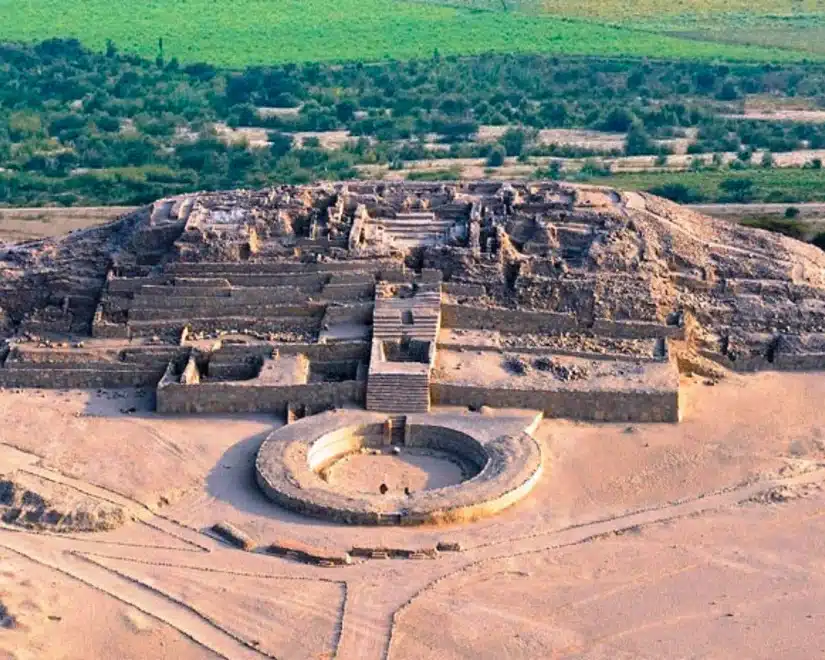
Caral is located in the Supe Valley, in the province of Barranca, north of the Lima region, and it is an excellent independent visit if you love archaeology. Most people spend 2 to 3.5 hours at the complex, and if you are coming from Lima it is best to plan a full day because of drive time. The most practical way to visit without a tour is to travel by bus or car to Barranca or Supe, then take local transport to the site, checking entry hours and road conditions ahead of time. The climate is coastal desert with very little rain; the hottest period is usually December through March, and temperatures are more comfortable the rest of the year; even so, the sun can be intense, so it is worth bringing water, a hat, and sunscreen.
12. Qhapaq Ñan Andean Road System
The Qhapaq Ñan, or Andean Road System, was a vast network of Inca roads that crossed six countries today: Argentina, Bolivia, Chile, Colombia, Ecuador, and Peru. More than a single route, it was a system connecting Cusco with the four regions of the Tahuantinsuyo and with countless administrative centers, ceremonial sites, and settlements, supporting exchange, political organization, and economic life across extreme geography. For its exceptional value, UNESCO inscribed this system in 2014 as a World Cultural Heritage Site, and it is often highlighted for its engineering, capable of linking landscapes that range from high mountains, in sections above 19,685 ft (6,000 m), to valleys and transition zones toward the Amazon.

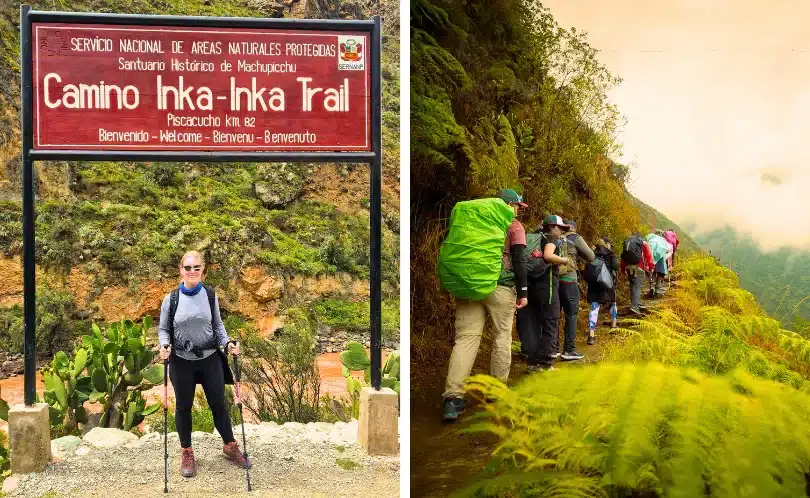
The Inca Trail is part of the vast Qhapaq Ñan road system, an ancient network of stone paths that once connected the Inca Empire across the Andes
You experience the Qhapaq Ñan through specific segments that are better preserved or easier to access. Typically, you choose a section near a base city, such as the Inca Trail, with stone paths, bridges, stairways, and remnants of related infrastructure. In terms of time, some segments take 1 to 3 hours, while others require a half day or even multiple days, depending on access and the hike itself. Weather depends entirely on the segment you choose, but in the highlands it is usually more comfortable from May through October, when rain is less likely; November through March brings a higher chance of storms, mud, and overcast skies. In any season, factor in altitude, bring water, sun protection, and a layer for wind or sudden changes.
13. Chankillo Archaeoastronomical Complex
The Chankillo Archaeoastronomical Complex, located in the Casma Valley in the Áncash region, is a site where thirteen towers line up along a ridge and, when viewed from specific points, mark the Sun’s positions throughout the year, functioning as a ceremonial calendar from more than 2,300 years ago (around 250 to 200 BC). For that reason, UNESCO inscribed it as World Heritage in 2021.
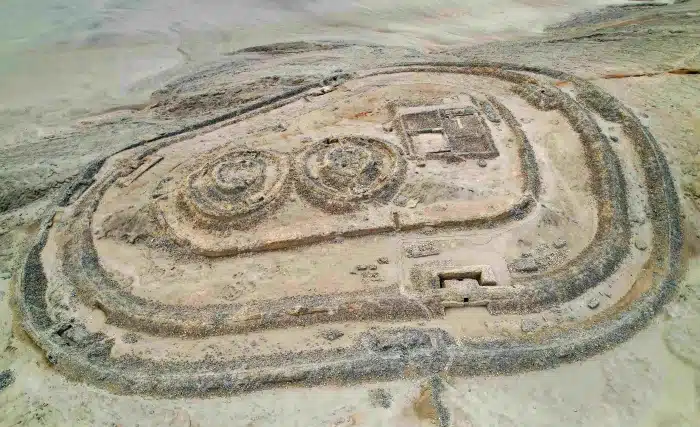
To visit, the easiest approach is to get to Casma first, then take local transport to the complex, which is about 8 to 10 mi (13 to 16 km) from the center and usually takes around 30 minutes by road; once you are there, plan 2 to 3 hours to walk the towers, the fortified temple, and the viewing points at a comfortable pace. Bring water, a hat, and sunscreen because shade is limited and the wind can pick up in the afternoon. The climate is typically desert-like, with mostly dry days; May through November often brings cooler mornings and gray skies from coastal fog, while December through March tends to be sunnier and warmer, so it is smart to go early for better light and more comfortable temperatures, and to confirm current hours and access before you head out.
Below is a video featuring 12 of the 13 World Heritage Sites recognized in Peru.
Frequently Asked Questions
What does it mean for a place to be a World Heritage Site?
How many World Heritage Sites does Peru have and how are they classified?
Which World Heritage Sites are the easiest to visit?
What is the best time to visit Cusco, Machu Picchu, and other sites for better weather?
Do I need to buy tickets in advance for these sites?
Can I visit these sites without a guide, or are there cases where it is better to go with someone?
What practical recommendations should I keep in mind?

Share:

If you liked this article and the information you found, give us 5 stars!
Table of Contents
Related blogs

Best month to visit Uyuni salt flats and what each season offers
7 min of reading
Peruvian Music: Where the coast, highlands, and jungle sing together
8 min of reading