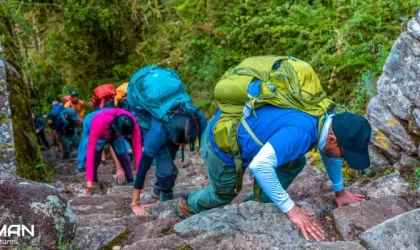
2 days in Sacred Valley and Machu Picchu: Dive into the heart of Inca culture.
Ultima actualización en 29 November, 2024 por Waman Adventures
Last Updated on 29 November, 2024 by Waman Adventures
Among the most amazing things you can do in Cusco is visit the Sacred Valley and Machu Picchu, two awe-inspiring tourist destinations. These two days will be unforgettable, offering a deeper connection to various local towns’ Inca culture and traditions. Cusco has a wide diversity of places to suit every visitor’s preference.

View of the Inca citadel of Machu Picchu.
How can I visit the Sacred Valley and Machu Picchu?
To visit the Sacred Valley and Machu Picchu Tour, you can organize the trip on your own. However, if you want a hassle-free experience, it’s best to book through a travel agency. A 2 day Tour Sacred Valley and Machu Picchu by train is a great option for those who want to experience both the Sacred Valley and Machu Picchu in a short amount of time, with the convenience of traveling by train, making the journey even more enjoyable. This offers a complete range of services. including transportation, a guide, train tickets, and entrance fees.
WEATHER
These two attractions are located on a plain surrounded by snow-capped mountains, creating a mild, dry environment with significant rainfall. The Sacred Valley’s weather ranges from 13°C to 21°C, while Machu Picchu, located at the edge of the jungle, is warmer and more humid, with temperatures between 13°C and 24°C.
Enjoy this trip and discover the best places in just two days!
DAY 1: SACRED VALLEY
CHINCHERO
Chinchero is a key stop in the Sacred Valley tour, rich in history and traditions. Only 35 minutes away from Cusco, this magical small town welcomes tourists with its exceptional textile craftsmanship. The traditional techniques used to create various garments amaze visitors, especially the handmade processes for preparing wool and natural dyes (like cochineal-based dye).
In Chinchero, you can explore the archaeological site of the same name, which was the palace of Inca Tupac Yupanqui (15th century). The area features an agricultural sector of approximately 43 hectares, with remarkable Inca walls and terraces. To the south, you’ll find huacas or shrines carved into limestone rock, known as “Chinchana.” To the west, another huaca called “Pumaqaqa” showcases two puma sculptures, though their heads were destroyed by the Spanish.
Sacred Valley and Machu Picchu offer a rich cultural and historical experience. You can also visit the church “Doctrina Nuestra Señora de Montserrat de Chinchero,” built in the 16th century under Viceroy Toledo. It was constructed using Inca foundations and features adobe walls. The main entrance’s facade displays a mural dedicated to the Virgin Mary. Inside, the main altar, adorned with gold leaf, and the Baroque-style ceiling are particularly impressive.
A Machu Picchu and Sacred Valley Tour is the perfect way to explore the region, combining stunning landscapes and ancient sites. Visiting this church is just one of the highlights in the Sacred Valley and Machu Picchu area, where history and culture intertwine.
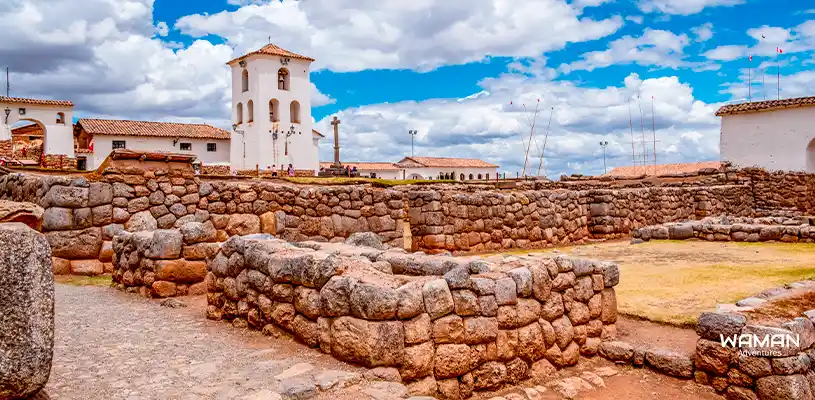
View of the church and archaeological site of Chinchero.
MARAS SALT MINES
The Maras Salt Mines are located 3,380 meters above sea level, just 46 kilometers from Cusco. This incredible site consists of 3,000 salt pools fed by an underground spring, which channels water into each pool. After being filled, the water is left to evaporate, leaving crystallized salt. Once this process is complete, locals harvest the salt for national and international markets.
The Maras Salt Mines offer unique tourist appeal, with stunning views from any angle—perfect for photos. The entrance fee is 10 soles per person.
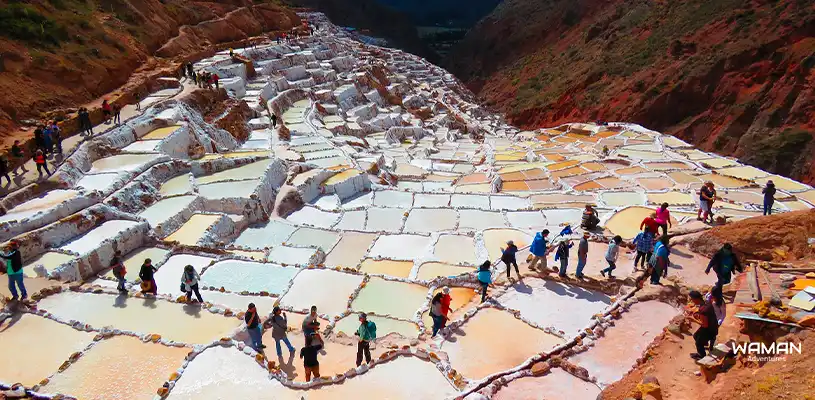
View of the salt pools.
MORAY
Located 53 kilometers from Cusco at an altitude of 3,500 meters above sea level, the name “Moray” comes from a Quechua word that translates to “territory reclaimed since ancient earthquakes.”
Sacred Valley and Machu Picchu are home to numerous fascinating archaeological sites, and one of the most impressive is Moray. Moray is an archaeological site known for its impressive system of concentric terraces resembling a large amphitheater, with height differences of up to 150 meters. A Machu Picchu and Sacred Valley Tour will allow you to explore this incredible site, among others, as you experience the rich cultural and historical significance of the Sacred Valley and Machu Picchu region.
Moray is considered an Inca agricultural research center, where various crops were tested at different altitudes. Its terraces create 20 microclimates, with temperatures gradually decreasing from the center to the outermost layers.
This technology allowed the ancient Inca farmers to experiment and produce crop varieties that improved their harvests. Each terrace has retaining walls and is connected by an intricate artificial irrigation system, showcasing the advanced hydraulic engineering of the Incas.
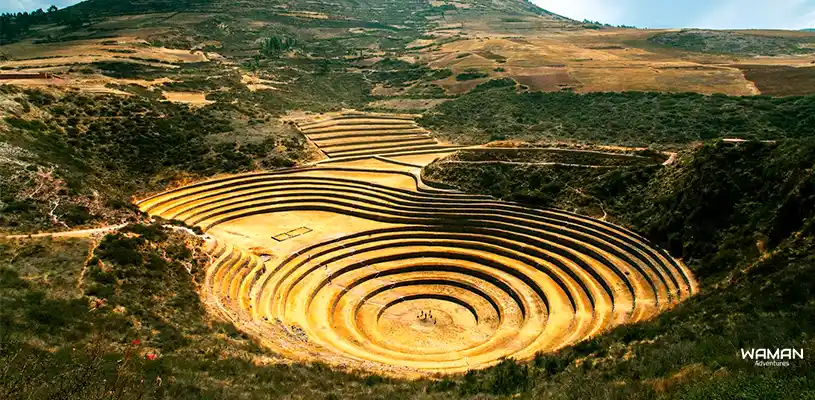
Archaeological site of Moray
DAY 2: IN MACHU PICCHU
Machu Picchu is considered the ultimate expression of what the Inca Empire once was—a true Peruvian treasure. Built in the 15th century by the ninth Inca, Pachacutec. Although its true name remains uncertain, the ancient inhabitants named it Machu Picchu, referencing its altitude and the state in which it was preserved in ancient times. Its name originates from the Quechua language and means “old mountain.”
The Inca citadel of Machu Picchu is located 2,453 meters above sea level, rediscovered in 1911 by archaeologist and historian Hiram Bingham. Machu Picchu is Peru’s main tourist destination, as it was named one of the 7 New Wonders of the Modern World by UNESCO in 2007. What’s most impressive about Machu Picchu is its architecture, with over 200 structures perfectly integrated with nature. Among the most remarkable sites are:
Temple of the Sun
Located in the religious sector, it is accessible through a large gate. It is a semicircular structure that includes a natural cave, which was carved and adapted to serve as a royal tomb. The most important part is the central zone inside the temple, where a carved stone serves as an altar to the sun. The windows were constructed to precisely observe solstices and equinoxes.
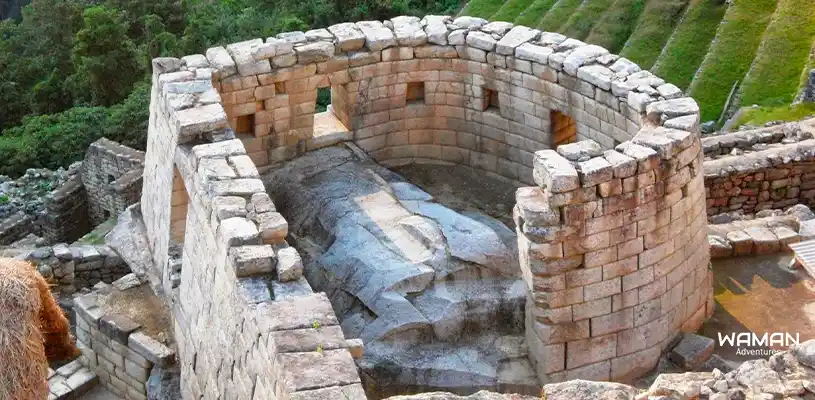
Temple of the Sun in Machu Picchu.
Intihuatana
Also known as the solar clock of the Incas, it is located in the Hanan sector of the urban area. This word comes from the Quechua language, meaning “INTI = sun and WATANA = to tie”; combined, it becomes “Where the sun is tied.”
The Intihuatana functioned to mark the sun’s shadow; each of its four sides pointed in a cardinal direction. Although it did not have numbers, the Incas could determine the time of day. It was crucial for marking planting and harvesting periods within the empire.
Another theory about the Intihuatanas is that they may have served as astronomical observatories for observing stars and seasonal changes.
The Royal Tomb of Machu Picchu
This site is one of the most important due to its sacred significance. The royal plaza hosts the most significant constructions of this civilization. This mausoleum is located beneath the main plaza, aligning vertically with the tower of the Temple of the Sun. It was built to house the highest-ranking members of the Inca aristocracy.
Princess’s Palace
Located within the same architectural complex as the Temple of the Sun, it was considered part of the temple rather than a standalone structure. The Princess’s Palace stands out for its elaborate and refined construction methods, and techniques reserved only for the most important buildings in the city.
Sacred Plaza
This is the main space for all religious ceremonies in Machu Picchu. These celebrations were likely dedicated to the sun. The platform was designed in a rectangular shape, spanning approximately 4,000 square meters. This area marked the social spaces between the elite and the rest of the population. It includes the main temple, the Temple of the Three Windows, the Intihuatana, and the Temple of the Moon.
Temple of the Three Windows
One of the most important structures, it is considered one of the best-carved buildings in the entire Inca city. It is among the most relevant enclosures of the Incas. Located in the upper district, this area contains the most significant buildings of Machu Picchu. From here, you can see Huayna Picchu and Putucusi.
The construction is associated with a traditional legend of the “Ayar Brothers,” which states that each window represents one of the tribes that founded the Inca civilization. The temple also displays the three levels of the Andean worldview: Hanan Pacha, Kay Pacha, and Ukju Pacha.
Archaeological site of Moray
DAY 2: IN MACHU PICCHU
Sacred Valley and Machu Picchu are considered the ultimate expression of what the Inca Empire once was—a true Peruvian treasure. Built-in the 15th century by the ninth Inca, Pachacutec, Machu Picchu stands as a remarkable symbol of the Inca civilization. Although its true name remains uncertain, the ancient inhabitants named it Machu Picchu, referencing its altitude and the state in which it was preserved in ancient times. Its name originates from the Quechua language and means “old mountain”.
The Inca citadel of Machu Picchu is located 2,453 meters above sea level, rediscovered in 1911 by archaeologist and historian Hiram Bingham. Machu Picchu is Peru’s main tourist destination, as it was named one of the 7 New Wonders of the Modern World by UNESCO in 2007. What’s most impressive about Machu Picchu is its architecture, with over 200 structures perfectly integrated with nature. Among the most remarkable sites are:
Temple of the Sun
Located in the religious sector, it is accessible through a large gate. It is a semicircular structure that includes a natural cave, which was carved and adapted to serve as a royal tomb. The most important part is the central zone inside the temple, where a carved stone serves as an altar to the sun. The windows were constructed to precisely observe solstices and equinoxes.
Temple of the Sun in Machu Picchu.
Intihuatana
Also known as the solar clock of the Incas, it is located in the Hanan sector of the urban area. This word comes from the Quechua language, meaning “INTI = sun and WATANA = to tie”; combined, it becomes “Where the sun is tied.”
The Intihuatana in Sacred Valley and Machu Picchu functioned to mark the sun’s shadow; each of its four sides pointed in a cardinal direction. Although it did not have numbers, the Incas could determine the time of day. It was crucial for marking planting and harvesting periods within the empire, highlighting the sophisticated knowledge of astronomy and agriculture that thrived in Machu Picchu and Sacred Valley.
Another theory about the Intihuatanas is that they may have served as astronomical observatories for observing stars and seasonal changes.
The Royal Tomb of Machu Picchu
This site is one of the most important due to its sacred significance. The royal plaza hosts the most significant constructions of this civilization. This mausoleum is located beneath the main plaza, aligning vertically with the tower of the Temple of the Sun. It was built to house the highest-ranking members of the Inca aristocracy, and it is a key highlight when exploring Sacred Valley and Machu Picchu, offering deep insight into the spiritual and architectural mastery of the Incas.
Princess’s Palace
Located within the same architectural complex as the Temple of the Sun, it was considered part of the temple rather than a standalone structure. The Princess’s Palace stands out for its elaborate and refined construction methods, and techniques reserved only for the most important buildings in the city.
Sacred Plaza
This is the main space for all religious ceremonies in Machu Picchu and Sacred Valley. These celebrations were likely dedicated to the sun. The platform was designed in a rectangular shape, spanning approximately 4,000 square meters. This area marked the social spaces between the elite and the rest of the population. It includes the main temple, the Temple of the Three Windows, the Intihuatana, and the Temple of the Moon, all of which are essential stops when exploring the spiritual and cultural significance of Sacred Valley and Machu Picchu.
Temple of the Three Windows
One of the most important structures in Sacred Valley and Machu Picchu, it is considered one of the best-carved buildings in the entire Inca city. It is among the most relevant enclosures of the Incas. Located in the upper district, this area contains the most significant buildings of Machu Picchu and Sacred Valley. From here, you can see Huayna Picchu and Putucusi, offering a stunning view of the surrounding landscapes.
The construction is associated with a traditional legend of the “Ayar Brothers,” which states that each window represents one of the tribes that founded the Inca civilization. The temple also displays the three levels of the Andean worldview: Hanan Pacha, Kay Pacha, and Ukju Pacha.
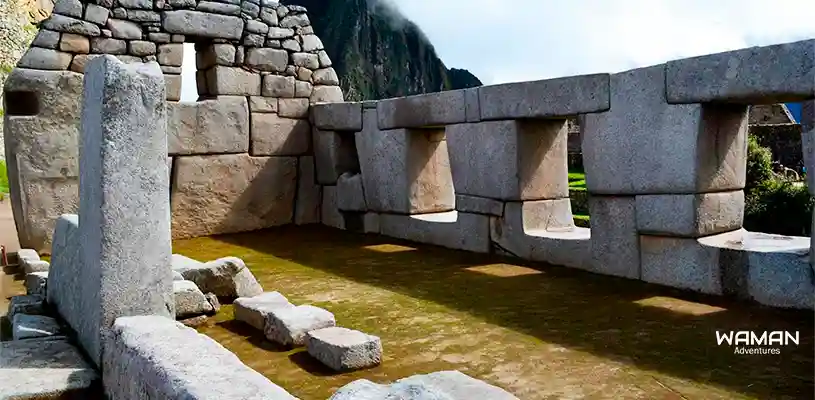
Temple of the Three Windows
Taking this trip as part of the Sacred Valley and Machu Picchu Tour is truly empowering; discovering new places filled with magic and history invites you to step out of your comfort zone. Whether you opt for a 2 day Tour Sacred Valley and Machu Picchu by train or a longer adventure, the experience will immerse you in the incredible culture and beauty of the Sacred Valley and Machu Picchu. Waman Adventures is a specialized agency in organizing trips, always striving to provide the best experiences for each of our travelers.
YOU MIGHT ALSO LIKE
✔️10 REASONS TO VISIT HUMANTAY LAKE
✔️THE BEST TIME TO VISIT MACHU PICCHU | THE BEST TRAVEL OPTION
✔️HOW TO BUY THE INCA TRAIL TO MACHU PICCHU IN 2023
Share:

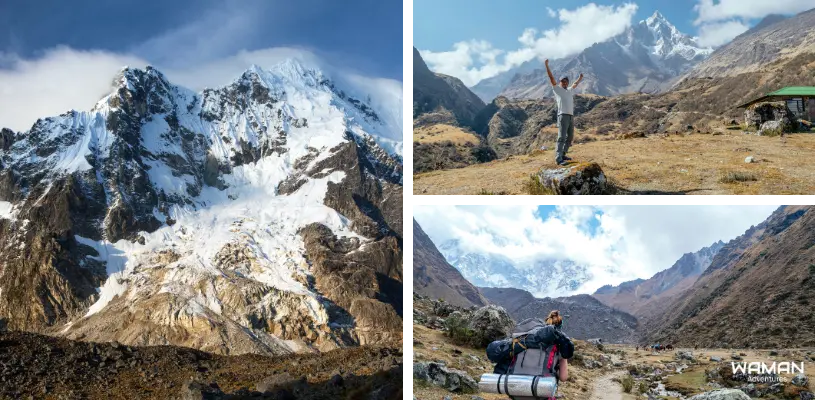


Related tours you might be interested in
Enjoy unique experiences in Cusco and Machu Picchu with the peace of mind that comes from working with a local travel agency

02 DAY «EXPLORING» THE SACRED VALLEY AND MACHU PICCHU
CHINCHERO, MARAS AND MORAY WILL ENVELOP YOU IN THE MAGIC OF THE SACRED VALLEY. EACH EXPERIENCE WILL...

Full Day – «Exploring» Machu Picchu
MACHU PICCHU EPIC ADVENTURE TOUR FROM CUSCO This full-day option is an excellent opportunity to...

04 DAY CUSCO – SACRED VALLEY – MACHU PICCHU
DISCOVER THE MAGIC OF CUSCO, THE SERENITY OF THE SACRED VALLEY AND THE GRANDEUR OF MACHU PICCHU On...

10 Days Andean Dreamscapes – Lima, Ica, Cusco & Puno with Local Flights
YOUR NEXT DESTINATION IS PERU, THE LAND OF FASCINATING STORIES AND OUTSTANDING LANDSCAPES! With our...
If you liked this article and the information you found, give us 5 stars!
Table of Contents
Related blogs
Best Things to Do in Puno: Discover the Magic of the Andean Highlands
13 min of reading