OVER 30 FACTS ABOUT SALKANTAY TREK TO MACHU PICCHU: DISCOVER THE BEST-KEPT SECRETS OF THIS TREK IN THE ANDES
Ultima actualización en 5 November, 2024 por Waman Adventures
Last Updated on 5 November, 2024 by Waman Adventures
- FACTS ABOUT SALKANTAY TREK TO MACHU PICCHU
- DISTANCE, START AND DURATION
-
DIFFICULTY, SAFETY AND REWARDS
- 10.- HOW HARD IS THE SALKANTAY TREK?
- 11.- IS THE SALKANTAY TREK DANGEROUS?
- 12.- IS THE SALKANTAY TREK WORTH IT?
- 13.- CLIMATE ON THE SALKANTAY TREK
- 14.- WHAT IS THE BEST SEASON TO DO THE SALKANTAY TREK?
- 15.- WHAT ARE THE ACCOMMODATION OPTIONS ALONG THE ROUTE?
- 16.- OPPORTUNITY TO INTERACT WITH THE LOCAL COMMUNITIES ALONG THE ROUTE.
- 17.- MACHU PICCHU, FINAL ACHIEVEMENT OF THE SALKANTAY TREK
- 18.- ALTITUDE SICKNESS OR SOROCHE ON THE SALKANTAY TREK ROUTE
-
PREPARATION AND PLANNING
- 19.- IS IT POSSIBLE TO DO THE SALKANTAY TREK WITHOUT A GUIDE?
- 20.- WHAT TO TAKE ON THE SALKANTAY TREK?
- 21.- WHAT IS THE DIFFERENCE BETWEEN THE SALKANTAY TREK AND THE INCA TRAIL?
- 22.- ARE THERE SHOWERS IN THE SALKANTAY TREK?
- 23.- ARE THERE TOILETS IN THE SALKANTAY TREK?
- 24.- WHICH ARE THE ALTERNATIVE TREKKING ROUTES TO GET TO MACHU PICCHU
- 25.- IS IT POSSIBLE TO DO THE SALKANTAY TREK WITH CHILDREN?
- 26.- DO I NEED A PERMIT TO DO THE SALKANTAY TREK?
- 27.- WHO TO BOOK THE SALKANTAY TREK WITH?
- 28.- WHO WILL CARRY MY LUGGAGE ON THE SALKANTAY TREK?
- 29.- HOW MANY KILOGRAMS OF LUGGAGE ARE ALLOWED ON THE SALKANTAY TREK?
- 30.- IS THERE INTERNET OR PHONE SIGNAL ON THE SALKANTAY TREK?
- NATURE AND UNIQUE LANDSCAPES
- FLORA ON THE SALKANTAY TREK
- CURIOSITIES OF THE SNOWY SALKANTAY
Welcome to our Salkantay Trek blog, a Peruvian trekking experience that takes you among the southern Andes towards Machu Picchu. As we explore this incredible adventure, we will discover the secrets of one of the most exciting treks in the Cusco region. This trek offers you an unforgettable journey through breathtaking scenery, ascending towards the imposing Salkantay Mountain and downwards to the eastern slope of the Andes.
Reading this blog, you will discover significant facts about the Salkantay Trek to Machu Picchu. That’s not all! You must read about its challenging altitudes, discover the difference between the Salkantay trek and the Inca Trail, and learn about the wide biodiversity of flora and fauna growing on the Salkantay Trail. We will also provide you with practical advice for your journey; we mean, a packing list, and opportunities to meet local communities along the path. The end of this exciting adventure is exploring the marvellous Machu Picchu and learning about the Inca heritage belonging to Peruvians.
Are you ready to explore the Salkantay trek and immerse yourself in its beautiful adventure? Let’s explore together this journey full of challenges and historical discoveries!
FACTS ABOUT SALKANTAY TREK TO MACHU PICCHU
1.- WHAT IS THE SALKANTAY TREK?
The Salkantay trek route in Peru has gained considerable attention in recent years as an alternative to the iconic Inca Trail; both reach Machu Picchu. This trek is named after the Salkantay mountain (6,271 m/20,574 ft), which is one of the most prominent mountains in the Cusco region. Contrary to the Inca Trail, the Salkantay trek does not require a special permit and provides a true hiking experience in the Andes.

Trekkers walking towards the Salkantay Pass
2.- WHAT DOES SALKANTAY TREK MEAN?
The word Salkantay is a Quechua word composed of:
- Sallqa or Salka means “wild” or “untamed”.
- Antay means “head” or “beak”.
So, Salkantay means “wild peak”.
3.- WHERE IS THE SALKANTAY TREK LOCATED?
It is located in southern Peru, in Cusco. In more accurate terms, the Salkantay Trek belongs to the Vilcabamba Mountain Range which is widespread between the Cusco and Apurimac region.
4.- WHAT IS THE AVERAGE ALTITUDE ON THE SALKANTAY TREK?
Throughout the Salkantay trek, you trek upwards and downwards in rough mountains, so altitude variations as you progress through the different stages of the trek. This is one of the aspects of the trek that make it so challenging and exciting.
Starting the route, you will walk at lower altitudes, starting at Soraypampa (3,900 m/12,795 ft). As you progress, you will climb higher altitudes up to Salkantay Pass at approximately 4,600m/15,092ft, and then descend into the thick cloud forest.
5.- WHAT IS THE HIGHEST POINT OF THE SALKANTAY TREK?
The highest point reached on the Salkantay trek is at Salkantay Pass. It’s approximately 4,600 m/15,092 ft height! This pass is considered the most challenging point of the trek.
NOTE: If you choose hiking the Salkantay trek + Inca Trail 7 days, the highest point is reached at the Incachiriaska pass at 5,200 m/17,060 ft above sea level.
DISTANCE, START AND DURATION
6.- HOW LONG IS SALKANTAY TREK?
The Salkantay Trek to Machu Picchu offers different versions with different trekking distances. Here are more details about each version’s distances:
- Salkantay trek to Machu Picchu 4 days: This abbreviated version covers a distance of 52 kilometres/32.3 miles approximately.
- Salkantay Trek to Machu Picchu 5 days: It covers 70 kilometres/43.5 miles length.
- Humantay Lake & Salkantay Pass 2 days: It covers 22 kilometres or 13.7 miles approximately.
- Salkantay trek + Inca Trail 7 days: This is the most challenging trek covering approximately 78 kilometres or 48.5 miles!
7.- WHERE DOES THE SALKANTAY TREK START?
The classic Salkantay Trek 5 days and the Salkantay Trek + Inca Trail start in Challacancha, which is a campsite before Soraypampa. From this location, hikers start trekking towards the impressive Humantay Lake, the Salkantay Pass, then descend through the mountains and cloud forest and finally arrive in Machu Picchu.

Tourists heading to Humantay Lake from Challacancha.
In contrast, the shorter versions, the 4-day Salkantay trek to Machu Picchu and the Humantay Lake & Salkantay Pass tour begin in Soraypampa, a spectacular area in after Challacancha.

Soraypampa is and strategic campsite under Salkantay Mountain
8.- WHERE DOES THE SALKANTAY TREK END? Soraypampa is and strategic campsite under Salkantay Mountain
All the Salkantay Trek versions end at the majestic Inca citadel of Machu Picchu, one of the 7 Wonders of the Modern World. Among the attractions of the city are cobbled streets, temples, Inca houses, as well as its architecture. In addition, there is an option to climb to the highest point, Huayna Picchu, for spectacular panoramic views.

Stunning photos of the Machu Picchu citadel.
9.- HOW LONG DOES THE SALKANTAY TREK LAST?
Its duration depends on the version you choose:
- Salkantay trek to Machu Picchu (Short version): It lasts 4 days and 3 nights, and follows an accelerated route to complete the trek in a shorter period of time.
- Salkantay trek to Machu Picchu (Classic): This trek, lasting 5 days and 4 nights, gives adventurers an exceptional experience in the Andes, exploring diverse landscapes ranging from snow-capped mountains to cloud forests and beautiful valleys.
- Humantay Lake & Salkantay Pass: It lasts 2 days and 1 night allowing participants to explore the impressive Humantay Lake and Salkantay Pass, offering privileged views of the imposing Salkantay Mountain.
- Salkantay trek + Inca Trail 7 days: It lasts 7 days and 6 nights, merging the challenging Salkantay trek with the historic Inca Trail. It offers a comprehensive experience of natural landscapes and archaeological sites, ending with a visit to Machu Picchu.
DIFFICULTY, SAFETY AND REWARDS
10.- HOW HARD IS THE SALKANTAY TREK?
The Salkantay Trail difficulty varies according to individual fitness, season and weather conditions. Due to its location in the Andes, specifically in the Vilcabamba mountain range, the difficulty of this trek ranges from tough to challenging. As a result, it is imperative that you are in good physical condition to succeed in this exciting venture.
11.- IS THE SALKANTAY TREK DANGEROUS?
The Salkantay trek is not dangerous in itself if you take the right precautions and are well prepared. However, like any outdoor and adventure activity, there are risks to consider:
- Some sections of the Salkantay trek are steep and rocky, making it challenging to trek.
- The Salkantay trek reaches high altitudes, especially at the Salkantay pass (4,600 m) and at the Incachiriasca pass at 5,092 m (Salkantay + Inca Trail), so you may have problems with altitude sickness or soroche.
- The Andes weather is unpredictable, with possible rainfall and cold temperatures during the rainy season.
- As with any outdoor activity, there is always the possibility of minor accidents, such as sprains or falls.
- The altitudes reached at the Salkantay Pass (4,630 m/15,190 ft) and the Incachiriaska Pass (5,200 m/17,060 ft) can lead to altitude sickness symptoms, such as headaches, fatigue and shortness of breath, so proper acclimatisation is essential.
12.- IS THE SALKANTAY TREK WORTH IT?
Without a doubt, conquering the Salkantay trek is a worthwhile experience! This is especially true for those who seek a challenging adventure in the wilderness and wish to enjoy the Andes’ beauty. Here are some reasons you must do it:
- The trek immerses you in breathtaking landscapes, from snow-capped mountains to subtropical jungles, turquoise lakes and ancient Inca ruins, giving you a visually stunning experience.
- The trek presents physical challenges, such as the crossing of the Salkantay Pass, which are rewarding for trekking and adventure lovers.
- During the trek, you will interact with locals and learn about their culture and life, enriching your trekking experience.
- The Salkantay Trek culminates in exploring Machu Picchu, one of the greatest archaeological wonders in the world, making the journey a complete experience from nature to culture.
- Although it is popular, the Salkantay Trek tends to be less crowded than the Inca Trail, allowing for a quieter experience in nature.
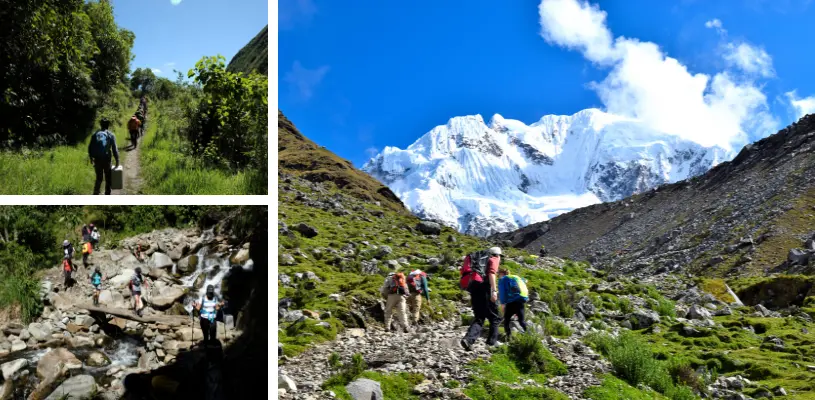
Hikers hiking towards Salkantay Pass and then, through the cloud forest.
13.- CLIMATE ON THE SALKANTAY TREK
The weather on the Salkantay Trail varies significantly depending on the trekking season due to differences in altitude along the route. Here is an overview of the seasons and their characteristics:
Dry Season (April to October):
- During these months, which are the peak season for the trek, the weather is usually dry and stable.
- Daytime temperatures are pleasant ranging from 15°C to 20°C (59°F to 68°F) at lower elevations.
- At night, in higher altitude areas, temperatures drop below 0°C (32°F), so warm clothing is essential.
- These months offer clear skies and spectacular landscape views.
Rainy Season (November to March):
- These months are considered the rainy season, and rainfall is more frequent.
- Daytime temperatures are still comfortable, but nights can be cooler and wetter.
- Rain can make hiking difficult and trails slippery, so be prepared with waterproof clothing and equipment.
- Despite the rains, this season has greener landscapes and less crowded places.
Be aware that, due to the variations in altitude on the Salkantay trail, the weather can change rapidly, so it’s essential to be prepared for different conditions. It is always advisable to check weather forecasts before trekking and follow local guides’ instructions to ensure a safe and enjoyable experience.

Weather conditions on the Salkantay trek.
14.- WHAT IS THE BEST SEASON TO DO THE SALKANTAY TREK?
The best season to do the Salkantay trail is generally between April to October. During this period, you can expect better weather, clear skies and less rainfall. Specifically, the dryest months run from June to August, coinciding with the Andes winter season. However, it is important to be prepared for temperature variations, as although the days are usually warm and sunny, the nights can be quite cold.
15.- WHAT ARE THE ACCOMMODATION OPTIONS ALONG THE ROUTE?
Along the Salkantay trek, you will find various accommodation options to suit different preferences and budgets. Here are the common alternatives:
Campsites: During the trek, campsites will be set up at strategic locations. These camps usually include sleeping tents, basic amenities such as portable toilets, and meals prepared by the support team.
Lodges: Some Salkantay trail routes offer lodging in glamping, camping areas and hostels. These lodges are usually more comfortable and offer additional amenities, such as beds, private bathrooms and common areas for relaxing.
Accommodation in Aguas Calientes: In the town of Aguas Calientes, which is the gateway to Machu Picchu, you will find a wide tourism industry. Here, you can enjoy more conventional accommodation before or after visiting Machu Picchu.
Local accommodation: In some areas along the route, local communities run accommodation. This gives you the opportunity to interact closely with the indigenous culture and contribute to the development of these communities.

Different accommodation options on the Salkantay Trek route.
16.- OPPORTUNITY TO INTERACT WITH THE LOCAL COMMUNITIES ALONG THE ROUTE.
Especially in Lucmabamba, a community located within the cloud forest, there is a coffee establishment called “Flor de Café” led by women known as the “Reynas del café”. This enterprise offers hikers the opportunity to witness the entire coffee production process up close, from harvesting, washing, pulping, fermenting and finally drying.
In addition to learning about the coffee production process, visitors can taste freshly roasted coffee and experience its authentic flavour. It is an enriching experience that combines nature, culture and Andean taste.

Lucmabamba is the place to harvest Peruvian coffee during the Salkantay Trek
17.- MACHU PICCHU, FINAL ACHIEVEMENT OF THE SALKANTAY TREK
The culmination of the Salkantay trek is the iconic Inca citadel of Machu Picchu, a historical and cultural wonder. Visitors can explore its cobbled streets, temples and residences, marvelling at Inca engineering and exceptionally preserved architecture. Those seeking breathtaking panoramic views can ascend Huayna Picchu or Machu Picchu Mountain.
In addition, the natural wealth surrounding the site offers a unique opportunity to connect with the region’s flora and fauna. Machu Picchu is the perfect reward for the Salkantay trek, combining history, nature and spectacular views.
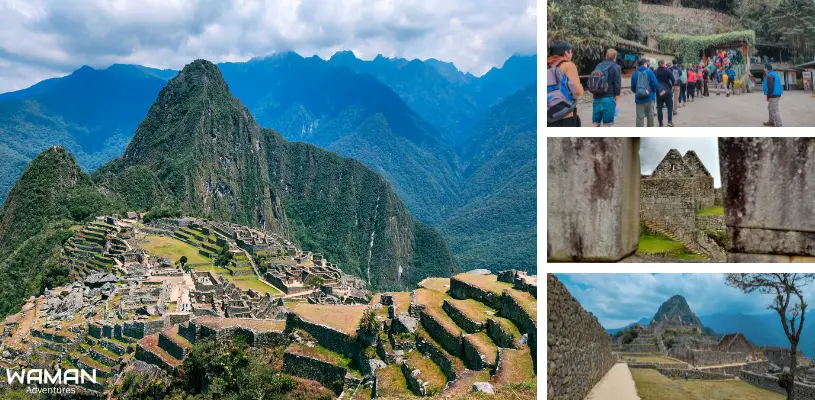
The seventh wonder of the modern world is Machu Picchu
18.- ALTITUDE SICKNESS OR SOROCHE ON THE SALKANTAY TREK ROUTE
Altitude sickness, known as soroche, is common on the Salkantay trek due to the altitude. This phenomenon occurs when the body does not adapt properly to high altitude, which can cause symptoms such as headaches, dizziness, fatigue and nausea. To prevent altitude sickness, it is essential to take measures such as gradual acclimatisation, maintaining adequate hydration, getting sufficient rest and avoiding excessive physical exertion.

Altitude sickness symptoms include headache, fatigue and vomiting.
PREPARATION AND PLANNING
19.- IS IT POSSIBLE TO DO THE SALKANTAY TREK WITHOUT A GUIDE?
Yes, it is possible to do the Salkantay trek without a guide, as there are no strict restrictions. However, it is important to note that due to the challenging nature of the trek and the possible difficulties of navigation in remote areas, it is highly recommended to do it with the help of a travel agency or an experienced guide.
Travel agencies often offer packages that include guides, support equipment, permits, transport and logistics, which facilitates planning and ensures a safe and well-organised experience. A local guide can also provide valuable information about the culture and nature of the region, which will enrich your Salkantay trek experience.
20.- WHAT TO TAKE ON THE SALKANTAY TREK?
ESSENTIALS
- Original physical passport.
- ISIC card (students).
- Extra money (soles).
- Water bottle or camelback.
- Personal medication (allergies).
- Sunscreen (SPF 50+).
- Personal care items.
- Hat.
- Sunglasses.
- Insect repellent.
CLOTHING
- Trekking or trail running shoes.
- Long sleeve T-shirts.
- Waterproof rain trousers.
- Hiking shorts.
- Waterproof jacket.
- Fleece jacket.
- Socks.
- Gloves.
- Hat.
- Underwear.
- Rain poncho.
- Swimwear.
- Sandals.
EQUIPMENT
- Trekking poles (rent with us).
- Sleeping bag (rent with us).
- Duffle bag (provided by us).
- Medium trekking backpack.
RECOMMENDED
- Waterproof dry bags.
- Power bank.
- Pain killers.
- Camera.
- Headlamp.
- Notepad and a pen.
- Snacks (Nuts, electrolytes, energy bars).
- Quick-drying towels.
- Wet towels.

Packing list for the Salkantay Trek
21.- WHAT IS THE DIFFERENCE BETWEEN THE SALKANTAY TREK AND THE INCA TRAIL?
The main differences between the Salkantay trek and the Inca Trail are the experience they offer, schedule, level of difficulty, scenery and permit requirements:
| Salkantay Trek | Inca Trail | |
| Duration | The Salkantay Trek takes 5 days and 4 nights generally. | The Inca Trail is usually completed in 4 days and 3 nights. |
| Difficulty level | Uneven terrain, it passes through a variety of landscapes, including mountains, glaciers and valleys. | Varied terrain and high altitudes, can be physically challenging. |
| Permits | It does not require a special permit, which makes it more accessible and flexible in terms of dates and availability. | Maximum capacity of 500 people per day.
|
| Landscapes | More scenic experience, with varied landscapes including mountains, glaciers and cloud forests. | It features impressive Inca archaeological sites along the route, such as Wiñay Wayna, Inti Punku, Intipata, Patallaqta and Sayacmarca. |
22.- ARE THERE SHOWERS IN THE SALKANTAY TREK?
In all camps, showers are provided for your comfort. However, you must take into account:
First day – Soraypampa (3,900 meters/12,795 feet): Cold water showers. Extra cost.
Second day – Chaullay (2,920 meters/9,580 feet): Cold water showers. Extra cost.
Third day – Lucmabamba (2,000 meters/ 6,561 feet): Cold water showers. Extra cost.
Fourth day – Hotel in Aguas Calientes (2,050 meters/6,571 feet): Hot water showers.
23.- ARE THERE TOILETS IN THE SALKANTAY TREK?
Yes, along the Salkantay Trek route, toilets are in every campsite. It is essential to remember that these toilets are basic and shared, and consist of simple facilities such as latrines.
24.- WHICH ARE THE ALTERNATIVE TREKKING ROUTES TO GET TO MACHU PICCHU
- Inca Trail: The Inca Trail is the classic and most famous route to Machu Picchu. It offers a historical experience as you walk along ancient Inca trails, passing archaeological sites and beautiful landscapes. The journey culminates in Machu Picchu.

- Inca jungle: This route is ideal for adventure lovers. It combines activities such as mountain biking, hiking and rafting on the Urubamba River. It offers an unparalleled perspective of the natural environment and allows you to enjoy exciting adventure sports.

Inca Jungle, a non-conventional route to reach Machu Picchu
- Lares Trek: The Lares Trek route is the less crowded and focuses on interaction with local communities. Hikers learn about Andean culture and enjoy natural hot springs on trekking to Machu Picchu.

Hikers adventuring on the Lares Trek route to Machu Picchu
- Choquequirao trek: This route takes adventurers to the ancient city of Choquequirao, known as the “sacred sister” of Machu Picchu due to its architectural similarity. It is a challenging experience that allows you to explore impressive ruins before heading to Machu Picchu.

25.- IS IT POSSIBLE TO DO THE SALKANTAY TREK WITH CHILDREN?
Yes, it is possible to do the Salkantay trek with children, but it is important to consider several factors before making this decision.
- The trek presents long walks.
- You cross the Salkantay Pass at a height of 4,600 m/15,092 ft.
- Weather conditions change.
- Mountain weather can be unpredictable.
If you plan to take your children on this adventure, make sure they are physically fit and used to walking long distances. It is also crucial to take precautions to avoid altitude sickness, such as making sure children are properly acclimatised before the hike.
Choose the most suitable Salkantay trek version for the children’s age and stamina.
26.- DO I NEED A PERMIT TO DO THE SALKANTAY TREK?
No, you do not need a special permit to trek Salkantay. Unlike the Inca Trail, which requires a limited permit and must be booked 6 months in advance due to high demand, the Salkantay trek does not have this restriction. This makes the Salkantay trek a more flexible option in terms of dates and availability.
However, it is important to note that certain local regulations and rules still apply on the route, and it is advisable to do the trek with an experienced travel agency that is familiar with these regulations and can guarantee a safe and environmentally friendly experience.
27.- WHO TO BOOK THE SALKANTAY TREK WITH?
It is advisable to do so through a trekking travel agency. These agencies have experience arranging the Salkantay Trail, know the local regulations and can provide services such as guides, transport, equipment and accommodation.
They will also take care of the purchase of tickets for the visit to Machu Picchu, which simplifies the process and ensures access to this archaeological wonder.
28.- WHO WILL CARRY MY LUGGAGE ON THE SALKANTAY TREK?
On the Salkantay trek, luggage is carried by mules. These are trained to carry camping equipment, food and other necessary supplies for hikers.

Mules carry all the luggage on the Salkantay trek, led by muleteers.
29.- HOW MANY KILOGRAMS OF LUGGAGE ARE ALLOWED ON THE SALKANTAY TREK?
On the Salkantay trek, you are generally allowed to carry between 6 and 7 kilograms of personal luggage, which must be put in a duffle bag. However, it is essential to remember that of those 7 kilograms; 2 kilograms are usually intended for your sleeping bag, which means that you will have approximately 4 to 5 kilograms for your personal belongings.
30.- IS THERE INTERNET OR PHONE SIGNAL ON THE SALKANTAY TREK?
Signal availability is absent for the first two days of trekking. However, on the fourth night, staying in a hotel in Machu Picchu (Aguas Calientes), you will enjoy a more stable and convenient connection.
NATURE AND UNIQUE LANDSCAPES
31.- ATTRACTIONS ALONG THE SALKANTAY TREK
Salkantay Mountain: At an altitude of 6,271 metres above sea level, the snow-capped Salkantay Mountain impresses with its majesty and panoramic views of vast glaciers and rugged landscapes.
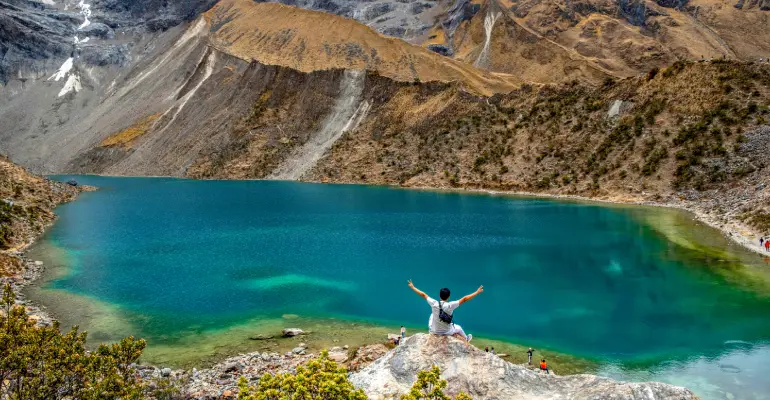
Humantay Lake: Situated some 4,200 metres above sea level, this turquoise lake reflects the majestic snow-capped mountain of the same name, offering an unforgettable visual experience amidst the mountains.
Chaullay: A peaceful village in the middle of the high jungle that provides a restful respite from the lush green scenery, providing a relaxing environment on the route to Machu Picchu.
Cloud forest: The Salkantay Trek traverses a cloud forest, a magical environment that immerses you in unique biodiversity, with species of plants, birds and wildlife to discover.
Santa Teresa Hot Springs: These hot springs in Santa Teresa are an oasis of warm waters that offer a well-deserved break to relax the muscles after days of hiking in a natural environment.
Machu Picchu: The highlight of the trek is the arrival at Machu Picchu, world-famous for its Inca architecture and location in the Andes. Exploring its ancient ruins is an extraordinary and unforgettable experience that takes you back in time.
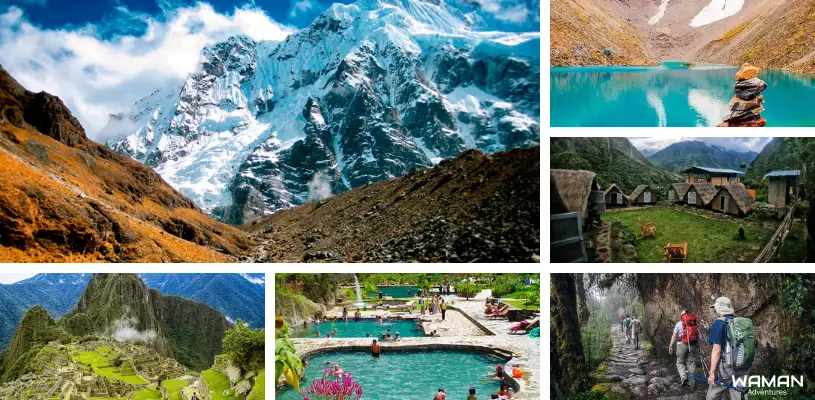
Targets from the Salkantay Trek
FLORA ON THE SALKANTAY TREK
32.- WIDE BIODIVERSITY OF FLORA AND FAUNA ON THE SALKANTAY TREK
- Queuña (Polylepis sp.): The queuña is a sturdy tree that thrives at high altitudes. Its twisted branches and rough bark are adaptations to the harsh conditions of the high mountains. This species is important for water conservation in Andean ecosystems.
- Bromeliads (Bromeliaceae): Bromeliads are ornamental plants that cling to trees or hang from them. Their leaves form a rosette that holds water, providing a habitat for small creatures like frogs and other insects. You will find a variety of bromeliad species in the Salkantay Trail cloud forest.
- Ferns (Cyathea sp.): Ferns are primitive plants that thrive in moist, shady environments. On the Salkantay Trail, you can see a diversity of ferns in the cloud forest, adding lush greenery to the landscape.
- Orchids: Orchids are famous for their beauty and diversity. In the cloud forests of the Salkantay Trek, you will find numerous species of orchids in different colours and shapes adding elegance to the flora of the region.
- Bamboo chusquea (Chusquea scandens): Andean bamboo is a hardy plant that forms dense thickets in mountainous areas. Its thin canes are used in house construction and other structures in local communities.
- Ichu (Stipa ichu): Ichu is a highland grass native to the Andes adapted to high altitudes. It is used as feed for livestock and contributes to soil formation in mountainous areas.

Flora on the Salkantay trail: Queuña, bromeliads, ferns, orchids, Andean bamboo, ichu.
FAUNA OF THE SALKANTAY TREK TO MACHU PICCHU
- Andean condor (Vultur gryphus): The Andean condor is one of the largest birds in the world and a symbol of the Andes. You can see it soaring majestically over the mountains. Its wings and imposing presence make it an impressive sight to watch.
- Andean Bear (Tremarctos ornatus): The spectacled bear is the only bear native to South America. Although elusive and rarely seen, its presence adds mystery to the region. It is known for its distinctive white face mark.
- Cock-of-the-rock (Rupicola peruvianus): The cock-of-the-rock is an elegant and vibrant bird and the national bird of Peru. Males have brightly coloured plumage and gather in leks for elaborate courtship displays.
- Woodpecker (Colaptes atricollis): Woodpeckers are well known for their ability to climb trees and search for insects. They are an integral part of the Andean forests and can be heard tapping into the trunk for food.
- Toucanet: The toucanet is a small toucan species that inhabits tropical and subtropical forests. Its striking beak and colours make it easy to identify among tree branches.
- Crested oriole (Psarocolius decumanus): This oriole is known for its elaborate hanging nests. Its black and yellow plumage makes it stand out in forests.
- Chachalaca (Ortalis cinereiceps): The chachalaca is a bird found in the forests and scrub areas of the region. Its distinctive call is often heard at dawn and dusk.

Fauna in the Salkantay trek: Andean condor, Andean spectacled bear, Cock-of-the-Rock, Woodpecker, Toucanet, Crested Oropendola and Speckled Chachalaca.
CURIOSITIES OF THE SNOWY SALKANTAY
1.- BRIEF HISTORY OF THE SNOW-CAPPED MOUNTAIN SALKANTAY
- During ancient times, long before the Inca empire, the snow-capped Salkantay Mountain was venerated by communities that lived near its slopes.
- According to historical records, these regions were inhabited by the “Rimactampus”, who were conquered by the first Inca, Manco Capac, in the 13th century.
- The Incas worshipped this mountain as well, which they called “Apu”, meaning “great lord” in Quechua.
- Religious ceremonies included corn offerings, coca leaves and auquenidos sacrifices.
- Despite colonial efforts to prohibit these practices, mountain worship persisted in Quechua culture.
- Even today, the Salkantay Mountain is still revered as one of the most powerful gods by Andean communities.
- From prominent places such as Machu Picchu and Choquequirao, the majesty of Salkantay with its imposing glaciers can be appreciated.
2.- MYTH OF THE SNOW-CAPPED SALKANTAY MOUNTAIN
Salkantay Mountain, one of the most imposing mountains in the Andes, settles a prominent place in Andean mythology as a protective deity, or “Apus”. This mountain is revered by Andean communities who worshipped its majesty for centuries. The Salkantay myth represents the deep respect of the Andean people for nature and is manifested in rituals and offerings that seek its protection and blessings. Despite the influence of colonisation and Christianity, the beliefs and rituals surrounding the Salkantay persist as an essential part of the Andean cultural legacy recalling the deep connection between mankind and nature.
3.- THE TWO SUMMIT OF SALKANTAY MOUNTAIN
Salkantay’s summit has two peaks, the East and the West Summit. Previously, the West summit was slightly higher due to the presence of a serac, which is a large block of ice fragmented by crevasses in the glacier, which collapsed in 2019. As a result of this collapse, both summits now have similar altitudes.
4.- FIRST CLIMBERS TO REACH THE SALKANTAY MOUNTAIN
There is some contradiction about who reached Salkantay’s summit first. Some say it was the French-American expedition, while others claim it was Swiss climbers. However, both expeditions date back in 1952.
5.- FIRST PERUVIAN TO REACH SALKANTAY’S SUMMIT
On June 17, 2013, Nathan Heald and Thomas Ryan from the United States, together with the Peruvian Luis Crispin reached the summit of Salkantay at 10:30 A.M. after a gruelling 9-hour climb. This achievement made Luis Crispin the first Peruvian to reach the summit of this mountain in the records known at that time.
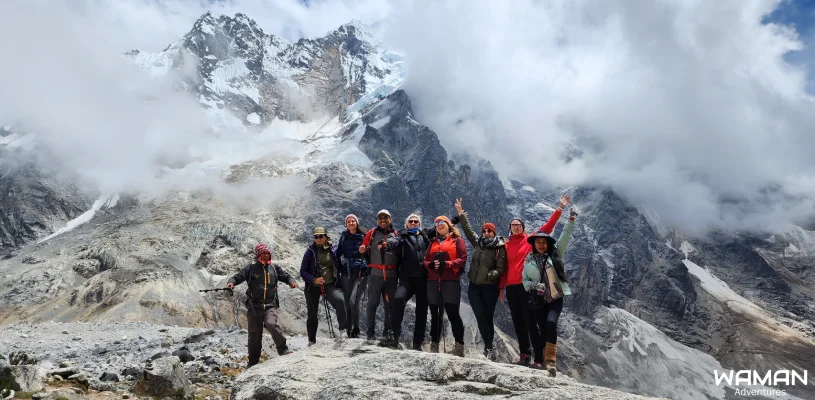
Hikers enjoying the foothills of the Salkantay Mountain.
Experience the Salkantay trek’s majesty with Waman Adventures! Plan your trip to this impressive mountain in the Peruvian Andes and enter a world of natural wonders, ancient culture and unforgettable adventures. Whether you’re a nature lover or a curious traveller, Salkantay has it all – book your adventure now!
Share:

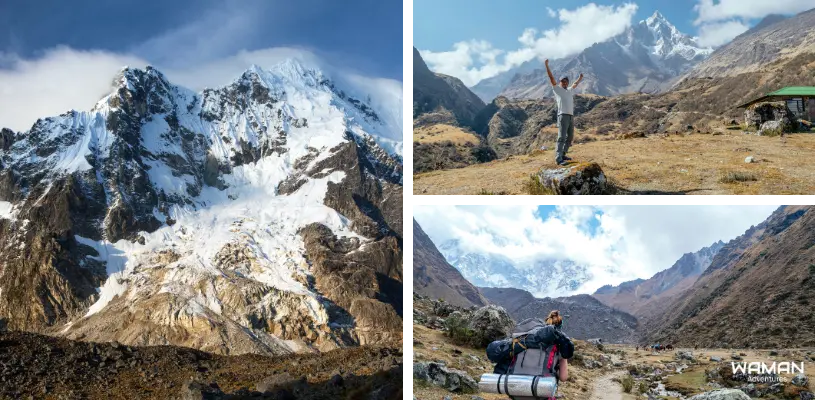


Related tours you might be interested in
Enjoy unique experiences in Cusco and Machu Picchu with the peace of mind that comes from working with a local travel agency

Choquequirao to Machu Picchu Trek 7 Days | Private Service
The most epic and challenging adventure awaits! Dare to push your limits and embark on the ultimate...

10 Days Andean Dreamscapes – Lima, Ica, Cusco & Puno with Local Flights
YOUR NEXT DESTINATION IS PERU, THE LAND OF FASCINATING STORIES AND OUTSTANDING LANDSCAPES! With our...
HUMANTAY LAKE TOUR FULL DAY – Group Service
Venture to the heights with a dream trip to the Humantay Lagoon! In the depths of Peru's imposing...

07 Day Echoes of Peru – Lima, Ica & Cusco with Flights
IMAGINE YOUR PERFECT ESCAPE PLAN IN PERU, WHERE EVERY DAY IS THE PERFECT OPPORTUNITY TO EXPLORE AND...
If you liked this article and the information you found, give us 5 stars!
Table of Contents
Related blogs
Train to Machu Picchu Schedules, Stations and Routes
13 min of reading