10 Incredible Places in Peru for Epic Scenery
Ultima actualización en 15 July, 2026 por Waman Adventures
Last Updated on 15 July, 2026 by Waman Adventures
- Quick answer
- 1. Machu Picchu
- 2. Lake Titicaca and its floating islands
- 3. Humantay Lake
- 4. Rainbow Mountain (Vinicunca)
- 5. Huascarán National Park
- 6. Manu National Park
- 7. Sunset in Rúpac
- 8. Paracas National Reserve
- 9. Los Manglares de Tumbes National Sanctuary
- 10. Sacred Valley of the Incas
-
Frequently asked questions…
- What is the best time of year to visit Peru’s most impressive landscapes?
- Do I need to acclimate before visiting high altitude destinations?
- Which of these destinations is the most physically demanding?
- How many days do I need to see several of these landscapes?
- What clothing and gear should I bring?
- Is it better to visit these places on my own or with a tour?
- Should I buy tickets or permits in advance?
- How can I plan an efficient route to see several landscapes in one trip?
Quick answer
Peru is a land of dramatic contrasts, where geography and history are inseparable. If you’re chasing the most epic scenery, the list starts with Andean icons like Machu Picchu, Rainbow Mountain, and Lake Titicaca, but the experience goes far beyond the peaks. Here, you can go from the coastal desert of the Paracas Reserve to the untouched biodiversity of Manu, or from the glaciers of Huascarán to mangrove forests in the north. What makes these places unforgettable is not only their visual beauty but also the energy of the cultures that learned to thrive within them.
Peru is one of the most diverse countries in South America, and every stop surprises you with the power and variety of its landscapes. From ancient Inca cities perched between mountains to sacred lakes, lush jungles, and deserts that meet the sea, each region delivers one-of-a-kind views closely tied to its history and culture. In this guide, we’ll show you ten places with the most epic scenery in Peru, why they stand out, and what you can see in each one.
1. Machu Picchu
Built in the 15th century at the height of the Inca Empire, Machu Picchu likely served as a royal estate and ceremonial center for the Inca Pachacútec. Its strategic location offers a perfect example of how the Incas mastered their environment, controlling routes, resources, and rituals tied to the stars.
Location
It is located in the Cusco region, Urubamba province, perched on a mountain ridge encircled by the Urubamba River, right where the Andes meet the cloud forest.
Altitude
It sits at about 7,972 feet (2,430 meters), an elevation that blends rugged mountain terrain with lush, subtropical vegetation.
To get the most out of it, plan for a full-day visit and book your tickets well in advance, especially during peak season.
What to see
- Wander through the massive Inca citadel, home to more than 200 stone structures.
- See how agricultural terraces perfectly contour the steep terrain to prevent erosion.
- Stand before key spiritual sites like the Intihuatana, the Temple of the Sun, and the Temple of the Three Windows.
- Soak in the epic scenery of the surrounding mist-covered peaks.

Experience the awe-inspiring epic scenery of Machu Picchu, the crown jewel of the Inca Empire
2. Lake Titicaca and its floating islands
Lake Titicaca was a sacred center for pre-Inca and Inca cultures alike. According to Andean worldview, the founders of the Inca Empire emerged from these deep blue waters. Even today, a visit here reveals the profound spiritual and cultural significance the lake still holds for its people.
Location
Situated on the high Andean plateau (Altiplano), the lake is shared between Peru (Puno region) and Bolivia.
Altitude
At approximately 12,506 feet (3,812 meters), the air is crisp and thin.
If it’s your first time at this elevation, take it slow and allow at least a full day to explore the lake and its unique islands comfortably.
What to see
- Walk on the soft, reed-woven surface of the Uros floating islands.
- Discover Taquile and Amantaní, islands renowned for their intricate textile traditions.
- Gaze across vast, open views of intense blue water against clear highland skies.
- Observe the daily life of Andean communities that have thrived alongside the lake for centuries.
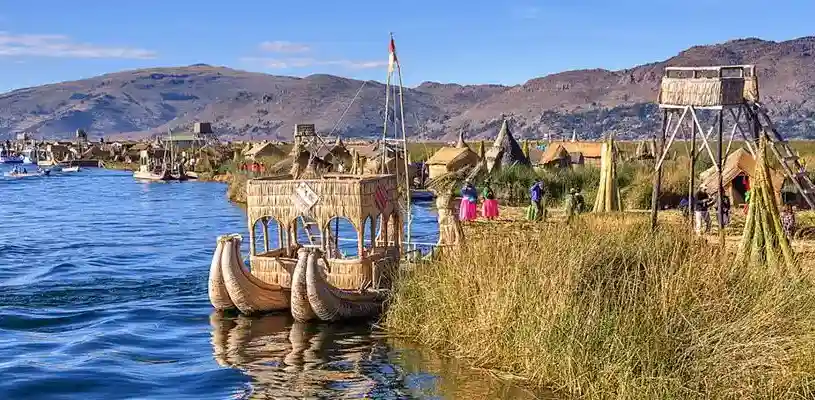
Discover the mesmerizing epic scenery of Lake Titicaca and its unique Uros floating islands
Remember:
At high altitude, walking slowly and staying hydrated is the best way to prevent altitude sickness.
3. Humantay Lake
Formed by glacial meltwater from the towering peaks above, Humantay Lake is considered a sacred space by local communities. Upon arrival, you can sense the connection to the Pachamama (Mother Earth) and the mountain spirits that watch over the valley.
Location
Found in the Cusco region, Anta province, this gem lies along the famous Salkantay trekking route.
Altitude
The lake sits at about 13,779 feet (4,200 meters), making prior acclimatization essential.
It is typically a full-day trip from Cusco. The hike is moderate but short; just remember to pace yourself due to the steep incline and thin air.
What to see
- Gaze at a stunning glacial lake with intense turquoise waters.
- Get direct, up-close views of the snow-capped Humantay and Salkantay peaks.
- Photograph high-mountain epic scenery and, if you’re lucky, Andean wildlife like condors.
- Find natural viewpoints perfect for capturing that unforgettable travel shot.

Admire the majestic epic scenery of Humantay Lake, a turquoise jewel hidden in the Andes.
4. Rainbow Mountain (Vinicunca)
Vinicunca exploded onto the travel scene after receding glaciers revealed its colors over the last decade. If you are chasing epic scenery defined by vivid color, this is the place. Its striking appearance comes from mineral deposits—iron, copper, sulfur—layered over millions of years.
Location
Located in the Cusco region, Canchis province, near the imposing Ausangate mountain.
Altitude
Standing at approximately 17,060 feet (5,200 meters), this is one of the highest altitude excursions you can do.
Tours start early, and the hike can be physically demanding. Proper rest and acclimatization in Cusco beforehand are key to enjoying the trek.
What to see
- Witness mountains painted with natural, vibrant mineral stripes.
- Enjoy sweeping panoramic views of the sacred Ausangate glacier.
- Cross high-altitude “puna” grasslands dotted with herds of alpacas and llamas.
- Hike trails that offer wide-open vistas of the Andes range.

Witness the breathtaking epic scenery of Vinicunca, Peru’s famous Rainbow Mountain
5. Huascarán National Park
Established in 1975 to protect the Cordillera Blanca, Huascarán National Park is home to some of Peru’s most epic scenery in the high Andes. Declared a UNESCO World Heritage Site in 1985, it remains a premier destination for its ecological value and breathtaking landscapes.
Location
You’ll find it in the Áncash department, in the northern highlands, encompassing the heart of the Cordillera Blanca.
Altitude
Elevations range from 8,202 feet (2,500 meters) to the summit of Mount Huascarán at 22,205 feet (6,768 meters)—the highest point in Peru.
Using Huaraz as a base, you can take day trips to turquoise lakes, with the clearest views usually occurring during the dry season (May–September).
What to see
- Stand before the snow-capped giants of the Cordillera Blanca.
- Visit famous glacial lakes like Llanganuco and Querococha, known for their vivid colors.
- Spot diverse high-Andean flora and fauna across various ecosystems.
- Access world-class trekking and mountaineering routes for all skill levels.

Experience the breathtaking epic scenery of Huascarán National Park, a paradise for trekkers in the Andes
6. Manu National Park
Founded in 1973, Manu National Park protects one of the most biodiverse corners of the planet. A UNESCO World Heritage Site since 1987, it is a sanctuary not just for wildlife but also for Indigenous communities, including uncontacted tribes. As such, access is strictly regulated.
Location
Spanning the Cusco and Madre de Dios regions, the park stretches from the eastern Andean slopes down into the deep Amazon rainforest.
Altitude
Elevations drop dramatically from about 13,779 feet (4,200 meters) in the mountains to just 984 feet (300 meters) in the lowland jungle, creating a massive variety of climates.
Due to logistics and regulations, most travelers visit with authorized operators, setting aside several days to experience the rainforest fully.
What to see
- Experience the dramatic shift from cloud forests to lowland tropical jungles.
- Watch for incredible wildlife: macaws, monkeys, giant otters, and even jaguars.
- Explore unique ecosystems where the Andes meet the Amazon.
- Find options for nature-focused and educational tourism in a pristine environment.

Discover the pristine epic scenery of Manu National Park, one of the most biodiverse places on Earth
Warning:
In the Amazon, humidity and insects are a constant companion year-round. Pack accordingly!
7. Sunset in Rúpac
Often called the “Machu Picchu of Lima,” Rúpac was a vital ceremonial center for the Atavillos culture. Its stone architecture and strategic hilltop position served both defensive purposes and ritual functions, connecting the people to the sky and earth.
Location
Located in Huaral province, in the highlands of Lima, atop a rugged and scenic summit.
Altitude
At approximately 11,745 feet (3,580 meters), the altitude is significant, so pace yourself on the hike up.
It is a popular two-day camping trip from Lima, famous for the “sea of clouds” phenomenon that blankets the valley below at sunset.
What to see
- Wander among well-preserved pre-Inca funerary towers (chullpas) and stone buildings.
- Catch a breathtaking sea of clouds that creates truly epic scenery at sunrise.
- Immerse yourself in a unique blend of archaeology and mountain trekking.
- Look for skies that are perfect for astrophotography and golden hour shots.

Experience the romantic epic scenery of Rúpac, famous for its spectacular sunsets above the clouds
8. Paracas National Reserve
Created in 1975, the Paracas National Reserve protects rich marine and desert ecosystems where the dunes meet the ocean. It stands out as one of Peru’s most valuable coastal areas, celebrated for both its wildlife and the epic scenery of the desert clashing with the sea.
Location
Found in the Ica department on the southern coast, facing the Pacific Ocean.
Altitude
Situated at sea level, it offers an easy, accessible adventure for all travelers.
It’s a comfortable half-day or full-day trip. Just keep in mind it gets windy—the name “Paracas” literally relates to sandstorms—so a windbreaker is a must.
What to see
- Watch the Pacific waves crash against striking red sand beaches and cliffs.
- Spot abundant wildlife, including sea lions, Humboldt penguins, and seabirds.
- Take in wide-open views of the ocean and unique rock formations.
- Witness the rare sight of a dry desert landscape merging directly into the sea.

Observe striking wildlife like sea lions basking in the epic scenery of the Paracas coast
9. Los Manglares de Tumbes National Sanctuary
Declared a sanctuary in 1988, this area protects Peru’s largest mangrove ecosystem, a critical habitat that had faced threats in the past. Visiting here helps support conservation efforts and offers a glimpse into a delicate natural balance.
Location
Located in the Tumbes region, on the far northern border with Ecuador.
Altitude
At sea level, this tropical coastal zone is warm and humid.
Boat rides are the best way to navigate the winding channels, and clear days offer excellent birdwatching opportunities.
What to see
- Glide through winding mangrove tunnels in a truly unique setting.
- Spot migratory birds, crabs, and the famous black conchs.
- Observe the impressive mangrove trees with their tangled, exposed roots.
- Enjoy a peaceful boat route ideal for nature photography.

Discover the exotic epic scenery and diverse birdlife hidden within the Tumbes Mangroves
10. Sacred Valley of the Incas
The Sacred Valley offers some of the most accessible epic scenery in the Cusco region, serving as the agricultural and spiritual breadbasket of the Inca Empire. Traveling through it today, it’s easy to see why this area became the heart of Inca civilization, feeding the capital and hosting major royal estates.
Location
Nestled in the Cusco region between Cusco city and Machu Picchu, following the path of the Urubamba River.
Altitude
Averages around 9,842 feet (3,000 meters), making it lower and milder than Cusco city.
While you can rush through it in a day, spending two days allows you to explore the ruins and markets without the crowds.
What to see
- Explore massive archaeological sites like Pisac, Ollantaytambo, and Moray.
- Photograph endless agricultural terraces and living Inca towns full of culture.
- Enjoy peaceful Andean landscapes and scenes of rural life.
- Visit vibrant markets, colonial churches, and traditional weaving communities.

Explore the timeless epic scenery of Chinchero, where Inca foundations support colonial architecture
These landscapes are not just pretty backdrops for photos; they are places where Peru’s nature, history, and culture feel truly alive. From the magic of Machu Picchu to the wild heart of Manu, every destination offers a distinct experience that stays with you. If you want to explore them in an organized, hassle-free way, at Waman Adventures we’ll help you plan your route, choose the best times to maximize every stop, and even guide you on where to stay on the Choquequirao trek. Message us at +51 979 858 544. Don’t wait—your next great adventure in Peru is ready when you are!
Frequently asked questions…
What is the best time of year to visit Peru’s most impressive landscapes?
Do I need to acclimate before visiting high altitude destinations?
Which of these destinations is the most physically demanding?
How many days do I need to see several of these landscapes?
What clothing and gear should I bring?
Is it better to visit these places on my own or with a tour?
Should I buy tickets or permits in advance?
How can I plan an efficient route to see several landscapes in one trip?

Share:


If you liked this article and the information you found, give us 5 stars!
Table of Contents
Related blogs