


Machu Picchu Travel Guide for Planning Your Visit
Ultima actualización en 12 October, 2026 por Jhon Quispe
Last Updated on 12 October, 2026 by Jhon Quispe
How should you plan a Machu Picchu trip?
Start with the Machu Picchu entrance route and entry time, then coordinate your train or trek, accommodation, final transfer, guide and daypack around that fixed reservation. If your dates are not flexible, securing the entrance first reduces the risk of booking transportation that does not work with the route or time you want.
- Machu Picchu travel planning at a glance
- Plan your Machu Picchu trip in the right order
- Book your Machu Picchu entrance first
- Choose how you will reach Machu Picchu
- Choose where to stay for Machu Picchu
- Season and weather planning
- Plan your Machu Picchu visit day
- Daypack essentials for Machu Picchu
- Altitude and health planning
- Brief historical context before your visit
-
Frequently asked questions about planning a Machu Picchu travel guide
- Can Machu Picchu be visited as a day trip from Cusco?
- Is it better to sleep in Machu Picchu Pueblo before visiting?
- Can I buy a Machu Picchu entrance ticket in person?
- Do I need separate tickets for the train and Machu Picchu entrance?
- Can I combine the Sacred Valley and Machu Picchu in the same itinerary?
- How much buffer should I leave between my train and Machu Picchu entry?
- Is Machu Picchu open year-round?
A Machu Picchu trip becomes much easier when each decision is made in the right order. Instead of booking trains, hotels and tours separately, use the archaeological-site entrance as the fixed point and build the rest of the itinerary around it.

Machu Picchu stands at 7,972 ft (2,430 m) in a tropical mountain setting.
Machu Picchu travel planning at a glance
| Planning detail | What to know |
| Location | Cusco region, Peru |
| Elevation | About 7,972 ft (2,430 m) |
| Nearest town | Machu Picchu Pueblo, also known as Aguas Calientes |
| Main access options | Train, regulated Inca Trail or alternative trekking and road combinations |
| Entrance system | Your ticket is linked to a specific route, date and entry time |
| Current visitor system | 3 official circuits grouping 10 visitor routes |
| General weather pattern | Drier conditions are more common from roughly May through October; November through March is wetter, with April acting as a transition |
| What to book first | Machu Picchu entrance if your travel dates are fixed |
| Main planning mistake | Booking transportation before confirming an entrance route and time that work with the itinerary |
Plan your Machu Picchu trip in the right order
Machu Picchu involves several reservations that depend on each other. The easiest way to avoid schedule conflicts is to organize the least flexible elements first.
- Choose your approximate travel date.
- Check Machu Picchu entrance availability.
- Select the visitor route that matches what you want to see.
- Confirm the entry time.
- Choose how you will reach Machu Picchu Pueblo or the archaeological site.
- Arrange accommodation around your arrival and departure times.
- Coordinate buses, guide services and other transfers.
- Prepare clothing and a compact daypack for the season and route.
Important note:
A train ticket does not include or guarantee the Machu Picchu entrance route you want. Treat the archaeological-site ticket as a separate reservation and coordinate transportation around the confirmed route and entry time.
Book your Machu Picchu entrance first
Machu Picchu does not operate as a single unrestricted entrance where every visitor follows the same path. The current visitor system uses 3 circuits that group 10 routes, and your admission is linked to a specific route, date and entry time.
Choosing the ticket therefore also means choosing part of your experience. Some routes emphasize panoramic viewpoints, others focus more on archaeological sectors, while selected options add mountain hikes.
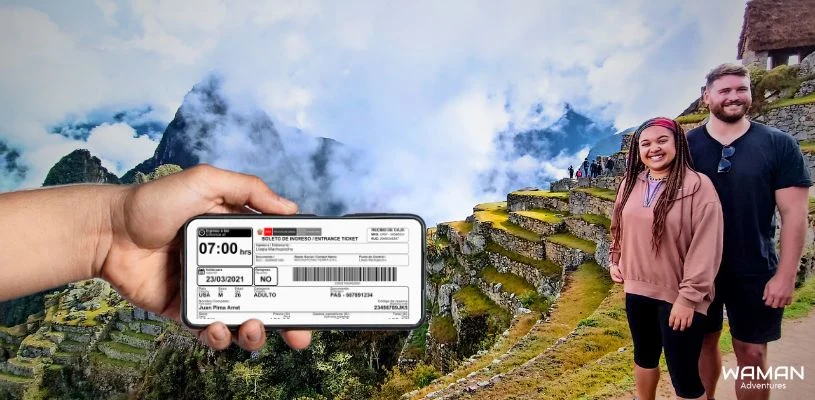
Confirm your route and entry time before coordinating fixed transportation.
If your dates are fixed, online booking gives you more control over the route and time you want. The official Ministry of Culture ticket platform is TuBoleto.
For current routes, seasonal availability, ticket prices and the complete purchasing process, use the Machu Picchu entrance ticket guide. This travel guide focuses only on where the entrance fits within the overall itinerary.
Choose how you will reach Machu Picchu
There is no single transportation method that fits every traveler. Your choice depends on available time, budget, physical condition and whether you want the journey itself to be part of the experience.
| Option | Best suited for | Main planning point |
| Train | Travelers prioritizing comfort and time | Coordinate rail times with the confirmed entrance and hotel schedule |
| Inca Trail | Travelers who want the regulated historic trekking approach | Requires its own permit system and advance planning |
| Alternative trek | Travelers prioritizing mountain scenery, culture or adventure | Duration, altitude and logistics vary considerably by route |
| Hidroeléctrica route | Travelers intentionally choosing a road-and-walking alternative | Requires a long overland journey and final walk to Machu Picchu Pueblo |
Train travel
Train travel is the most straightforward non-trekking option for many visitors. Services commonly connect from Ollantaytambo and other stations toward Machu Picchu Pueblo.
Once your entrance is confirmed, select train times with enough transfer margin instead of choosing only by price. Operators, stations and operating arrangements can vary by season.
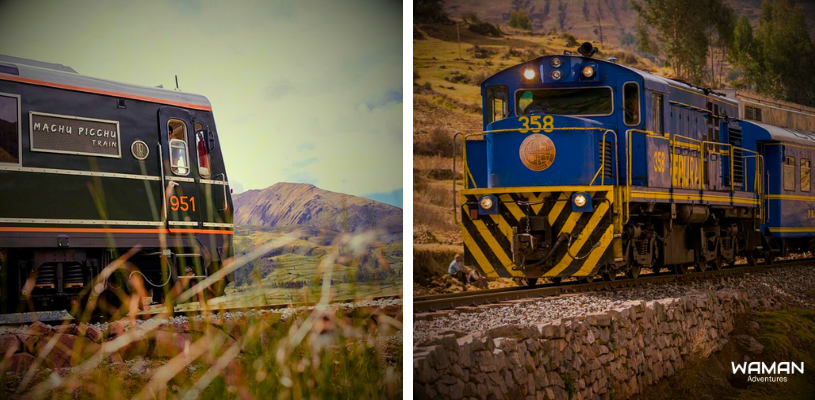
Rail services connect Sacred Valley stations with Machu Picchu Pueblo.
For operators, stations, baggage rules and railway logistics, use the train to Machu Picchu guide.
Trekking routes
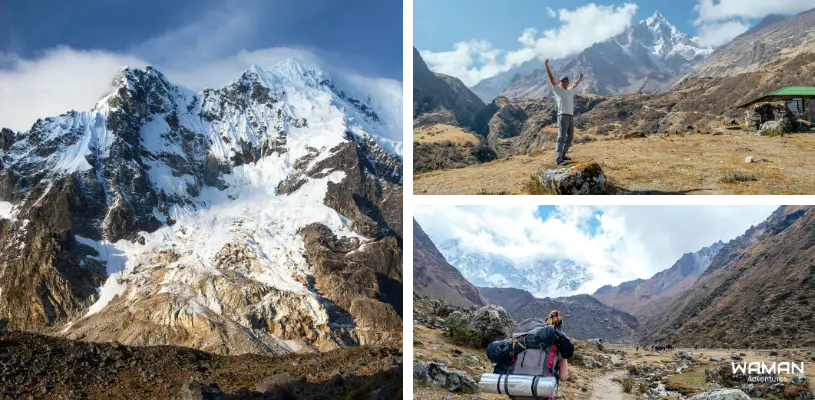
Travelers who want the journey to be part of the experience can choose routes such as the Inca Trail, Salkantay, Lares, Inca Jungle, Huchuy Qosqo or longer combinations involving Choquequirao.
These routes differ substantially in duration, altitude, terrain, archaeology and physical demand. Use the treks to Machu Picchu comparison rather than treating them as interchangeable approaches.
Hidroeléctrica route
The Hidroeléctrica option combines a long road journey from the Cusco region with a final walk toward Machu Picchu Pueblo. It is a different travel style from the faster train connection through the Sacred Valley.
For the full comparison of road, rail and trekking approaches, use the how to get to Machu Picchu guide.
Choose where to stay for Machu Picchu
Your accommodation base affects how early you need to leave, how many transportation connections you must coordinate and how much margin you have before the entrance printed on your ticket.
| Base | Best for | Trade-off |
| Cusco | Travelers combining Machu Picchu with the city and wider Cusco region | More transportation time before reaching Machu Picchu |
| Sacred Valley | Travelers wanting convenient access to Ollantaytambo and valley attractions | You still need to coordinate the train and onward transfer |
| Machu Picchu Pueblo | Travelers wanting to stay close to the archaeological site before or after visiting | Hotel and restaurant demand can be strong on popular dates |

Staying nearby can reduce pressure before an early Machu Picchu entrance.
If you stay overnight in Machu Picchu Pueblo
An overnight stay can make sense when your entrance time would otherwise require a tight sequence of road, train and bus connections on the same morning.
If you arrive early or have time after your archaeological visit, use the things to do in Aguas Calientes guide for local attractions rather than treating this planning guide as an Aguas Calientes activity list.
Season and weather planning
Machu Picchu can normally be visited throughout the year. Conditions are generally drier from around May through October, while November through March brings more frequent rain, cloud and greener landscapes. April often acts as a transition between the wetter and drier periods.
Drier months usually improve the probability of stable trail conditions and longer clear periods, but they also overlap with stronger visitor demand. Wetter months require more flexibility because visibility and transportation conditions can change.
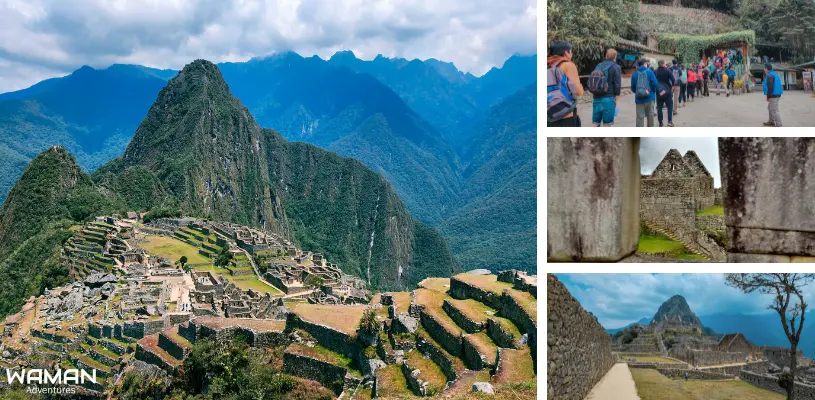
Season changes rainfall probability but never guarantees a specific view.
For detailed month-by-month conditions, visitor demand and seasonal decisions, use the best time to visit Machu Picchu guide.
Plan your Machu Picchu visit day
By the time you reach Machu Picchu Pueblo, the major decisions should already be resolved: entrance route, entry time, transportation, accommodation and whether you are using a guide.
From Machu Picchu Pueblo to the entrance
The archaeological site is located above Machu Picchu Pueblo. Most travelers use the shuttle buses connecting the town with the entrance, while walking uphill requires considerably more physical effort and time.
Factor that final transfer into your schedule before the entry time printed on your ticket.
Follow the route on your ticket
Your ticket determines the visitor route you are permitted to follow. Confirm in advance that your selected route includes the viewpoints, archaeological sectors or mountain hike that matter to you.
For the major archaeological attractions themselves, use the places to visit inside Machu Picchu guide.
Leave a time buffer
A tightly scheduled visit leaves little room for transfer delays, bus queues or problems finding the entrance or your guide. Build enough margin into the day to absorb small delays without putting a fixed archaeological-site entry at risk.
Keep this in mind:
Avoid an itinerary where every connection depends on the previous service arriving exactly on schedule. A reasonable time buffer is easier to manage than missing a fixed Machu Picchu entry.
Guide support
A knowledgeable guide can add archaeological and historical context and help you understand what you are seeing along the assigned visitor route.

A guide adds historical context to the archaeological route you booked.
If guide requirements or the value of guided interpretation matter to your decision, use the Machu Picchu guide support article.
Rules that affect your visit
Machu Picchu is a protected archaeological site, so visitor movement and equipment are regulated. Check the current official rules shortly before traveling because restrictions can be updated.
| Practical point | Planning consequence |
| Your ticket follows a defined route | Choose the route before arrival according to what you want to see |
| Large bags are restricted | Use a compact daypack and leave bulky luggage elsewhere |
| Tripods, selfie sticks and similar equipment are restricted | Plan normal photography with permitted handheld equipment |
| Restrooms are outside the archaeological visitor route | Use the facilities before beginning your visit |
| Movement follows established visitor paths | Do not assume you can return to an earlier viewpoint later |

Arrive with your ticket, identification and visitor route already organized.
For the latest restrictions, review the official Machu Picchu code of conduct.
Daypack essentials for Machu Picchu
A standard visit by train does not require the equipment of a multi-day trek. Keep your daypack light and carry only what you are likely to use during the archaeological visit.
| Bring | Why it matters |
| Passport or required identification | Keep the document associated with your reservation accessible |
| Ticket information | Have your route, date and entry details ready before the checkpoint |
| Light waterproof layer | Rain and cloud can occur even during generally drier months |
| Comfortable footwear | Visitor routes include stone surfaces, stairs and uneven ground |
| Hat, sunglasses and sunscreen | Useful during clear periods and exposed sections |
| Compact daypack | Keeps essentials accessible without bringing bulky luggage |
| Water | Useful during a day involving transport and walking |
For current bag dimensions, prohibited items, seasonal clothing and a complete packing checklist, use the what to wear and pack for Machu Picchu guide.
Altitude and health planning
Machu Picchu is located at approximately 7,972 ft (2,430 m), which is lower than Cusco. Many travelers therefore notice altitude more strongly while staying in Cusco or completing higher mountain activities than during a standard Machu Picchu visit.
Individual responses still vary. If your Peru itinerary includes high-elevation destinations or demanding treks, allow time to see how your body responds before scheduling the most strenuous part of the trip.
Persistent or worsening symptoms deserve appropriate medical attention rather than simply trying to maintain the itinerary.
Brief historical context before your visit
Machu Picchu was developed during the Inca period in the 15th century and is closely associated with the reign of Pachacútec. Its terraces, ceremonial areas, residences, drainage and finely worked stone demonstrate how Inca planners adapted architecture to a steep mountain environment.
The site was known locally before Hiram Bingham arrived in 1911. His expeditions brought Machu Picchu much wider international academic and public attention, but describing him simply as the person who “discovered” an unknown city overlooks the people who already knew and lived around the site.
For chronology, archaeology and historical interpretation, use the history of Machu Picchu guide.
Frequently asked questions about planning a Machu Picchu travel guide
Can Machu Picchu be visited as a day trip from Cusco?
Yes, but a same-day trip requires careful coordination between road transfers, train times, the shuttle bus and your fixed Machu Picchu entrance. An overnight in Machu Picchu Pueblo can reduce the number of time-sensitive connections on the visit day.
Is it better to sleep in Machu Picchu Pueblo before visiting?
It can be useful when you have an early entrance or want to avoid combining several transfers on the same morning. Travelers with later entry times may prefer to stay in Cusco or the Sacred Valley depending on the wider itinerary.
Can I buy a Machu Picchu entrance ticket in person?
Yes. The current official system makes up to 1,000 tickets available daily for in-person purchase in Machu Picchu Pueblo for entry on the following day, subject to availability. If your dates or preferred route are important, booking online in advance gives you more control.
Do I need separate tickets for the train and Machu Picchu entrance?
Yes. The archaeological entrance and train journey are separate services. Buying a train ticket does not include admission to Machu Picchu or guarantee that your preferred visitor route will still be available.
Can I combine the Sacred Valley and Machu Picchu in the same itinerary?
Yes. Many travelers use the Sacred Valley as a transition between Cusco and the train journey toward Machu Picchu Pueblo. The exact sequence should be built around the confirmed Machu Picchu entrance and transportation times.
How much buffer should I leave between my train and Machu Picchu entry?
There is no single buffer that works for every itinerary because stations, train schedules and arrival points differ. Avoid plans that depend on every connection arriving at the exact scheduled minute and leave enough time for transfers between the train, hotel, shuttle and archaeological entrance.
Is Machu Picchu open year-round?
Machu Picchu normally receives visitors throughout the year. Weather, maintenance, emergencies or operational conditions can still affect individual services, routes or access, so verify current information before traveling.
Share:



Related tours you might be interested in
Enjoy unique experiences in Cusco and Machu Picchu with the peace of mind that comes from working with a local travel agency
6-Day Tour Cusco, Sacred Valley, Machu Picchu and Rainbow Mountain
EXPERIENCE THE MAJESTY OF THE INCAS: SACRED VALLEY, MACHU PICCHU & RAINBOW MOUNTAIN IN ONE TRIP If...
6 Day Andean Adventures Tour│With Flights from Chile
ENJOY THE BEST OF CUSCO CITY – MUST VISIT DESTINATIONS ARE WAITING FOR YOU! Want to explore Cusco...
6 Days Andean Adventure │ With Flights from Mexico
EXPERIENCE THE BEST OF CUSCO – THE MOST BREATHTAKING DESTINATIONS AWAIT Do you want to explore...
5 Day Cusco, Sacred Valley and Machu Picchu
DISCOVER THE MAJESTY OF MACHU PICCHU AND THE BEAUTY OF THE SACRED VALLEY IN ONE EPIC JOURNEY! The...
If you liked this article and the information you found, give us 5 stars!
Table of Contents
Related blogs
Best Time to Visit Humantay Lake by Month and Season
10 min of reading
An Intrepid Traveler’s Guide to Machu Picchu’s Secrets of Altitude
11 min of reading


