Ausangate Trek: The Complete Guide to Planning Your Journey
Ultima actualización en 24 January, 2026 por Amy Pérez
Last Updated on 24 January, 2026 by Amy Pérez
- Quick answer
- General information
- Trek logistics and planning
- Essential preparation
- Why is Ausangate sacred?
- Ready to book?
-
Frequently asked questions…
- What is the Ausangate Trek, and why is it considered demanding?
- Do I need prior experience to do the Ausangate Trek?
- What is the best time of year to do the Ausangate Trek?
- Does the Ausangate Trek reach the summit of Ausangate Mountain?
- Is it better to do the Ausangate Trek with an agency or on your own?
- What routes are available, and how long does the Ausangate Trek take?
- What risks should I consider during the Ausangate Trek?
Quick answer
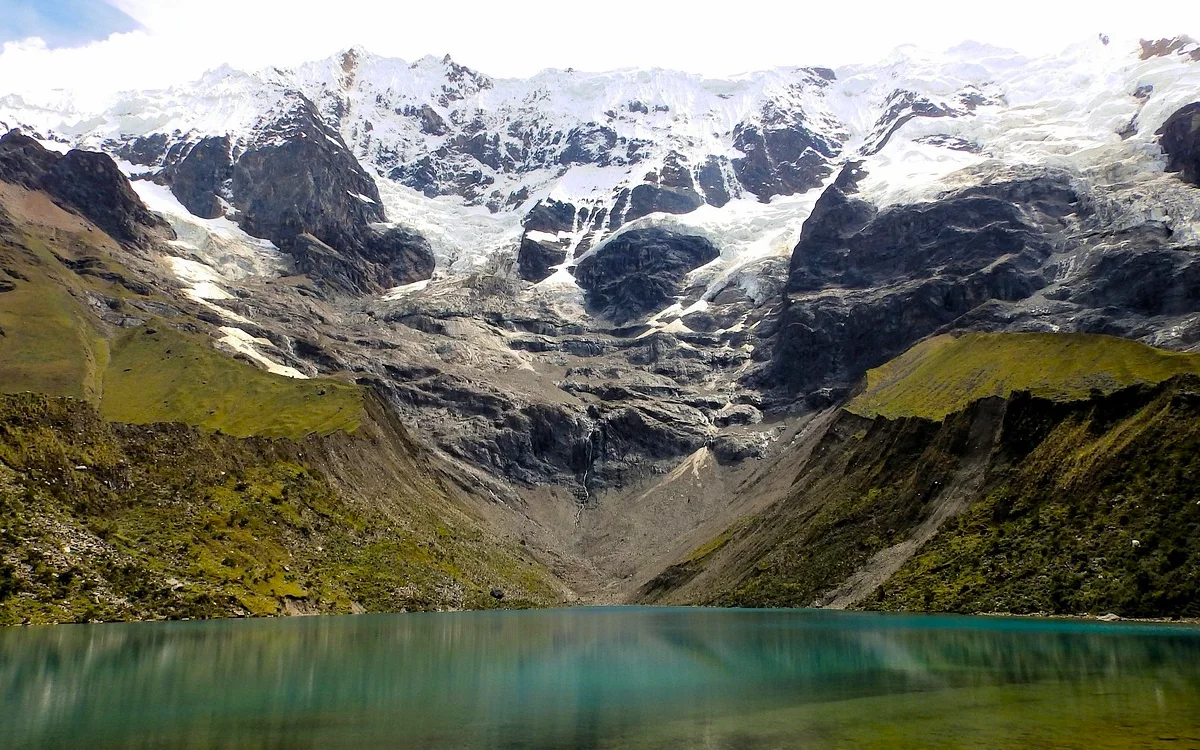
The Ausangate Trek is a high mountain trek in Cusco, Peru, that loops around Ausangate Mountain, passing turquoise lakes, Andean valleys, and high passes that often exceed 5,000 m (16,404 ft). We recommend physical training before the trek. The route is demanding, and you need strong endurance because most of the trail runs above 4,000 m (13,123 ft) in elevation.
This trek is one of the best alternatives to Machu Picchu if you want wilder landscapes, fewer crowds, and an intense experience where acclimatization and the right gear make all the difference.
If you are looking for a trek in Cusco that feels authentic, remote, and breathtakingly beautiful, you can stop searching because the Ausangate Trek is your trip.
Here you will find turquoise lakes, massive glaciers, high mountain passes, and nights where the star-filled sky is your only roof. It is one of the most striking routes in the Peruvian Andes and one of the best alternatives to the Inca Trail if you want silence and a real connection with Andean nature.
This trek is demanding. You reach high altitude with weather that can change quickly and feel unpredictable. That is why we created this Ultimate Ausangate Trek Guide so you can plan your adventure with clear facts, no guesswork, and the confidence you need.
General information
What is the Ausangate Trek?
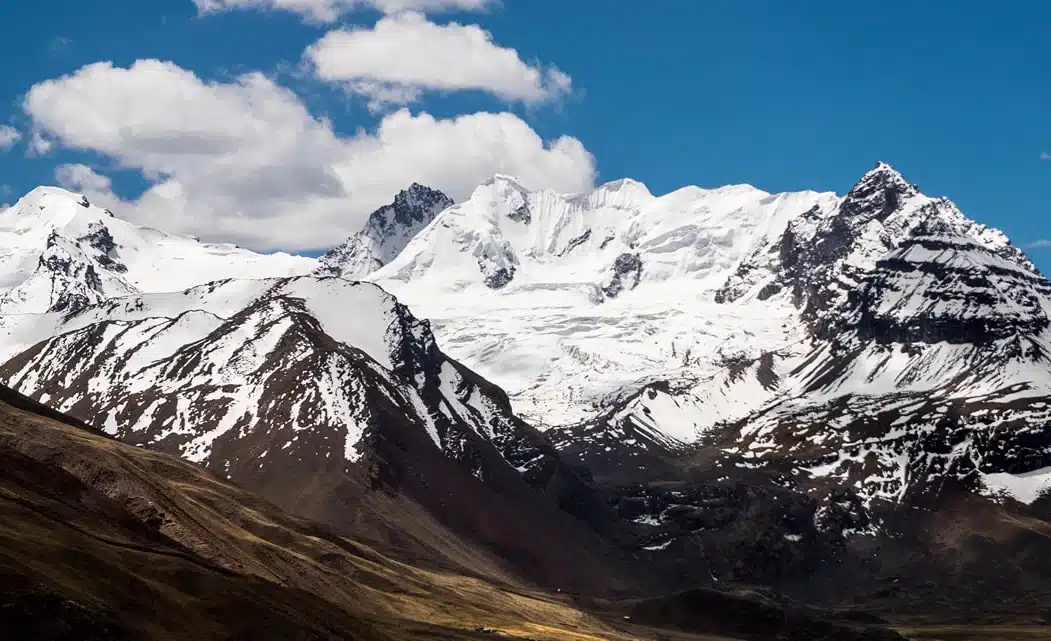
The Ausangate Trek is a high mountain hike that circles the lower slopes of Ausangate Mountain, the highest peak in Cusco and the most important Apu, a protective mountain spirit, in the local Andean worldview.
Unlike other routes, this circuit does not end at Machu Picchu. Its magic is the pure scenery: you will see snow-capped peaks, vividly colored lakes in shades of green, blue, and red, and alpaca herding communities that keep centuries-old traditions alive.
Remember this:
The Ausangate Trek is NOT a summit climb, it is a route around the mountain, challenging but doable for hikers with solid acclimatization.
Location and elevation
Ausangate dominates the Vilcanota Mountain Range, located about 100 km (62 miles) southeast of the city of Cusco. To help you understand the physical challenge, here are the key elevations along the route:
- Trip start: Cusco at 3,399 m (11,152 ft).
- Ausangate summit: 6,385 m (20,948 ft). Important: this is the snow-capped summit, but you do not climb it on the standard trek.
- Average hiking elevation: Most of the time you will hike above 4,000 m (13,123 ft).
- Highest point of the trek: Depending on the route, you will face Palomani Pass (about 5,200 m / 17,060 ft) or Condor Pass (between 5,200 and 5,400 m / 17,060 to 17,717 ft).
Expert tip:
April and October are transition months, meaning you often get good weather without extreme cold or heavy rains.
Route difficulty
This route is rated moderately difficult to advanced, mainly because of the thinner oxygen at altitude. However, you do not need to be an athlete to do this trek. The key is proper acclimatization, at least two days in Cusco, and during the hike staying hydrated and keeping a steady, efficient pace.

Trek logistics and planning
Planning an expedition to Ausangate means making important decisions before you go. Here we simplify the logistics so you can choose the option that best matches your time and experience level.
Types of Ausangate Trek routes
Although every route loops around Ausangate, some include different places to visit. The real difference is how long each option takes. To help you choose well, here is a breakdown of each route.
| DURATION | DISTANCE | DIFFICULTY | MAX ELEVATION |
| Ausangate Trek 6D/5N | About 79 km / 49 mi | Moderate | 5,400 m (17,716 ft). |
| Ausangate Trek 5D/4N | About 55 km / 34 mi | Very challenging | 5,200 m (17,060 ft). |
| Ausangate Trek 4D/3N | About 37 km / 23 mi | Very challenging | 5,053 m (16,578 ft). |
| Ausangate Trek full day + 7 Lagunas | About 16 km / 10 mi | Challenging | 4,800 m (15,748 ft). |
Ausangate trek 6 days
- Day 01: Cusco-Ocongate-Tinke-Pacchanta
- Day 02: Pacchanta-Ccampa Pass-Ausangate Camp
- Day 03: Ausangate Camp-Wayraqmachay Lake-Yanamayo Camp
- Day 04: Yanamayo Camp-Condor Pass-Sibinacocha Lake
- Day 05: Sibinacocha Lake-CCasccara Lake
- Day 06: CCasccara Lake-Cusco

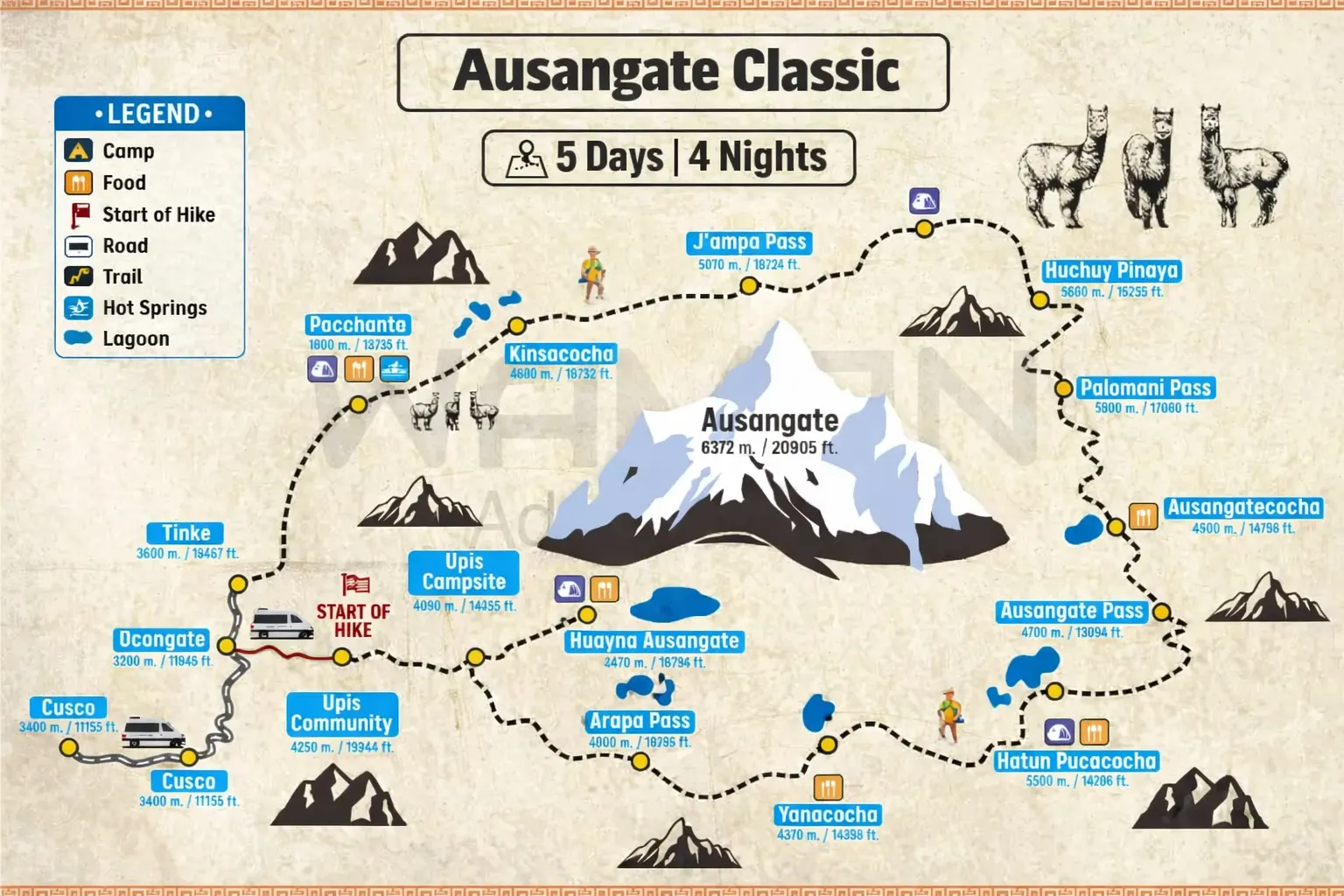
Ausangate trek 5 days
- Day 01: Cusco-Ocongate-Upis-Huayna Lake-Ausangate
- Day 02: Upis-Arapa Pass-Yanacocha-Hatun Pucacocha
- Day 03: Hatun Pucacocha-Ausangatecocha-Palomani Pass-Huchuy Phinaya
- Day 04: Sorapata-Jampa Pass-Pacchanta
- Day 05: Pacchanta-Tinke-Cusco
Ausangate trek 4 days
- Day 01: Cusco-Upis-Upis Camp-Wayna-Ausangate
- Day 02 Upis Camp-Arapa Pass-Hatun Pukacocha
- Day 03: Hatun Pukacocha-Puka-Pass Anantapata-Warmisaya-Surinacocha
- Day 04: Surinacocha-Rainbow Mountain-Red Valley-Llactoc-Cusco

Ausangate full day – Tour 7 Lagunas
- First, you visit the 7 lakes: Azulcocha, Otorongo, Pucacocha, Alqacocha and Q’omercocha, Orqo Otorongo, China Otorongo.
- Then you visit Pacchanta, where you can enjoy thermal mineral springs.

Tour 7 Lakes of Ausangate – Full Day
Go with an agency or go on your own?
Ausangate is remote, and logistics can make or break the experience. Going with an agency is safer and more comfortable because a tour operator handles private transportation to the trailhead, camp setup, full meals, and, crucially, safety protocols and oxygen. You can focus on hiking and taking it all in.
Going on your own is only suggested for mountaineers with strong navigation skills and real self-sufficiency. This option means managing public transportation from Cusco to the start of the trek, then coordinating local transfers from there. You will also need to carry your own gear or negotiate arriero services in local communities, and availability is not always guaranteed.
Warning:
If you do not have experience doing multi-day treks independently, it is better to go with a tour operator. This route is long, and there is a real risk of losing the trail.
On trail budget
Even if you book an all-inclusive tour, it is essential to carry cash in soles, ideally in small bills.
For 2026, keep the following in mind:
- Local communities manage trail maintenance, and there are control points where you pay for entry or campsite use.
- In areas like Upis and Pacchanta, you will find natural hot springs. Entry is usually modest (often around $1.50 to $5.50 / S/ 5–20, and it can vary by season), and they are highly recommended for relaxing sore muscles after hiking.
- The trail team (arriero pack handlers, cooks, and guides) does physically demanding work. If the service has been great, it is customary to leave a tip at the end of the expedition.
Essential preparation
Success on Ausangate depends largely on your gear and how well you adapt to the environment. Do not underestimate the altitude or the Andes’ fast-changing weather.
What you must pack
To keep your backpack from feeling too heavy, pack only what you truly need and what actually works at altitude. Here are essential items you should not leave behind.
Personal gear:
- 25L to 35L backpack.
- Trekking boots or high top hiking shoes with a stiff sole.
- Layering system clothing (base layer keeps you dry, mid layer keeps you warm, outer layer protects you from weather)
- Beanie, gloves, and a waterproof jacket.
- Sunscreen, and a sun hat and/or cap.
- Personal hygiene items.
Camping gear:
- Tent.
- Sleeping bag
- Sleeping pad or mat.
Supplies and food:
- Water and a purification system.
- Light food and energy snacks.
- GPS
- Headlamp with batteries.
- Basic first aid kit.
Documents and money:
- ID and important documents.
- Cash.

Health and safety
You will be hiking constantly above 4,000 m (13,123 ft), with passes that rise beyond 5,000 m (16,404 ft). It is important to know how to read your body’s signals. Symptoms like intense headache, dizziness, or nausea should never be ignored. Tell your guide immediately. Often, descending a bit or using oxygen is enough. To reduce risks from altitude sickness, it is recommended that you train well in advance with cardiovascular conditioning and leg strength work.
Why is Ausangate sacred?
Ausangate is the most powerful Apu (protective spirit) in the Andean worldview in Cusco. Hiking here carries a spiritual dimension you do not find on many other routes.

Kintu offering ceremony facing Nevado Ausangate, a sacred Apu in Cusco’s Andean worldview
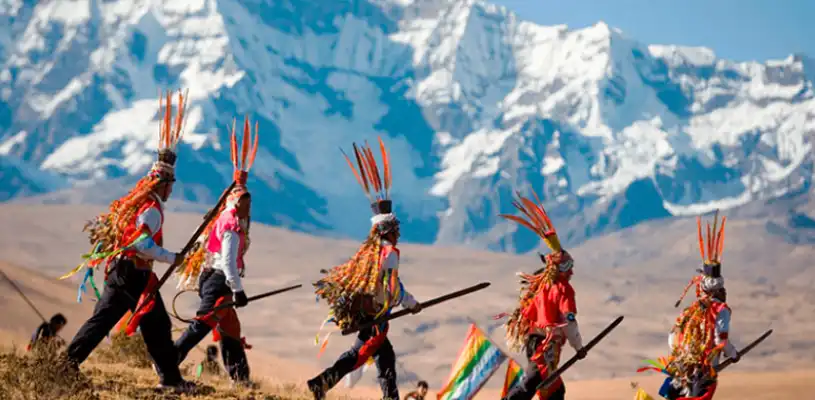
Traditional dancers from Paucartambo participating in the Qoyllur Rit’i pilgrimage, one of Cusco’s most important Andean religious festivals
Mystical tourism and ceremonies
Mystical tourism on the Ausangate Trek offers a deep connection with nature, letting you experience a spiritual journey while you move through its landscapes.
The Andean worldview shows up in every stage of the trail. You can see it in everyday acts of respect, like the traditional payment to the earth with coca leaves, or asking permission from the sacred mountains (Apus) before you cross a pass.
On a different note, the region preserves the ritual use of Huachuma (San Pedro). It is worth emphasizing that this is not a conventional or recreational tourist activity. It is an ancestral medicine ceremony with deep cultural meaning that requires seriousness, preparation, and a safe setting.
That is why it is essential to do these experiences only with authorized tour operators and the right logistics. Only they can ensure your connection with Andean spirituality is respectful, unforgettable, and above all, safe.
The Qoyllur Rit’i pilgrimage
Right on the lower slopes of the mountain, every year between May and June, the festival of Qoyllur Rit’i (Snow Star) takes place.
It is the largest Indigenous pilgrimage in the Americas. Thousands of devotees climb to dance and pray at sacred glaciers, a tradition that blends Catholic faith with Inca heritage and is recognized by UNESCO as Intangible Cultural Heritage of Humanity.
Remember this:
Even if your tourist trek does not usually line up with the celebration (unless you plan for it), knowing you are walking the same sacred trails gives real depth to every step you take.
Ready to book?
The Ausangate Trek is one of those experiences that stays with you forever. It is tough, it is cold, but it is unbelievably beautiful.
If you want smooth logistics, solid gear (tents that truly hold up in rain), and guides who love what they do, plan ahead. Especially if you are coming during peak season (June to August), spots fill fast.
Not sure which route fits you best? Write to us and we will help you build the perfect plan for 2026. And if your trip planning also includes Choquequirao, figuring out where to stay on the Choquequirao trek early can make the entire experience smoother.