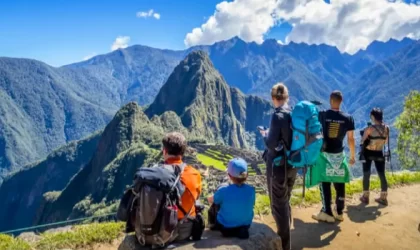
Best Treks to Machu Picchu Compared by Time, Altitude and Difficulty
Ultima actualización en 17 September, 2026 por Jhon Quispe
Last Updated on 17 September, 2026 by Jhon Quispe
What Are the Main Treks to Machu Picchu?
The main treks to Machu Picchu include the Classic Inca Trail, Short Inca Trail, Salkantay Trek, Lares Trek, Inca Jungle, Huchuy Qosqo and Choquequirao to Machu Picchu. They range from about two to seven days and differ substantially in altitude, permits, archaeology, scenery and physical demand. Only the regulated Inca Trail routes use the protected Inca Trail network toward Machu Picchu; most alternative treks connect with Machu Picchu Pueblo before the archaeological visit.
- MachupicchuMachu Picchu & Humantay Lake
- Machu Picchu treks at a glance
- How to choose the best trek to Machu Picchu
- Main treks to Machu Picchu
- Inca Trail routes vs alternative treks
- Best time for a Machu Picchu trek
- What to know before booking a Machu Picchu trek
- Choose the Machu Picchu trek that fits your trip
-
Frequently asked questions about treks to Machu Picchu
- What is the best trek to Machu Picchu?
- What is the shortest trek to Machu Picchu?
- Which trek approaches Machu Picchu through Inti Punku?
- Which Machu Picchu trek is the most demanding?
- Do all Machu Picchu treks require an Inca Trail permit?
- How far in advance should I book a trek to Machu Picchu?
- Can you trek to Machu Picchu in February?
The main trek to Machu Picchu differ in much more than duration. Altitude, camping, archaeology, permits and the way you finally approach Machu Picchu can completely change the experience, so the right route depends on your priorities rather than on finding one universal “best” trek.

Machu Picchu treks differ in scenery, altitude, archaeology and arrival style.
Machu Picchu treks at a glance
| Route | Typical duration | Approx. hiking distance | Highest point | Best fit |
| Classic Inca Trail | 4 days | About 26.7 mi (43 km) on Waman’s standard itinerary | 13,829 ft (4,215 m) | Inca archaeology and the historic Inti Punku approach |
| Short Inca Trail | 2 days | About 6.5 mi (10.5 km) on official Route 5 | About 8,924 ft (2,720 m) | Limited time with an Inca Trail experience |
| Salkantay Trek | 5 days | About 42.9 mi (69 km) on Waman’s current itinerary | 15,190 ft (4,630 m) | Mountain scenery and changing ecosystems |
| Lares Trek | 4 days | About 19.3 mi (31 km) on Waman’s current itinerary | 15,846 ft (4,830 m) | Andean communities and quieter mountain trails |
| Inca Jungle | 4 days | About 17.4 mi (28 km) walking plus about 13 mi (21 km) cycling | 14,271 ft (4,350 m) at Abra Málaga | Adventure activities and varied environments |
| Huchuy Qosqo Trek | 3 days | About 11.8 mi (19 km) of trekking | 14,107 ft (4,300 m) | A shorter archaeological and cultural route |
| Choquequirao to Machu Picchu | 7 days | About 55.3 mi (89 km) before the Machu Picchu visit | 15,288 ft (4,660 m) | Experienced hikers wanting a long archaeological challenge |
Important note:
Only the Classic and Short Inca Trail follow the regulated Inca Trail network and approach Machu Picchu from the direction of Inti Punku. Most alternative treks reach Machu Picchu Pueblo first and visit the archaeological site separately.
How to choose the best trek to Machu Picchu
The easiest way to compare Machu Picchu trek options is to start with the experience you actually want rather than the route name.
| If your priority is… | Start with… |
| Original Inca roads and archaeology | Classic Inca Trail |
| Only two days available | Short Inca Trail |
| Snow-capped mountains and changing ecosystems | Salkantay Trek |
| Andean communities and rural culture | Lares Trek |
| Cycling and adventure activities | Inca Jungle |
| A shorter and quieter archaeological trek | Huchuy Qosqo Trek |
| A long trek linking two major Inca sites | Choquequirao to Machu Picchu |
Time is only one factor. Also compare the highest elevation, number of consecutive hiking days, camping style, archaeological focus and whether the route reaches Machu Picchu through the Inca Trail network or through Machu Picchu Pueblo.
Keep this in mind:
Walking to Machu Picchu can also refer to shorter access walks such as Hidroeléctrica to Machu Picchu Pueblo or the uphill path from town toward the archaeological entrance. Those walks should not be confused with multi-day treks such as the Inca Trail, Salkantay or Lares.
Main treks to Machu Picchu
Classic Inca Trail
The Classic Inca Trail is the strongest option when Inca history and archaeology are the main reasons you want to trek.
Waman’s standard 4-day itinerary covers about 26.7 mi (43 km) and reaches its highest point at Dead Woman’s Pass, approximately 13,829 ft (4,215 m). Along the way, hikers encounter archaeological sites such as Patallacta, Runkurakay, Sayacmarca, Phuyupatamarca and Wiñay Wayna before approaching Machu Picchu through Inti Punku.
Its defining feature is the combination of preserved Inca roads, archaeology and a continuous historic approach rather than simply the amount of hiking.

Historic Inca roads and archaeological sites define the Classic route.
For route-specific permits, camps and itinerary details, use the Inca Trail planning guide.
Short Inca Trail
The Short Inca Trail preserves the final historic approach while reducing the experience to two days and removing the need for several nights of camping.
Official Route 5 covers about 6.5 mi (10.5 km) and traditionally enters through the Km 104 sector before continuing through Chachabamba, Wiñay Wayna and Inti Punku.
Operational access to the Short Inca Trail can change because of conservation or trail conditions, so confirm the current entry point before departure rather than assuming historical access details never change.

The Short Inca Trail preserves the final approach through Inti Punku.
For current access, route details and logistics, use the Short Inca Trail guide.
Salkantay Trek
The Salkantay Trek to Machu Picchu is a stronger fit when natural scenery matters more than having archaeological sites throughout the hiking route.
Waman’s current 5-day itinerary covers about 42.9 mi (69 km) and reaches approximately 15,190 ft (4,630 m) at Salkantay Pass.
The landscape changes considerably during the trek, moving from high mountain environments near Humantay and Salkantay into warmer cloud-forest terrain before continuing toward Machu Picchu Pueblo.

Lares Trek
The Lares Trek to Machu Picchu places more emphasis on Andean communities, rural landscapes and cultural encounters.
Waman’s current route includes about 19.3 mi (31 km) of hiking and reaches approximately 15,846 ft (4,830 m) at Sicllakasa Pass.
Its shorter distance does not make altitude insignificant. Lares works best for travelers who want mountain trekking but value community contact and quieter landscapes more than an archaeological trail throughout the entire route.

Lares combines mountain trekking with rural Andean communities.
Inca Jungle
The Inca Jungle is different because hiking is only one part of the experience.
Waman’s current itinerary includes about 17.4 mi (28 km) of walking plus approximately 13 mi (21 km) of cycling. The route begins around Abra Málaga at roughly 14,271 ft (4,350 m) before descending toward lower and warmer environments.
Depending on the service, activities such as rafting or zip lining can also form part of the trip. It suits travelers who want variety and activity rather than several days focused almost exclusively on conventional trekking.

Huchuy Qosqo Trek
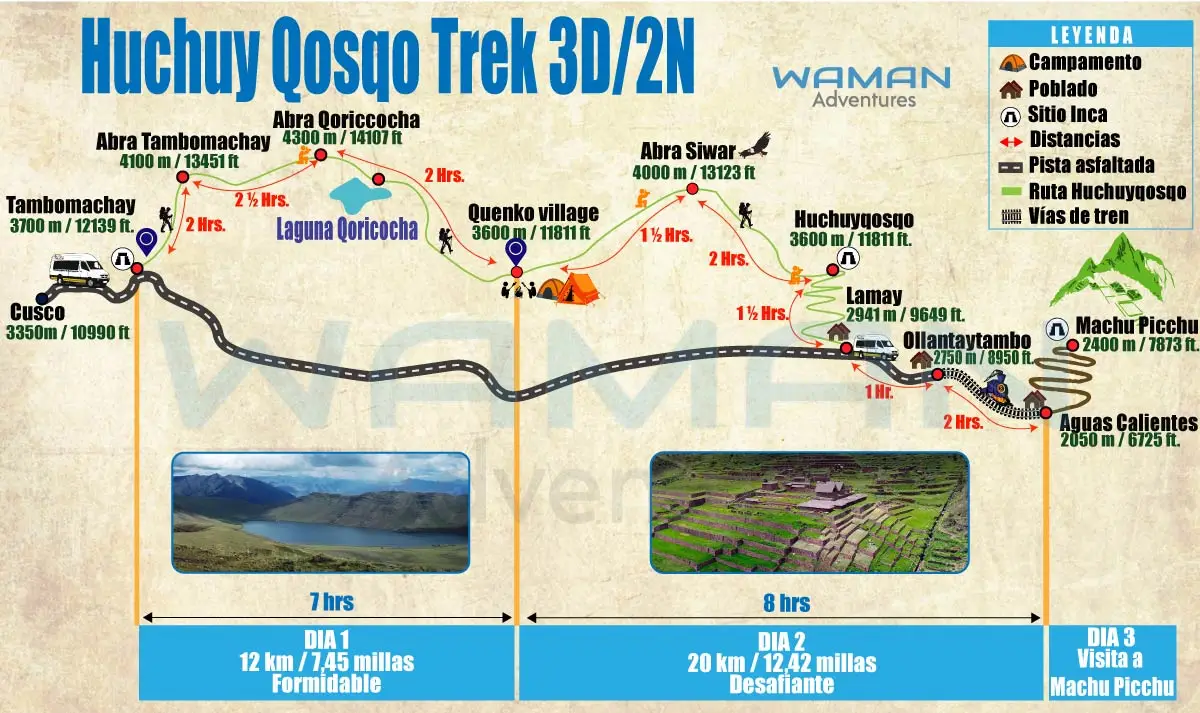
The Huchuy Qosqo Trek is a shorter alternative that combines high-Andean landscapes with the archaeological site of Huchuy Qosqo.
Waman’s current 3-day itinerary includes about 11.8 mi (19 km) of trekking and reaches approximately 14,107 ft (4,300 m) before descending toward the Sacred Valley and eventually continuing by train toward Machu Picchu.
It makes sense for travelers who want a meaningful trek and archaeology but have less time than a Classic, Salkantay or Choquequirao itinerary requires.
Choquequirao to Machu Picchu
The Choquequirao to Machu Picchu Trek is the longest and most physically demanding route in this comparison.
Waman’s current 7-day itinerary covers about 55.3 mi (89 km) before the final Machu Picchu visit and reaches approximately 15,288 ft (4,660 m).
Its challenge comes not only from distance but also from repeated major climbs and descents. The reward is a route that combines two important Inca archaeological destinations with remote Andean landscapes.

Inca Trail routes vs alternative treks
The most important structural decision is whether you want the regulated Inca Trail itself or an alternative trekking route that eventually connects with Machu Picchu.
| Factor | Classic and Short Inca Trail | Alternative treks |
| Permit system | Specific regulated Inca Trail access and controlled availability | Do not use the same Inca Trail permit system |
| Approach to Machu Picchu | Approach through the protected trail network and Inti Punku | Most reach Machu Picchu Pueblo before entering the archaeological site separately |
| Archaeology | Multiple Inca sites directly along the protected route | Varies substantially according to the trek |
| Landscape | Mountain passes, valleys and cloud forest | Can include glaciers, villages, jungle, canyons and high mountain passes |
| Flexibility | More restricted by official trail regulations and capacity | Usually more flexible, although Machu Picchu availability still matters |
Alternative does not mean easier. Salkantay, Lares and Choquequirao all reach elevations above those encountered on many conventional tourist routes around Cusco.
Best time for a Machu Picchu trek
May through September generally brings drier trekking conditions in the Cusco region. These months are popular because clearer conditions can improve mountain views, although high-altitude nights can still be very cold.
April and October are transition periods, while the wetter season generally brings more rain, cloud and greater variability on mountain routes.
The best month therefore depends partly on which trek you choose. A high mountain route such as Salkantay can respond differently to changing weather than a lower section of another itinerary.
Important note:
The regulated Inca Trail network closes throughout February for annual conservation and maintenance. Do not plan the Classic or Short Inca Trail for that month. Alternative routes follow their own operating conditions and should be checked separately.
What to know before booking a Machu Picchu trek
Inca Trail permits and Machu Picchu admission are separate planning factors
The Classic and Short Inca Trail operate under regulated trail access. Machu Picchu itself also has controlled entrance arrangements.
Do not assume that finding a trekking service automatically guarantees every archaeological entrance, circuit or optional add-on you may want.
For detailed entrance planning, use the Machu Picchu entrance ticket guide.
Alternative does not mean easy
Alternative treks avoid the Classic Inca Trail permit system, but several are physically demanding in their own right.
Salkantay, Lares, Huchuy Qosqo and Choquequirao climb above 13,123 ft (4,000 m), and some reach considerably higher.
Compare total distance, highest pass, repeated elevation changes and number of hiking days rather than assuming an alternative route is automatically easier.
Acclimatization matters before high-altitude routes
Many of the main Machu Picchu treks reach elevations substantially above Cusco.
Spending time in the Cusco region before starting a demanding route gives you an opportunity to adjust and evaluate how you respond to altitude before committing to several trekking days.
Packing requirements also vary according to the selected trek, season and operator inclusions. Once you choose a route, use the route-specific guide before preparing camping gear or buying equipment.
Choose the Machu Picchu trek that fits your trip
The right route becomes much easier to identify once you know how many days you have and whether your priority is Inca archaeology, mountain scenery, Andean culture, adventure activities or a major physical challenge.
Choose the Classic Inca Trail for the most historically focused experience, the Short Inca Trail when time is limited, Salkantay for mountain scenery, Lares for community-focused trekking, Inca Jungle for mixed adventure activities, Huchuy Qosqo for a shorter archaeological route, or Choquequirao when you want the longest challenge in this comparison.
Frequently asked questions about treks to Machu Picchu
What is the best trek to Machu Picchu?
What is the shortest trek to Machu Picchu?
Which trek approaches Machu Picchu through Inti Punku?
Which Machu Picchu trek is the most demanding?
Do all Machu Picchu treks require an Inca Trail permit?
How far in advance should I book a trek to Machu Picchu?
Can you trek to Machu Picchu in February?
Share:



Related tours you might be interested in
Enjoy unique experiences in Cusco and Machu Picchu with the peace of mind that comes from working with a local travel agency

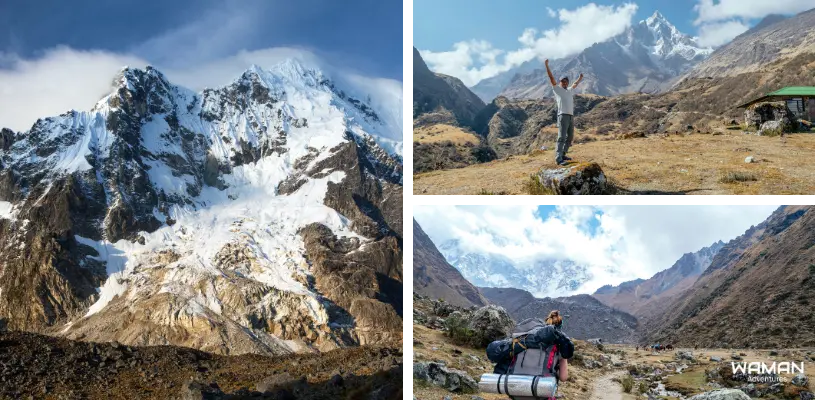
Choquequirao to Machu Picchu Trek 7 Days | Private Service
The most epic and challenging adventure awaits! Dare to push your limits and embark on the ultimate...

10 Days Andean Dreamscapes – Lima, Ica, Cusco & Puno with Local Flights
YOUR NEXT DESTINATION IS PERU, THE LAND OF FASCINATING STORIES AND OUTSTANDING LANDSCAPES! With our...
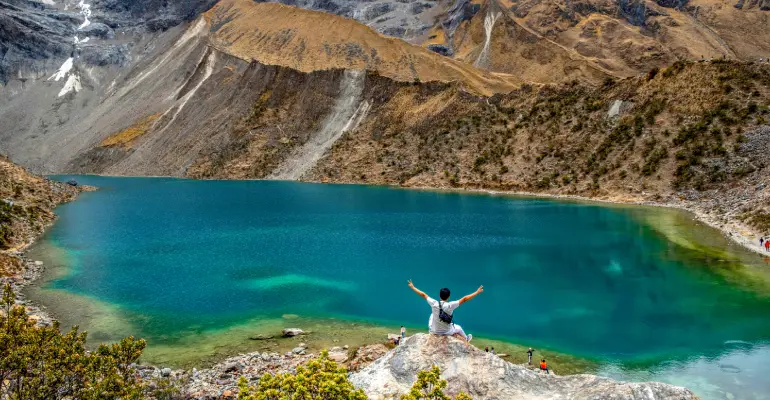
HUMANTAY LAKE TOUR FULL DAY – Group Service
Venture to the heights with a dream trip to the Humantay Lagoon! In the depths of Peru's imposing...

07 Day Echoes of Peru – Lima, Ica & Cusco with Flights
IMAGINE YOUR PERFECT ESCAPE PLAN IN PERU, WHERE EVERY DAY IS THE PERFECT OPPORTUNITY TO EXPLORE AND...
If you liked this article and the information you found, give us 5 stars!
Table of Contents
Related blogs
Ideal clothing guide to take to Machu Picchu
12 min of reading
Inca Trail packing list: simple guide to enjoy every step
9 min of reading
Walking With the Llamas in Machu Picchu: A Journey Through Time
8 min of reading